Date: 11 Aug 2018
From Anna Banana: Shipping and planting during hot weather
Q: I received email notification that my order was delayed due to hot weather. Why? And do I need to do anything special if I plant when it is hot?
A: When plants are shipped via FedEx Ground, it is hot in the truck! According to our FedEx area manager information, if outside temperature is 100 degrees, inside the truck it can be 130! We don't want to put your plants through that much stress. We monitor the weather at destination, and as soon as it cools down a little bit, your order will be shipped.
Planting during
hot weather:
1. For a mail-ordered plant follow planting instructions and never
plant it from the box directly into the ground. Keep it in a pot the size of a
root ball until the plant recovers from shipping stress, re-grows root system
and adjusts from several days of darkness to a bright light. Move the pot
gradually into brighter light, eventually into a spot of its permanent home. Do
not over water the pot. Once you see new growth - the plant is ready to be
transplanted into the ground.
2. Use only quality soil, containing lots of organic matter (compost, peat
moss); soil conditioner is beneficial (pine bark). Plant it on a little hill,
so growing point is elevated 1-1.5"above the rest of the surface.
3. Put a good layer of mulch around the plant, at least 1-2" thick, and not
too close to the trunk as it may cause stem rot on contact.
4. Water daily with a garden hose until the plant shows active growth -
then watering may be reduced every other day or less, or you may rely on
sprinklers and/or rains.
5. If the sun is too hot, use shade cloth (or simply a white bed sheet) to
cover the plant for the first few days (use bamboo sticks for support). It
will help the plant to establish without heat stress. If leaves start dropping
- this may be a sign of excessive light and heat. Shading is the way to
reduce it.
6. Use SUNSHINE booster
Date: 24 Jun 2018
Date: 24 Jun 2018
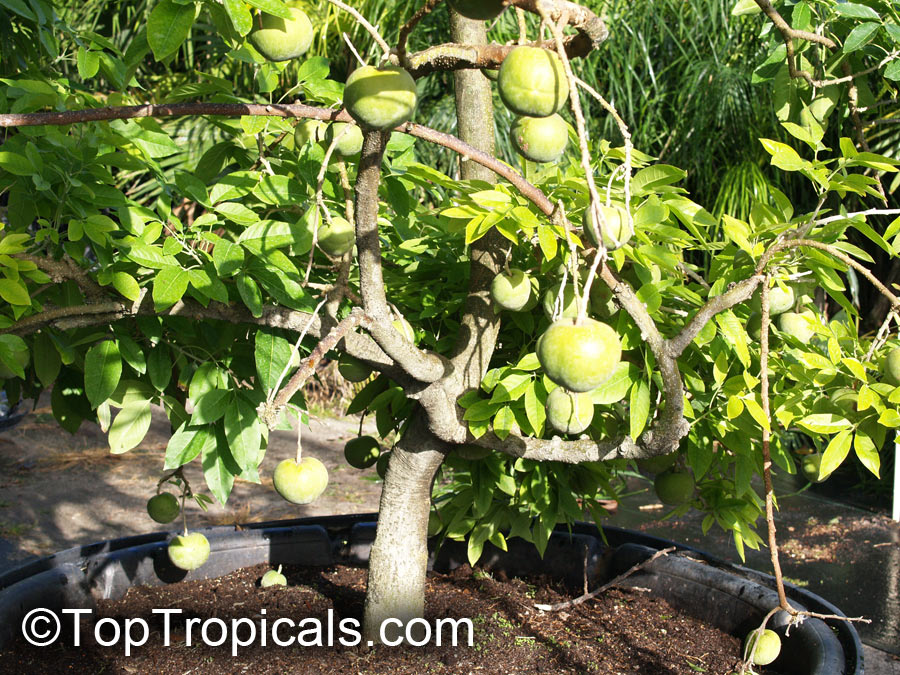
White Sapote from under graft
Q: My super sweet white sapote died back all the way to the roots but it's growing back from the roots and I'm wondering if that's just the rootstock growing back or if that's good fruiting wood that's going to make a nice healthy super sweet tree?
A: The "super sweet" White Sapote, or Casimiroa edulis, was probably variety Young Hands, Super Sweet White Sapote. It was grafted on seedling of White Sapote that has a pleasant somewhat-sweet flavor. The grafted variety you had is a little sweeter than that. So to answer your question, it is worth to give the tree a second chance as far as fruit quality is concerned, although it won't be the a grafted variety, if the new growth coming from under the graft point. The only problem is, non-grafted tree may take longer until it fruits. Grafted trees may fruit right away, seedlings may take a few years.
We suggest to use SUNSHINE-Sweet
Date: 24 Jun 2018
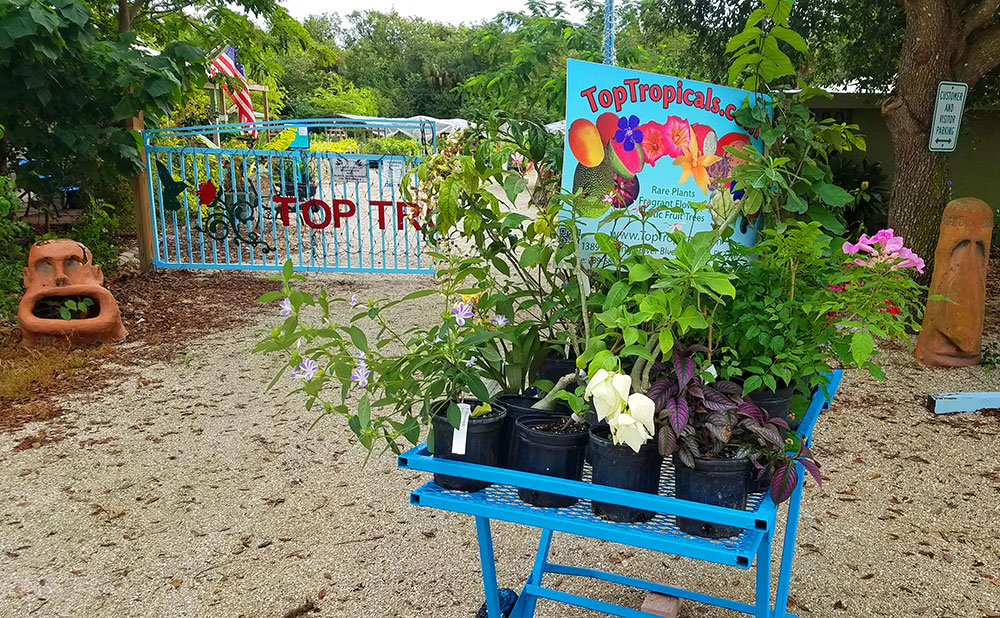
Winter Flowering Plants
Take advantage of the late season tropicals! Brighten up your winters with spectacular flowers and winter producing fruit trees!
Many Floridians move up North during hot summer months,
our snow-bird season usually starts late September and
ends by Mother's Day in May. Many of our local seasonal
customers planting those flowering and fruiting species
that they can fully enjoy while staying in Florida. Below
you will find a few specials that are in bloom right now.
Check out full list of winter bloomers and
late season plants, and download a PDF chart of the most
interesting tropical plants that will flower and fruit for
you in Fall, Winter and early Spring. Some of them are
ever-blooming, others are late- or early season.
Visit our Garden Center in Ft Myers FL
Date: 24 Jun 2018
SUNSHINE-SuperFood for your plants health
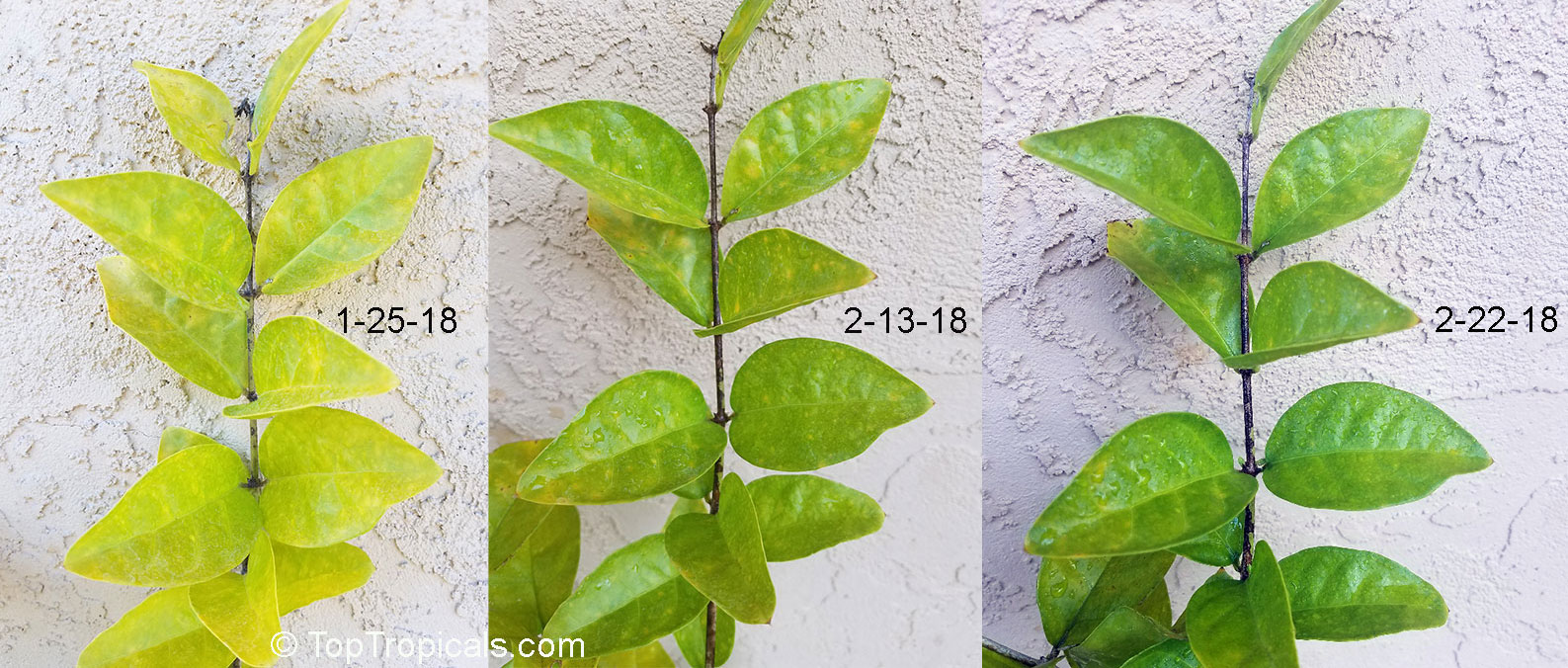
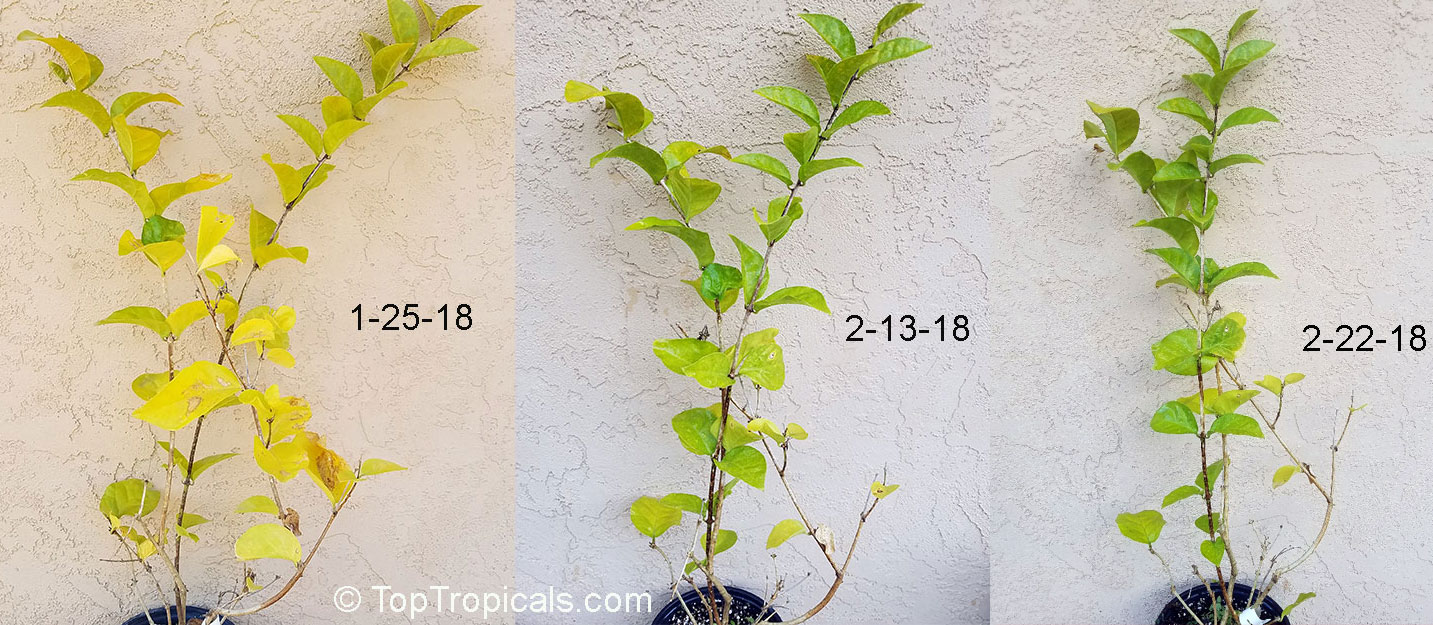
We are getting very high interest from our customers to our new plant booster SUNSHINE-SuperFood as well as many questions. We continue experimenting with the Jasmine that you saw in our previous newsletter, that had pale yellow leaves and numerous deficiencies. Right now, after only 2 applications, it looks healthy green again. Click on the picture to zoom in and see leaves turning from yellow to green within less than a month. See also full plant photo of this jasmine.
Q: Is SUNSHINE-SuperFood a fertilizer?
A: Traditionally we call a fertilizer macro-elements (NPK - nitrogen, phosphorus, and potassium). Technically, SUNSHINE-SuperFood is a complex of micro-elements that are essential for plant's health. It provides such elements as Mg, Fe, Mn, Zn, Cu, B, Mo, S, and Amino-acids that our soils are usually poor of. These elements are responsible for proper development of leaves, roots, flowers, and overall plant vigor. Read more about role of these micro elements.
Q: Can I just get these additional elements in a dry form and add to soil like a fertilizer?
A: No. Some of these elements must present in extremely low concentrations (this is why they are called micro-). SUNSHINE-SuperFood is a liquid substance with very high bioavailability that has very complicated formula; it is not just a mix of the elements. The formula is developed with the maximum efficiency for a plant to absorb through leaves and a root system.
Q: Is it better to spray leaves or water the plant with the solution?
A: Foliar applications are always most efficient in regards of seeing a quick result. However, we recommend to also drench the root ball with SUNSHINE-SuperFood solution to deliver the necessary elements evenly to all parts of the plant through its natural metabolism.
Q: My gardenia looks very sad after winter - most leaves are yellow and some have pale spots. Should I use SUNSHINE-SuperFood more often and in higher concentrations?
A: We recommend to apply SUNSHINE-SuperFood once a month to maintain a general plant health. In difficult cases like with this jasmine on the photo, you can do twice a month. However do not exceed recommended concentration. The rule of thumb is, you can apply water soluble fertilizers and supplements more often, but with lower concentrations - this way a plant will be more responsive. Plant metabolism in general is rather slow, changes take days and weeks - don't try to speed it up. Your patience will be rewarded.
Try SUNSHINE SuperFood on sick looking plants, especially with leaves that are yellowing, deformed or have spots (see photos of different deficiencies). There are no miracles, but this one works like a Miracle! All you need is a few drops of SUNSHINE SuperFood - item 6000! We also have bottles 50 ml and 100 ml for large plant collections and yard/landscape applications. Read more about SUNSHINE SuperFood...