Garden Blog - Top Tropicals

Date: 17 Mar 2026

Move Over, Paddy: Why March 17th is Actually the International Day of the Cat Lady
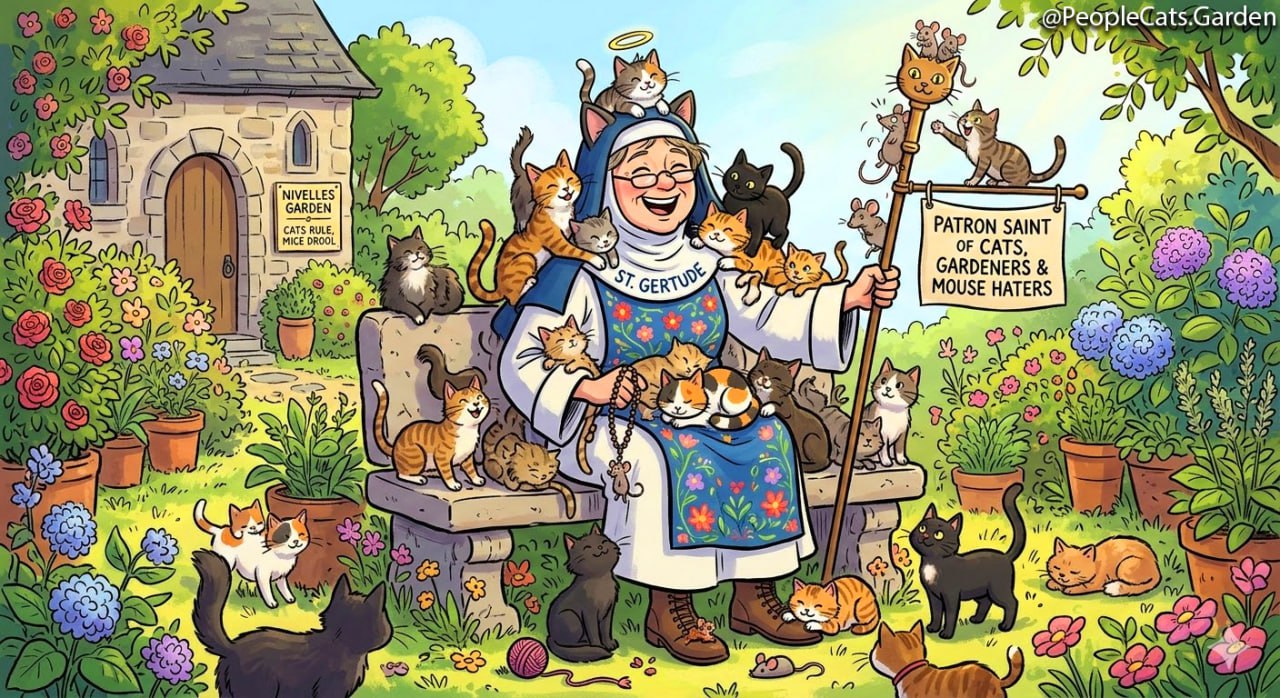
March 17th - International Day of the Cat Lady, Gertrude with cats

March 17th - International Day of the Cat Lady, Gertrude with cats

Move Over, Paddy: Why March 17th is Actually the "International Day of the Cat Lady" ☘️ 🐈

When you think of March 17th, you probably think of green beer, shamrocks, and parades. But while everyone else is toasted to St. Patrick, a subset of gardeners and feline enthusiasts are celebrating a different icon: St. Gertrude of Nivelles. She 's the 7th-century abbess who skipped the noble marriage proposals to become the unofficial Patron Saint of Cats, Gardeners, and anyone who really, really hates mice.

🐾 From Noblewoman to Monastery Boss


Born in 626 AD (modern-day Belgium), Gertrude wasn't your average medieval teenager. When her family tried to marry her off to a rich duke, she famously told them she’d rather be a bride of Christ than any man on Earth.
She eventually ran the Nivelles monastery like a pro, turning it into a 5-star medieval hub for travelers, scholars, and pilgrims. But it isn't her hospitality that made her an internet icon 1,300 years later - it’s her "pest control" skills.

🐾 The Mouse-Hater’s Hero


Look at any medieval painting of Gertrude, and you’ll notice something weird: mice are literally climbing up her staff. In the Middle Ages, mice weren't "cute Disney sidekicks." They were grain-destroying, plague-spreading menaces. Gertrude became the go-to saint for:

Protecting the harvest from rodents.
Keeping the pantry mouse-free.
Calming the nerves of people with a serious case of musophobia (fear of mice).
The Logic: If you’re the saint of mice, you’re naturally the BFF of the creature that eats them.

🐾 How She Became the "Cat Lady Saint"


Interestingly, Gertrude wasn't "officially" the saint of cats for most of history. That title actually went viral in the late 20th century.

A 1981 Metropolitan Museum of Art catalog highlighted her rodent-fighting reputation, and the world’s cat lovers basically said, "Hold my catnip". The association stuck instantly. Today, she’s the patron saint of the "Original Cat Lady" aesthetic, celebrated by anyone who knows that a home isn't a home without a feline supervisor.

🐾 A Big Day for Green Thumbs


If you’re a gardener, March 17th is your "Green Flag" day. In European folklore, St. Gertrude’s feast day is the traditional start of the planting season.

👉 Pro-Tip from the Middle Ages: If the sun is out on March 17th, it’s a sign that your garden will thrive all year. If it’s raining? Well, maybe stay inside and pet the cat.

🐾 The Perfect Trio: Cats, Gardens, and Gertrude


There’s a reason plant people and cat people are often the same people. Cats love a good garden patrol - they nap in the mulch, stalk the butterflies, and ensure no chipmunk dares to touch your tomatoes.

At TopTropicals, we take this tradition seriously. Our PeopleCats are more than just pets; they are the furry CEOs of the nursery, supervising every seed we plant and every leaf we prune.

🐾 Meet the PeopleCats:


The furry supervisors of the garden world!

🐾 This March 17th, Wear a Little Extra Fur


Whether you’re Irish or not, take a moment this March 17th to raise a glass (or a bag of treats) to St. Gertrude.

This year, let’s celebrate:
🐾 The Feline Patrol: For keeping our gardens mouse-free.
🐾 The Gardeners: For braving the dirt to grow something beautiful.
🐾 The Abbess: For being the coolest historical figure you'd never heard of.

📚 Learn more:
St. Gertrude of Nivelles: Patron Saint of Cats, Gardeners, and Those Who Fear Mice!

#PeopleCats #Horoscope #Fun_Facts

🟢 Join 👉 TopTropicals and 🐈PeopleCats.Garden

Date: 25 Feb 2026

A Miracle in the Garden: Watching a Tiger Swallowtail Rebuild Itself on a Magnolia Champaka - Joy Perfume Tree

Tiger Swallowtail Butterfly

A Miracle in the Garden: Watching a Tiger Swallowtail Rebuild Itself on a Magnolia Champaka - Joy Perfume Tree 🐯

Tiger Swallowtail Metamorphosis: From Cocoon to Joy

🏼 Nature’s most mind-blowing magic trick happened right here on a branch of our Magnolia champaka - the Joy Perfume Tree. Did you know that when a caterpillar enters its chrysalis (cocoon), it literally dissolves its body and rebuilds it from scratch?

🏼 This Tiger Swallowtail chose the legendary Joy Perfume Tree as its nursery. It’s a match made in heaven—the "flying tiger" of North America born on a tree famous for the world’s most expensive perfume scent. While most people know the Champaka for its intensely fragrant flowers, few realize that even the leaves release a soft, sweet aroma when brushed against.

🏼 In this video, you’ll see the rare moment of eclosion - where the butterfly emerges with soft, wrinkled wings and begins the slow process of pumping life into them before its first flight.

🏼 It is a real gem in your garden - not just for fragrance lovers, but for wildlife that clearly loves it too.
Watch this Tiger Swallowtail butterfly being born on a Champaka - Joy Perfume tree!

🛒 Bring the miracle Joy to your garden - the perfume Champaka tree

📚
Everything You Need to Know About the Joy Perfume Tree:
🟡Magnolia (Michelia) champaca - Joy Perfume Tree, Champaka in Plant Encyclopedia

🟡 Growing Guide:


· How to grow Magnolia champaca and get some Joy
· What does a mature Champaka Tree look like? Practical Growing Guide
🟡The Fragrance: What does Joy Perfume flower smell like?
🟡Troubleshooting: Why is my Champaka Tree dropping leaves?

🟡 Comparison:


· Which Champaka tree is better - White or Golden?
· Golden and White Champaka side-by-side
· White Champaka
🟡More:
· When does Champaka tree start blooming?
· Why Champaka is such a popular perfume tree
· Flower of the most expensive perfume
· Article about Champaka

🎥

#Perfume_Plants #Container_Garden #Trees #Discover

Joy Perfume Tree Plant Facts

Botanical name: Magnolia champaca, Michelia champaca
Also known as: Joy Perfume Tree, Huang Yu Lan, Safa
USDA Zone: 9 - 11
Highligths Small tree 10-20 ftFull sunWatering: Regular. Let topsoil dry slightlyYellow, orange flowersPlant attracts butterflies, hummingbirdsFragrant plantSubtropical plant. Mature plant cold hardy at least to 30s F for a short time
Get personalized tips for your region
🟢 Join 👉 TopTropicals

Date: 20 Sep 2025

How to make lots of Insulin Ginger plants quickly and get more health benefits

Costus igneus (Chamaecostus cuspidatus) - Fiery Costus or Spiral Flag

💚 How to make lots of Insulin Ginger plants quickly and get more health benefits


Costus igneus (Chamaecostus cuspidatus) - Fiery Costus or Spiral Flag is believed to help lower blood glucose levels naturally and managing diabetes.

Have you heard of Insulin Ginger? Everyone wants to have it in the garden!

Gardeners in India grow it not just for its pretty spiral leaves, but for what those leaves do. People with diabetes often chew them fresh or brew them into tea, saying it helps keep their blood sugar under control.

Researchers have found something interesting: the leaves contain an insulin-like compound, along with antioxidants and anti-inflammatory properties. In animal studies, extracts from the plant lowered blood sugar, protected the liver and kidneys, and even made the body more sensitive to insulin.

The way folks use it is simple. You can chew a leaf right off the plant, steep dried leaves for tea, or find it in powders and capsules. It's one of those plants that shows how tradition and science sometimes meet in the garden.

Its lush, turmeric-like leaves spiral around upright stems, with a glossy dark green top and a striking light purple underside. In warm months, it produces bright orange, cone-like flowers that stand out beautifully in the garden.

Beyond its beauty and natural insulin effects, the insulin plant is credited with aiding digestion, reducing cholesterol, boosting energy, improving skin health, supporting weight loss, relieving stress, and promoting heart wellness. A real botanical multitasker!

🎥 In this video, we’ll show you how to multiply Insulin Ginger fast, so you’ll have plenty of plants for yourself and even extras to share with friends and family.

✅ Don’t forget to use Green Magic fertilizer for the best results. Gingers absolutely love this plant food - they thrive on it and respond better than any other plant, with vigorous growth, lush foliage and loads of leaves you’ll need for all the benefits.

🛒 Grow your own sugar-fighter - the Insulin Ginger

📚 Learn more:


🟡The fiery plant that fights sugar: Nature secret insulin?
🟡Most interesting edible gingers

#Food_Forest #Remedies #Shade_Garden #Discover

🟢 Join 👉 TopTropicals

Date: 25 Feb 2024

Avocado pollinating and crops

Avocado  fruit

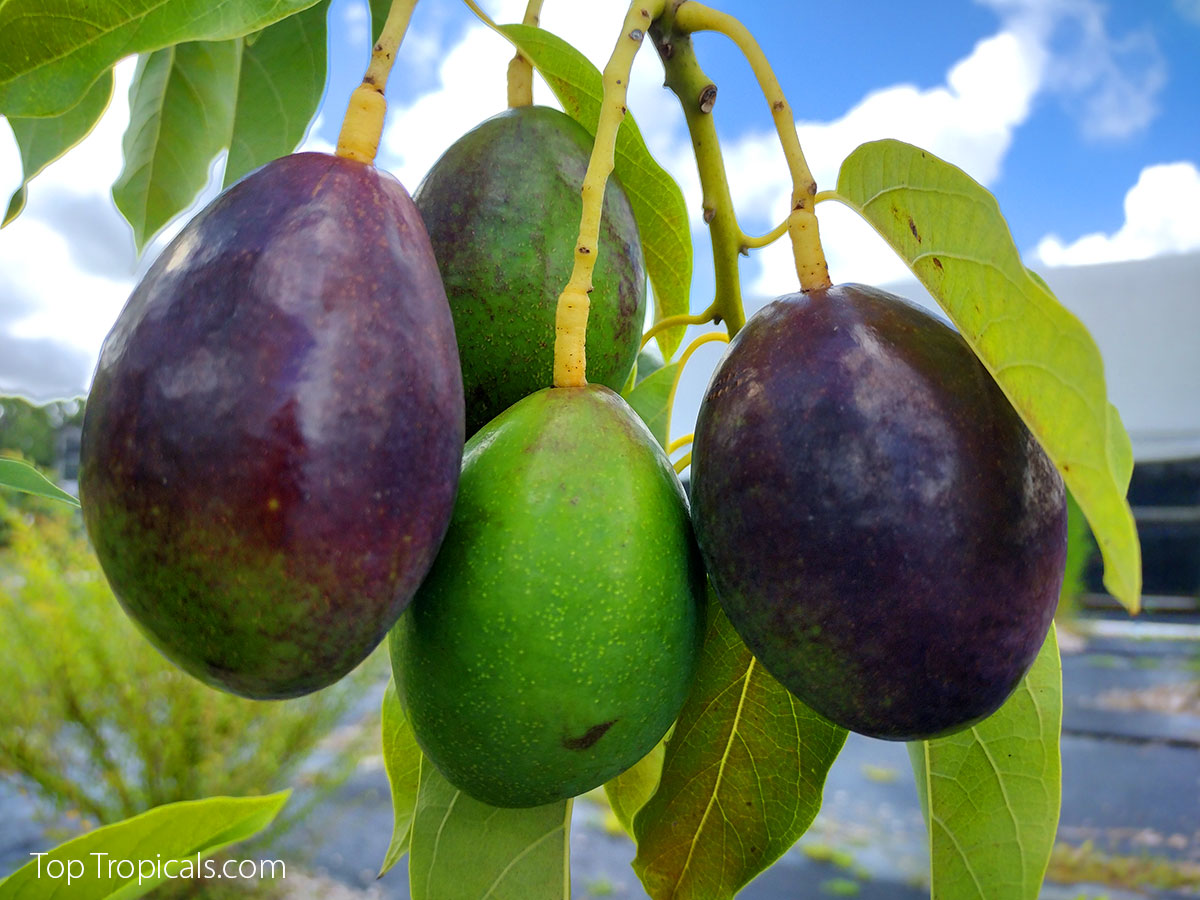
Photo above: Avocado Joey - very buttery fruit, cold hardy variety.

Q: I bought an anise leaf-scented avocado from you, and it is finally quite large and doing great. I live in California, the coldest temperatures we seem to get in some winters is around 25 to 28F, and it never lasts long. The tree might get a bit of frost nipping on the new growth, but it has done very well. It has flowered profusely for the last two years but hasn't set any fruit. What variety you might recommend to help with pollinating?

A: We are glad your avocado is doing great. Anise is one of our favorite varieties, with the wonderful smell of leaves and tasty fruit.

Cold hardiness and flower quality

It is true that cold damage may affect avocado production, especially in setting fruit. To improve the tree's cold hardiness, make sure to provide balanced plant food, especially during the season of active growth. For our avocado trees, we use Sunshine C-Cibus year-round.

If you prefer to use dry (granulated, slow-release) fertilizers, make sure they contain micronutrients, or apply Sunshine Superfood microelement complex once a month.

To improve flower quality (including the ability to set fruit), we recommend a special micronutrient supplement called Sunshine Honey. It contains Boron and Molybdenum - elements that are responsible for setting fruit and for developing fruit (meaning not dropping at the early stage of development).

Cross-pollination and crop

In general, every avocado tree is self-fertile, meaning it can produce some fruit with its own pollen and doesn't necessarily require a second tree for pollination. So even if you don't do anything, sooner or later your tree will set fruit. However, it is also true that the amount of fruit and crop reliability depends on pollination factors. One type of avocado classification is by flowering and pollination behavior - type A or B.

When both types of trees are grown in proximity to each other, their overlapping flowering patterns significantly enhance the chances of cross-pollination. This can lead to improved fruit set and higher yield, making it especially important for commercial production and, to a lesser extent, for home growers.

Therefore, it's advisable to plant different varieties of avocado in your garden - the more, the merrier! The greater the diversity of avocado trees with overlapping flowering periods, the better your crop is likely to be. If you're growing an avocado tree without other avocados nearby, it becomes helpful to have more than one tree with different flowering patterns (A and B) to increase yield in your garden.

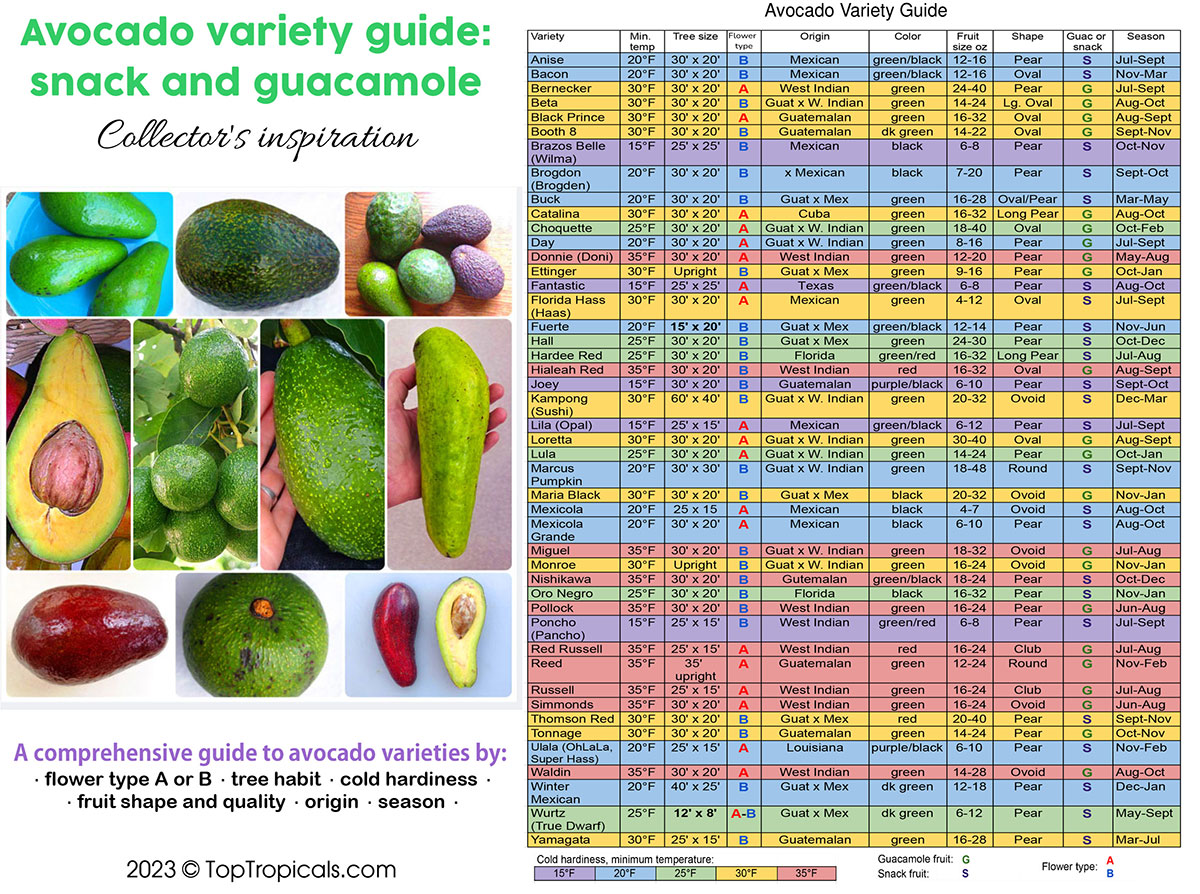
Anise Avocado is type B. So to increase your crop, you may consider planting type A variety from the list: Bernecker, Black Prince, Catalina, Choquette, Day, Donnie, Fantastic, Florida Hass, Lila, Loretta, Lula, Mexicola, Mexicola Grande, Red Russell, Reed, Russell, Simmonds, Ulala , Waldin .

To learn more about avocado types, fruit characteristics, cold hardiness and much more, refer to our Avocado Variety Guide - a page with very convenient interactive chart allowing you to quickly sort types of avocado by requirements of your choice (just click on column header to sort data). You may also buy a Book or download a PDF.

PAvocado  Variety  Guide  Book

Avocado  trees  in  pots

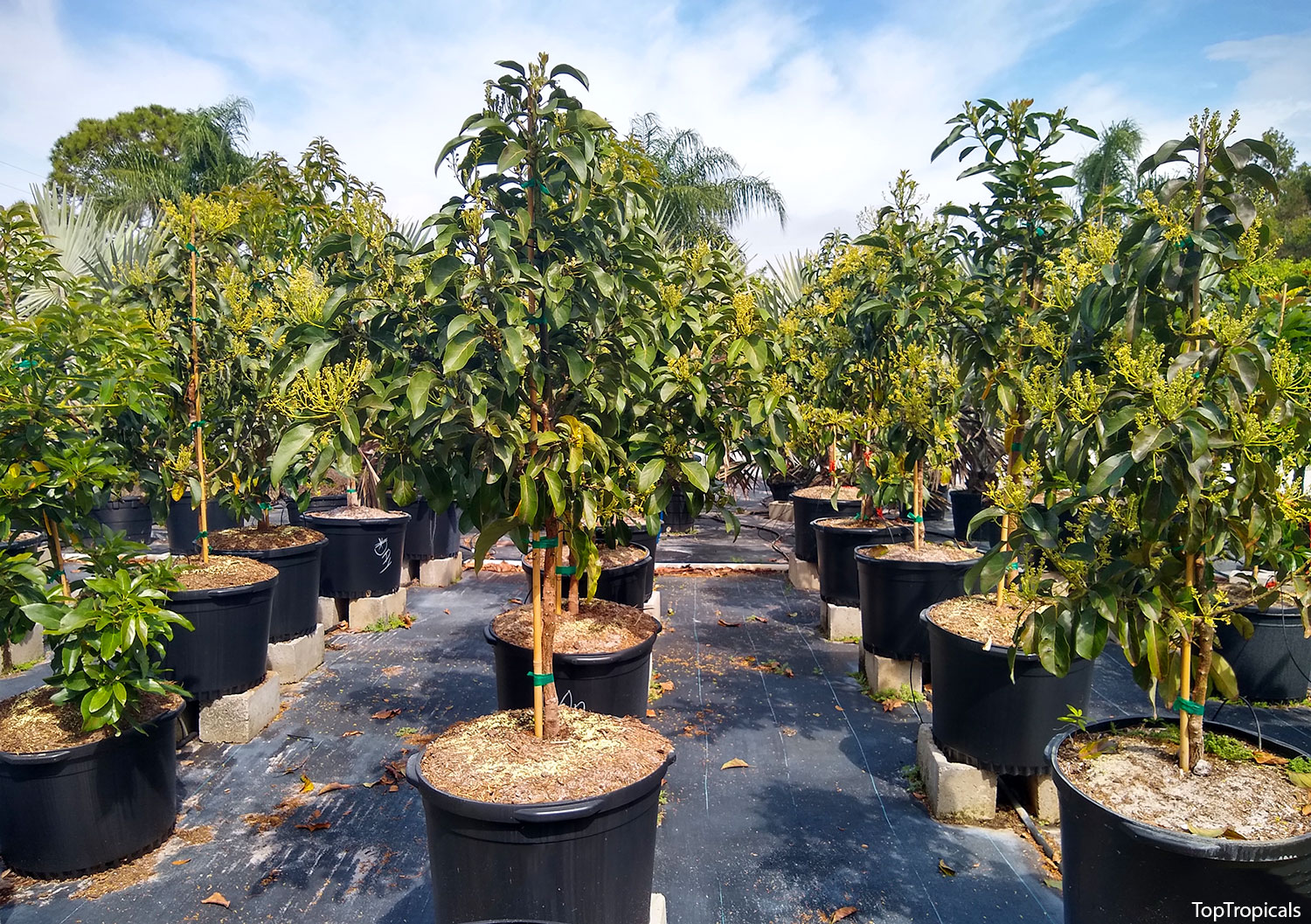
Photo above: 15 gal Avocado trees for local pick up. Delivery and installation available!

Date: 6 Jan 2024

Sunshine Boosters
Winter use... and discount!

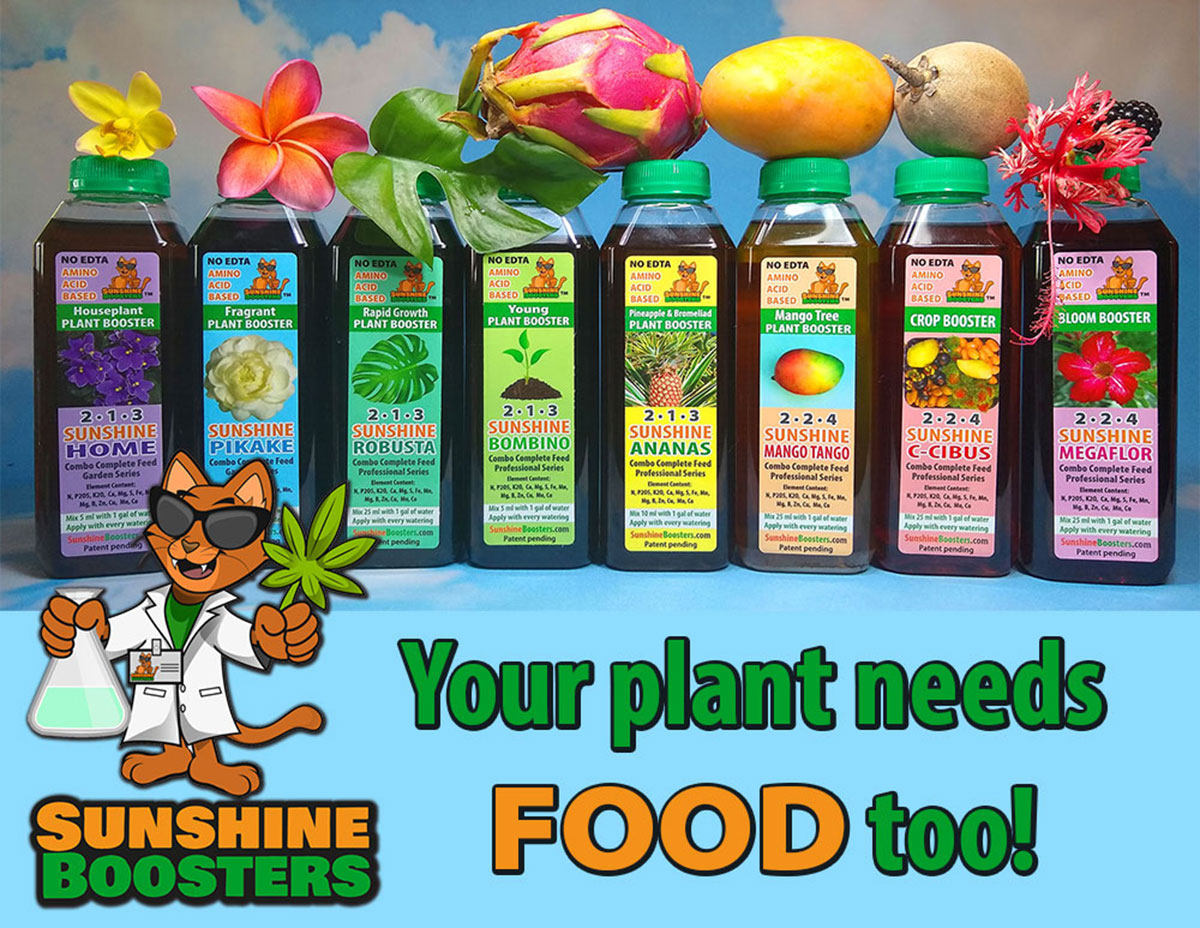
Sunshine  Boosters  different  formulas

Do you remember that Sunshine Boosters fertilizers can be applied year-round?

As natural fertilizers, their scientifically created formulas provide perfectly balanced nutrition for your plants throughout the year. Follow the instructions on the labels and apply Sunshine Boosters with every watering. Give your plants extra boost during winter months! The fertilizer amount is balanced, adjusting proportionally to the water amount, which is tailored to the plant's winter needs. Unlike dry fertilizers, Sunshine Boosters can be used all year without fear of burning plants with excessive nutrient lockup.

Take advantage of the winter sale and stock up on this perfect plant food. You'll need plenty by Spring when your plants begin active growth! Use the code below for 20% off all Sunshine Boosters products. Hurry up, the sale will end in a few days!

SBOOSTERS20

Min order $20, excluding S/H. Exp. 1-12-24

Sunshine  Boosters  effect  in  the  garden

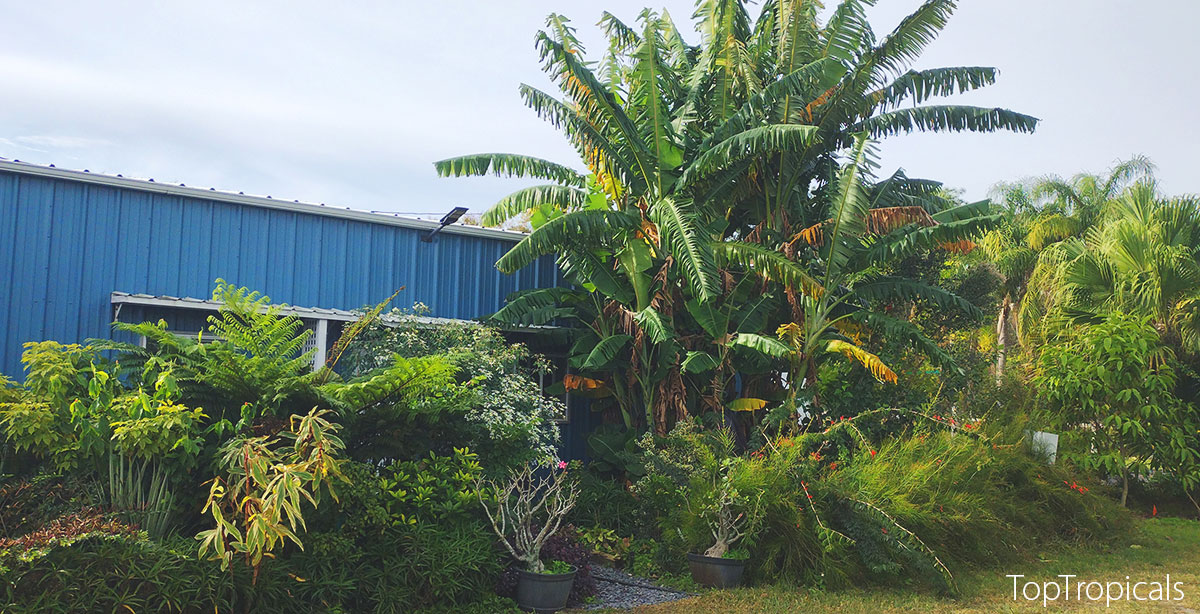
In the photo above: This picture was taken on Christmas Eve, December 24, 2023. The little garden by our B-farm office, irrigated automatically with Sunshine Boosters using the Robuster injector, is thriving in spite of cool nights. Look at this crazy banana, it is taller than the building, we honestly have never seen a banana of that size! The solution we are using there is Sunshine Robusta; now available for pick up in 2.5 gal jugs!