Garden Blog - Top Tropicals

Date: 23 Feb 2026

❄️ The Hardiness Report: February 2026 ❄️

🐾 Smokey & Sunshine’s real-world survival data from our Sebring, Florida Research Gardens. Smokey analyzed the data. Sunshine just stayed happy. Here is what they found.

Macadamia  tree  surviving  25F  freeze  as  Smokey  inspects  leaves  and 
 Sunshine  holds  steaming  coffee  in  frosty  garden.
Sunshine: Twenty five degrees. Wind chill fourteen. And it is still standing... like nothing happened?
Smokey: This is macadamia strength.
Sunshine: I should put a macadamia nut in my coffee and borrow some of that strength.
Smokey: Do not get too nutty yet. It still needs curing and cracking.

📊 Weather Data – February 1–6, 2026

Sebring, Florida – 132 years of recorded observations
This was not a light frost. It was a prolonged, windy, penetrating hard freeze.

  • 🌡 Minimum temperature: 25F
  • ❄️ Wind chill: 14F
  • ⏳ Duration: 3 nights of 8–10 hour hard freeze
  • ☀️ Daytime temperatures: around 50F for 7 days
  • 🌀 Wind: sustained 20 mph, gusts 40–50 mph

While all our plants in pots were protected in greenhouses, our in-ground plantings faced the freeze outdoors. We covered what we could. Even so, some plants were damaged, some died, and some surprised us by surviving.

In the next few newsletters, we will share the real survivors - the plants that proved themselves in the ground, under real conditions. Smokey and Sunshine have been out in the fields assessing the damage from the February 1–6 freeze. While many plants struggled, the Macadamia proved to be a true standout. This is how we grow them to handle the tough years.

Why does this matter? Because we have gotten used to warm winters, and this freeze was a rude awakening. Not everyone lives in Miami. If you garden in places where a real cold event can happen, you have to be prepared - and you have to plant what can take it.

🌰 Macadamia: Freeze Tested and Standing
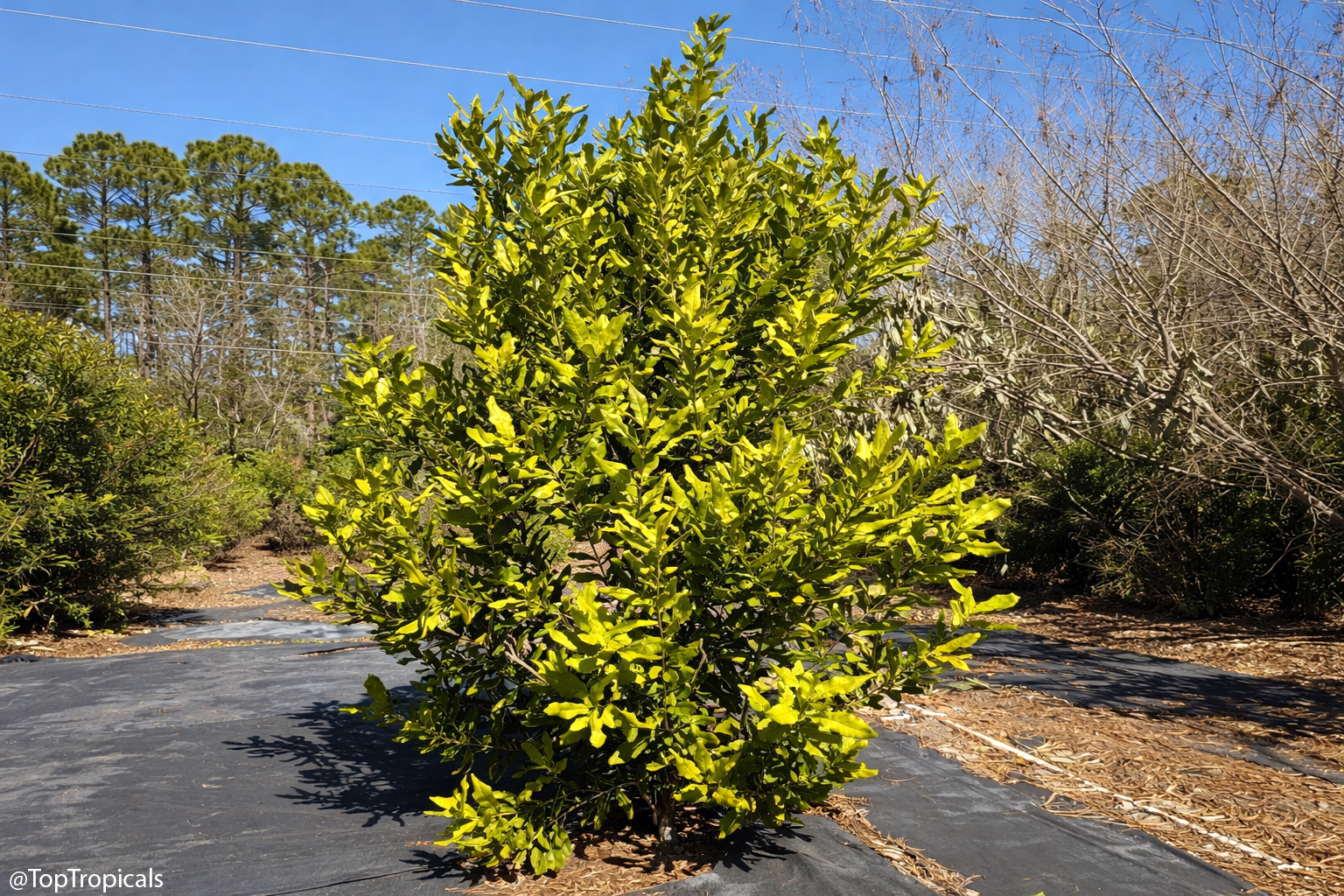
Three  year  old  macadamia  tree  after  three  nights  of  25F  hard  freeze  in 
 February  2026,  showing  healthy  foliage.

3 year old macadamia tree after 3 nights of hard freeze in February 2026 - standing strong.

When temperatures dropped to 25F with wind chill near 14F, our established macadamia trees remained upright, green, and structurally intact. Leaves held. Branches stayed firm. No collapse, no panic.

That is not luck. That is macadamia hardiness.

Often considered a "tropical luxury nut," macadamia proved it can handle more than many gardeners expect. In USDA Zones 9b-11, with proper drainage and site selection, it is not just ornamental - it is a long-term food tree with real resilience.

In a winter that reminded us not to take warmth for granted, macadamia earned its place on the survivor list.

The nut itself is famous for its strength. The shell is among the hardest in the nut world, requiring serious pressure to crack. Inside, the kernel is creamy, buttery, rich, and deeply satisfying. High in monounsaturated fats and naturally low in sugar, macadamias have long been valued both for flavor and for nutrition.

The tree is equally impressive. An evergreen with tough leaves and elegant spring flowers, it matures into a productive, manageable canopy. Nuts develop slowly over six to seven months. Production begins in a few years and increases steadily as the tree matures. Plant it once, and it can reward you for decades.
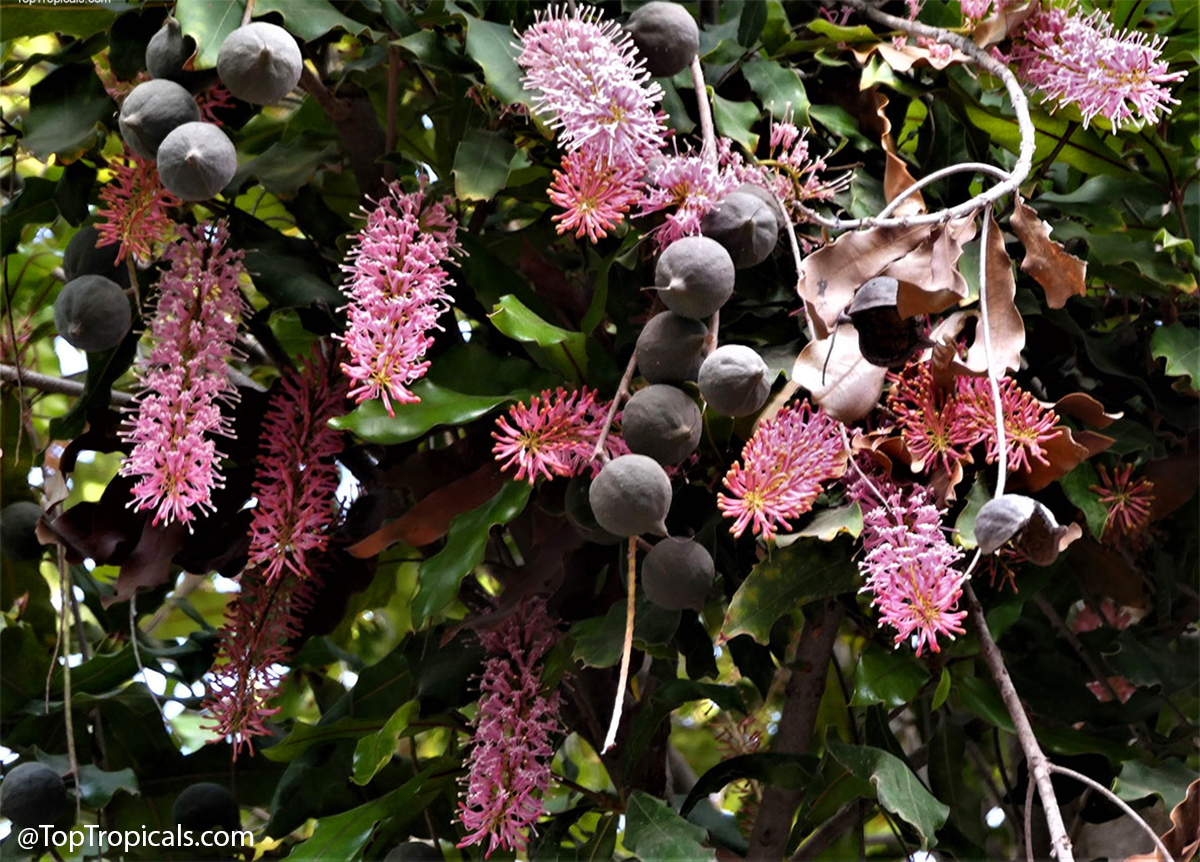
Macadamia  tree  with  pink  flower  racemes  and  developing  round  green  nuts
    on  branches.

Macadamia flowers and developing nuts on the tree.

Cold will come again. It always does. The question is not whether winter will test your garden. The question is whether your trees are ready. Macadamia proved it is. If you are building a garden that feeds you for decades, this is a tree worth planting.

🛒 Add Macadamia Tree to your garden
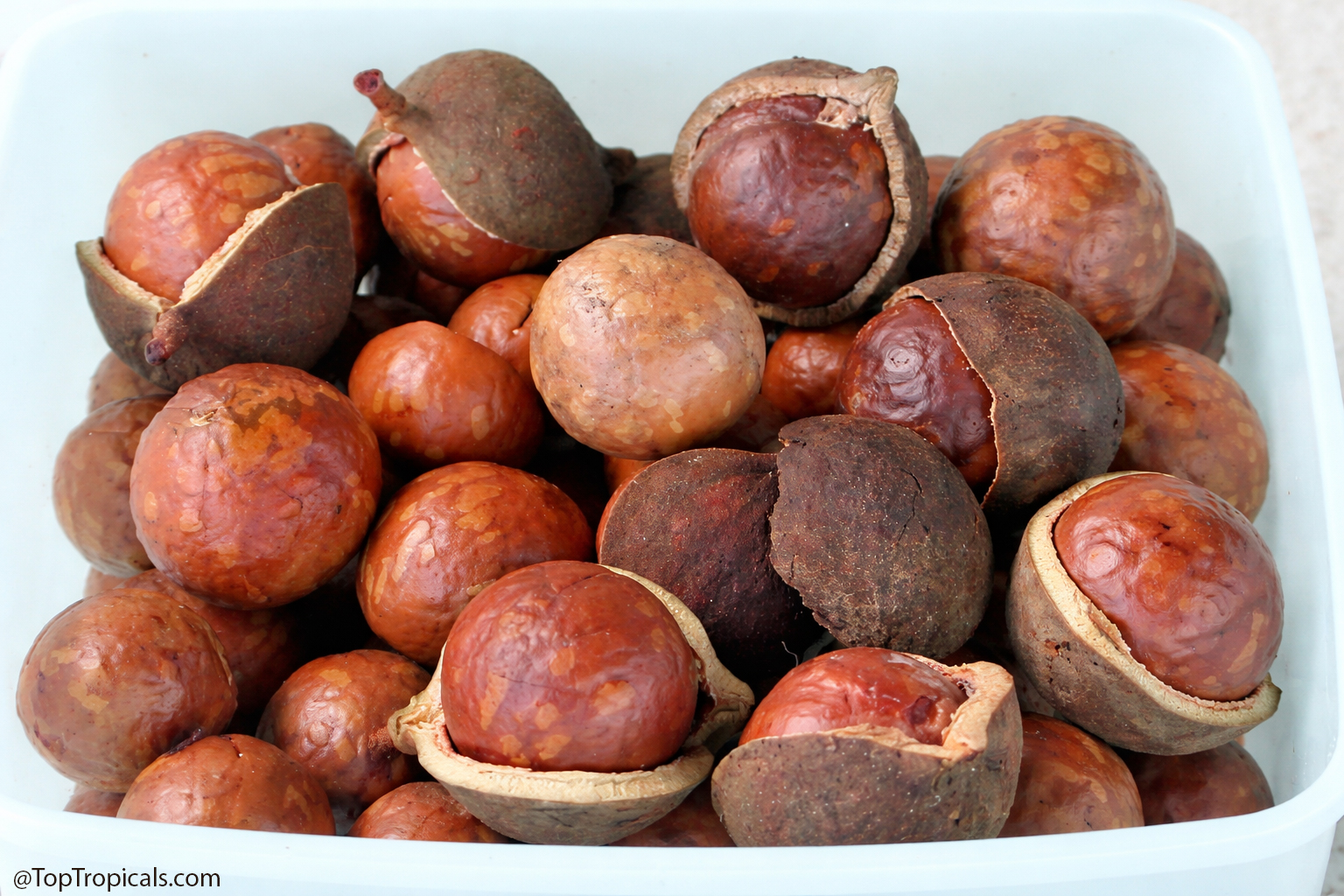
Fresh  macadamia  nuts  with  outer  husks  removed  and  hard  brown  shells 
 exposed  in  a  container.

Freshly harvested macadamia nuts with husk removed and hard shells visible.

Date: 25 Feb 2026

A Miracle in the Garden: Watching a Tiger Swallowtail Rebuild Itself on a Magnolia Champaka - Joy Perfume Tree

Tiger Swallowtail Butterfly

A Miracle in the Garden: Watching a Tiger Swallowtail Rebuild Itself on a Magnolia Champaka - Joy Perfume Tree 🐯

Tiger Swallowtail Metamorphosis: From Cocoon to Joy
  • 🏼 Nature’s most mind-blowing magic trick happened right here on a branch of our Magnolia champaka - the Joy Perfume Tree. Did you know that when a caterpillar enters its chrysalis (cocoon), it literally dissolves its body and rebuilds it from scratch?
  • 🏼 This Tiger Swallowtail chose the legendary Joy Perfume Tree as its nursery. It’s a match made in heaven—the "flying tiger" of North America born on a tree famous for the world’s most expensive perfume scent. While most people know the Champaka for its intensely fragrant flowers, few realize that even the leaves release a soft, sweet aroma when brushed against.
  • 🏼 In this video, you’ll see the rare moment of eclosion - where the butterfly emerges with soft, wrinkled wings and begins the slow process of pumping life into them before its first flight.
  • 🏼 It is a real gem in your garden - not just for fragrance lovers, but for wildlife that clearly loves it too.
Watch this Tiger Swallowtail butterfly being born on a Champaka - Joy Perfume tree!

🛒 Bring the miracle Joy to your garden - the perfume Champaka tree

📚
Everything You Need to Know About the Joy Perfume Tree:
· How to grow Magnolia champaca and get some Joy
🟡The Fragrance: What does Joy Perfume flower smell like?
· Which Champaka tree is better - White or Golden?
🟡More:

🎥

#Perfume_Plants #Container_Garden #Trees #Discover

Plant Facts

Magnolia champaca, Michelia champaca
Joy Perfume Tree, Huang Yu Lan, Safa
USDA Zone: 9-11
Small tree 10-20 ftFull sunRegular waterYellow, orange flowersPlant attracts butterflies, hummingbirdsFragrant plantSubtropical plant. Mature plant cold hardy at least to 30s F for a short time
🟢 Join 👉 TopTropicals

Date: 2 Mar 2026

Beyond fruit: how this African tree supports wildlife and garden health

Vangueria infausta - Spanish Tamarind

Vangueria infausta - Spanish Tamarind

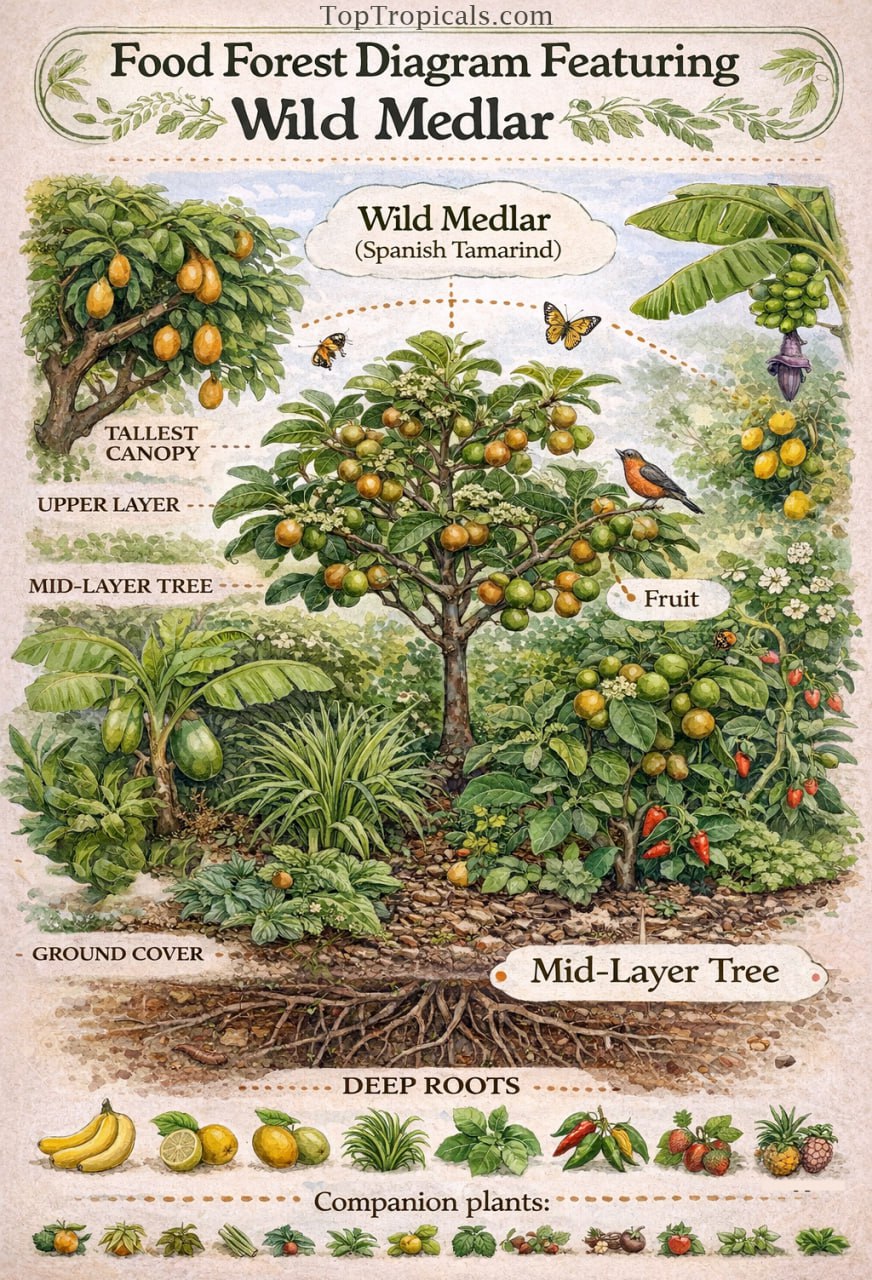
Beyond fruit: how this African tree supports wildlife and garden health: Wild Medlar in the ecological food forest 🍊

Vangueria infausta (Spanish Tamarind, Wild Medlar) might win your heart for its sweet-tart fruit and folk medicine magic - but did you know it’s also a quiet hero in the ecosystem? Whether you’re planting a full-blown food forest or just a mixed backyard garden, Vangueria infausta brings more than fruit to the table. It brings balance, beauty, and biodiversity.

🐝 Pollinator power


When in bloom, this tree produces nectar-rich flowers that attract bees, butterflies, and other pollinators. These beneficial insects don’t just help the Wild Medlar fruit - they boost productivity in your entire garden.
If you grow mangos, citrus, guava, or veggies nearby, Spanish Tamarind helps keep the pollinator traffic moving.

🐦 Bird magnet


Birds are big fans of this tree. They nest in its dense branching, snack on overripe fruit, and help spread seeds. In return, they’ll help keep down pests like caterpillars and beetles.
Even in a small garden, one Wild Medlar can be a micro-habitat for birds, insects, and other helpful wildlife.

🌱 Soil stabilizer


With its deep roots and drought-hardy nature, Wild Medlar helps hold soil in place, especially on slopes or rocky patches. It improves drainage and reduces erosion, which makes it a great addition to food forests in challenging spots.

🍂 Natural mulch & green cleanup


The tree drops a modest amount of leaf litter, which breaks down into soft, rich mulch. In a diverse planting, that means fewer weeds, better soil structure, and less watering needed.

🌿 Companion planting & food forest stacking
  • · Works great as a mid-layer tree in multi-tiered systems
  • · Provides light shade for herbs or smaller fruiting plants
  • · Plays well with bananas, papaya, guava, lemongrass, and ground covers
In zones 9-11, it can live happily in a mixed border or permaculture guild. In colder zones, just keep it potted and move it around as needed - it still offers many of the same benefits.

🛡 Pest and disease resistant


One more bonus: Spanish Tamarind is incredibly low-maintenance. It resists most common pests and doesn’t suffer from fungal issues like many tropical fruit trees do. That means fewer chemicals and more harmony in your garden ecosystem.

✍️ Ready to plant something that gives back?


Think you need more than just another fruit tree? More life. More movement. More meaning in your garden?
Grow Wild Medlar for the fruit - but keep it for everything else it brings. The pollinators. The shade. The quiet medicine. The steady presence that makes your space feel alive.
If you’re building a food forest - or simply want a tree that earns its place every single season - this one doesn’t just sit there. It contributes.

🛒 Plant Spanish Tamarind in your Food Forest for a happy wildlife

📚 Learn more:

Plant Facts

Vangueria infausta
Wild Medlar, Spanish Tamarind
USDA Zone: 9-11
Small tree 10-20 ftFull sunModerate waterEdible plantDeciduous plantEthnomedical plant.
Plants marked as ethnomedical and/or described as medicinal, are not offered as medicine but rather as ornamentals or plant collectibles.
Ethnomedical statements / products have not been evaluated by the FDA and are not intended to diagnose, treat, cure, or prevent any disease. We urge all customers to consult a physician before using any supplements, herbals or medicines advertised here or elsewhere.Subtropical plant. Mature plant cold hardy at least to 30s F for a short time

#Food_Forest #Discover

🟢 Join 👉 TopTropicals

Date: 7 Mar 2026

🌞 Spring Nutrition Strategy: How to Identify and Fix Plant Nutrient Starvation

Smokey  and  Sunshine  PeopleCats  diagnose  a  starving  coffee  plant  and 
 revive  it  using  Sunshine  Robusta  boosters,  turning  a  weak  yellow  plant  into 
 a  healthy  green  coffee  tree  after  one  month..
Sunshine: I'm trying to fight rising coffee prices. So I planted my own coffee plant. But it's dying.

Smokey: It's not dying. It's starving. Classic nutrient collapse. Imagine going two days without donuts.

Sunshine: Two days? That's a PeopleCats rights violation. Catstitution First Amendment: food, including donuts, must remain available.

Smokey: Exactly. Plants feel the same. Let's feed it. Sunshine Robusta. Robusta is coffee, you know.

Sunshine: Obviously they named Sunshine Boosters after my charm. And since it's coffee, it should work perfectly.

One month later

Sunshine: Holy whiskers! You're a magician.

Smokey: No magic. Just boosters.

Sunshine: Great. Coffee is on me when this tree starts producing. You bring the donuts.

Read more about Smokey & Sunshine

Fellow gardeners,

Spring has arrived, and plants are coming back to life. New shoots are appearing, fresh leaves are unfolding, and roots are beginning to grow actively again. As plants enter this important stage of the season, they need more than just water to support their growth. Proper nutrition is essential for strong development and healthy plants. SUNSHINE Boosters provide the balanced nutrition plants need to start the growing season strong.

A simple rule we follow in our nursery: new growth responds best to foliar feeding. When nutrients are sprayed directly on the leaves, plants can absorb them quickly and efficiently.

  • Immediate action – nutrients are absorbed through the leaves and start working right away.
  • No delay traveling through soil – plants do not need to wait for nutrients to move down to the roots.
  • Avoids soil lockout – micronutrients can become unavailable in high pH soils, but foliar feeding bypasses this problem.
  • Supports stressed plants – when roots are cold, damaged, or newly transplanted, foliar feeding helps plants recover faster.

However, sometimes plants begin to show visible nutrient deficiencies. Yellow leaves, slow growth, brown leaf edges, or distorted new leaves are often early signs that the plant is missing essential elements needed for healthy development.

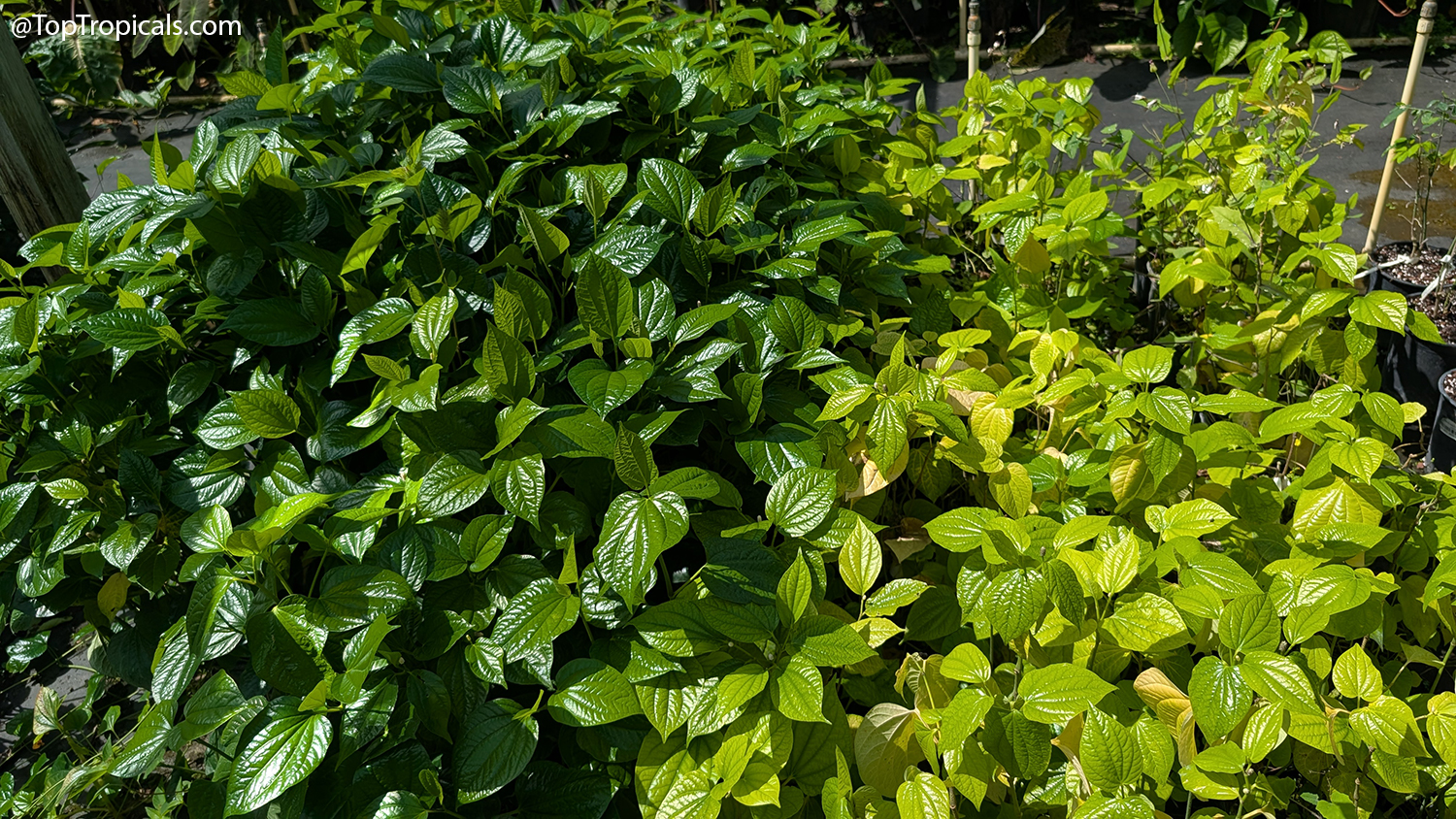
Piper  sarmentosum  Vietnamese  pepper  plants  comparison  with  fertilizer 
 on  the  left  and  without  fertilizer  on  the 
 right

Piper sarmentosum - Vietnamese Pepper - with fertilizer (left) and without (right)

These symptoms are especially common in container plants, where nutrients can be quickly depleted or become unavailable due to soil pH and watering conditions.

Use the quick reference table below to identify common nutrient-related symptoms and the recommended SUNSHINE solution to correct them.

Symptom you see What to do
Pale leaves, slow growth, weak new shoots
(often nitrogen related)
Spray SUNSHINE Robusta to stimulate strong vegetative growth.
Brown leaf edges or weak plant vigor
(often potassium related)
Apply SUNSHINE Robusta to restore nutrient balance.
Yellow leaves with green veins
(iron or manganese deficiency)
Apply SUNSHINE Superfood to correct micronutrient deficiency.
Small distorted leaves or poor flowering
(zinc or boron deficiency)
Use SUNSHINE Superfood during active growth period.

🌿Foliar Feeding: How Much and How Often

For most plants, foliar feeding works best when applied lightly and regularly during active growth.

  • Regular feeding (maintenance): Mix with tap water according to the ratio on the label. For SUNSHINE Robusta use 25 ml (5 tsp)per gallon of water and spray leaves every 5-7 days during active growth.
  • Correction feeding ("medicine" dose): if plants show visible nutrient deficiencies, combine SUNSHINE Robusta with SUNSHINE Superfood and spray every 5–7 days until new growth appears healthy. All SUNSHINE Boosters products are compatible and can be mixed with water in the same sprayer.
  • Best time to spray: early morning or evening when temperatures are cooler and leaves can absorb nutrients efficiently.
  • Important: spray both the top and underside of leaves for maximum absorption.

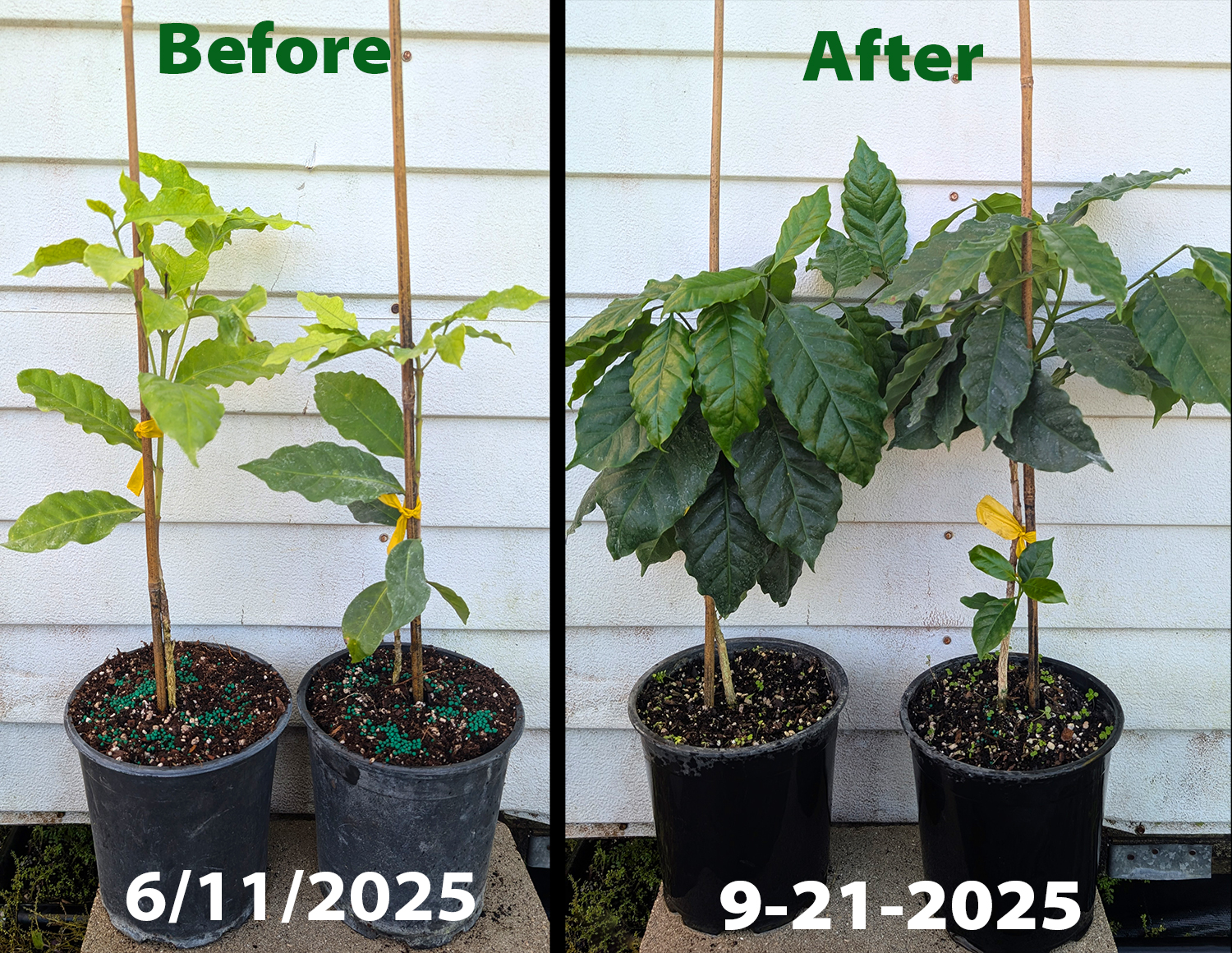
Coffee  plants  before  and  after  regular  Sunshine  Robusta  fertilizer 
 applications  showing  darker  leaves  and  stronger 
 growth

Coffee plants before and after regular Sunshine Robusta applications

🛒 Feed your plants

Date: 7 Mar 2026

SUNSHINE Boosters: The Professional Advantage

By Tatiana Anderson, Horticulture Expert at Top Tropicals with Smokey & Sunshine help

Sunshine  Boosters  plant  fertilizers  lineup  including  Bloom,  Pikake, 
 Robusta,  Omnibus,  Ananas,  Mango  Tango,  Citrus,  and  MegaFlor

Sunshine Boosters for different types of plants

Here is why SUNSHINE Boosters are the smart choice for your garden this spring:

  • Amino Acid Stability: Unlike traditional fertilizers that use synthetic EDTA chelators, our formulas are amino-acid based. This means 100% of the nutrients are bioavailable and consumed by the plant, leaving zero toxic residues or salt build-up in your soil.
  • Safe for Every Watering: Because our concentrations are scientifically balanced and mild, they are safe for daily use. This eliminates the "feast or famine" cycle of dry fertilizers and prevents accidental root burn.
  • Pure Taste for Edibles: Our delicate formulas do not contain excess salts, urea, or ammonium salts that can ruin the flavor of your harvest. Your fruit and vegetables will retain their pure, natural taste.
  • Pollinator Friendly: Our boosters are designed to be safe for honeybees and other beneficial insects, making them the responsible choice for an organic-style garden.

🌿For Potted Plants: Breaking the "Foodless" Cycle

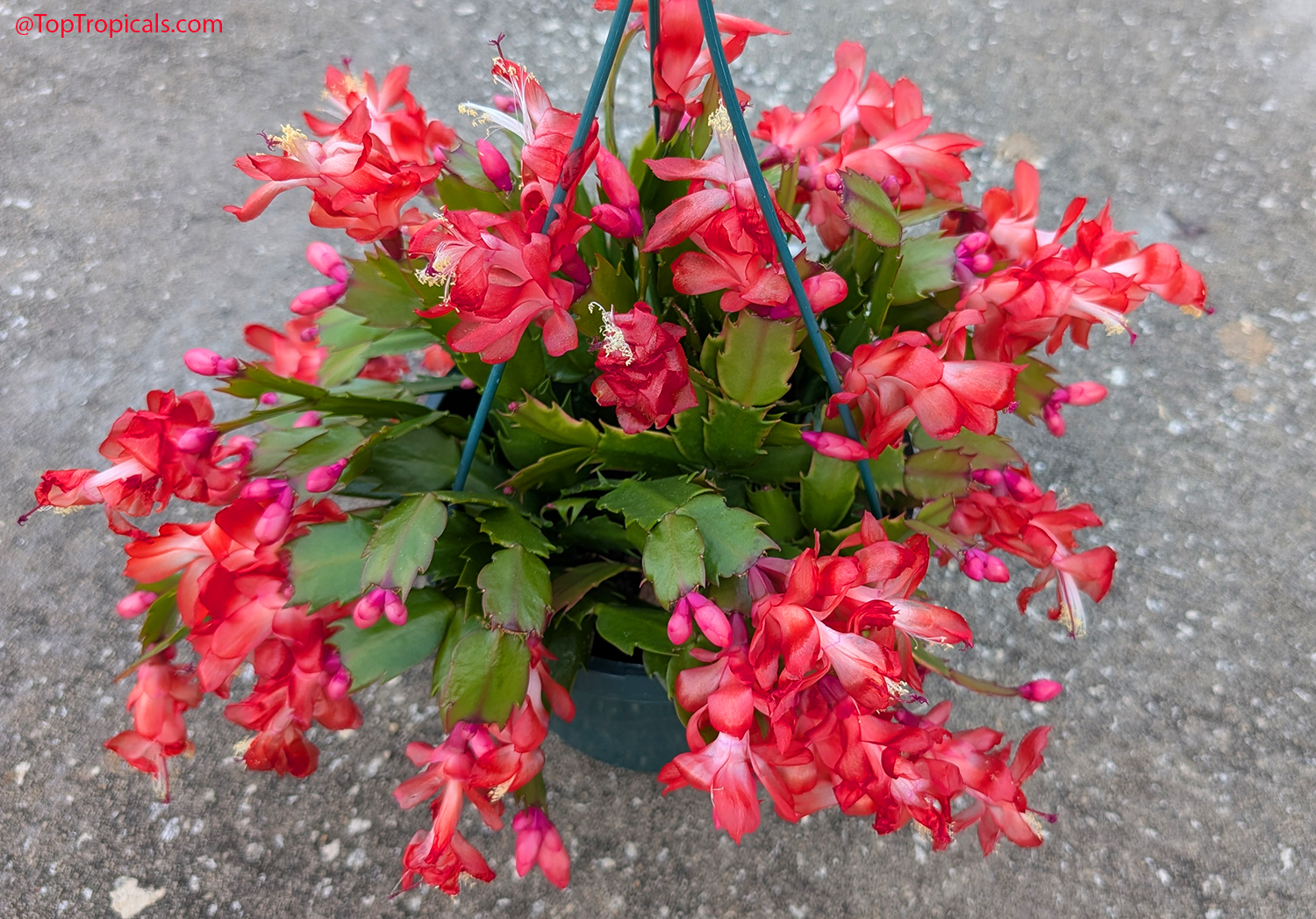
Schlumbergera  Christmas  cactus  with  abundant  red  blooms  after  feeding 
 with  Sunshine  Megaflor  fertilizer

Schlumbergera - Christmas cactus - after boosting flowers with Sunshine Megaflor

Container-grown plants are trapped in soilless mixes (peat, bark, perlite) that are structurally great but naturally nutrient-deficient.

  • Total Nutrition: Since pots lack the natural "buffet" of the ground, SUNSHINE Boosters™ provide every essential mineral the plant cannot find on its own.
  • No Salt Build-up: Our amino-acid based formulas are consumed entirely by the plant, leaving zero toxic residue or root-burning salts behind.
  • Daily Safety: Our mild concentrations eliminate the "feast or famine" cycle of dry fertilizers, making them safe for use with every single watering.

For In-Ground Plants: Unlocking the Soil

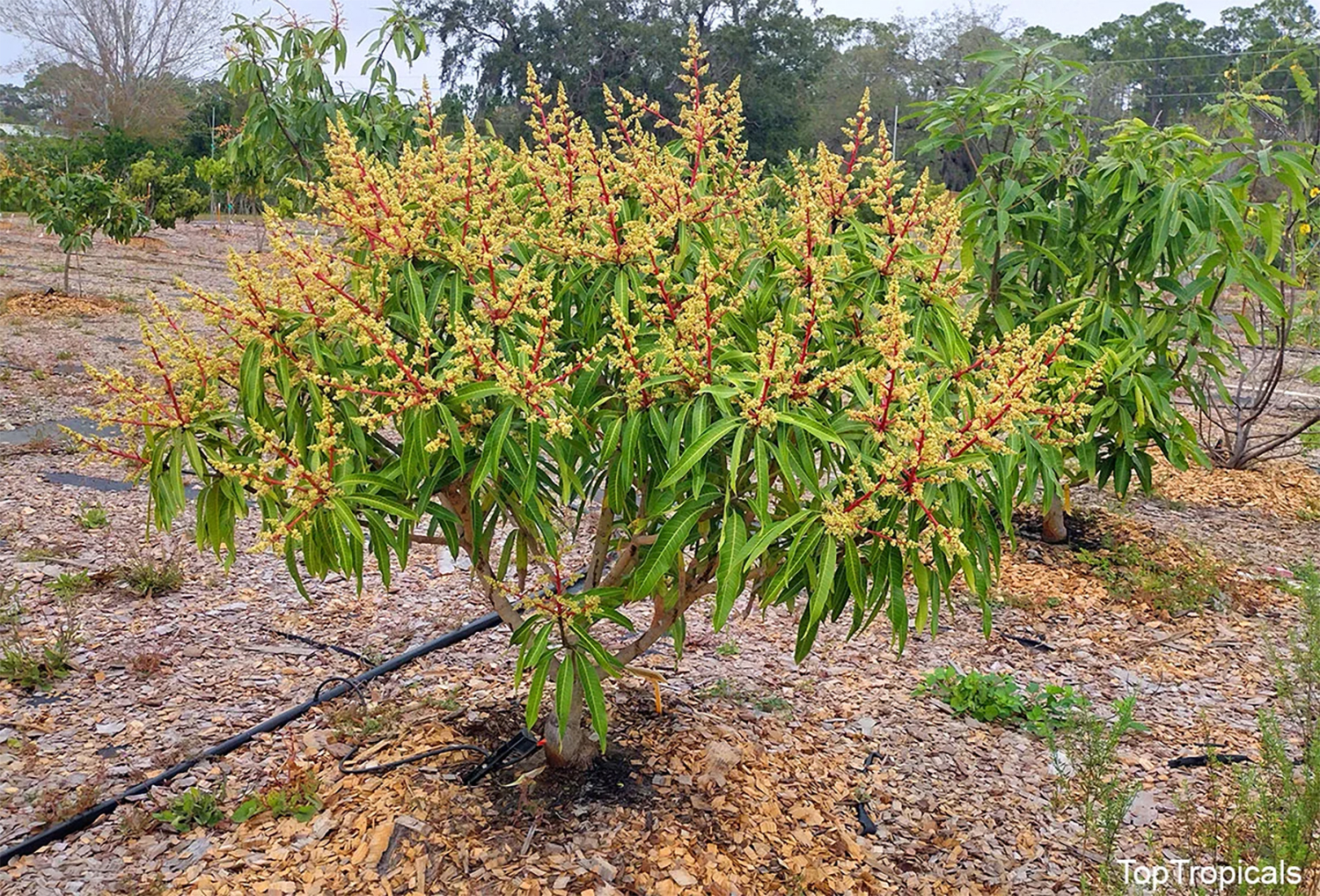
Mango  tree  blooming  produsely  after  applying  Sunshine  Mango  Tango 
 Booster

Mango tree blooming produsely after applying Sunshine Mango Tango Booster

Even in the ground, plants often struggle to absorb what they need because soil compounds can "lock up" nutrients.

  • Enhanced Solubility: SUNSHINE Boosters create a slightly acidic environment that helps dissolve stubborn salts in the soil, making them accessible to roots again.
  • Precision Delivery: We provide mobile elements like Nitrogen precisely when the plant needs to push new spring growth.

🌿The Foliar Advantage: Direct-to-Leaf Delivery

Did you know a plant leaf can absorb nutrients even more efficiently than the roots? Foliar feeding is your "emergency button" for instant results.

  • Quick Fix: Foliar applications with Sunshine Superfood are the fastest way to correct yellowing leaves or visible deficiencies.
  • Metabolism Boost: Sprays like SUNSHINE-Epi act as a bio-regulator, helping plants recover from the stress of spring temperature swings.
  • Better Fruit: SUNSHINE Honey is applied to leaves to naturally move sugars to the fruit, increasing sweetness and flavor.

🌿The Calcium Problem: Solved

As your plants wake up this Spring, they need structural strength. Think of Calcium as the "cement" that holds plant cells together. Without it, new spring growth is doomed to fail.

Signs Your Plant is Starving for Calcium:

  • Deformed Leaves: New growth looks twisted, hooked, or curled.
  • Blackened Tips: The very edges of young leaves turn white, then quickly blacken and die.

The Industry Secret: The "Missing" Mineral

Most fertilizers, both dry and liquid, completely skip Calcium. Why? Because it’s a chemical nightmare to keep stable in a concentrated solution. Most manufacturers rely on your irrigation water to deliver Calcium, but tap water is inconsistent and often fails to provide what a hungry, growing plant needs.

The SUNSHINE Boosters: Stable Calcium in Every Bottle

We have successfully stabilized Calcium directly into every single Sunshine Booster formula. Whether you are using Bombino, Robusta, or Megaflor, you are delivering a precise, stable dose of Calcium with every watering. No lockout, no sediment, and no relying on the "luck" of your tap water. Just strong, healthy cell walls and perfect spring growth.

🌿SUNSHINE-Epi: The Year-Round Bio-Regulator

Whether it’s the transition of spring, the extreme heat of summer, or the dry air of indoor wintering, SUNSHINE-Epi is your plant’s primary defense. This natural Brassinosteroid acts as a powerful immune booster, helping plants navigate stress wherever it comes from.

  • Universal Stress Shield: Protects against temperature swings (both heat and cold), drought, and transplant shock.
  • Vigorous Development: Dramatically improves root growth and speeds up the metabolism of young seedlings and cuttings.
  • Eco-Safe: 100% non-toxic to humans, pets, and pollinators.

Note: While Epi is highly effective, it is a performance booster, not a substitute for proper care. It works best when paired with the right light, water, and a consistent feeding program. It won't bring a dead plant back to life, but it will help a struggling one find its footing.

🛒 Feed your plants

Don't let your garden wake up to an empty nutrition plate.
Smokey: Save your gas money for donuts. We're shipping the boosters for free.
Sunshine: Agreed. My charm covers the delivery cost.

No coupon code required: The free shipping is automatically applied at checkout.

Complete Nutrition: Stock up on Robusta, Superfood, and Epi for the Spring growth push.
Offer valid through 03/14/2026. Free shipping offer is valid on SUNSHINE Boosters liquid products only. Not valid on previous purchases and cannot be combined with any other offers, coupons, or discounts. Offer subject to change or cancellation without notice.

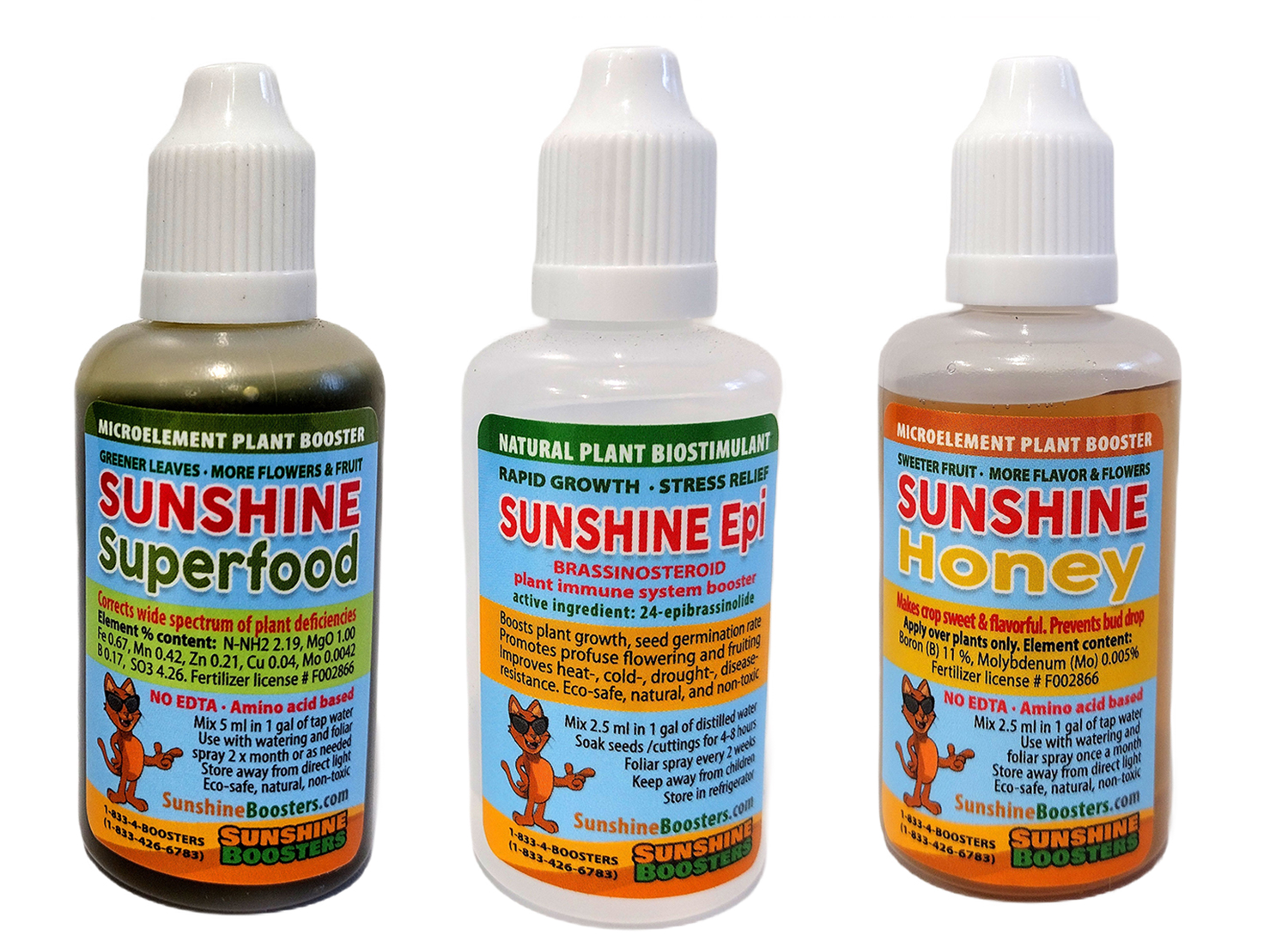
Sunshine  Boosters  plant  supplements  including  Superfood  micro  element 
 complex,  Epi  biostimulant,  and  Honey  fruit  enhancer

Sunshine Boosters micro elements and supplements - Superfood micro-element complex, Sunshine Epi biostimulant and Sunshine Honey supplement for better fruit

❓Frequently Asked Questions: SUNSHINE Boosters™

  • What water should I use for foliar spraying?
    Tap water works perfectly for most. However, if your water is very "hard" (leaving white mineral spots on leaves), switch to distilled water for a cleaner finish and better absorption.
  • How long does a diluted solution last?
    For maximum potency and to avoid nutrient degradation, try to use your diluted mixture within a few hours of preparation. Keep away from direct sun. Fresh is always best!
  • Can I use SUNSHINE Boosters as a daily foliar spray?
    Yes! You can mist your plants daily to maintain high vigor, but you must reduce the dosage (use half the recommended strength) to avoid over-feeding.
  • Can I mix boosters with pesticides or fungicides?
    It is best to apply them separately. Mixing fertilizers with chemical pesticides in one tank can trigger reactions that "lock out" nutrients or reduce the efficacy of the treatment.
  • Will the liquid stain my patio or hands?
    No. Unlike traditional fertilizers with heavy blue or pink dyes, our solutions are clear or very light-colored. If you spill it, simply rinse with water—no stains, no mess.
  • Can I mix different SUNSHINE Boosters together in one sprayer?
    Yes. All SUNSHINE Boosters are chemically compatible. You can combine a "growth" booster like Robusta with a "micro-element" complex like Superfood in the same water to save time.
  • Are these products safe to use around my pets?
    Absolutely. Our formulas are 100% non-toxic and amino-acid based. Just ask Smokey and Sunshine—they are perfectly safe for households with curious cats, dogs, and children.
  • Can I use these boosters on indoor plants?
    Yes. They are ideal for indoor use because they don't produce a "fertilizer smell" and won't cause salt crusting on your decorative pots or furniture.
  • Is it safe to use on fruit and vegetables I plan to eat?
    Yes. Because our formulas contain no urea, nitrates, or harsh salts, they don't leave a "chemical" aftertaste. They actually help improve the natural sugars and flavor profile of your harvest.
  • What is the best temperature for foliar spraying?
    Apply when temperatures are below 85°F. Early morning or late evening is best; this allows the leaves to remain wet longer, giving the plant more time to absorb the nutrients.

What Fertilizer to Use and How?

Green Magic controlled release fertilizer keeps plants green during active growth season - apply only once in 6 months.
Sunshine: Smokey, you saved my coffee tree. But what do I do now so it stays happy?

Smokey: Simple. Spray Sunshine Robusta every five days during active growth.

Sunshine: Five days? Smokey, I barely remember where I left my coffee mug five minutes ago.

Smokey: That is exactly why we use Green Magic.

Sunshine: Fertilizer for forgetful gardeners?

Smokey: Controlled release. Sprinkle once and it feeds the plant for six months.

Sunshine: Six months? I can have a very good nap in that time.

Smokey: Exactly. The plant keeps eating slowly while you keep napping.

Sunshine: Perfect. Remember, I will bring the coffee. You bring the donuts.

Smokey: And next week we will show you exactly how Green Magic works and why plants love it. Stay tuned.

🛒 Feed your plants

✍️ Learn more about fertilizers