Garden Blog - Top Tropicals

Date: 25 Feb 2026

A Miracle in the Garden: Watching a Tiger Swallowtail Rebuild Itself on a Magnolia Champaka - Joy Perfume Tree

Tiger Swallowtail Butterfly

A Miracle in the Garden: Watching a Tiger Swallowtail Rebuild Itself on a Magnolia Champaka - Joy Perfume Tree 🐯

Tiger Swallowtail Metamorphosis: From Cocoon to Joy
  • 🏼 Nature’s most mind-blowing magic trick happened right here on a branch of our Magnolia champaka - the Joy Perfume Tree. Did you know that when a caterpillar enters its chrysalis (cocoon), it literally dissolves its body and rebuilds it from scratch?
  • 🏼 This Tiger Swallowtail chose the legendary Joy Perfume Tree as its nursery. It’s a match made in heaven—the "flying tiger" of North America born on a tree famous for the world’s most expensive perfume scent. While most people know the Champaka for its intensely fragrant flowers, few realize that even the leaves release a soft, sweet aroma when brushed against.
  • 🏼 In this video, you’ll see the rare moment of eclosion - where the butterfly emerges with soft, wrinkled wings and begins the slow process of pumping life into them before its first flight.
  • 🏼 It is a real gem in your garden - not just for fragrance lovers, but for wildlife that clearly loves it too.
Watch this Tiger Swallowtail butterfly being born on a Champaka - Joy Perfume tree!

🛒 Bring the miracle Joy to your garden - the perfume Champaka tree

📚
Everything You Need to Know About the Joy Perfume Tree:
· How to grow Magnolia champaca and get some Joy
🟡The Fragrance: What does Joy Perfume flower smell like?
· Which Champaka tree is better - White or Golden?
🟡More:

🎥

#Perfume_Plants #Container_Garden #Trees #Discover

Plant Facts

Magnolia champaca, Michelia champaca
Joy Perfume Tree, Huang Yu Lan, Safa
USDA Zone: 9-11
Small tree 10-20 ftFull sunRegular waterYellow, orange flowersPlant attracts butterflies, hummingbirdsFragrant plantSubtropical plant. Mature plant cold hardy at least to 30s F for a short time
🟢 Join 👉 TopTropicals

Date: 2 Mar 2026

Beyond fruit: how this African tree supports wildlife and garden health

Vangueria infausta - Spanish Tamarind

Vangueria infausta - Spanish Tamarind

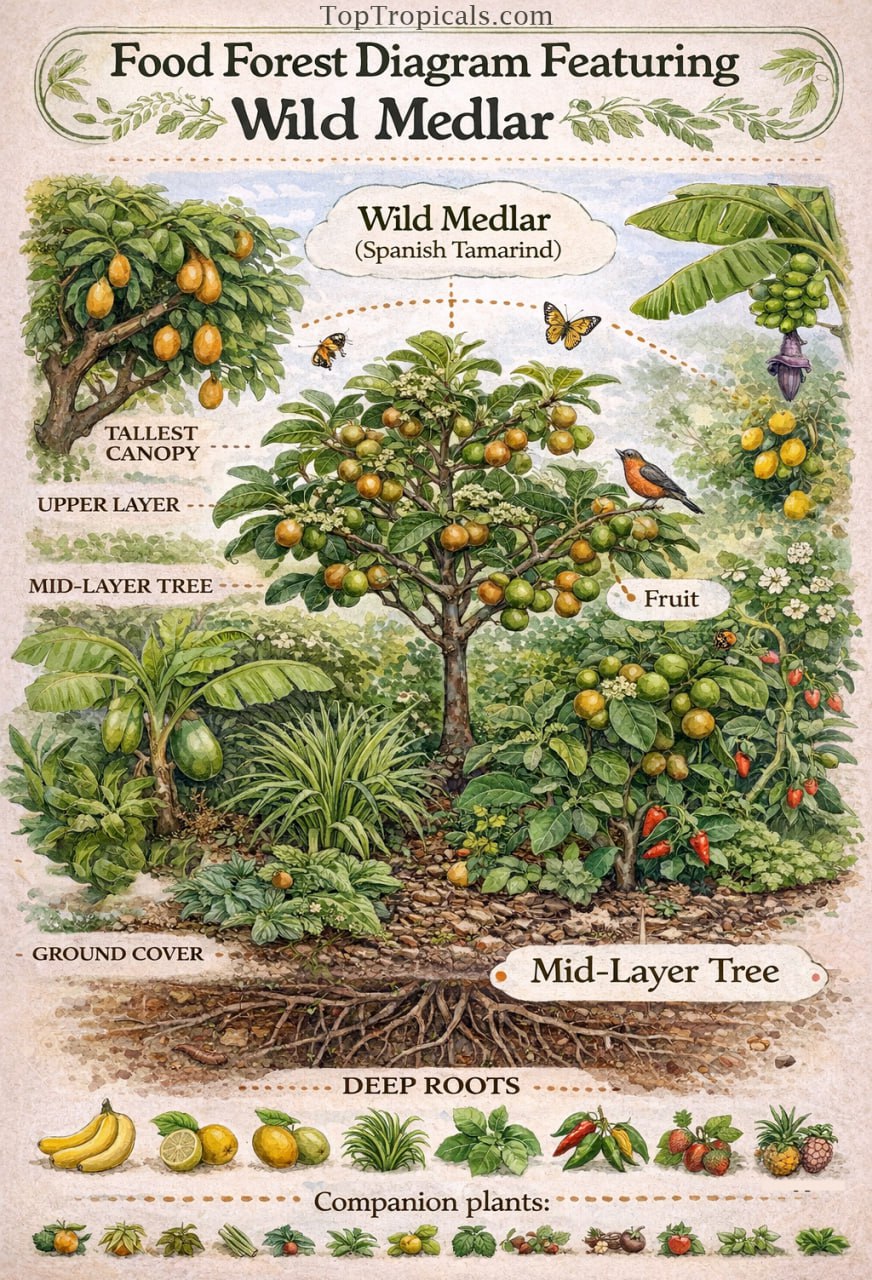
Beyond fruit: how this African tree supports wildlife and garden health: Wild Medlar in the ecological food forest 🍊

Vangueria infausta (Spanish Tamarind, Wild Medlar) might win your heart for its sweet-tart fruit and folk medicine magic - but did you know it’s also a quiet hero in the ecosystem? Whether you’re planting a full-blown food forest or just a mixed backyard garden, Vangueria infausta brings more than fruit to the table. It brings balance, beauty, and biodiversity.

🐝 Pollinator power


When in bloom, this tree produces nectar-rich flowers that attract bees, butterflies, and other pollinators. These beneficial insects don’t just help the Wild Medlar fruit - they boost productivity in your entire garden.
If you grow mangos, citrus, guava, or veggies nearby, Spanish Tamarind helps keep the pollinator traffic moving.

🐦 Bird magnet


Birds are big fans of this tree. They nest in its dense branching, snack on overripe fruit, and help spread seeds. In return, they’ll help keep down pests like caterpillars and beetles.
Even in a small garden, one Wild Medlar can be a micro-habitat for birds, insects, and other helpful wildlife.

🌱 Soil stabilizer


With its deep roots and drought-hardy nature, Wild Medlar helps hold soil in place, especially on slopes or rocky patches. It improves drainage and reduces erosion, which makes it a great addition to food forests in challenging spots.

🍂 Natural mulch & green cleanup


The tree drops a modest amount of leaf litter, which breaks down into soft, rich mulch. In a diverse planting, that means fewer weeds, better soil structure, and less watering needed.

🌿 Companion planting & food forest stacking
  • · Works great as a mid-layer tree in multi-tiered systems
  • · Provides light shade for herbs or smaller fruiting plants
  • · Plays well with bananas, papaya, guava, lemongrass, and ground covers
In zones 9-11, it can live happily in a mixed border or permaculture guild. In colder zones, just keep it potted and move it around as needed - it still offers many of the same benefits.

🛡 Pest and disease resistant


One more bonus: Spanish Tamarind is incredibly low-maintenance. It resists most common pests and doesn’t suffer from fungal issues like many tropical fruit trees do. That means fewer chemicals and more harmony in your garden ecosystem.

✍️ Ready to plant something that gives back?


Think you need more than just another fruit tree? More life. More movement. More meaning in your garden?
Grow Wild Medlar for the fruit - but keep it for everything else it brings. The pollinators. The shade. The quiet medicine. The steady presence that makes your space feel alive.
If you’re building a food forest - or simply want a tree that earns its place every single season - this one doesn’t just sit there. It contributes.

🛒 Plant Spanish Tamarind in your Food Forest for a happy wildlife

📚 Learn more:

Plant Facts

Vangueria infausta
Wild Medlar, Spanish Tamarind
USDA Zone: 9-11
Small tree 10-20 ftFull sunModerate waterEdible plantDeciduous plantEthnomedical plant.
Plants marked as ethnomedical and/or described as medicinal, are not offered as medicine but rather as ornamentals or plant collectibles.
Ethnomedical statements / products have not been evaluated by the FDA and are not intended to diagnose, treat, cure, or prevent any disease. We urge all customers to consult a physician before using any supplements, herbals or medicines advertised here or elsewhere.Subtropical plant. Mature plant cold hardy at least to 30s F for a short time

#Food_Forest #Discover

🟢 Join 👉 TopTropicals

Date: 17 Mar 2026

Move Over, Paddy: Why March 17th is Actually the International Day of the Cat Lady

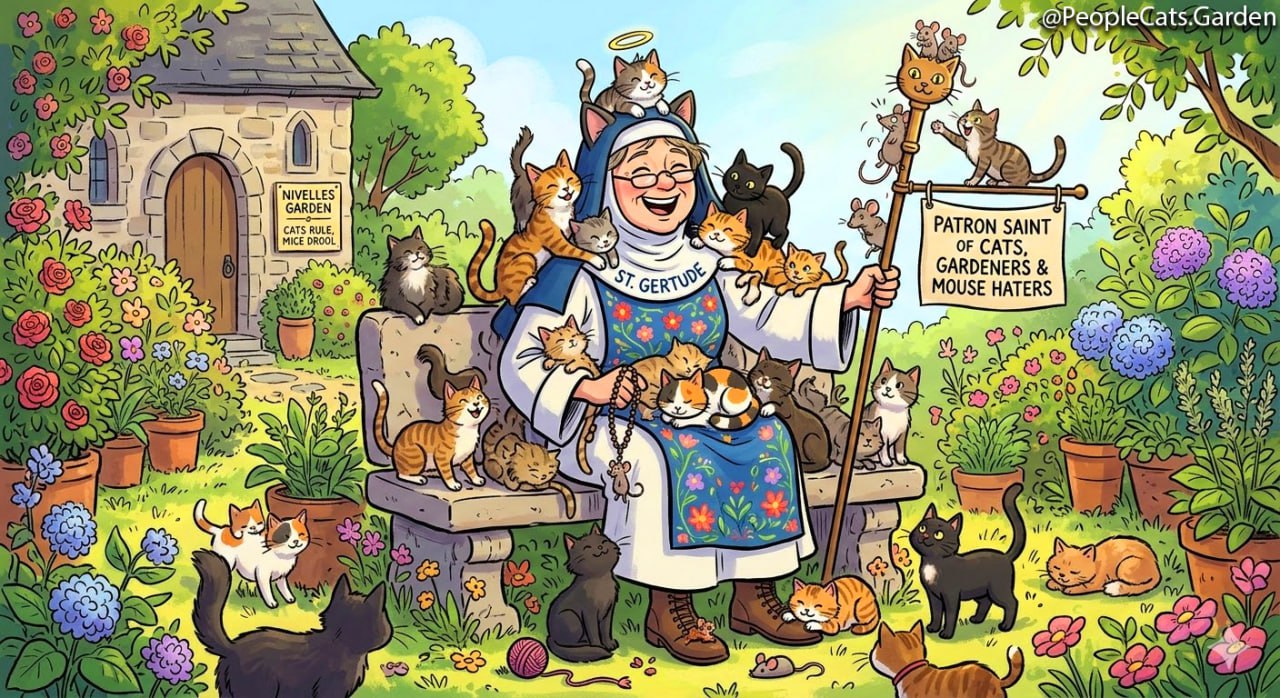
March 17th - International Day of the Cat Lady, Gertrude with cats

March 17th - International Day of the Cat Lady, Gertrude with cats

Move Over, Paddy: Why March 17th is Actually the "International Day of the Cat Lady" ☘️ 🐈

When you think of March 17th, you probably think of green beer, shamrocks, and parades. But while everyone else is toasted to St. Patrick, a subset of gardeners and feline enthusiasts are celebrating a different icon: St. Gertrude of Nivelles. She 's the 7th-century abbess who skipped the noble marriage proposals to become the unofficial Patron Saint of Cats, Gardeners, and anyone who really, really hates mice.
  • 🐾 From Noblewoman to Monastery Boss


    Born in 626 AD (modern-day Belgium), Gertrude wasn't your average medieval teenager. When her family tried to marry her off to a rich duke, she famously told them she’d rather be a bride of Christ than any man on Earth.
    She eventually ran the Nivelles monastery like a pro, turning it into a 5-star medieval hub for travelers, scholars, and pilgrims. But it isn't her hospitality that made her an internet icon 1,300 years later - it’s her "pest control" skills.
  • 🐾 The Mouse-Hater’s Hero


    Look at any medieval painting of Gertrude, and you’ll notice something weird: mice are literally climbing up her staff. In the Middle Ages, mice weren't "cute Disney sidekicks." They were grain-destroying, plague-spreading menaces. Gertrude became the go-to saint for:

    Protecting the harvest from rodents.
    Keeping the pantry mouse-free.
    Calming the nerves of people with a serious case of musophobia (fear of mice).
    The Logic: If you’re the saint of mice, you’re naturally the BFF of the creature that eats them.
  • 🐾 How She Became the "Cat Lady Saint"


    Interestingly, Gertrude wasn't "officially" the saint of cats for most of history. That title actually went viral in the late 20th century.

    A 1981 Metropolitan Museum of Art catalog highlighted her rodent-fighting reputation, and the world’s cat lovers basically said, "Hold my catnip". The association stuck instantly. Today, she’s the patron saint of the "Original Cat Lady" aesthetic, celebrated by anyone who knows that a home isn't a home without a feline supervisor.
  • 🐾 A Big Day for Green Thumbs


    If you’re a gardener, March 17th is your "Green Flag" day. In European folklore, St. Gertrude’s feast day is the traditional start of the planting season.

  • 👉 Pro-Tip from the Middle Ages: If the sun is out on March 17th, it’s a sign that your garden will thrive all year. If it’s raining? Well, maybe stay inside and pet the cat.


🐾 The Perfect Trio: Cats, Gardens, and Gertrude


There’s a reason plant people and cat people are often the same people. Cats love a good garden patrol - they nap in the mulch, stalk the butterflies, and ensure no chipmunk dares to touch your tomatoes.

At TopTropicals, we take this tradition seriously. Our PeopleCats are more than just pets; they are the furry CEOs of the nursery, supervising every seed we plant and every leaf we prune.
  • 🐾 Meet the PeopleCats:


    The furry supervisors of the garden world!
  • 🐾 This March 17th, Wear a Little Extra Fur


    Whether you’re Irish or not, take a moment this March 17th to raise a glass (or a bag of treats) to St. Gertrude.

    This year, let’s celebrate:
  • 🐾 The Feline Patrol: For keeping our gardens mouse-free.
  • 🐾 The Gardeners: For braving the dirt to grow something beautiful.
  • 🐾 The Abbess: For being the coolest historical figure you'd never heard of.


📚 Learn more:
St. Gertrude of Nivelles: Patron Saint of Cats, Gardeners, and Those Who Fear Mice!

#PeopleCats #Horoscope #Fun_Facts

🟢 Join 👉 TopTropicals and 🐈PeopleCats.Garden

Date: 24 Jun 2018

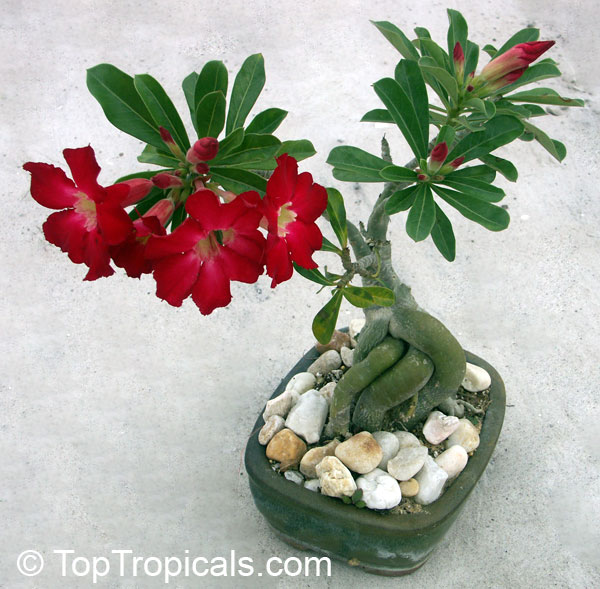
Adenium: a Rose by any Other Name

New article by Jane Jordan.
"...The famous quote is often used to imply that the names of things do not affect what they really are, in the case of The Desert Rose (Adenium obesum) it is not a rose at all, rather a succulent that thrives in hot, dry and sunny conditions. These spectacular plants have no relation to the rose family, they are a species of flowering plant from the dogbane family, Apocynaceae. The naming of this plant is partly correct as they originate in sub-Saharan Africa and the Arabian Peninsula, where they can grow into large trees with huge swollen trunks..."
Continue reading...

Date: 24 Jun 2018

Cold hardy tropical fruit trees for Luisiana

Q: I've just moved to Louisiana and have been wondering whether it would make sense to plant some tropical fruit trees in our garden. Average lows in New Orleans are 41 deg F in January and February, although we did hit 25 once with the Arctic vortex. I'm interested in litchi, longan, rambutans, and persimmons. Do you have varieties that can tolerate Louisiana's temperature range? I'd love mangosteen but I don't suppose they will survive. Do you have any suggestions on tropical fruit trees that I could try?

A: Average temperatures are for statistics only; it is actual temperatures that may hurt your cold sensitive plant. This is what you should keep in mind when starting your tropical fruit collection:
1) Ultra-tropical plants like Rambutan can not survive winters below 45-50F. However, they can be successfully grown in containers in a greenhouse or moved indoors into a sun room during cold periods.
2) Tropical plants like Litchi and Longan may take some light frost once established. Still, for areas with freeze our advice is - keep them in pots and move inside in case of cold.
3) There is a number of subtropical fruit trees that are hardy enough to take some freeze. Persimmon, Feijoa, Fig, Cattley Guava, Jujube, Kiwi, some Eugenias and others. Please refer to our Tropical Fruit Sensitivity Chart.
4) Remember that plant's ability to survive winter depends on several factors, not only temperature itself. Important factors are: wind protection (chill wind kills rather than low temperature itself), exposure, how close the tree is planted to the house, plant maturity and its overall strength and health. If a plant had received good nutrients during summer, has well established root system, planted in enclosed area protected from winds and has plenty of bright sunlight - it has better chances to survive than a weak plant in warmer conditions.
5) Use SUNSHINE plant boosters for improving cold tolerance of your tropical plant. It only takes a few drops, and only costs $5!