Can you name all the fruits on this tray? One of them will stump you!
Papaya, Avocado, Egyptian guava and Cas guava, Barbados cherry, Peanut butter fruit
Can you name all the fruits on this tray? One of them will stump you!
🥭 This morning I walked the garden and came back with a tray of fruits! That’s the joy of living in Florida with your own tropical garden: something new is always in season.
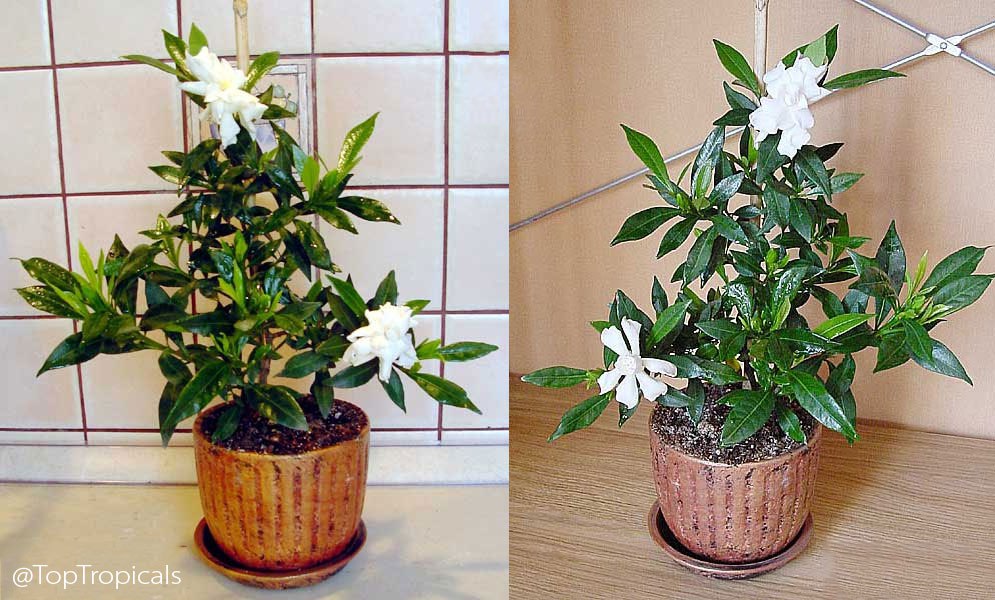
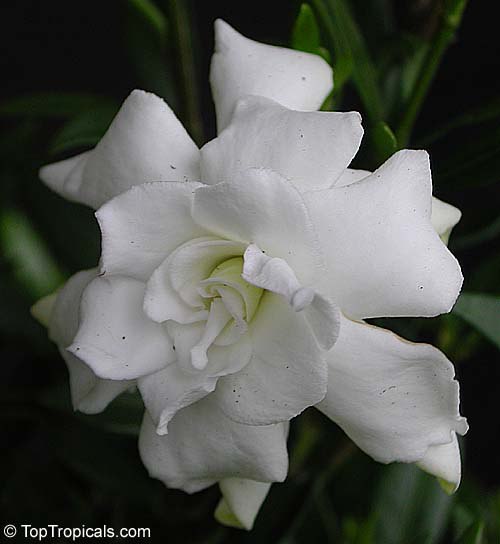
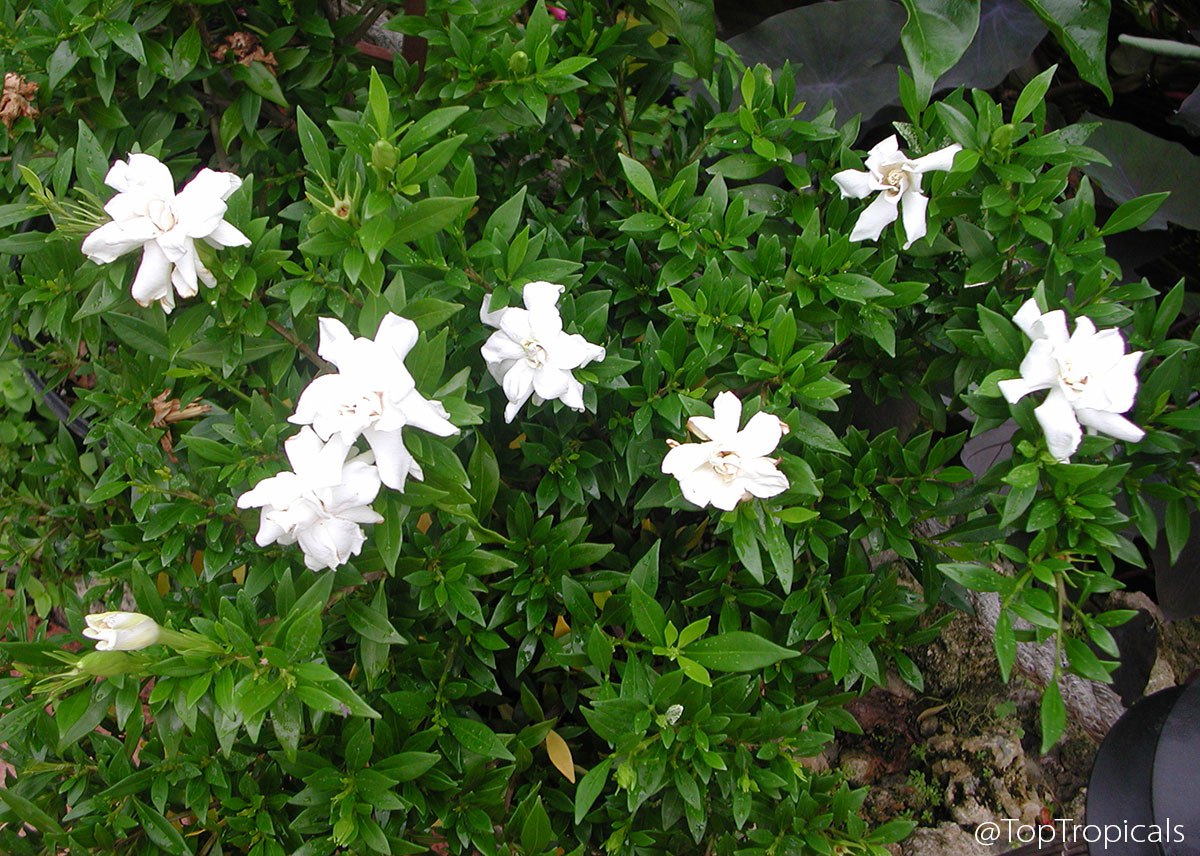
Gardenia radicans - Dwarf Miniature Creeping Gardenia - can surprise even longtime gardenia fans. It has all the charm of the classic shrub - glossy green leaves, pure white flowers, and that unforgettable fragrance - but in a smaller, easier form.
Natural bonsai. This little plant grows low and wide, staying under 1-2 feet tall and spreading up to 3-4 feet. It forms a dense mound or creeping groundcover that looks great along walkways or spilling from a pot. The leaves are tiny and shiny, giving it a neat, polished look all year.
The flowers are about an inch across, double or semi-double, and smell just like the full-size gardenia. They bloom in spring and often return through summer, filling the air with perfume.
Easier than other gardenias. Gardenia radicans isn’t as fussy as most gardenias. It can handle clay, sandy, or loamy soil as long as it drains well. Once established, it’s fairly drought-tolerant and can even handle some cold, down to around 15F in protected spots.
Where to plant. It's perfect for small gardens, patios, or as a bonsai. You get the luxury fragrance of a gardenia without needing a big space. Use it as a groundcover, edging plant, or container specimen. It's one of those plants that stays tidy, looks refined, and keeps blooming. For anyone who loves gardenias but wants something compact and low-maintenance, Gardenia radicans is a great find.
Q: I need a tree for a space that is close to a pool and I don't
want a tree that is shedding leaves all year long. I don't want it too big
either. The canary tree caught my attention but I need to know if it is a
tree that is dropping leaves all year. If it does then can you recommend another
tree? I live in Fort Lauderdale.
A:Canary tree is a good choice. It is free-flowering pretty little tree.
It is evergreen and doesn't shed leaves too much especially in your area with
mild winter. However, keep in mind that every plant sheds leaves. Even
evergreen trees replace old leaves with new ones. Some trees more than others.
Flowers also have a seasonal drop.
You may check the full list of compact flowering trees suitable for small spaces.
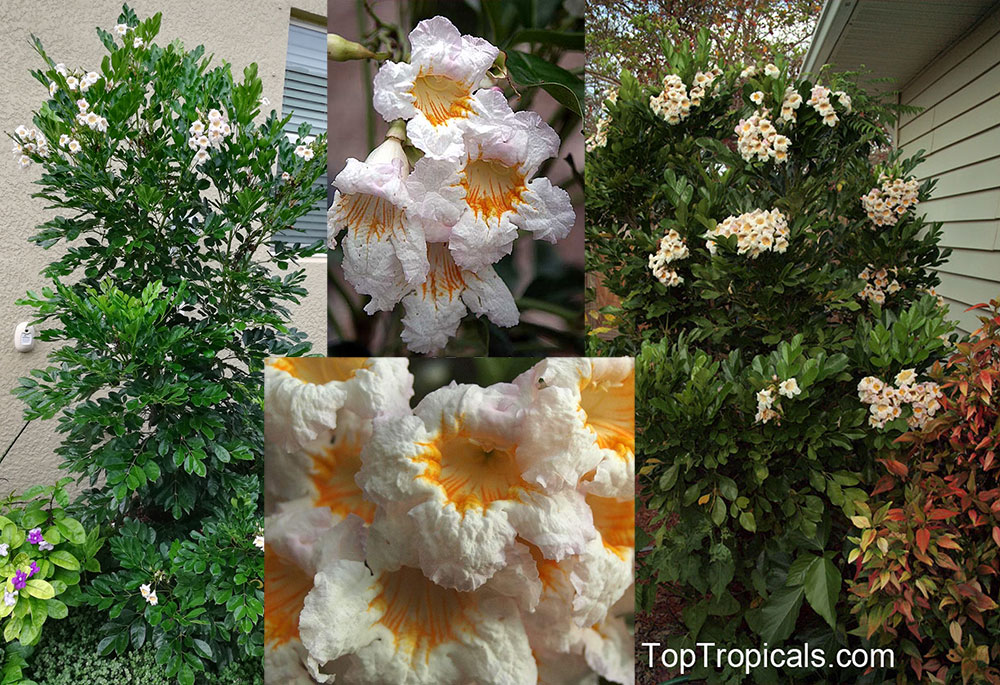
Another great choice is a Dwarf Tree Jasmine, Radermachera - also a free-flowering tree with rose-fragrant flowers
and large, architectural leaves that hardly ever drop. It has very dense yet
compact columnar shape, and is one of the greatest trees for smaller
landscapes.
Q: I'm a beginner gardener and looking for something easy to
grow that will add a lot of color to my garden fast.
A: Try growing Canna lilies. They are a favorite of many
gardeners as they are so easy to grow and always provide a reliable, beautiful show
of flowers. In fact, Cannas are one of those plants that are spectacular even
if they never bloomed. The leaves are tropical-looking, banana-like and huge!
They range in a wide variety of shades and colors, always accentuating the
large showy flowers on top.
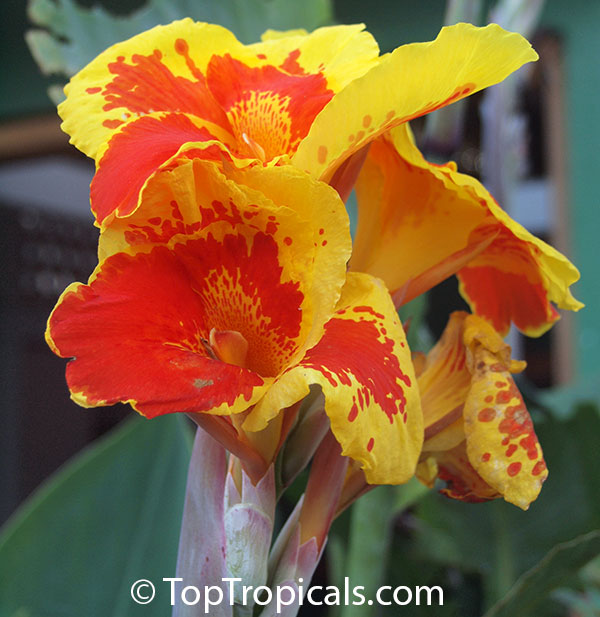
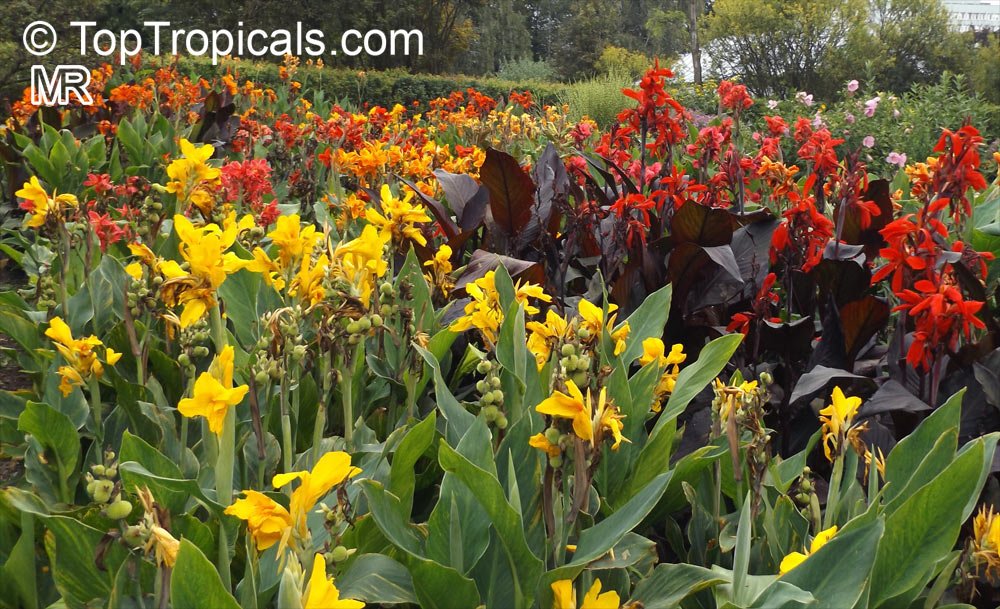
One of our favorite cannas right now is Canna Cleopatra - very striking and most unique. Large yellow flowers
speckled with red spots, or red flowers and even flowers with a little bit of
both. Foliage is exotic and very beautiful, often dark green,
dark chocolate or a combination of both. This is a canna that will
definitely illuminate
your garden!
Caring for Cannas
Cannas like a lot of water, full sun and high heat. They are also heavy
feeders and prefer soils that are well drained, organically rich and moist.
The leaves will quickly tell you when the plant is hungry. Feed your cannas
weekly with a water-soluble 20-20-20 fertilizer Broad Leaf Plus, and they will quickly respond with
beautiful, lush growth. Deadhead often to encourage continued flowering.
Cannas are winter hardy in US hardiness zones 7 and warmer. If you live in
colder areas, the rhizomes need to be lifted in the fall, and stored indoors in a
dark, warm spot until spring arrives. Be sure to divide clumps every three or
four years. Give them lots of room as they grow into large plants, forming
spreading colonies up to 7 feet high and 4 feet wide. Show them off in mass
plantings, in large containers or in mixed flower borders. Lure in hummingbirds
with these beauties!
Date: 24 Mar 2024
Bauhinias: trees with Orchid Flowers
and Butterfly Wings...
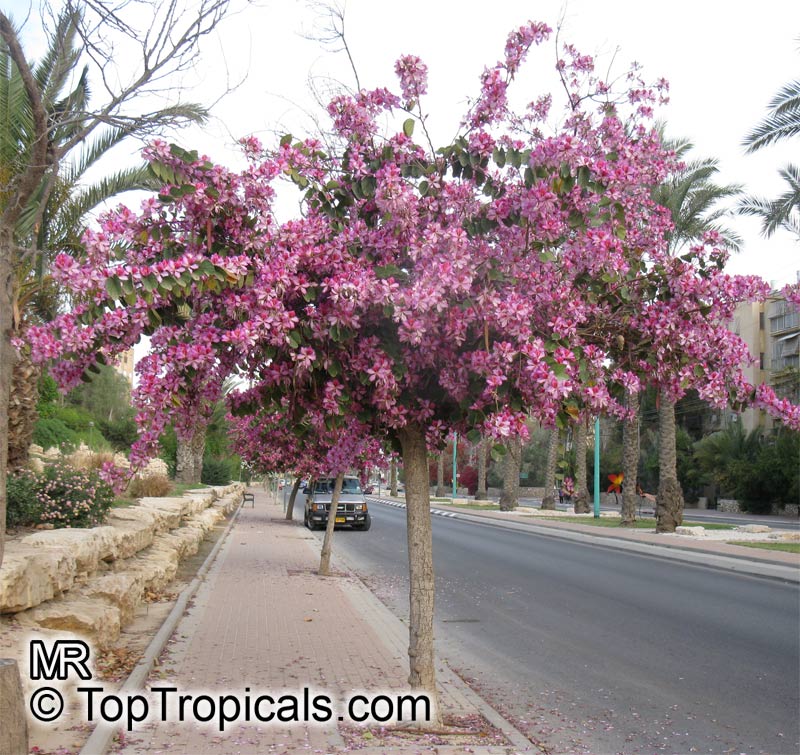
Photo above: Bauhinia variegata - Purple Orchid Tree, one of the most spectacular
varieties.
Q: We just moved to Florida and I see these beautiful trees with large purple
flowers. I was told these are Orchid trees, do you have them?
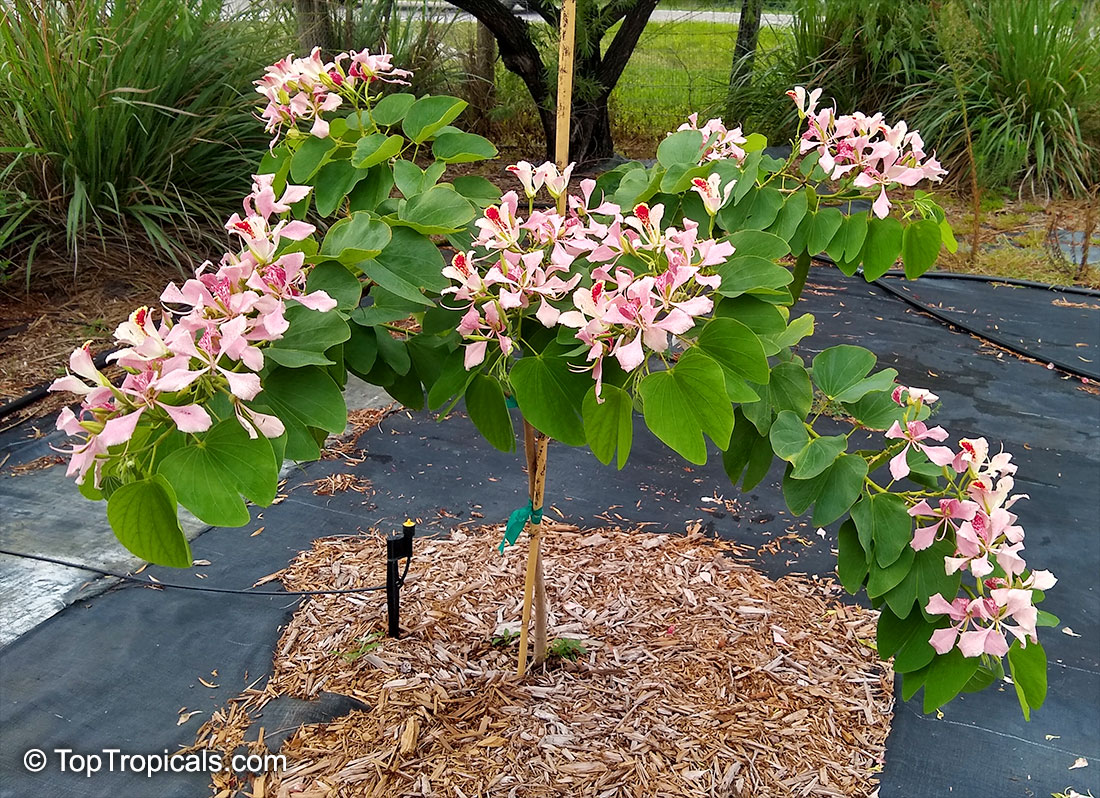
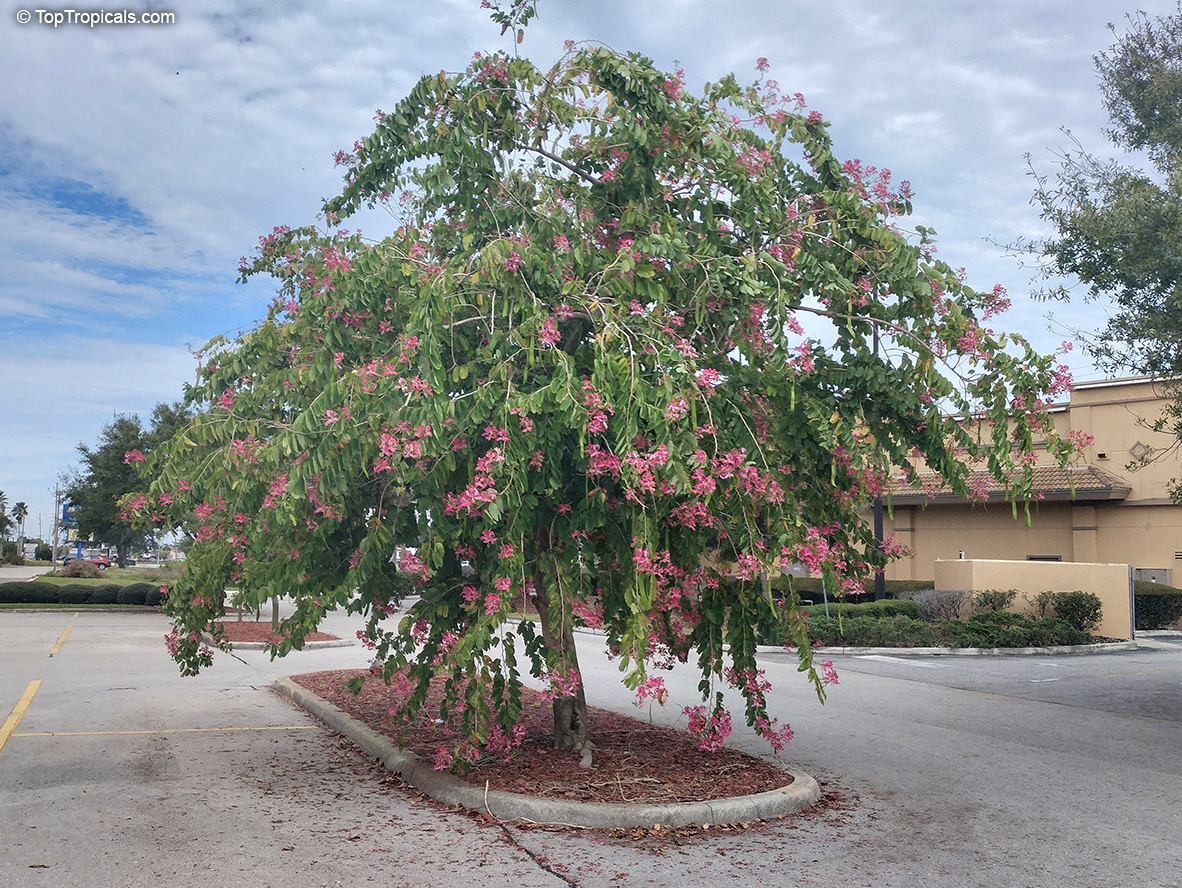
A:Bauhinias, commonly known as Orchid trees, are renowned for their captivating flowers and unique
foliage. These trees typically grow to a moderate height of 15-25 feet with a
spread of 10-15 feet, showcasing a rounded to vase-like shape. Thriving in hardiness zones 9-11, they exhibit
resilience to heat and can withstand mild frost. There are over 300 species of Bauhinia,
which are distributed in tropical and subtropical areas. These species vary
in characteristics such as size, foliage, and flower color, contributing to
the diversity and appeal of this genus. You can find them as trees, shrubs,
and even vines.
Bauhinias are evergreen (in tropics) to semi-deciduous (in cooler
climates), offering year-round beauty with intermittent blooming cycles. The peak
bloom time varies depending on the species and location, often occurring in
late winter to early spring, bedecking the tree with striking orchid-like
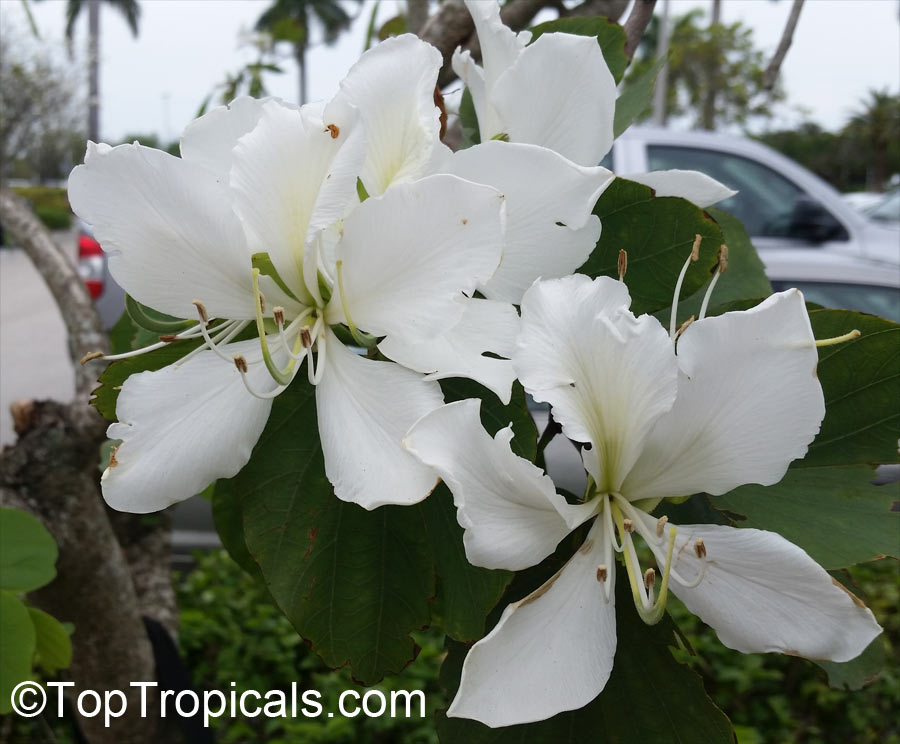
flowers in hues ranging from white and pink to purple and red. The flowers boast
delicate petals with intricate patterns, resembling the elegance of true
orchids.
One of the distinguishing features of Bauhinia leaves is their unique
bi-lobed or bilobed structure, which gives them a distinct appearance. The
leaves are deeply divided, typically into two lobes or halves, hence the common
name "Butterfly tree" due to their resemblance to butterfly wings. This
characteristic is often used as an identifying trait for Bauhinia species. The
bilobed leaves add to the visual appeal of the tree, contributing to its
ornamental value in addition to its beautiful flowers.
Photo above: Bauhinia monandra - Napoleons Plume, starts flowering in small size.
This one is very beautiful but the most cold sensitive and should be grown in
pots in areas with winter freeze. It will happily bloom in container!
Low-maintenance by nature, Bauhinias require minimal upkeep. Annual
feeding with a balanced fertilizer enhances growth and flowering. Pruning is generally
optional but can be done in late winter or spring, after flowering, to
maintain shape or remove dead or damaged branches. These trees thrive in full sun,
preferring well-drained soil. With their enchanting blooms and easy care
requirements, Bauhinia orchid trees are a delightful addition to any landscape,
and a colorful specimen for tropical winter gardens.
In addition, Orchid trees grow fast and provide excellent shade. They
can make a shady spot in your garden in no time, giving relief from the hot
sun. This is really valuable, especially in places where it gets very hot. So, not only are
Orchid trees pretty to look at with their lovely flowers, but they're also
great for keeping you cool!