Garden Blog - Top Tropicals

Date: 19 Sep 2018

A Sacred Earthworm: benefit or damage?

by Mark Hooten

TopTropicals.com

Q: We have lots of earthworms in our soil. I've heard they are beneficial for the plants, it it true? Or should I try (and how) to get rid of them at least for container plants?

A: From my earliest childhood, I remember learning that "earthworms" are wonderful, beneficial creatures for our gardens. I had heard that they improved the soil by both aerating it via the tiny tunnels they dig from burrowing activities, AND leaving their droppings which act as fertilizer. However, both my personal experiences and studies have shown otherwise. The truth is that the vast majority of earthworms we encounter in our daily horticultural practices are not even native to North America. In fact, they were introduced from Europe, beginning with the colonial period, mostly accidentally in things like the ballasts of ships, and from soil from around the roots of plants being imported. However, once they arrived here, they began to irreparably alter the natural eco-systems of our forests... Continue reading...

Date: 11 Aug 2018

From Anna Banana: Shipping and planting during hot weather

TopTropicals

Q: I received email notification that my order was delayed due to hot weather. Why? And do I need to do anything special if I plant when it is hot?

A: When plants are shipped via FedEx Ground, it is hot in the truck! According to our FedEx area manager information, if outside temperature is 100 degrees, inside the truck it can be 130! We don't want to put your plants through that much stress. We monitor the weather at destination, and as soon as it cools down a little bit, your order will be shipped.

Planting during hot weather:
1. For a mail-ordered plant follow planting instructions and never plant it from the box directly into the ground. Keep it in a pot the size of a root ball until the plant recovers from shipping stress, re-grows root system and adjusts from several days of darkness to a bright light. Move the pot gradually into brighter light, eventually into a spot of its permanent home. Do not over water the pot. Once you see new growth - the plant is ready to be transplanted into the ground.
2. Use only quality soil, containing lots of organic matter (compost, peat moss); soil conditioner is beneficial (pine bark). Plant it on a little hill, so growing point is elevated 1-1.5"above the rest of the surface.
3. Put a good layer of mulch around the plant, at least 1-2" thick, and not too close to the trunk as it may cause stem rot on contact.
4. Water daily with a garden hose until the plant shows active growth - then watering may be reduced every other day or less, or you may rely on sprinklers and/or rains.
5. If the sun is too hot, use shade cloth (or simply a white bed sheet) to cover the plant for the first few days (use bamboo sticks for support). It will help the plant to establish without heat stress. If leaves start dropping - this may be a sign of excessive light and heat. Shading is the way to reduce it.
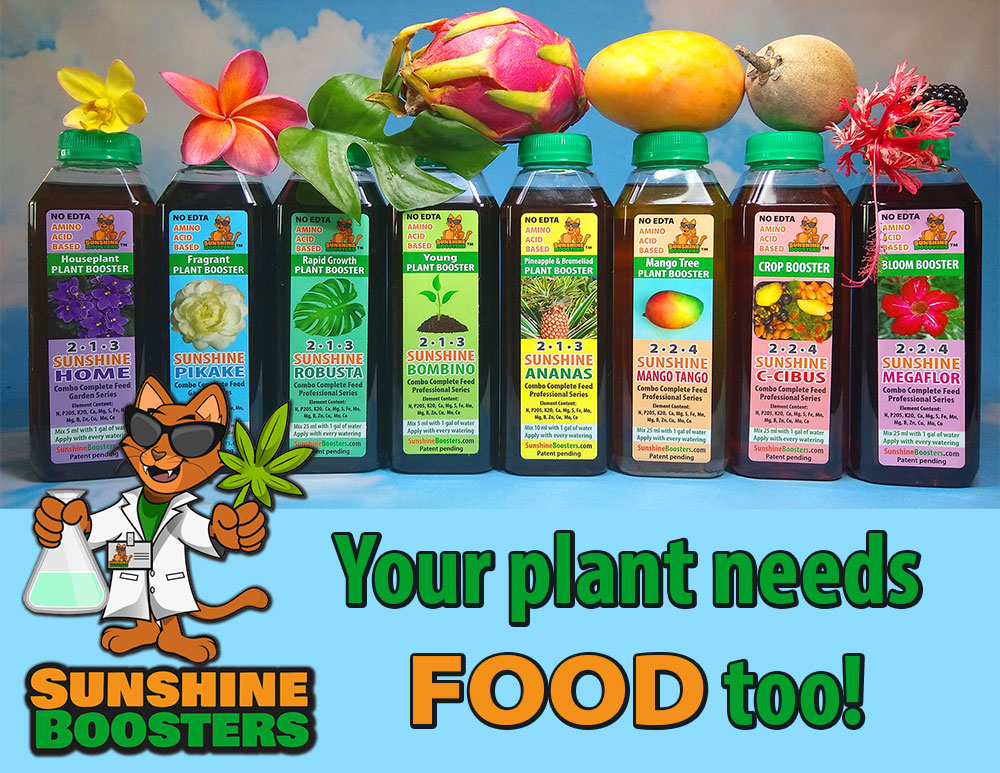
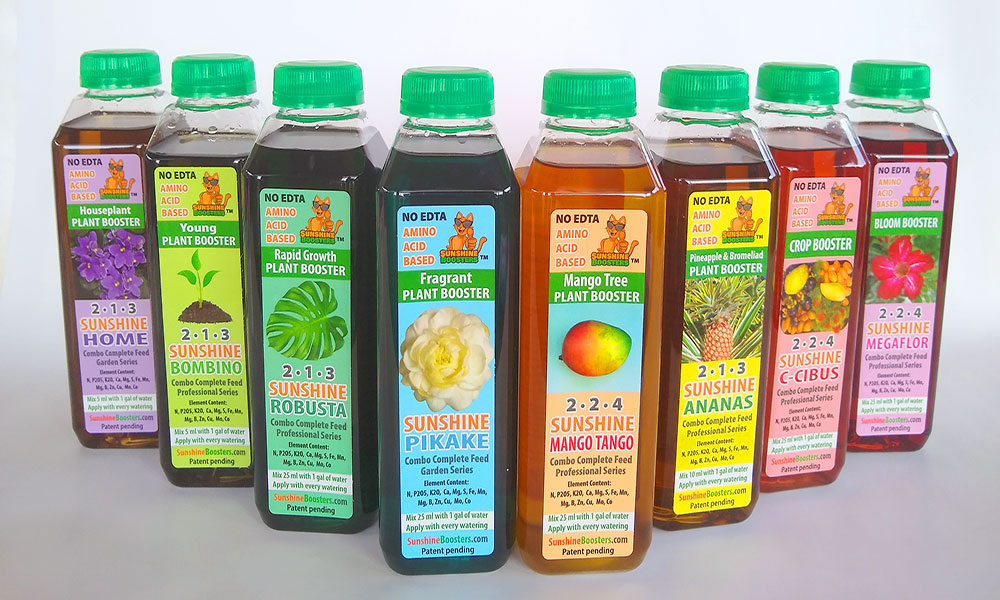
6. Use SUNSHINE booster

Date: 24 Jun 2018

We can ID plants for you! Even Mango Elephant...

Q: I had a mango tree, the fruit was very large and no one knew the name of it. Can you please tell me the name of it or something about it? I have never seen this variety before. It weighed in at 7 lbs, it smells a little like bubble gum, its flesh is fiberless and the taste is watery with a little sweet. And do you have it for sale? I don't have the tree anymore. My pictures are about a year or two old, lighting struck the tree and it died so I have been trying ever since then to find another tree but I don't know what kind it is. I originally bought the tree on side of the road cause I always wanted a mango tree so I didn't care at the time what kind it was so I bought it but I was shocked at how big the mango was. However I collected rotten mangoes off the ground and planted the seeds. Only one germinated.

A: This mango is called Elephant. We will try to find this grafted variety and let you know when we have it. Unfortunately seedlings take many years to fruit (8-15 for mango) and usually do not come trues to seed.
The closest variety by fruit size is Lancetilla, it is a giant 5 lb fruit, of a very good quality. And the best tasting and the most popular - Nam Doc Mai

Date: 24 Jun 2018

Date: 24 Jun 2018

How to keep your plants green

We continue experimenting with a new plant health booster SUNSHINE SuperFood. Couple weeks ago we grabbed a very sad looking jasmine with completely yellow leaves... It suffered from winter cool night temperatures plus some overwatering that caused weak roots and due to that - a number of deficiencies. The plant looked pretty hopeless as far as turning yellow leaves back to green. The best bet to revive it was to cut it short, remove old leaves and wait for new healthy growth... but we decided to try SuperFood. And it worked! Since the plant was almost hopeless, we put it in a far corner and forgot about it. Imagine the surprise when we looked again and it was green! See full plant photo of this jasmine.

Try SUNSHINE SuperFood on sick looking plants, especially with yellowing and/or deformed leaves. There are no miracles, but this one works a like a Miracle! All you need is a few drops of SUNSHINE SuperFood - item 6000!
Read more about SUNSHINE SuperFood...

Buy 5-ml bottle for only $4.95