Garden Blog - Top Tropicals

Date: 6 May 2026

Why your plants need more than NPK

Why your plants need more than NPK


Most fertilizers focus on just three numbers - NPK. But that’s only part of the story. If your plants look okay but not amazing, or grow but don’t really thrive, they’re likely missing the smaller pieces that make a big difference.

☘️ Complete nutrition your plants actually use


Plants need more than just NPK. They also require a full range of microelements like iron, boron, magnesium, calcium, and others. These support photosynthesis, sugar movement, and internal plant processes.

Sunshine Boosters include a full spectrum of these nutrients in balanced amounts. This gives plants complete nutrition without needing extra products for basic care.

☘️ The "Potassium Pump" - how plants move water and energy


Potassium plays a central role in how plants move water and energy. You can think of plant cells as tiny rooms with doors that open and close. Potassium helps control these openings.

Where potassium goes, water follows. This movement fills plant cells, making them firm and strong. It also helps move energy through the plant, supporting fruit development and flowering.

With enough potassium, plants handle drought better, grow stronger, and produce better crops.

☘️ Calcium - the backbone of plant strength


Calcium plays a key role in building strong plant structure and keeping growth stable. It is a major part of cell walls, so it directly affects how firm and healthy the plant tissues are. When calcium is available, plants develop stronger stems, better roots, and more solid fruit with improved shelf life. It also helps regulate how nutrients move inside the plant and supports proper cell division, which is important for new growth, root tips, and developing fruit.

Calcium improves resistance to stress, including heat and disease, and helps prevent common problems like blossom end rot, weak growth points, and poor fruit quality. Because calcium does not move easily inside the plant, a steady and available supply is important throughout the growing cycle.

Calcium cannot be mixed with NPK dry fertilizers. It forms insoluble compounds with phosphates and sulfates, so it has to be dosed separately.

In Sunshine Boosters, Calcium is present along with additives - complex agents and pH regulators. This allows you to dose calcium, sulfates, trace elements and other additives in one solution without fear of fertilizer lockout.

👉 To be continued - next we’ll break down the 10 main Sunshine Boosters formulas and how to match them to your plants. 👉 More...

🛒
Get your plants real food

📚
Learn more:
What makes Sunshine Boosters different
This changes how you feed your plants
Sunshine Boosters: Complete Plant Nutrition System
Frequently Asked Questions: Plant Nutrition & Fertilizer
Green Magic + SUNSHINE Boosters: A Complete System for Strong Plant Growth
Spring Nutrition Strategy: Is Your Garden Starving?
How to keep your house plants beautiful all year by feeding them right
Why do you need Sunshine Boosters?
Which dry fertilizer to use - slow release or controlled release?
Green Magic effect: before and after
The SECRET growers never tell you: simple trick how to bring plants back to life and keep green
📱 What are Sunshine Boosters

#Discover #Fertilizers #How_to

🟢 Join 👉 TopTropicals

Date: 10 May 2026

🍑 Tree-Ripened Peaches Change Everything

Smokey  and  Sunshine  relax  under  a  peach  tree  in  the  S&S  Garden, 
 discussing  low-chill  peaches  for  Florida  while  enjoying  peach  cobbler  with 
 ice 
 cream.
Sunshine: I love peach cobbler. Smokey, why are peaches on the tree so early?
Smokey: Low-chill peach varieties for Florida. They ripen much sooner.
Sunshine: I thought peaches were for Georgia.
Smokey: Not if you plant low-chill peaches. And speaking of peaches, do you know about donut peaches?
Sunshine: Donut peaches? Finally, horticulture I can understand.

Some fruits carry memories before you've even tasted them.

There's something about a peach still warm from the tree - the way it gives a little when you pick it, the smell that hits you before you even take a bite. It makes you slow down. It makes summer feel like it actually meant to show up.

Peach Plant Facts

Botanical name: Prunus persica, Amygdalus persica
Also known as: Peach
USDA Zone: 5 - 10
Highligths Small tree 10-20 ftFull sunWatering: Regular. Let topsoil dry slightlyWhite, off-white flowersPink flowersEdible plantDeciduous plantSubtropical plant. Mature plant cold hardy at least to 30s F for a short time
Get personalized tips for your region

For Florida gardeners, that moment used to feel borrowed. Peaches were a Georgia thing, a Carolina thing. You'd admire someone else's harvest and quietly file it under not for us.

Low-chill peaches rewrote that story.

Here's the thing about regular peaches - they need cold. Not just a cool night or two, but a real winter. We're talking 600 to 1,000 hours below 45F. That's how they know to wake up in spring and actually fruit. South Florida just doesn't deliver that. The trees will grow fine, look healthy even, and then give you almost nothing come harvest time. Frustrating doesn't cover it.

Low-chill varieties are different. They were bred specifically for places like ours - warm winters, mild springs. Some only need 100 hours of chill. A hundred. That's a few cold fronts, not a season. And because they're working with our climate instead of against it, they fruit reliably. Every year.

They're not just a Florida trick either. Gardeners in coastal Texas, southern Louisiana, southern California - anywhere in that Zone 8b to 10 range - have been growing these successfully. If you've got warm winters and thought peaches weren't for you, they probably just weren't the right peaches.

🛒 Shop Low-Chill Peach trees

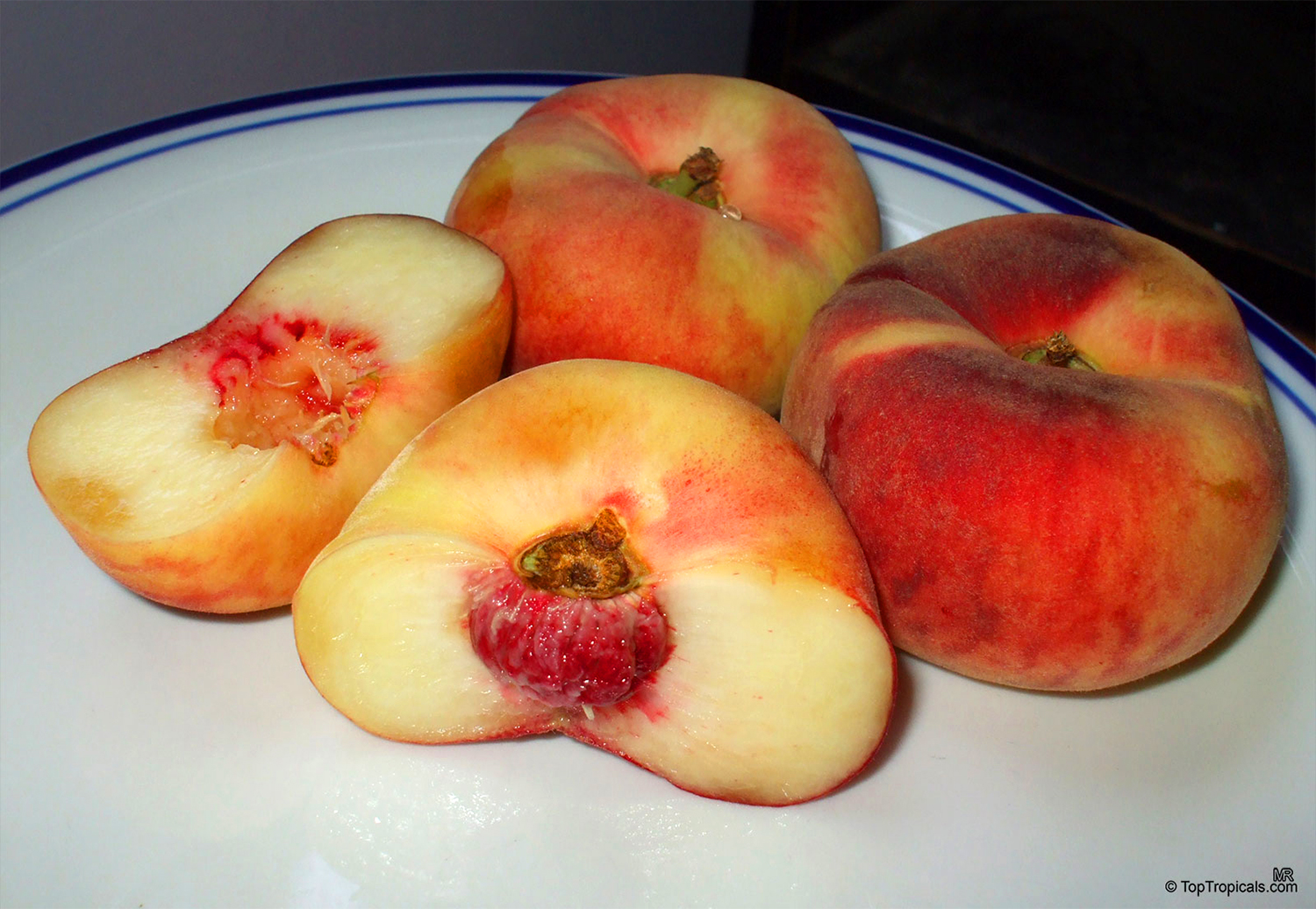
Several  ripe  flat  peaches,  also  known  as  donut  peaches  or  Saturn 
 peaches,  displayed  on  a  white  plate.  Two  peaches  are  cut  open,  showing  the 
 pale  white  flesh  and  small  central  pit  with  pink-red  coloring  around  the 
 seed 
 area.

Flat peaches - sometimes called DONUT peaches - are known for their sweet white flesh, low acidity, and fun squashed shape.

Date: 18 Feb 2026

🔥 Blazing into the 2026 with hot jasmines

Sunshine  the  orange  tabby  wearing  a  red,  white,  and  blue  wristband  sits
    laughing  on  a  jasmine-covered  horse  topiary  during  the  2026  Year  of  the 
 Horse,  while  Smokey  the  tuxedo  cat  trims  the  greenery  at 
 sunset.
Sunshine: I'm blazing into the 2026 Year of the Horse! Call me Mister Fahrenheit. Don't stop me now! 'Cause I'm having a good time — I'm a shooting star, leaping through the sky like a tiger, defying the laws of gravity!
Smokey: It's jasmine, Tiger. A shrub. Not Wembley. Calm down.

💮 2026 Year of the Horse - and the Plant I Trust Most

By Tatiana Anderson, Horticulture Expert at Top Tropicals

Every new year carries its own energy.

2026 is the Year of the Horse - a year of movement, fire, momentum, and bold decisions. It is not a quiet year. It pushes us forward.

When fellow gardeners ask me what to grow in a year like this, my answer is simple:
Grow something that balances strength with grace.

For me, that plant is Jasmine Sambac.

In many cultures, Sambac represents devotion, purity, and deep affection. In the Philippines it is the national flower - Sampaguita - woven into garlands for weddings and sacred ceremonies. In Hawaii, it becomes leis - a symbol of welcome and connection - Pikake. In India, it perfumes temples and homes.

This is not just a fragrant shrub.
It is a plant tied to love, loyalty, and continuity.

The Horse runs forward.
Jasmine anchors the heart.

In a fiery year like 2026, I believe we need both.

And that is why I always return to Jasminum sambac.

🛒 Explore Jasmine varieties

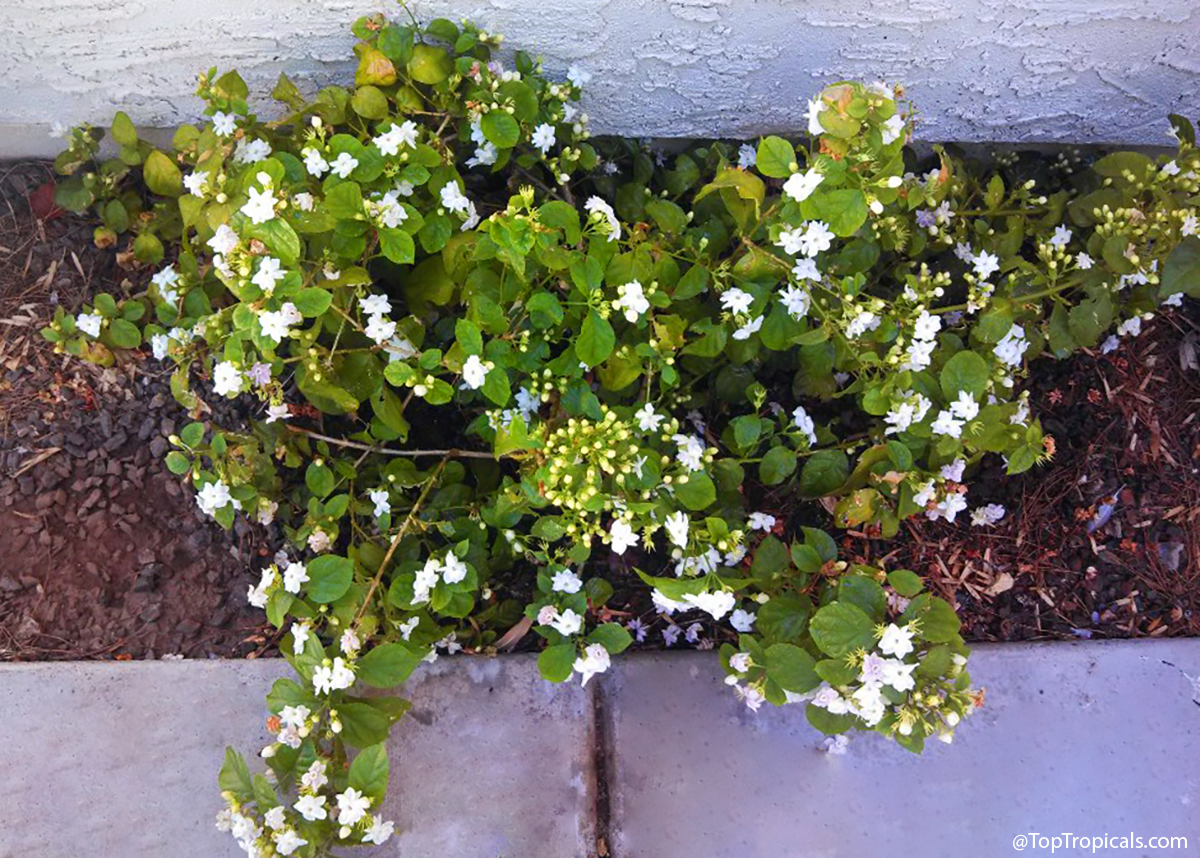
Jasmine  Sambac  Maid  of  Orleans  plant  growing  along  a  wall  with  clusters
    of  white  fragrant  flowers  in  bloom.

Jasmine Sambac thrives in hot, sunny locations

✅ Why Jasmine Sambac?

Over the years I have grown thousands of plants, but very few have the staying power of Jasmine Sambac.

It is not just fragrant. It is intensely, unmistakably fragrant. One open flower can perfume an entire patio. In the evening, the scent becomes deeper and richer.

But what makes Sambac truly special is its adaptability.

It can grow as a compact patio shrub, a flowering hedge, or a climbing vine. It performs beautifully in containers. It tolerates both full sun and partial shade. The more light you give it, the more flowers it rewards you with.

And unlike many tropicals, Sambac does not bloom just once. With proper care, it flowers in cycles throughout the warm season.

For gardeners, that combination is rare: beauty, perfume, flexibility, and repeat bloom.

That is why it has remained one of the most wanted fragrant plants in cultivation.

✍️ More About Jasmines from Blog

🛒 Explore Jasmine plants

Date: 15 Aug 2021

How to grow Cerbera and make it flower

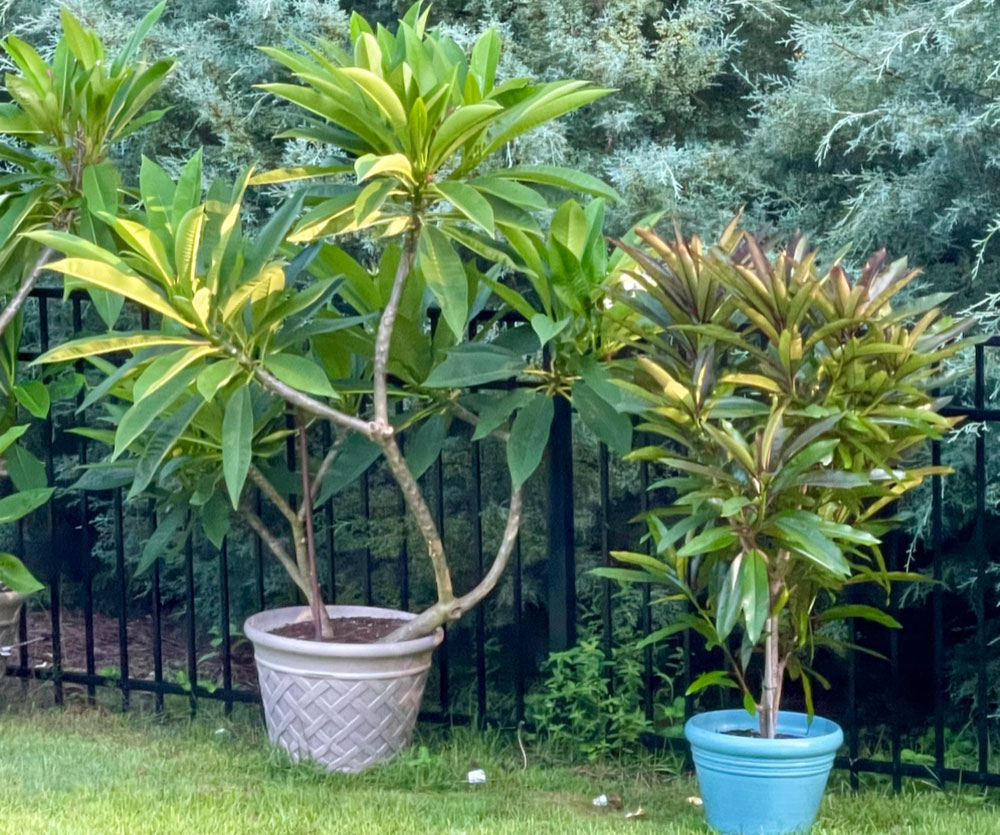
Q: I purchased Cerbera manghas - Enchanted Incense a year ago. As you see from the photo, it's doing great however, no blooms. I fertilize properly and very often and use worm castings for micronutrients. Yes it's not "your" fertilizer, but my plumerias, that are also in pots they are over 5 feet tall and blooming like crazy. I don't see any inflows coming on the Cerbera at all and it is hot and humid here in North Carolina, so it's happy but no sign of blooming. What is your advice?

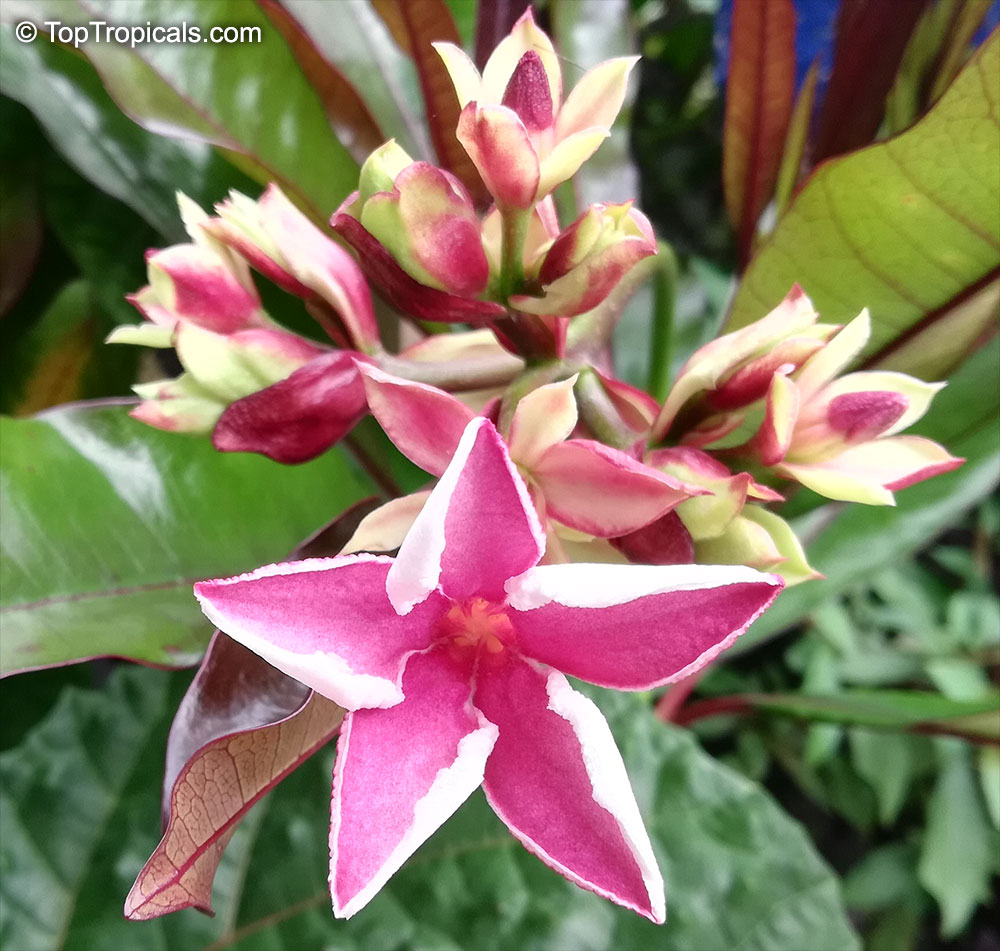
A: Top Tropicals first brought Cerbera manghas into the US plant market a few years ago, it was recommended to us by our friend, plant taxonomist John Mood who visited Thailand, and among other exotic plants noted this fragrant beauty. Since then we've been successfully growing this plant, it has become one of everybody's favorites.

Generally speaking, Cerbera culture is very similar to Plumerias. These plants are closely related. So if you know how to grow Plumeria, you sure will succeed with Cerbera. Hot and sunny location, well-drained mix, moderate water and bloom boom fertilizer will do the trick. However, we have noticed a few distinctive features that make this plant somewhat challenging at times.

1) Flowers

For past years, we've been studying what triggers its flowering. Sometimes these plants start flowering in 1 gal pot, 1 ft tall. Other times a large developed tree 5-6 ft tall, in 5-7 gal pot, grows beautiful foliage with no signs of flowers. Eventually all of them bloom, no matter how stubborn they are, it's just some individual plants start flowering sooner than others, all grown in the same conditions.
One of our plants in the ground, a well-branched tree, was covered with flowers for a few months, but only on the 3d year after planting. Before that, it only produced a few random blooms. Others bloomed in pots at very young age.
The following factors benefit to Cerbera flowering:
- full sun at least 10 hours a day
- hot temperatures above 85F
- regular water but not heavy rains
- regular fertilizer - Bloom Booster type
- very good drainage and drying out before waterings. If root ball stays moist, the plant may look healthy but won't set flower buds. Keeping on a dry side will encourage flowering. Very similar to Jasmines: they bloom like crazy in April while it's hot and dry in Florida, but once our summer rainy season starts, they reduce blooming.

We highly recommend using Sunshine Megaflor bloom booster or SUNSHINE Pikake in combination with micro-element supplements Sunshine Honey (B-Mo) and Sunshine Superfood (complex micro) that induce flowering. Dry and granulated fertilizers may not supply exactly what a plant needs: certain elements that trigger flowering may be missing. Sunshine Boosters formulas are scientifically balanced, they contain precise amounts of nutrients needed for setting flowers. Besides, excessive salts from regular dry fertilizers create nutrient lock up that may retard plant metabolism; with liquid amino-acid based Sunshine boosters, plants consume the whole menu of elements without building them up in the soil.

2) Fruit

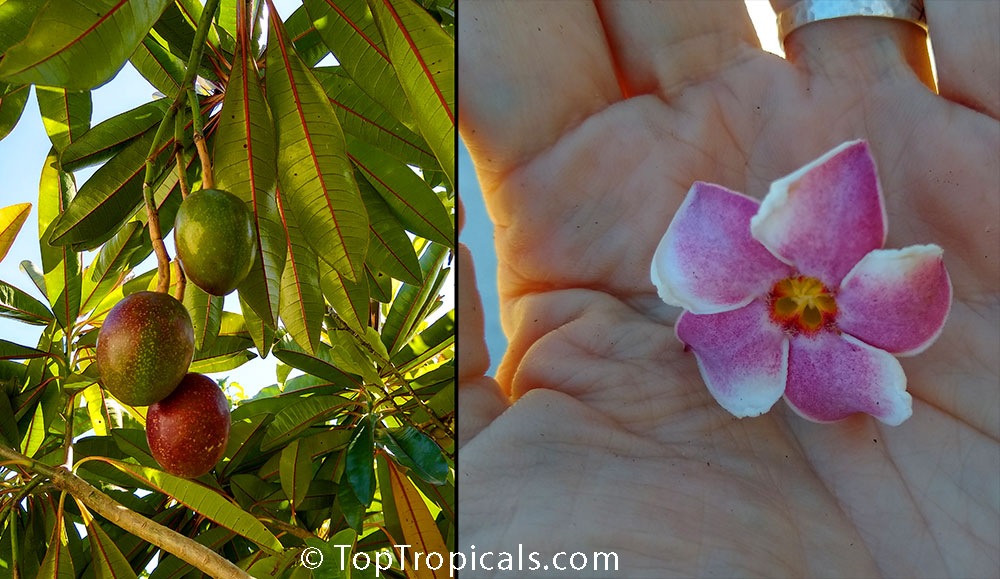
Fruit of Cerbera are very pretty and cover the tree after profuse flowering. To inexperienced eye they may look very much like small mango or avocado fruit - so make sure kids or visitors don't try to eat them! Cerbera seeds are extremely poisonous.

3) Leaves

If you ever grew Passiflora or Milkweed, you know how leaves can be eaten by caterpillars overnight. This may happen to Cerbera too, as we discovered. In Florida environment this exotic plant doesn't have natural predators for protection from certain insect species that may feed on it. So watch out and if noticed first signs of leaves damage - its time for insect control.
Other than that, Cerbera foliage is usually beautiful and colorful, here in Florida it looks much healthier than that of Plumerias often affected with rusty residue during high humidity months.

Hope this helps. The Cerbera fragrance is enchanting, it is worth the efforts and waiting!

Date: 6 Jun 2025

Bring Sunshine to your garden - no forecast needed!

Adenium Sunshine

Adenium Sunshine

☀️ Bring Sunshine to your garden - no forecast needed!


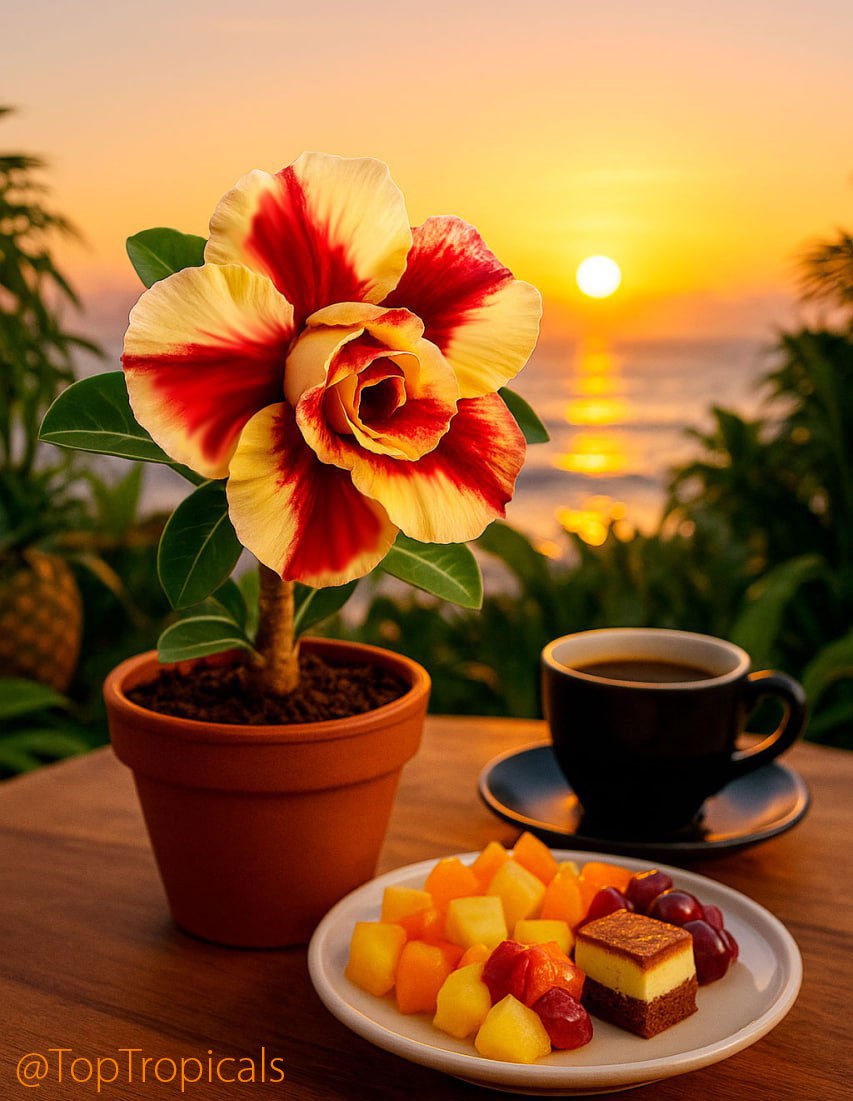
☀️ Adenium Sunshine is a radiant beauty that lives up to its name!

☀️ With mauve and yellow swirls across its multi-layered blooms, this flower glows like a warm summer day. The soft blending of colors creates a dynamic, cheerful display that feels like Happiness and Sunshine rolled into one.

☀️ A joyful, uplifting addition to your garden that brightens every glance.
See photos of the actual Adenium Sunshine in next post 👇

🛒 Shop the Sunshine Bloom

📚 More adeniums

#Nature_Wonders #Container_Garden #Fun_Facts #Adenium

🟢 Join 👉 TopTropicals