🌿 Bring the Jungle Inside: Winter Survival
Guide. Part 3. Watering and Humidity. ❄️
💦
Water, Humidity, and the Small Things That Decide Who Makes It to
Spring

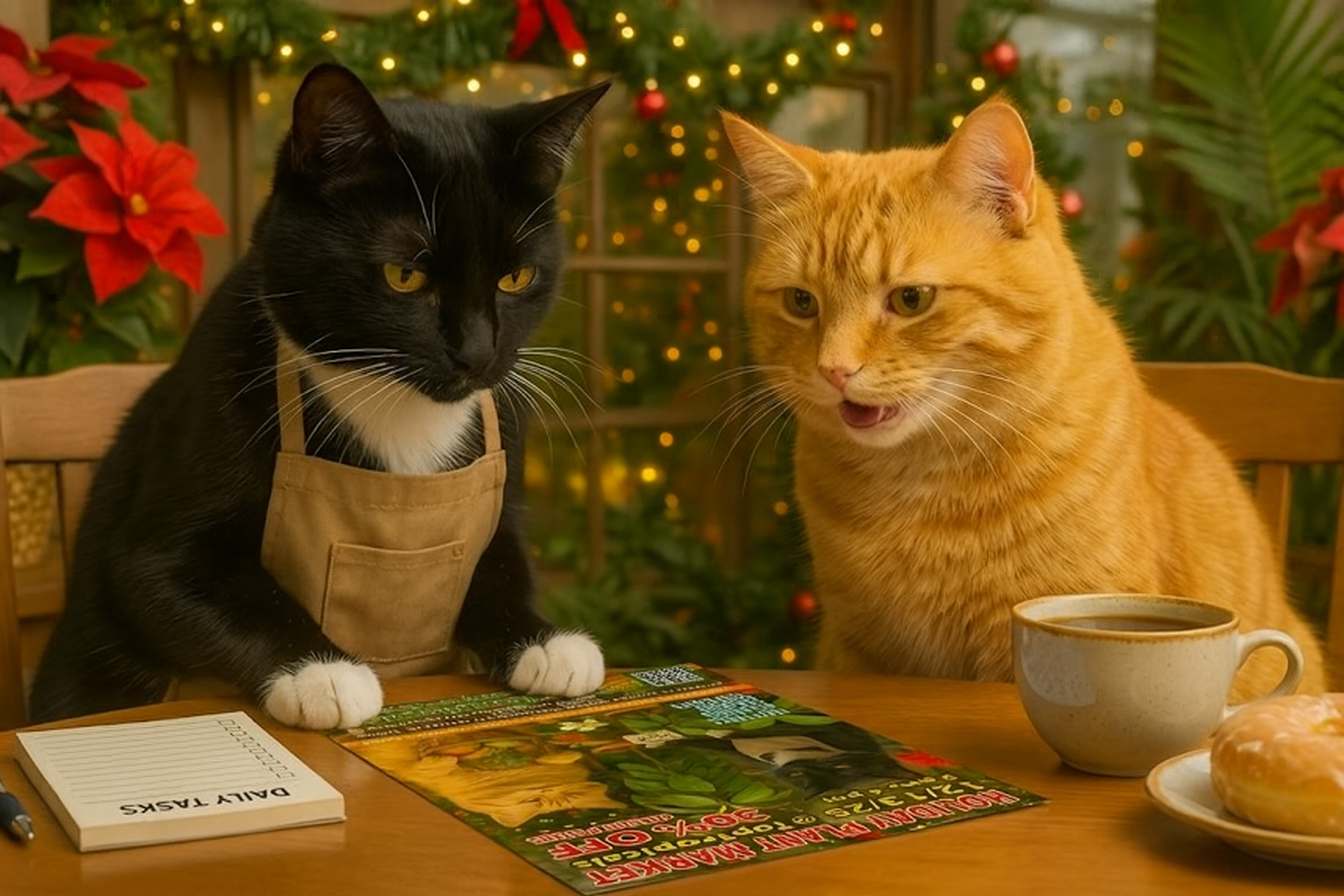
Smokey:"Still damp. No watering today."
Sunshine:"Great. I am excellent at not watering."
Smokey:"You have been practicing not doing any work your whole life."
In Part 1 (Winter Survival Guide: Temperature) we covered the foundation: light, placement, and acclimation. That is the survival layer.
Part 2 (Winter Survival Guide: Temperature) is about what quietly ruins plants indoors in winter. Not overnight. Slowly.
Most winter losses come from good intentions and habits that worked fine outdoors or in summer, but fail indoors when growth slows.
Watering: Where Most Indoor Plants Die in Winter
If there is one winter skill that matters more than anything else, it is knowing when not to water.
In winter, light is weaker, temperatures are lower, roots stay cold longer, and growth slows or stops. Plants simply do not drink the way they do in summer.
How winter watering actually works
Do not water on a schedule. Winter does not care about your calendar.
Instead:
- Water thoroughly when you do water.
- Let excess drain out.
- Then wait longer than feels comfortable.
Before watering, test the soil with your finger. Water only when the top inch or so is dry.
If the soil below still feels cool and damp, do nothing. That is the hardest skill to learn.
Remember what we covered in Part 1: in winter, soil and roots stay cold much longer. Cold roots absorb water very slowly. Wet, cold soil is not helpful moisture. It is stress.
Waiting is often the correct move.
Common winter watering traps
- The soil surface looks dry, but the root ball is still wet.
- Pots near windows dry unevenly.
- Large pots stay wet for weeks.
Always check below the surface. If the pot feels cold and heavy, roots are not asking for water yet.
Signs you are watering too much
- Soil stays wet for many days.
- Pot feels heavy long after watering.
- Leaves yellow and soften.
- Fungus gnats appear.
As a rough guideline, most indoor tropicals need 25 to 50 percent less water than summer, sometimes even less in low light.
Always use room temperature water. Cold water shocks roots and slows recovery.
Humidity: Invisible Winter Stress
Winter indoor air is dry. Often far drier than people realize.
Heating systems pull moisture out of the air, and many homes sit at 20 to 30 percent humidity all winter. Most tropical plants prefer something closer to 50 to 60 percent.
Low humidity rarely kills plants outright. It weakens them first. That is why pests show up more often in winter. The plant is already stressed before insects arrive.
What low humidity looks like
- Brown or crispy leaf edges.
- Curling leaves.
- New leaves stuck while unfolding.
- Spider mites appearing suddenly.
What actually helps
- Group plants together.
- Use pebble trays.
- Run a room humidifier.
- Use bathrooms if light allows.
Humidity works best when plants are grouped. One isolated plant in dry air struggles far more than a group sharing moisture.
Misting leaves feels helpful, but it only raises humidity for minutes. It does not fix dry air.
Cleaning Leaves: More Important Than It Sounds
Winter light is already weak. Dust makes it worse.
Dusty leaves block light, clog stomata, and create hiding places for pests.
Wiping leaves is one of the simplest winter care steps, and one of the most ignored.
How to clean
- Soft cloth.
- Plain water.
- Mild soap if needed.
Gently wipe. No scrubbing. Every few weeks is enough.
Plants with fuzzy leaves, like African violets, should only be brushed gently with a dry brush.
Clean leaves also make problems easier to see. You will spot mites, scale, or damage early instead of discovering it weeks later.
Winter is not the season to be surprised.
Soil and Pots Behave Differently Indoors
Soil that works outdoors often behaves badly indoors. No wind, lower evaporation, and cooler roots mean the same soil stays wet far longer than expected.
In winter, roots care more about oxygen than water. Soil that stays wet pushes oxygen out, even if the plant looks fine above the soil line.
This is why rot often appears suddenly in late winter, not right after watering mistakes.
Pot size matters
Large pots dry slowly. Slow drying plus cool soil equals rot.
If a plant is barely growing, a very large pot is not doing it any favors.
About repotting
Winter is not the time to repot unless you must.
Only repot if:
- Roots are rotting.
- Pests are severe.
- The plant is clearly failing.
Repotting in winter slows recovery and often makes things worse.
Airflow: Quietly Important
Indoor winter air is still. Still air leads to mold, fungus, and spider mites.
Airflow is not about cooling plants. It is about breaking stagnant air layers that pests and fungus love.
A small fan on low, not blowing directly on plants, makes a big difference. Even gentle movement helps more than people expect.
Drainage and Mold: Boring but Critical
Never let pots sit in water.
Standing water causes root rot, fungus gnats, and mold smell. Always empty trays after watering.
Raise pots slightly so air can move underneath. It helps more than people expect.
If you smell sour soil or a musty odor, something is staying wet too long. That smell is an early warning, not a minor issue.
Fertilizer: Mostly Stop
This is where a lot of winter damage happens.
If a plant is not actively growing, fertilizer does not help. It hurts.
In winter, most indoor tropicals are in maintenance mode, not growth mode. Feeding during this time leads to salt buildup, root burn, and weak, floppy growth.
Green leaves do not mean the plant is growing. They often just mean the plant has not given up yet.
Growth shows up as new leaves, longer stems, or expanding roots. No growth means no feeding.
When light feeding is acceptable
Only if all of these are true:
- The plant is warm.
- Light is strong.
- You see real new growth.
Even then, feed lightly and less often than summer.
Spring will come. You do not need to force it.
Common Winter Care Mistakes
- Watering on a schedule.
- Misting instead of humidifying.
- Fertilizing to fix poor light.
- Ignoring cold windowsills.
- Placing pots on cold tile or stone.
- Repotting out of boredom.
- Letting trays stay wet.
- Assuming green leaves mean growth.
- Assuming winter leaf drop always means death.
Quick Winter FAQ
My soil stays wet forever.
Too little light, too cold, or pot too large. Water less.
Leaves are crispy but soil is wet.
Low humidity combined with overwatering.
Should I mist every day?
No. Fix the air, not the leaves.
Can I fertilize just a little?
Only if the plant is clearly growing.
Why do I suddenly have fungus gnats?
Wet soil indoors is the invitation.
My plant looks fine but has not grown in months. Is that bad?
No. Stability is success in winter.