💎 What is better than Plumeria? Only climbing Plumeria!
💮 It's in bloom again at Top Tropicals Garden! Over and over, from Spring through Winter! Almost year around non stop. What a vigorous vine, and the perfume flowers never stop coming.
💮 Imagine Plumeria's wild cousin climbing your fence: Chonemorpha fragrans, the Frangipani vine, is a tropical liana with jumbo 12-inch leaves and creamy white flowers that fill the air with that unmistakable Plumeria scent.
💮 This beauty doesn’t grow like a tree - it climbs! Perfect for fences, trellises, or pergolas, it brings vertical drama and sweet, Plumeria-like fragrance to sunny or lightly shaded spots.
💮 Give it some support and a little fertilizer, and your garden will bloom into a lush, fragrant escape that smells like a Hawaii vacation!
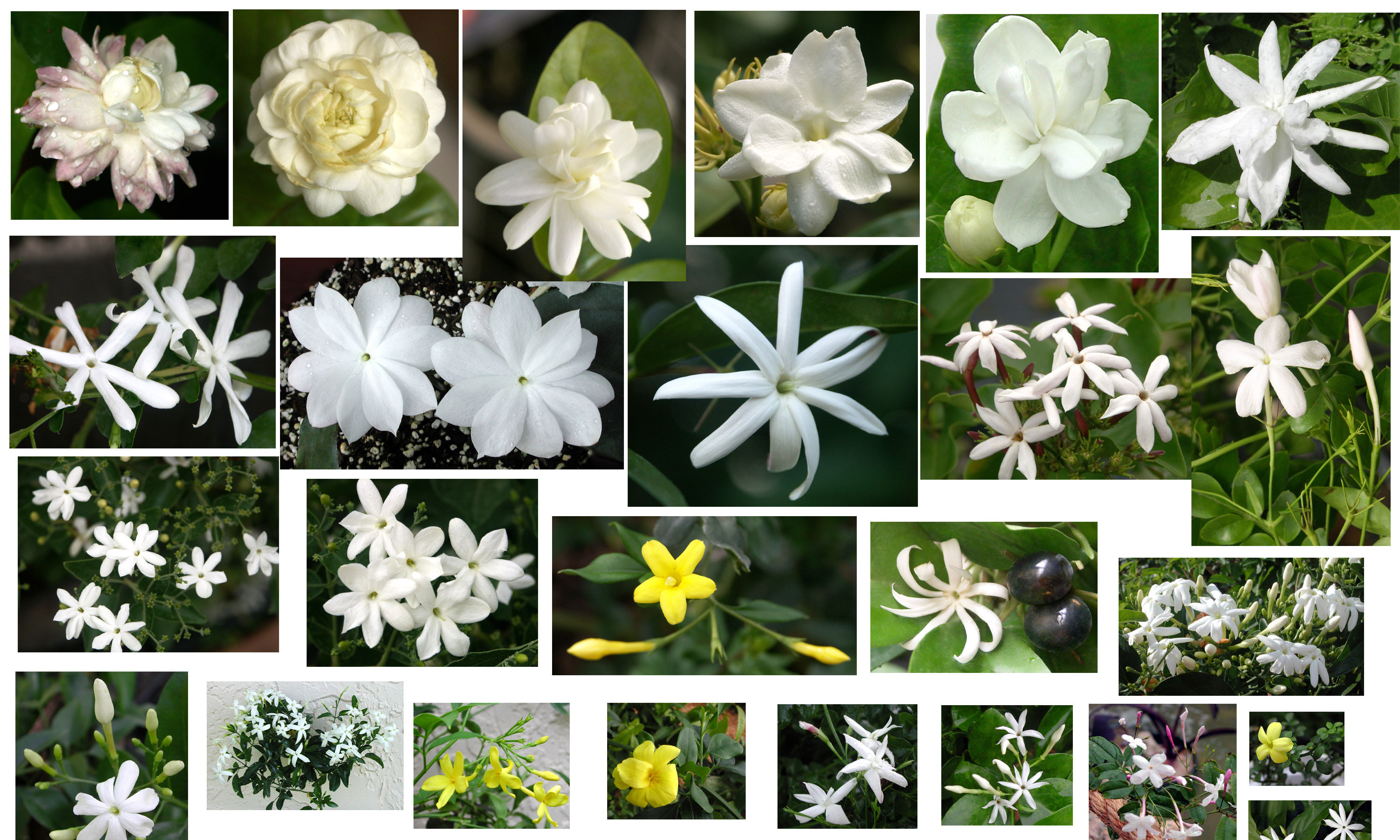
💮 What is your favorite variety of Jasmine Sambac?
💮 Jasminum Sambac is hands-down the queen of fragrant flowers. The scent is heavenly - so much so that it's the key to jasmine perfume and the secret behind authentic jasmine tea.
💮 Jasmine sambac comes in all shapes and sizes - from neat little shrubs to big, vigorous bushes and even climbing vines. Every variety shows off a different flower form. It’s happy in sun or shade, perfect for pots, and loved as an indoor plant.
💮 At TopTropicals we love them all, but these three are our favorites:
- Belle of India - with elegant long petals
- Arabian Nights - vigorous yet compact, always covered in blooms
- Little Duke - same big carnation-like flowers as Grand Duke, but in a smaller, tidy package
👉 At Top Tropicals, we grow every known variety of Jasminum sambac in cultivation:
❓ Which one would you choose for your garden?
✔️ Arabian Nights - compact slow growing shrub with small delicate flowers
✔️ Belle of India - compact vine with long elegant petals, shade lover
✔️ Grand Duke of Tuscany - the most popular, vigorous bush with carnation-like flowers
✔️ Grand Duke Supreme - bigger, more vigorous version of Grand Duke with larger flowers
✔️ Gundu Malli - new hybrid between Arabian Nights and Grand Duke
✔️ Little Duke - more compact version of the Grand Duke
✔️ Maid of Orleans - vigorous full sun climber, great for hedges and fences
✔️ Mali Chat - very delicate, rare variety, with miniature 3-tier flowers, not easy to establish, shade lover
✔️ Mysore Mulli - vigorous vining shrub for sunny or semi-shade locations
👉 To get more flowers, just use Sunshine Pikake plant booster and enjoy the perfume all day long!
Q: Would you please help me select the right jasmine? I want to
find a jasmine that smells like lily of the valley or honeysuckle or roses,
not the one that smells like gardenia. I'm in Missouri, zone 6, so I want a
jasmine for my deck for the summer, so I want it to bloom this season.
A: There are 3 major types of tropical flower fragrances - Sweet,
Fresh, and Fruity (including Lemony). Below are the most interesting
fragrant tropical flowers, excluding Gardenias (which are sweet type). These are all
same-year bloomers, so you can enjoy the fragrance this year assuming proper
care and bloom booster feeding.
* - The fastest growers that can be treated as annuals. Others can be
grown in a pot and brought inside for winter, and be enjoyed every year.
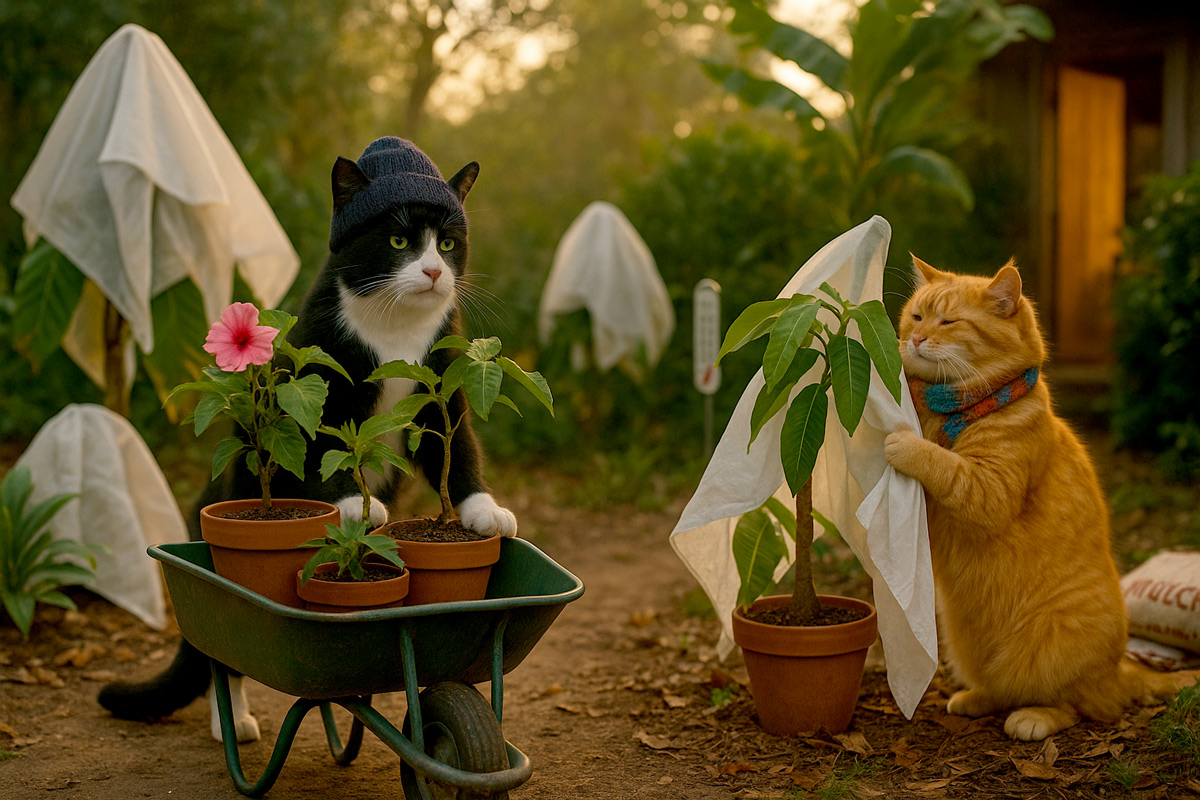
Smokey and Sunshine Prepare Plants for the Cold Night.
Smokey: Come on, Sunshine, help me move these plants inside before it gets
dark!
Sunshine: I am helping... see? I’m supervising the mango
tree.
Smokey: You call that supervising? The frost cloth’s upside down!
When the forecast drops into the 30s, panic is not a plan. This is your
simple, clear checklist to protect every tropical in your garden. Think of
it as the quick emergency manual that goes hand in hand with the previous
cold-weather newsletter.
"We
all love our tropical flowers, mangoes, bananas, and rare fruit trees. A
single cold night does
not have to be a disaster. The key is knowing what to do, when to do it, and
what mistakes to avoid." - Tatiana Anderson, Top Tropicals Plant
Expert
🌡️ FROST AND FREEZE
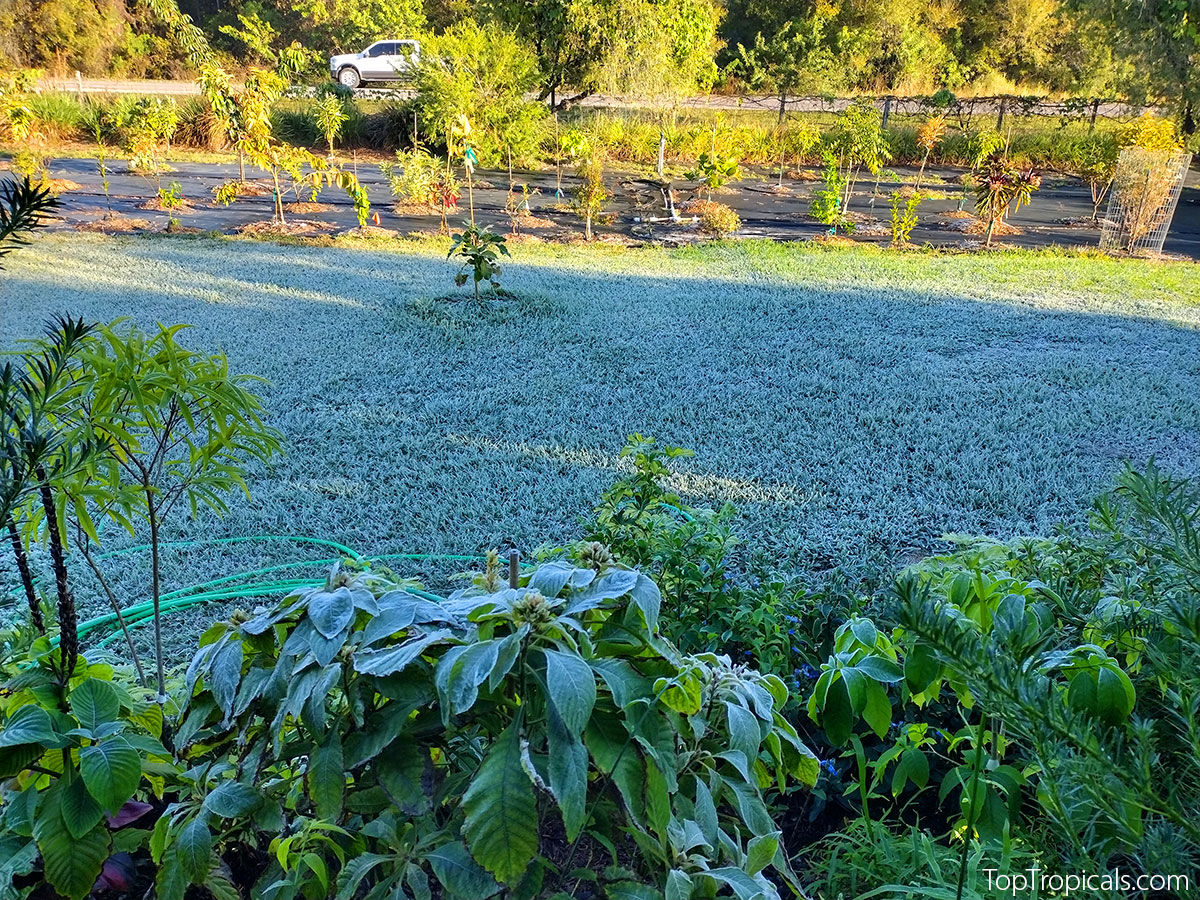
A frost and a freeze are not the same. A frost is when you see ice crystals
on leaves or grass, while a freeze is when the air temperature drops below
32 F. The tricky part is that you can get
frost even when the air is above freezing, and you can have a freeze with no
frost at all. It all depends on humidity and the dew point. If the dew
point
is below freezing, the ground can cool faster than the air, letting frost
form even when your thermometer reads 35 or 36 F. And once the air itself
drops below 32 F, even for an hour, tender tropicals can be damaged. For
plants, a freeze is far more dangerous, because freezing air pulls heat out
of stems, branches, and roots. Frost usually burns leaves, but a true freeze
can injure wood, kill buds, and damage the entire plant.
Frost on the grass and leaves on Winter morning in Central
Florida
WHAT TO DO
AND NOT TO DO BEFORE A COLD SNAP
✔️ 5 THINGS TO DO:
Water well. Hydrated plants tolerate cold better than dry, stressed
ones.
Add mulch. A thick layer around the base keeps roots warm.
Block the wind. Move pots to a sheltered corner or patio.
Cover at night, uncover in the morning. Let plants breathe and get
light.
Add gentle heat if needed. Non-LED Christmas lights or a small old style
15-20W light can raise temps a few degrees.
❌ 5 THINGS NOT TO DO:
Do not prune or trim. Fresh cuts freeze first.
Do not overwater. Wet, cold soil invites root rot.
Do not let plants dry out either. Wilted plants freeze more easily.
Do not use dry fertilizer. Gentle liquid feeds like Sunshine
Boosters are safe to use with every watering: its intake naturally slows
down as watering decreases.
Do not look only at the thermometer. A long, windy night can be worse
than a short freeze.
TEMPERATURE
ACTION GUIDE (40 to 25 F)
40 to 38 F: Move potted plants to shelter, water soil, and cover
tender tropicals.
37 to 33 F: Use frost cloth and anchor it down so the wind does
not lift it.
32 to 30 F: Add a heat source like non-LED lights.
29 to 25 F: Double-cover sensitive plants, wrap trunks, and
protect roots heavily.
COLD
TOLERANCE BY PLANT TYPE
Before a cold night, it really helps to know your plant’s exact
cold limits. Every species is different, and young plants are always more
sensitive than mature ones. Take a few minutes to look up your varieties in
our Tropical
Plants Encyclopedia
— it will tell you the safe temperature range, how much protection
each plant needs, and which ones must be covered or moved before the next
cold snap hits.
Bananas: leaf burn below 37 F
Mango, Annona: hurt around 32 F
Cold hardy avocados: Mature tree can take about 25 F. Young trees must
be protected
Olives, Citrus, Guava, Jaboticaba: usually OK outside with mulch
QUICK-ACTION
TABLE
Before the cold arrives, make yourself a quick list of every plant and
what action each one needs. It saves time when temperatures start dropping
and keeps you from scrambling in the dark. Check that you have enough frost
cloth, blankets, and supplies on hand so you can cover everything without
rushing. Planning ahead makes cold nights much less stressful.
Bring Indoors: Cacao, Bilimbi, Coffee. They need warm, bright
light.
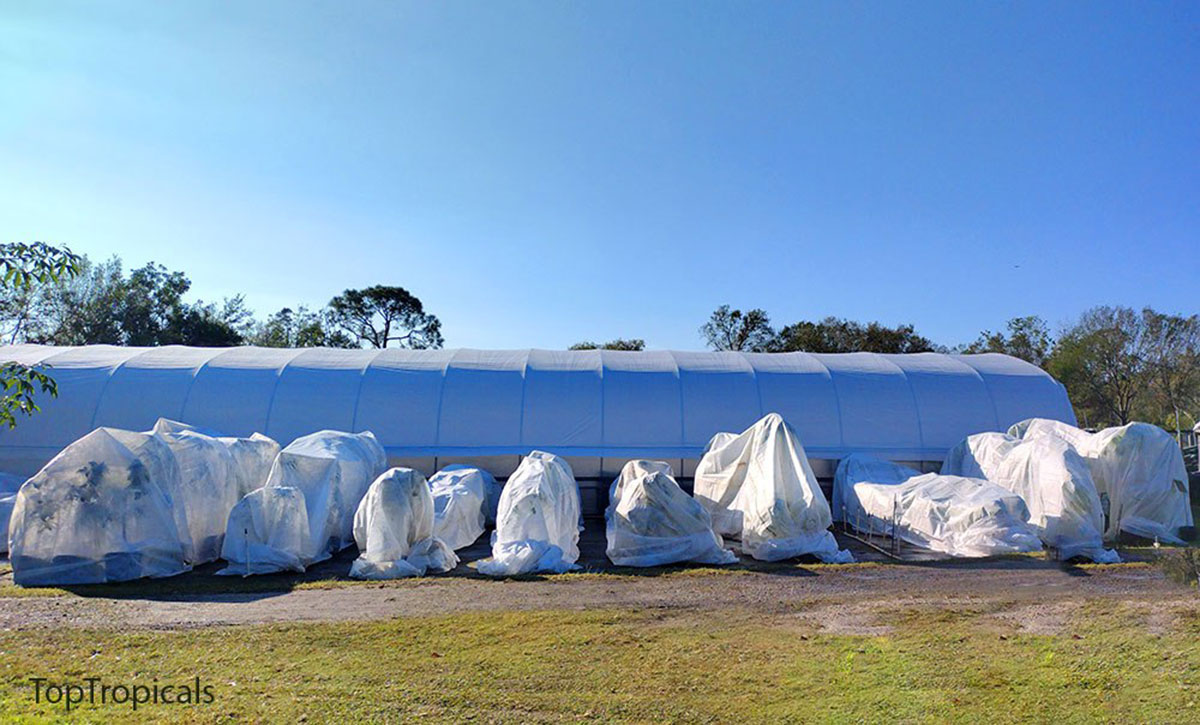
Cover Outdoors: Mango, Jackfruit, Banana, Annona. Use frost cloth, not
plastic on leaves.
Covering large mango and avocado trees in pots at TopTropicals during
cold nights
GADGETS AND
TOOLS THAT HELP
Indoor helpers: LED lights, small heaters, bottom-heat mats,
timers.
Outdoor helpers: frost cloth rolls, mini greenhouses, non-LED Christmas
lights or small incandescent lights, smart thermometers.
Always keep electrical safety in mind, especially if you are using extension
cords outdoors. Use only weather-rated cords, keep all connections off the
ground, and protect plugs from moisture. Make sure heaters and lights are
stable, secured, and never touching fabric covers. A few minutes of safety
check
can prevent a dangerous situation on a cold, wet night.
And if you want to keep plants strong through winter, add Sunshine
Boosters to your watering routine. It is gentle, safe in cold weather,
and gives plants an extra edge.
AFTER THE
COLD PASSES
In the morning, uncover plants. Leaving covers on during the day can trap
heat and cook the tender new growth, especially under the sun. The only
exception is true frost cloth designed for all-day use, which allows air,
light, and moisture to pass through. Regular blankets, sheets, and plastic
must come off as soon as the sun rises.
Do not cut anything yet. A plant can look completely dead after a freeze,
but many branches are still alive under the bark. Cutting too soon removes
wood that would recover on its own. Wait until new growth begins in spring.
That is when you can see exactly which branches are truly dead.
Use the scratch test. Gently scratch the bark with your nail or a small
knife. If the layer underneath is green, the branch is alive. If it is brown
and dry, it is likely dead. But even then, wait until warm weather to be
sure, because sometimes only the tips die back while the lower part of the
branch survives.
Once the weather stabilizes, resume light feeding. Plants coming out of cold
stress need gentle support, not heavy fertilizer. A mild liquid feed like
Sunshine
Boosters helps them rebuild roots and push new growth without burning
tender tissue.
Your tropical garden can survive any cold night if you prepare right. Cold
snaps always feel stressful in the moment, but once you know your plants,
have the right supplies, and follow a simple plan, it becomes routine. A few
minutes of preparation before dark can save months of growth and keep your
collection healthy all winter.
Frost cloth is the true workhorse of cold protection: it keeps heat in,
keeps frost off, and will not suffocate plants the way plastic or blankets
can. Having a few rolls ready means you never have to scramble at the last
minute. Sunshine
Boosters give your plants gentle support during the colder months so
they stay strong enough to bounce back quickly when warm weather
returns.
A little planning now will pay off in spring, when your mango, banana,
citrus, and all your favorite tropicals come back happy and ready to
grow.
Everybody loves shopping online nowadays, and plants are no exception.
Buying plants by mail order is not uncommon anymore; it only takes one click,
and luckily, there are many sources - from big shopping malls like Amazon to
small backyard nurseries that sell their seedlings on eBay or Facebook - all
delivered to your door. But plants are alive... So when doing your online
plant shopping, you must ensure that you fully enjoy your experience and are
happy with a healthy plant that a) doesn't die; b) recovers quickly; and c)
starts growing fast, so you can see flowers and fruit as soon as possible.
The rule of thumb for shipping plants: bigger plants undergo shipping
better, experience less stress, less leaf drop, and recover quicker than plants
with smaller root systems. So when it comes to buying plants online, the
bigger, the better. Unfortunately, many mail-order plant sources may sell you a
tiny twig that has very few chances of surviving. Shipping is very expensive
today, so shipping a bigger size plant may cost more than the plant
itself.
Below is a piece of advice on how to make the best plant selection for
your garden...
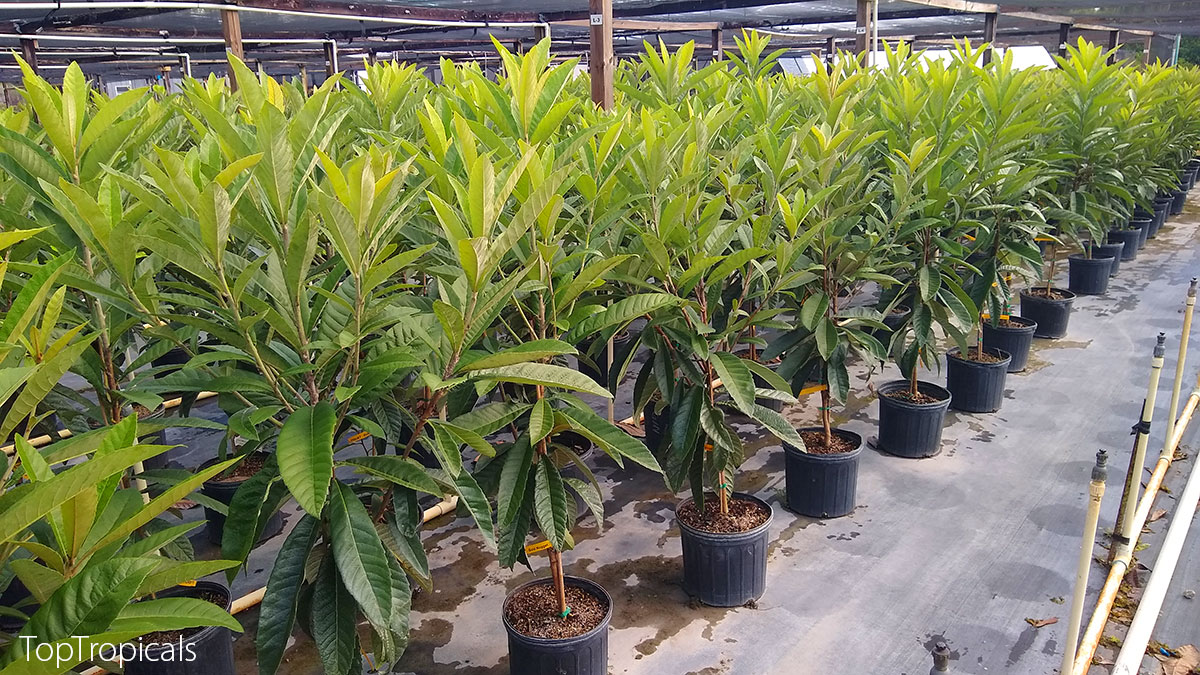
1. Find a source with bigger plants. Check reviews, ask friends
for recommendations, inquire from the company about the size of their plants
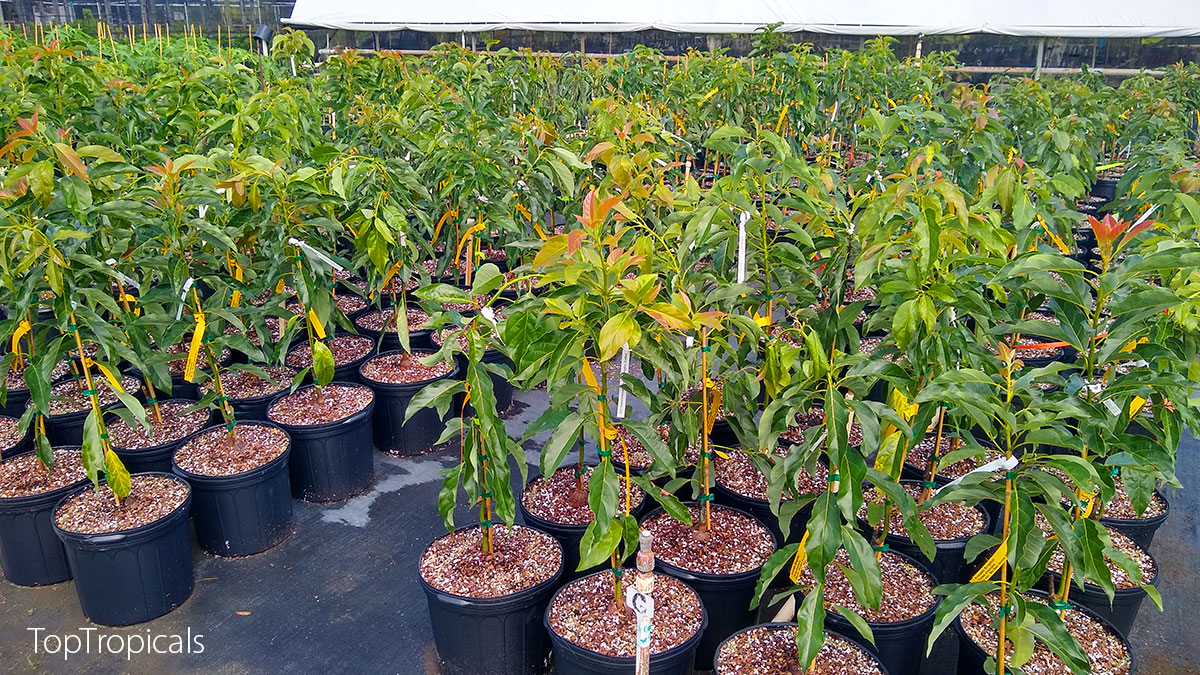
and how they pack their plants for shipping. TopTropicals offers well-established, strong plants with developed root
system, in container sizes 1, 3, 7, 15 gallon, directly from a tropical
Florida growing farm. Our unique plant-packing techniques are state of the art!
2. Price not always reflects the size and quality of the plant
TopTropicals offers many deals, discounts and sales, while still
providing the biggest and strongest plants grown in real tropical conditions.
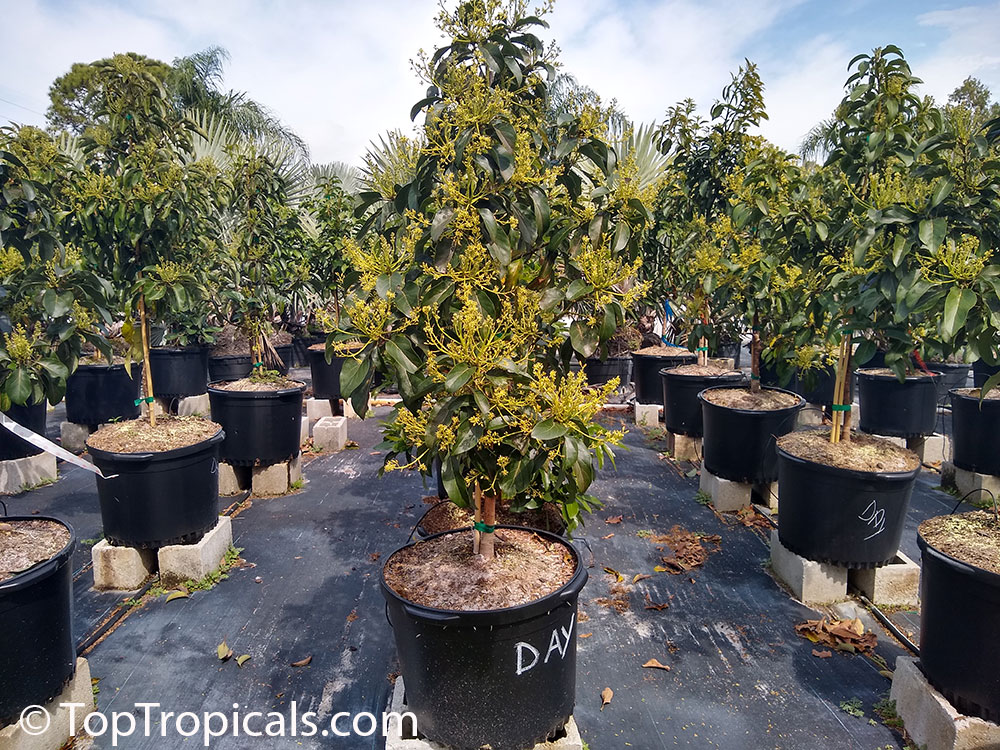
3. Most fruit trees must be grafted to produce good fruit. Make
sure you are not purchasing a seedling when it comes to Mango, Avocado,
Peaches and some other trees with named varieties that don't come true to seed. TopTropicals offers only grafted - Mango,
Avocado and a large number of other tropical cultivars.
4. Pick up when possible from the nursery your ordered from, or
get a delivery, instead of shipping the plants. A drive to the nursery will save you more time and money in the
future, plus you can hand-pick the biggest and healthiest specimens. TopTropicals is open 7 days a week for your convenience. Visit our Ft Myers Garden Center or Sebring Farm to select the biggest plants.
5. Take advantage of X-Large size plant material if you live
outside the tropical zone and are trying to zone-push your tropical garden.
Bigger plants will establish faster and have more chances to survive cold winters.
Again, it will save you money in a long run (although bigger plants may be
more expensive, but their survival rate is much higher when it comes to cold
nights). TopTropicals offers X-Large flowering and fruiting trees (7-15-25
gallons), and most of the varieties you see in our online
store can be custom-ordered in big sizes. Delivery and installation
available.