Garden Blog - Top Tropicals

Date: 10 Nov 2025

❄️ How to Prepare Your Tropical Garden for Winter
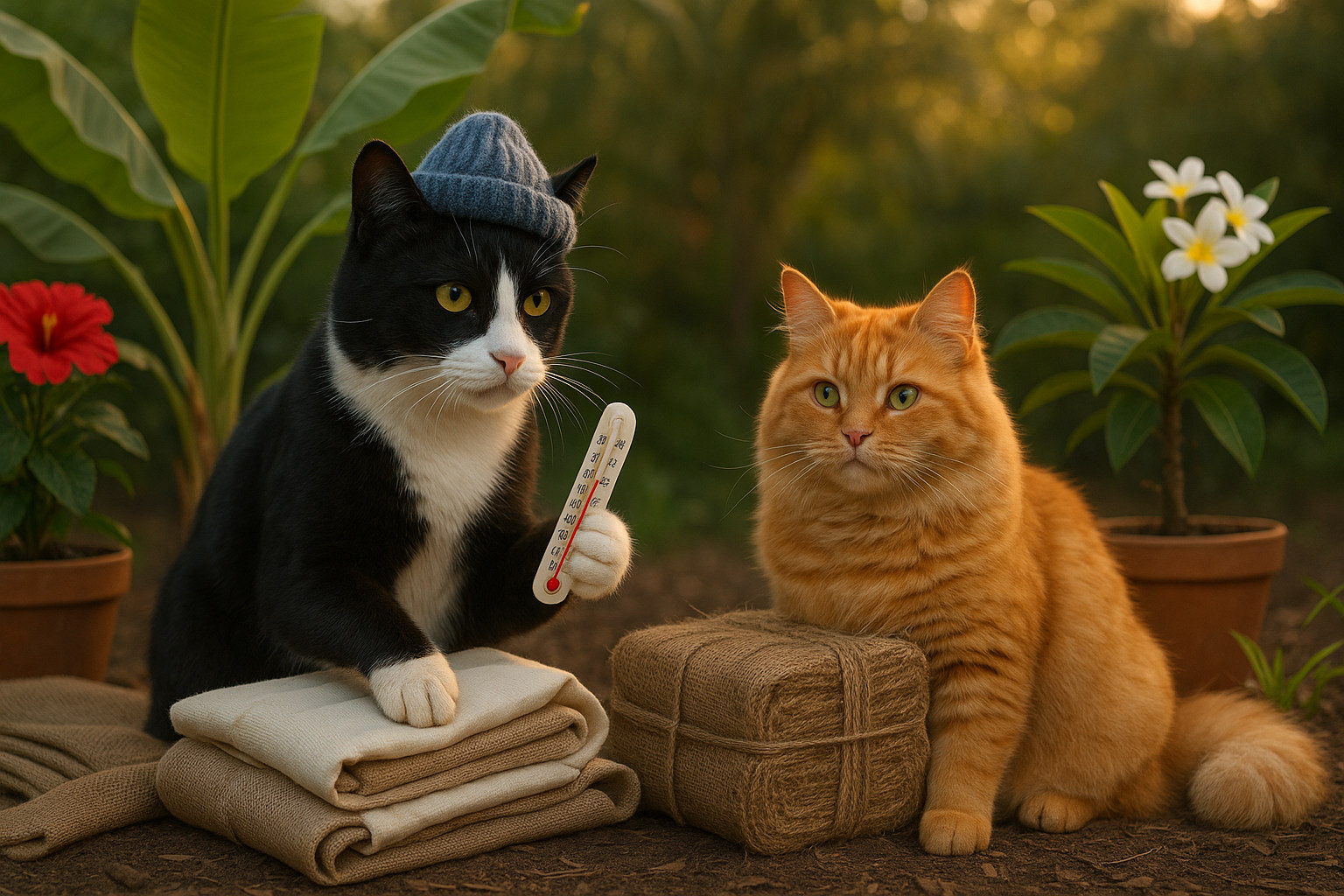
Two  cats  in  a  tropical  garden  at  sunset.  Smokey,  a  black-and-white 


tuxedo  cat  wearing  a  wool  cap,  holds  a  thermometer  while  Sunshine,  a  fluffy 


orange  tabby,  sits  beside  mulch  and  folded  frost  cloths  surrounded  by  banana
 
 
  and  hibiscus  plants.

Smokey and Sunshine Wrap Up the Garden with Frost Cloth Before the Chill.

Smokey: "Thermometer says 45. Time to wrap the bananas!"
Sunshine: "You wrap the bananas. I’ll guard the mulch… from this sunny spot."
Smokey: "Teamwork, Sunshine. Teamwork."

🌡️ Cold nights are coming - but your tropicals do not need to shiver!

Even in sunny Florida and other warm zones, one cold snap can undo months of growth. Preparation is everything. Tropical plants can handle a lot, but they dislike surprises. Let’s make sure your garden stays safe, strong, and happy all winter long.

Tips from Tatiana Anderson, Top Tropicals Plant Expert

👉 Group and Check Your Plants

You already know which plants are in pots and which are in the ground. What matters now is prioritizing by cold sensitivity. Identify the tender tropicals – papaya, banana, plumeria, adenium, heliconia – and decide which ones get covered first when temperatures drop. Keep frost cloths or old sheets near those areas, ready to grab fast. If your garden is large, label protection zones or mark plants that always need extra care. The goal is to have a plan, not a panic, when the cold alert hits.

Once you know your priorities, you can plan the rest of your protection strategy.

👉 Feed and Mulch

Stop using high-nitrogen fertilizers by late fall. They push soft new growth that freezes easily. Add compost around the base of your plants and top with 3 to 4 inches of mulch. Mulch acts like a blanket: it keeps warmth in, protects the roots, and keeps soil moisture steady. Just make sure the soil drains well; cold and soggy soil leads to root rot. In raised beds, check that water flows away easily.

After you feed and mulch, it is time to look at how your local zone changes the game.

👉 Zone-by-Zone Tips
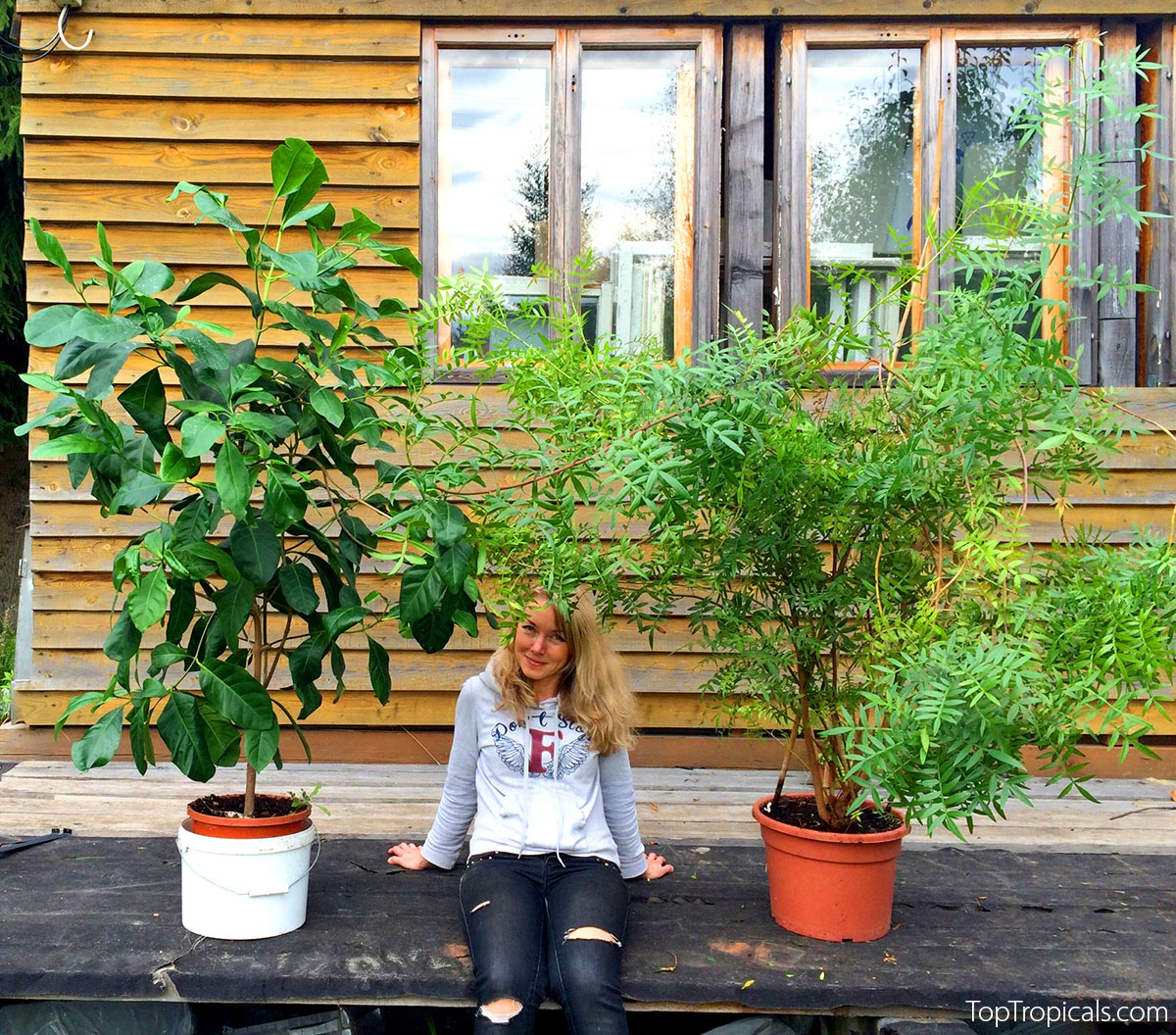
Woman  sitting  between  two  large  potted  tropical  plants  on  a  wooden  deck
 
 
  in  front  of  a  house,  preparing  to  move  them  indoors  for  the  winter.

Moving Tropical Plants Indoors for Winter Protection

  • Zone 10: You are lucky! This is mostly a maintenance season. Watch for root rot after heavy rain, trim lightly if needed, and protect tender young trees during surprise chills. Keep some frost cloth ready just in case.
  • Zone 9: This is the main action zone. Nights can dip into the 30s. Deep-water your trees once before cold nights to insulate the roots. Apply heavy mulch, and have frost protection ready to go. If you grow tropical fruit like mango or guava, consider wrapping young trunks in burlap or foam pipe insulation.
  • Zone 8: This is where tropical gardening becomes creative. Stick to cold-hardy tropicals such as loquat, guava, or cold-hardy avocado varieties. Use portable greenhouses, wrap trunks, and move smaller plants indoors or to a heated porch when frost threatens.

Now that the garden beds are set, let’s look at your pots and containers – your most mobile plants.

👉 Container and Patio Plants

Potted plants are the easiest to protect but also the quickest to freeze. Start reducing watering now so roots do not stay too wet in cooler weather. Before moving them, check for insects hiding under leaves or in the soil. Group your pots close to a wall for reflected heat and wind protection. If you plan to bring them indoors, do it gradually. Move them closer to the house for a few days before bringing them all the way inside to help them adjust to lower light and humidity.

When the chill starts, many gardeners rush to move everything inside at once – but a smooth transition works much better.

👉 Indoor Plants

When bringing plants inside, give them a good rinse to remove dust and bugs, and flush the soil to wash out salts from summer fertilizing. Keep them separate from your houseplants for a week to make sure no pests come along. Expect some leaf drop – it is normal as they adjust to lower light. Give them bright light near a window, and cut watering by about half until spring. Avoid misting too much; good airflow matters more than humidity during winter.

Many tropicals, like hibiscus, brugmansia, and crotons, may look tired for a while, but they will bounce back quickly once days get longer.

👉 Timing Is Everything

The key is to prepare before the first cold warning. Check your weather app regularly once nights start dropping into the 50s. Keep covers, mulch, and supplies ready so you are not running outside at midnight with a flashlight and a frozen hose. Have your frost cloths labeled by plant group and stored in an easy spot. A little organization now saves a lot of stress later.

Many tropicals, like hibiscus, brugmansia, and crotons, may look tired for a while, but they will bounce back quickly once days get longer.

Remember: the goal is to help your plants rest safely. Many gardeners prune or fertilize too late in the season – we will talk about why that can be risky next week." — says Tatiana Anderson, Top Tropicals Plant Expert

Coming next mail-list: The best gadgets for cold protection (lights, heaters, frost covers) and what NOT to do in winter.

📚 Learn more from Top Tropicals Blog:

Cold protection - winter action for your plant collection

What plants are good to order in Winter?

How to take care of house plants in Winter

How to protect tropical plants in Winter

How to take care of a mango tree in winter

How to protect Avocado from cold

Overwintering Adeniums outside of tropics
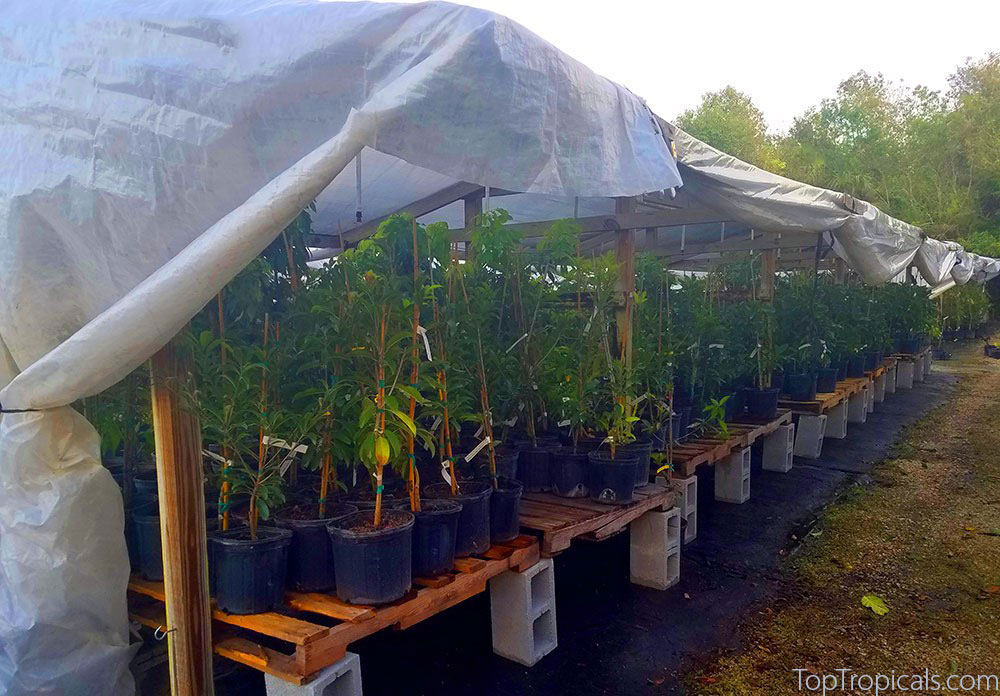
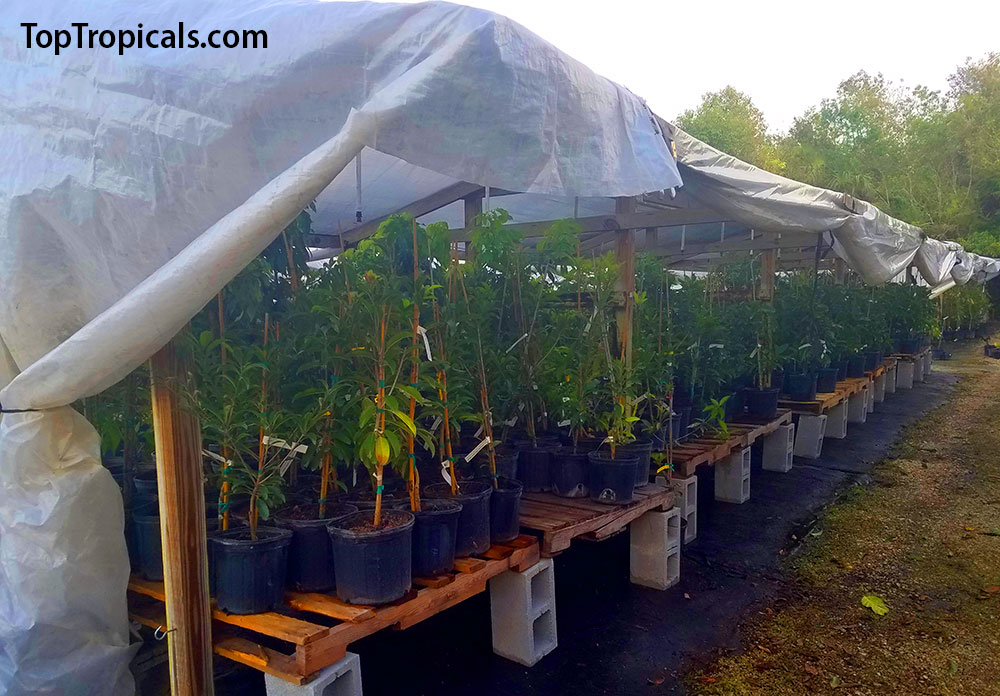
Rows  of  tropical  plants  in  black  pots  covered  with  frost  cloth  and 


plastic  sheeting  for  winter  protection  at  Top  Tropicals  nursery.

Protecting Tropical Plants with Frost Covers at Top Tropicals Nursery

Date: 15 Jun 2021

Healthy Plants: Q&A from Mr Booster

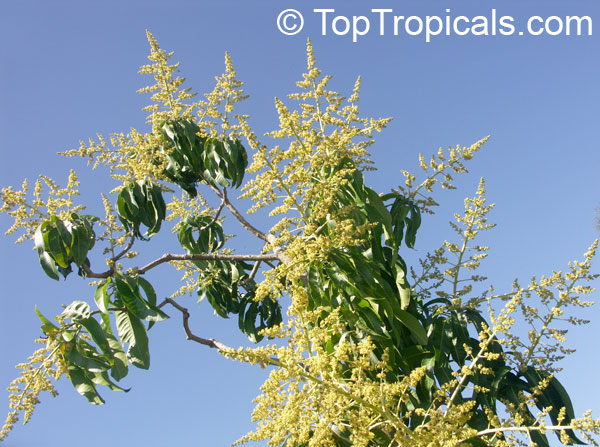
How to prevent mango flowers drop

Q:The mango blossoms my tree had in February have blown off due to weather conditions. Do you know what I can do to prevent this from happening again in the future?

A: The only "guarantee" to protect mango flowers from cold weather damage here in Florida is to plant a LATE flowering variety. Generally, mango trees are winter bloomers. Those varieties called "early season" start flowering in January (for example, Nam Doc Mai), and of course very often they get affected by cold, so they drop. Some varieties are so called "late season" - for example Venus. They start flowering in spring when the weather conditions are more favorable.
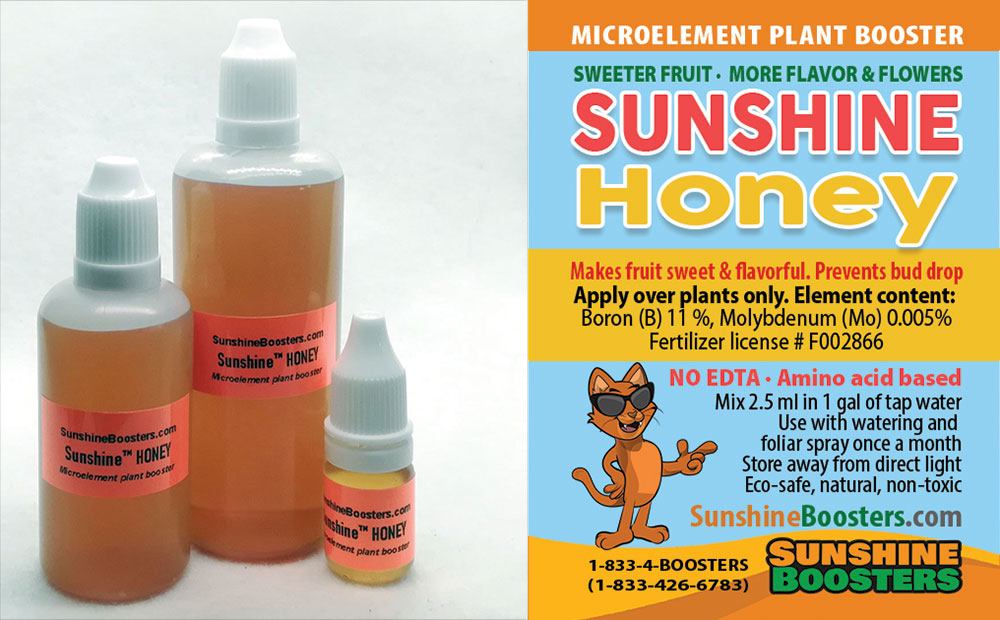
Another thing that may help you with mango flower drop is applying plant micro-element supplement Sunshine-Honey - it contains Molybdenum and Boron, which help flower and fruit development/strength and prevent their drop.

Read more: Boosting Mango Flowers and Fruit.

Date: 20 Aug 2020

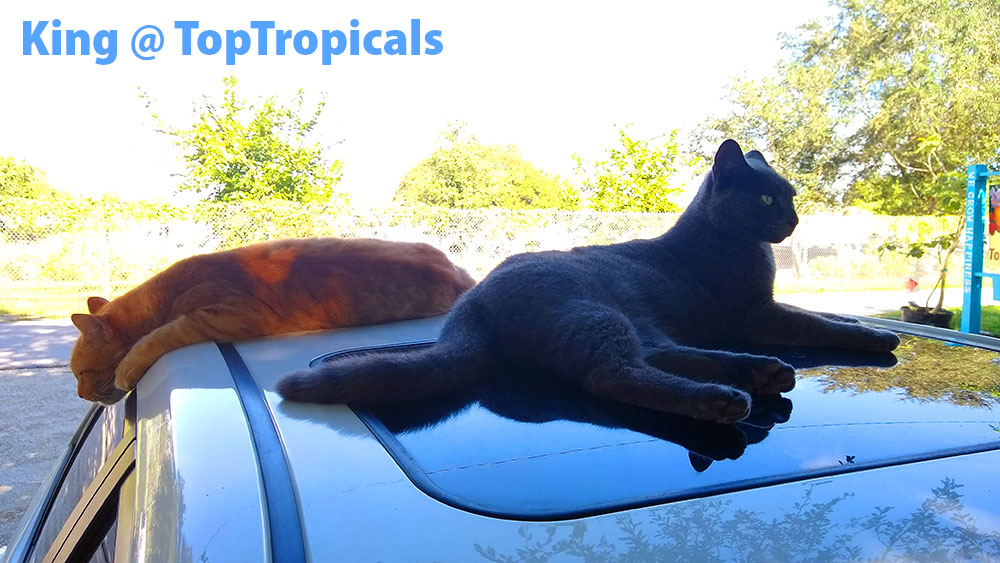
PeopleCats of TopTropicals. Cat of The Month: Greenhouse King

King continues being on top of the poll... thanks to his adventurous nature. This Purrrson just loves to travel! He likes driving and biking. How many times we pulled him out of customer's car or delivery truck!
Sure thing, he just did it again, joining contractor's team. Luckily he was noticed hiding in the back of the truck before the driver hit the highway!

ATTENTION VISITORS!

We are reminding you, please check your vehicles for cats before you leave!

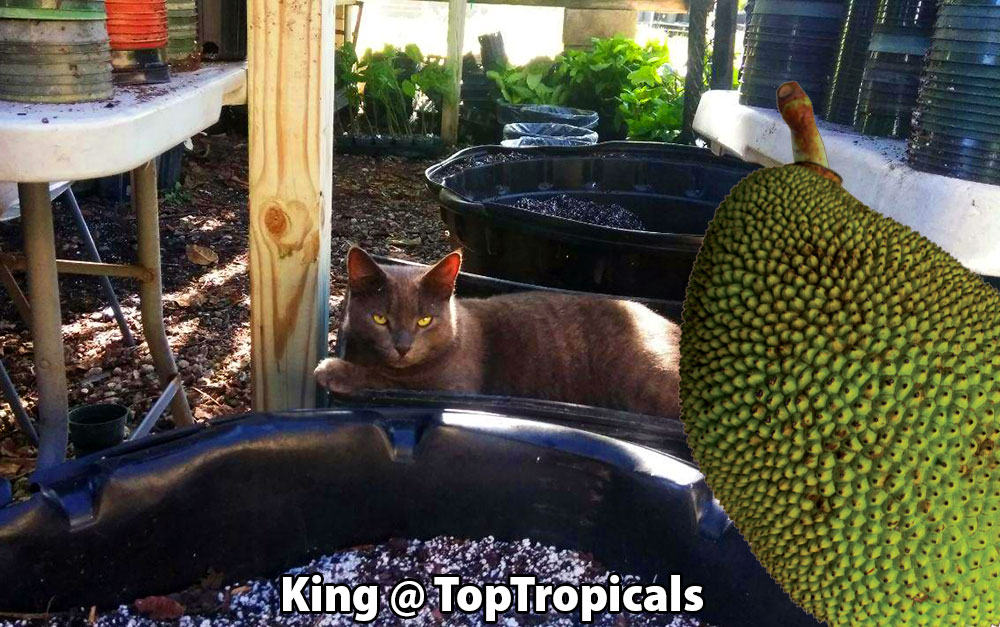
On a bright side, King has been very helpful, helping to plant newly arrived plant shipment from Thailand.
For those of you who has been waiting for rare plants, after a long delay due to airlines lockdown, we finally got lots of rare stuff and it will be ready for shipping soon.
Please make sure to add to your wish-list these coming-soon rare plants, this is the only way we can ensure you will get notified when they are available for sale, on first come first serve basis.
These are limited quantities, high demand plants!
Don't miss your dream plant! Just click on "Notify me when available" and add your email to waiting list.

Limited quantities - will be ready soon
(planted with King's help)

- Amherstia nobilis - Pride of Burma
- Artabotrys siamensis - Climbing Ylang-Ylang
- Barringtonia acutangula - Indian Putat
- Barringtonia asiatica - Fish Poison Tree
- Bauhinia aureifolia - Fragrant Gold Leaf Orchid Vine
- Brownea ariza - Rose of Venezuela
- Brownea grandiceps - Scarlet Flame Bean
- Cananga fruticosa - Dwarf Ylang-Ylang
- Couroupita guianensis - Cannonball Tree
- Cyrtostachys lakka - Lipstick Palm, Red Sealing Wax
- Desmos chinensis - Ylang Ylang Shrub
- Dillenia philippinensis - Katmon, Philippines Elephant Apple
- Garcinia mangostana - Mangosteen
- Ixora congesta Thai Flame
- Melodorum fruticosum - Hot Lips Ylang-Ylang
- Monstera variegata Thai Constellation (available now for pick up only)
- Gustavia augusta - Heaven Lotus
- Posoqueria longiflora - Needle Flower Tree
- Rauwenhoffia, Melodorum siamensis
- Saraca declinata - Red Saraca
- Terminalia catappa - Tropical Almond
- Vallaris glabra - Bread Flower
- Wrightia vietnamensis - Dwarf

TopTropicals PeopleCat Club and Zoo

Thank you for supporting us in helping PeopleCat Community!
Make your kind donation today and receive a surprise gift from us! Every little bit helps. Thank you and God bless you and your pets!

Date: 16 Nov 2019

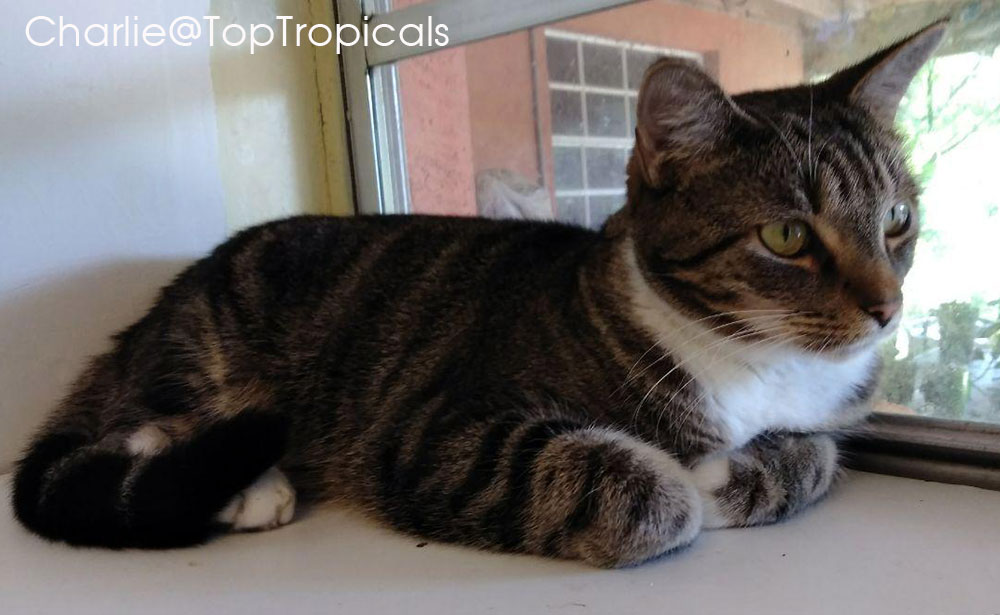
Meet PeopleCats of TopTropicals. Charlie, the Indoor Hunter

Carlie was a kitty drop off with LadyBug, Rickie, and Purry.
Charlie is Jamie's baby. She has an attitude of a teenager, one minute she loves you and the next - wants nothing to do with you. Carlie stays with the inside PeopleCats, she says it's too big in the outside world for her and she gets scared. Carlie has a fun game (fun to her): she plays around 2:00 am in the morning, she loves to drag random items down the hall (socks, toys, shirts, even blankets) in her mouth MEOOOWWWING as loud as she can. She then sets the items down on her human's bedroom rug and waits for her human to say thank you. We're pretty sure her hunting instinct is off...

Check out and more Cat of the Day stories.

2019, from Top to Bottom: Moe, Charlie, Bagheera, and Snitch. 2016: Charlie

From left to right: Purry, LadyBug, Charlie, and Ricki - 2016

Date: 29 Nov 2020

Cold protection of tropical container plants

Q: I am long time customer of yours, I live in San Diego California and while the summer and Fall temperatures are warm to mild, the winter temperatures dip to a point where some tropicals die off. We are experimenting with different variations of way to heat and insulate the pots we have the tropicals planted in as a way to keep them alive during the colder winter months. I was wondering if you knew of the ideal soil temperature for these tropical in order to look their best year round. All of the heaters we have installed have thermostats and temperature adjustments so we can now keep the soil anywhere between a range of between 65-75 degrees. Any advise you can provide would be greatly appreciated.

A: This is a very interesting concept you are working with. Indeed, keeping pots/roots warm, may help a lot! We've been experimenting with cold protection for a long time - for the above-ground plant parts. For sure keeping roots protected (even with a thick layer of mulch) will benefit tropical plants during winter. In case with container plants, this may help dramatically.
The guideline is, tropical plants slow down or stop their metabolism at 65F. As long as you can keep soil above that temperature - this should work great. Of course, the higher the better.
Optimum temperature for growing tropical plants in general - 70-85F. Above 90F, metabolism stops too, unless it's a heat tolerant, desert plant.

More information on winter cold protection of tropical plants and zone pushing:

Greenhouse in Virginia
Plumeria cold protection
Ghost Cold Protection
Seven rules of cold protection for tropicals
About Cold Protection
Cold protection - winter action for your plant collection
Tropical Treasures articles on zone pushing.