Date: 24 Jun 2018

URBAN TROPICAL GARDENING:
10 secrets of successful Container Mango growing on a
balcony.
Q: I live in Miami in apartment on a second floor, and I have a balcony with SE exposure. I wonder if I can grow a mango tree in a pot? Will it fruit for me? I recently moved to South Florida and I don't know much about tropical plants; but I tasted real fiberless mangos from someone's garden - it was so delicious and different from those in the grocery store. I wonder if I can have a fruiting tree on my balcony? And if yes, how do I plant and take care of it?
A:
Yes, you can! Here is what you need to do:
1) Temperature. You are lucky to live in Tropics,
keep it on a balcony year round.
2) Light. Position the pot in a spot with the most
sun exposure. Mango trees can take filtered light too, but
the less sun, the less fruit you will get.
3) Soil and Container. Use only
well drained potting mix. Step up the purchased
plant into next size container (3 gal into 7 gal, 7 gal
into 15 gal). When transplanting, make sure to keep growth
point (where roots meet the trunk) just at the top of the
soil. Covering base of the trunk with soil may kill the
plant.
4) Water. Water daily during hot season, but only
if top of soil gets dry. If it still moist, skip that day.
Mangoes (unlike
Avocados!) prefer to stay on a dry side.
5) Fertilizer. Use
balanced fertilizer once a month, 1 tsp per 1 gal of
soil. Do not fertilize during fruiting - this may cause
fruit cracks.
6) Microelements. Apply
SUNSHINE-Superfood once a month. This will help your
mango healthy, vigorous, and resistant to diseases. Use SUNSHINE-Honey to make your
fruit sweeter.
7) Insect control. Watch for scales and mealybugs,
clean with solution of soapy water + vegetable oil (may
need to repeat 2-3 times with 10 days interval), or with
systemic insecticide like imidacloprid only as needed (if
non-harsh treatment didn't help). Most Flea shampoo for
dogs contain that chemical, you may try that shampoo
solution.
8) Trimming. Once potted, do not remove leaves
that are discolored or have spots until new growth
appears. Dark dots on mango leaves, especially in humid
climate like Florida, may be signs of fungus. Treat with
fungicide according to label, and remove only badly
damaged leaves. Trim crown as needed after flowering and
fruiting (by Fall). Train into a small tree, and you may
remove some lower branches eventually.
9) Flower and fruit. Mangoes are winter bloomers
with bunches of tiny flowers coming in thousands. Many of
them set fruit (if pollinating insects present). Keep in
mind that young trees can only bare a few fruit. Normally
a tree will drop excessive fruit and keep only a few that
it can manage. To save the young tree some energy, remove
fruit if too many and leave only 2-3 for the first year.
It will pay you next year with more abundant crop.
10) Variety. Last but not least: Choose the right
variety for container culture! Pick from "condo" dwarf
varieties such as Icecream, Nam Doc Mai, Carrie, Cogshall, Julie, Fairchild, Pickering, Graham, Mallika, and a few others -
check out Mango Chart pdf
and full list of our Mango varieties
Date: 27 Apr 2020
How to feed a Mango tree...
and to grow a Dwarf Mango
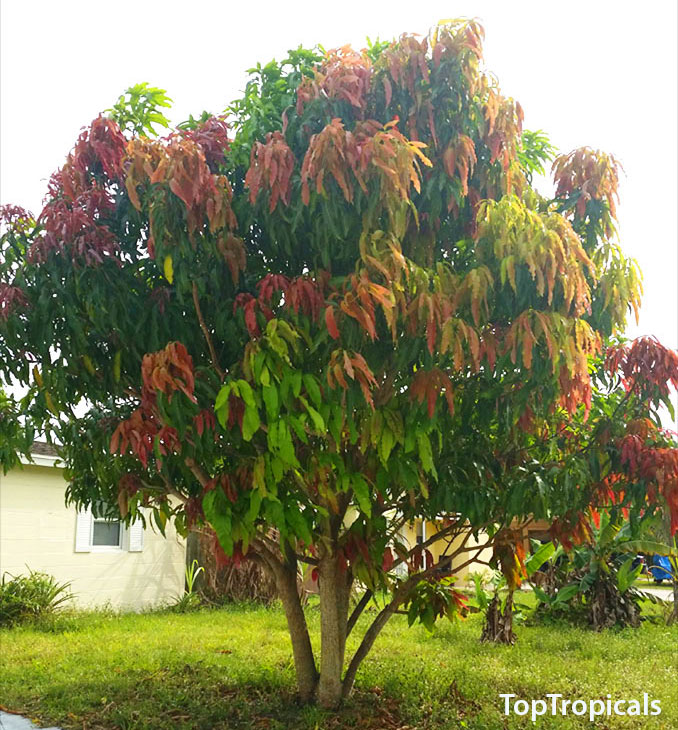
How to fertilize a Mango tree
Q: My mango trees that I bought and planted last august now have fruit. I bought 2 types of fertilizer from you and never used it. Should I use your fertilizer now?
A: It is a perfect time now to fertilize your plants as they
start active growth.
For mango trees, we recommend liquid fertilizer Sunshine Booster - Mango Tango. It is formulated for Mango trees,
especially for container grown. It improves quantity and quality of flowers and
ability to set fruit, reduces bud-flower-fruit drop. Can be used as often as
with every watering. For best results, use in combination with Sunshine Honey and Sunshine Superfood plant supplements. Its scientifically-balanced
stable formula is organic Amino-acid based and has NO EDTA chelators to eliminate
nutrients lockup; it does not affect crop taste.
Additionally, you may use slow-release granulated fertilizer Mango-Food once a month during hot season only. Dosage: 1 teaspoon per
each gal of soil.
Water-soluble fertilizers can be also used, however, those are usually
EDTA-chelated which is not as efficient as Amono-acid based Sunshine Boosters and
may create nutrients build up, especially if overdosed in containers.
For in-ground mango trees, you may use all the above, and slow-release
granulated fertilizer can be applied in larger quantities: spread a handful
around the drip line.
Remember that only liquid Sunshine Boosters can be applied year around. With other fertilizers, you need to be careful not to overdose, and apply only during hot weather (when night temperatures are steadily above 65F).
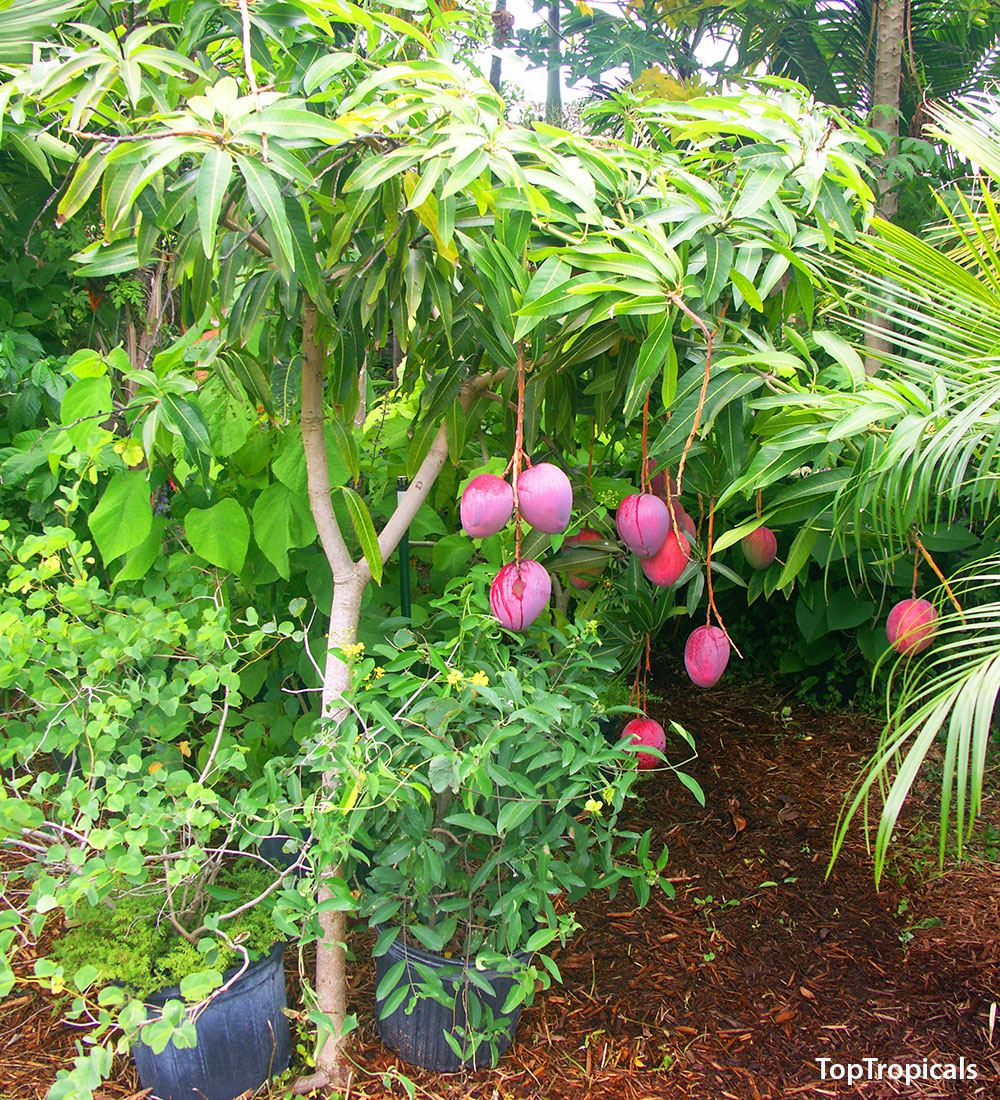
How to grow a Dwarf Mango tree
Q: I received the Ice cream mango tree in great condition (thank you for the ingenious packing job) on Wednesday and have planted it in a pot slightly bigger than the root ball. I plan to grow the tree on my front porch, so how big a container should I ultimately use when the tree outgrows this pot? How big a container does it need to fruit? I hope to keep it around 6-7 feet high, if possible. I live in Hawaii.
A: Ice Cream mango is a perfect variety for container culture, and it should be happy in Hawaii. You did everything right. Keep it in this small pot for now and wait until it starts vigorous growth in Summer. Once it starts growing (and you will notice roots growing too, sometimes they try to grow through the holes in the bottom of the pot), then it's time to step up into a bigger container (7-10 gal). Eventually you may use container size as large as 15 gal. Ice cream mango is slow growing and compact, and you will be able to maintain it under 7 ft with very minimal pruning if any.

Date: 21 Oct 2025
Cassia vs Bauhinia: which is better as an everblooming container tree?
Cassia vs Bauhinia: which is better as an everblooming container tree?
- 🌸 Cassia (Senna) trees are very popular flowering trees - fast growing, free-flowering, relatively cold hardy, and they love the summer heat. Cassias come in several colors: yellow, orange, pink, red, and rainbow. Rainbow varieties (which are hybrids between yellow and pink cassias) are the most popular thanks to their multicolor blooms with swirls of yellow, pink, red, and orange. But while Rainbow Cassia is a spectacular flowering tree for southern gardens, is it a good choice for a container when you want color on your patio or pool deck?
- 🌸 Some yellow-flowering cassias make attractive bushes that bloom most of the year and stay compact, so they can be grown as container specimens: Cassia didymobotrya- Popcorn Cassia
- 🌸 When it comes to Rainbow or pink cassias such as Cassia javanica - Apple Blossom Tree or Cassia grandis- Red Cassia and other species and hybrids (Cassia marginata - Rainbow Shower Tree, Cassia roxburghii - Ceylon Senna, Cassia x nodosa - Pink Shower), these are usually more vigorous trees that may take several years to bloom. Their flowering season lasts from a few weeks to a couple of months. These trees grow moderately fast but typically need to reach about 10 feet before they start flowering.
- 🌸 So, the answer is: if you want rich, deep color year-round from a container tree, go with Bauhinias - Orchid Trees. Most varieties grow well in pots, stay compact, and reach blooming maturity within just one season. The following varieties are everblooming and can produce flowers for up to 10 months of the year:
Senna alata - Empress Candles
Cassia fistula - Golden Shower (a compact size winter blooming tree)
- Bauhinia madagascariensis - Red Dwarf Orchid Tree. Blooms from winter through fall, up to 10 months a year. The most cold-hardy of all.
- Bauhinia blakeana - Hong Kong Orchid Tree. A large tree in the ground, but compact in pots if trimmed. Grafted trees flower right away. Winter bloomer, cold hardy to light frost.
- Bauhinia tomentosa - Yellow Orchid Tree. Flowers from Winter through Summer, cold hardy to light frost.
- Bauhiniamonandra - Napoleon's Plume Orchid Tree. Almost everblooming with the longest flowering period (less cold hardy than the first three).
- Bauhinia acuminata - Dwarf White Orchid Tree. Blooms from summer through winter (also less cold hardy than the first three).
🛒 Explore Cassia trees and Bauhinias (Orchid Trees)
📚 Learn more:
- ✦ How to add color to your yard with Cassias
- ✦ Rainbow Cassias and Why they are called "Rainbow"
- ✦ Napoleons Plume - Orchid Tree that blooms in a pot
- ✦ Bauhinia madagascariensis, or Red Butterfly Orchid Tree that NEVER Stops Blooming
- ✦ Rare Red Orchid Tree you may never find again but everyone wants
- ✦ Bauhinia acuminata, Dwarf Orchid tree - white and elegant
- ✦ 5 small tropical trees that bloom all summer or year around
- ✦ How to grow Orchid Trees in pots
#Container_Garden #Trees #How_to
🟢 Join 👉 TopTropicals
Date: 25 Feb 2021
Container mango - Condo varieties
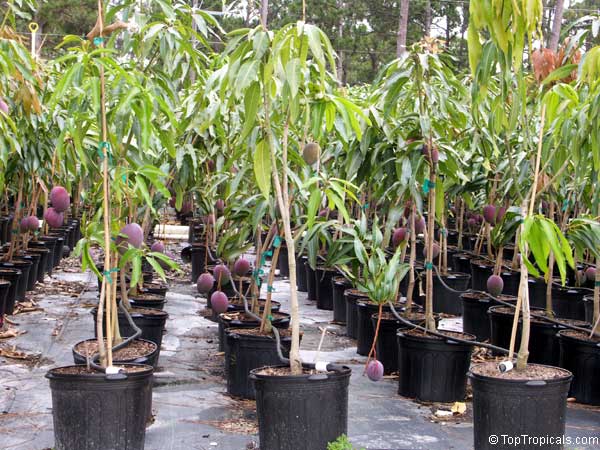
Q: What are the good varieties of mango trees available for container grow? Can you please share the details?
A: There are some great varieties of Mango selected specifically
for container culture, they even have a nick-name - "condo mangoes". They
have compact growth habit and respond well to pruning to keep them in small
size. Here are a few of our favorites that we currently have in stock:
Glenn
Ice
Cream
Cotton
Candy
Mallika
Manilita
Pram
Kai Mai
Mun
Kun Si
Maha
Chinook
You can see more condo mangoes on this page.
Related articles:
How to grow a Dwarf Mango tree
Choosing the right Mango for your garden
10 secrets of successful Container Mango growing on a balcony.
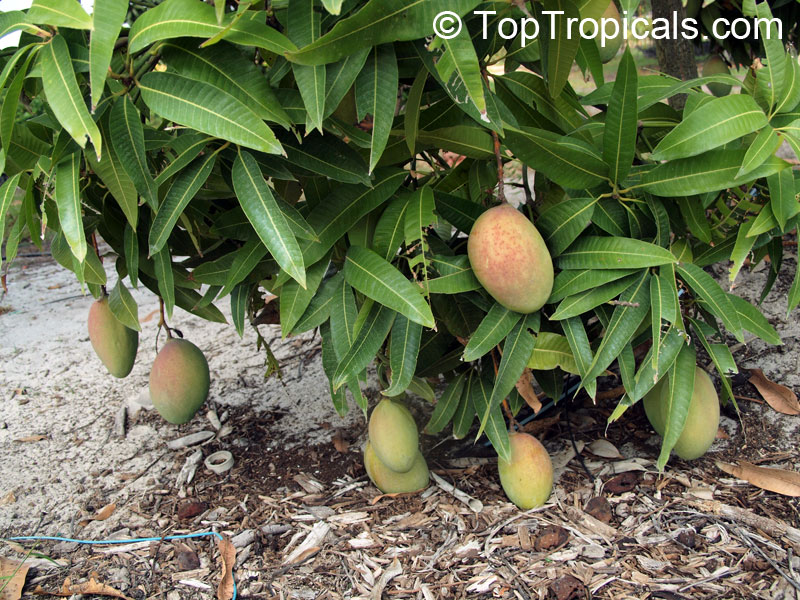
Condo Mango
Date: 28 Sep 2025
 Guava Tree Plant Care
Tips from Top Tropicals Plant Expert - Tatiana Anderson
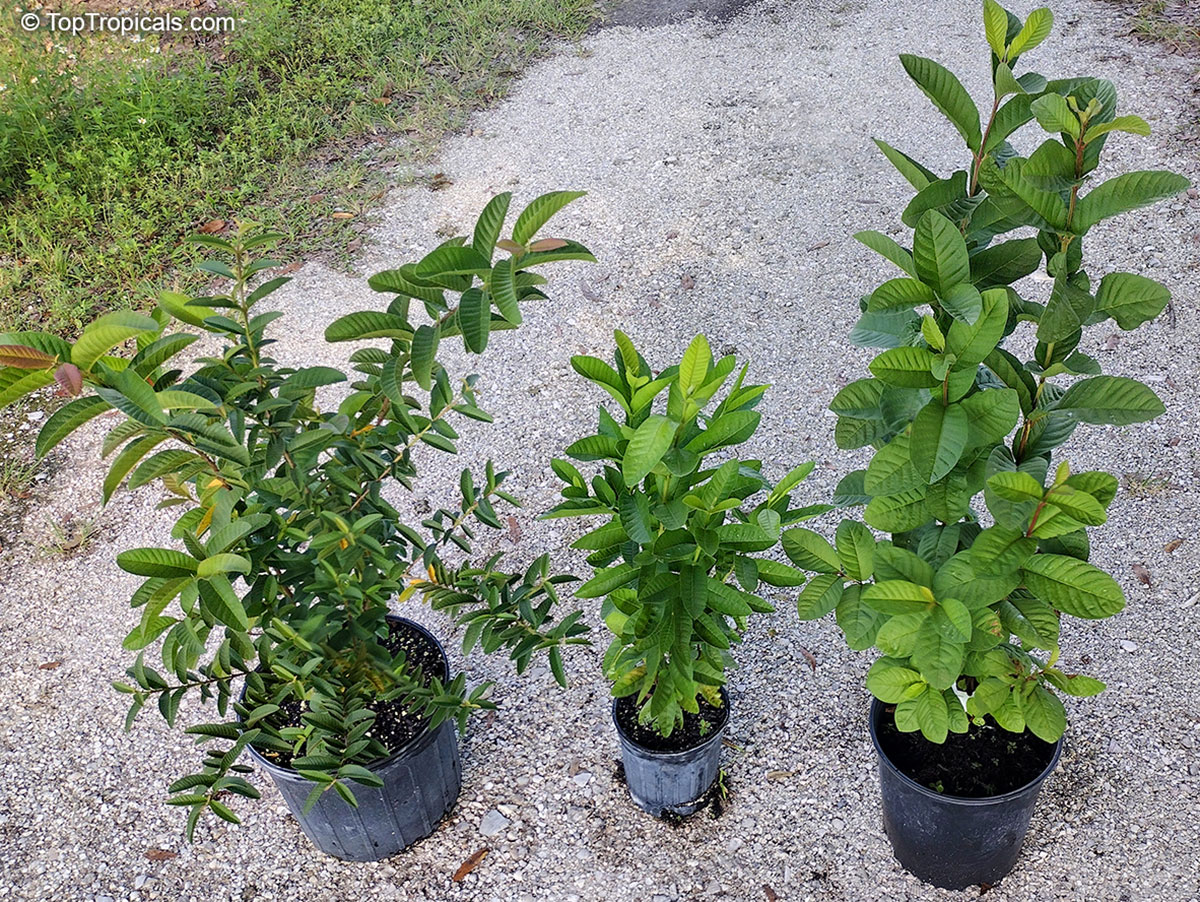
Where to Plant Outdoors
Guavas love full sun — aim for 6–8 hours of direct light. They’re adaptable to many soils but do best in well-drained, organic-enriched mixes. Plant them in a spot where you can water easily; guavas are thirsty trees during fruiting.
Container & Indoor Growing
Don’t have space or live in a cooler climate? Guavas thrive in large pots. Use well-drained potting mix. LINK TO OUR SOIL Keep them on a sunny patio during warm months and bring them indoors when nights dip below freezing. Compact varieties like Dwarf Hawaiian Rainbow or Tikal are especially good for pots.
Winter Care
Mature guavas can handle a light frost (down into the high 20s F), but young plants need protection. If planted outdoors, cover them with frost cloth on cold nights. Container guavas can be wheeled into a garage, greenhouse, or bright indoor window until the weather warms.
Watering and Fertilizing
Water deeply once or twice a week, more often in hot weather or when fruit is developing. They don’t like soggy soil, but they won’t complain about short floods either. Fertilize 3–4 times a year during the growing season with a balanced fruit tree fertilizer. Guavas especially love potassium and phosphorus for strong flowering and heavy crops. We recommend liquid crop booster Sunshine C-Cibus and balanced controlled release fertilizer Green Magic.
Pruning
Prune after fruiting to keep them compact and open up airflow. Remove crossing or dead branches. In containers, trim back vigorous shoots regularly to manage size and encourage more fruiting wood.
Pests and Problems
Guavas are generally tough and pest-resistant. The main thing to watch for in humid or rainy climates is mealybugs - those cottony white clusters on leaves or stems. They're easy to manage with neem oil or a quick spray of horticultural soap.
Fruit time
Guavas fruit young - often within a year or two.
Pollination
Guavas are self-pollinating, so you'll get fruit even with a single tree. Planting more than one tree, however, often boosts harvests and gives you a longer fruiting season.
If you've ever wanted instant gratification from a fruit tree, guava is it.
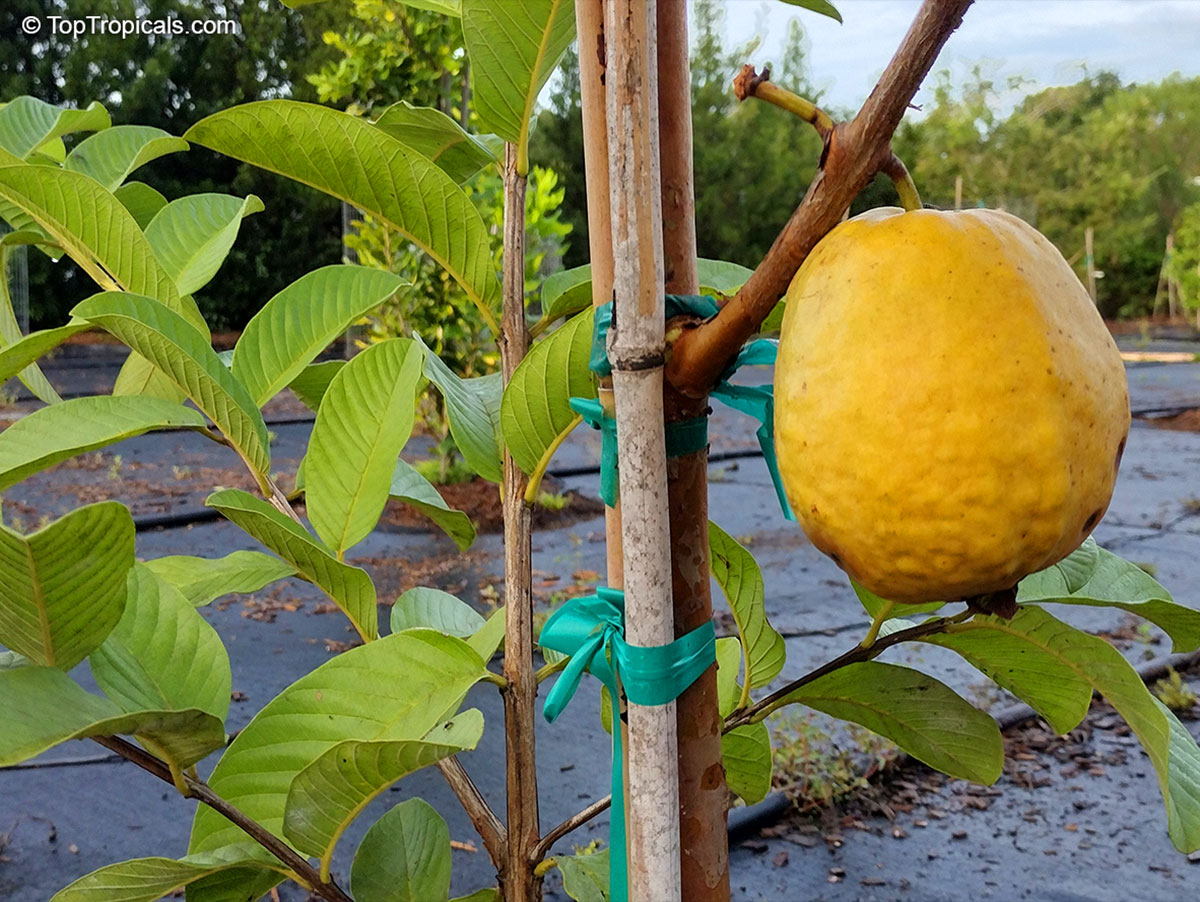
🍴 Guava Recipes
With all that fruit, the next question is always: "What do I do with it?" Here are our favorites:
Cas Guava: Make Agua de Cas
Boil halved Cas Guava fruits with sugar, simmer, strain, and bottle. Dilute with water when serving. The concentrate keeps for months in the fridge.
Check out the recipe.-
Hawaiian Gold: Make Drinks
Perfect for Mojitos or Margaritas. Sweet, tangy juice pairs beautifully with lime and mint. Learn more
-
Araca Pera: Guava Wine
Famous in Brazil, where the fruit is turned into a vibrant rosу wine. Locals say it’s the taste of summer in a glass — and yes, you can make it at home too. Learn more...
-
Quick snack: Guava Grilled Cheese
Spread guava paste or fresh mashed fruit with cheese, grill until golden. Sweet and savory heaven. Learn more...
-
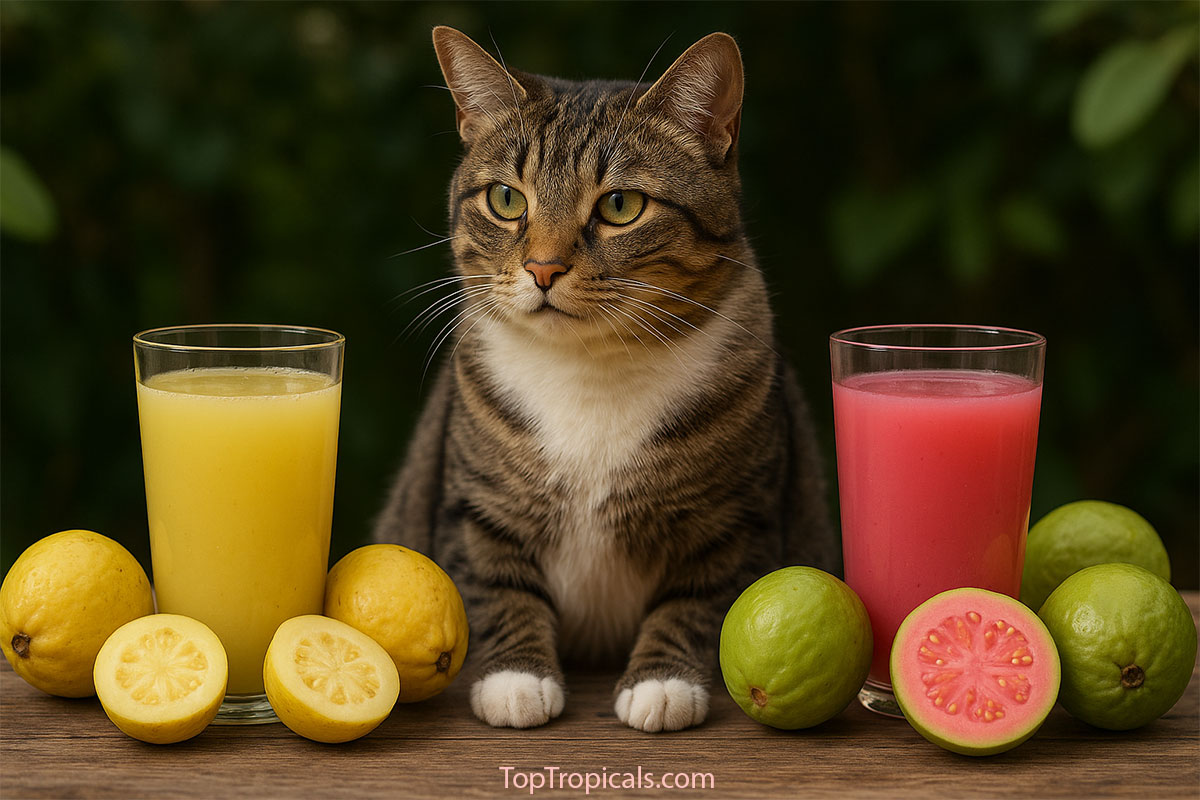
Simple Guava Juice
Blend ripe guavas with water, ice, and a little sugar if you like. Instant refreshment.
✅Ready to Grow? Whether you want fresh juice, sweet fruit, or even your own guava wine, we’ve got the best varieties in stock right now. Your future self, sipping guava juice on a hot summer afternoon, will thank you.