Garden Blog - Top Tropicals
Date: 17 Nov 2026
How to Grow Olive Trees: 5 Secrets to Shaping, Fruiting
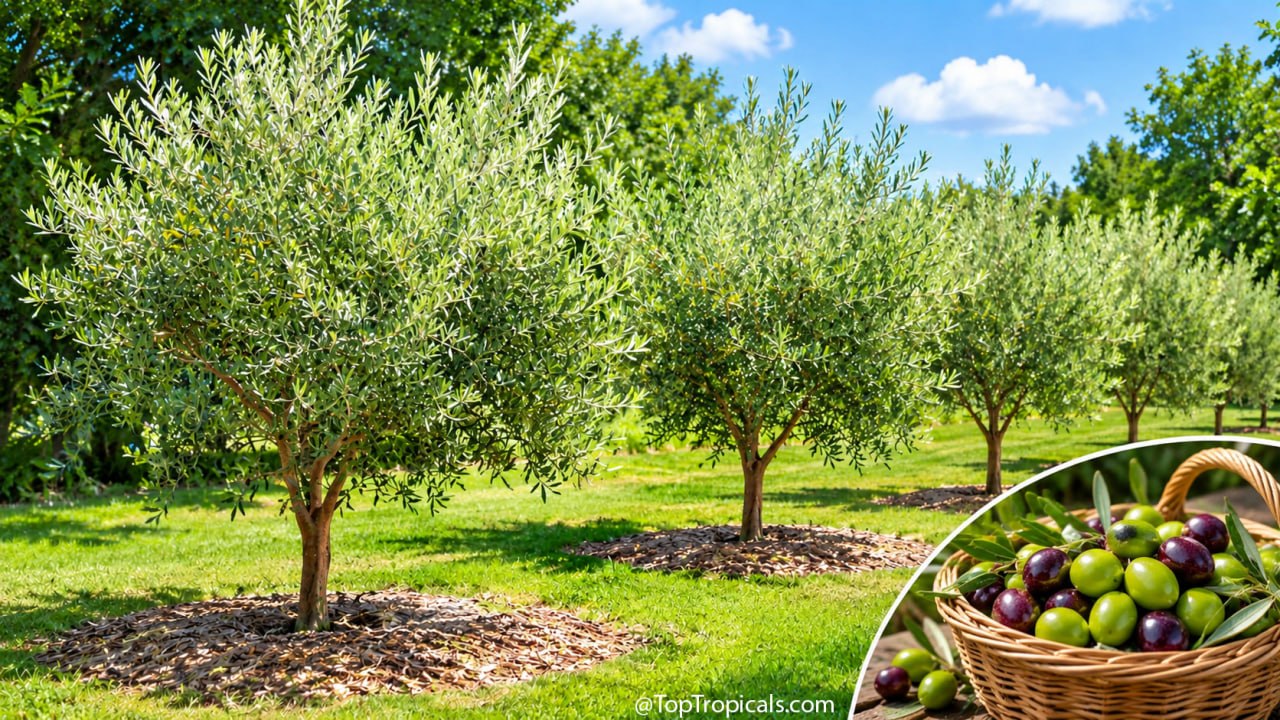
How to Grow Olive Trees: 5 Secrets to Shaping, Fruiting & Harvesting
Your olive tree keeps producing long, skinny branches. It grows, but never fills out. And where are those olives?
Olive trees (Olea europaea) can test your patience! But a few growing secrets can make a big difference.
Secret #1: Shape early, but don't overprune!
Young olives often produce long, leggy shoots instead of a full canopy.
Select 3–5 well-spaced main branches. Remove competing shoots, suckers, and inward-growing branches. Selectively shorten long young shoots to encourage branching.
💡 Here's the catch: Olives fruit on shoots produced the previous year. Cut off all those tips, and you may lose next year's harvest!
Once the framework develops, thin crowded branches rather than shortening every shoot. Let sunlight reach the canopy's interior.
Secret #2: More fertilizer doesn't mean more olives
Olives naturally grow in relatively poor Mediterranean soils. Excess nitrogen encourages leafy growth at the expense of fruiting.
Fertilize modestly when needed, and avoid pushing tender growth late in the season.
We recommend Sunshine C-Cibus to encourage flowering and fruiting, along with Green Magic controlled release fertilizer every 6 months.
Secret #3: In Florida, drainage is everything
Olives tolerate drought better than soggy roots. Florida's rainy summers can be challenging.
Plant on elevated ground where drainage is questionable. In containers, use a fast-draining mix and never leave pots standing in water.
Water young trees thoroughly, then allow the upper soil to dry before watering again.
👉 Olives for Your Florida Landscape - UF/IFAS
Secret #4: Your tree needs a little winter
Olives require winter chilling to initiate flower buds. A healthy tree in a warm climate may produce beautiful foliage but no olives.
Central and North Florida offer better conditions for fruiting because of their cooler winters. In South Florida, insufficient chilling makes harvests less reliable. Warm winter spells, rain during flowering, and excessive pruning can also reduce production.
Secret #5: Choose the right variety
Arbequina Olive, originally from Spain, is a promising choice for Florida. It has a compact habit, flavorful olives, excellent oil quality, and grows well in containers.
Coratina, from Italy, is valued for its high-quality, intensely flavored oil and vigorous growth.
Leccino, another Italian variety, produces mild-flavored olives suitable for oil production and is known for its adaptability.
All three are worth trying in Central and North Florida, although fruiting depends on sufficient winter chilling. Arbequina is self-fruitful, while Coratina and Leccino benefit from compatible pollinizers.
When will you finally harvest?
Vegetatively propagated olive trees commonly begin bearing around 3–5 years, sometimes earlier under favorable conditions. Expect small initial harvests that increase as the tree matures.
Olives may bear heavily one year and lightly the next.
Harvest green olives when fully sized and firm, or wait until they turn purple-black. Fresh olives are extremely bitter and must be cured before eating.
💡 The secret? Grow a well-shaped, sunlit canopy with plenty of young fruiting wood. That's how you turn skinny branches into your own olive harvest!
🛒 Grow Your Own Olives
📚 Learn more:


• Olea europea - Olive Tree - in Plant Encyclopedia
• 3 Olive Trees Worth Planting in Your Yard Right Now
• Warm marinated olives: quick-n-fun exotic recipes
• Grow your own Olive Oil
• How to grow your own Olive
#Food_Forest #How_to #Discover
🟢 Join 👉 TopTropicals