Garden Blog - Top Tropicals
Date: 15 Nov 2026
✨ The fragrance that made Champaka famous
By Tatiana Anderson, Plant Expert, Top Tropicals
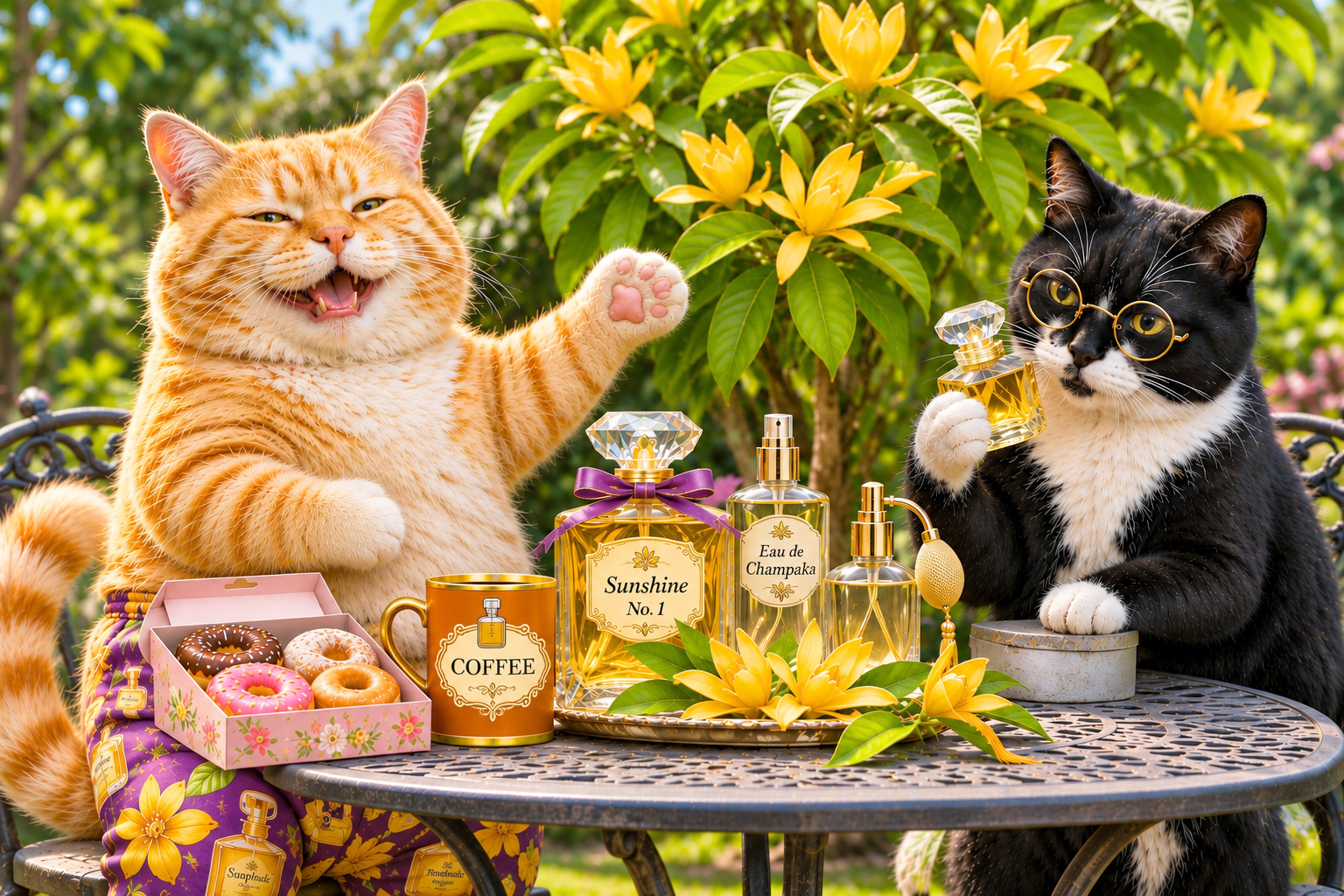
Smokey: Made from Champaka flowers, I presume?
Sunshine: Of course! With my own secret ingredient!
Smokey: Ah. Eau de Donut. Very sophisticated.

Sunshine's formula needs work, but he picked the right flower. People across India and Southeast Asia have treasured Champaka blossoms for centuries, long before anyone thought to sell them by the bottle.
Golden (or Yellow) Champaka, Magnolia champaca (formerly Michelia champaca), is also called the Joy Perfume Tree. It's a true magnolia, though you might not guess it from the flowers. They're slender and starry, with narrow petals in shades from golden yellow to apricot orange.
But it's the fragrance that makes people stop and turn around. To us, Champaka smells like sweet, fruity bubble gum with rich floral notes underneath. Other people pick up orange blossom, a bit of warm spice, and a sweetness that's hard to name. A single flower is strong enough to make you look around for the source. A mature tree in bloom on a humid evening can perfume a good part of the garden. Each flower lasts a week or more on the tree, and new ones open every day.
In India and Southeast Asia, Champaka is considered a sacred tree and is part of daily life. The flowers are offered at temples and shrines, strung into garlands, tucked into hair, or floated in bowls of water. The oil has a long history in traditional perfumes and hair oils. The floating flowers are easy to copy at home: put a few in a plate of water and they'll keep for a couple of days.
Western perfumers noticed too. Champaka is often credited as one of the flowers in Jean Patou's Joy, a rich floral perfume built around jasmine and rose, created in 1929-1930 and advertised at the time as "the costliest perfume in the world." The common name Joy Perfume Tree is usually traced to that perfume.
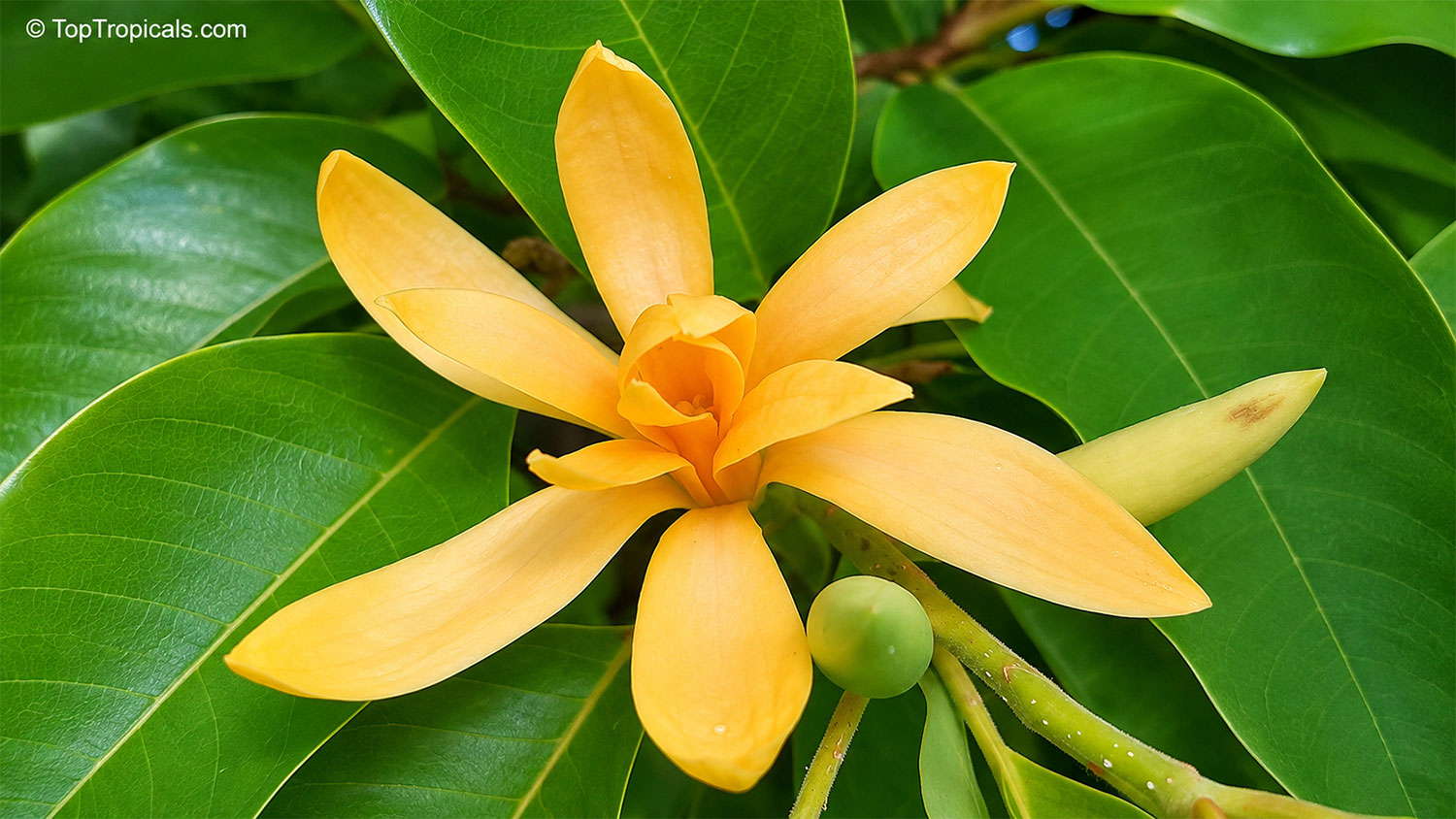
Unfortunately, we still can't send fragrance through a newsletter. You'll have to smell a Champaka flower for yourself.
⭐Why Champaka is one of our signature plants
We've grown Champaka for years at our B-Farm nursery in Sebring, Florida. It has become a Signature Plant of Top Tropicals, and it's the flower in our avatar. We'd grow it even if the flowers had no scent.
🎥 Watch Champaka bloom by our office🌻
Champaka loves the heat. In our Florida conditions it grows vigorously, with an upright, somewhat columnar habit that fills out into a dense, bushy canopy once established. Golden Champaka's leaves are a soft light green, somewhere between lemon-lime and chartreuse, and the tree looks fresh even when it isn't flowering.
That light color is normal for this plant. Don't mistake it for a hungry tree and start piling on fertilizer. White Champaka has noticeably darker green foliage, and you can see the contrast clearly in our nursery videos. The mature trees near the B-Farm office are our favorite examples, and birds like the thick canopy too. They often build nests there in spring.
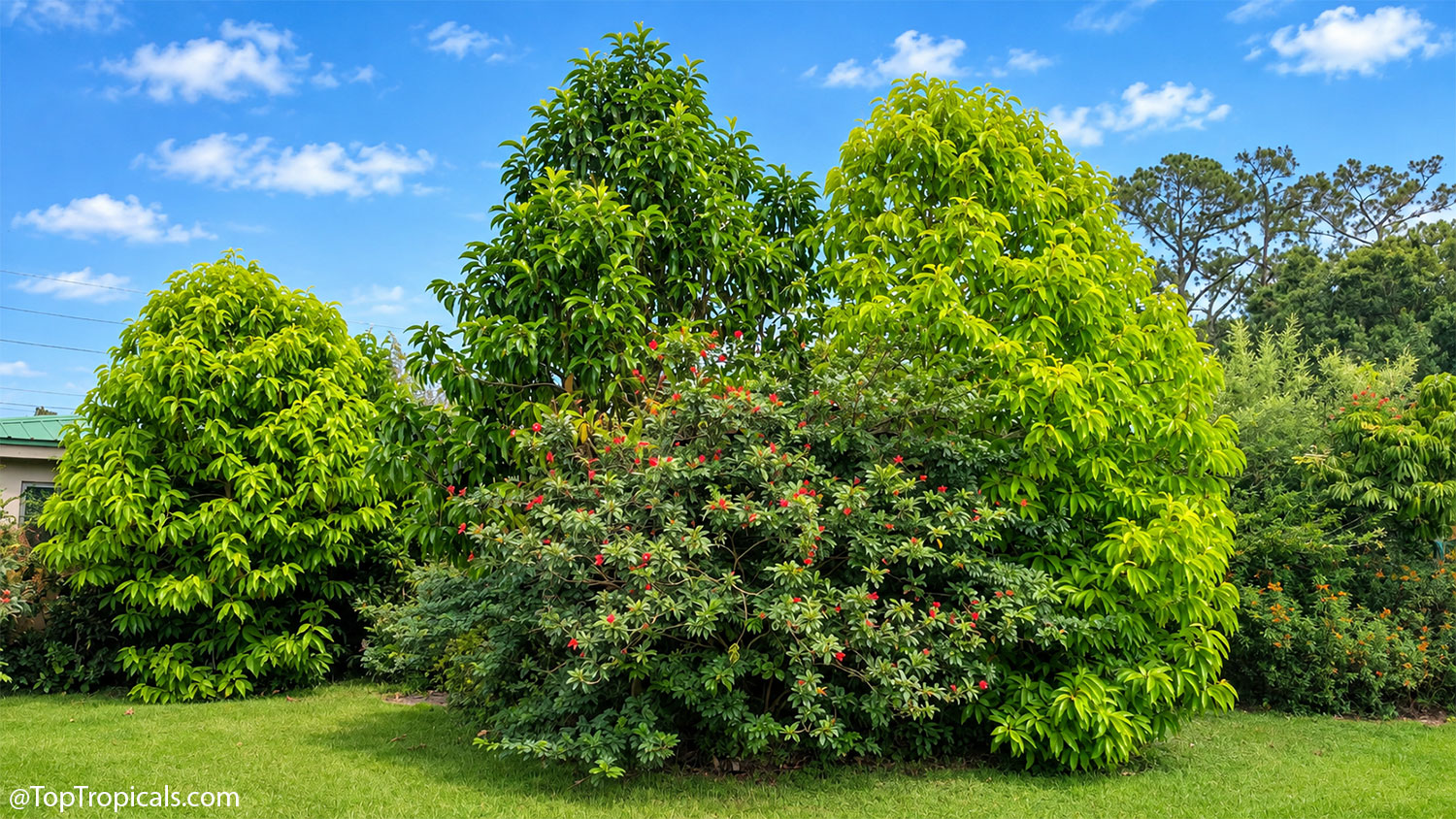
A healthy tree blooms for several months at a stretch. Ours flower from late spring or early summer well into winter, and where winters are warmer, they can keep going.
🎥 What does a mature Champaka Tree look like? 🌳
Before planting, consider how large Golden Champaka can become. You'll see 10-20 feet listed, which is a fair size for a pruned tree in a garden, but in its native forests it grows far taller. Pruning, soil, water, and climate all affect how big yours gets. Give it room to spread, keep it a sensible distance from the house, the roof line, and power lines, and think about where it will be in ten years, not just next spring.
A stand-alone tree needs plenty of space, and 15 to 20 feet from other trees is a reasonable starting point. For a perfume hedge we've suggested planting about 10 feet apart, knowing the trees will need regular pruning to stay at that spacing as they mature.
🟡⚪ Golden vs. White Champaka: which should you grow?
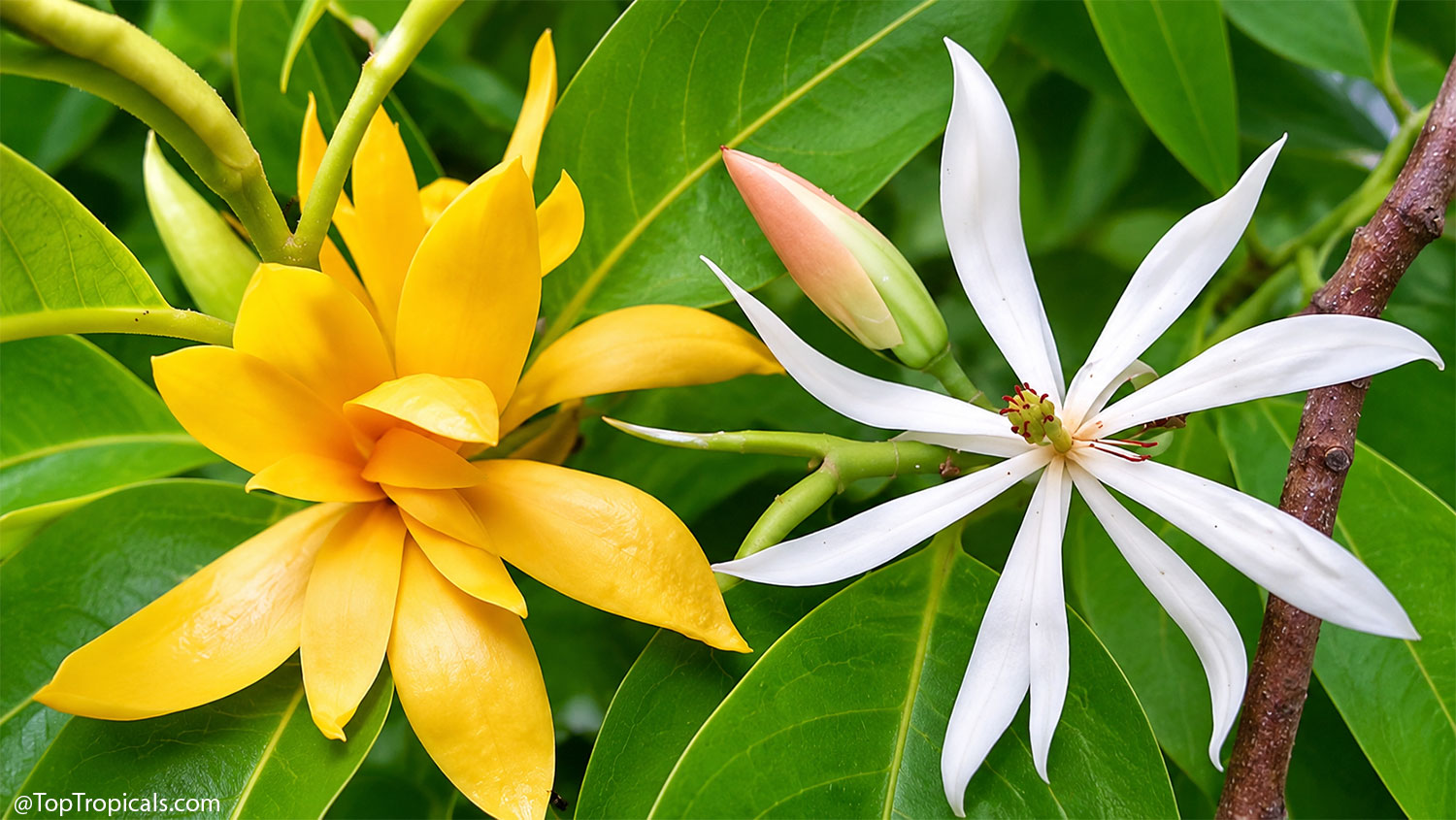
These are two different plants, not two flower colors of the same tree.
Golden Champaka (Magnolia champaca)
It has golden-yellow to yellow-orange flowers, light lemon-lime foliage, and upright growth. It grows readily from seed. We collect seed from our own trees and raise new plants from it. Golden is the better choice for a landscape with room to spare, though it can also be kept in a large container with pruning.
White Champaka (Magnolia x alba)
Also known as Michelia x alba, it's generally treated as a hybrid of Magnolia champaca and Magnolia montana. The flowers are creamy white and the leaves darker green.
The fragrance is a little sharper and more intense than Golden's, closer to jasmine or gardenia, while Golden is sweeter and milder, with more of that bubble gum note.
In our experience White Champaka stays more compact and grows more slowly. Because it's sterile or effectively seedless, it has to be propagated vegetatively, by grafting, air layering, or similar methods, depending on the nursery. Plants made from mature flowering wood can bloom at a fairly small size, which makes White Champaka a good choice for containers and smaller gardens.
So, roughly: choose Golden if you have space, want a bigger tree with bright foliage and orange-gold flowers, and like a sweeter scent. Choose White if space is tight, you're growing in a pot, you'd like flowers on a smaller plant, or you lean toward jasmine and gardenia. If you have room for both, they look good together, and the leaf color difference is part of the appeal. We compare them in Which Champaka is better - White or Golden? and in this video of both growing side by side.
❄️ Our biggest surprise: the February 2026 freeze
In February 2026, B-Farm went through a record freeze: two nights in a row around 25°F, inside about two weeks of hard cold. (The full story, and what we replanted afterward, is in Florida freeze damage - what to replant after a record cold winter.)
We didn't cover our Champakas. They're simply too big. So both kinds took the cold with no protection at all.
Our Golden Champakas lost every leaf and had tip and branch burn. They looked bad. New growth started within a few weeks, but regrowing the damaged branches took a few months.
The White Champakas lost their upper leaves, pushed fresh green growth within days, and were blooming again by March. They barely paused!
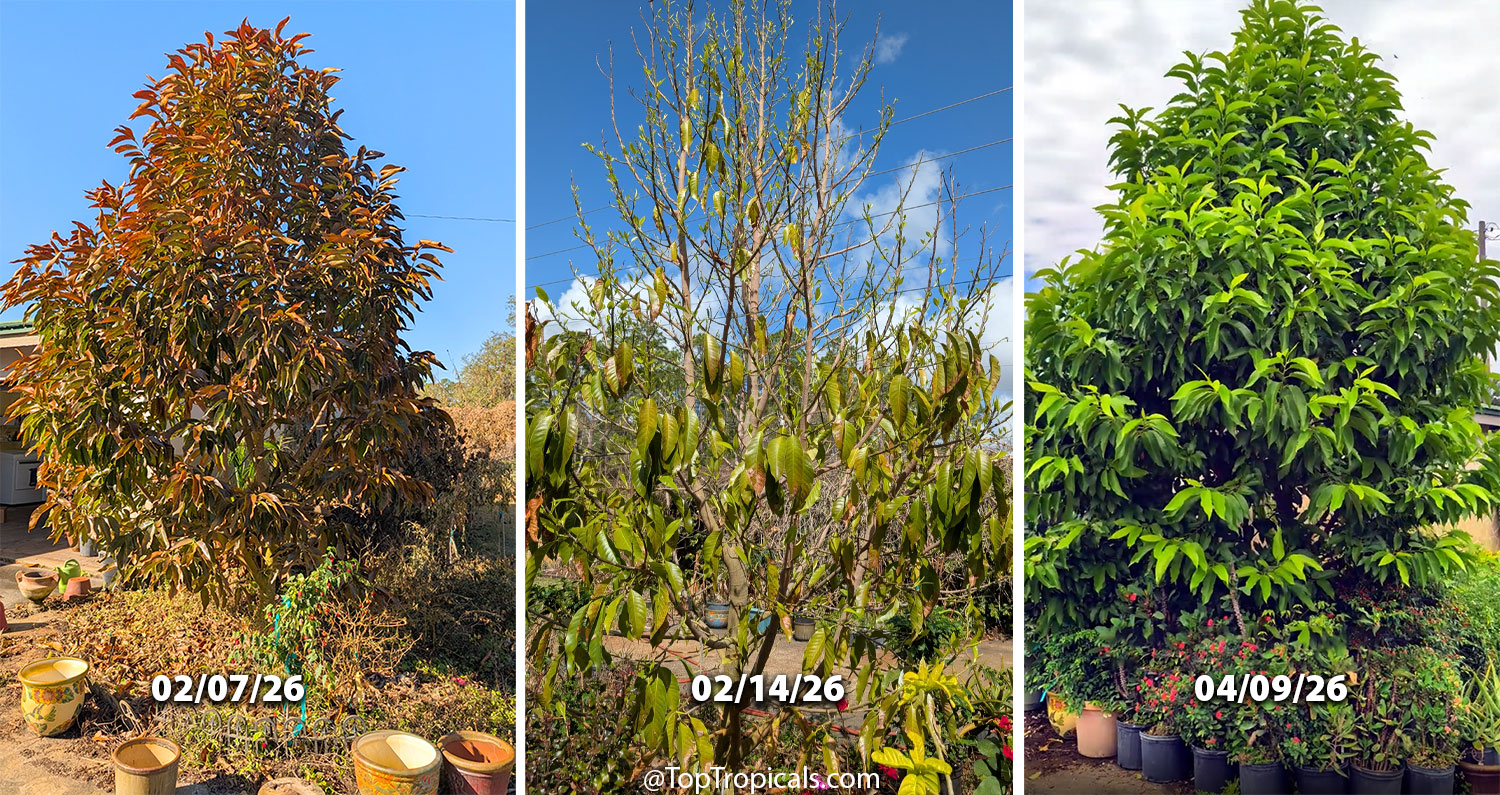
Well, that wasn't what we expected. White Champaka is widely listed as the more cold-sensitive of the two, and going by the hardiness charts, we figured the Golden trees would hold the line and the White ones would be the casualties. It went the other way.
We're not ready to call White Champaka the hardier plant. This was one freeze at one nursery. Our trees differ in age and how well established they are, and an older tree with a deep root system has more to regrow from than a young one. Wind exposure, overhead canopy, and soil moisture can all change how hard the cold hits a particular tree, and so can the length of the freeze. A quick dip to 25°F is not the same as a freeze that holds all night. And two nights at 25°F doesn't mean either tree will reliably survive that temperature next time.
Still, the result was clear enough that we're putting more White Champakas in the ground this season. More photos and video are in White Champaka did better at 25°F than the hardier one.
Smaller and younger trees are worth covering, and our Cold Night Survival Guide explains how. If your Champaka does get hit, take the covers off in the morning, and then be patient. Don't cut anything until spring growth shows you which branches are dead, because a tree can look finished while much of its wood is still alive. Once the weather settles, go back to light feeding, such as Sunshine Boosters , rather than a heavy dose of fertilizer.
🌞 Growing Champaka in Florida and other warm areas
Site and planting
In Central and South Florida, Champaka is an easy tree to grow if it gets sun, steady water, and room. There, and in other places where frost is rare, it can live in the ground year-round. Where you can, pick a spot with some shelter from cold winter winds.
Before planting, find the root flare, where the first main roots come out of the trunk. Set it at or slightly above the level of the surrounding soil. Don't bury the base of the trunk, even if it was buried in the nursery pot. If you're improving sandy soil, work compost into a broad planting area rather than concentrating it in the hole, and backfill around the root ball with the native soil. A layer of mulch over the root zone, kept a few inches off the trunk, helps hold moisture while the roots establish.
Sun and water
Established trees do well in full sun as long as they get enough water. Newly planted and container-grown trees may need some afternoon shade while they settle in, especially in midsummer heat.
Champaka likes consistent moisture, but not soggy roots. Florida sand drains and dries out fast, so at B-Farm regular irrigation is a must, and a permanent sprinkler system works well for in-ground trees. A newly planted tree needs the most attention, because its roots are still confined to the original root ball and can dry out even when the ground around it is damp.
Feeding and pruning
Feed Champaka regularly while it's actively growing, and cut back when the weather cools. In the nursery we use Green Magic controlled release fertilizer every 6 months, because it feeds steadily between waterings. Keep pruning light and do it in warm weather, ideally after a flush of flowers. Skip heavy pruning while a tree is recovering from cold.
Growing in a container
Champaka can live in a large container. Its upright habit helps. White Champaka is especially suited to it, and Golden can be managed with occasional pruning. Move up one pot size at a time, keep the root flare at the surface each time you repot, use a mix that drains freely, and feed regularly, since a pot holds only a small supply of nutrients and every watering washes some out. Over the years a healthy tree will need a substantial pot, plus root pruning or trimming of the top to keep it in balance.
When will it bloom?
At our nursery, Golden Champaka seedlings usually begin flowering at about 2-3 years old, and we've filmed young Golden Champakas in bloom at around three (When does Champaka start blooming?). In less favorable conditions, seed-grown trees can take much longer. White Champaka grown from mature flowering material can bloom smaller. Once they start, both flower for months each year in a mild climate.
🍃 Why is my Champaka dropping leaves?
This is one of the questions we hear most. Champaka comes from tropical Asia, where there's no winter like ours. It's an evergreen there, and in the warmest parts of Florida (zones 10-11) it may hold its leaves and keep blooming right through the cool season. In cooler winters like ours in Sebring, both Golden and White Champaka tend to yellow and drop many of their leaves between winter and early spring, and for a few weeks they look tired. Winter is also when our Golden trees set the seed we collect for the next crop of seedlings.
Usually the tree is just responding to cooler weather. Keep your regular watering routine, don't overreact with extra fertilizer or pruning, and it will push fresh leaves and start blooming again in spring.
But leaf drop isn't always seasonal or harmless. Cold damage, drought, overwatering, and root problems can all cause it too, so look at the whole plant. To check, gently scratch a twig with your fingernail. Green underneath means the branch is alive. Brown and dry usually means it isn't, though tips often die back while the rest of the branch survives. Firm, green branches with buds swelling as the weather warms are a good sign. Our video shows what normal winter leaf drop looks like: SOS! Why is my Champaka dropping leaves?
📅 When does Champaka wake up in spring?
After the February freeze, we saw fresh Champaka sprouts in March as steady warmth came back.
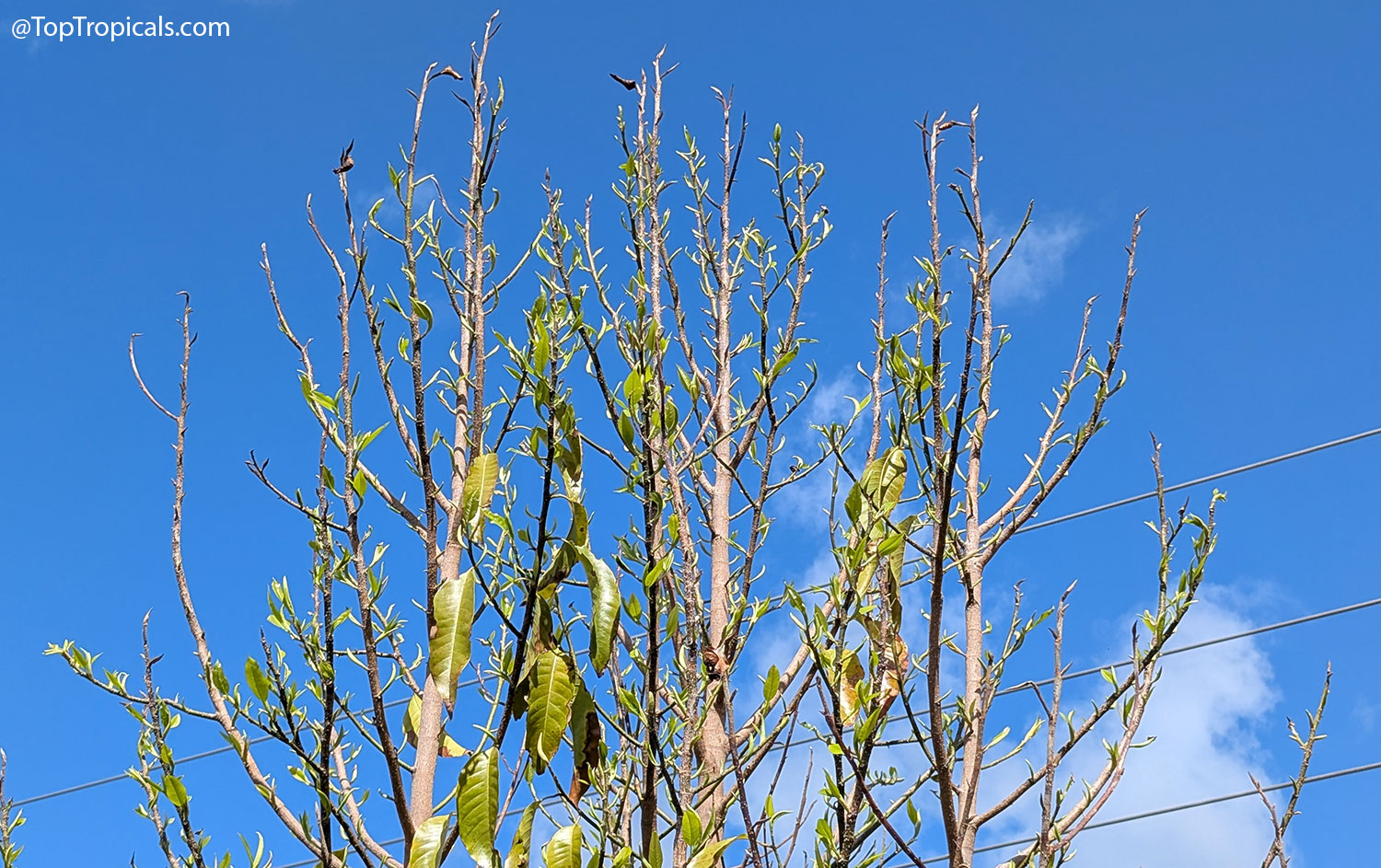
A rule of thumb we use for tropical plants is to watch for about a week of nights at 65°F or warmer. It's a practical guide, and plants don't follow it exactly. Soil temperature, day length, the plant's condition, and how much cold it went through all play a part. More on this in The Magic Number 65.
Growing Champaka where winters are cold
Yes, you can grow Champaka even in Minnesota. You'll need a pot large enough for the tree and a place to keep it indoors through winter. Survival is usually easier than flowering. For blooms, the tree needs plenty of light and a good, warm summer outdoors. If you're growing in a pot up north, White Champaka is the better bet for flowers.
When to bring it in. Move it indoors before nights regularly drop below about 50-55°F. That's a cautious threshold, not the point where damage starts, but there's no reason to push it. Check the leaves, stems, and the undersides of leaves for pests before it comes inside.
Light. Winter light is often the biggest problem. A northern window in winter, even a bright one, gives a tropical tree far less light than it gets outdoors. Use your sunniest window, ideally south-facing, and add a grow light if you can. A Champaka in poor winter light may survive for years and still bloom poorly.
Where to put it. Keep it away from heating vents, cold drafts, and doors that open to the outside. Sudden temperature swings are harder on it than steady cool temperatures.
Water and humidity. Water less in winter, but don't let the root ball dry out completely. Let the top of the mix dry somewhat between waterings, and check the soil rather than watering on a schedule. Indoor winter air is very dry, and a humidifier or grouping plants together helps. Expect some leaf drop indoors.
Pests. Spider mites, scale, and mealybugs thrive in heated, dry rooms. Look under the leaves every week or two so you catch them early.
Back outside in spring. Wait until nights are reliably warm, then move it out gradually. Leaves grown indoors will scorch in full sun, so start in a sheltered, shady spot and increase the sun over a week or two.
Flowering. In northern climates, flowering is less certain. Expect blooms mostly in summer, if they come. Strong summer sun, heat, and a mature plant all improve your chances. A heated greenhouse or bright sunroom can improve the chances of flowering. A small seedling Golden Champaka may need several years of good summers before it blooms.
👉 More: Champaka growing guide
🌠 One warm evening
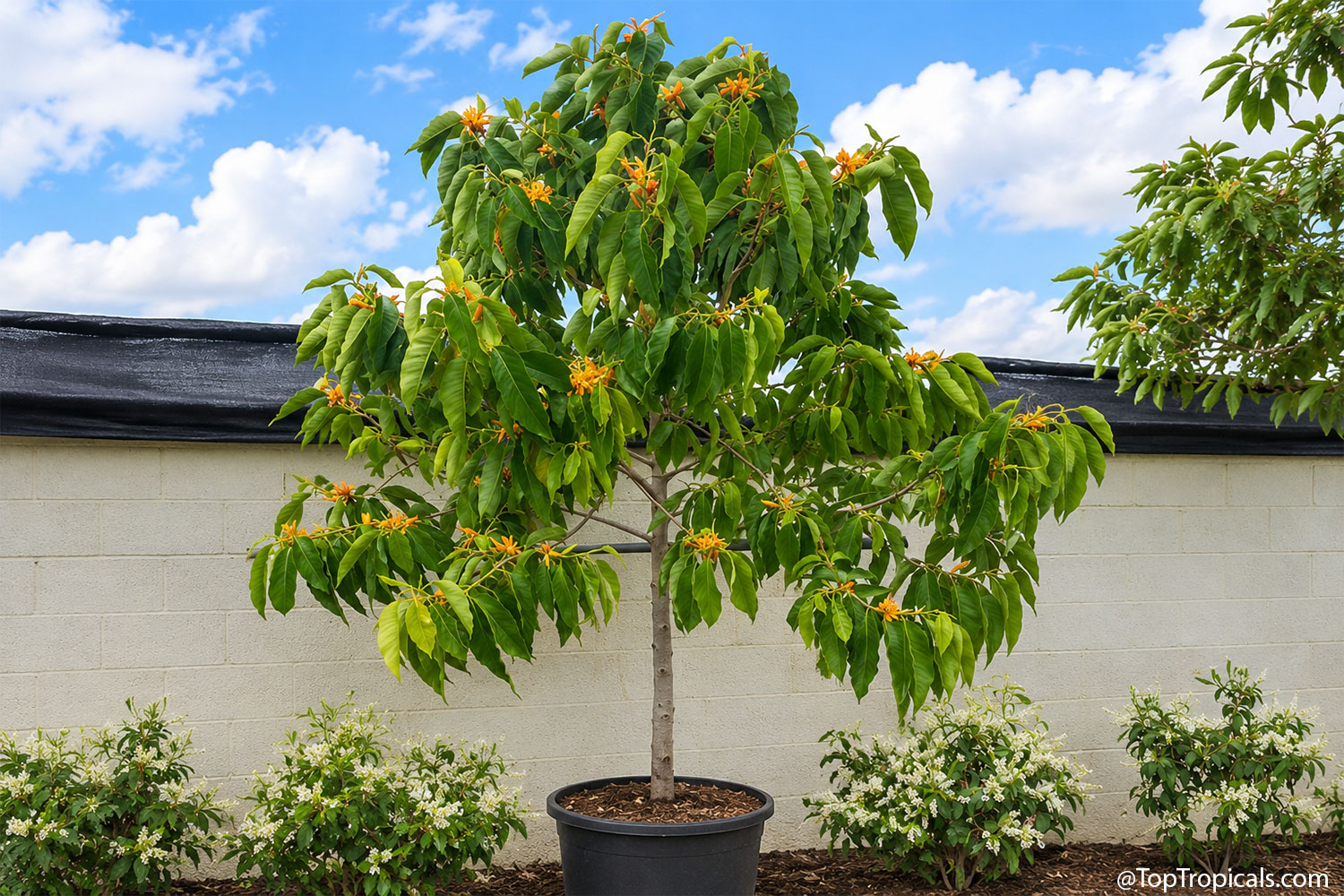
The best part of growing Champaka happens when you're not thinking about it. You step outside on a warm Florida evening, the air is thick and still, and something sweet and fruity is drifting across the yard. It takes a second to remember which tree is doing it.
If you'd like that to happen in your own yard, come see our Champaka trees.
For the full growing details, see our plant pages for Golden Champaka and White Champaka.