Garden Blog - Top Tropicals
Date: 22 Oct 2026
Tropical paradise in the shade, Part 1:
🌳 Tropical paradise in the shade, Part 1:
Making the most of limited sunshine.
More sunshine, more flowers and fruit. Right?
Usually! But Florida's blazing summer sun can scorch leaves and overheat roots, while too little light limits growth and blooming.
What if your garden is shaded by trees, your patio is covered, or your tropicals spend winter indoors?
Can you still grow a tropical paradise? Absolutely! The secret is knowing your shade.
Bright filtered light: Sunlight passing through an open tree canopy or shade cloth. Excellent for many tropical plants, including flowering and fruiting species.
Partial shade: A few hours of direct sun, preferably morning sun, followed by shade during the hottest hours. Often ideal for flowering tropicals in Florida.
Bright indirect light: Plenty of daylight without direct sun, as on a covered patio or near a bright window. Great for foliage and some flowering plants.
Deep shade: Dense canopy, dark corners, or areas between buildings. Mostly suited to foliage plants. Don't expect abundant flowers or fruit.
Even a shaded outdoor garden often receives much more light than a bright-looking indoor room.
You don't need a light meter to evaluate your garden.
On a sunny day, look at the shadow your hand casts on the ground:
Sharp, dark shadow: Strong direct sunlight.
Soft, blurry shadow: Filtered light or light shade.
Barely visible shadow: Deep shade or weak indirect light.
Check the same spot in the morning, at noon, and in the afternoon. Light changes throughout the day and across seasons.
Best trick: Count the hours of direct morning sunshine. Even 2-4 hours can make a big difference for many flowering tropicals.
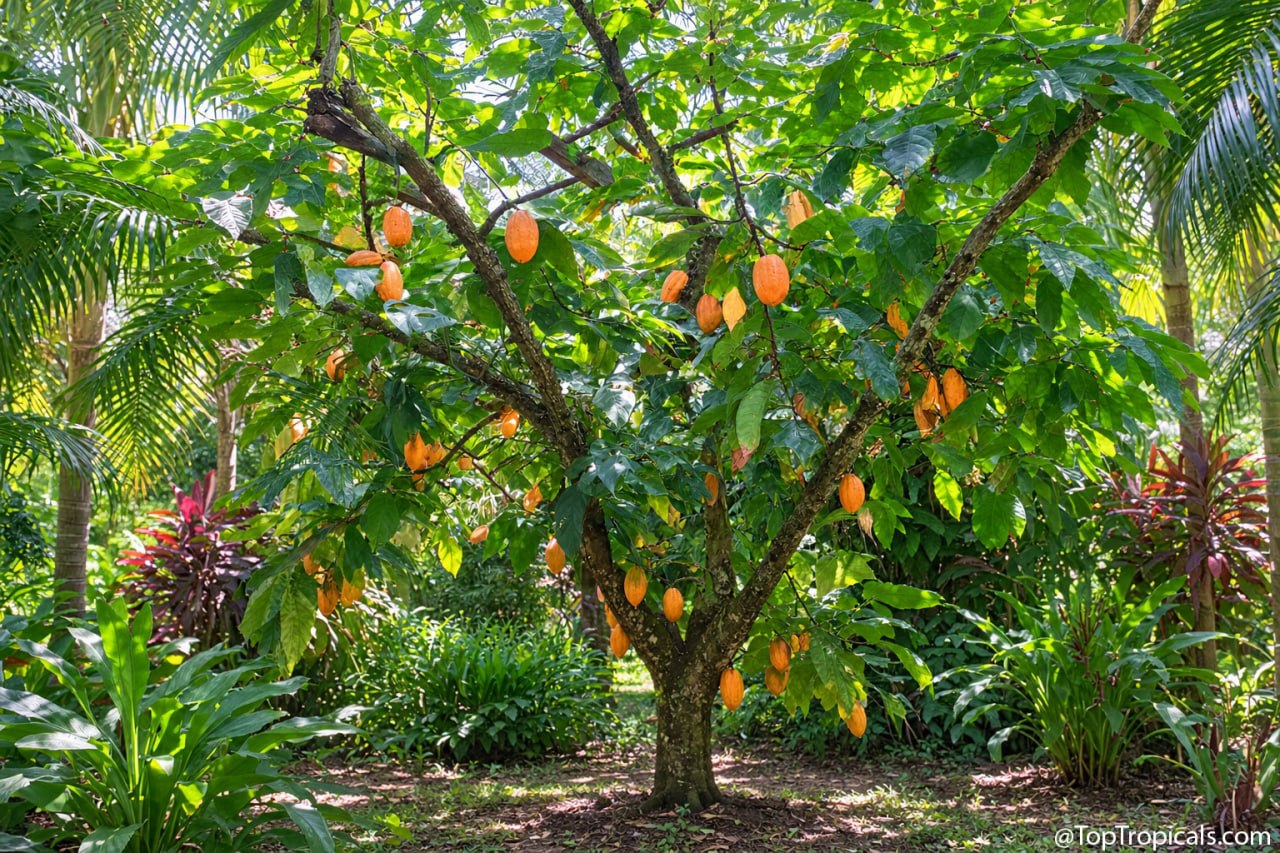
Tropical forests grow in layers. Philodendrons and Aglaonemas thrive beneath trees, Coffee and Cacao tolerate filtered light, while vines climb toward the sun.
But shade-tolerant doesn't mean darkness-loving. Even understory plants often grow and bloom better with brighter light.
A plant may grow lush foliage in shade but never bloom. Less light means less energy for flowers and fruit.
Rule of thumb: More light means more bloom, bigger harvests. But not necessarily full sun! Morning sun and filtered afternoon light often work great.
Watch how sunlight moves through your garden. Even shady spots may get valuable morning sun.
Save brighter spots for flowers and fruit; place foliage plants in deeper shade.
Create jungle layers with shrubs, vines, and groundcovers.
Thin tree canopies to let in filtered light.
Grow vertically: let vines climb toward sunshine.
Move containers as seasonal light changes.
Water less: shaded soil stays moist longer.
Don't overfertilize: fertilizer can't replace sunlight.
Allow airflow to prevent fungal problems in damp shade.
🌳 Growing indoors?
Indoor light drops sharply away from windows. Choose the brightest spot or add grow lights.
Overwintering tropicals? Just keep them healthy until spring. Slower growth is normal. Reduce watering and feeding, and avoid cold window glass.
In Florida, afternoon shade protects leaves from scorching, keeps roots cooler, and reduces water stress. Tree canopies may even offer some frost and wind protection.
The secret is balance: enough light for healthy growth without excessive sun.
Don't fight your garden's conditions. Choose plants that make the most of them!
👉 Coming next: Part 2: What to plant: tropical foliage, fragrant flowers, vines, and even fruit trees that grow in filtered light.
🛒 Explore shade-tolerant tropical plants
· Tropical paradise in the shade, Part 2: What to plant? Shade-tolerant tropical plants.
· Full Sun Isn't Always Best for Peach Trees - Especially in Florida
· When Is the Best Time to Water Your Plants?
· How much water is too much?
#How_to #Discover
🟢 Join 👉 TopTropicals
Making the most of limited sunshine.
More sunshine, more flowers and fruit. Right?
Usually! But Florida's blazing summer sun can scorch leaves and overheat roots, while too little light limits growth and blooming.
What if your garden is shaded by trees, your patio is covered, or your tropicals spend winter indoors?
Can you still grow a tropical paradise? Absolutely! The secret is knowing your shade.
🌳 Not all shade is created equal
Bright filtered light: Sunlight passing through an open tree canopy or shade cloth. Excellent for many tropical plants, including flowering and fruiting species.
Partial shade: A few hours of direct sun, preferably morning sun, followed by shade during the hottest hours. Often ideal for flowering tropicals in Florida.
Bright indirect light: Plenty of daylight without direct sun, as on a covered patio or near a bright window. Great for foliage and some flowering plants.
Deep shade: Dense canopy, dark corners, or areas between buildings. Mostly suited to foliage plants. Don't expect abundant flowers or fruit.
Even a shaded outdoor garden often receives much more light than a bright-looking indoor room.
🔎 Quick shade test: Look at the shadows!
You don't need a light meter to evaluate your garden.
On a sunny day, look at the shadow your hand casts on the ground:
Sharp, dark shadow: Strong direct sunlight.
Soft, blurry shadow: Filtered light or light shade.
Barely visible shadow: Deep shade or weak indirect light.
Check the same spot in the morning, at noon, and in the afternoon. Light changes throughout the day and across seasons.
Best trick: Count the hours of direct morning sunshine. Even 2-4 hours can make a big difference for many flowering tropicals.
🌳 Learn from the rainforest
Tropical forests grow in layers. Philodendrons and Aglaonemas thrive beneath trees, Coffee and Cacao tolerate filtered light, while vines climb toward the sun.
But shade-tolerant doesn't mean darkness-loving. Even understory plants often grow and bloom better with brighter light.
🌳 Growing isn't the same as flowering or fruiting
A plant may grow lush foliage in shade but never bloom. Less light means less energy for flowers and fruit.
Rule of thumb: More light means more bloom, bigger harvests. But not necessarily full sun! Morning sun and filtered afternoon light often work great.
🌳 Work with your shade, not against it
Watch how sunlight moves through your garden. Even shady spots may get valuable morning sun.
Save brighter spots for flowers and fruit; place foliage plants in deeper shade.
Create jungle layers with shrubs, vines, and groundcovers.
Thin tree canopies to let in filtered light.
Grow vertically: let vines climb toward sunshine.
Move containers as seasonal light changes.
Water less: shaded soil stays moist longer.
Don't overfertilize: fertilizer can't replace sunlight.
Allow airflow to prevent fungal problems in damp shade.
🌳 Growing indoors?
Indoor light drops sharply away from windows. Choose the brightest spot or add grow lights.
Overwintering tropicals? Just keep them healthy until spring. Slower growth is normal. Reduce watering and feeding, and avoid cold window glass.
🌳 A little shade can be a blessing
In Florida, afternoon shade protects leaves from scorching, keeps roots cooler, and reduces water stress. Tree canopies may even offer some frost and wind protection.
The secret is balance: enough light for healthy growth without excessive sun.
Don't fight your garden's conditions. Choose plants that make the most of them!
👉 Coming next: Part 2: What to plant: tropical foliage, fragrant flowers, vines, and even fruit trees that grow in filtered light.
🛒 Explore shade-tolerant tropical plants
📚 Learn more
· Tropical paradise in the shade, Part 2: What to plant? Shade-tolerant tropical plants.
· Full Sun Isn't Always Best for Peach Trees - Especially in Florida
· When Is the Best Time to Water Your Plants?
· How much water is too much?
#How_to #Discover
🟢 Join 👉 TopTropicals