Garden Blog - Top Tropicals
Date: 8 Jul 2026
Why this Sleepy Hibiscus goes to sleep every afternoon
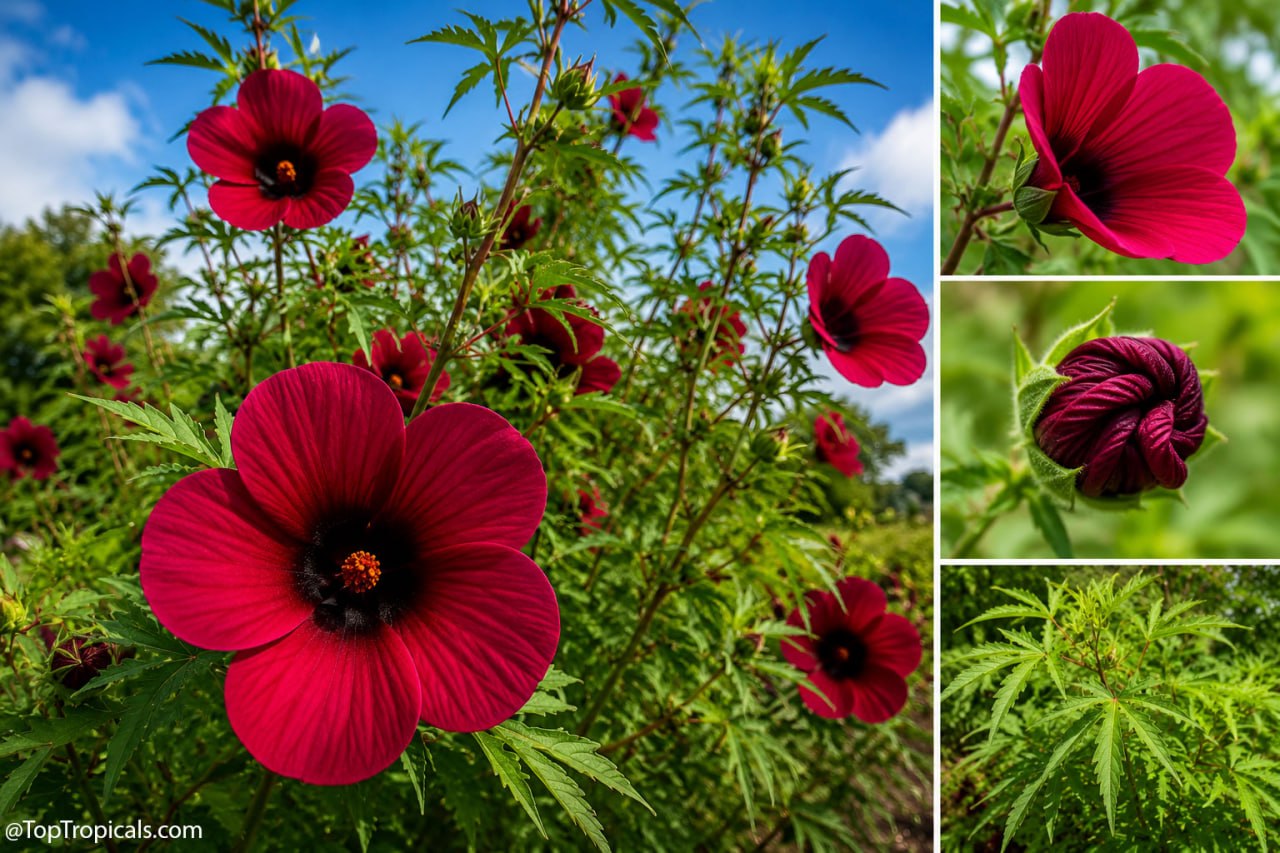
Hibiscus cannabinus - Sleepy Hibiscus
💤 Why this Sleepy Hibiscus goes to sleep every afternoon
Most hibiscus flowers stay wide open all day long before eventually dropping; but the deep wine-red flowers of Hibiscus cannabinus (popularly known as Salad Hibiscus or Kenaf) open wide with the morning sun, putting on a spectacular show for local bees and butterflies. But by mid-afternoon, usually around 3 to 4 pm, each bloom slowly twists itself into a tight little knot, almost as if the flower has fallen asleep. This unusual curled shape lasts until the bloom finally drops, giving the plant one of the most fascinating daily performances in the garden.
A stunning tropical beauty that belongs in your salad bowl
Unlike traditional ornamental hibiscus bushes, this species is a double agent that belongs in both your flower beds and your vegetable garden.
The young leaves, flowers, seeds, and tender shoots are completely edible. The leaves carry a pleasantly tart, slightly tangy flavor remarkably similar to sorrel and are packed with vitamin C. You can toss them fresh into summer salads, cook them down exactly like spinach, or brew the leaves and flowers together into a vibrant herbal tea.
Extreme speed and a historical second career
If you love instant gratification in the garden, this plant delivers. It explodes into a large, lush structural bush in a single season, showing off handsome, deeply lobed leaves that closely resemble Japanese maple foliage.
Long before modern gardeners discovered its backyard appeal, kenaf was celebrated as one of the ancient world's most vital natural fiber crops.
Ancient History: Ancient Egyptians reportedly cultivated this exact plant thousands of years ago, using the tangy leaves for food while turning the fibrous stems into cordage and boat sails.
Modern Sustainability: Today, those same ultra-strong stem fibers are used globally for high-quality rope, paper, textiles, and eco-friendly, biodegradable packaging.
A Quick Garden ID Tip: Salad hibiscus Hibiscus cannabinus s frequently confused with Hibiscus furcellatus because they look nearly identical when young. It also shares a striking resemblance to Hibiscus acetosella, but instead of solid burgundy foliage, this species boasts fresh green leaves that make the dark, wine-colored flowers pop dramatically.
Give your edible landscape a major upgrade
Whether you want a fast-growing privacy screen, a conversation-starting "sleepy" flower, or a constant supply of tangy summer greens, this resilient plant checks every box. It handles intense summer heat, loves the sun, and becomes surprisingly drought-tolerant once established. This hibiscus feeds you, flowers for months, and grows like crazy! 👉 More...
🛒 Add a tasty conversation piece to your garden


· Hibiscus cannabinus in Plant Encyclopedia
· Did you know that you can eat and drink Hibiscus plants?
· Most useful Hibiscus plants and recipes
#Food_Forest #Remedies #Recipes
🟢 Join 👉 TopTropicals
Most hibiscus flowers stay wide open all day long before eventually dropping; but the deep wine-red flowers of Hibiscus cannabinus (popularly known as Salad Hibiscus or Kenaf) open wide with the morning sun, putting on a spectacular show for local bees and butterflies. But by mid-afternoon, usually around 3 to 4 pm, each bloom slowly twists itself into a tight little knot, almost as if the flower has fallen asleep. This unusual curled shape lasts until the bloom finally drops, giving the plant one of the most fascinating daily performances in the garden.
A stunning tropical beauty that belongs in your salad bowl
Unlike traditional ornamental hibiscus bushes, this species is a double agent that belongs in both your flower beds and your vegetable garden.
The young leaves, flowers, seeds, and tender shoots are completely edible. The leaves carry a pleasantly tart, slightly tangy flavor remarkably similar to sorrel and are packed with vitamin C. You can toss them fresh into summer salads, cook them down exactly like spinach, or brew the leaves and flowers together into a vibrant herbal tea.
Salad Hibiscus Growing Guide
- 🌸 Daily Routine: Opens at sunrise, twists into a tight knot by 3-4 pm
- Edible Perks: Tangy leaves rich in vitamin C; great fresh or cooked
- 🍁 Foliage Style: Deeply lobed green leaves that look like japanese maple
- ⏳ Growth Speed: Explodes into a massive, lush bush in just one season
Extreme speed and a historical second career
If you love instant gratification in the garden, this plant delivers. It explodes into a large, lush structural bush in a single season, showing off handsome, deeply lobed leaves that closely resemble Japanese maple foliage.
Long before modern gardeners discovered its backyard appeal, kenaf was celebrated as one of the ancient world's most vital natural fiber crops.
Ancient History: Ancient Egyptians reportedly cultivated this exact plant thousands of years ago, using the tangy leaves for food while turning the fibrous stems into cordage and boat sails.
Modern Sustainability: Today, those same ultra-strong stem fibers are used globally for high-quality rope, paper, textiles, and eco-friendly, biodegradable packaging.
A Quick Garden ID Tip: Salad hibiscus Hibiscus cannabinus s frequently confused with Hibiscus furcellatus because they look nearly identical when young. It also shares a striking resemblance to Hibiscus acetosella, but instead of solid burgundy foliage, this species boasts fresh green leaves that make the dark, wine-colored flowers pop dramatically.
Give your edible landscape a major upgrade
Whether you want a fast-growing privacy screen, a conversation-starting "sleepy" flower, or a constant supply of tangy summer greens, this resilient plant checks every box. It handles intense summer heat, loves the sun, and becomes surprisingly drought-tolerant once established. This hibiscus feeds you, flowers for months, and grows like crazy! 👉 More...
🛒 Add a tasty conversation piece to your garden
📚 Learn more:
· Hibiscus cannabinus in Plant Encyclopedia
· Did you know that you can eat and drink Hibiscus plants?
· Most useful Hibiscus plants and recipes
#Food_Forest #Remedies #Recipes
🟢 Join 👉 TopTropicals