Garden Blog - Top Tropicals

Date: 26 Jan 2022

Don't miss this one:
PodCast Premiere!

Episode 1
How to Protect Tropical plants in Winter: Q & A

Featuring Horticulturist Mark Hooten

...We are introducing our new Series: Top Tropicals Podcast. Growing tropicals and pushing the limits. Watch the first episode:

How to Protect Tropical plants in Winter

...Who doesn't like tropical beauty? Everyone wants tropical plants. But not everyone lives in a warm climate. Is it possible to grow tropicals outside of Tropics?
Top Tropicals horticulturist Mark Hooten, who is well known to many gardeners as the Garden Doc with his Saturday Plant Clinic, is answering gardeners' questions about how to prepare and protect tropical plants during winter...

Premiere scheduled:
Thursday, January 27, 8:00 AM

More about cold hardiness and cold protection:

Cold hardy tropical fruit trees
Growing Stephanotis and cold protection
Cold protection of tropical container plants
Plumeria cold protection
Ghost Cold Protection
Seven rules of cold protection for tropicals
Improving cold hardiness before winter: fertilizer and micro-elements
3D garden ideas and winter cold protection
Cold protection - winter action for your plant collection
About Cold Protection

Date: 27 Apr 2020

PeopleCats of TopTropicals. Cats of the day: Biggy's Cat Hospital

Biggy checking on patient Abu when he couldn't walk

During these challenging times for the whole planet, we receive kind letters from our customers checking on how our PeopleCats are doing, especially those that previously were ill. And since we promised to follow up on everyone, including heart-breaking story of Raja and Abu, today's report is about everybody's progress!

As we mentioned in our previous newsletter, several cats in TopTropicals Cat Sanctuary had a coronavirus (we call it COVID-Cat-20), or simply a cat respiratory infection. Chiefy, Snitch, Marco and Biggy had it really bad, but some other PeopleCats surprisingly didn't get it! Just like with humans. Lucky King didn't have a single sneeze!
Finally, everybody has recovered by now, but it has been a very stressful couple of weeks for us, considering limited vet availability at this stay-home time. On top of that, Lil S had an abscess and was also contained in a home hospital, away from flu-quarantined PeopleCats. Our homes become real cat hospitals!
We are thankful to our customers support, especially Silvia who made several donations for our PeopleCats, and also recommended antiseptic pads - those worked great for Lil S!
Abu and Raja's adventures were not over... After 2 weeks of seeing a vet treating their infections and injuries, they got worse... Then after a couple of weeks in another hospital (and a couple thousand more in bills) we were suggested to put them down as hopeless since they would never walk again... But Kristi did not want to believe it, she did not give up! The kittens heard her. They won. Today, they are all better, walking, jumping and playing!

Thank you Kristi!
Never give up hope!

Stay safe and healthy with your PeoplePets!

TopTropicals PeopleCat Club

Thank you everybody for supporting us in helping PeopleCat Community!
Make your kind donation today and receive a surprise gift from us. Every little bit helps! Thank you and God bless you and your pets!

Date: 2 May 2019

How to propagate plants from cuttings. Top (Tropicals) secrets.

TopTropicals.com

Q: After pruning my jasmine, I have so many branches and I don't have a heart to through them away, can I use them to make more plants? Please tell me what size cuttings and do I need to remove leaves? Should I just stick them in the ground? Will they root? I don't know if you will be willing to share your secrets?

A: We are always happy to know that you grow more plants, and make our World better! These are some useful tips for the propagation of tropical plants using cuttings:

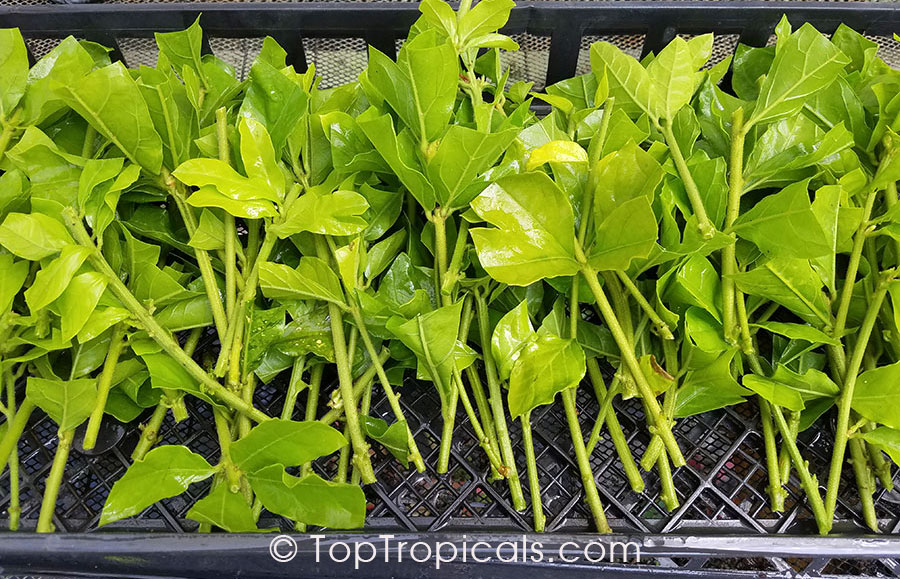
- Cuttings and leaves. Use cuttings 2-5" long. Strip leaves from the bottom. Cut larger leaves in half to reduce evaporation.
- Soak cuttings for 15-30 min in SUNSHINE solution.
- Mix. Use special well-drained mix with lots of soil conditioner: we have a special professional propagation mix for cuttings.
- Mist. Put community pots or trays with cuttings in mist, or if you don't have mist - cover the pot with a clear plastic bag to create a mini-greenhouse.
- Shade. Keep propagation pots in bright shade and never allow direct sun rays.
- Rooting hormone: yes, use it if you have it. Not only it promotes root formation but also prevents from fungus so the cuttings won't rot. We use Dip-N-Grow.
- Rooting and food. Check in 2-3 weeks for roots. Once you see the little roots, begin fertilizing with a special Baby-Plant Food and make sure never exceed recommended doze otherwise you may kill the cuttings.
- Establishing. Once roots start growing, plant in 4" pots in a well-drained potting mix and watch the beauty grow! Gradually move to the full sun only when little plants establish and start new growth.

If you are lucky to make more rare plants than you can use, contact us, we will buy them from you or trade for your dream plants! In fact, one of our customers from many years ago started selling us baby plants that he propagated from our plants, and now has a successful business (Karma Nursery); we buy a lot of plants from him every month!

For more ideas on tropical plant propagation, see also:
- Secrets of turtle tank propagation
- 5 secrets of propagation

Date: 16 Nov 2019

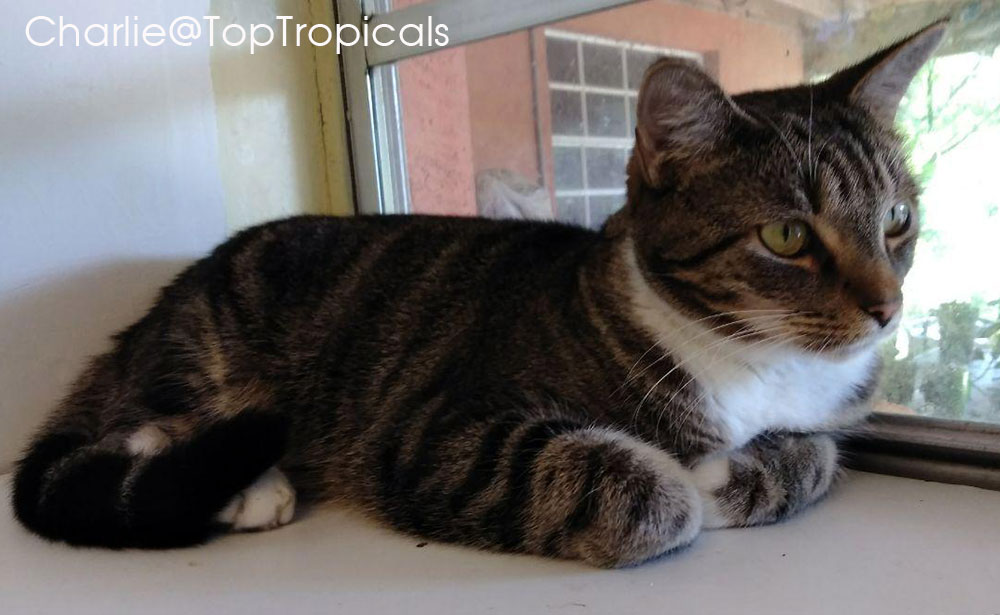
Meet PeopleCats of TopTropicals. Charlie, the Indoor Hunter

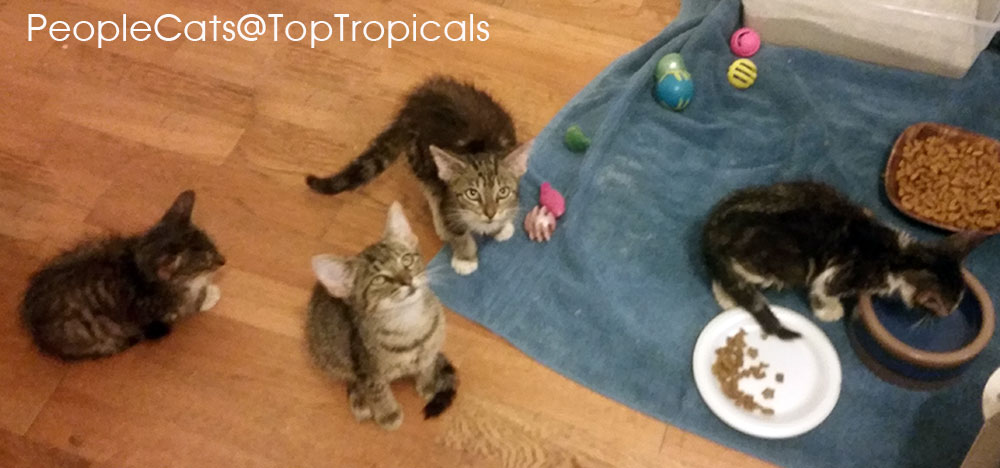
Carlie was a kitty drop off with LadyBug, Rickie, and Purry.
Charlie is Jamie's baby. She has an attitude of a teenager, one minute she loves you and the next - wants nothing to do with you. Carlie stays with the inside PeopleCats, she says it's too big in the outside world for her and she gets scared. Carlie has a fun game (fun to her): she plays around 2:00 am in the morning, she loves to drag random items down the hall (socks, toys, shirts, even blankets) in her mouth MEOOOWWWING as loud as she can. She then sets the items down on her human's bedroom rug and waits for her human to say thank you. We're pretty sure her hunting instinct is off...

Check out and more Cat of the Day stories.

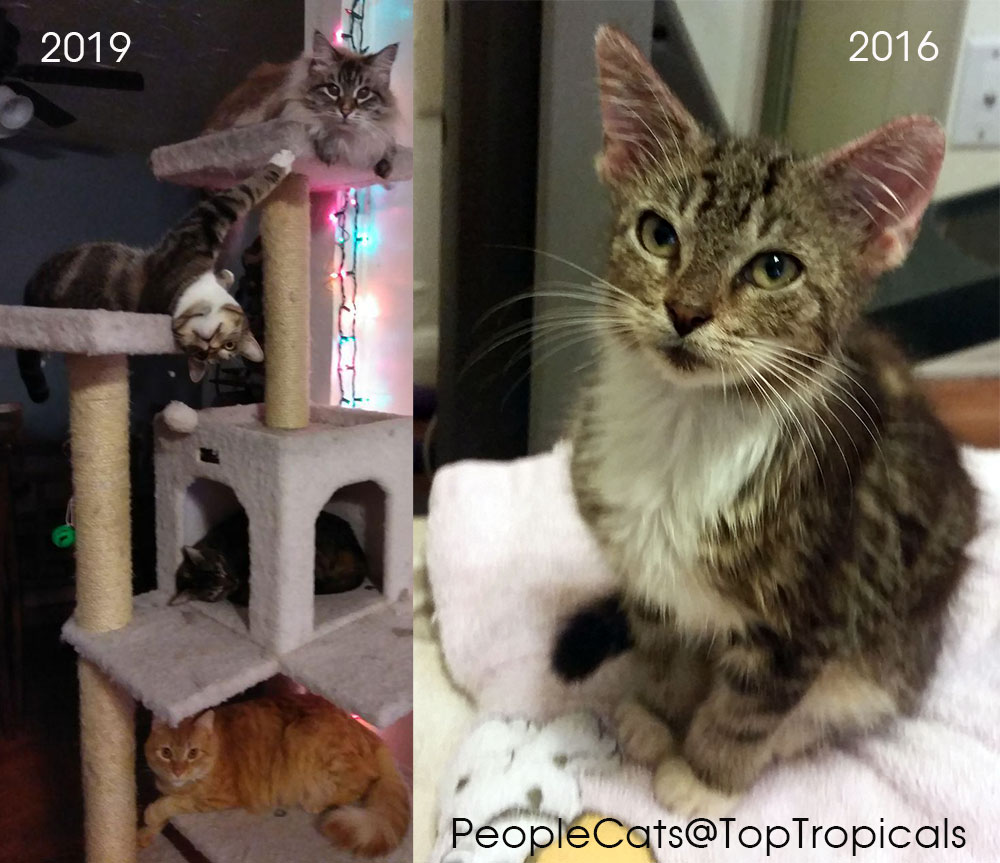
2019, from Top to Bottom: Moe, Charlie, Bagheera, and Snitch. 2016: Charlie

From left to right: Purry, LadyBug, Charlie, and Ricki - 2016

Date: 29 Nov 2020

Cold protection of tropical container plants

Q: I am long time customer of yours, I live in San Diego California and while the summer and Fall temperatures are warm to mild, the winter temperatures dip to a point where some tropicals die off. We are experimenting with different variations of way to heat and insulate the pots we have the tropicals planted in as a way to keep them alive during the colder winter months. I was wondering if you knew of the ideal soil temperature for these tropical in order to look their best year round. All of the heaters we have installed have thermostats and temperature adjustments so we can now keep the soil anywhere between a range of between 65-75 degrees. Any advise you can provide would be greatly appreciated.

A: This is a very interesting concept you are working with. Indeed, keeping pots/roots warm, may help a lot! We've been experimenting with cold protection for a long time - for the above-ground plant parts. For sure keeping roots protected (even with a thick layer of mulch) will benefit tropical plants during winter. In case with container plants, this may help dramatically.
The guideline is, tropical plants slow down or stop their metabolism at 65F. As long as you can keep soil above that temperature - this should work great. Of course, the higher the better.
Optimum temperature for growing tropical plants in general - 70-85F. Above 90F, metabolism stops too, unless it's a heat tolerant, desert plant.

More information on winter cold protection of tropical plants and zone pushing:

Greenhouse in Virginia
Plumeria cold protection
Ghost Cold Protection
Seven rules of cold protection for tropicals
About Cold Protection
Cold protection - winter action for your plant collection
Tropical Treasures articles on zone pushing.

Date: 22 Oct 2024

How to grow Jackfruit in a pot:
the biggest fruit in the world

Jackfruit - Artocarpus heterophyllus

Q: Can I grow Jackfruit in a pot?

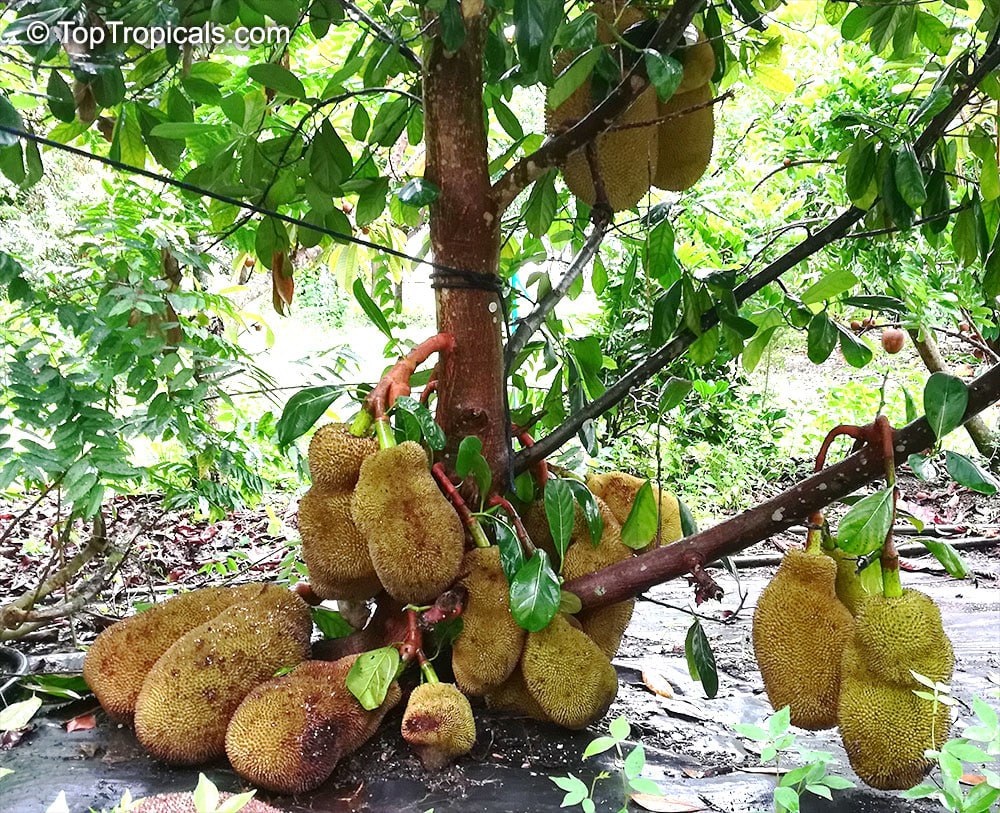
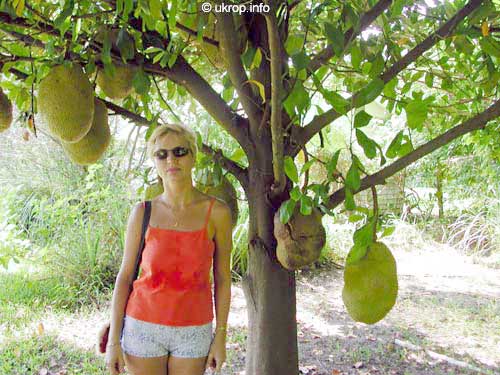
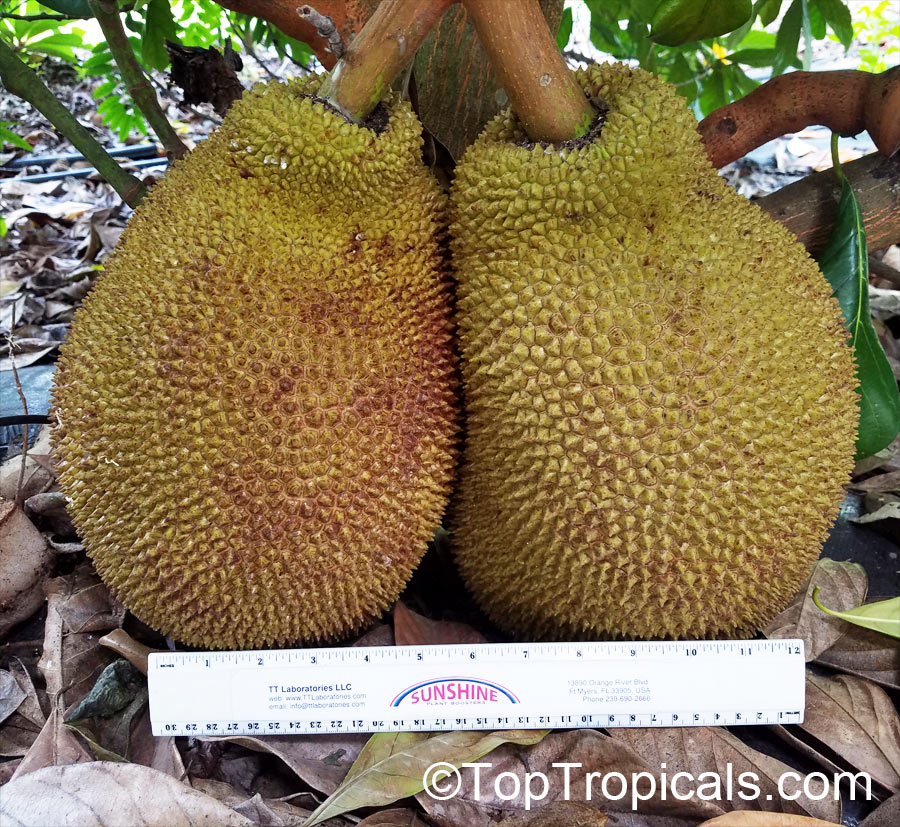
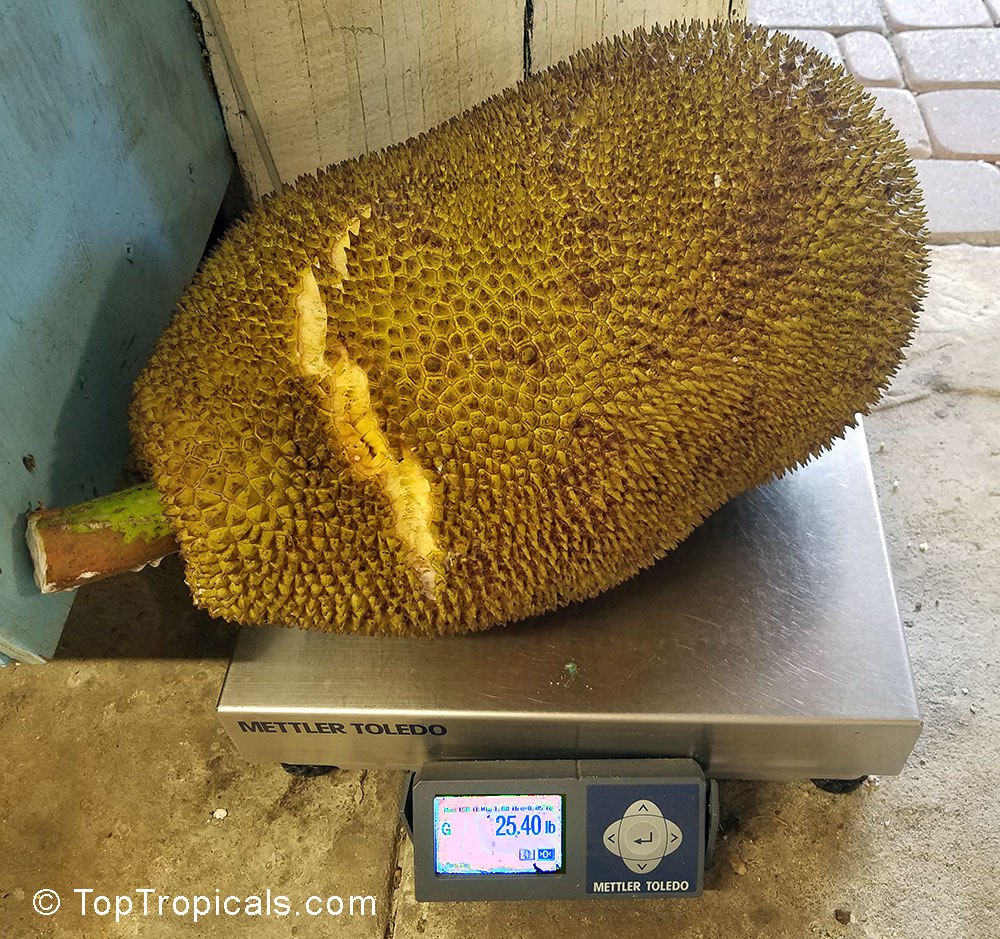
A: Yes, you can! Jackfruit trees, despite producing the largest tree-borne fruit in the world - up to 80 pounds and 36 inches long - can thrive and fruit in containers. The tree has a clever feature: it grows fruit only at the base of the trunk, allowing you to manage its height and size. With regular pruning, the tree can stay compact at just 6-7 feet tall, making it perfect for pot culture.

1. Getting started: pot sizes and growth tips

Start with: A 3-7 gallon container.
As it grows: Gradually increase to a 15-25 gallon pot by the time it reaches fruiting size (2-4 years).
Pruning is key: Keep the tree topped at 6-7 feet to focus its energy on fruit production.
Fertilize regularly: Use high-quality plant food like Sunshine Boosters C-Cibus to promote healthy growth and fruit development. C-Cibus is the best natural plant food for fruit and edibles.

2. Fun facts about Jackfruit - Artocarpus heterophyllus

Jackfruit - Artocarpus heterophyllus

A mature Jackfruit tree can produce 200 pounds of fruit per year.
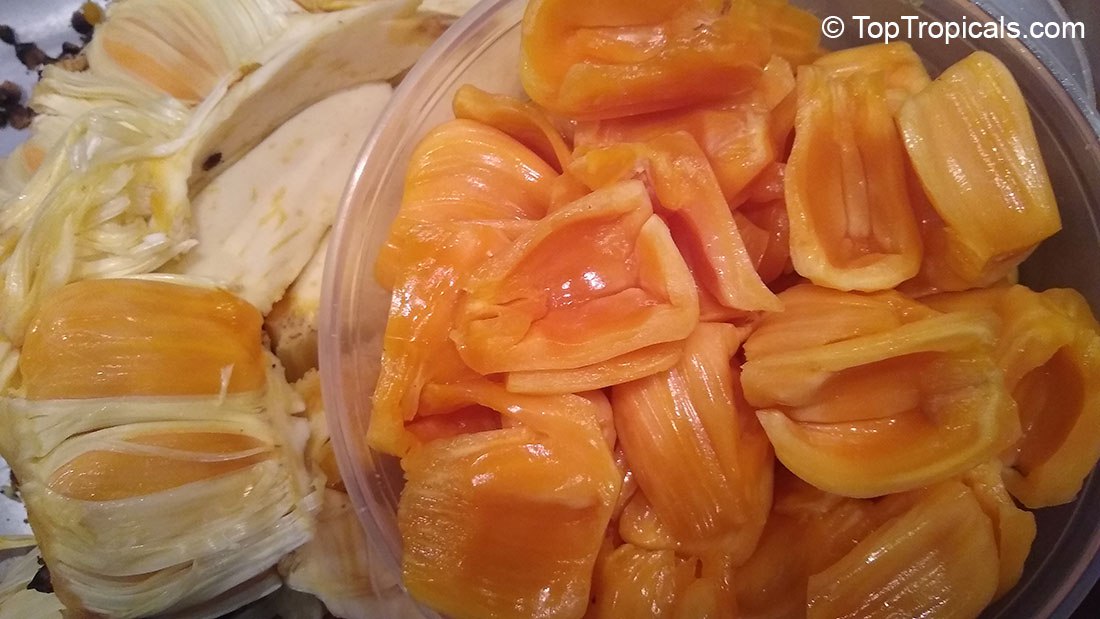
The fruit consists of large, sweet, yellow bulbs with a banana-like aroma.
Seedlings start fruiting within 3-4 years, with fruits ripening in just 4-6 months after flowering.

3. Cold tolerance of Jackfruit trees

Though often thought of as ultra-tropical, mature trees can withstand light frost for short periods without major damage. Keeping Jackfruit in pots also offers an easy way to move them indoors during cold spells if you're in a cooler climate.

4. Secrets for successful Jackfruit production

- Frost-free temperatures are essential.
- Use rich, organic soil with compost, manure, or peat moss.
- Maintain moist soil with regular watering.
- Constant pruning to keep the tree under 7 feet promotes healthy fruiting.
- Apply fertilizer and microelements regularly for better fruit quality.

By following these tips, you'll be able to enjoy the world's biggest fruit right from your patio!

Jackfruit - Artocarpus heterophyllus

Learn more:
About Jackfruit
How to grow the biggest fruit on Earth
Cheena - Jackedack

Videos:
Jackfruit Fruit

Jackfruit - Artocarpus heterophyllus

Jackfruit - Artocarpus heterophyllus

Date: 28 Sep 2025

Guava Tree Plant Care

Tips from Top Tropicals Plant Expert - Tatiana Anderson
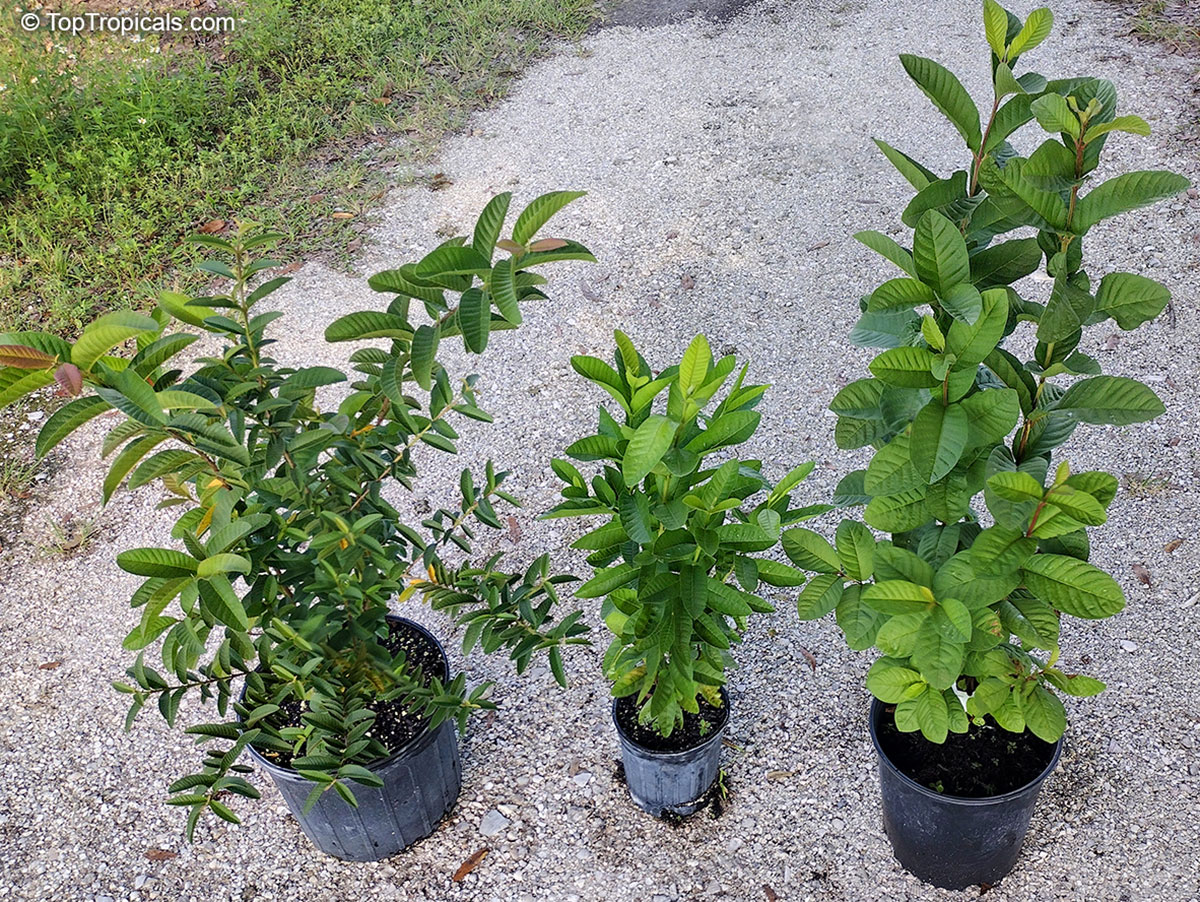
Guava trees for sale in 3-gallon nursery pots, healthy young plants 
with green 
foliage.

Where to Plant Outdoors

Guavas love full sun — aim for 6–8 hours of direct light. They’re adaptable to many soils but do best in well-drained, organic-enriched mixes. Plant them in a spot where you can water easily; guavas are thirsty trees during fruiting.

Container & Indoor Growing

Don’t have space or live in a cooler climate? Guavas thrive in large pots. Use well-drained potting mix. LINK TO OUR SOIL Keep them on a sunny patio during warm months and bring them indoors when nights dip below freezing. Compact varieties like Dwarf Hawaiian Rainbow or Tikal are especially good for pots.

Winter Care

Mature guavas can handle a light frost (down into the high 20s F), but young plants need protection. If planted outdoors, cover them with frost cloth on cold nights. Container guavas can be wheeled into a garage, greenhouse, or bright indoor window until the weather warms.

Watering and Fertilizing

Water deeply once or twice a week, more often in hot weather or when fruit is developing. They don’t like soggy soil, but they won’t complain about short floods either. Fertilize 3–4 times a year during the growing season with a balanced fruit tree fertilizer. Guavas especially love potassium and phosphorus for strong flowering and heavy crops. We recommend liquid crop booster Sunshine C-Cibus and balanced controlled release fertilizer Green Magic.

Pruning

Prune after fruiting to keep them compact and open up airflow. Remove crossing or dead branches. In containers, trim back vigorous shoots regularly to manage size and encourage more fruiting wood.

Pests and Problems

Guavas are generally tough and pest-resistant. The main thing to watch for in humid or rainy climates is mealybugs - those cottony white clusters on leaves or stems. They're easy to manage with neem oil or a quick spray of horticultural soap.

Fruit time

Guavas fruit young - often within a year or two.

Pollination

Guavas are self-pollinating, so you'll get fruit even with a single tree. Planting more than one tree, however, often boosts harvests and gives you a longer fruiting season.

If you've ever wanted instant gratification from a fruit tree, guava is it.
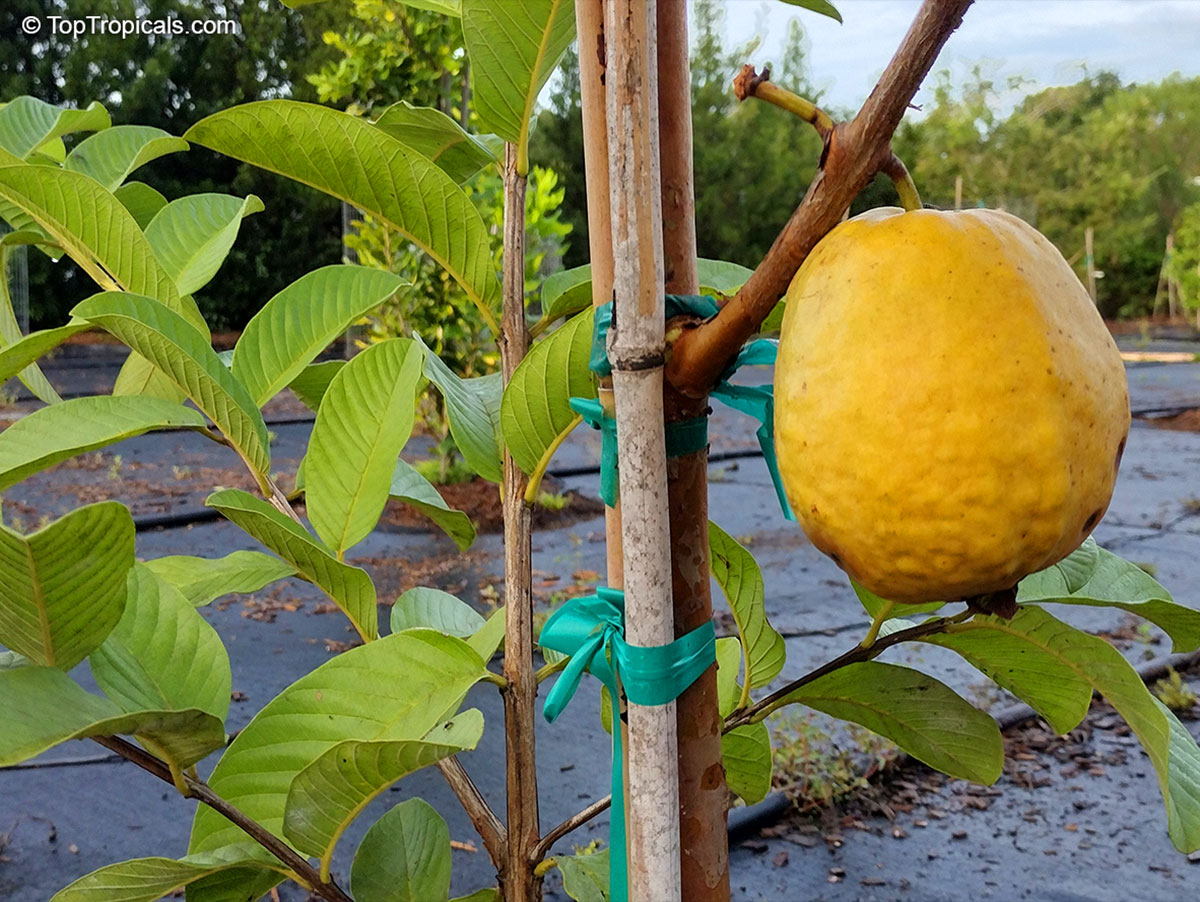
Ruby Supreme Guava tree with a large ripe yellow fruit, variety known 
for sweet pink flesh and reliable 
harvests.

🍴 Guava Recipes

With all that fruit, the next question is always: "What do I do with it?" Here are our favorites:

  • Cas Guava: Make Agua de Cas

    Boil halved Cas Guava fruits with sugar, simmer, strain, and bottle. Dilute with water when serving. The concentrate keeps for months in the fridge.
    Check out the recipe.

  • Hawaiian Gold: Make Drinks

    Perfect for Mojitos or Margaritas. Sweet, tangy juice pairs beautifully with lime and mint. Learn more

  • Araca Pera: Guava Wine

    Famous in Brazil, where the fruit is turned into a vibrant rosу wine. Locals say it’s the taste of summer in a glass — and yes, you can make it at home too. Learn more...

  • Quick snack: Guava Grilled Cheese

    Spread guava paste or fresh mashed fruit with cheese, grill until golden. Sweet and savory heaven. Learn more...

  • Simple Guava Juice

    Blend ripe guavas with water, ice, and a little sugar if you like. Instant refreshment.

✅Ready to Grow? Whether you want fresh juice, sweet fruit, or even your own guava wine, we’ve got the best varieties in stock right now. Your future self, sipping guava juice on a hot summer afternoon, will thank you.

👉 Order your guava tree today
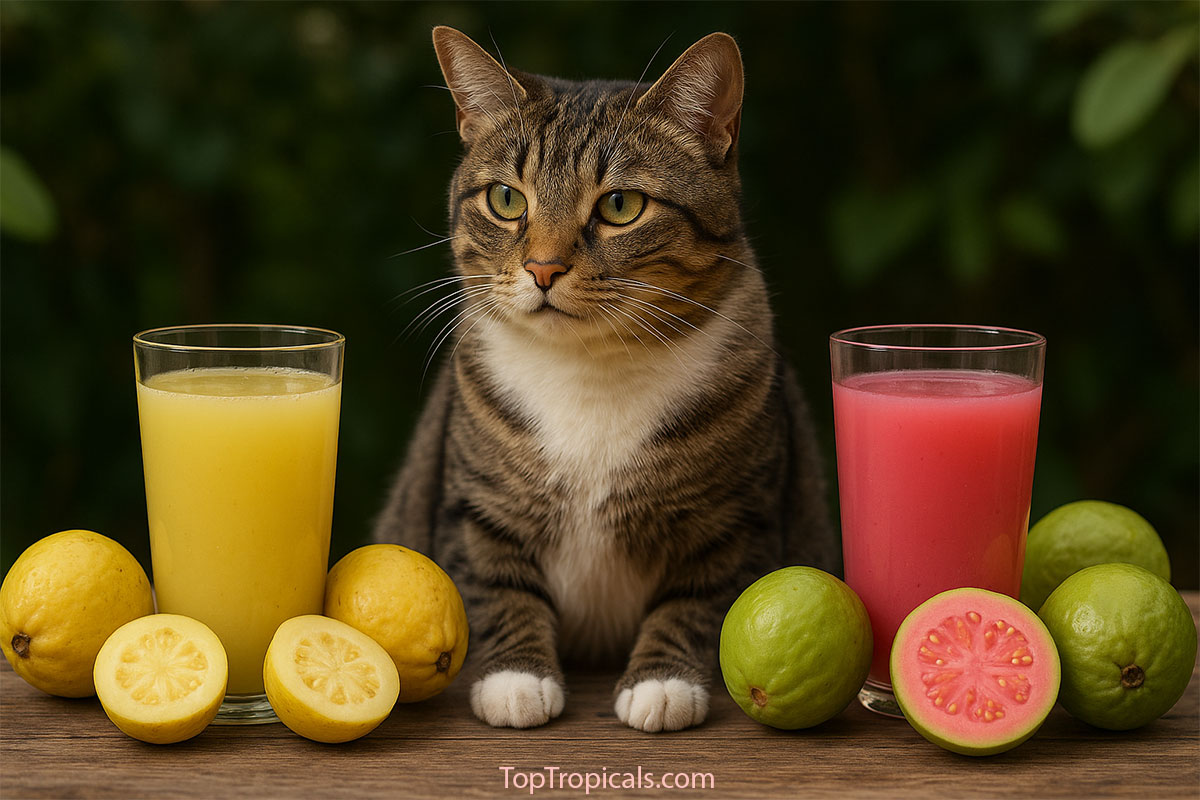
Tabby cat sitting between a glass of yellow guava juice with white 
guavas and a glass of pink guava juice with green guavas and cut pink guava 
fruit.

Date: 4 Feb 2021

PeopleCats of TopTropicals. Cat of the Month: Moishe, the Google Intern with a Sweet Tooth

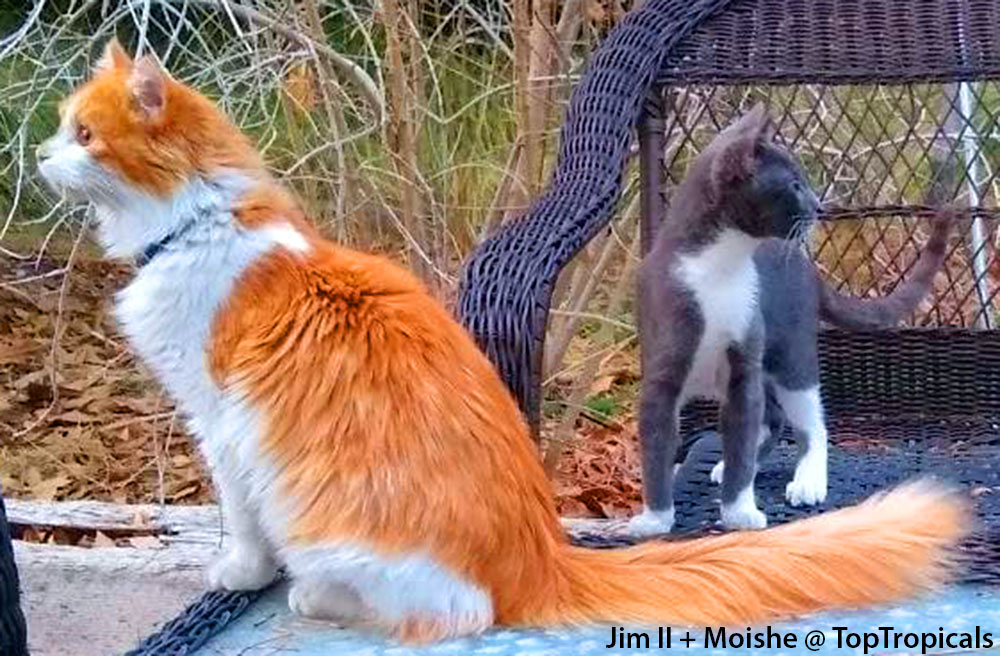
Just a few months ago we introduced our new Little Purrrson Jim II that we got as a "toy" for intellectual Google the Cat, to cheer him up after he lost his friend Jim I... Jim II, the fluffy goofball, grew up in no time and in his turn, requested entertainment, since Google bored him with his technical lectures... So we got a toy for Jim-the-toy... and he turned out to be - another mini-Google!
Moishe is very busy young individual, spending his day solving math equations and discovering laws of physics... Google appreciates the new generation's input. Jim II is simply glued to the little guy. He follows Moishe everywhere, including boring seminars by Google. Jim loves his new little brother with all his heart!
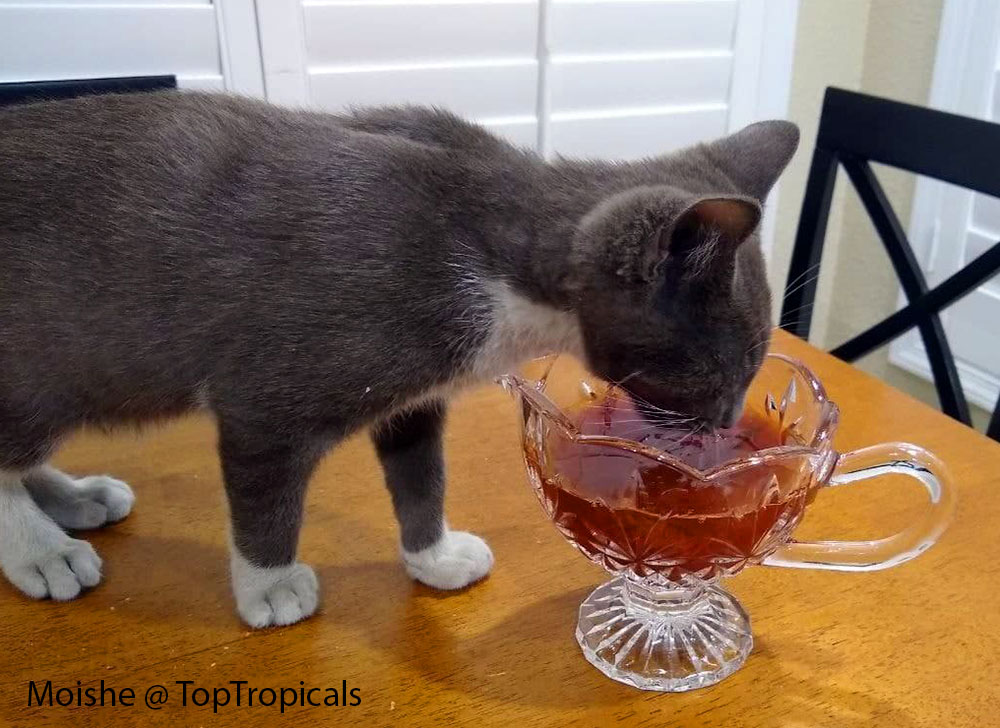
Moishe's favorite things are - gravity experiments, reading scientific manuscripts, and eating JAM for breakfast! No toast required.

TopTropicals PeopleCat Club and Zoo

Thank you for supporting us in helping PeopleCat Community!
Make your kind donation today and receive a surprise gift from us! Every little bit helps. Thank you and God bless you and your pets!

In the photo: Moishe the Scientist and Jim the Hopeless Romantic

Date: 25 Feb 2021

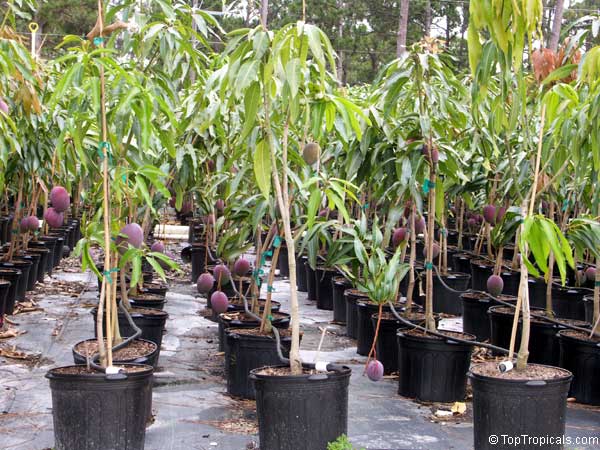
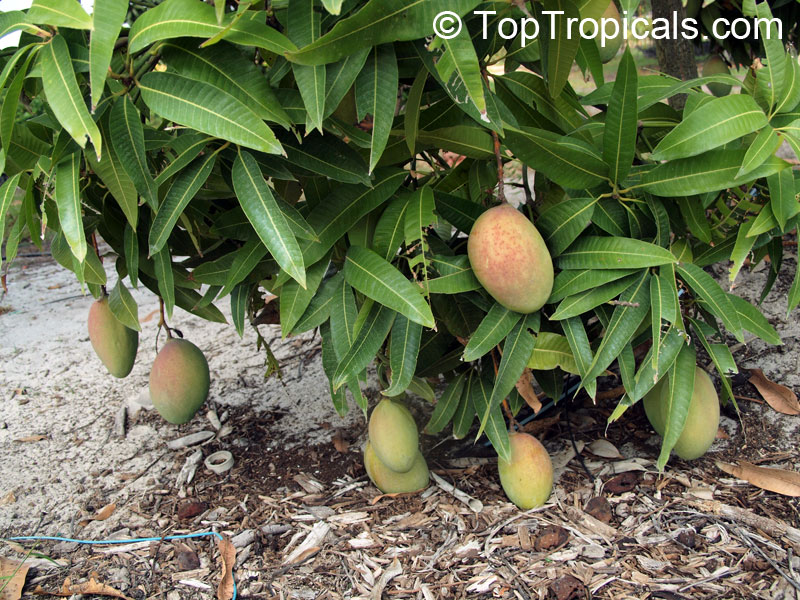
Container mango - Condo varieties

Q: What are the good varieties of mango trees available for container grow? Can you please share the details?

A: There are some great varieties of Mango selected specifically for container culture, they even have a nick-name - "condo mangoes". They have compact growth habit and respond well to pruning to keep them in small size. Here are a few of our favorites that we currently have in stock:
Glenn
Ice Cream
Cotton Candy
Mallika
Manilita
Pram Kai Mai
Mun Kun Si
Maha Chinook
You can see more condo mangoes on this page.

Related articles:

How to grow a Dwarf Mango tree
Choosing the right Mango for your garden
10 secrets of successful Container Mango growing on a balcony.
Condo Mango

Date: 3 Dec 2019

Ghost Cold Protection

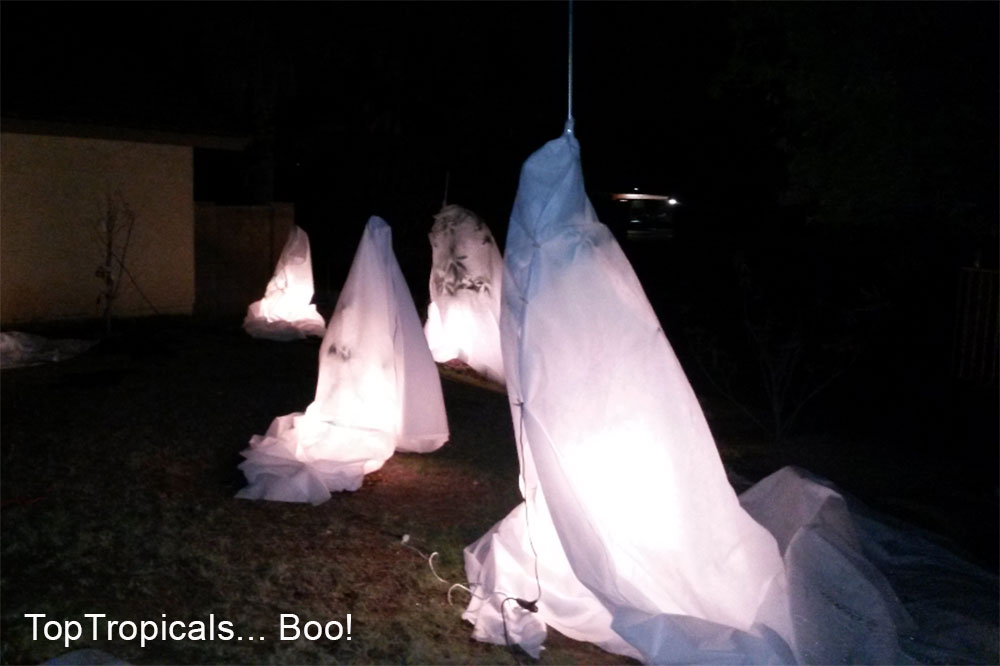
Q: Has anyone ever tried using heat packs under frost blankets to protect tropical plants from frost?

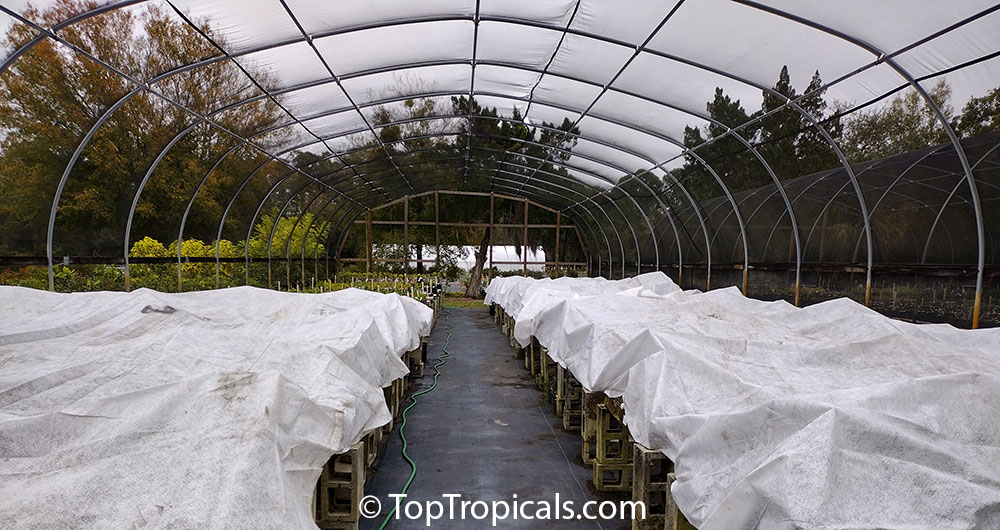
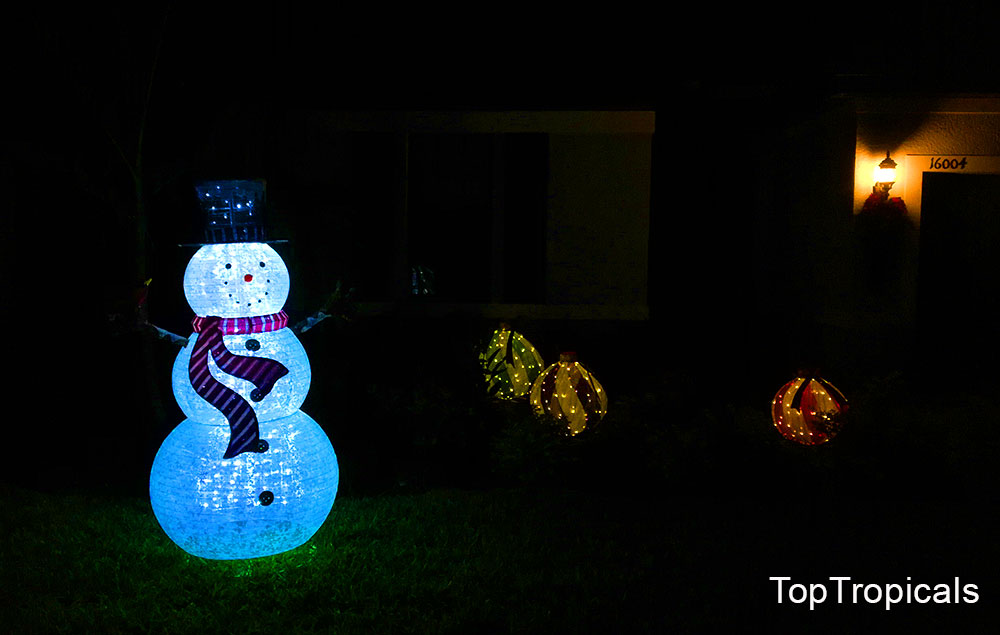
A: The reality is, the heat packs used for shipping do not have enough heat capacity to create efficient warming effect. From our own experience, the best way is to use small 25W incandescent bulbs which produce lots of heat (considering observing all safety precautions and fire safety). Some gardeners use Christmas lights. See picture of our plants in the ground during a cold night. We called them Ghost Cold Protection! ;)

See more columns on cold protection:
Seven rules of cold protection for tropicals
About Cold Protection
Cold protection - winter action for your plant collection
Tropical Treasures articles