🐈📸 Meet Onika's cats from TopTropicals PeopleCats.Garden:
This is Donald (last name is Trump - it is what it is). Donald is patrolling the yard constantly to make sure everyone is safe.
Compact size, ideal for patios, balconies, and windows
Form unique, sculptural caudex shapes
Decorative even when not in bloom
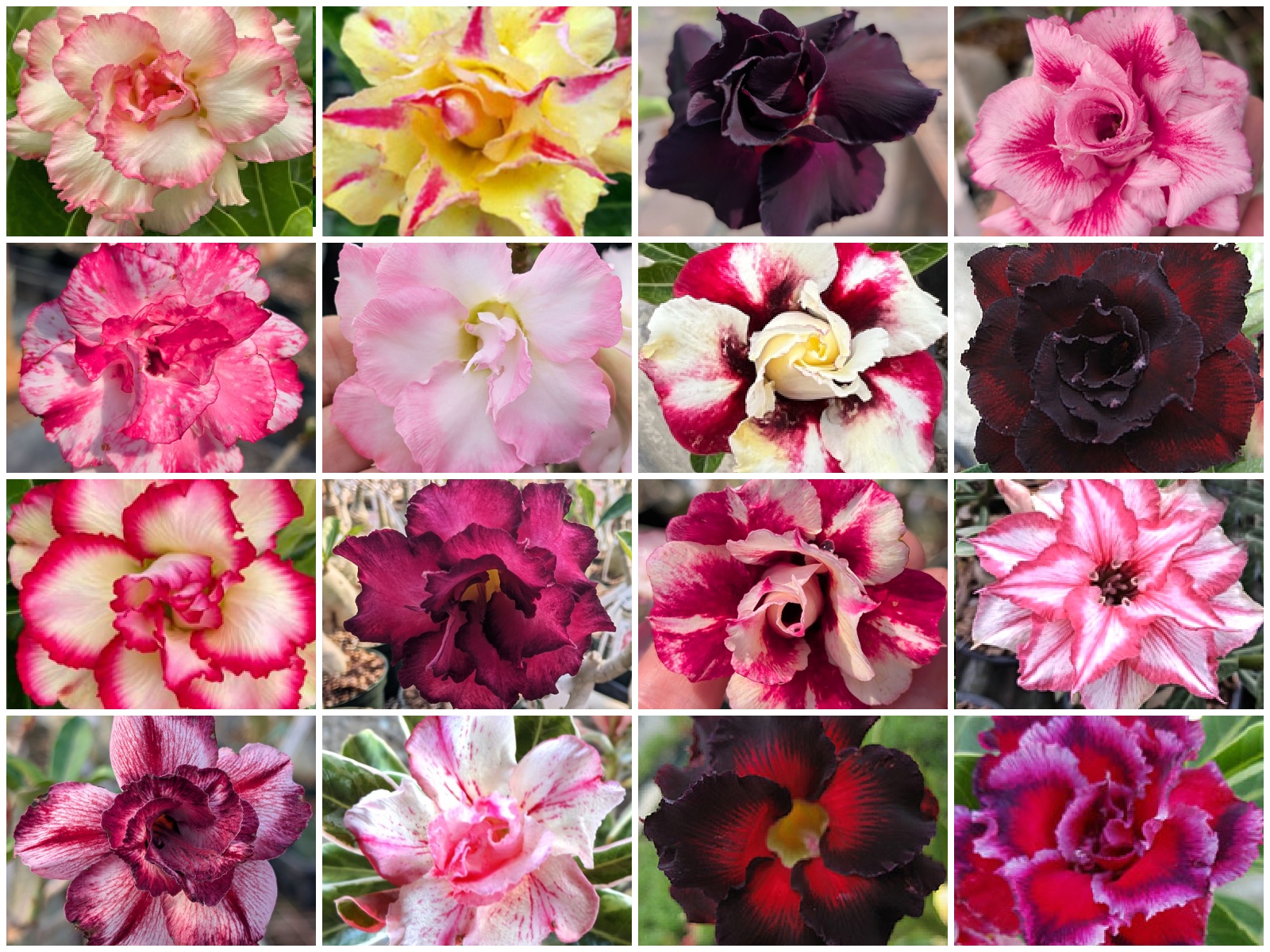
Produce stunning, long-lasting flowers
Often blooming in a few months
🌸 Adenium Care
Basics
Adeniums have many spectacular hybrids, and their basic culture is closer to
orchids than to typical houseplants.
The key is a small pot, excellent drainage, bright light, and careful
watering.
Pot and Soil
Use a small pot sized to the root system.
Excellent drainage is required.
Use a very well-drained mix. We recommend specially formulated for
Adeniums Desert
Rose Soilless Mix
Light and Blooming
Give lots of light for heavy flowering.
In warm conditions and longer days, most hybrids and species begin
blooming in spring.
In warmer climates they can keep blooming through fall and winter.
Watering (Most Important)
Adeniums dislike both extremes: over-watering and drying out too
often.
Use neutral to hard water when possible.
Acidic water can sour the mix quickly and may cause root rot.
Water in the early morning so the plant can drink through the day.
Watering frequency can range from daily to every few days, depending on
heat, light, and how fast the mix dries.
Never let the pot sit in a saucer of water.
Do not let the plant dry out too often, or it may go into early
dormancy.
Do not wet the leaves.
Fertilizer (Caudex + Flowers)
To build a large swollen base/trunk (caudex), use a good quality
fertilizer.
A fertilizer that helps trunk swelling also supports flowering. The best
choice for this is Sunshine
Megaflor.
Avoid fertilizers that are too high in nitrogen; choose a formula where
the middle number is the highest.
Never apply fertilizer directly on roots.
Do not liquid feed a thirsty plant.
Always water lightly first, then feed, to avoid root burn and leaf
drop.
The Caudex "Secret" (Shaping the Base)
At each repotting, lift the plant slightly so the upper roots are a
little exposed.
This encourages new roots to grow downward and helps create a thicker,
more interesting caudex shape.
Multi-Grafted Plants (Important Note)
Adenium hybrids can be multi-grafted with several colors/varieties on
the same plant.
The swollen base forms only when the rootstock plant is grown from
seed.
✍️ Adenium
FAQ
How much light do Adeniums need?
Adeniums need lots of light for heavy flowering. Most hybrids and species
start blooming when conditions are warm and days get longer, and in
warmer climates they can keep blooming through fall and winter.
What is the best pot size for Adeniums?
Use a small pot sized to the root system, with excellent drainage. A small
pot with excellent drainage is a must.
What kind of soil mix should I use?
Use only a well-drained mix. Adeniums do best in very well-drained soil. A
small pot plus excellent drainage is the foundation of success.
How often should I water Adeniums?
Adeniums do not like both over-watering and drying-out too often. Water
preferably in the early morning and do not water again until the mix dries
on the surface. Watering can range from daily to every few days depending on
heat, light, and how fast the mix dries.
Can Adeniums sit in a saucer of water?
No. Never allow your Adenium to sit in a saucer of water.
Should I wet the leaves when watering?
No. Do not wet the leaves.
What kind of water do Adeniums prefer?
Adeniums prefer neutral to hard water. Acidic water tends to sour the soil
too fast and may cause root rot.
How do I create a large, swollen caudex?
At each repotting, lift the plant slightly so the upper parts of the roots
are a little exposed. This encourages the plant to form more roots that grow
downward and helps create a thicker, more interesting caudex.
What fertilizer should I use for caudex growth and blooms?
Use a good quality fertilizer to support both trunk swelling and flowering.
Avoid formulas that are too high in nitrogen; the middle number should be
the highest. Never apply fertilizer directly on roots, and do not liquid
feed when the plant is thirsty. Water lightly first, then feed, to avoid
root burn and leaf drop.
Can an Adenium have multiple flower colors on one plant?
Yes. Adenium hybrids can be multi-grafted with several colors or varieties
on the same plant. Note that the swollen base forms only when the rootstock
plant is grown from seed.
Smokey: Desert rose. One caudex. Multiple grafts. Different
flowers. Sunshine: So it is a team plant. Everyone blooms, nobody agrees. Smokey: Yet it grows just fine. Sunshine: That is the secret. Coffee and donuts.
🌸Featured Adeniums
Recommended by our Horticulturist, Tatiana
Anderson
Moung Kusuma
Deep magenta flowers with a velvety look and a darker, almost black edge. A
bold, elegant adenium that stands
out immediately.
Sunshine
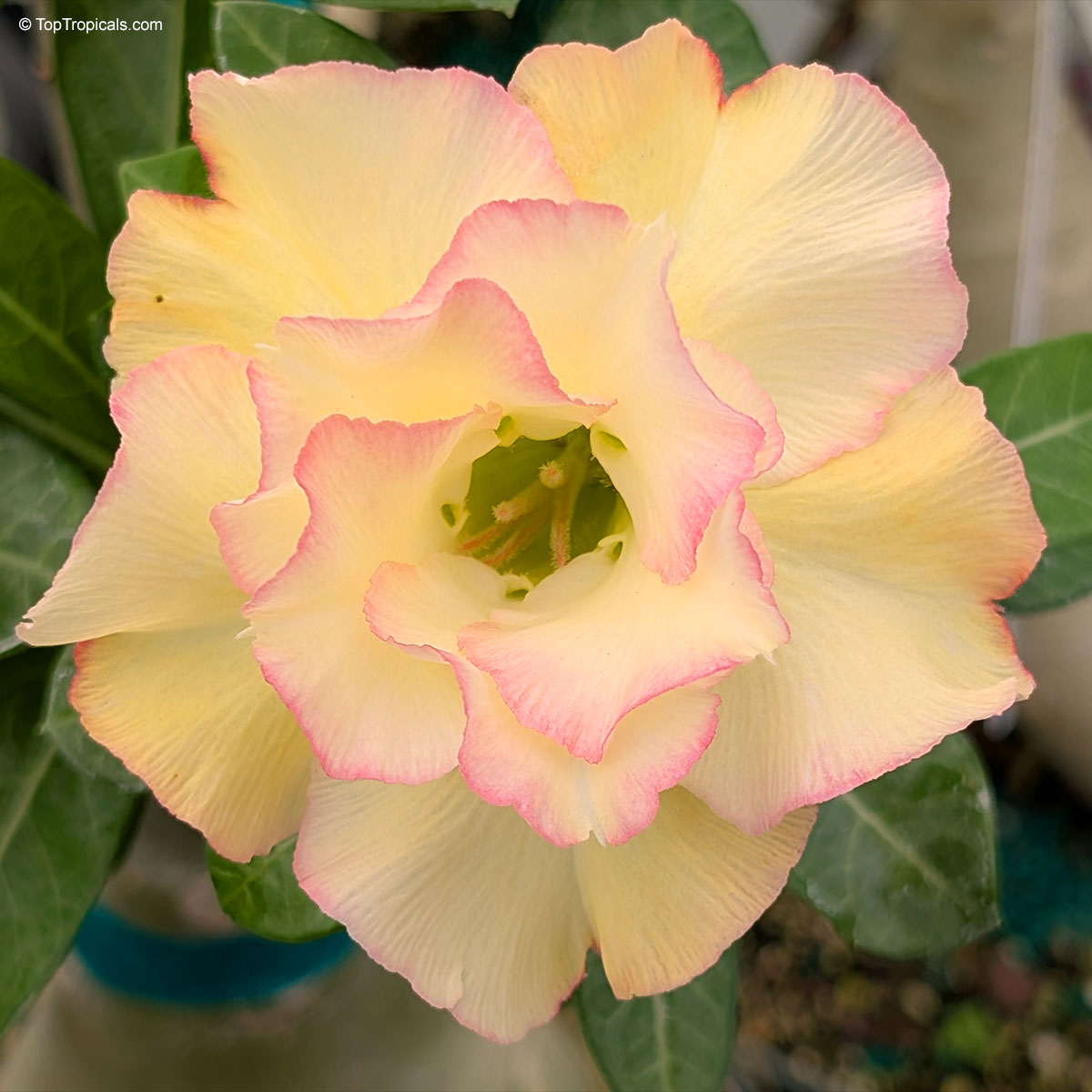
Bright yellow and mauve swirls across layered petals create a warm,
cheerful bloom that lives up to its name.
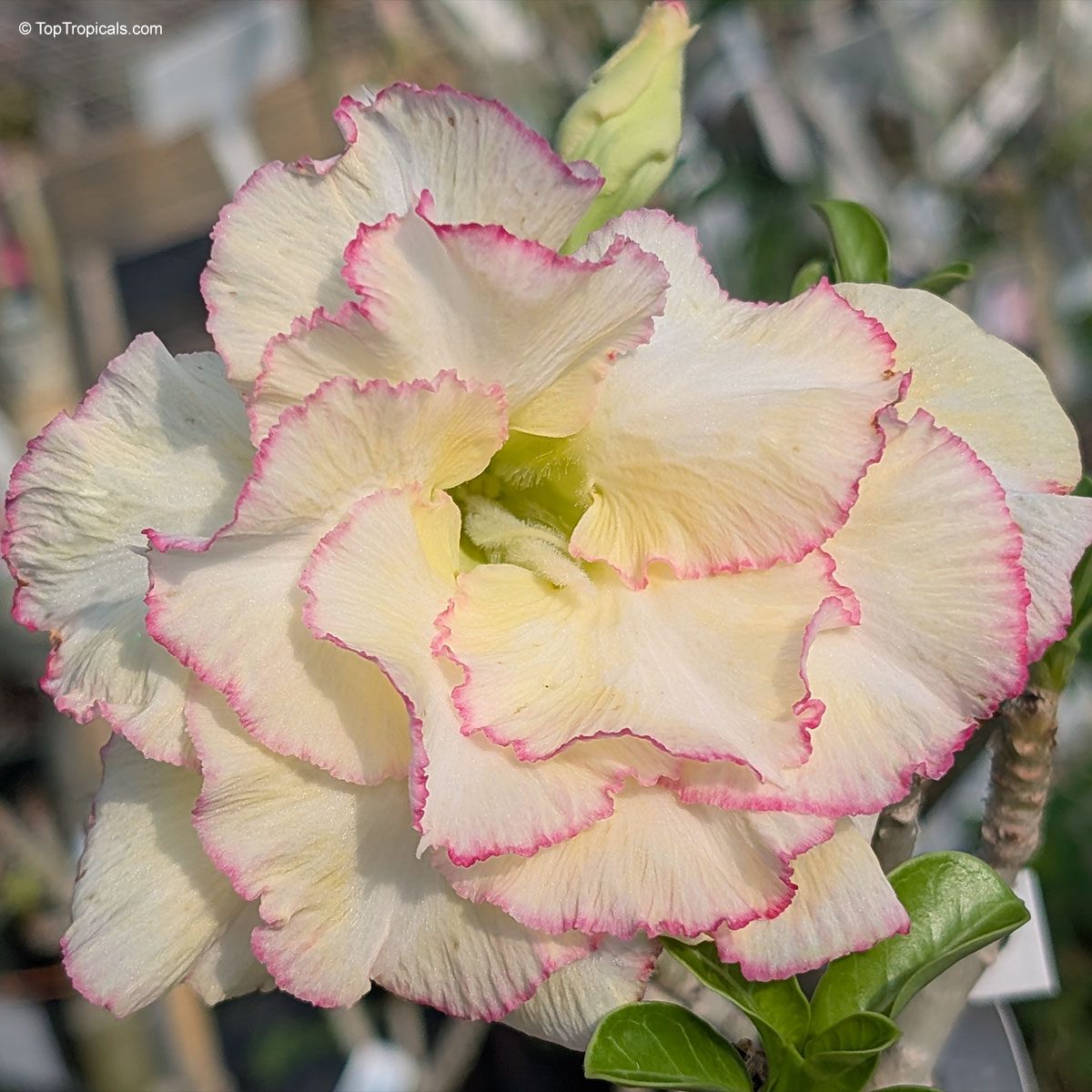
White Rabbit
Clean white petals brushed with playful pink streaks. A reliable bloomer
with soft ruffled flowers.
Thong Samsee
Known for its three-color effect, shifting from yellow to pink to nearly
white on the same plant.
Candy
Cheerful yellow petals dipped in cherry red with bold ruffled layers.
Bright, playful, and impossible to miss.
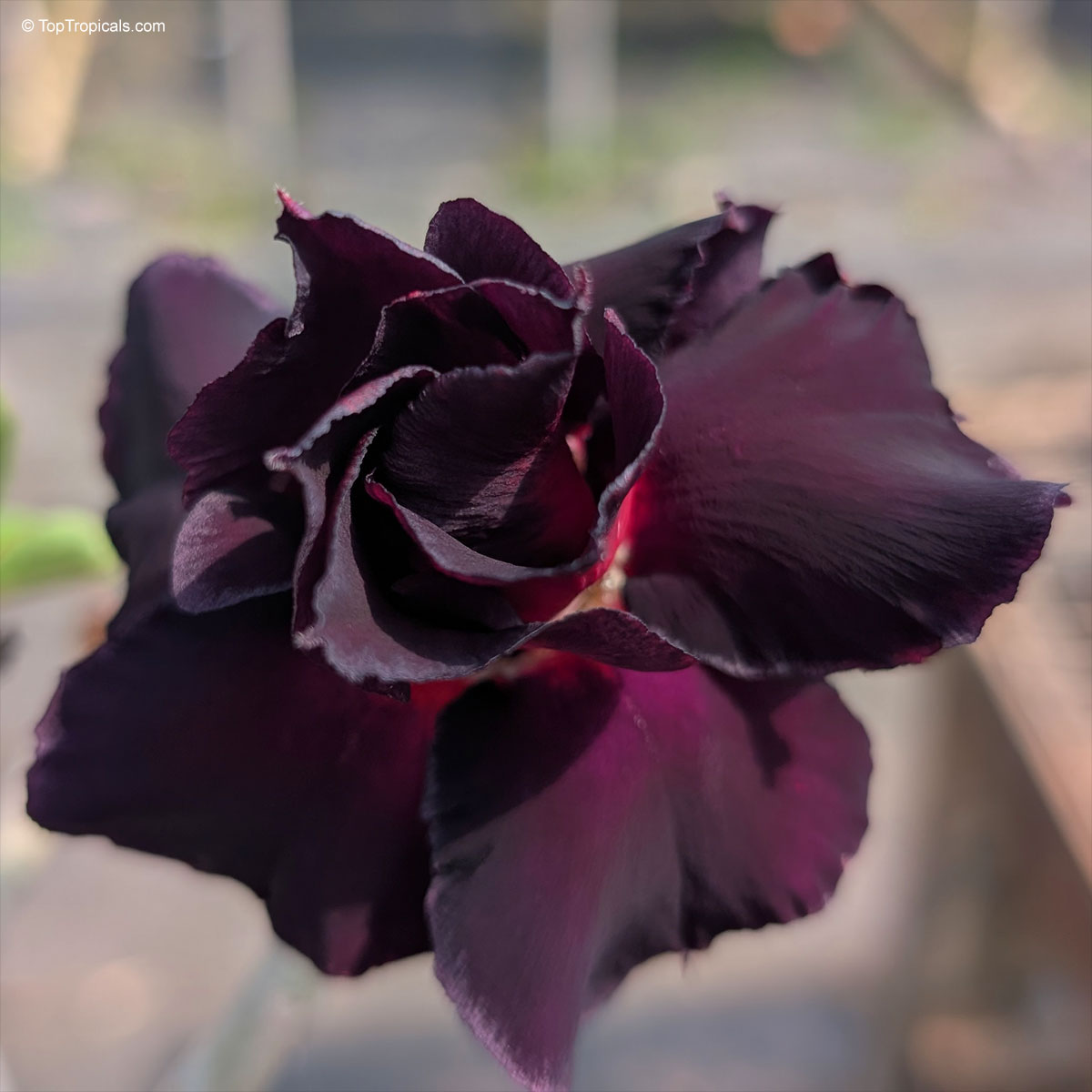
Black Sheep
Nearly black petals with a glowing red center. Dark, dramatic, and
different.
Free Adenium (Desert Rose) Shipping
Plant now, bloom soon. Get select Adenium (Desert Rose) varieties shipped to
you with FREE S&H.
Offer valid through 02/06/2026. Limited quantities. While
supplies last.
Free shipping applies to qualifying Adenium items only. Excludes other items
and prior orders.
🍴 Jackfruit golden hash: quick-n-fun exotic recipes
Jackfruit Golden Hash
Ingredients
1 cup ripe jackfruit pods, chopped
1 teaspoon coconut oil or butter
1 pinch salt
Fresh lime juice (optional)
Instructions
Chop ripe jackfruit pods into small pieces.
Heat coconut oil or butter in a frying pan over medium heat.
Add the chopped jackfruit and pan-sear until the edges begin to caramelize.
Toss with a tiny pinch of salt.
Finish with a squeeze of lime juice and serve warm.
🌿 About the plant:
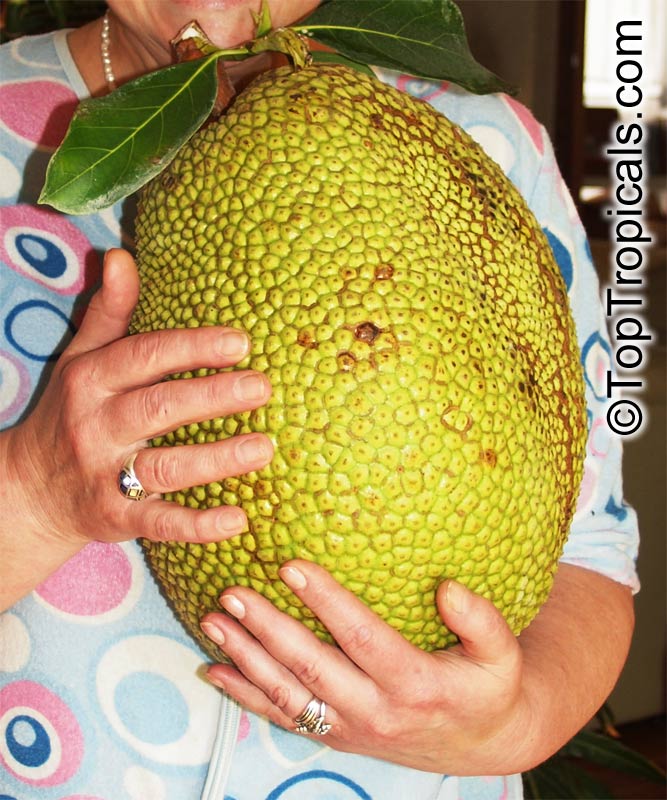
Jackfruit is the world’s largest tree-borne fruit, native to South and Southeast Asia. When ripe, its golden pods are sweet, fragrant, and naturally caramelize when cooked. It has been a staple food for centuries, used both ripe and unripe in desserts and savory dishes.
🌱 In the garden:
Jackfruit is a fast-growing tropical tree that thrives in warm climates with full sun and good drainage. It loves regular water and fertile soil, it's a heavy feeder. Best suited for USDA zones 9b-11, it can be grown in large containers when young and makes a bold, architectural fruit tree in the landscape. The fruit forms at the base of the tree, so trimming it under 7-8 ft makes it easier for cold protection.