Date: 2 Aug 2020
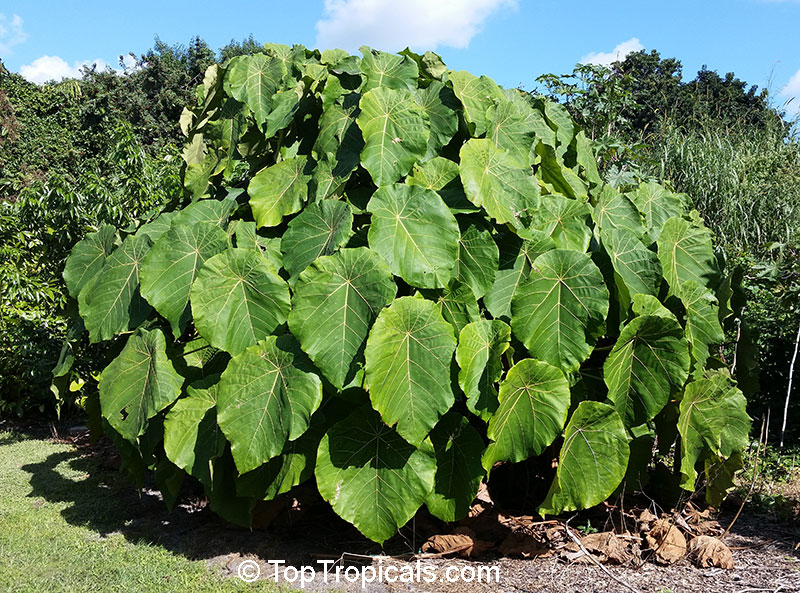
Macaranga grandifolia - Elephant Ear Tree
The very quintessence of tropical foliage luxury
by Mark Hooten, the Garden Doc
Why is this wonderful little tree so unknown here in Florida? I can only guess it's because people don't see them, and therefor don't know about them, and that basically no nurseries grow them. Yet it's one of the most utterly spectacular foliage plants conceivable... Provided with an appropriately warm climate such as South Florida or elsewhere, there is no reason they should not be seen more often (for purposes of utter awe).
CONTINUE READING >>

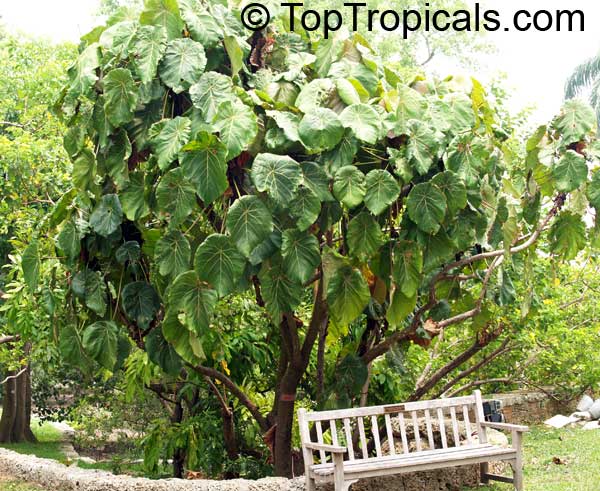


Macaranga's genuinely grand foliage much more resembles the ears of actual elephants (esp. the Asian species) than do the leaves of the much more commonly known and grown "elephant ears" meaning certain Alocasia and Colocasia
Date: 26 Jul 2020
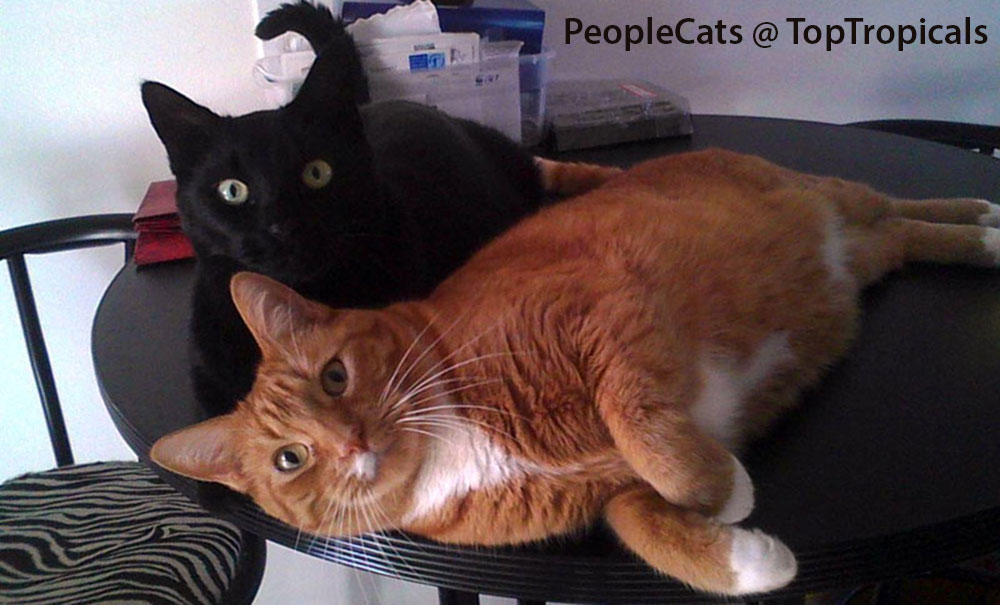
PeopleCats of the World. Cats of The Day: Theodor and Arthur from the Cat Cafe
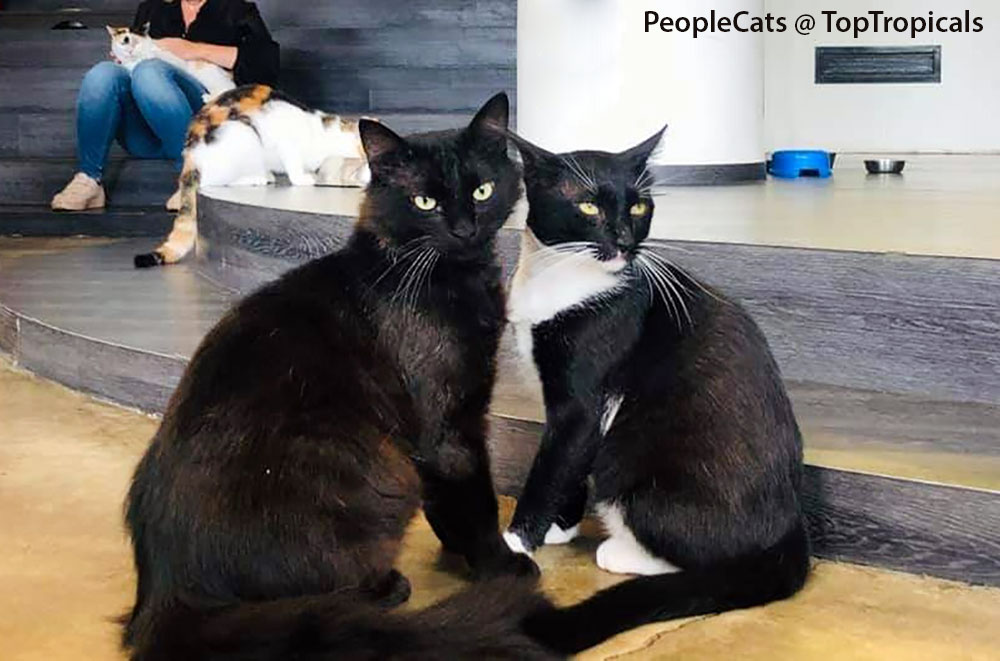
We received many replies from Garden Cat Lovers to our previous Blog about Cat Cafe
Nurri Kassikohvik. We continue introducing a few other PeopleCats from
the Cafe: Theodor (pure black) and Arthur (tuxedo).
Theodor and Arthur are security guys. They sit at the front door and make
sure everyone passes their face-control... while they take care of each
other's faces...

TopTropicals PeopleCat Club and Zoo
Thank you for supporting us in helping PeopleCat Community!
Make
your kind donation today and receive a surprise gift from us! Every little
bit helps. Thank you and God bless you and your pets!
Date: 26 Jul 2020
The best grafted Loquat varieties
at 15% OFF for 3 days!
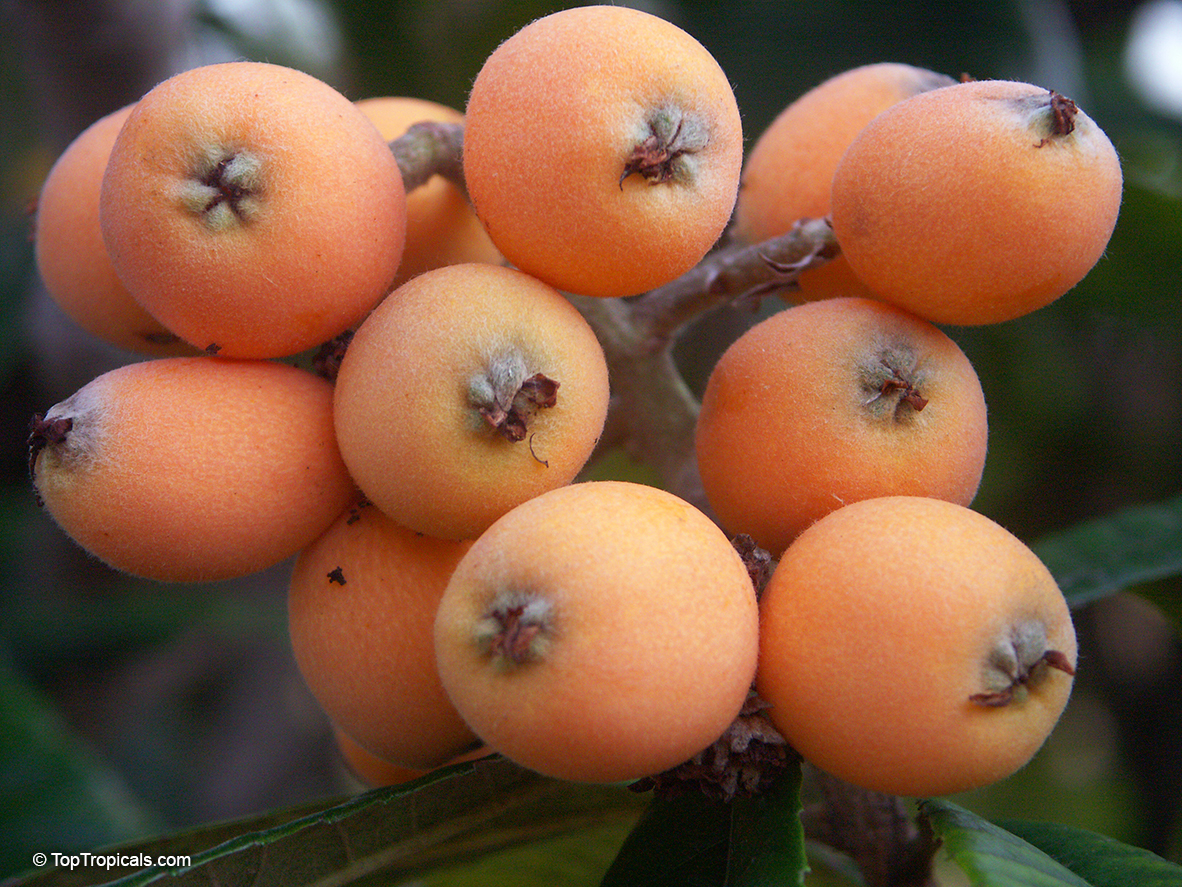
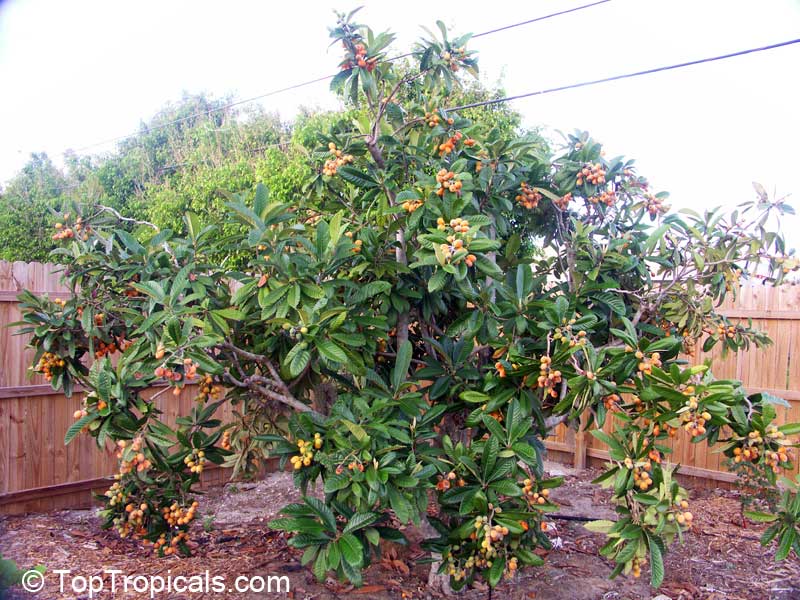
Q: I have a nice Loquat tree started from seed. I understand it will not bear fruit unless grafted. Can you graft the tree in your nursery? If this is not possible let me know the cost of Loquat tree and I buy it from your nursery.
A: From our experience, Loquat trees grown from seed bear fruit
much sooner (within 5-6 years) than seedlings of such trees as Mango and
Avocado (8-15 years). Also, unlike Mango and Avocado, the fruit quality of a
Loquat seedling is usually not too bad. However, in order to have a tree with a
superior fruit, it is recommended to plant grafted variety for a guaranteed
tasty crop. If your seedling is already a large plant (with a trunk diameter
over 5 mm), it may be too late to graft it, because quality graft requires fresh
wood.
If you have plenty of room in your yard with enough space for both grafted
tree and a seedling, you may still plant the seedling in the ground and give
it a chance to produce in a few years. If your garden space is limited, we
recommend you to plant a grafted variety and enjoy fruit as soon as the next
year.
The most popular grafted Loquat varieties, heavy
producers:
Champagne
Christmas
Gold
Nugget
Yehuda
SALE: 15% OFF now, no min. order!
- $20% OFF discount code PARENTS2020 for orders over
$200
- 5% automatically off all orders over $100
= make it a steal!
Offer expires 7-28-20
If you are local, stop by our Garden Center and we will pick the biggest
and the best tree for you. Or just order online and get it in just a few
days to your doorstep!
See full list of Loquat varieties available at the moment.
Date: 19 Jul 2020
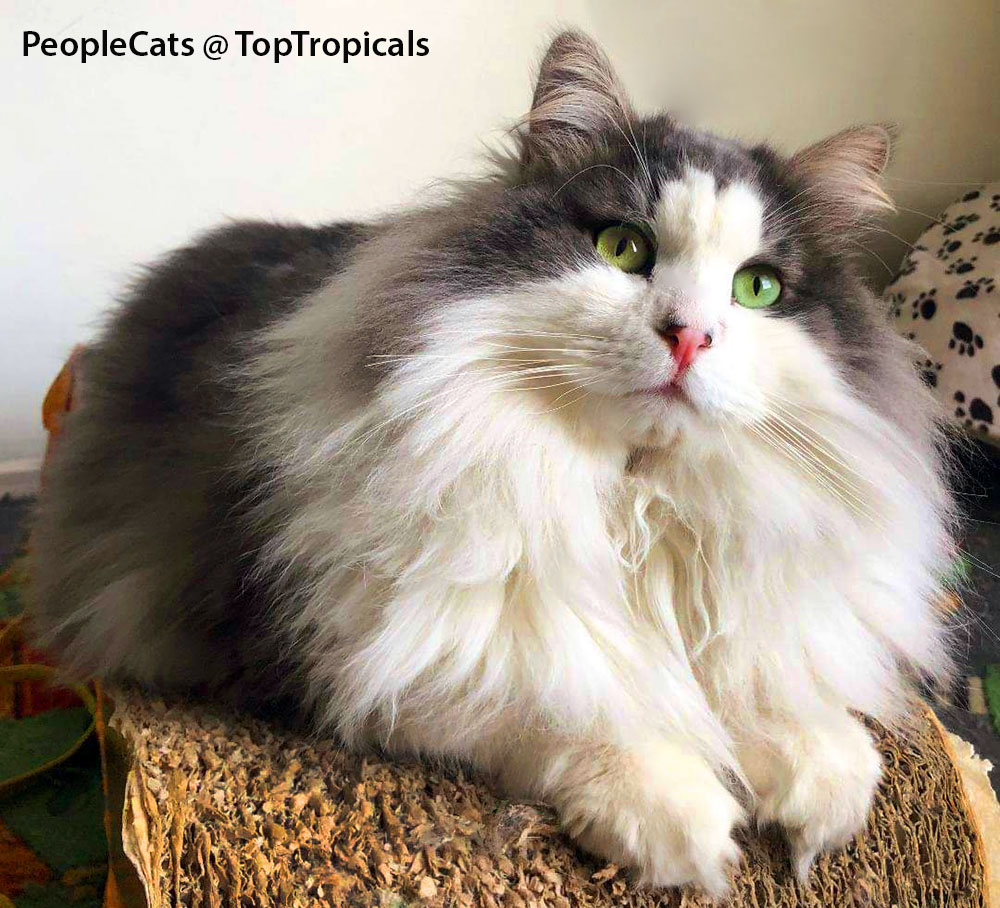
PeopleCats of the World. Cat of The Day: Sabake from the Cat Cafe
We continue inviting PeopleCats of the World to our Blog. Today's cat of
the day is visiting us from Cat Cafe Nurri from Tallinn, Estonia - Nurri Kassikohvik (Nurri means Purr!). Our columnist Alex Butova has visited enchanting Nurri Cafe especially for this
report!
This amazing cat project is supported by donations, cat gift shop, as well
as order surcharge - $6.50 per customer. Nurri Cafe is a foster home for cats
rescued from different troubles. Some of these cats eventually find their
forever homes when adopted by the customers. But some have become Nurri's
family members, the cafe is their permanent home, and of course - place of
work.
One of such permanent residents is a fluffy beautiful Sabake (BTW "sabaka"
in Russian means "dog"... well, it is what it is!)
Sabake's main responsibility is checking out customers at the cash
register. She also advertises souvenirs and offers to sign the Guestbook - which is
she uses as a napping mat.
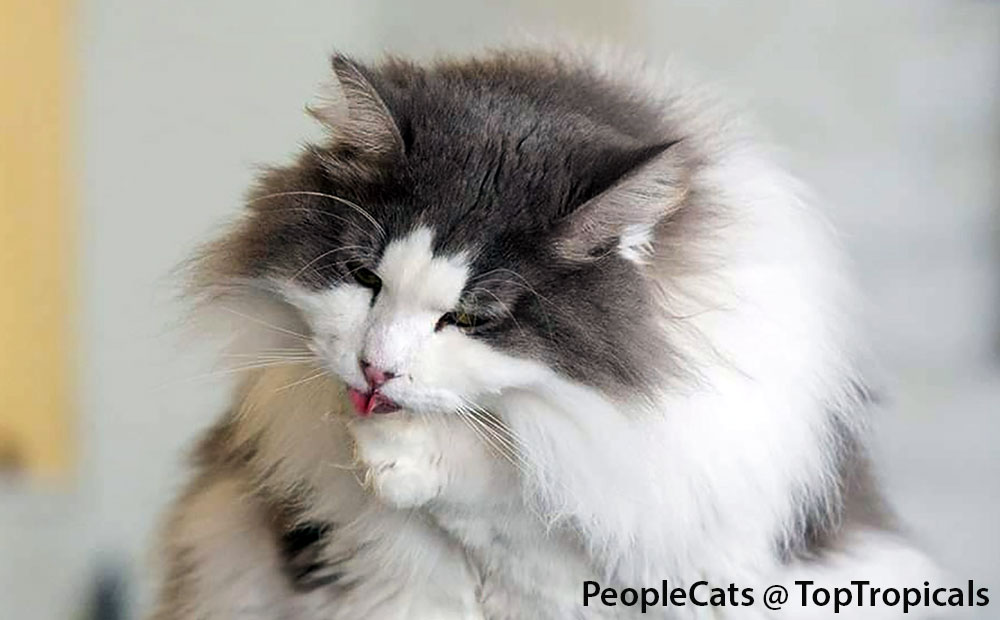
Sabake is very proud of her beautiful, long, thick fur. Cafe employees have
a daily task of grooming her fur coat which is quite a job!
In May 2020, during the world's shut-down, the MAOW Academy hosted a webinar from this cafe: "For
everyone who cares how the life order of"stay home"worked on cats and how they
get used to the"old"life order again."
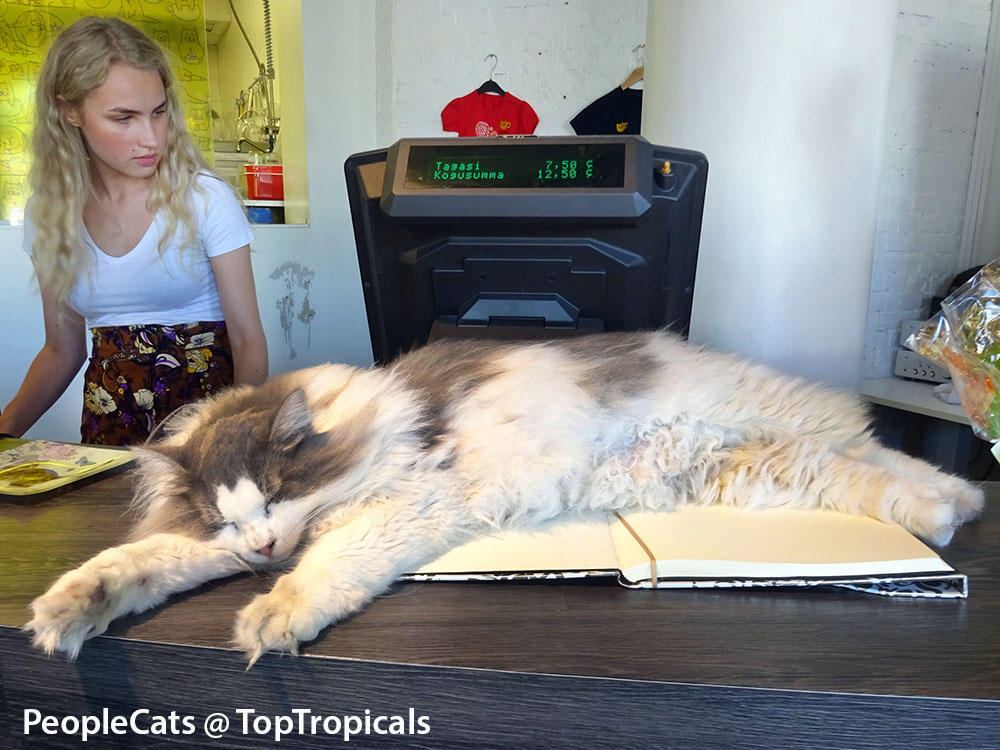
In the photo: Sabake napping on the Guestbook
TopTropicals PeopleCat Club and Zoo
Thank you for supporting us in helping PeopleCat Community!
Make
your kind donation today and receive a surprise gift from us! Every little
bit helps. Thank you and God bless you and your pets!
Date: 19 Jul 2020
Sugar grains on leaves?
by Mark Hooten, the Garden Doc
Q: On my Stemmadenia tree I noticed tiny drops (like white sand grain or sugar crystals) and wonder if this is a disease or some kind of insect and what can I do about it?
A: Sometimes certain vigorously growing (mostly tropical) plants
develop suspiciously-looking tiny "growths" mostly on the undersides of their
leaves. Without strong magnification, they can be easily mistaken for mealy
bugs, scale insects, or any number of parasitic disease vectors.
However, according to plant pathologists, these are actually harmless
excretions actually exuded by the plants themselves. A chemical analysis of these
tiny granules shows that they are nothing more than polysaccharides.
Polysaccharides are basically complex chains of sugar/glucose molecules which are
simply a production of all plants undergoing photosynthesis. Polysaccharides are
at the beginning of the entire food-chain. These odd tiny sugar-grained
nodules are actually only semi-crystalline complex sugars which certain plants
have over manufactured and have had no choice but to excrete through their
stomata (breathing pores).
I have personally observed Cecropia, Psychotria, Spondias (Hog Plum), and Guavas doing this... there are many others. Nothing to worry about,
they are harmless, but if they bother you - wash them off with a hose water.