Date: 20 Dec 2019
Plumeria cold protection
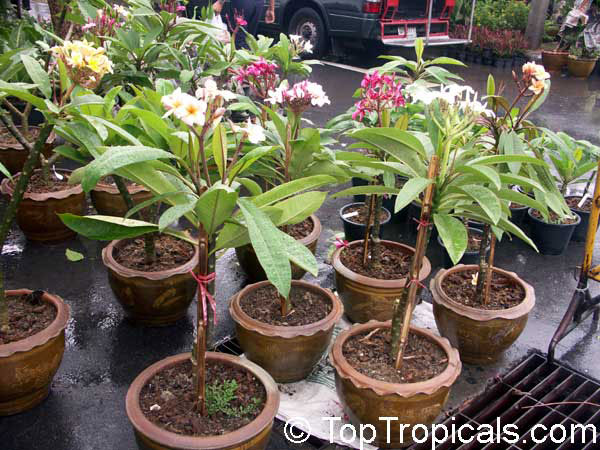
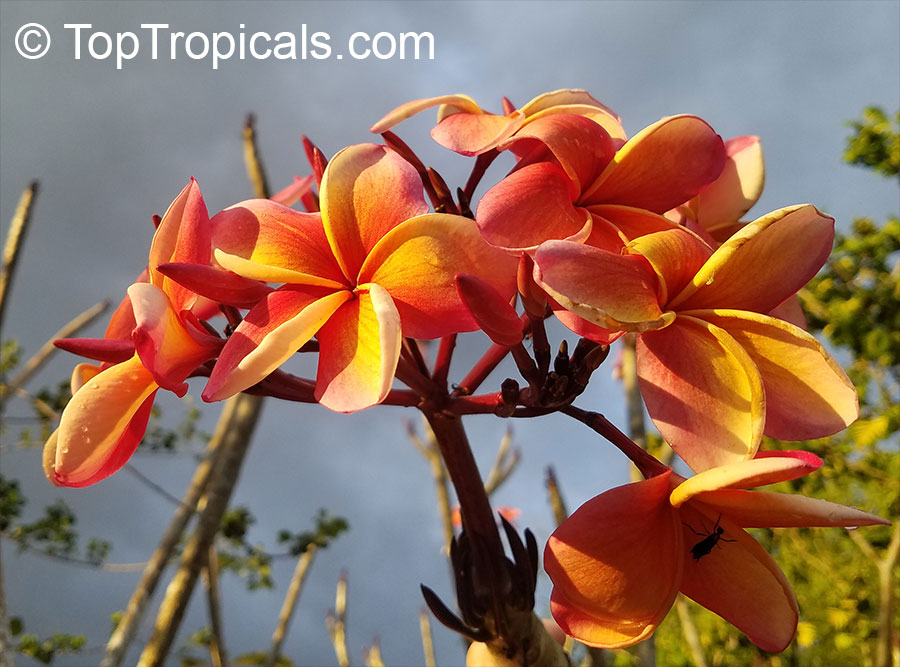
Q: We have a purple-flowering plumeria which resides on our sunny deck during the warm months and then Winter vacations on our back porch where we can close the plastic film windows and where it stays above 50 degrees (overnite) until it can get moved outside again. We live in zone 8+ in South Carolina and I would love to plant it outside. Do you think if we ghost-covered it when alerted that we would have an overnite freeze, that it would survive being planted in the ground and recover to flower when warm? I don't believe the soil in our yard has ever frozen below the top 1/2 inch or so, and never for more than a few hours at a time. What do you think?
A: Plumerias are tropical plants, which means, they need frost-free environment. Even if the ground is frozen only on "the top ½" or so"- this may be enough to kill the plant. From our experience, plumerias can withstand a few hours of windchill frost (not frozen soil), but even if they survive, they may get some branches damage, and recovery may take so long that the plant may not even bloom the next year. So I wouldn't take that risk even with a ghost-cover cold protection. We have customers who grow tropical plants in the ground in colder areas, but they have greenhouse protection: this means, the soil is warm and the air temperature is maintained above 45-50F. For example, this Greenhouse in Virginia.
We recommend to continue growing your rare plumeria in container and
move it inside when temperatures drop below 50F (recommended) and for sure when
they drop below freezing. Plumeria can take a cold night (a few hours of
upper 30's) as long as it is followed by a nice warm sunny afternoon with at
least upper 50s. Otherwise, keep it indoors. The good news is, since plumerias
are deciduous and have no leaves in winter, low light level won't affect the
plant.
Just make sure to minimize watering and keep the plant on a dry side
until it starts growing new leaves in Spring. You may continue fertilizing once
a week with half-doze of Sunshine boosters - Sunshine TotalFeed. This will maintain the plant healthy and prepare
for the blooming season in Spring.

Date: 16 Dec 2019
Meet PeopleCats of TopTropicals. Cat of the Day: Jim the Founder
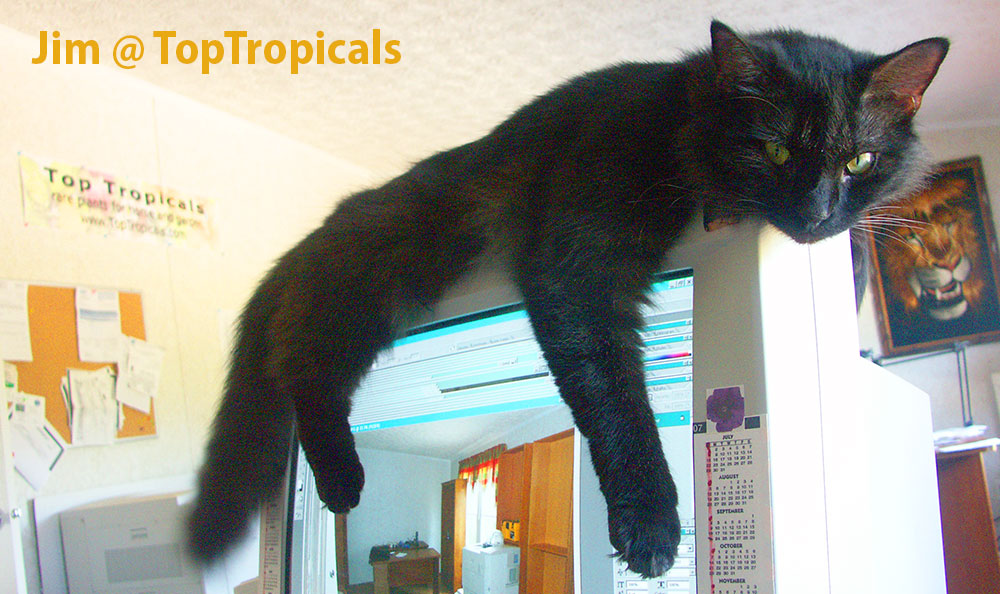
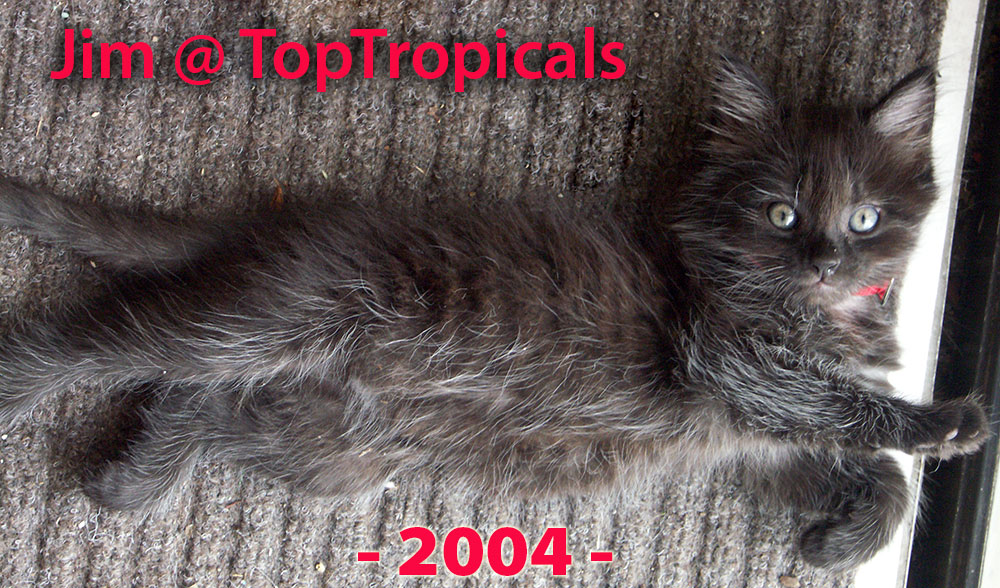
Jim is the oldest cat of Top Tropicals. In fact, he is one of the
Founders. In 2004 a tiny kitten showed up at first TopTropicals Nursery - a small
quarter acre in Ft Lauderdale... Jim looked very important and confident and
told us that he wants to stay with us because he sees a great future for
TopTropicals... and he was right. Since then, Jim traveled with us through all
nursery locations we ever had!
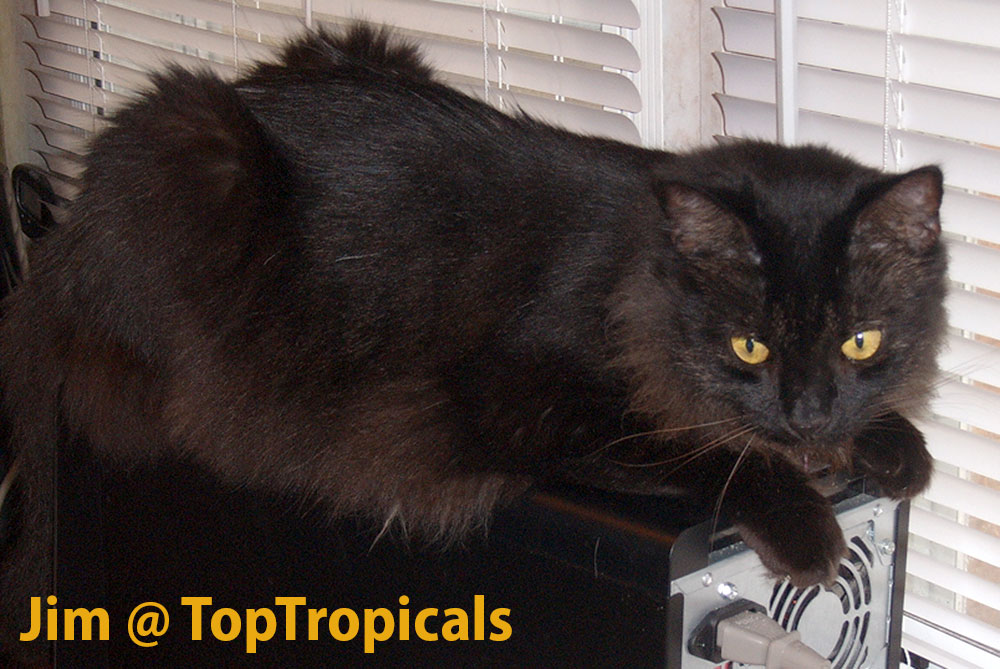
Jim used to lay on top of a warm monitor and help with our first
website designs... if you look at his favorite monitor in the picture, you now can
imagine how old this cat is!
In spite of his age, Jim is very active and likes to eat a lot. He
believes that a good meal is key to a healthy living, and prefers variety. He
eats everything: meat, fish, soup, pasta, pizza, veggies, cucumbers, salad...
eats well and stays healthy!
Jim happily participates in all costume parties. Yes, it is him in a
Santa costume greeting you at the top of this newsletter!
Don't miss out: Loquat Big Jim - we only have 4 plants, they all named after Jim!
Check out and more Cat of the Day stories.
Date: 16 Dec 2019
Hardy Dwarf Red Jade Vine
by Onika Amell, tropical plant specialist
Q: I simply adore Jade vines. I think they are the Queens of all the vines! I have been very been successful growing the green Strongylodon macrobotrys and purple Jade Mucuna pruriens vines here in Clewiston Florida but I am struggling to make the Red Jade vine (Mucuna benettii) thrive. It keeps dying on me during cold snaps. Any suggestions?
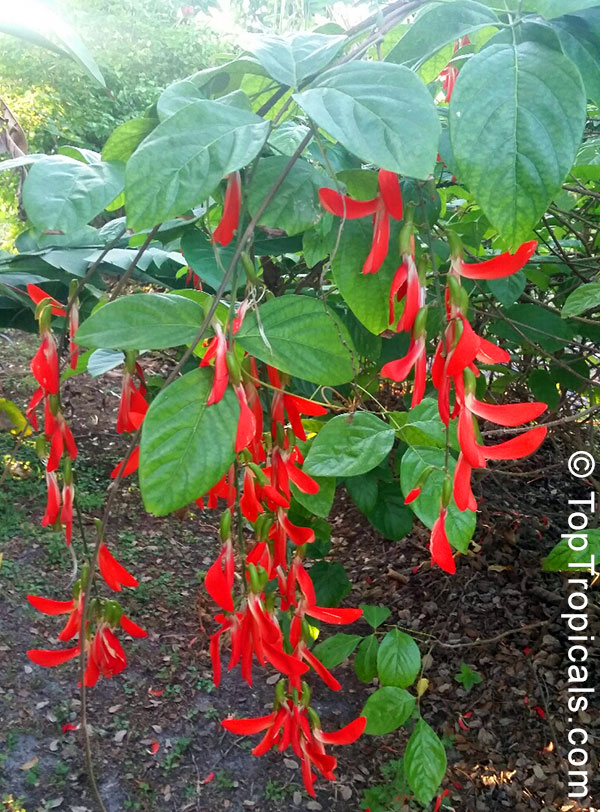
A: ...Here is our solution for you. Consider growing a Dwarf Red
Jade Vine or Camptosema grandiflora. It is closely related to the regular and ultra
tropical Red Jade Vine Mucuna benettii but much tougher and hardier. It is
considered to be one of the more cold hardy of the Jade Vines...
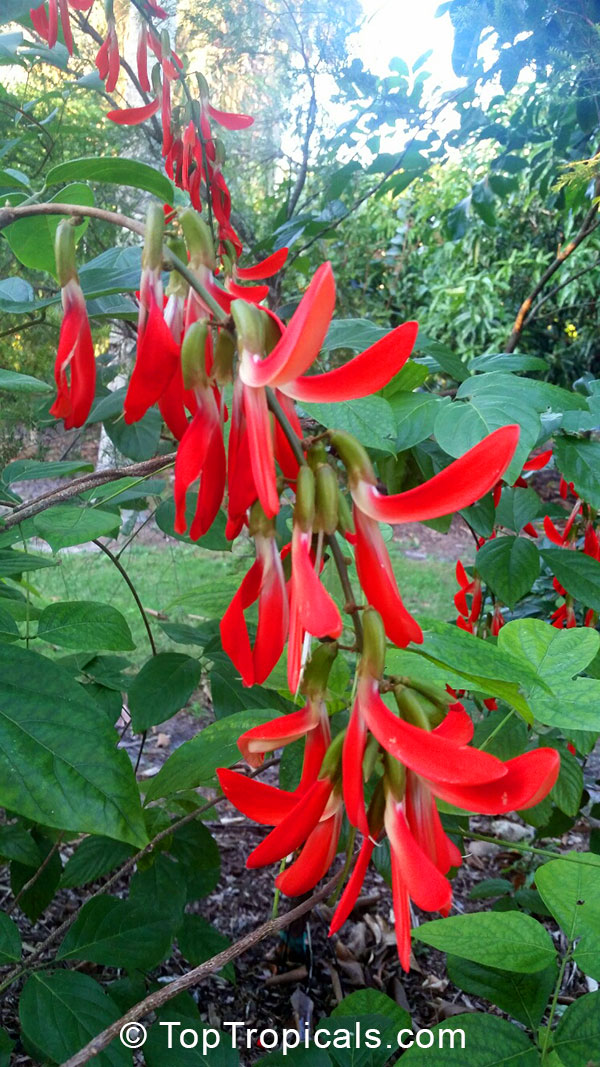
This gorgeous, rare and unusual vine is a sheer showstopper. It is easy
to grow and it will reward you with long fiery chains of dangling orange-red
flowers that bloom from late fall to early spring. Even though it is listed
as a dwarf do not be fooled. This vine will get quite large and will need a
strong support over time. The flowers are long and heavy and will show best
when planted on an arbor or pergola where they are able to hang down and wow
you and your visitors. It puts on a wonderful display. Butterflies, bees and
hummingbirds will all thank you for growing this stunner!...
CONTINUE READING >>
Date: 11 Dec 2019
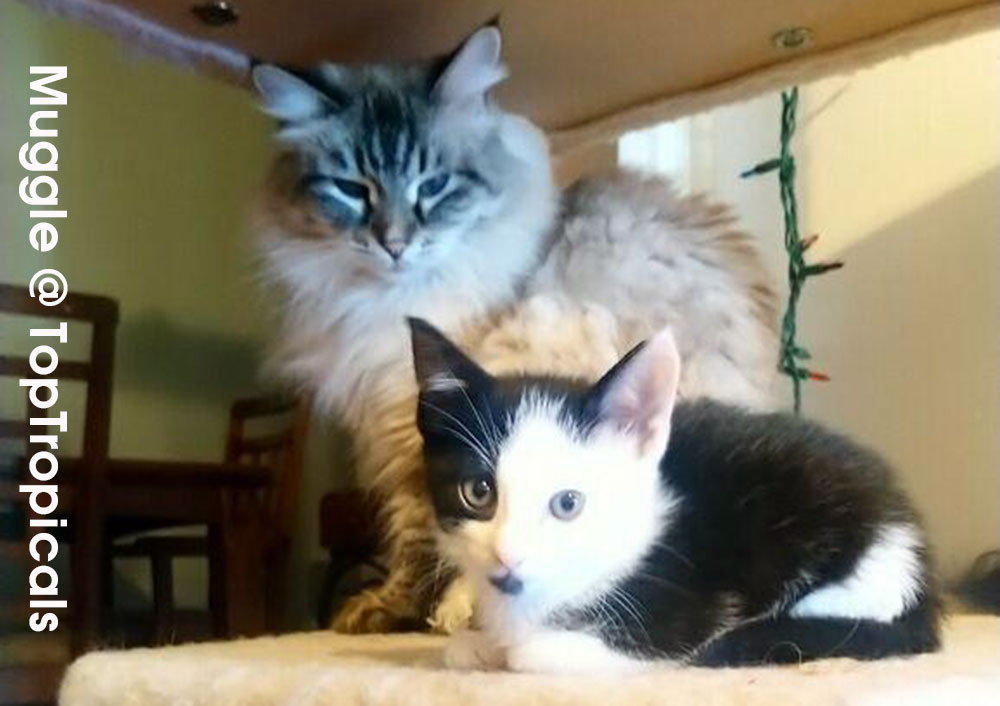
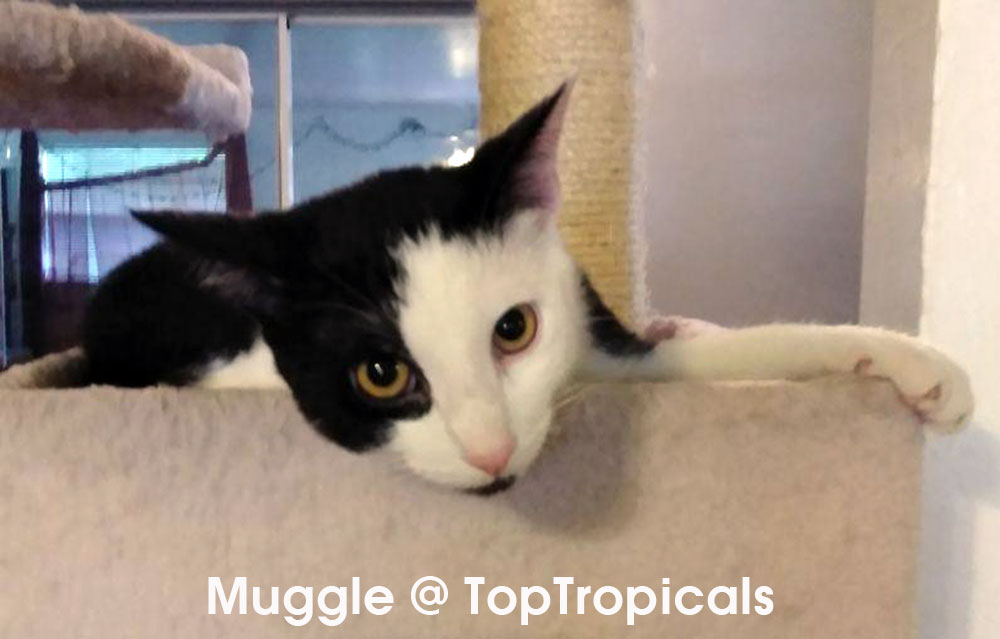
Meet PeopleCats of TopTropicals. Cat of the Day: Muggle the Snuggle
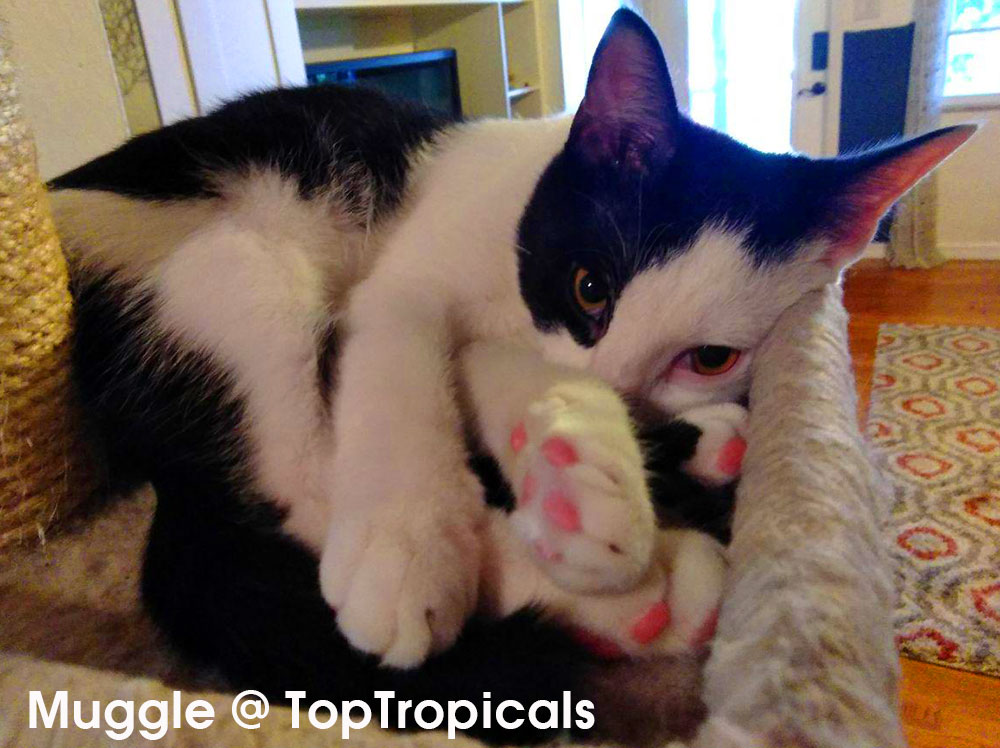
The sweet talking bathroom cat
Muggle* (or some call him Mawgli) is the little brother to Bagheera. We call him the sweet talker because he really does talk to you. As soon as he sees you he wants to have a conversation. He meows at you and if you meow back he will continue the talk. He is our bathroom cat because he loves to sit in the bathroom with you and purrrrrr. We think maybe he sees this time as his alone time with his humans, his one-on-one time when he doesn't have to share the attention with the other PeopleCats!
* His name is actually Muggle, Jamie named him after Harry Potter which she loves.
Check out and more Cat of the Day stories.


Date: 11 Dec 2019
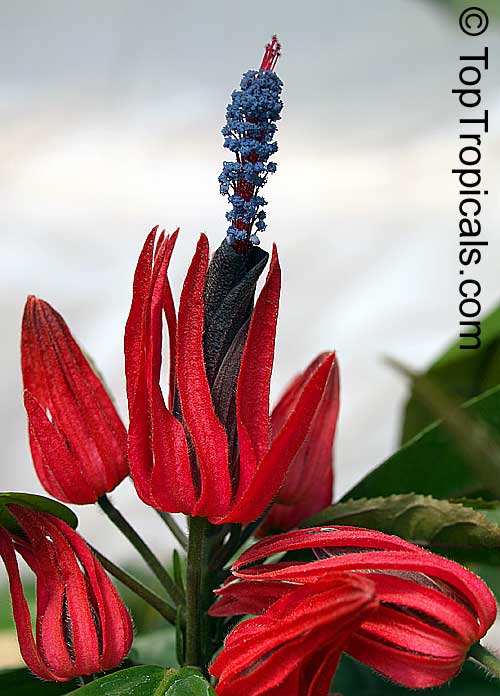
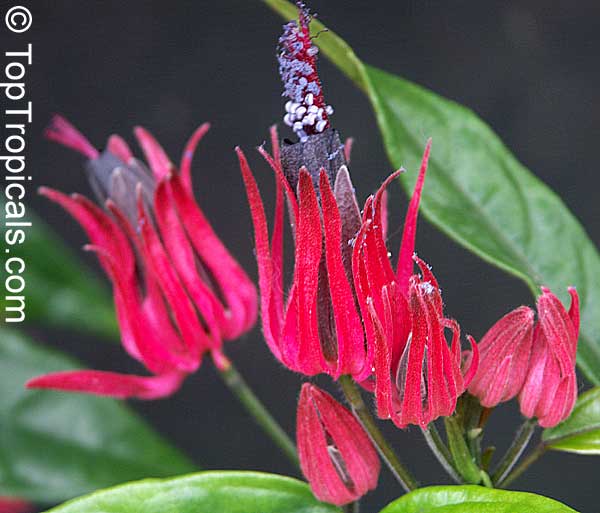
Pavonia for hummingbirds - a cinch to grow!
by Mark Hooten, the Garden Doc
...Flowers of the Brazilian candle - Pavonia multiflora are designed to be visited and pollinated strictly by hummingbirds. The narrow, upright, barely opening tubular flowers present a display any hummingbird can truly appreciate. While our eyes simply see a dazzling combination of reds, violet, and blue, the super-vision of those tiniest of birds perceive several more colors in the infra-red and ultra-violet spectrum, visible only to them and certain insects! Sort-of like electric lights along Times Square flashing "HERE I AM"! ...