Date: 30 Aug 2019
LadyBugs guarding your plants!
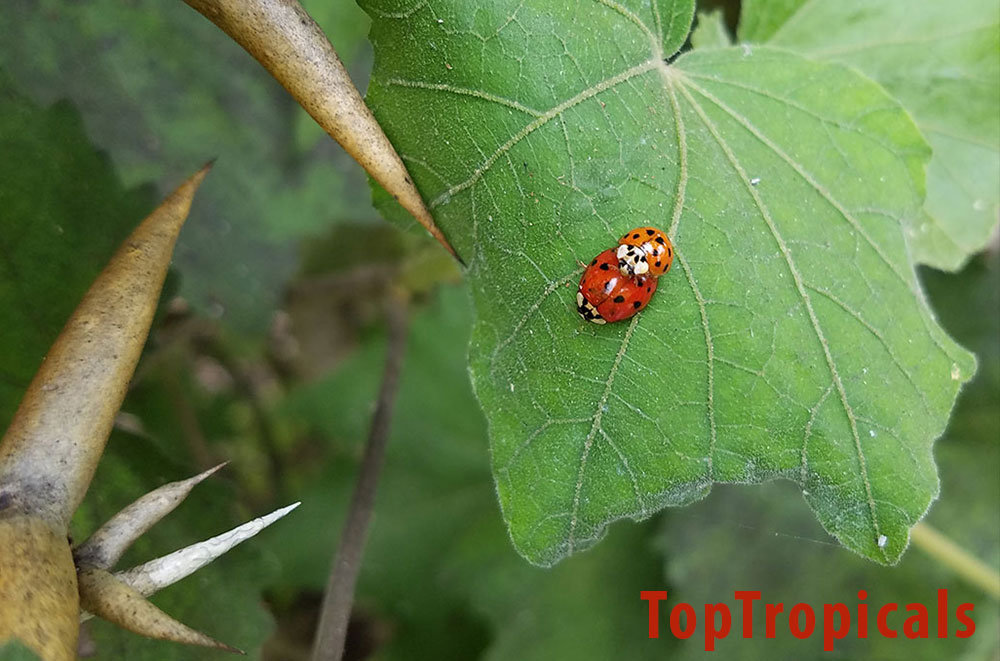
Q: I have a bunch of Ladybugs in my garden, I wonder if they eating my plants? Do I need to get rid of them?
A: Ladybug (Harmonia axyridis) is, in fact, one of the best insects you can find in your garden, it is a natural predator that takes care of many bad bugs, including aphids. Keep them happy and bring them to your garden. Ladybugs actually are cultivated as natural pest control, and you can even buy them for your yard, instead of chemicals!
Ladybug larvae eating aphids:
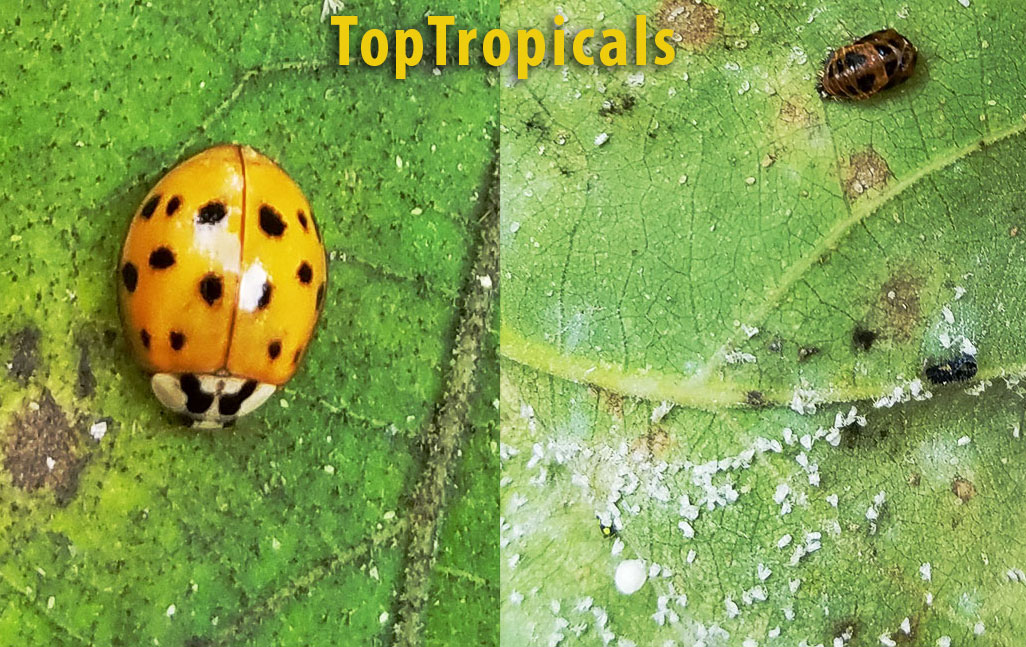
The wonderful insects that dine only on landscape pests and don't harm good bugs or plants are called 'beneficials', and ladybugs definitely fall into this category, but not the way many people think. It's the ladybug's larvae that are voracious predators of soft-bodied problem insects, especially aphids.
Photo below:
One of our PeopleCats, "Innocent" Ladybug (a.k.a. Bug) is wondering who else she can bug next...

Date: 29 Aug 2019
How to establish a Mango Tree
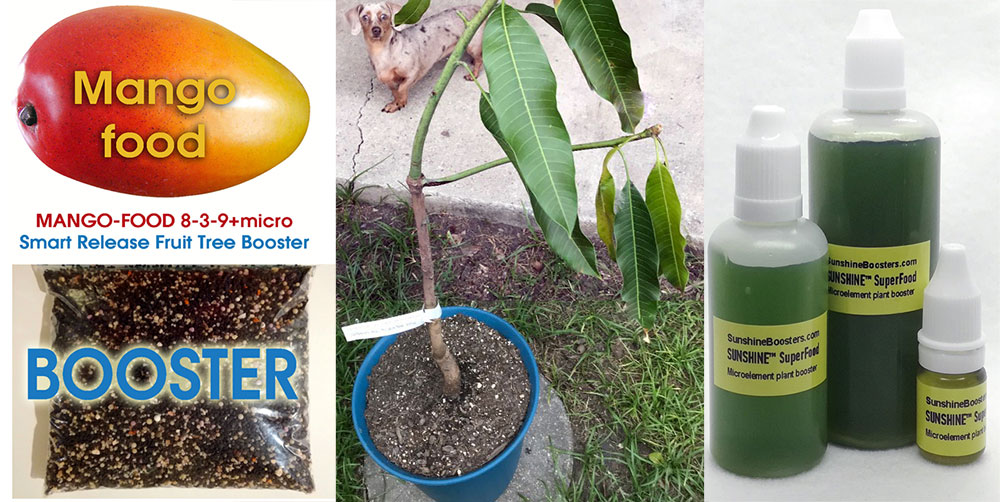
Q: I received my mango tree from you on Monday and it looked beautiful. I followed the instructions and kept it out of direct sun. I watered it a little each day when the potting mix was dry to the touch. But the leaves are turning yellow and brown then falling off. Should I have removed the tree from the soil it was packed in?
A: Leaf drop and dry/yellow leaves are normal symptoms of shipping stress. Your mango tree looks healthy overall. Considering you have high humidity now in Louisiana, the plant should recover soon under proper care. These are important tips:
- Keep the plant in bright shade, away from direct sun - at least for a
week, then you may start moving it gradually to semi-shade, then to full sun
within a few days.
- Do not over-water. If the top of the soil is still moist, do not
water until it dries a little bit. Mango prefers to stay on a dry side. From this
point, over-watering is more dangerous than under-watering. You may skip a
watering if in doubt.
- If it rains every day, make sure to keep the pot under the roof to
protect from excessive water.
- Do not remove original soil and do not disturb roots.
- You used the right container size and looks like you have a quality soil with good drainage. Keep the plant in this container at
least for a few months. You may step it up only when you see a lot of active
growth of branches and leaves - this means, the root system is developing fast
too.
- do not fertilize until you see new growth. Then use Mango Food Smart release.
- to help the plant recover from stress, you may use SUNSHINE-E booster and micro-element foliar spray with SUNSHINE-Superfood
Date: 29 Aug 2019
How to fertilize a Mango Tree

Q: I bought a Mango tree from you last month and planted it soon after it arrived. When is the best time to fertilize it? (I am in Florida)
A: We always recommend to wait on fertilizing until the plant is
well established. If you planted your tree a month ago and it is doing well,
showing new growth, then this is the time to start giving it some food.
For a mango tree, we recommend using 2 fertilizers - water-soluble and
granulated:
Fruit Festival Plant Food
Mango-Food
Remember micro-elements that are essential for healthy and vigorous
growth:
SUNSHINE SuperFood - plant booster
Date: 24 Aug 2019
Growing a Plumeria Tree
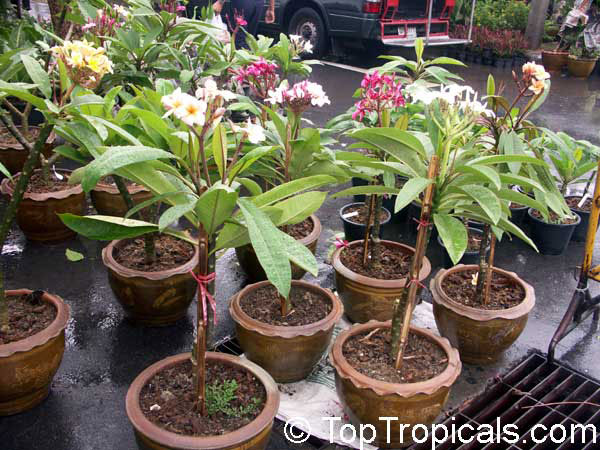
Q: I have a graft plumeria that is growing sideways. The leaves seem to be growing upside down. I tied it up with yarn and a bamboo stick last night. Will it grow strong enough to support itself without stakes or should I just let nature take its course and take the yarn and stake away?
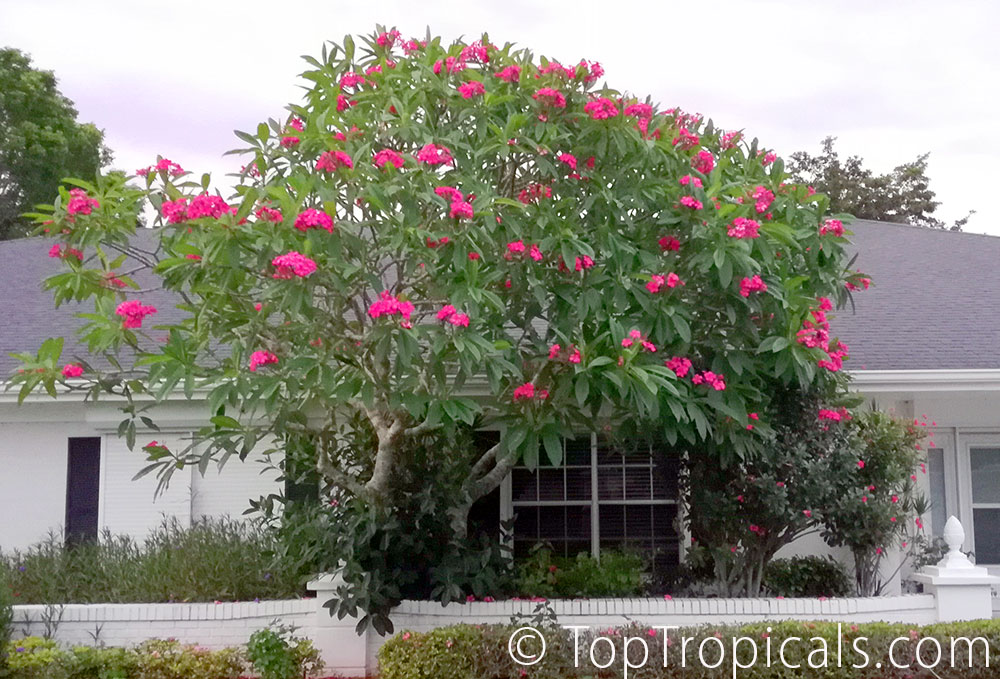
A: You should definitely help the tree and keep the stick. The tree will eventually straighten out. It will have a strong trunk and you will be able to remove the supports.
Make sure to feed the Plumeria tree to provide enough energy for fast
growth and strong trunk:
Plumeria Top Dress - Smart-Release Booster.
Check out all Plumerias from our store, they are 15% OFF today!

Date: 24 Aug 2019
How to keep iguanas away?
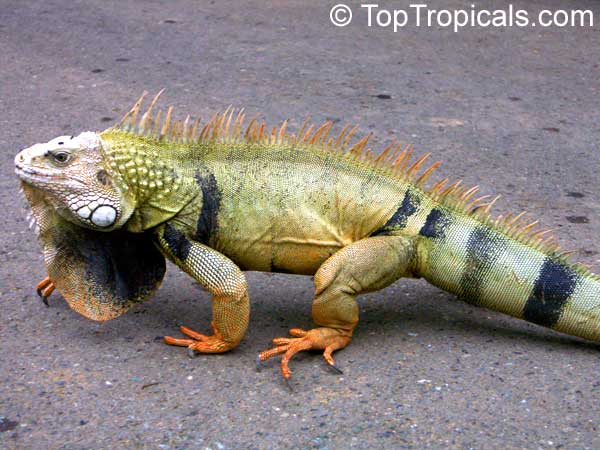
Q: Really enjoy all the plants that I have got from you, but having a hard time keeping iguanas eating everything! We are not on the water, any solution to keep them out?
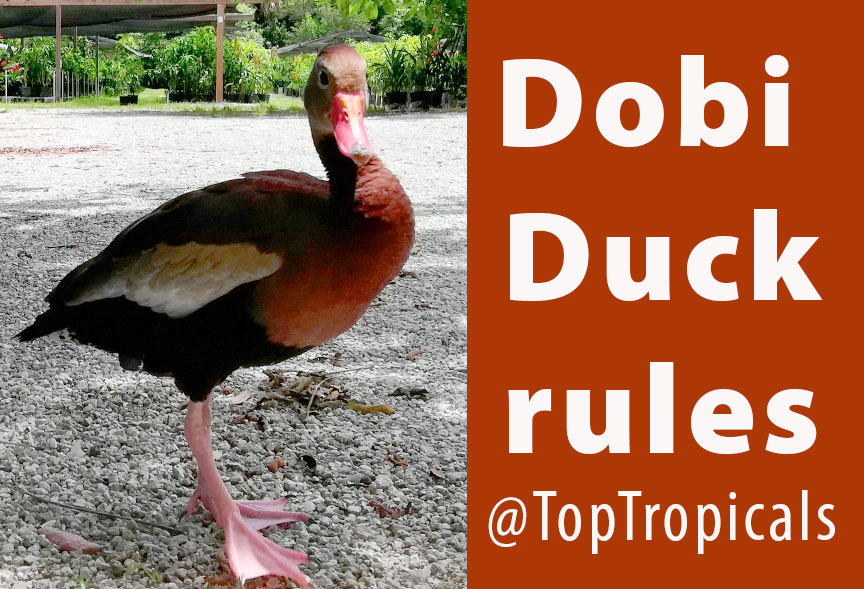
A: Iguanas may become quite a problem in the garden. Our first suggestion would be - get a Duck as we have (Duck Dobi), she is so dominant and keeps any wild animals away from the property, including gators... and cats! They are scared of her! Dobi thinks she owns the place.
Here are a few other ways to control iguana problem in your backyard:
1. Rid your lawn of dropped fruits. Iguanas love fruit. And they love
low-hanging fruit or fruit that's easy to get to. If you have fruit trees, take
the time to pick up your yard and dispose of any dropped fruit.
2. Keep a lid on a garbage can. Put your garbage cans in a place they
can't get to, or put a cinder block on your can lid.
3. Do not leave pet food out. If you're putting a bowl of dog food or a
plate of cat food out for your pets, you're inviting iguanas into your yard.
4. Fill iguana holes. Iguanas like to dig. Wherever you see a hole,
fill it. Stuff rocks into the hole first, then fill it with dirt and top it with
sod. The iguana may return to dig again, but he won't dig through large
rocks.
5 Do NOT feed the iguanas. Don't be friendly with them, so they won't
come back.
6. Wire netting around plants. You can use wire netting or screens to
prevent iguanas from entering plants and shrubs.
7. Spray them with a hose. When you see an iguana in the yard, spray
them with the hose. They also hate loud noises. Constant harassment can keep
them from returning.
8. Keep your yard clean. Excessive overgrowth or yard storage are great
places for iguanas to hide.
9. Do not leave food out, unattended. Iguanas are mainly herbivores but
that doesn't mean they won't smell something good and want to eat it. They
will TRY anything.
Hopefully these tips help keep your iguana problems to a minimum.