Date: 6 Nov 2018
Shopping for gifts is not an easy chore!

6 important steps for successful Holiday Gift Plant Shopping
1. Make a list of friends and family members that absolutely
require your special plant attention. Obviously, a live plant is the best
present!
2. Set deadlines for shipping gift plants. Remember good timing
is 50% of a good surprise!
3. Set a budget and call our Customer Service to help you pick the right plant that fits
your needs and finances. Check out current sales and deals to get more for your dollar, and low cost offers.
4. Buy plants for plant lovers, or simply for those who
appreciate the Nature, and the Beauty. Check out fragrant gift plants, fruit, and spice plants - these are always win-win! A gift certificate can be a great option so they can pick what they like,
and it is not time sensitive!
5. Prepare. Remember that live plant requires some attention.
Prepare pots, soil, and planting instructions beforehand so your beloved ones
can enjoy a happy plant for a long time.
6. Don't forget about yourself! Take advantage of BOGO deals
Date: 6 Nov 2018
Elephant Foot Yam seed production
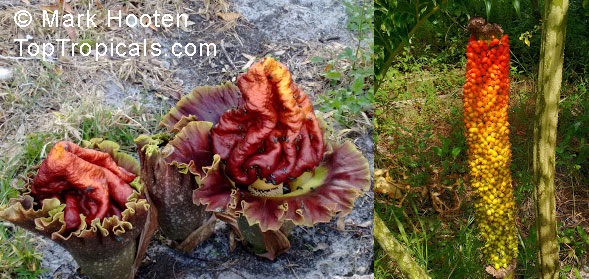
Q: Very interesting information about Amorphophallus in your recent newsletter! (which I always enjoy BTW). I would like to purchase those fresh seeds, and I have a couple of questions. Did you have to hand pollinate that flower? I've heard it is not easy to set a fruit. Also, is this an edible variety?
A: From
Mark Hooten, the Garden Whiz. These Elephant Yam seeds were produced as
a result of hand pollination between two different Amorphophallus
paeoniifolius plants grown from entirely different sources. Both plants over ten years
old. One corm originated from a traditional Chinese market here in Ft. Myers,
while the other came from a Hindu market in Naples. As both were being sold
for eating (the prepared corms of the sweet types are a popular Asian
vegetable), we know they are of the "sweet" type, not the acrid type which is the
commonest in cultivation. The flowering occurred this last April, with the fruit
spike maturing in October which is very fast considering it may take up to a
year to mature this fruit!
The flowering image shows three different flowers all emerging from a
single clump of the Chinese plant which has developed over the years, each
flower being a couple of days apart. This is the plant which made the
fruit-spike, one of its flowers having been hand pollinated by the Hindu store plant on
the other side of the property. Notice all of the large blue flies swarming
the fully mature and very stinky flower!
Check out Fresh seeds of Amorphophallus paeoniifolius. Only a few packs left!

Date: 2 Nov 2018
Amazing root growth after treatment of SUNSHINE-SuperFood!
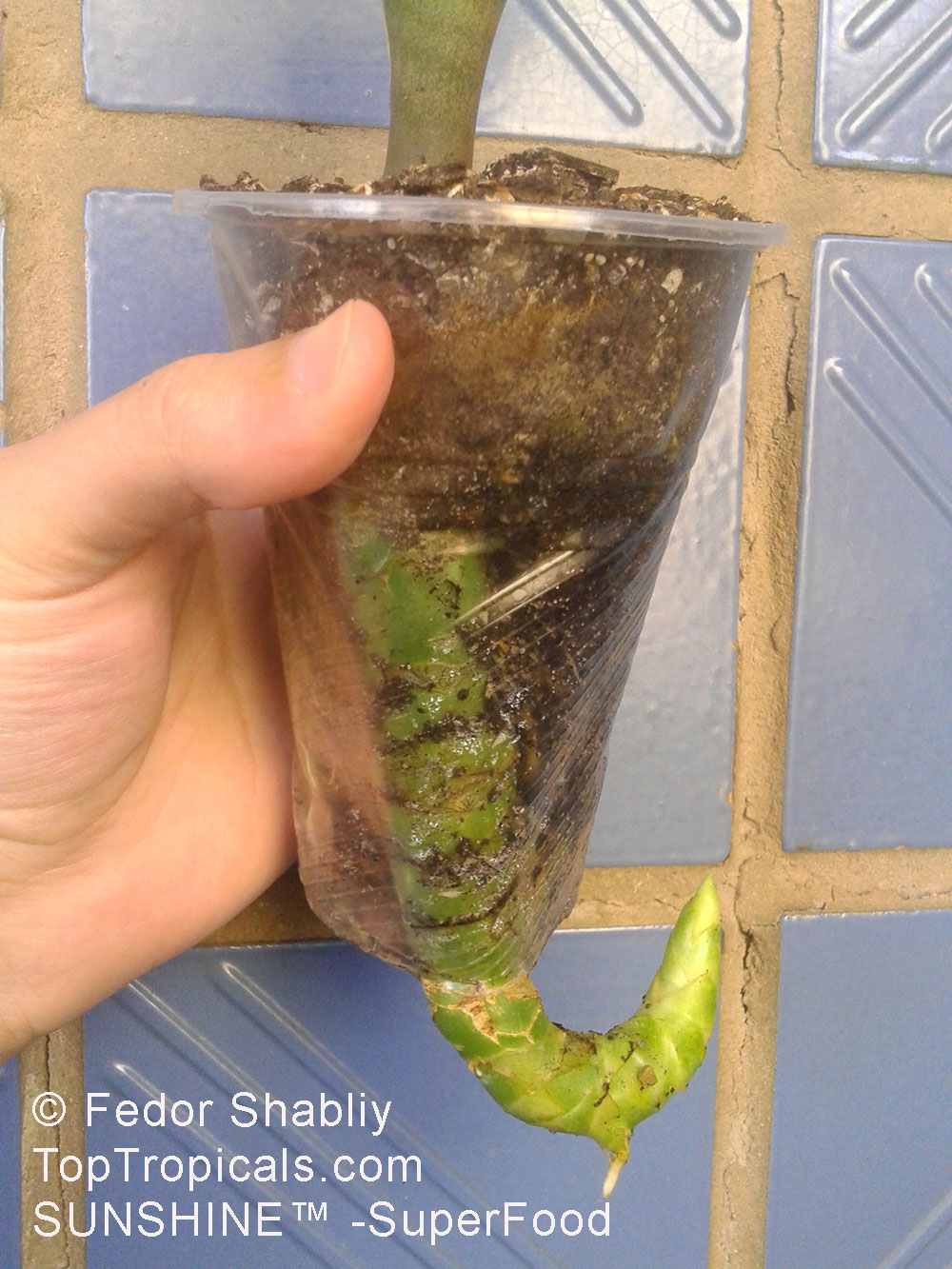
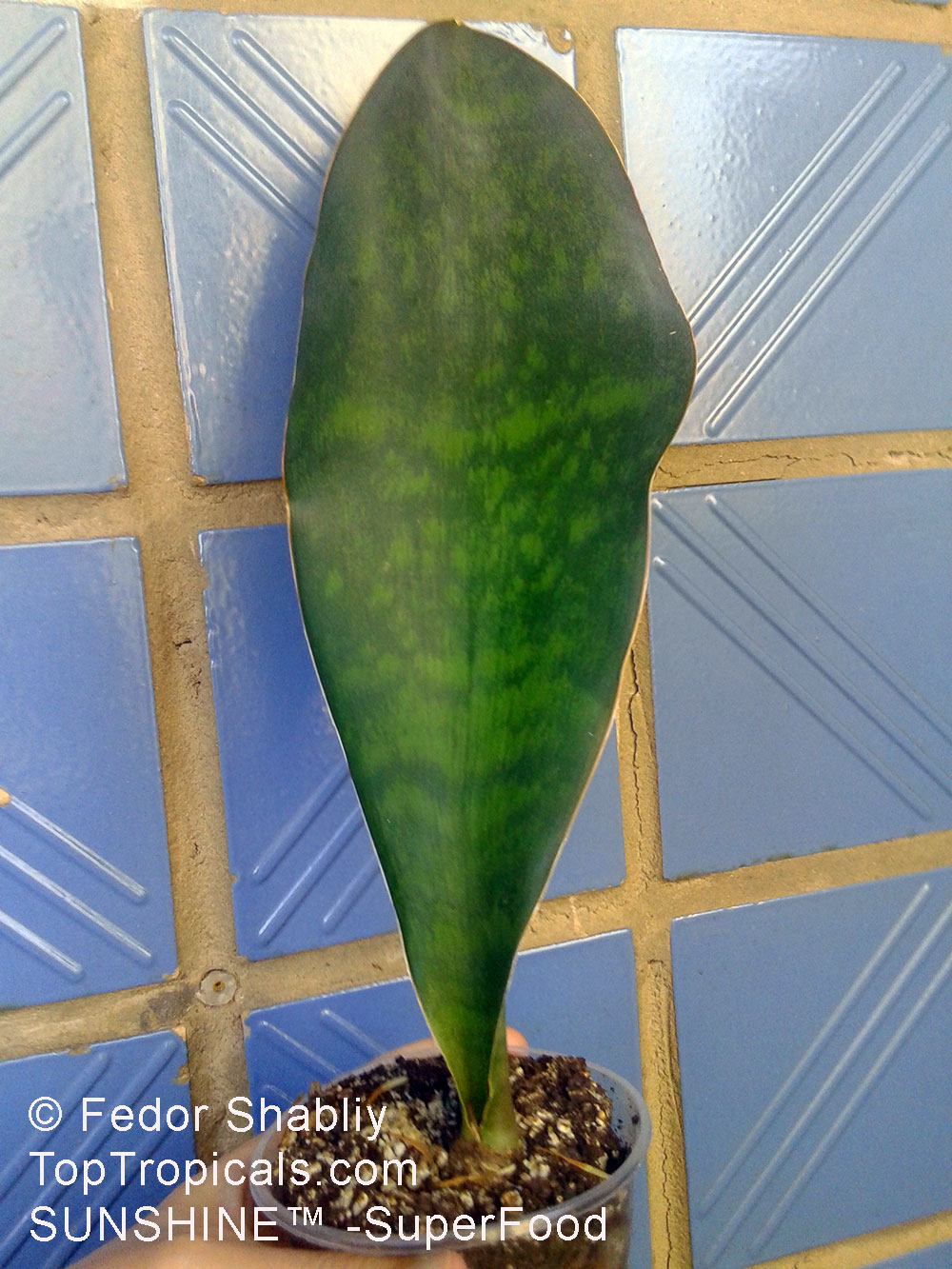
This Sansevieria grandis leaflet planted indoors in a plastic cup was treated with SuperFood once a week, along with regular monthly N-P-K, for a couple of months. On the photo, you actually see not just a ginormous root but a whole new plant started forming through the colossal size root sucker trying to find its way out. A pretty impressive result for a small plastic cup! The cup was protected from the sunlight, sitting inside of a dark planter. The plant received filtered light sitting on a windowsill with Eastern exposure.
Date: 2 Nov 2018
Happy Hobby: growing tropicals from seeds
Q: What is the best time to start tropical plants from seeds? Should I wait till spring?
A: If you
want to feel happier, get into gardening. If you want to feel God, start
plants from seeds and watch New Life grow from a tiny grain. Fall is a perfect
time to start tropicals from seed.
Traditionally, people prefer sowing seeds in Spring, especially
temperate species for a vegetable garden: tomatoes, peppers, cucumbers... My
grandmother up North started them in early Spring in paper cups on a windowsill,
then once the temperatures went just above freezing, she planted them out in the
garden beds, and that early start always helped her to have the best early
crop in the neighborhood.
When we deal with tropical plants, "just above freezing" is not warm
enough. Which means you have to grow small babies indoors for quite a while,
providing additional heating when needed. Heating pads always work best. If you
keep your living space around 75F (ideal for many species), this is a
perfect temperature to get your seeds started. Tropical plants are not like annual
tomatoes that try to grow through the season as fast as possible. They take
time. So the sooner you start, the more chances to get small seedlings just in
time when Spring air outside is "warm enough" for those tropicals - at least
in 70's.
A great advantage of starting tropical seeds indoors is controlled
temperature and moisture. In the plant world, environment extremes are not good
for the germination process. Mild conditions of your home or a greenhouse
create better chances for successful growth. Seeds won't get overheated in the
hot Summer sun, and won't rot because of a sudden heavy rain. Just keep in mind
that some species require light for good germination.
For the best seed germination:
- Use only well-drained mix - we recommend special Seed Germination Mix #3, professional grade. Put seeds not too deep
(1/2 inch deep or less) to allow air circulation
- Soak large seeds for a few hours with Sunshine-S solution
- Keep warm (75-85F) and in bright light
- Keep soil slightly moist but not soggy
- Apply micro-element booster SuperFood
Date: 31 Oct 2018
Featured Plant. Flacourtia indica - Governors plum
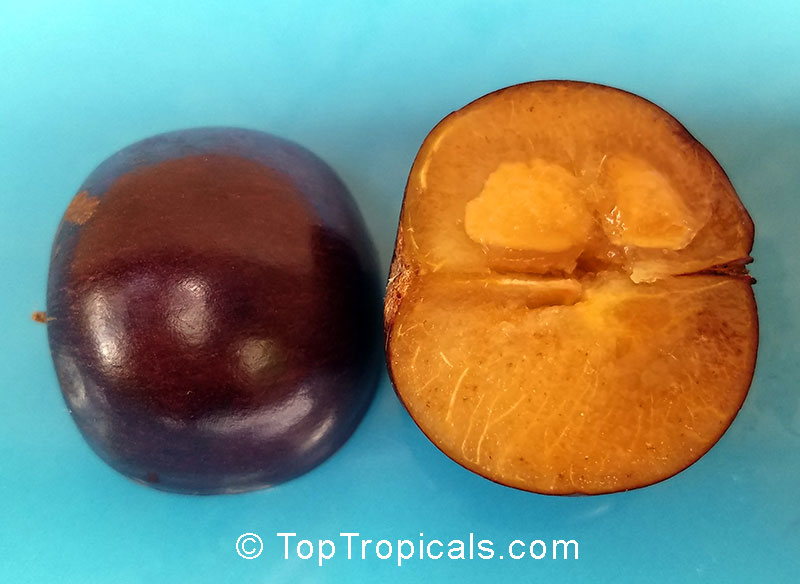
Flacourtia indica - Governors plum
Governors plum, Madagascar Plum, Batoko palm - is a tropical or
subtropical small shrubby tree. It is cultivated in tropical regions as a hedge plant
and for its deep red acid fruits resembling small plums. The fruits are
about one inch wide and can be eaten fresh or made into preserves. They are sweet
and sour, with a texture and flavor similar to a plum. Fruits mature after
one to two months from flowering.
The tree is easy to grow, self-fertile and doesn't require much care,
not fussy about soil and very forgiving if you forget to water it.
Seeds germinate readily, but it takes a while until the seedling is
ready to be transplanted into a big pot or in the ground. If you plant them now,
by spring you have a chance to get the little tree ready to go!