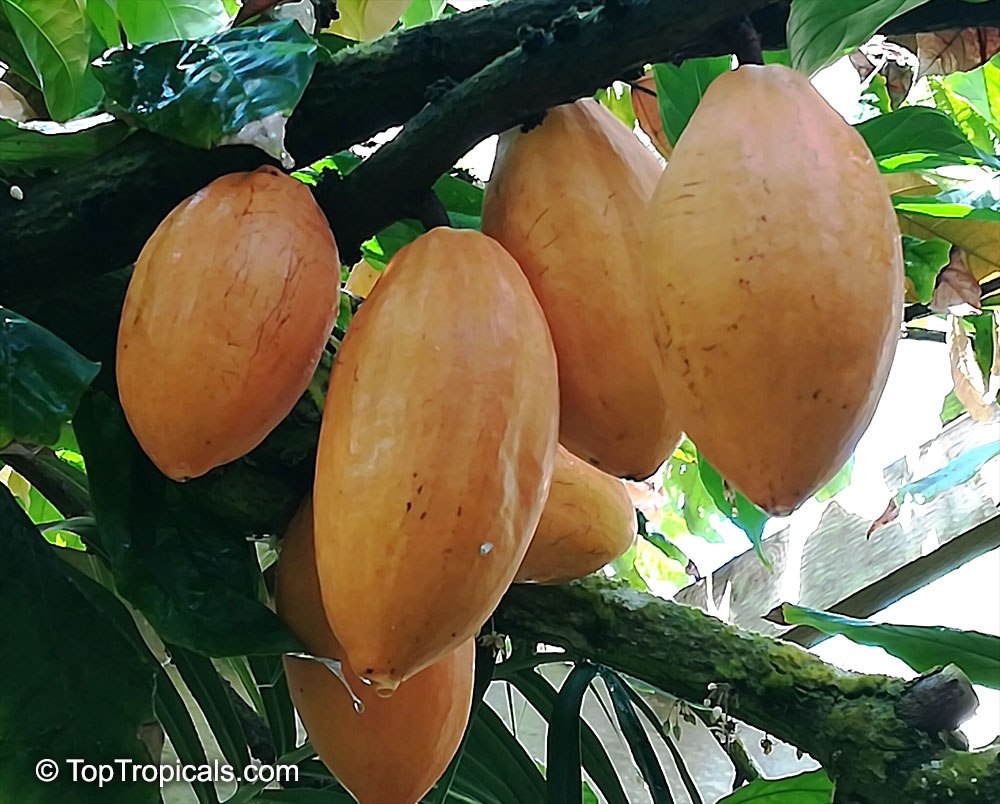
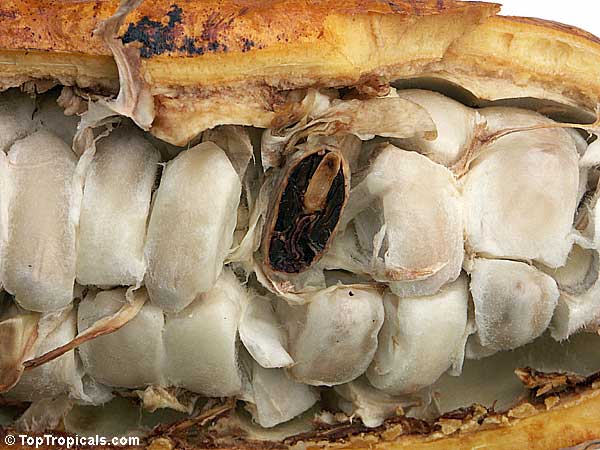
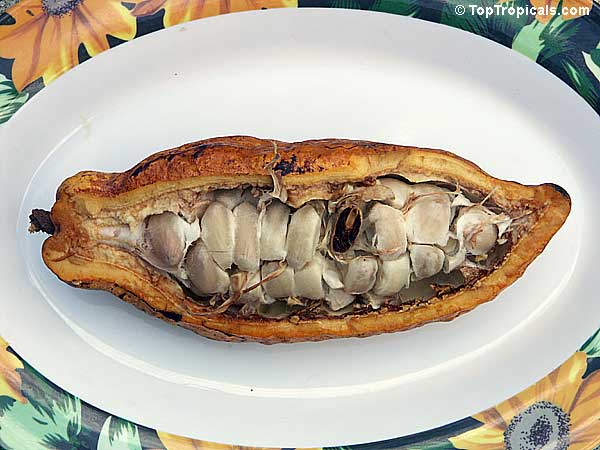
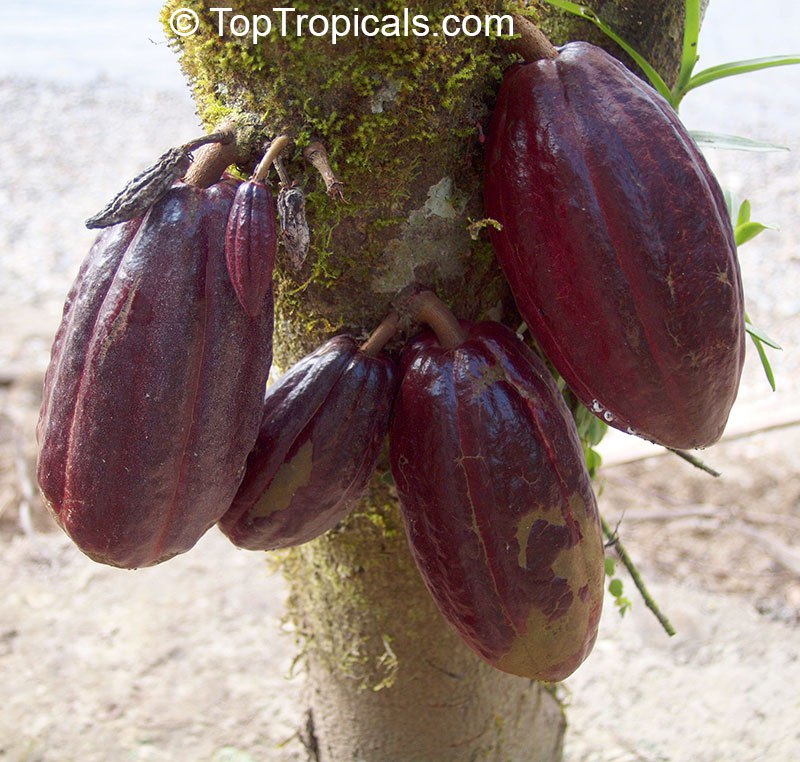
📖 Fun Facts: Cacao beans (Theobroma cacao) were used to make chocolate, and the ancient Maya and Aztec civilizations valued cacao beans as currency 💰 Can we use chocolate as money?
🍫 Chocolate tree has large dark green leaves that shade the fruit pods which grow directly from the trunk and branches.
🍫 The flesh of the fruit is eaten as a dessert, and the seeds are the raw material of chocolate. Hot chocolate can be made by drying the seeds, roasting, grinding, and adding milk.
🍫 This exotic rare tree makes a gem of a houseplant collection.
🌸 Frilly and Fabulous - Guava flowers may be small, but they're packed with fluffy white stamens that give them a soft, powder-puff look.
🌸 Pollinator Magnet - Bees and butterflies love guava blooms, making them a great addition to a pollinator-friendly garden.
🌸 Scent-sational - The flowers have a light, pleasant fragrance that adds a touch of sweetness before the fruit even arrives.
🌸 Bloom to Fruit - Each flower can turn into a delicious guava fruit, making them both beautiful and productive.
🌸 Part of the Showy Family - Guava (Psidium) belongs to the Myrtaceae family, which also includes eye-catching bloomers like Eucalyptus, Bottlebrush (Callistemon), and the stunning Rose Apple (Syzygium).
🍃 It actually has to do with the Chinese theory of the five elements - wood, metal, fire, water, and earth:
木 金 火 水 土
🍃 Tea comes from a plant - Camellia sinensis - the Tea Leaf Tree - that is used to make all true teas: green, black, white, and oolong. The Tea Tree contains the element of wood (木) 🌳
🍃 When it's roasted in a cast-iron pan, it gains the element of metal (金)
🍃 Then it's dried over fire, adding the element of fire (火) 🔥
🍃 When it's brewed with boiling water, the element of water enters (水) 💦
🍃 Finally, tea is poured into a clay vessel, symbolizing the element of earth (土) 🍯
🍃 In this way, all five elements - wood, metal, fire, water, and earth - come together in a single cup.
🍃 The plant grows slowly and can thrive in containers or frost-free gardens with sun to semi-shade.
Q: I live in New Cumberland, West Virginia. I love the smell of
Night-Blooming jasmine. Is it possible to grow it in the northern panhandle of
West Virginia? Do I have to plant it every year or do I keep it in a pot and
take it inside during the winter months?
A: Technically, Night Blooming Jasmine is not a true jasmine
(those plants belong to Oleaceae, or Olive family). Night Blooming Jasmine
belongs to the Solanaceae family, also known as the Nightshade or "Potato" family
of plants. Yes, this sweet fragrant flower called Jasmine for its perfume is
related to potatoes and tomatoes!
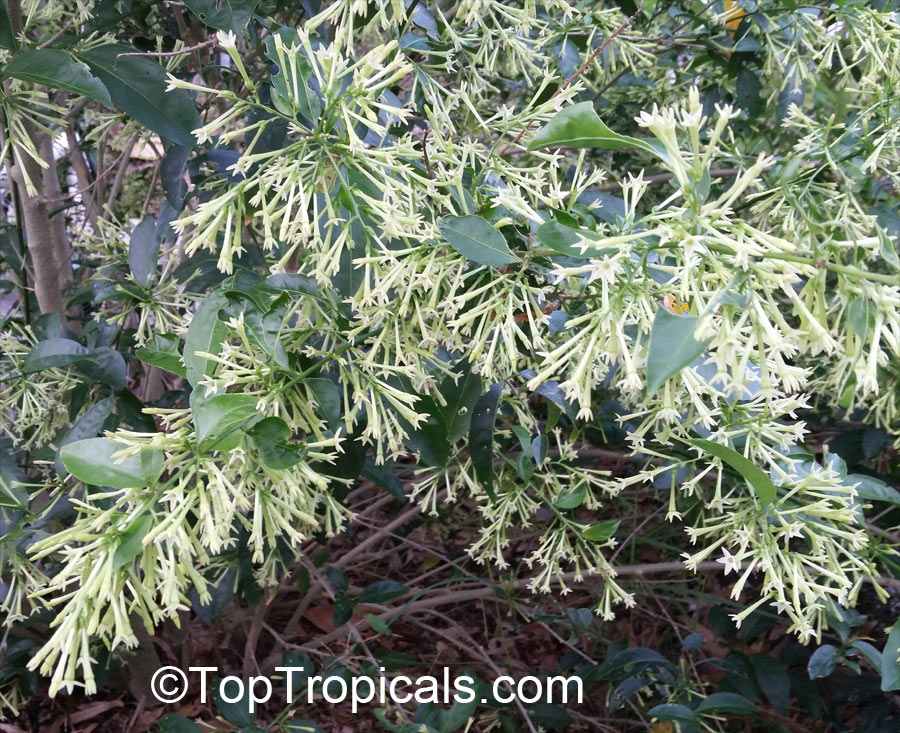
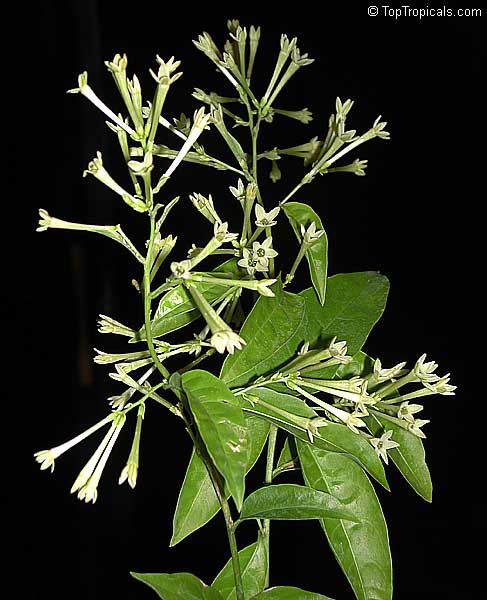
Night Blooming Jasmine - Cestrum nocturnum - is loved by many gardeners for its beautiful
fragrance at night. It is one of the most fragrant tropical evergreen shrubs
available. Cascading clusters of tiny, tubular pale yellow to white flowers open at
night and release a heavenly fragrance throughout the garden, especially on
warm summer evenings. The fragrance is much lighter during the day.
Night Blooming Jasmine is grown year-round in zones 9-11. It is at its
happiest in a sunny to a partially sunny spot in your garden in well-drained soil
but can be grown in cooler climates as a container or greenhouse plant.
You would absolutely be able to enjoy this plant during the warm months
in West Virginia, but it will most certainly not survive outside during the
winter. You will have to bring it inside. Take it outside again only once you
are confident there is no more possibility of frost. When grown indoors, be
sure to give it the sunniest, South facing window in your home. When grown in
a container, you will need to re-pot it every two to three years so it
doesn't become root-bound.
For those who are lucky to live in frost-free areas, in ideal growing
conditions outside, it can easily reach 8 feet with a spread of 5 feet. It has
a lovely informal look that can soften a more manicured garden. Add organic
matter to the planting hole when you plant to enrich the soil around the root
ball. Water well in the summer, but allow them to dry out a bit between
watering in the winter. Plant this Jasmine near pools, porches, doors, windows,
and walkways where its lovely fragrance can be enjoyed. The shrub is also an
excellent plant for privacy hedges and screens. When grown as a hedge, plant 3
feet apart.
Trim lightly after a bloom cycle to shape and then do a hard pruning in
fall or spring to control the size of this plant. Fertilize 3 times a year -
in spring, summer, and autumn - with a good quality granular fertilizer.
Night-blooming jasmine is an excellent mosquito repellent. The powerful
scent of the flowers attracts moths and bats that feed on mosquitoes and
other small insects.
The flowers of the Night Blooming jasmine are widely used in India and
other countries of South Asia for perfumery, medicinal applications and in
religious ceremonies.
TopTropicals.com - the World's leading authority on tropical plants - is now in Telegram. If you grow a tropical garden or indoor collection of rare plants, this is your channel!
Join to get exclusive updates on tropical gardening:
Fun Facts and Nature Wonders 🌺 How to make your plants flower and stay happy 🥭 How to get the biggest fruit crop 🏆 Sweepstakes and Contests Butterfly and Container Garden Food Forest ⚜️ Perfume Plants 🍲 Exotic Recipes and Remedies ...and of course, your favorite - 🐾 PeopleCats in the Garden!
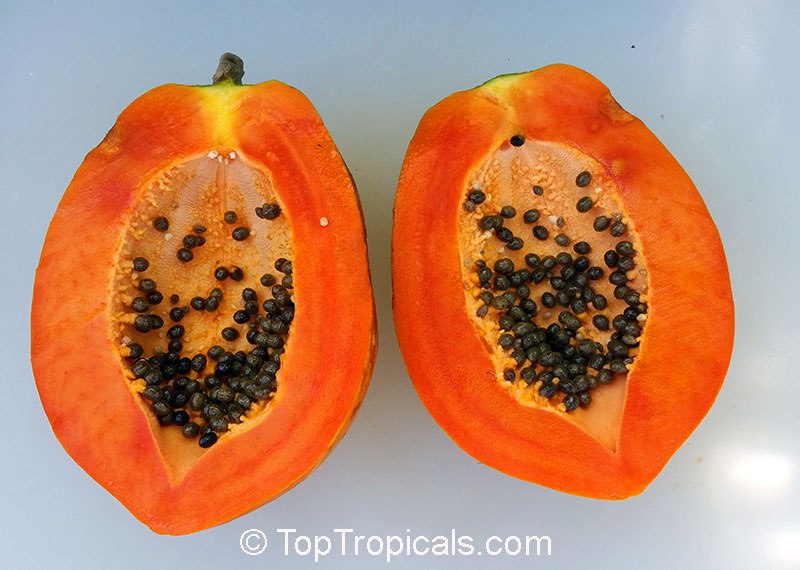
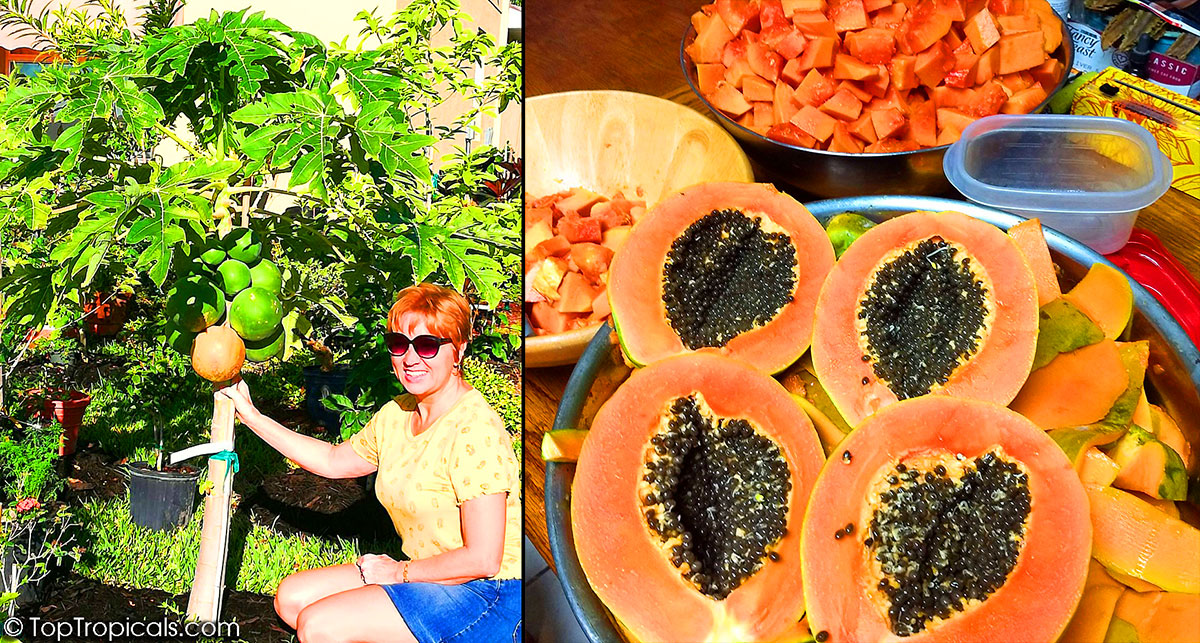
🟠 Many people include Papaya fruit in their daily diet because of its healing properties for digestive system. You can eat Papaya fresh as a tasty dessert, add to salads ripe or green, use fruit and leaf wraps in cooking - possibilities are endless.
🟠 Buying papaya fruit from the store every day can become costly. So you can plant your own tree - Papayas are heavy producers. But like with many fruit trees, the question may arise:
❓ What to do with so many fruit at once, and where to get the fruit when it's out of season?
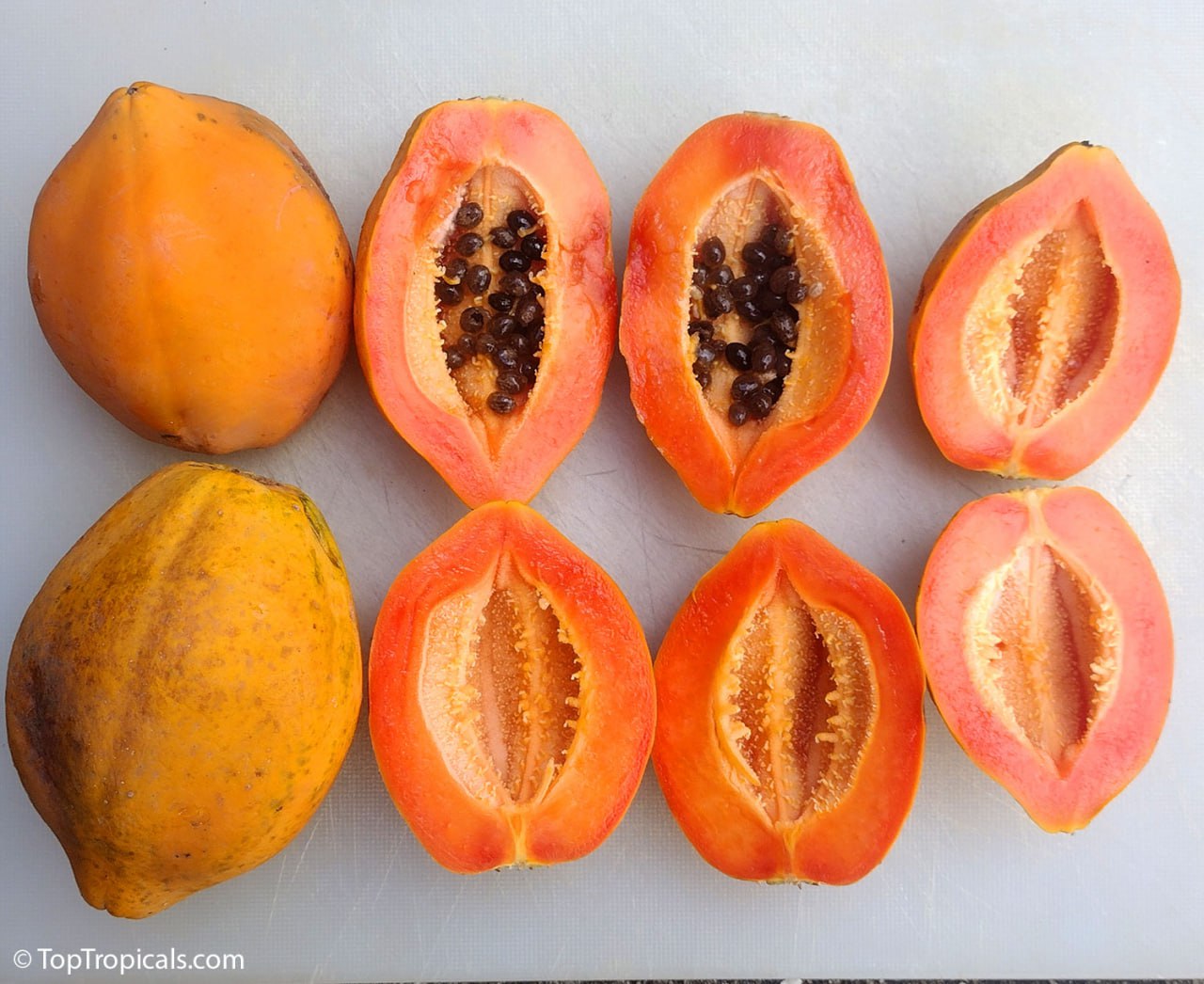
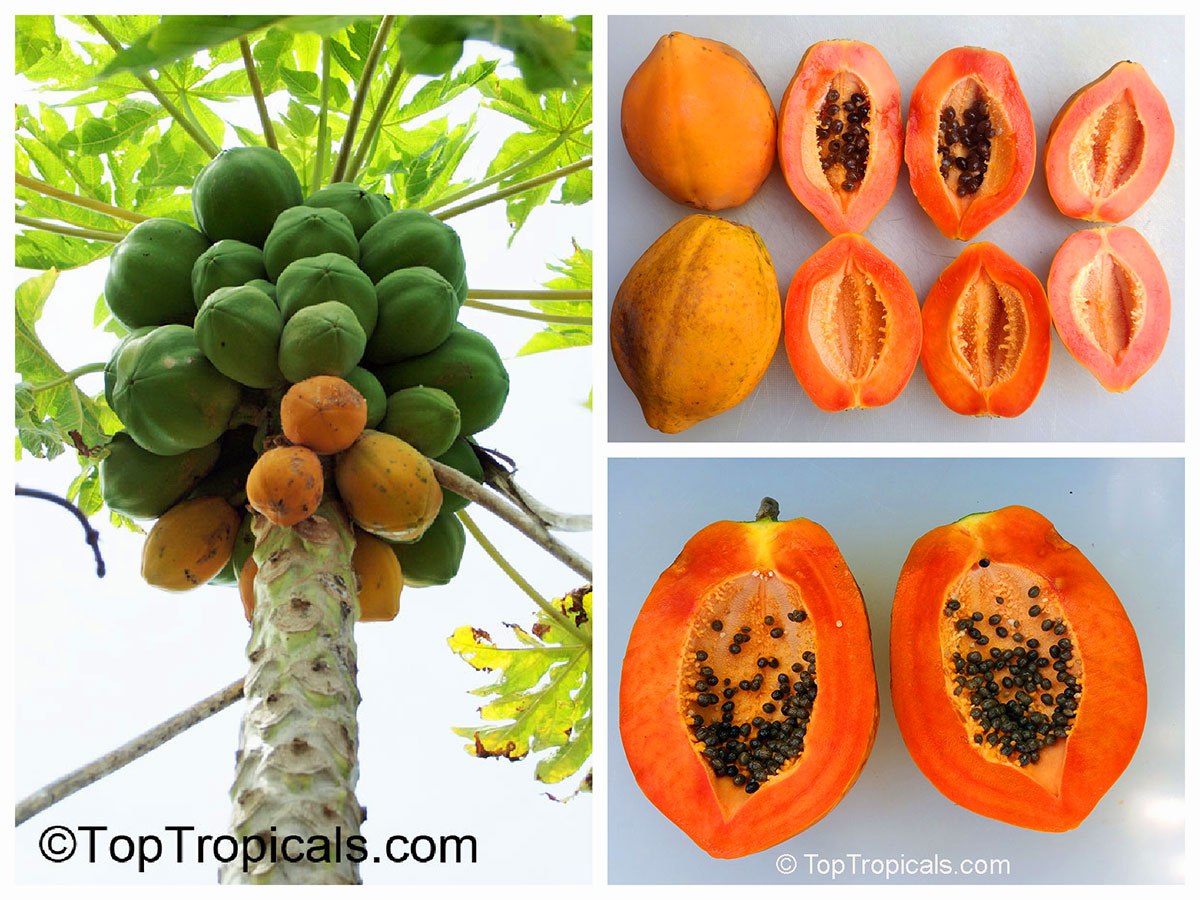
🟠 The answer is: plant several varieties. Different Papaya cultivars, similar to Mango and Avocado, have different crop seasons.
🟠 If you want to enjoy fresh delicious Papaya fruit year around, plant several Papaya varieties in your garden that have different ripening times.
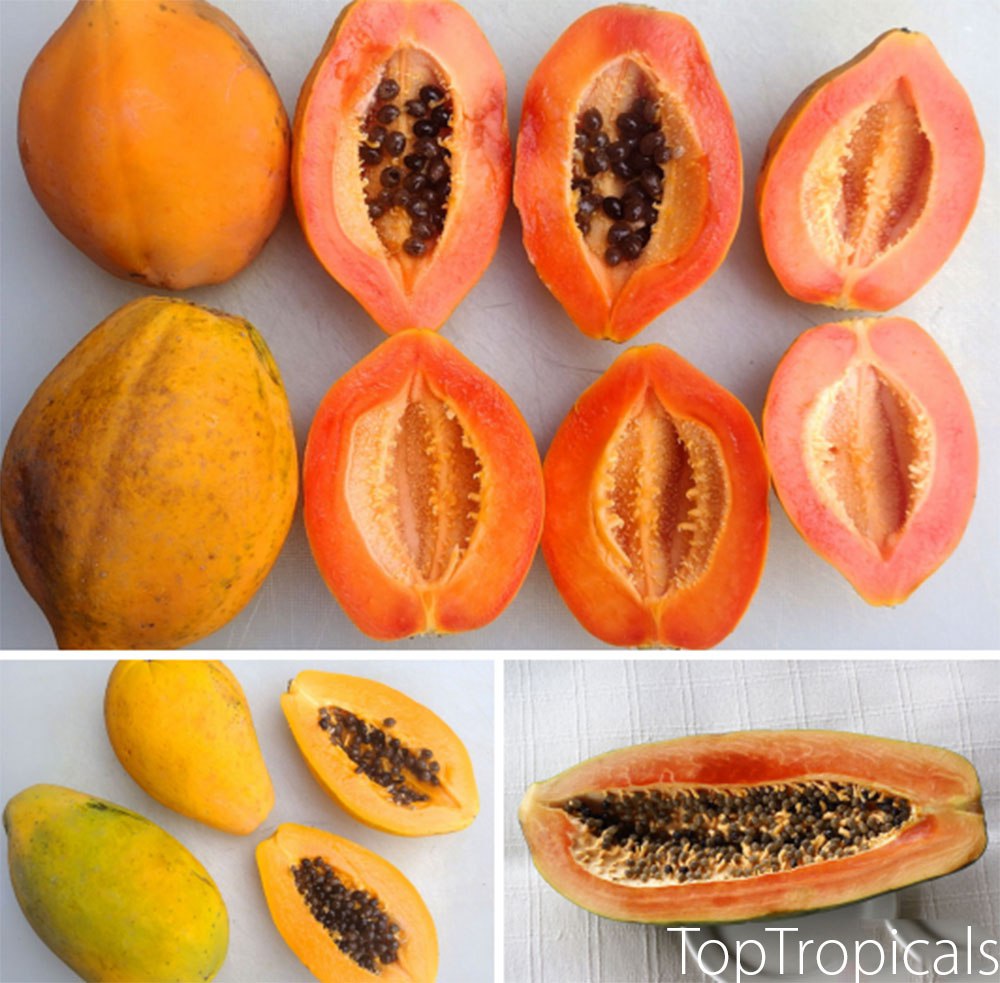
For example: Waimanalo - ripens from July to October and sporadically throughout the year. Sunrise - ripens from January through September and sporadically throughout the year. Maradol - ripens from August through March and sporadically throughout the year.
🟠 Papaya tree doesn't take any room in your garden: similar to a palm tree, all its leaves/crown is up high, so you can plant as many trees as you want in a very limited space and still use the room under Papaya tree for other plants.
🍊 The truth about Papaya:
1) it is grass, and
2) it can go transgender!
The secret facts of Papaya's private life.
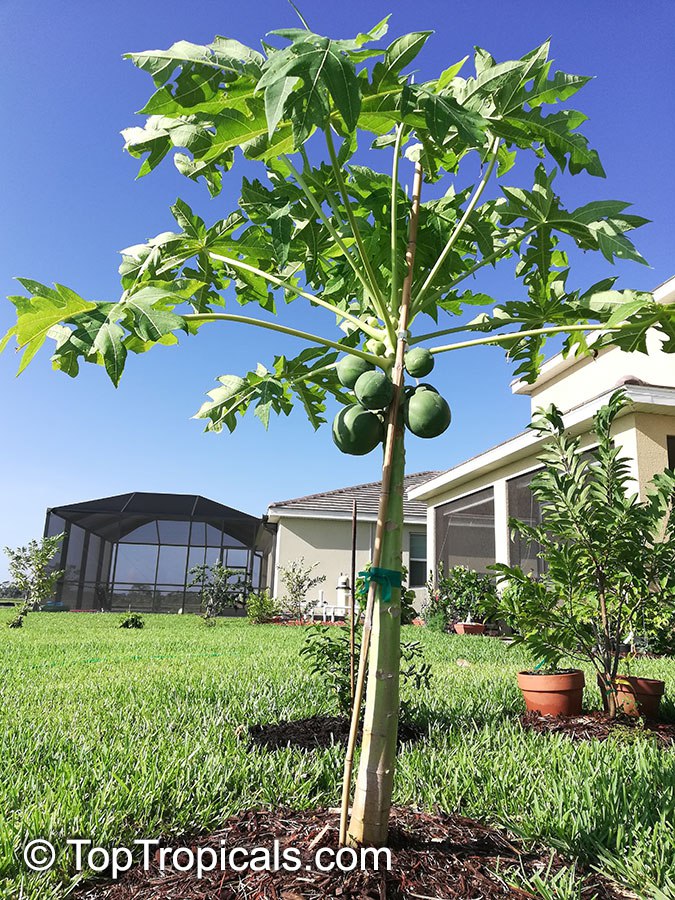
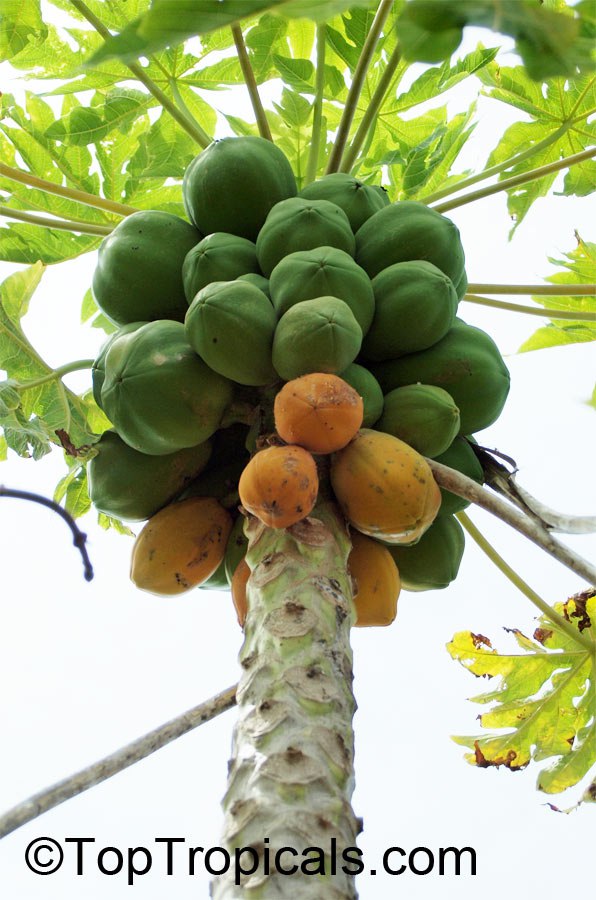
📌 Did you know that Papaya technically is not a tree? It is a large herbaceous plant, usually with a single, straight trunk that can reach 30 feet!
📌 Many dwarf varieties available in selection, reaching only 6-8 ft tall, but producing large crops of full size fruit - they are easy to harvest.
📌 Papaya trees have very complex gender mechanism, but the bottom line is - the tree can chance its sex based on conditions! Many varieties are self-fertile, but it always recommended to plant a few trees for cross-pollination and better yield.
📌 The sweetest Papaya is from so called "Solo" cultivars: the fruit is usually round or oval, on a smaller side, but super sweet.
📌 Fruit from Solo cultivars are not susceptible to fruit flies.
📌 Being officially a tropical plant, Papaya is pretty cold resistant and can withstand light freeze without significant damage.
📌 Surprisingly, Papayas are also hurricane-resistant plants and can take strong winds without damage. They still stand when other trees are down!
📌 Papaya is one of the Super-Foods thanks to papain - a natural enzyme containing in this fruit. Papaya fruit offers the best digestive aid! Eat some papaya after each meal to maintain healthy digestion.
📌 Try papaya leaf wraps for cooking meats - you won't need a meat tenderizer!
📌 Easy to grow trees, Papayas don't take any space in the garden, but bring so much goodness into your life!
🍊 Top 10 fast-fruiting trees:
#6. Papaya (Carica papaya)
Papaya is probably the fastest fruiting tree that can start production the same year from planting a seed. Many dwarf varieties available in selection, reaching only 6-8 ft tall, but producing large crops of full size fruit - they are easy to harvest. Plant 2-3 Papaya trees of different cultivars that fruit at different times of the year and enjoy heavy crops of healthy fruit year around! Another benefit - this tree doesn't take much space in the garden, you can plant as many as you want.
Carefree
Garden:
How easy is it to grow a Papaya tree?
Q: What is the easiest to grow fruit tree? It
must tolerate, heat, rains, and hurricanes! I live in Florida.
A:Papaya is the easiest to grow fruit tree. In our garden in Florida,
newly planted Papaya trees survived several hurricanes, frosts, drought and
heat, and keep producing year around!
We all enjoy eating Papaya fruit every day. It is great for digestion
and is a perfect naturally sweet, healthy snack. Even our PeopleCats love
Papaya. Check out this short video
how our cat Cash is begging for his daily Papaya treat!
Not a tree: Papaya is technically a giant herb with a single,
straight trunk that can grow up to 30 feet tall.
Gender flexible: Papaya plants can change their gender based on
environmental conditions. This complex mechanism ensures better
adaptability.
Cold and wind resistant: Papayas can withstand light freezes and
strong winds, making them surprisingly hardy for a tropical plant.
Solo cultivars: These smaller, round or oval papayas are
incredibly sweet and less susceptible to fruit flies.
How to grow a Papaya Tree: Practical Guide
Papaya is one of the fastest fruiting plants to grow. Often starting
production the same year from planting a seed, papayas are ideal for gardeners
seeking quick rewards. Many dwarf varieties reach only 6-8 feet tall, yet produce
large crops of full-sized fruit that are easy to harvest. Papaya trees are
space-efficient, making it possible to plant multiple trees in even small
gardens. Plant 2-3 different cultivars to enjoy year-round harvests of healthy,
delicious fruit.
How Easy Are Papaya Trees to Grow?
Papaya trees are exceptionally easy to grow. Technically a large herbaceous
plant rather than a true tree, they are resilient and adaptable. They can
tolerate light freezes and even hurricane winds without significant damage.
Additionally, many varieties are self-fertile, but planting multiple trees
encourages better pollination and higher yields.
What Light Levels and Soil Types Are Ideal?
Papayas thrive in full sunlight, so choose a sunny spot in your garden or
balcony. They prefer well-draining, fertile soil enriched with organic matter.
Add compost or manure to improve soil quality and ensure healthy growth.
Avoid waterlogged areas as papayas are sensitive to standing water.
How Much Watering Is Required?
Papayas need some watering to thrive, especially during the growing and
fruiting seasons. Water deeply once or twice a week, depending on your climate,
ensuring the soil remains moist but not waterlogged. Mulching around the base
helps retain moisture and regulate soil temperature.
Growing Papayas in Containers
Papayas can be successfully grown in large containers, making them ideal
for gardeners in cooler regions or those with limited space. Choose a container
at least 7 gallons in size with good drainage. Use a rich, well-draining
potting mix, and place the container in a sunny location. Select dwarf varieties
to keep the plant manageable and productive.
Health Benefits of Papaya
Papaya is considered a superfood due to its high nutritional value. Rich in
the enzyme papain, it aids digestion and promotes gut health. Papaya is also
an excellent source of vitamins A, C, and E, as well as antioxidants that
boost immunity and overall wellness. Additionally, papaya leaves can be used as
wraps for cooking meats, naturally tenderizing them.
Papayas are a low-maintenance, high-reward addition to a Southern garden
or greenhouse collection, whether in the ground or in a container. Their
fast growth, year-round fruiting potential, and health benefits make them a
must-have for gardeners and fruit enthusiasts alike.