Date: 8 Jun 2019
Chosing a good avocado tree
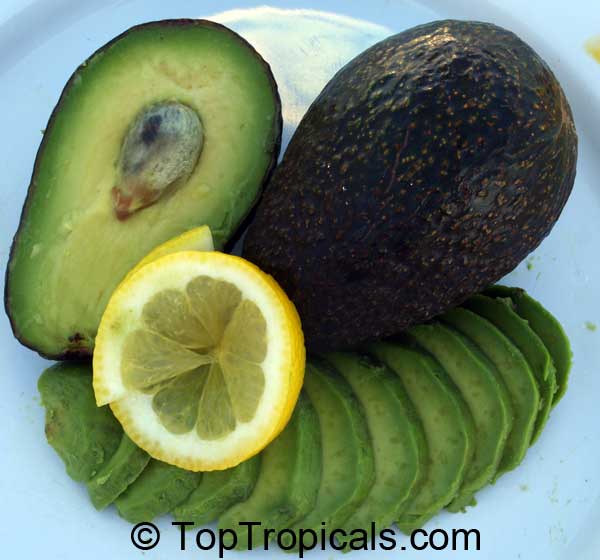
Q: I'm in coastal Broward County. I'm putting together an order on your web site, and one thing that I would like is an avocado tree. I'd like to have something as close to true "Hass" as possible. Which cultivar does well here in SE Florida, and is most like Hass in texture, creaminess, and flavor? I'm not a big fan of the yellow watery Florida avocados.
A: Mexican type of Avocado have dark skin and buttery texture,
while Florida green fruit types (West Indian type, with smooth skin), have lots
of delicious melting pulp, so it is a matter of preference.
In coastal Broward county you can grow a wide range of varieties since
your climate is very mild, so you don't have select cold-hardy varieties like
Winter Mexican, Brazos Belle or Joey, etc. Yet there are many interesting varieties that rare and much
more exclusive than Hass, with the same, or even better, quality buttery
fruit.
One of the most popular varieties - Brogdon, with red-purple colored pear-shaped fruit, very thin skin, and yellow buttery flesh. It is also very cold hardy.
Very interesting exotic avocado is Kampong - Sushi Avocado - see photo above. The flavor of this fruit very nice, oily, creamy, nutty, reminds of almonds. At the same time, it has solid consistency and if you cut a square it remains a shape of the square. It is the best Sushi Avocado! It tastes great as an appetizer when cut in squares with some shrimp cocktail sauce.
Three collectible varieties:
Anise - leaves that smell like Anise, very rare, the fruit is of excellent
quality, creamy and buttery.
Bacon - a large Mexican variety with dark-skinned medium-sized fruits, and
a rich creamy flavor. It has exceptional fruit that ripen in late fall and
into spring, they are easy to peel and have a light, subtle flavor. Another
outstanding feature of the Bacon avocado tree is its angelic sweeping branches
which helps keep the tree shorter and easier to pick its fruit.
Nishikawa is a very hot seller! Oval fruit somewhat resembles Hass, but
larger, and has very high oil content.
See all Avocado trees from our store
Recommended fertilizers:
Fruit Festival Plant Food - Super Crop Booster
Mango-Food - Smart Release Fruit Tree Booster

Date: 8 Jun 2019
10 trees to graduate
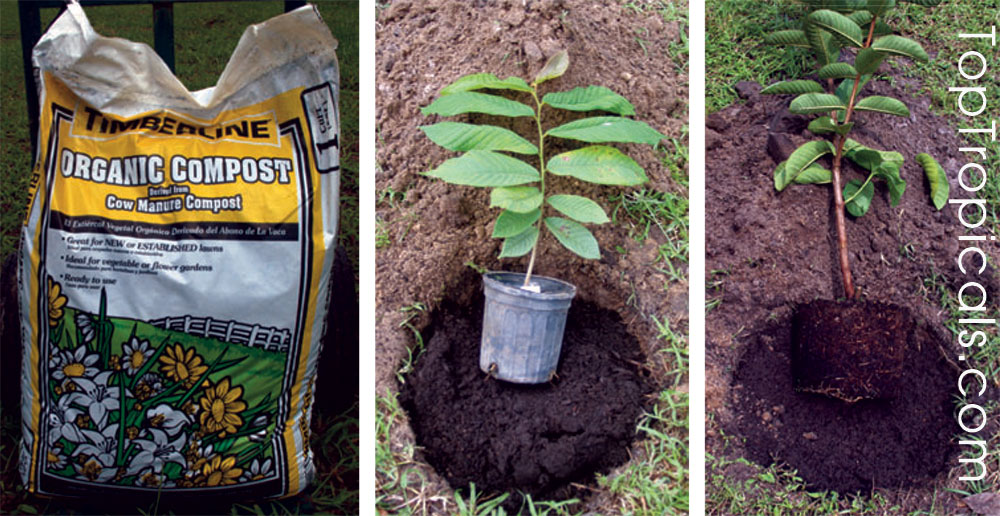
A new law hopes to fix deforestation and teach young people about
environmental stewardship. Students in the Philippines now have a final requirement
in order to graduate from school: they must plant 10 trees. The new law,
which came into effect on May 15, 2019, will apply to graduates from elementary
and high schools, and college or university.
With 12 million kids graduating from elementary school, 5 million from
high school, and 500 thousand from university every year, that means 175
million trees will be planted annually! Over the course of a generation, that
will mean 525 billion trees, although Alejano has said that even if only 10
percent of the trees survived, that's still an impressive 525 million in a
generation!
It sounds like the Philippines has introduced a wonderful program that
other countries would do well to emulate. Anything that gives young people a
sense of connection and responsibility for the natural environment bodes well
for its future... Continue reading...
See Tropical Treasures article: How to Plant a Tree (pdf file)
.
Date: 4 Jun 2019
Pretty in Pink... and Purple Prince for her!
By Onika Amell, tropical plant specialist
Q: I have a bare spot in my front garden, behind a low wall, in part-sun. I'm hoping to find an evergreen, flowering ground cover that will cover it quickly. Any ideas on finding something with the ability to eventually also cascade over that wall? I live on Marco Island, Florida.
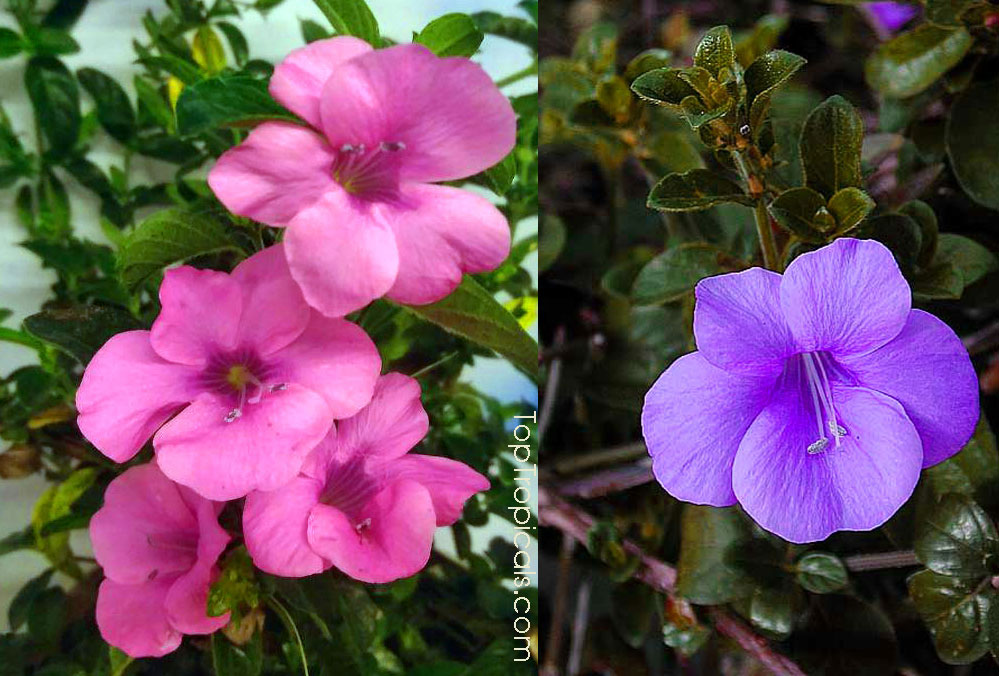
A: Barleria Repens - Small Bush Violet, is a tough, fast-growing evergreen
that blooms from late spring to autumn. Of the many Barleria we see in the
tropics, Pretty in Pink is one of the most striking! The name tells the whole
story: pretty and pink. A lot of gardeners enjoy using them as a ground
cover. They will quickly cover a large area - their stems root readily as the
plant crawls along. They are easily propagated by lifting the rooted runners or
using cuttings. They also reseed easily. Flowers are followed by seed pots
that explode open when dry, dispersing 4 seeds at a time! But perhaps best liked
by many gardeners, is their habit to cascade. It will be well suited for
covering the bare area in your garden and spilling over that wall beautifully.
When used as a ground cover, remember to pinch out young shoots to
encourage bushiness and prune the plant back hard after flowering to keep it
neat.
Barleria repens will also adapt to different situations in a garden if
you need them to. Although they usually form a rounded to spreading bushy
shrub, 2 ft high by 3 ft wide, they will climb when you give them support. They
are often allowed to lean into nearby trees and shrubs.
Hardy to 28F, Barleria repens is pest-free and fairly frost-tolerant.
They love sun and part shade, as well as well-drained soil and plenty of
organic material. Avoid planting it in deep shade as it will get leggy and
reluctant to flower.
They will thrive when fed with a slow release fertilizer at intervals
of 6-8 weeks, throughout the growing season.
There is another cultivar of this exact variety that has blue-purple flowers, it is called Purple Prince! It couples perfectly with Pretty in Pink! :)
See all Barlerias from our store
Recommended fertilizers:
Pink N Good Daily Plant Food Flower Booster
Tropical Allure Smart-Release Booster
Date: 4 Jun 2019
Plants for South Texas and other hot states
Q: Pretty much adore last newsletter. Haven't been buying because our weather here in deep south Texas is so bad it is stunting and killing even the Tamaulipan Scrub! Do you have a cure for that? :) I have every expectation the new grafted Plumeria I purchased from you last year will bloom soon. One of my favorite plants. Thanks again and keep up the good works.
A: Yes, there is a "cure" - using biostimulants that improve drought- and heat- resistance (SUNSHINE
boosters), plus the right plant selection. In fact, there is a large number of
tropical rare plants that can be successfully grown in hot climates like yours.
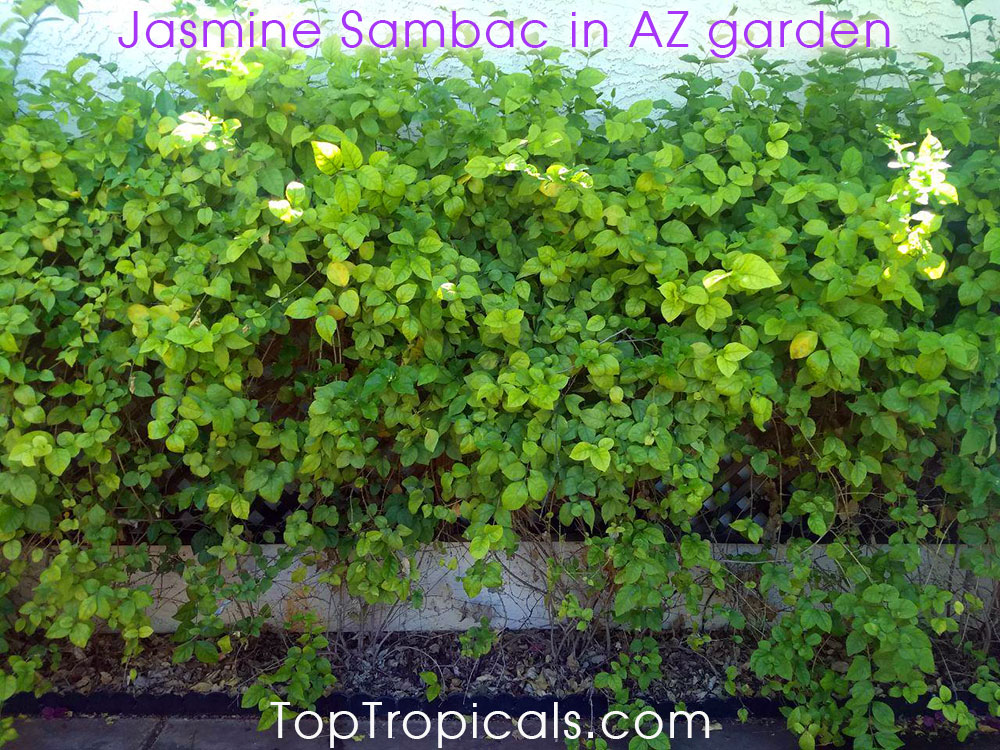
One of our partners lives in hot and dry Arizona area and has an amazing
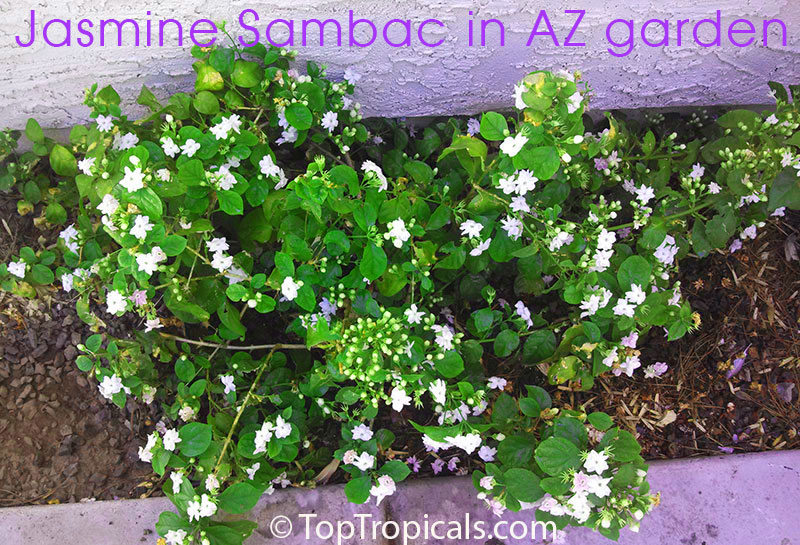
tropical garden that includes many fruit trees (Mango, Persimmons, Pomegranates, Loquats, etc). Here you can see a few pics from his garden.
Your choice is absolutely right about plumerias. Other easy plants would be Desert roses - Adeniums, and Fancy Euphorbia millii - all these come in so many varieties of colors
and bloom throughout most of the year. Our special recommendations for you
would be also:
Bougainvillea Dwarf Pixie
Jasmine sambac
Calliandra selloi Pink Lilian
Dracaena marginata Tricolor - Colorama, Money Tree
Hamelia patens Lime Sizzler - Variegated Fire Bush
Jatropha berlandieri - Buddah Belly
Pedilanthus tithymaloides - Devils Backbone
Trachelospermum asiaticum Mandaianum - Dwarf Confederate Jasmine
See full list of more plants that are suitable for hot and dry landscapes.
Apply fertilizers, miscroelements, and plant stimulants for improving heat tolerance
Date: 30 May 2019
Triple Sec Mango
By Onika Amell, tropical plant specialist
Q: I live in Mesa, Arizona. I am considering purchasing two of you Triple Sec Mango trees. Can you please give me some information on this variety and how to grow it successfully here in hot and arid Arizona, if at all?
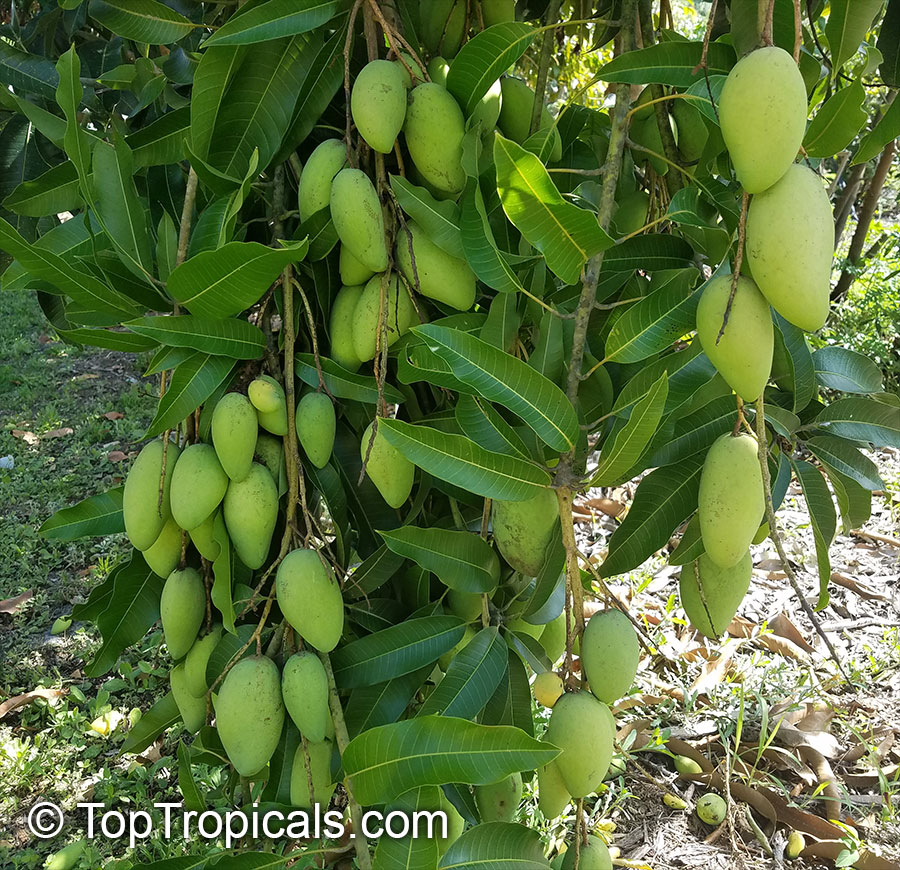
A: Triple Sec Mango is a new name for the superior variety Seacrest. The
aroma of this fruit resembles Triple Sec - an orange liqueur. It's a juicy,
mid-season variety that has good disease resistance.
Mango has pretty good heat and drought tolerance. It loves sun, but there
are a lot of factors to consider when growing Mango in your area.
Check your soil. Soil quality is always first and foremost: when you
live in an area of Arizona with
hardpan (extremely compacted desert soil) or caliche (layers of soil
cemented by calcium carbonate) you
will have to learn how to deal with such soil types. Amend the soil as
needed.
The best time to plant is spring or fall to give your Mango a chance to
get established before the really intense Summer heat starts. Alternatively,
protect the tree with a shade cloth. Tender, new growth will not stand a
chance unprotected, especially newly planted and/or young trees.
Mangoes are tropical and sensitive to frost and freeze damage. Young
trees especially will also need winter protection when temperatures go near or
below freezing. Always plant trees in a location where they will be protected
from cold wind. Consider staking your newly planted Mango trees for the
first year. It's never a bad idea to even stake during periods of high winds.
Make sure your planting site has very good drainage. Always use a good
quality mulch around your tree as it helps to trap moisture, keeping the
ground and the roots beneath it cool. Keep mulch a couple of inches from the
trunk of the tree. Avoid a location that gets full day sun. Morning sun,
afternoon shade is ideal. Give regular watering until the tree is established. Once
established, water only when the soil feels dry.
Fertilizer with a Mango-Food. A foliar spray of micronutrient solution is always
recommended during the active growing period. Use plant stimulants and microelements to improve cold hardiness and vigor.
See more info on growing mango in hot climate and container grown mangoes in Arizona.