Garden Blog - Top Tropicals

Date: 8 Aug 2019

How to grow Parijat indoors in winter
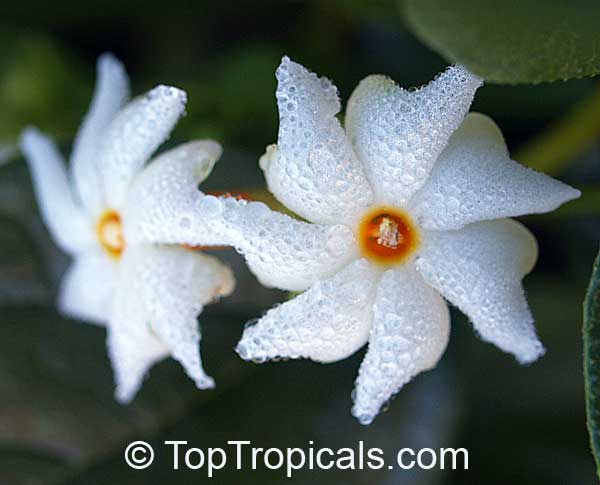
Q: I purchased Parijat plant last year spring. It had good growth in Summer, after that I kept the plant inside the house in winter. A couple of weeks it was ok, after that the plant lost leaves. What is a better idea for growing Parijat plant indoors in Winter?

A: Nyctanthes arbor-tristis, Parijat - is a semi-deciduous plant, which means, it may lose its leaves during unfavorable conditions such as drought, cold, low light and/or humidity. In your case, the plant dropped leaves because of the stress of moving indoors that includes reducing light and humidity levels. When a tropical plant loses leaves during winter, this means it goes into a dormant stage. If this happens, you need to reduce watering and keep the plant on a dry side, water in only when the top level of the soil feels dry to touch. Do not fertilize.
Try to place the plant in a well-lit spot such as a windowsill. If the windowsill and the window glass feel too cold for touch during wintertime, you may place a sheet of a Styrofoam underneath the pot, and a sheet of a bubble-wrap between the plant and the window glass, to create an extra barrier from cold. The plant may re-leaf during wintertime; if not, it may wait until spring, be patient.
Bring it back into outdoor light when minimum temperatures rise above 65F and resume fertilizing.

Recommended fertilizers for fragrant plants:

Pink N Good Daily Plant Food - Flower Booster
Plumeria Top Dress - Smart-Release Booster
SUNSHINE SuperFood - microelement supplement

Date: 3 Aug 2019

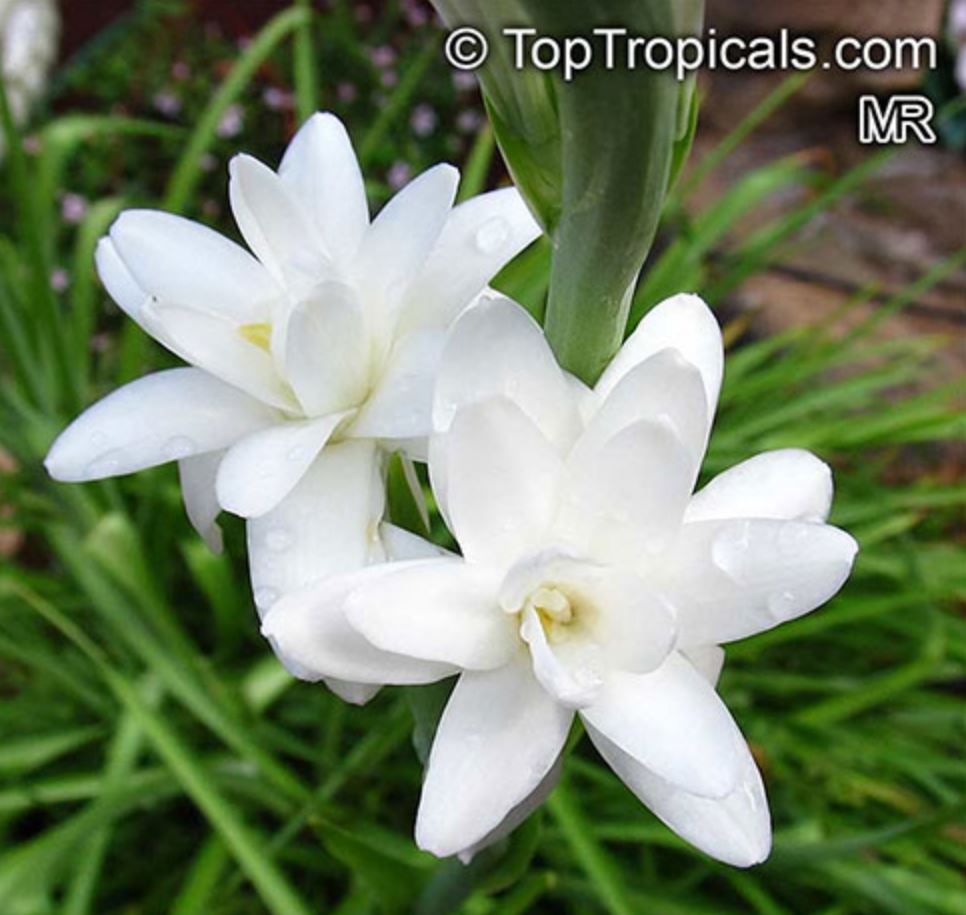
Agave amica? Polianthes tuberosa...

"A tuberose by any other name would smell as sweet..."
by Mark Hooten, the Garden Doc

A: Recently, we received a beautifully grown batch of Polianthes tuberosa, all in one gallon pots. These are commonly called Tuberose in the cut-flower trade. I was so happy to see them that I could hardly contain myself from exploding with joy! It had been such a number of years since I have even seen this plant that I had nearly forgotten about its existence. I first grew it as a little kid "up north", after seeing it listed in an old-fashioned mail-order catalogue, probably Gourney's. I remember doing things like mowing neighbors lawns and shoveling snow from driveways in-order to save enough money so that toward spring I could order a few things from those plant catalogues...
Continue reading...

Date: 3 Aug 2019

Grafted or seedling?

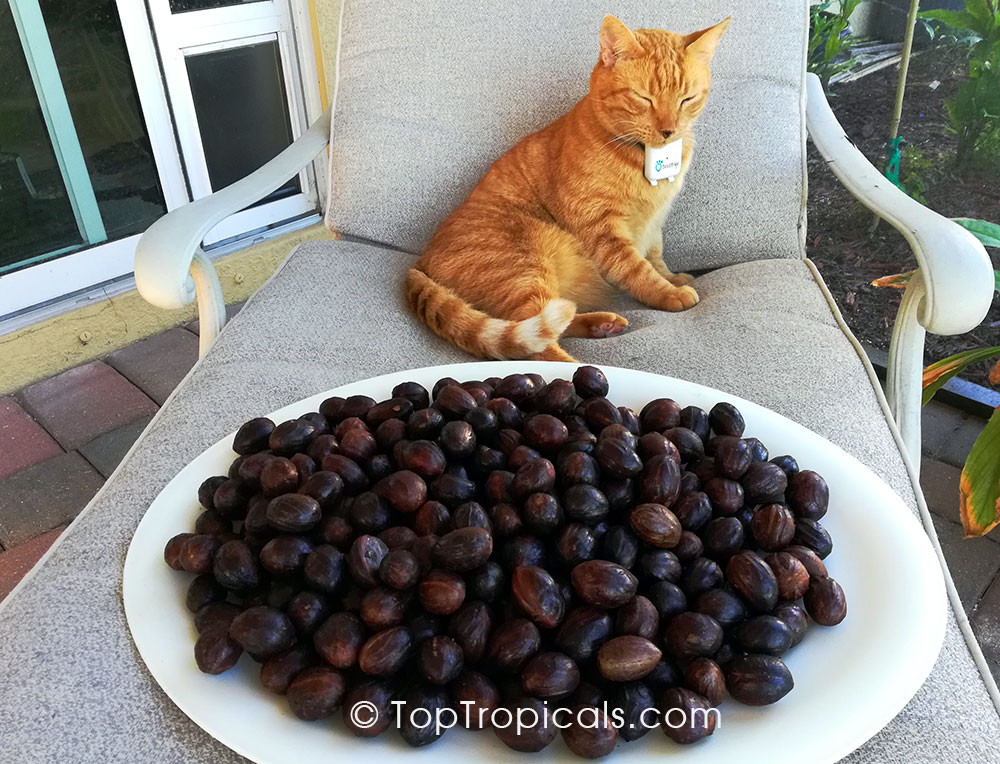
Photo: Mr Barcy meditating before planting Nutmeg seeds

Q: I planted an avocado seed and it sprouted quickly, it has been only a couple months and I already have a small plant. How soon will it produce fruit? Can I grow other tropical fruit from seed?

A: Unfortunately, some fruit trees, including varieties of avocado, mango, lychee, as well as apples and peaches - must be either grafted or air-layered in order to produce, for 2 main reasons:
- seedlings may take a very long time until fruiting, up to 10-15 years
- seedling gives no guarantee on the quality of the fruit or variety
These fruit trees should be propagated as "clones" - both grafted material or cuttings are actually copies of the mother plant and will keep the same fruit qualities. Grafted trees usually start producing immediately.
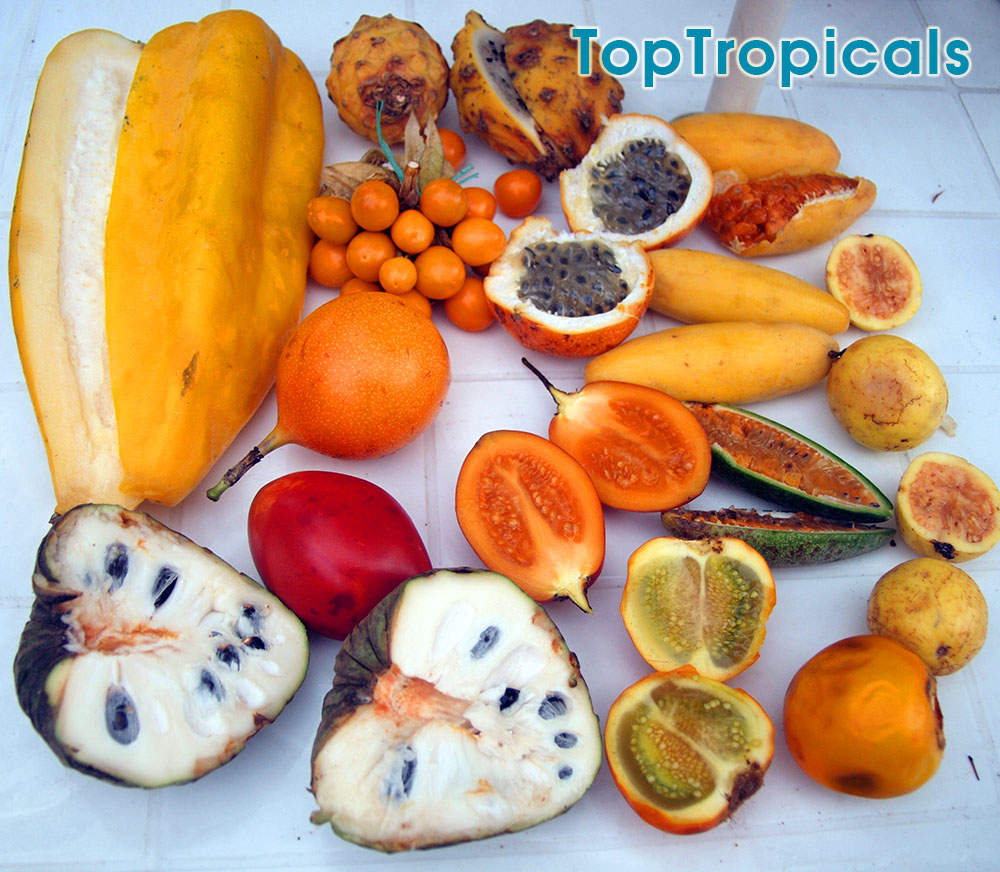
However there is a number of fruit trees that come true from seed, and take a very short time to start flowering. Jackfruit, Annonas (Sugar Apple, Guanabana, etc), Papaya, Icecream Bean, Eugenias start producing at a young age (3-4 years from seed).

Recommended fertilizers for fruit trees:

Fruit Festival Plant Food - Super Crop Booster
Mango-Food - Smart Release Fruit Tree Booster
SUNSHINE-Honey - for sweeter fruit
SUNSHINE SuperFood - microelement supplement
Date: 29 Jul 2019

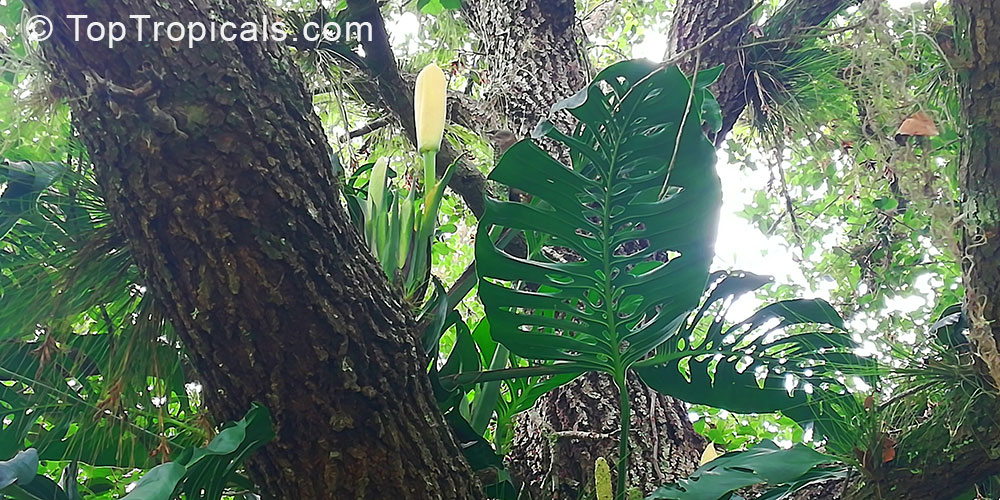
Monster hybrids of Monstera: juvenile and mature

by Mark Hooten, the Garden Doc

Q: I am a rare plant collector and obtained a very interesing cultivar of Monstera from you that says it's a hybrid Monstera adansonii x obliqua. Is there a named hybrid? The leaves on this specimen that came in 1 gal pot are much larger than the plant I have grown in a 3 gal pot for a few years, under name of Monstera friedrichsthalii.

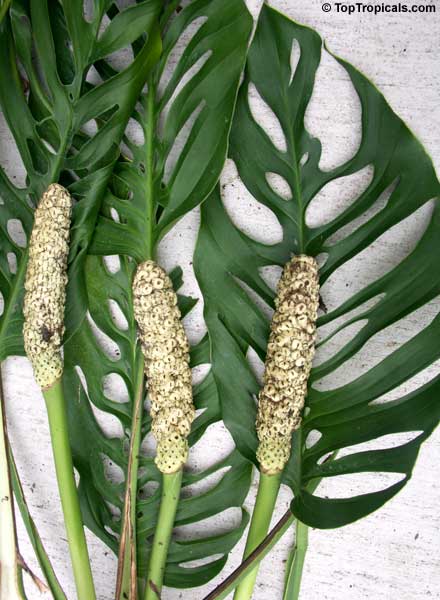
A: Due to their diversity, it is hard to find verified hybrids in the genus Monstera. M. friedrichsthalii is apparently an old Florida name for what is actually technically M. adansonii. The "primitive" juvenile growth is very different from the much larger more robust form that only occurs when it is allowed time to climb a tree, in which case the foliage becomes very different and much larger with many many more fenestrations (holes) of various sizes. If you visit our Garden Center, you can see the mature form climbing the oak tree in our Shade Garden in front of our office - we use this mature plant for propagation. If you take a cutting and don't let it attach to a bark/trunk and climb upwards, it will quickly revert to the wimpy juvenile form. Seems that even climbing a pole indoors, it never actually develops into the truly mature more complex adult stage. Some juvenile forms growing on a tree if given too much shade, do not develop into the larger mature form. Move it in more light and allow it to climb, and it will look very different, but still is the same plant under different conditions.

Date: 29 Jul 2019

When to fertilize and prune tropical fruit trees?

Q: Can tropical fruit trees (Soursop, Mango, Star fruit, etc) be given plant food any time of year? Also can they be trimmed this time of year/summer?

A: True tropical plants (including fruit trees) need plant food most of the year in real Tropics, where temperatures have very little fluctuations, and active growth season is close to 12 months a year. In subtropical areas when temperatures in winter drop below 65F, plant metabolism slows down, so it is recommended to fertilize only during the warmest period (March through November). So yes, Summer is the perfect time for fertilizing your trees; their metabolism is at the highest point and they can use more food!

Trim your fruit trees right after harvesting. Obviously, you don't want to prune branches before or during flowering or fruiting. The specific time of the year for pruning depends on the plant - every tree has its own flowering/fruiting season. However, avoid pruning right before winter: young shoots promoted by pruning are tender and can be cold damaged.

Recommended fertilizers for fruit trees:

Fruit Festival Plant Food - Super Crop Booster
Mango-Food - Smart Release Fruit Tree Booster
SUNSHINE-Honey - for sweeter fruit
SUNSHINE SuperFood - microelement supplement