Garden Blog - Top Tropicals

Date: 24 Jun 2018

TopTropicals

Cleanest fruit?

"Dirty" fruit: According to the Environmental Working Group research, Strawberries are top the list of the 12 "dirtiest" fruits and vegetables grown commercially. Spinach is the second, followed by (in order of contamination) nectarines, apples, grapes, peaches, cherries, pears, tomatoes, celery, potatoes and sweet bell peppers. Each of these foods tested positive for pesticide residues and contained higher concentrations of pesticides than other produce. This causes of course chronic health implications. Children are of special concern as younger bodies have greater susceptibility to pesticides than adult bodies, the report emphasizes. Pesticides may induce chronic health complications in children, including neuro- and behavioral problems, birth defects, allergies, asthma, and even cancer...

"Clean 15": Avocados lead 2018's clean fruits and veggies list, that also includes: mangoes, papayas, pineapples, kiwi, sweet corn, cabbage, onions, frozen sweet peas, asparagus, eggplant, honeydew melon, cantaloupe, cauliflower and broccoli.
Obviously, home grown fruit and vegetables are even better. Such fruit as Custard Apples, Sapodilla, Sapote, Jackfruit, Dragon Fruit, Passion Fruit and other rare varieties of tropical fruit, are even better for you because they are not grown commercially, and the choice from your own organic garden is the healthiest for yourself and your family!
Plant them today and get your cleanest fruit tomorrow!

Check out all tropical fruit trees and all tropical spice plants.

Date: 24 Jun 2018

TopTropicals

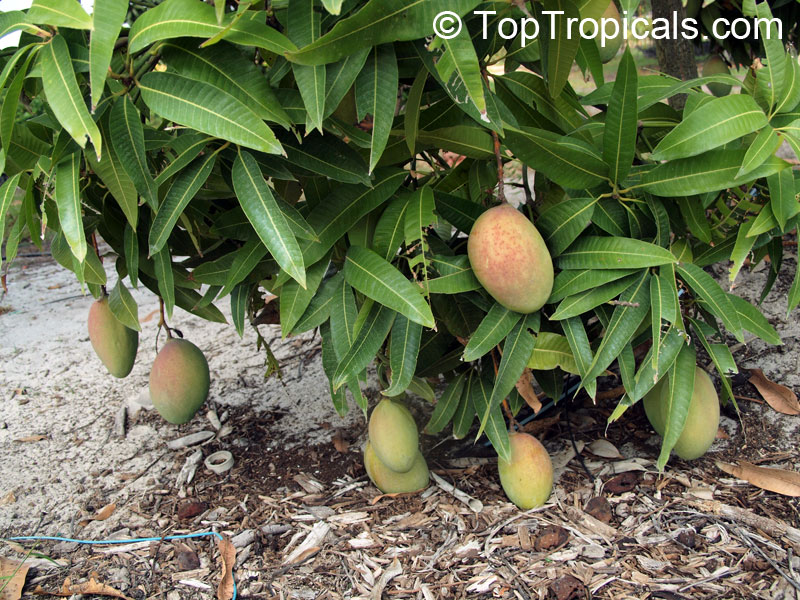
Mango Fralan - a new exciting discovery

Q: I am looking for a special mango called Fralan. It is the most popular mango in Vietnam where I am from. Do you have this variety?

A: Fralan is a relatively new variety of Mango, originated from Thailand, with green skin. In Thai, "Fralan" means "Thunder" - as the fruit cracks when peeled. It also has another meaning "Foreigner" as people from the West seem to speak too loud for Thai ears. This mango has no turpentine aftertaste unlike some other varieties. Its flavor is superior. The flat seed is similar to Nam Doc Mai, it has no seed coat which is a good advantage, leaves more room for flesh and makes it easier to eat.
Fralan can be eaten:
a) when green - it is crunchy, sweet, producing cracking sounds (=Thunder)
b) when yellow (fully ready) - very soft, no fiber whatsoever
The tree is early-middle harvesting season depending on climate and has a DWARF habit! Which make is excellent choice for potting culture. See full list of Mango varieties from our store.

Date: 24 Jun 2018

TopTropicals

Multi-grafted "fruit cocktail" trees

Q: We love your website and products. Do you have mango trees with different types grafted on one? We live in Hawaii and have space for an interesting mango.

A: Here is the truth about multi-grafted mangos. It is the same issue as with multi-grafted citrus (so-called "fruit cocktail trees"). In most cases, multi-grafted fruit trees look beautiful and healthy for the first couple years if that long. What happens next - the most vigorous variety will take over others and eventually all other grafts will die off or those branches stay retarded without sufficient production. There is a solution though, if you have limited space and still want to have several varieties to enjoy. Plant 2-3-4 desired varieties into 1 hole! Of course production of each tree will reduce due to the crowded situation, but overall crop will be as much as from one big tree. And you will have all kinds of tastes to enjoy! Very often trunks of such trees grow in together, but because of having separate root systems, all trees will remain equally strong and vigorous.

Check out our Mango varieties.

Date: 24 Jun 2018

Grafted Gardenias: what is the trick?

TopTropicals

Q: I am thinking about buying a Gardenia as a present for my mother's garden in Florida. What is the difference between grafted and non-grafted gardenias?

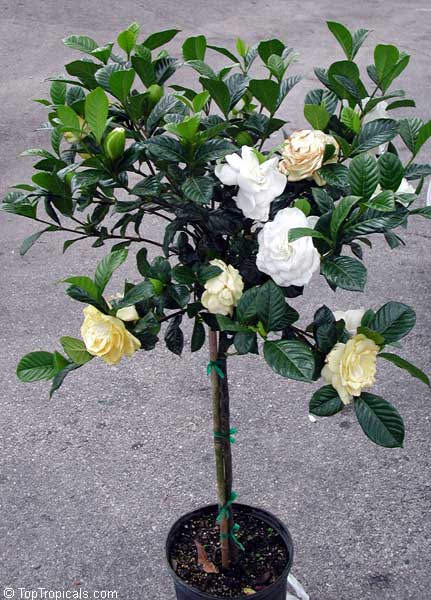
A: Gardenias are one of our finest shrubs, growing to a height of about six feet in warmer areas of the United States. They have very attractive, shiny evergreen leaves that are about four inches long and, each spring-summer, produce the loveliest of white flowers that are delightfully scented. In areas with alkaline soils, like Florida, only grafted gardenias can be planted in the ground: graft provides nematode resistance, tolerance to poor, sandy and alkaline soils, and healthy, dark green foliage. Grafted varieties have rootstock of Gardenia thunbergia - the most resistant species of all gardenias.

Check out our Gardenia varieties.

Date: 24 Jun 2018

TopTropicals

Elephant Foot, Turtle Shell - back in stock!

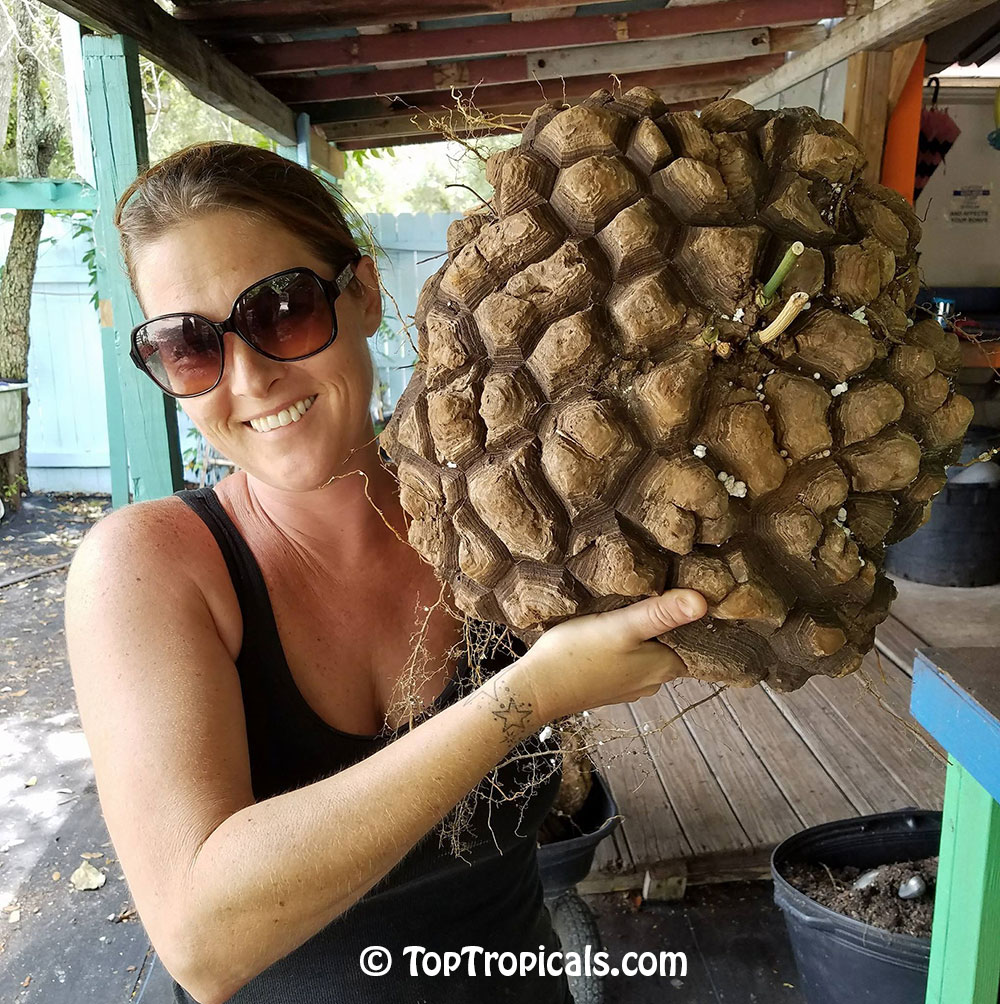
Dioscorea elephantipes.
Dioscorea is a curious plant with tuber above ground level covered with layers of corky bark, resembling a caudex. It is a slow growing, very unusual succulent. Tuber contains saponins, originally cooked and eaten as a famine food by the Hottentots. Caudex that grows up to 6' in nature, resembling an elephant's foot and looks as if it is segmented into geometric patterns (smaller plants look like tortoises) and looks dead but is actually a living tuber. A plant with 18" caudex can be almost 100 years old! The plant grows into a vine with attractive heart-shaped leaves and small yellow flowers. Culture is relatively easy. The vines may die back and regrow several times a year, depending on the particular plant and your region. The plant doesn't send down deep roots, so plant in a shallow pot about 1" larger than the diameter than the caudex. Potting soil should be very porous/loose so that there is easy drainage. Water well around the edges. Keep in a warm area and wait for the first shoots of the vine to appear. Water regularly from that point on. The plant should not be kept damp as with other tropical plants. Allow it to dry before watering again. Many books will say that they are winter growers, because they are native to the southern hemisphere. In fact, they grow in all seasons! Let the plant be your guide. You cannot force them to grow, and over watering will simply cause them to rot.
Elephant Foot is a collectors item, but remarkably easy to grow. It will be with you for years with no effort. It is a wonderful conversation piece! See more info about Dioscorea elephantipes.

We have limited stock, while supply lasts, hurry up!
*** 4-6" caudex *** 6-8" caudex *** 10-12" caudex *** Seeds. Don't forget special TopTropicals Adenium Soilless Mix that perfectly works for this plant!