Garden Blog - Top Tropicals
Date: 15 Aug 2026
Love yourself first
♥️ Love yourself first
"Love yourself first and everything else falls into line." - Lucille Ball
🐈📸 Top Tropicals rescued cat Matilda definitely doesn't look like a used-to-be-homeless homeless purrrson anymore!
Since moving in, she has gained a home, a family, a couple of pounds - and absolutely no regrets.
Judging by that magnificent belly rolling from side to side, Matilda is taking her new comfortable lifestyle very seriously at PeopleCats.Garden.
#PeopleCats #Quotes
🟢 Join 👉 TopTropicals
Date: 15 Aug 2026
The #1 Rule for Mail-Order Plant: Dont Disturb the Roots
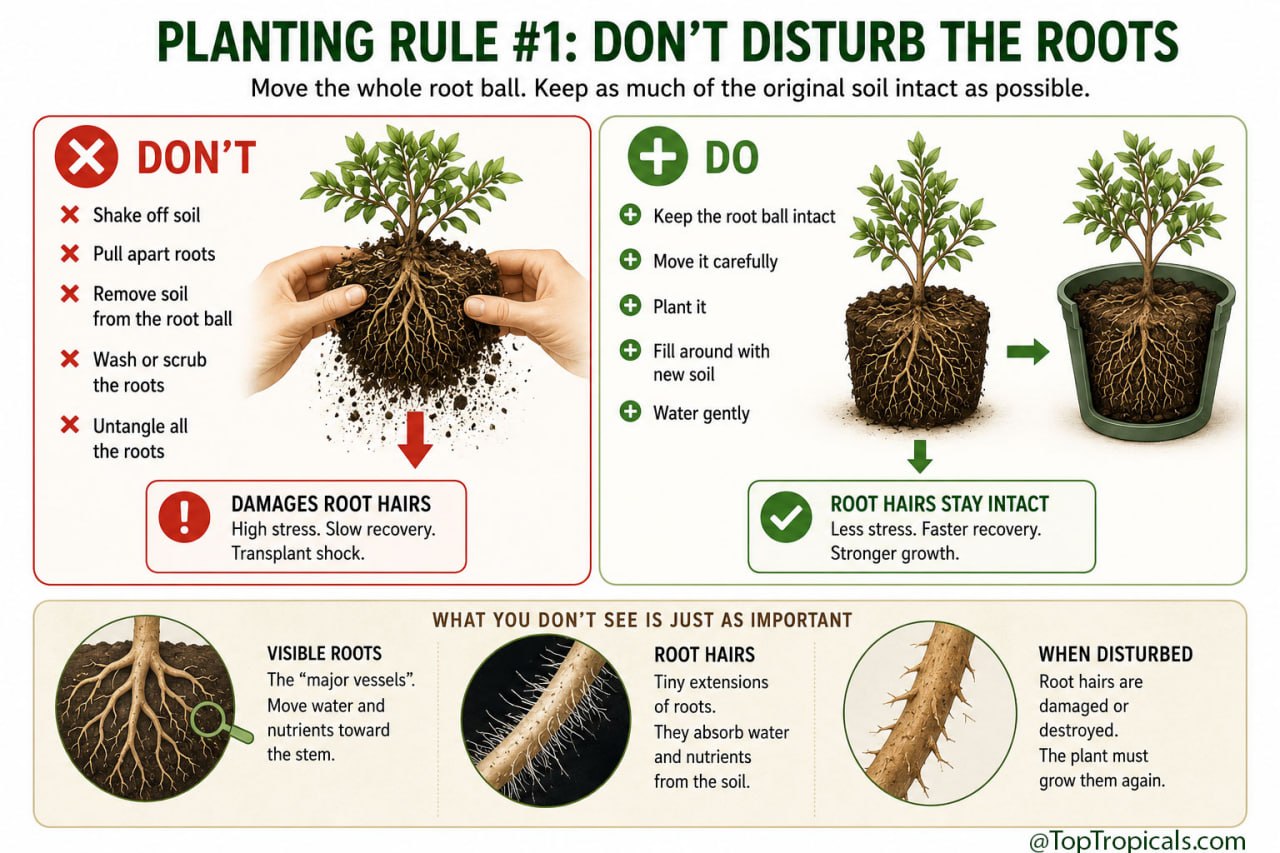
Keep the root ball intact. Disturbing the soil can damage tiny root hairs and increase transplant shock.
The #1 Rule for Mail-Order Plant: Don't Disturb the Roots
Your new plant just arrived in the mail. You open the box, unwrap it - and see a root ball surrounded by soil.
Your first instinct may be: "Clean it up? Shake off the soil? Pull it apart with your fingers? Untangle the roots so you can see what you're working with?"
❌ Don't!
Unless there's a specific problem that requires removing the old soil, one of the best things you can do for a newly arrived plant is leave its root ball alone.
✳️ The roots you can see aren't doing all the work
When you look at a root ball, you mostly notice the thicker roots. Think of these as the plant's plumbing - they transport water and nutrients toward the stem and hold the plant in place.
But much of the actual absorption happens through the youngest, finest roots and their root hairs: delicate extensions of root epidermal cells, some so tiny you can barely see them.
These root hairs dramatically increase the surface area available for absorbing water and dissolved minerals from the soil. And here's the important part - they're very easy to destroy.
When you shake, rub, scrape, wash, or pull soil away from the roots, you're not just removing dirt. You may be stripping away thousands of those tiny absorbing structures. The thicker roots can still look perfectly healthy while much of the plant's actual working surface has just been damaged.
✳️ Why this matters even more with a mail-order plant
A plant that's traveled through the mail has already been through some stress: darkness, jostling, temperature swings, and a brand-new environment on arrival.
This is not the moment for root surgery.
Once root hairs and fine feeder roots are damaged, the plant has to rebuild them. Until it does, its ability to take up water is reduced - right when it needs water most to recover and adjust. That can show up as wilting, leaf drop, stalled growth, or what gardeners call transplant shock.
✳️ Pot or plastic bag - the rule is the same
Some plants ship in their nursery pots. Others arrive with the pot removed and the root ball wrapped in plastic, since that makes shipping lighter, safer, and cheaper.
Either way, treat the root ball the same way:
Carefully remove the pot, bag, or wrapping without pulling the root system apart.
Set the whole root ball - with as much of its original soil intact as possible - into the new container.
Fill in around it with fresh potting mix.
Think of it as moving the root system, not rebuilding it.
✳️ But shouldn't I loosen the roots?
Sometimes - but not automatically.
If a plant is severely root-bound, with thick roots circling tightly around the outside of the pot, some gentle correction can help. Damaged, mushy, or rotten roots may also need attention.
But that's different from routinely breaking apart a healthy root ball. If the roots and soil look healthy, less handling is usually better.
✳️ Don't remove soil just to inspect the roots
Don't wash them clean. Don't massage the root ball. And don't assume spreading every root out will help the plant "take off faster." For a healthy plant, keeping those fine roots intact is worth far more than a tidy-looking root ball.
✳️ The simplest planting rule
When your plant arrives: unwrap it, move it, fill around it, water it - and leave the roots alone.
Keep as much of the original root ball intact as you reasonably can.
The roots you can see are only part of what's keeping your plant alive. The ones you may never even notice are doing some of the most important work.
Treat the root ball gently, and let the plant do the rest.
🛒 Shop Professional Potting Mix
📚 Learn more
· Planting instructions for mail order plants (PDF)
· How to re-pot a plant properly
· The complete guide to potting mix
#How_to #Discover
🟢 Join 👉 TopTropicals
Date: 14 Aug 2026
The Biggest Spiderweb on Earth: Overnight Masterpiece!
🕷 The Biggest Spiderweb on Earth: Overnight Masterpiece!
"In the middle of difficulty lies opportunity." - Albert Einstein
🕸 While everyone was sleeping, one tiny architect was very busy. By morning, this enormous spiderweb stretched nearly 20 feet between the bushes, all the way across the road.
And right at sunrise, the whole masterpiece lit up in the first rays of the sun.
Imagine building something 20 feet wide overnight - and doing it without a ladder. 🕷
#PeopleCats #Quotes
🟢 Join 👉 TopTropicals
Date: 14 Aug 2026
Turn One Colorful Houseplant Into a Whole Garden Bed
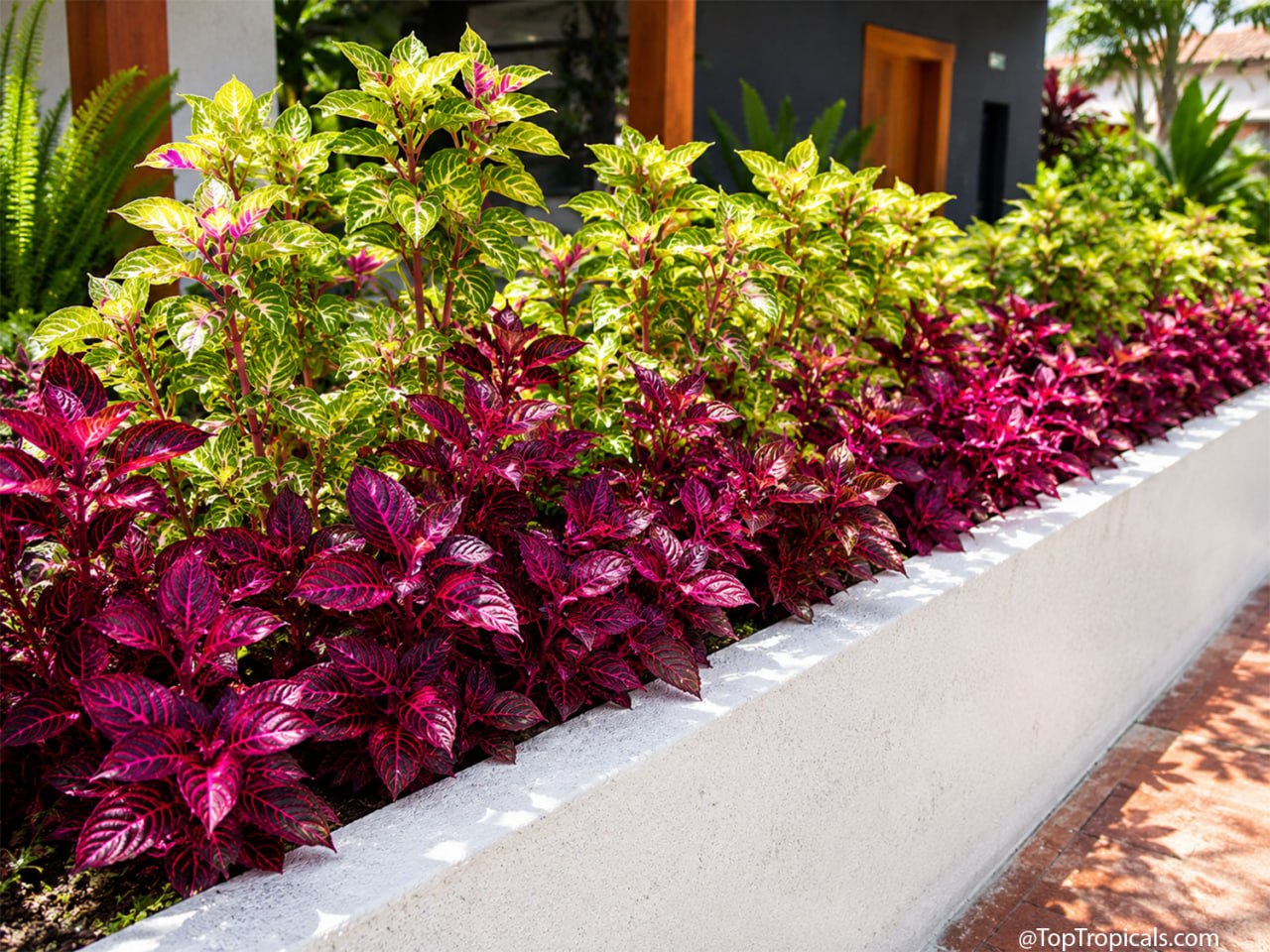
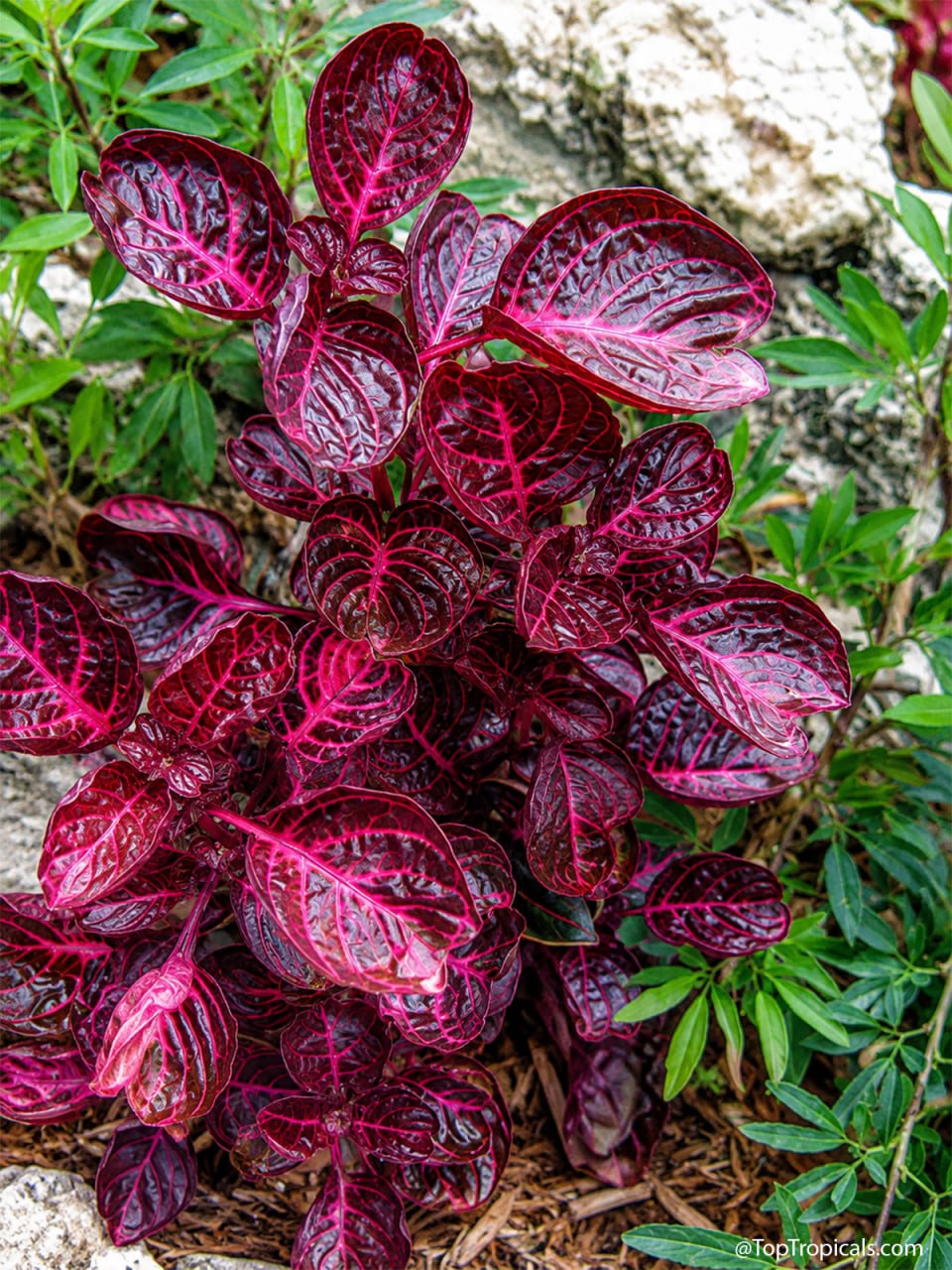
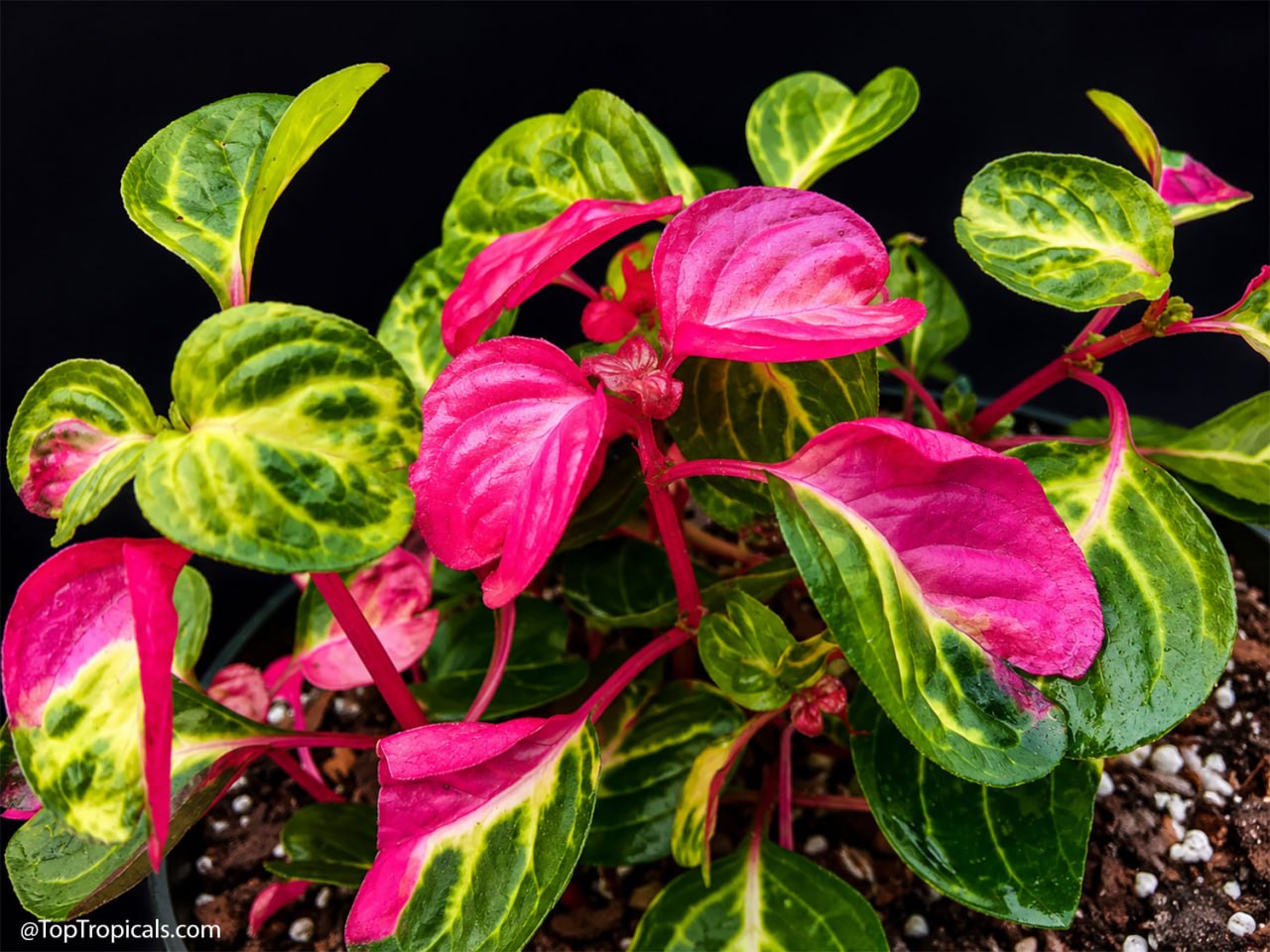
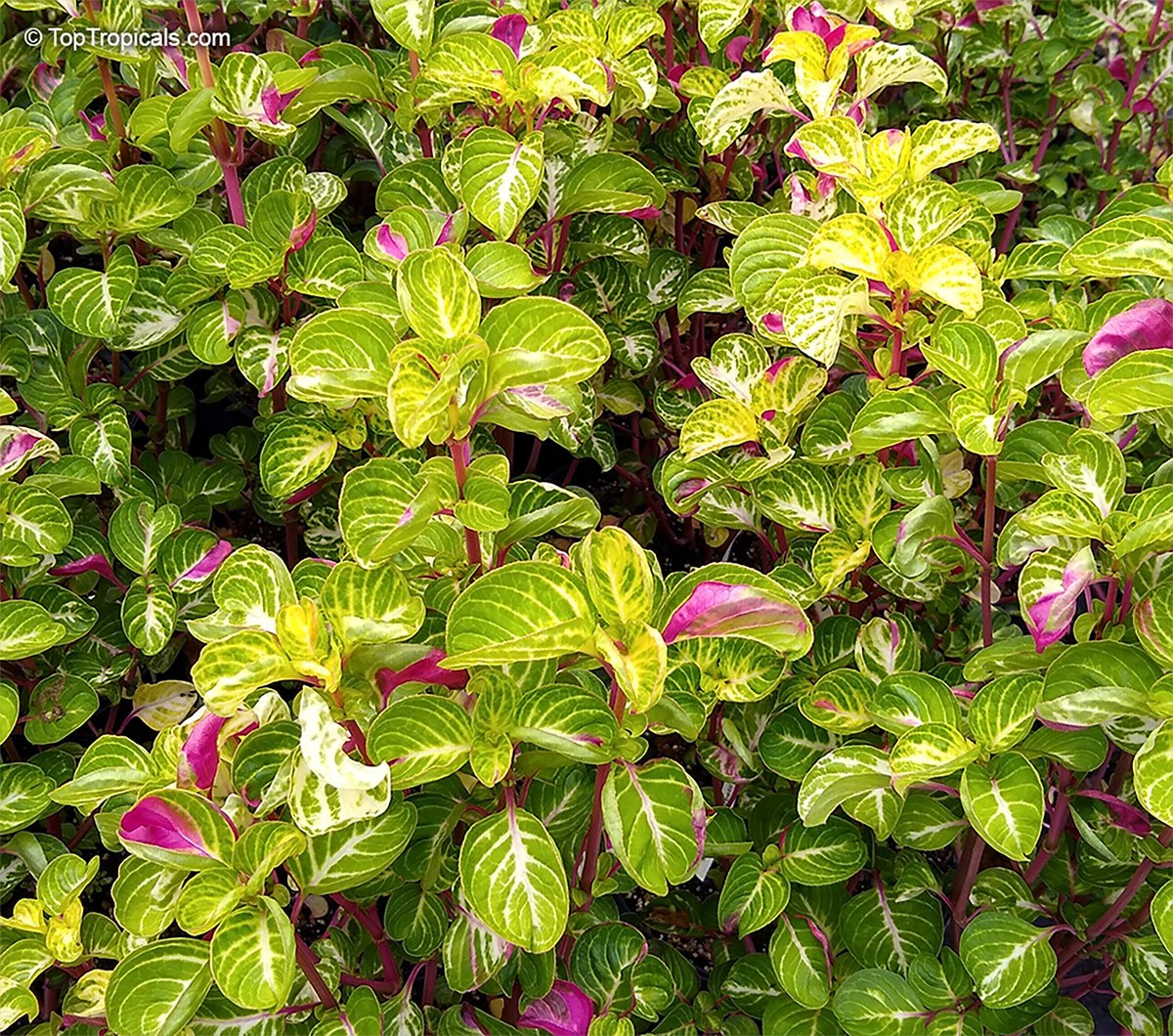
Turn One Colorful Houseplant Into a Whole Garden Bed
You may know Iresine as a colorful little 4-inch houseplant. But give that same plant warm weather and some room, and it transforms into something completely different.
Iresine herbstii - also known as Bloodleaf, Beefsteak Plant, or Chicken Gizzard Plant - grows and branches fast. In a warm climate, it can form a thick mass of brilliant red, burgundy, pink, green, and gold foliage.
And unlike flowers that come and go, the color is in the leaves.
🌈 A Living Carpet of Color
Technically, Iresine isn't a creeping ground cover. Left alone, it grows into a bushy plant about 2-3 feet tall.
The trick? Keep cutting it back.
Every time you pinch a growing tip, the plant produces more side branches. Regular trimming turns tall, leggy stems into a low, dense mound.
Plant several together about 12 inches apart and they'll quickly grow into each other, creating a colorful carpet - perfect under palms, fruit trees, along walkways, or anywhere you need contrast.
🌈 Why Plant Flowers When Leaves Look Like This?
Nobody grows Iresine for its tiny flowers. The foliage is the show.
Depending on the variety, leaves can be:
• Deep red and burgundy
• Purple and hot pink
• Apple green with yellow veins
• Splashed with several colors at once
Because the color comes from the foliage, you don't have to wait for blooming season.
🌈 Sun or Shade?
Another great thing about Iresine is its adaptability.
Bright light brings out the strongest color. It grows in sun to partial shade, although in very hot climates some afternoon protection can help prevent scorching.
In deeper shade it still grows, but may become taller, leggier, and less intensely colored.
Indoors, keep it near a bright window.
🌈 Buy One. Make Twenty.
Here's where Iresine gets really fun: it's incredibly easy to propagate.
Don't throw away those stems when you prune!
Take 4-6 inch cuttings, remove the lower leaves, and stick them into moist potting mix or even a glass of water. They usually root readily.
One mother plant can eventually provide enough cuttings to fill a border, walkway, container grouping, or entire garden bed.
🌈 Iresine Varieties to Collect
And they don't all look alike.
Acuminata has pointed, deep purplish-red leaves with bright contrasting veins - the classic Bloodleaf look.
Aureoreticulata, or Chicken Gizzard Plant, is completely different, with rounded apple-green leaves, bright yellow veins, and reddish stems.
Confetti looks almost painted, with foliage splashed and flecked with green, yellow, pink, and red.
Mix several varieties together for an even more dramatic planting.
🌈 Winter Houseplant, Summer Garden Superstar
Iresine loves warmth and doesn't tolerate hard freezes.
In frost-free tropical and subtropical climates, grow it outdoors as a perennial.
Farther north, use it as a colorful summer annual. Before frost arrives, take a few cuttings and overwinter them indoors. Those little plants can become next year's garden.
🌈 Great in Containers, Too
No garden bed? Iresine grows beautifully in containers.
Regular pruning keeps it compact and bushy, while its colorful foliage makes a great contrast with other tropical plants.
Keep the soil consistently moist but well drained while the plant is actively growing. Don't leave it soggy, but don't let it become extremely dry either.
🌈 The Three Secrets
Pinch it. Water it. Propagate it.
That's really all there is to it.
Start with one little houseplant, and before long you can have a whole garden full of color!
🛒 Plant a Carpet of Color
📚 Learn more:


Iresine plants in Plant Encyclopedia
How to make perfect ground cover
#Container_Garden #Shade_Garden #How_to
🟢 Join 👉 TopTropicals
Date: 13 Aug 2026
Story of Riki: From a Box at the Gate to Top Tropicals Old-Timer
🐈 Riki's Story: From a Box at the Gate to Top Tropicals Old-Timer
Riki is one of Top Tropicals' oldest rescued cats. He came to us back in 2016 - in a box.
Yes, that's right. Someone dropped off a box of kittens right at the Top Tropicals gate. Apparently, whoever did it knew what they were doing - right place, right time!
All the kittens were quickly adopted by our employees and friends. All except Riki.
Riki was the runt of the litter - the tiniest, weakest little kitten, and he didn't look healthy at all. He was barely hanging on, covered in fleas, with infections in both eyes so severe he could hardly open them.
Nobody wanted to adopt the sick little guy.
So Riki stayed.
And somehow that tiny, miserable kitten grew up into this beautiful boy.
It wasn't always easy. Riki has had a weak immune system and plenty of health problems over the years. He became a frequent flyer at the vet's office, and years of discomfort also affected his personality. He was very shy and preferred to keep his distance.
But look at him now!
Finally, Riki is feeling good. He looks healthy, he's happy, he's not hiding anymore - and apparently he's even ready to pose for the camera.
Ten years after someone left a tiny sick kitten in a box at our gate, Riki is still here.
I'd say whoever chose that gate chose pretty well.
Success story. Happy ending. 🐈❤️
🐈📸 Top Tropicals rescued cat Riki at PeopleCats.Garden.
#PeopleCats
🟢 Join 👉 TopTropicals
Riki is one of Top Tropicals' oldest rescued cats. He came to us back in 2016 - in a box.
Yes, that's right. Someone dropped off a box of kittens right at the Top Tropicals gate. Apparently, whoever did it knew what they were doing - right place, right time!
All the kittens were quickly adopted by our employees and friends. All except Riki.
Riki was the runt of the litter - the tiniest, weakest little kitten, and he didn't look healthy at all. He was barely hanging on, covered in fleas, with infections in both eyes so severe he could hardly open them.
Nobody wanted to adopt the sick little guy.
So Riki stayed.
And somehow that tiny, miserable kitten grew up into this beautiful boy.
It wasn't always easy. Riki has had a weak immune system and plenty of health problems over the years. He became a frequent flyer at the vet's office, and years of discomfort also affected his personality. He was very shy and preferred to keep his distance.
But look at him now!
Finally, Riki is feeling good. He looks healthy, he's happy, he's not hiding anymore - and apparently he's even ready to pose for the camera.
Ten years after someone left a tiny sick kitten in a box at our gate, Riki is still here.
I'd say whoever chose that gate chose pretty well.
Success story. Happy ending. 🐈❤️
🐈📸 Top Tropicals rescued cat Riki at PeopleCats.Garden.
#PeopleCats
🟢 Join 👉 TopTropicals