Regular water - Plant Encyclopedia Results
| Number of plants found: 2828 | Next | 
|
Go to page: | 1 | 2 | 3 | 4 | 5 | Last |
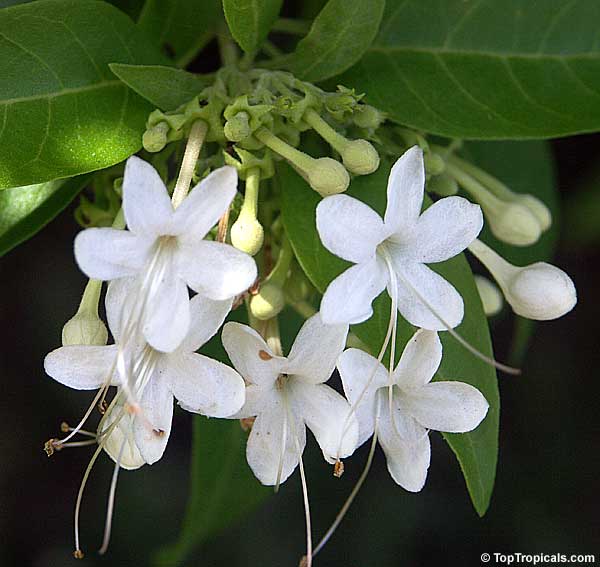
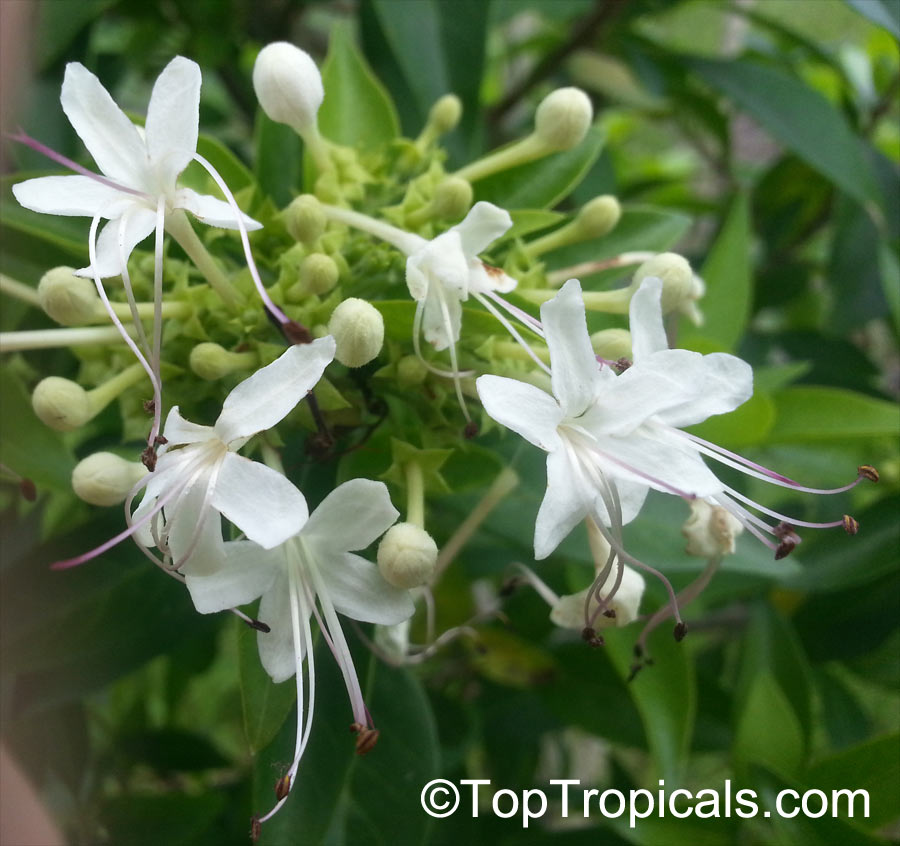
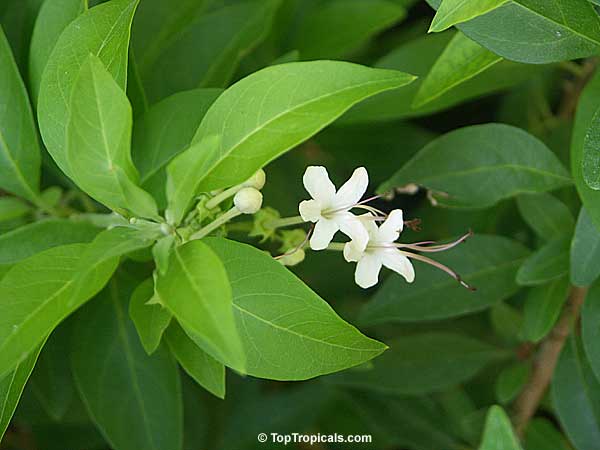
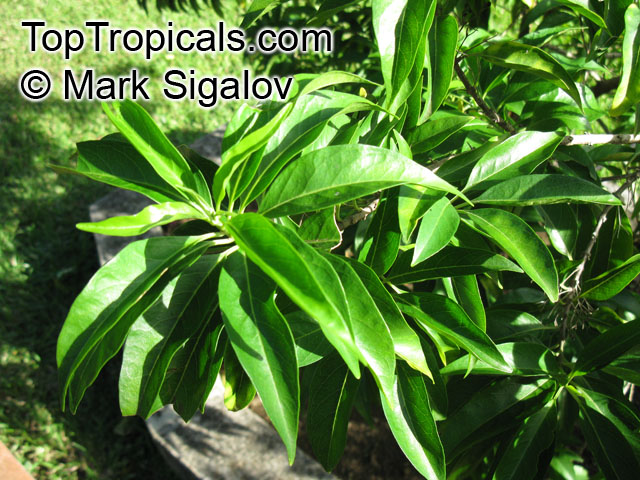
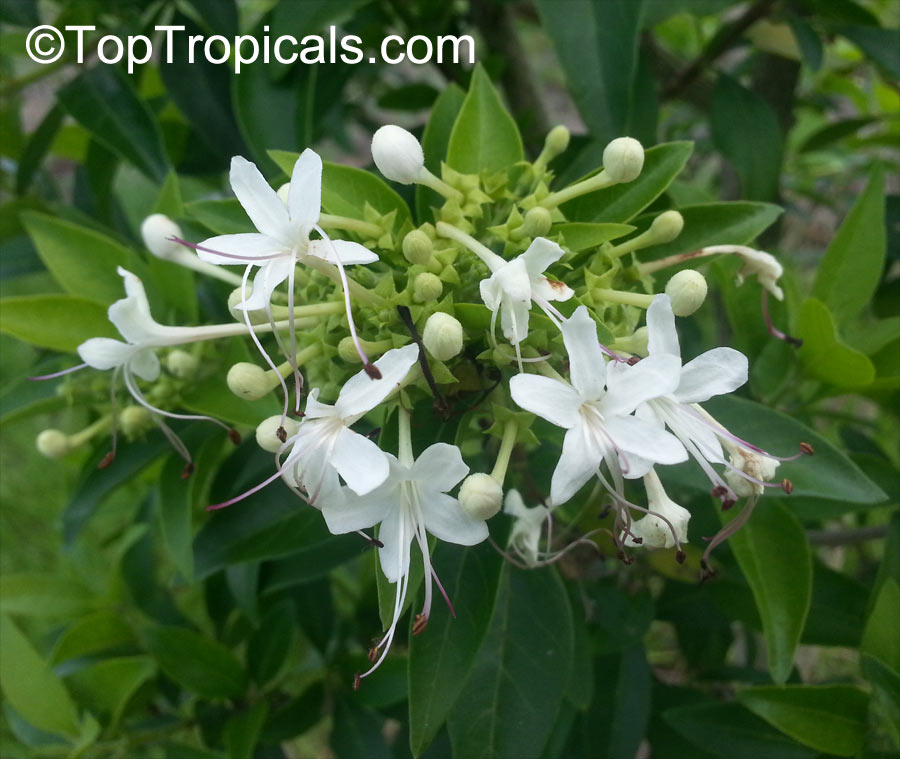
Botanical names: Clerodendrum heterophyllum, Clerodendrum aculeatum
Common names: Tree of little stars, Escambron, Tamourette
Family: Lamiaceae (Formerly:Verbenaceae)



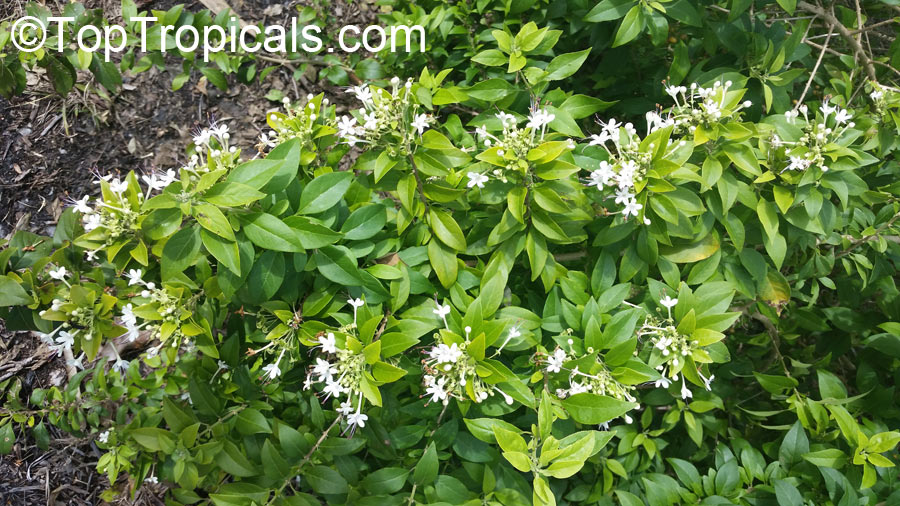
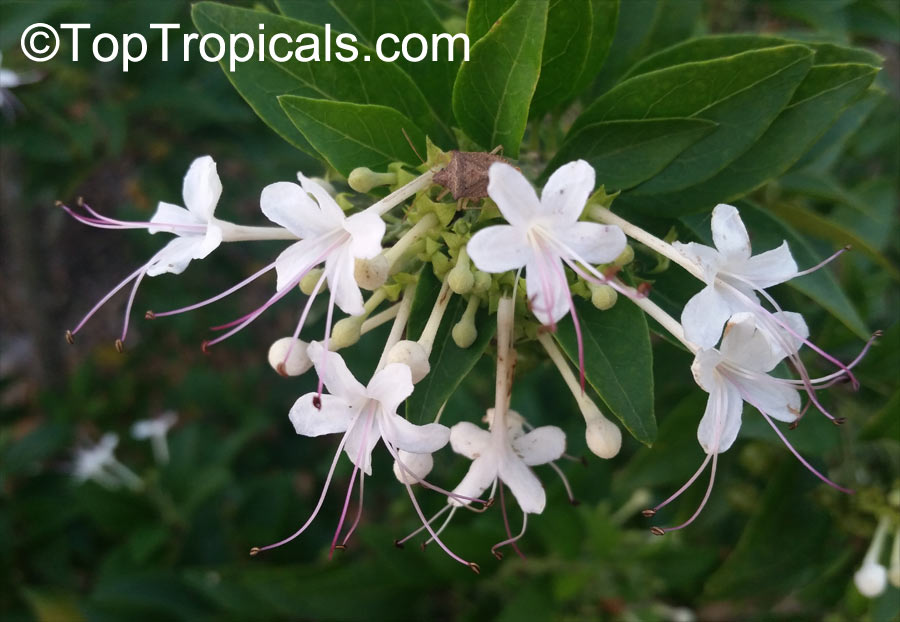
Clerodendrum heterophyllum (Tree of little stars) grows in full sun or semi-shade and prefers soil that is a bit acidic.
It is a large shrub, 5 - 10 ft tall, is tolerant to most soil types and can survive in USDA Zone 9-11. It produces white, off-white flowers that are slightly fragrant. It has a rather thorny or spiny character that adds to its beauty. Its nickname, Tree of little starsâ, is quite befitting since this plant looks like a thousand stars when in bloom.
Growth is easy with little care, as long as regular watering is maintained. In cold regions, it can be grown in pots and placed in sheltered areas. This shrub is attractive to both butterflies and hummingbirds. It also has ethnomedical applications for treating a few ailments.
To maintain the aesthetic beauty of this shrub, light pruning is recommended every now and then. When pruning, it is important not to prune too much off and always maintain a uniform shape. The plant should be fertilized throughout the growing season, around once a month.
Overall, Clerodendrum heterophyllum is a great choice for a low-maintenance garden shrub that is sure to attract the attention of both butterflies and hummingbirds.
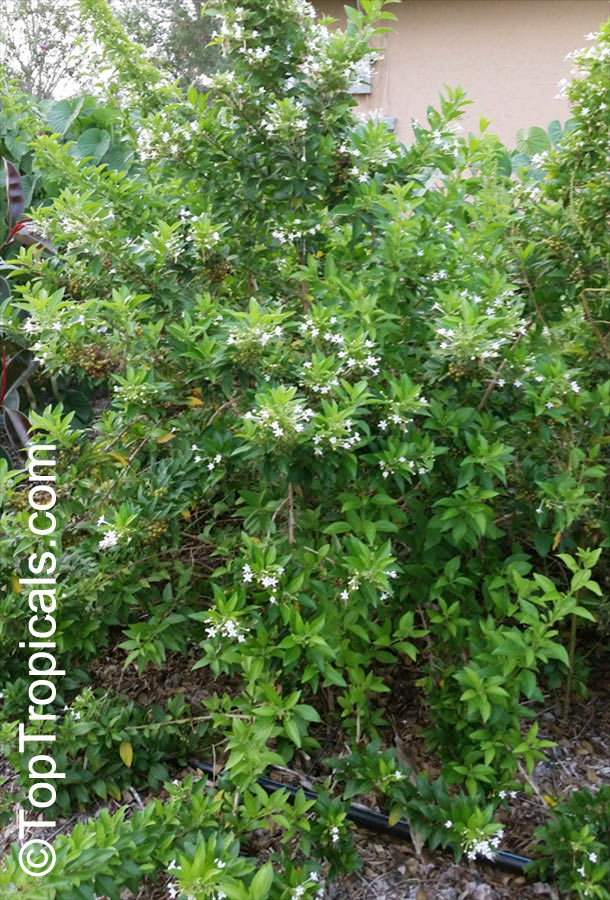
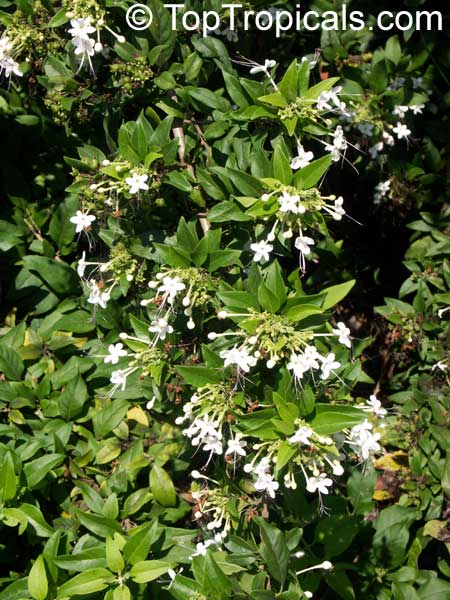
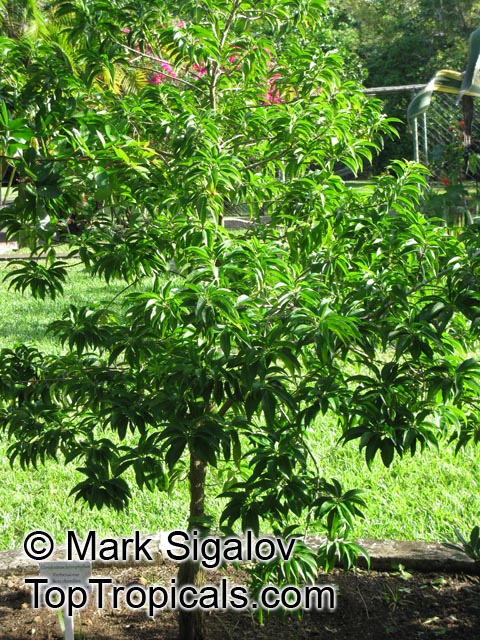
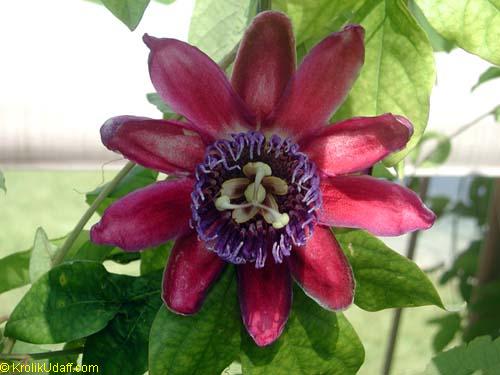
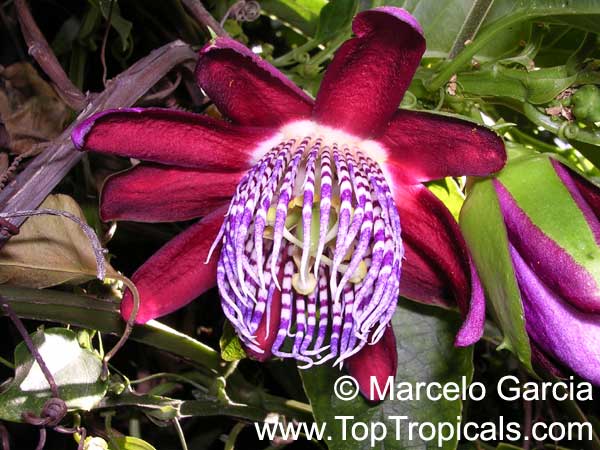
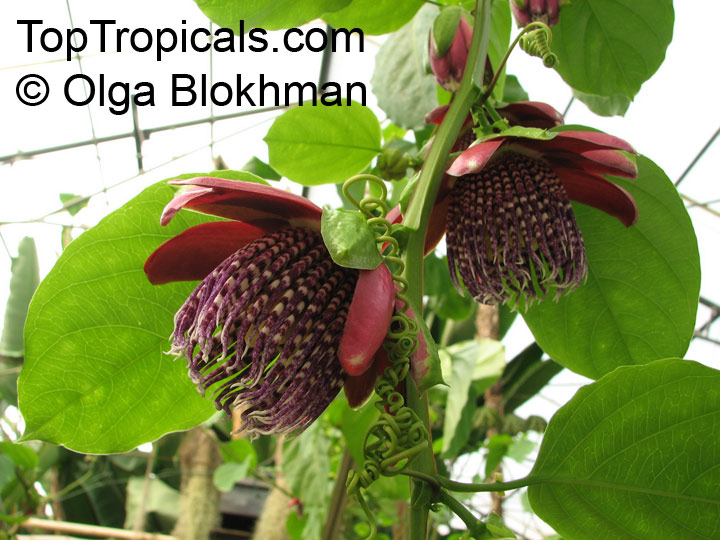
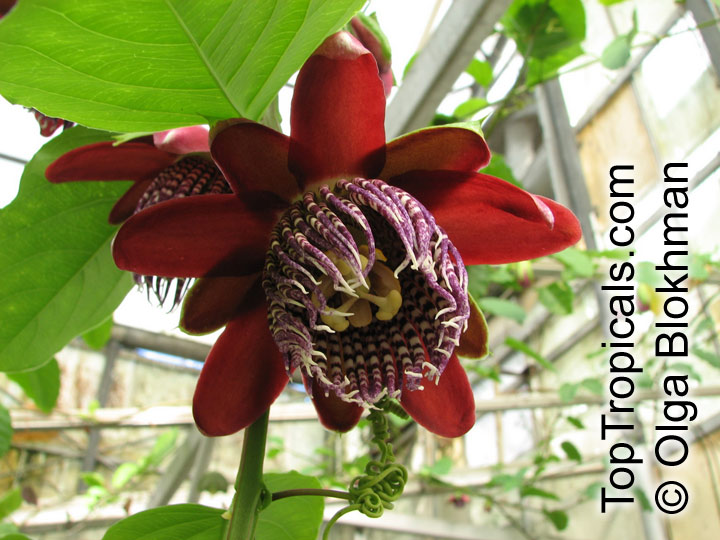
Botanical name: Passiflora alata
Common names: Winged-Stem Passionflower, Fragrant Granadilla
Family: Passifloraceae
Origin: Brazil


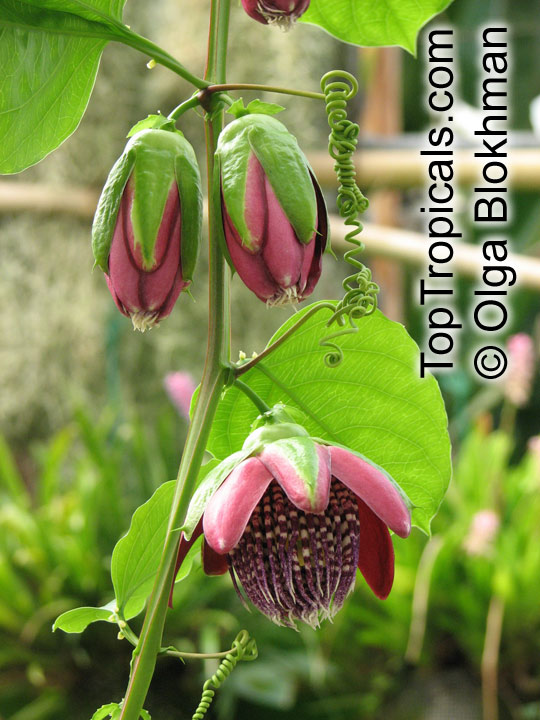
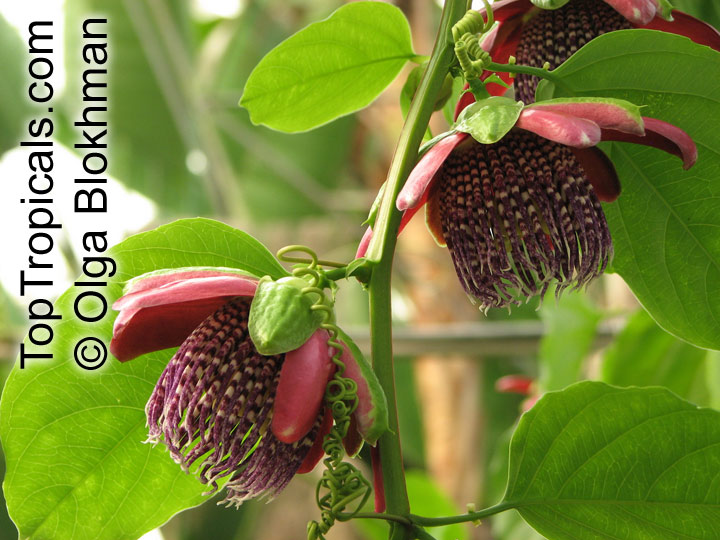
Passiflora alata is a vine or creeper, native to Brazil and widely grown as an ornamental in warm temperate climates. It is best grown in full sun to semi-shade, although it can tolerate light shade in warmer climates. The plant requires regular watering and well-drained soil for best results. The plant will flower and bear fruit better when planted in warm temperatures.
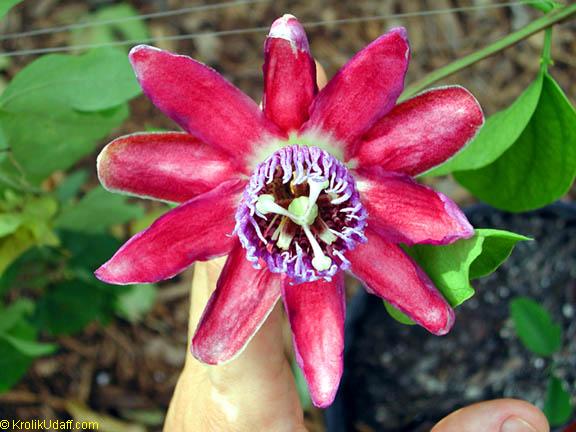
The flowers of Passiflora alata are exceptionally beautiful, with their bright red, crimson and vinous petals, white and purple filaments, and highly fragrant scent. It is not surprising that these flowers attract a lot of butterflies and hummingbirds. The beautiful blooms are soon followed by oval-shaped, yellow to bright orange fruits that are up to 4″ long. The flesh of the fruit is light orange, slightly acidic and very tasty. Passiflora alata fruits are edible and have several health benefits. They are rich in antioxidants and can help reduce inflammation.
It is possible to grow Passiflora alata in cooler climates, provided that the plant is protected over winter and is planted in a pot. For pot-grown plant, mulch will be beneficial to keep the soil warm. In pots, the plant may produce fewer fruits than when planted in a warm and sunny spot. However, when it fruits, each plant can yield an abundant harvest of up to 50 fruits per season. The fruits are rich in Vitamins A, B and C and can be consumed fresh or used to make jams or jellies.
Botanical names: Leea indica, Leea sambucina, Leea umbraculifera, Staphylea indica
Common name: Bandicoot Berry
Family: Vitaceae (Formerly:Leeaceae)
Origin: Southeast Asia, India


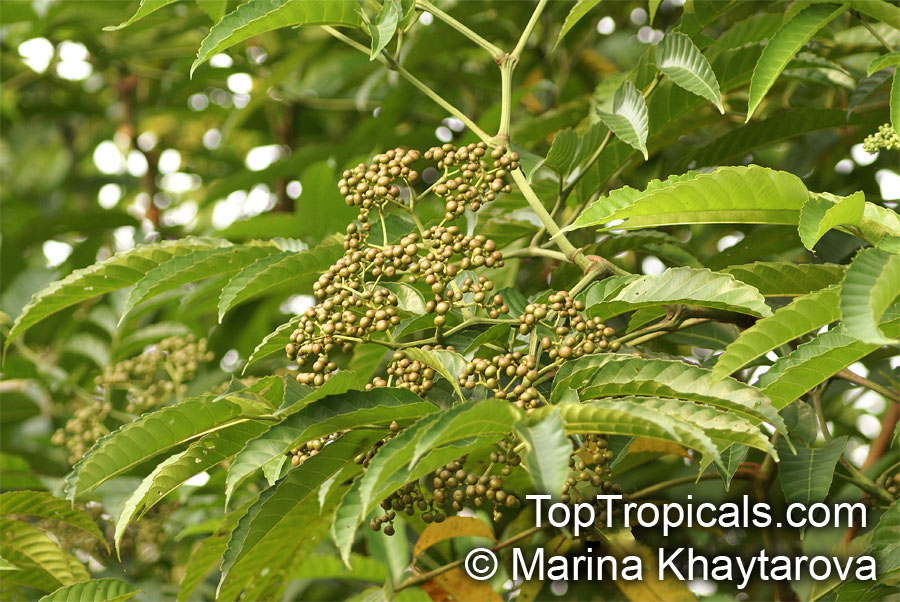
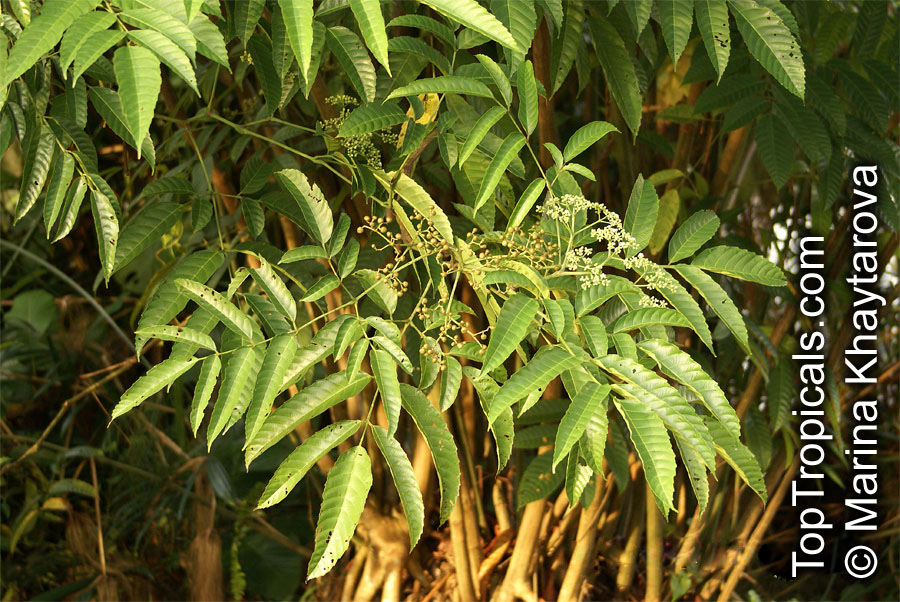
The small greenish-white to cream flowers are borne in cymes to about 20 cm across, these are followed by a black ovoid berry with 4-5 seeds.
Botanical names: Synsepalum dulcificum, Richardella dulcifica
Common name: Miracle Fruit
Family: Sapotaceae
Origin: Ghana
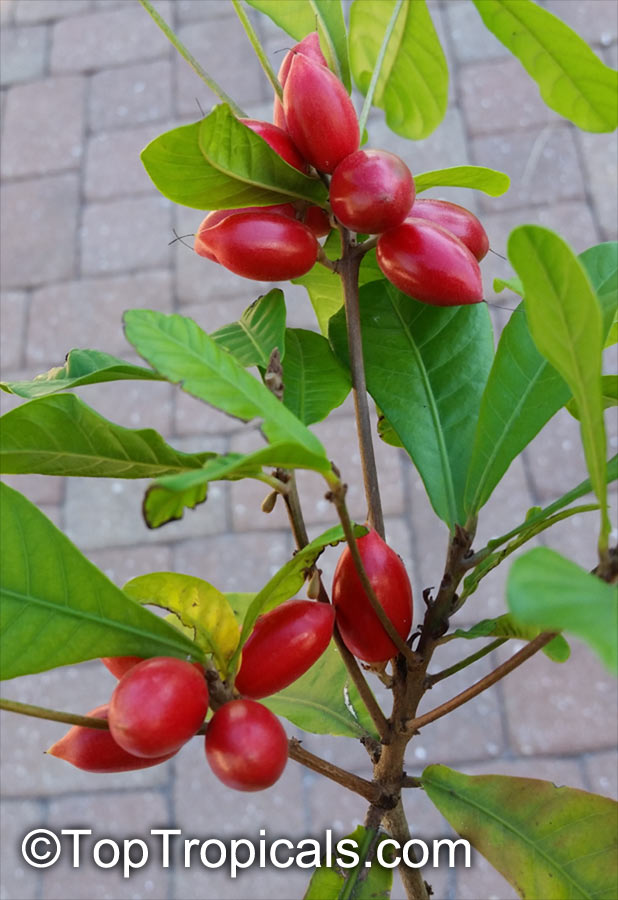
This is an oval to pyramidal shaped bush. Simple, alternate 3-5 leaves clustered at branch tips. At maturity it will reach seven feet. Inconspicuous, brown 1/2 in flowers. Red, 1 in football-shaped fruit, sweet, pleasant tasting. It fruits when only 1 ft tall. Miracle fruit produces small red fruits several times each year. The "miracle" is that if lemon or other sour fruit is eaten after the miracle fruit, the sour fruit tastes sweet. A natural chemical in the fruit masks the tongue's sour taste buds so that lemons taste like lemonade or lemon pie, or lemon candy. The fruit has a unique glyco protein that inhibits tastebuds' perception of sour taste for half an hour to a couple of hours. Enhances flavor of grapefruit, strawberries, and makes beer taste like a malta soft drink. Has been used as an appetite stimulant for persons taking chemotherapy medicines. Freezes whole for preservation. Prefers acid soil such as Canadian Peat Moss, minor nutrients. Seed to fruit in 2 to 5 years. Flower to fruit in 30 to 45 days The sweet sensation lasts from 20 minutes to 4 hours. Miracle fruit must have acid soil, is frost sensitive, and requires partial shade. It is an excellent choice for a containerized tree, which gives it the added benefit of mobility. Fill a container with a 50:50 mix of peat moss and perlite; this combination will create an acidic environment with good drainage.
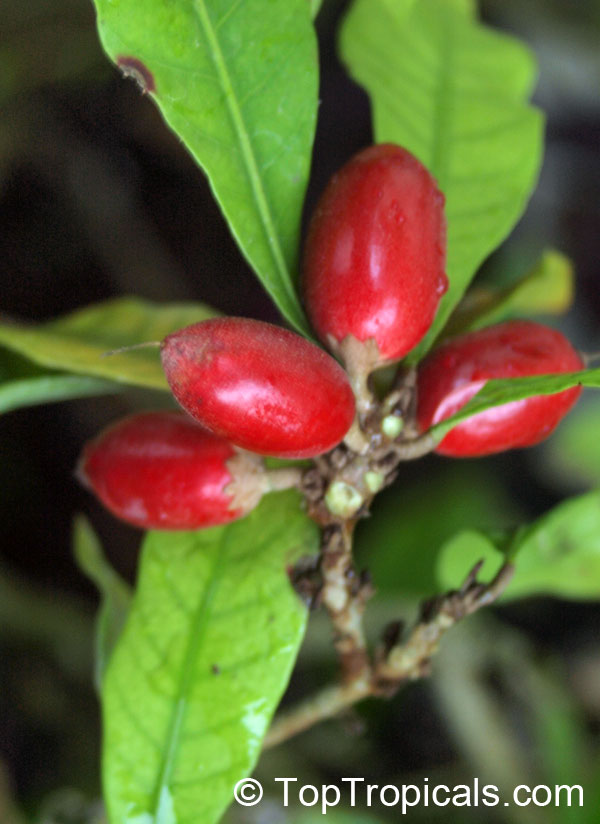

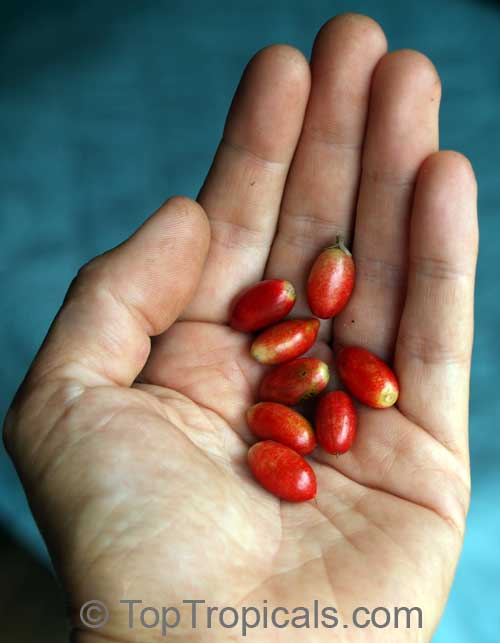
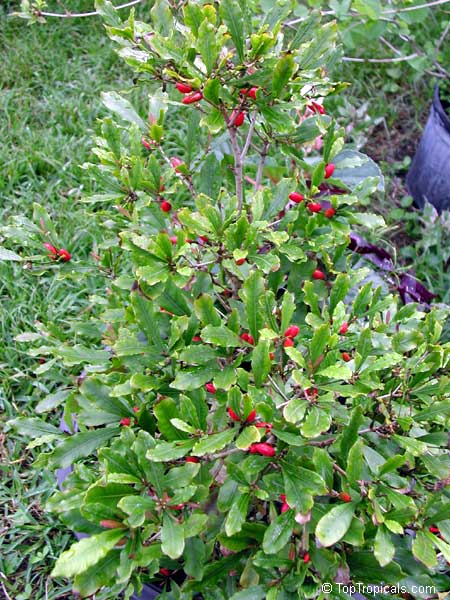
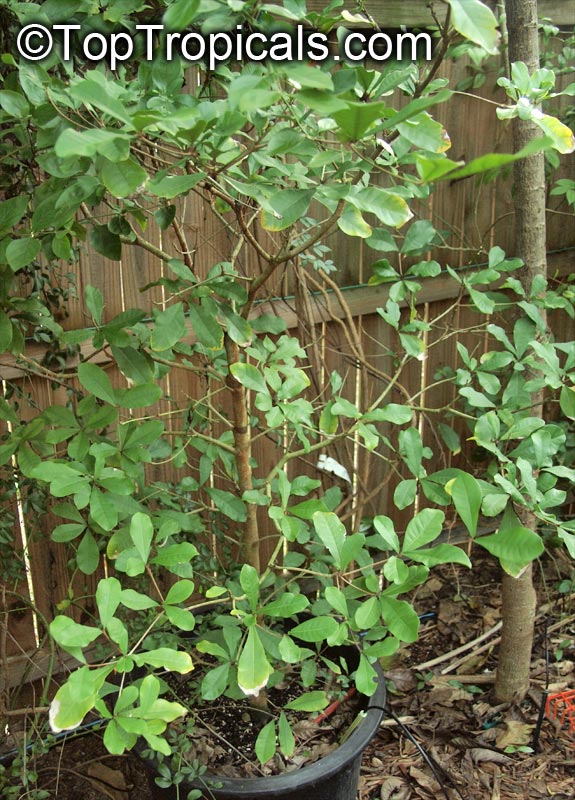
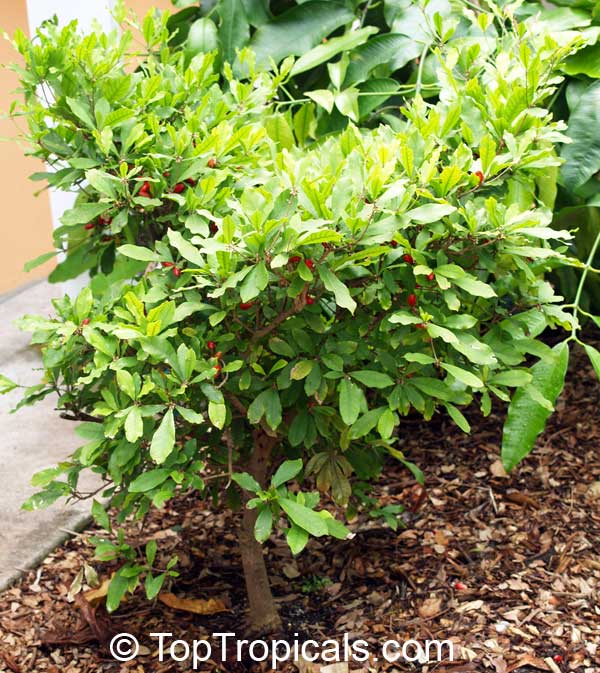
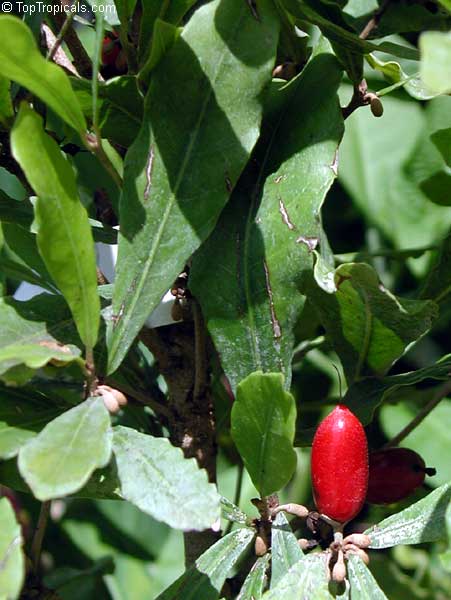
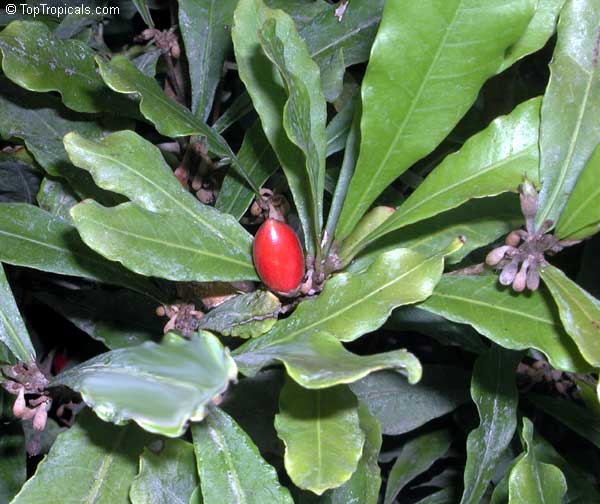
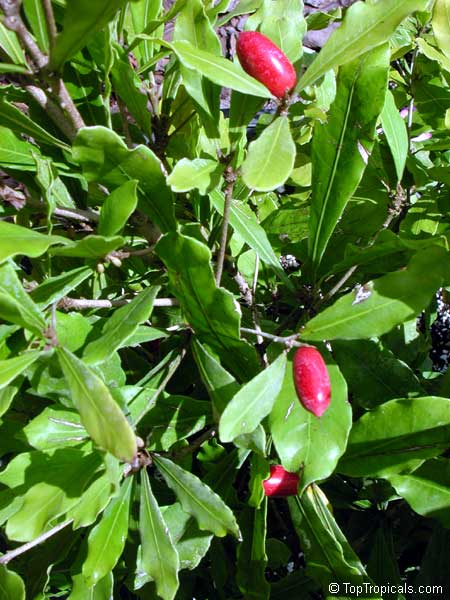
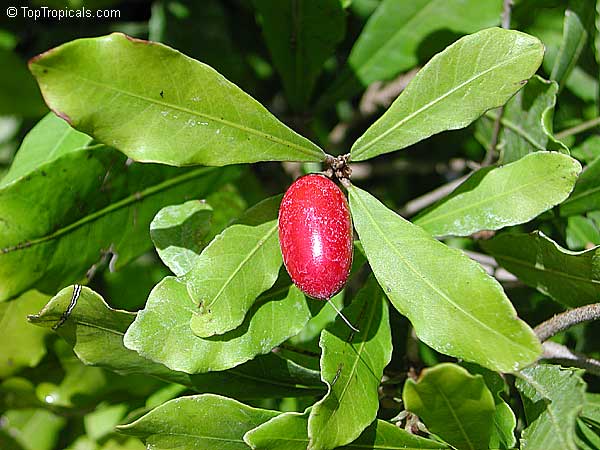
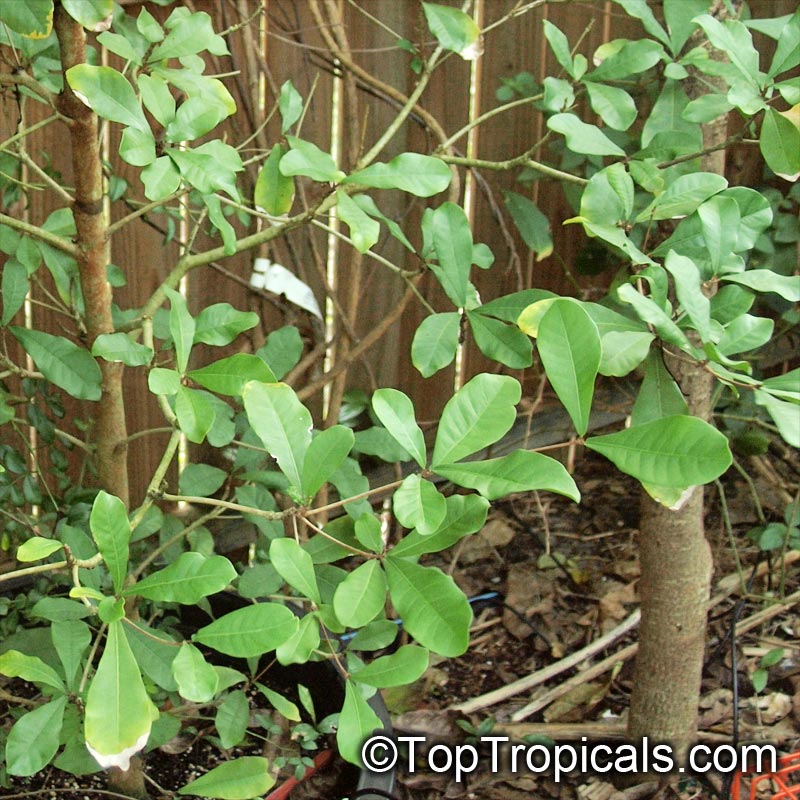
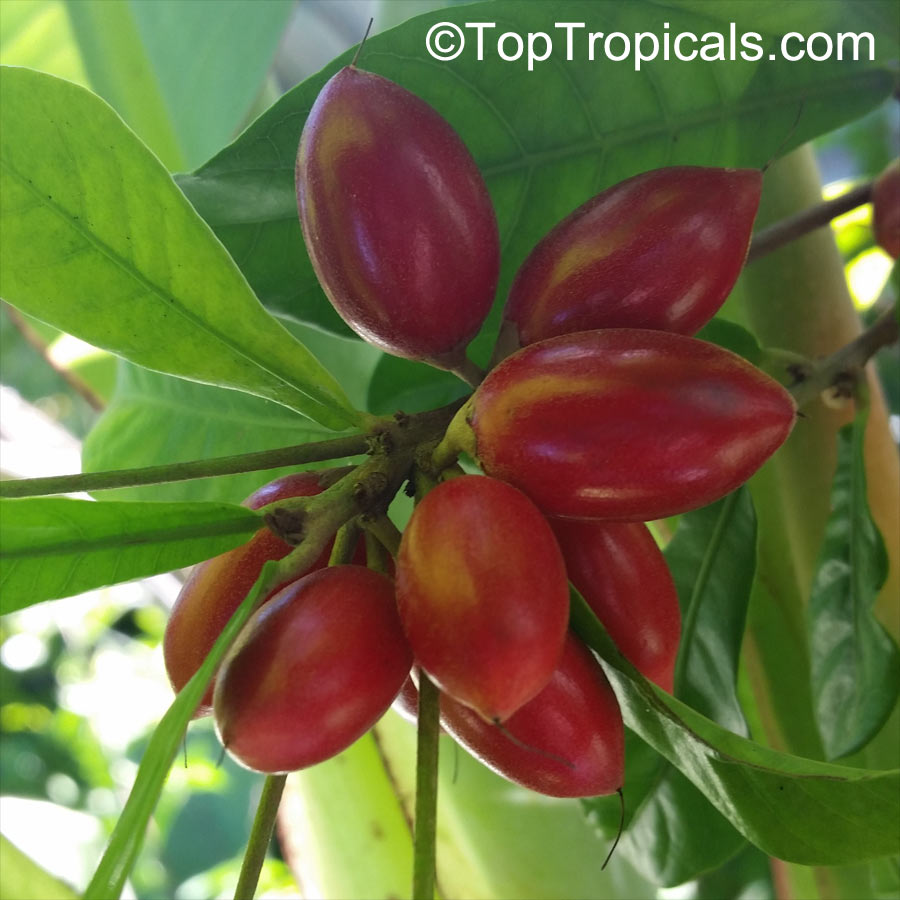
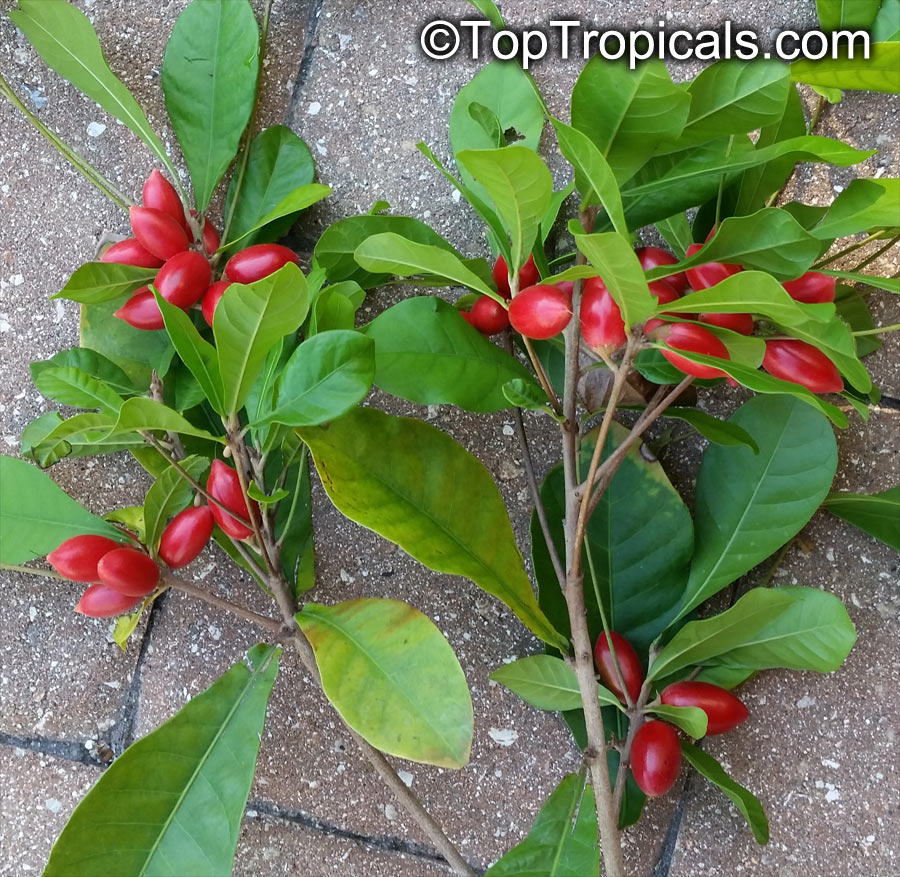
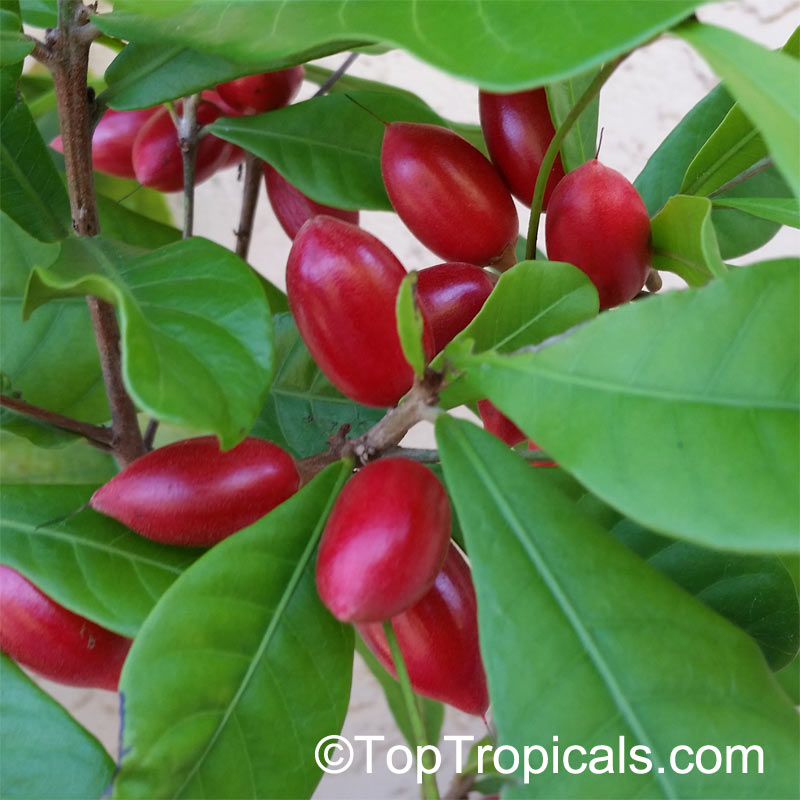
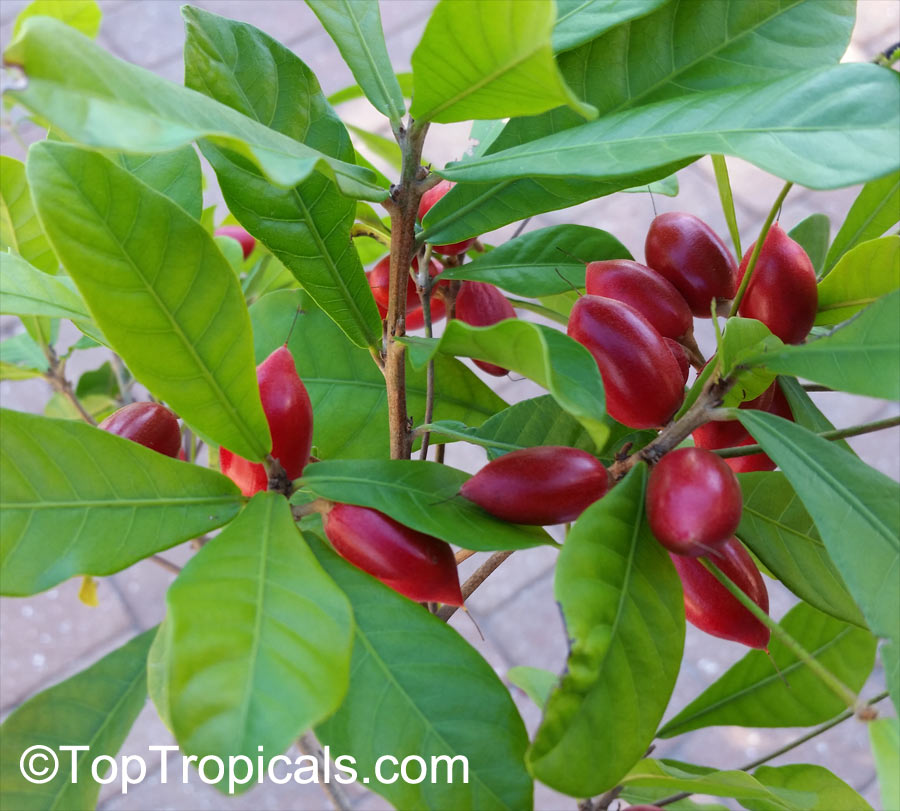
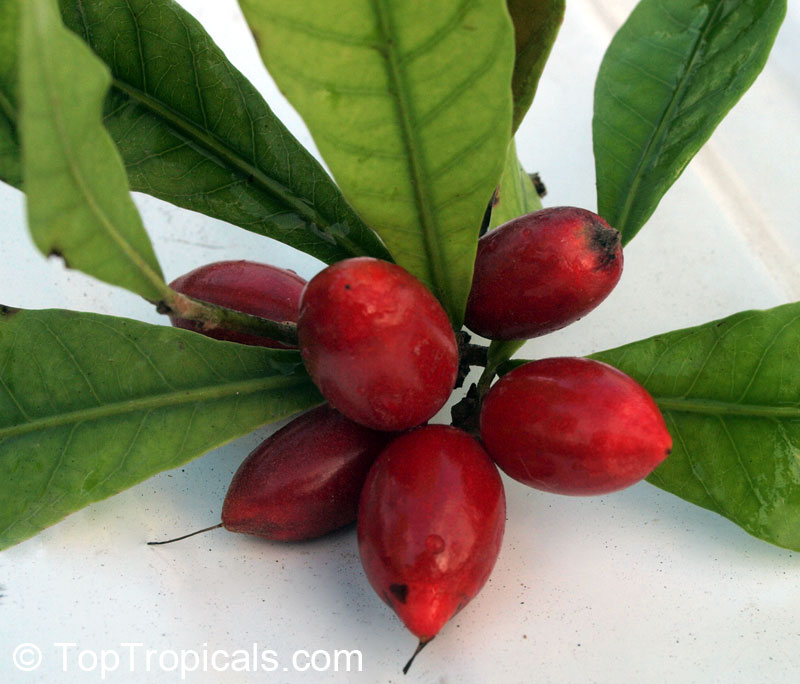
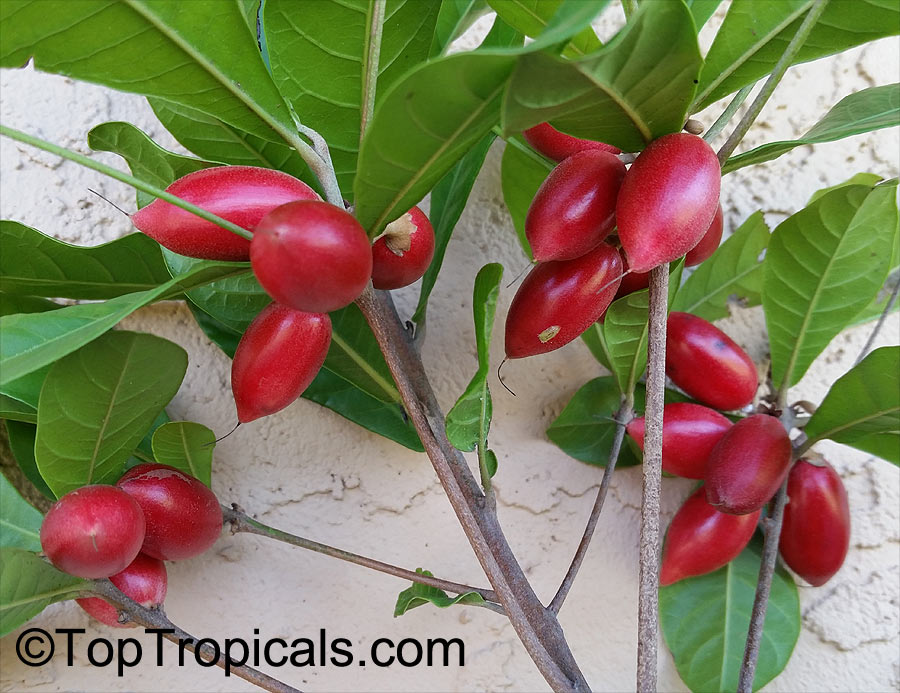
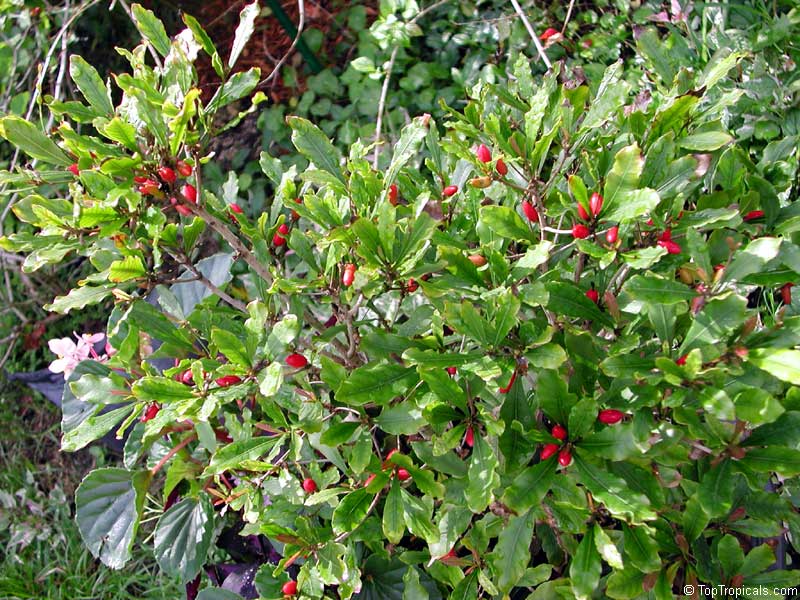
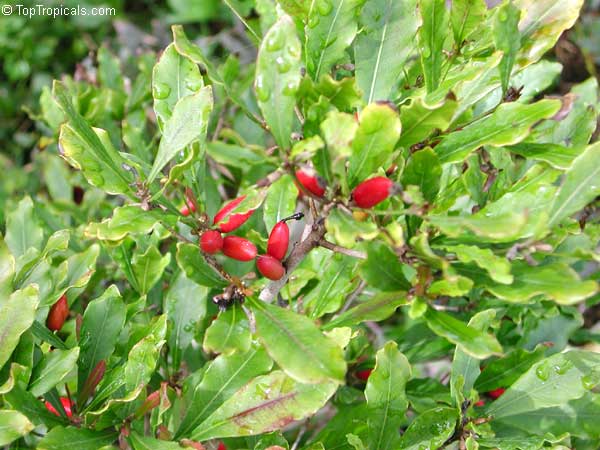
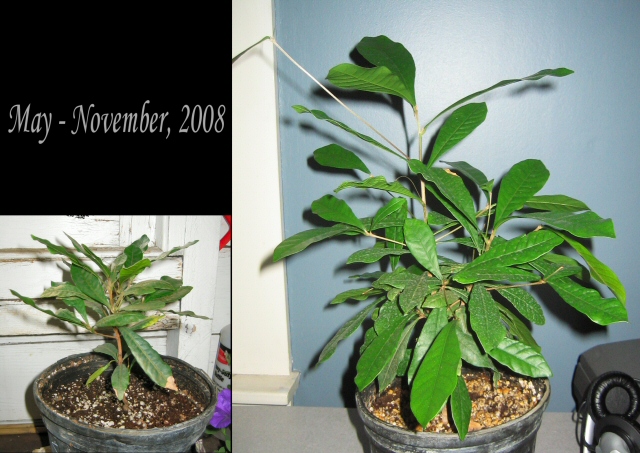
It is one of the strangest tropical fruits. The miracle is that if lemon or other sour food is eaten after the miracle fruit, the sour tastes sweet, as if sugar has been added. A natural chemical in the fruit masks the tongue sour taste buds so that lemons taste like lemonade or lemon pie, or lemon candy. The sweet sensation lasts for half an hour to a few hours.
See Article about this plant.
See Growing instructions for this plant
Recommended Fertilizer: SUNSHINE C-Cibus - Crop Nutrition Booster
SUNSHINE-Honey - sugar booster
 SUNSHINE C-Cibus (NPK 2-2-4) - Crop Booster for every watering.
  SUNSHINE C-Cibus (NPK 2-2-4) - Crop Booster for every watering.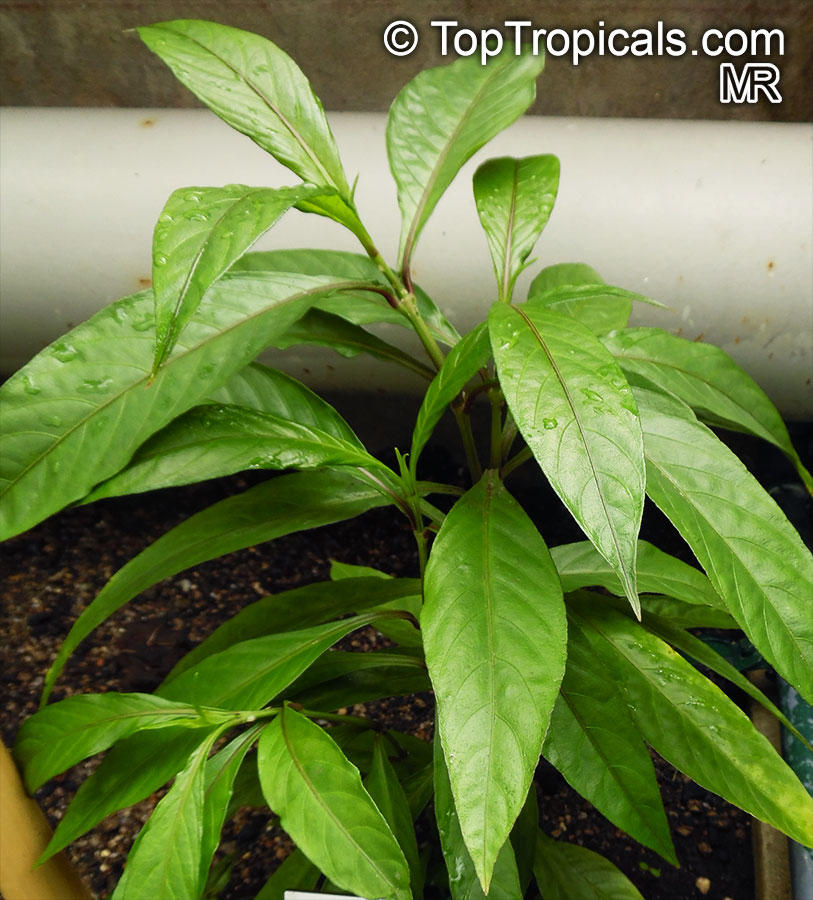
Botanical names: Justicia moritziana, Amphiscopia lancifolia var. minor
Common name: Justicia
Family: Acanthaceae
Origin: South America

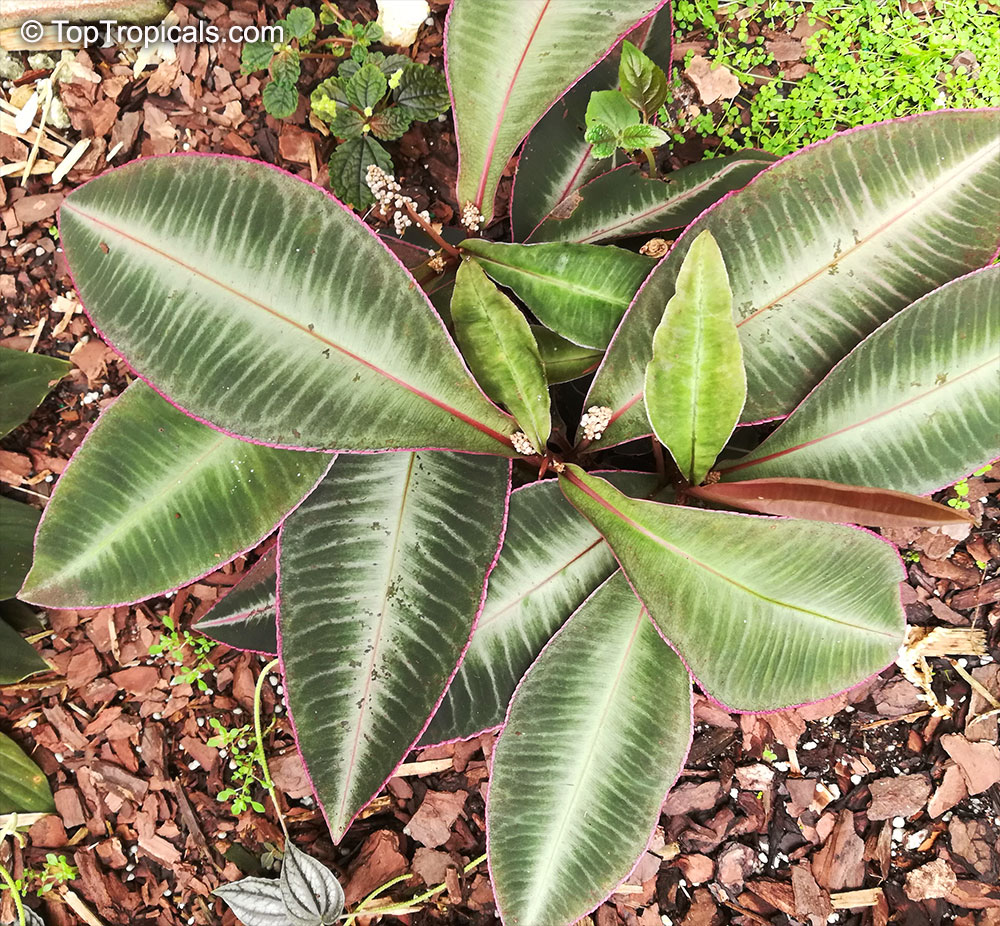
Botanical name: Labisia sp.
Common name: Labisia
Family: Primulaceae (Formerly:Myrsinaceae)
Subfamily: Myrsinoideae
Origin: Malesia

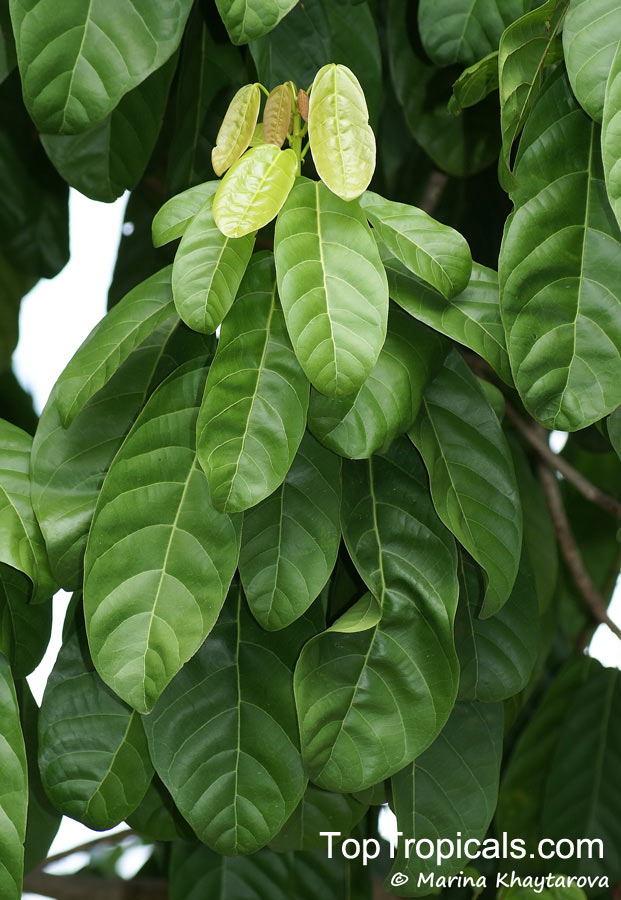
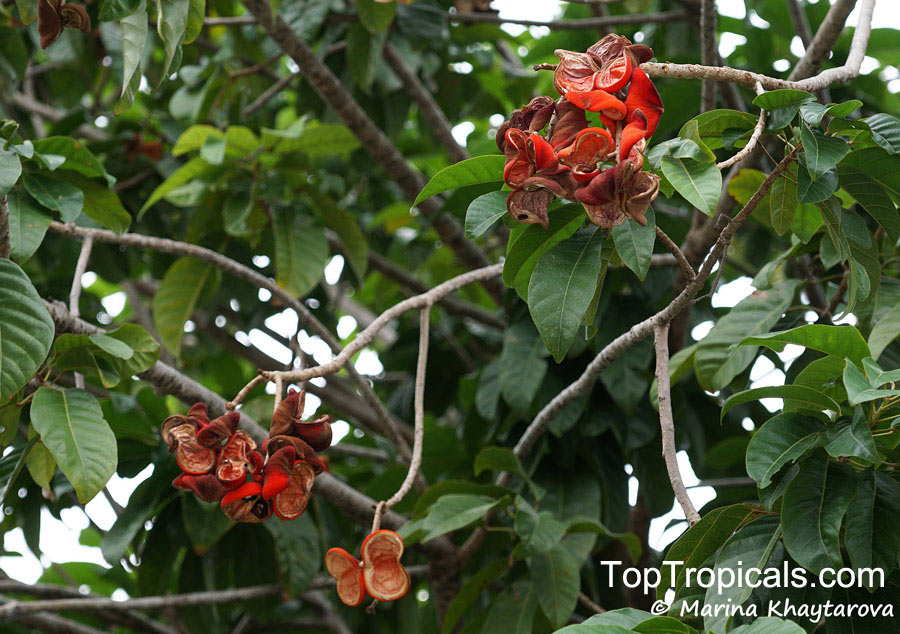
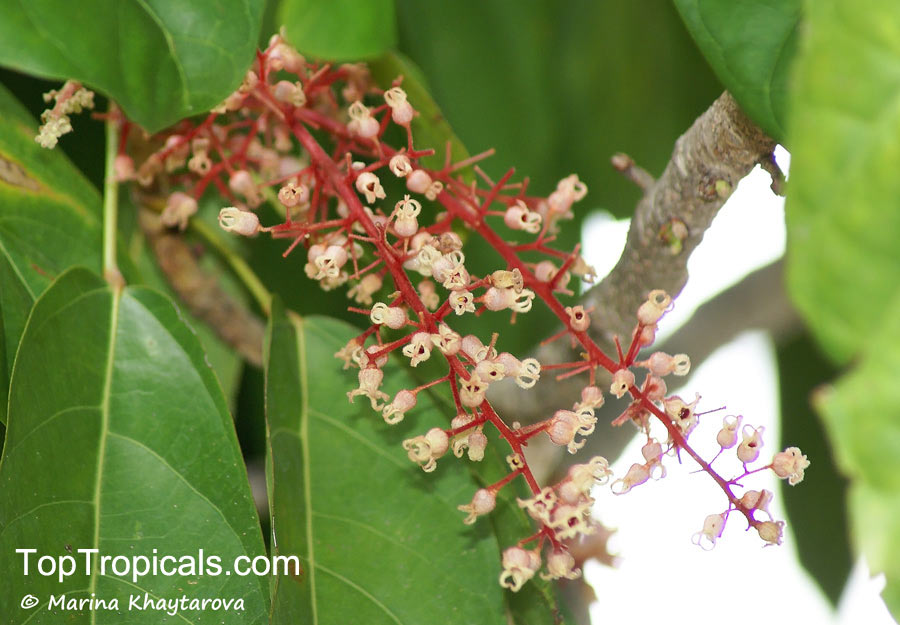
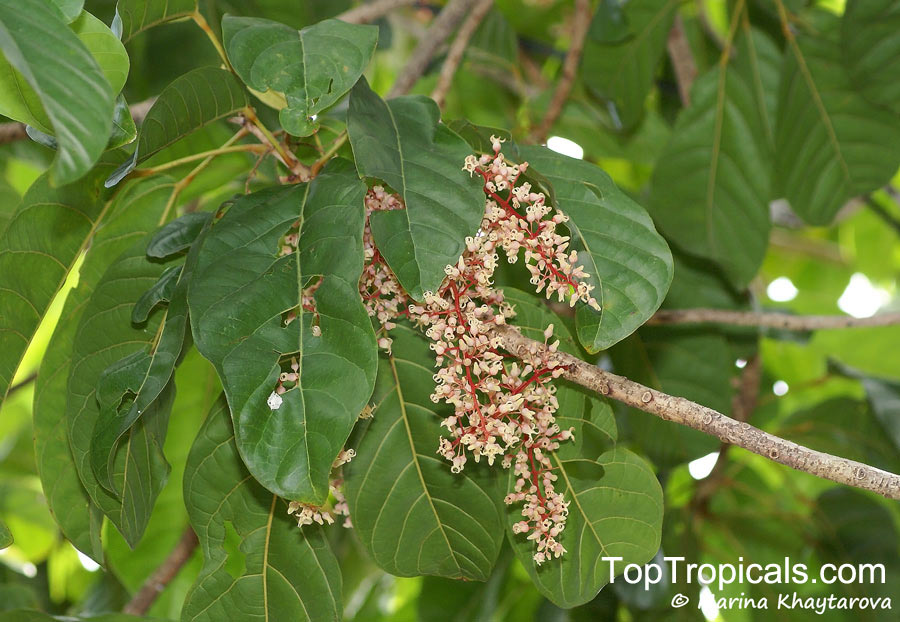
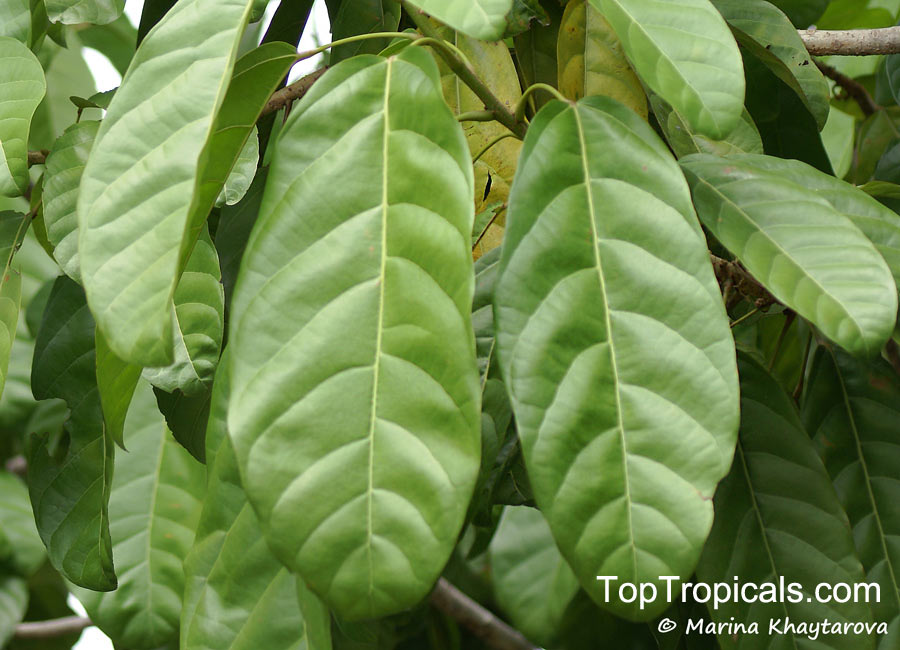
Botanical name: Sterculia oblongata
Common name: Kelumpang
Family: Malvaceae
Subfamily: Sterculioideae
Origin: Southeast Asia


The seeds are edible after boiling.
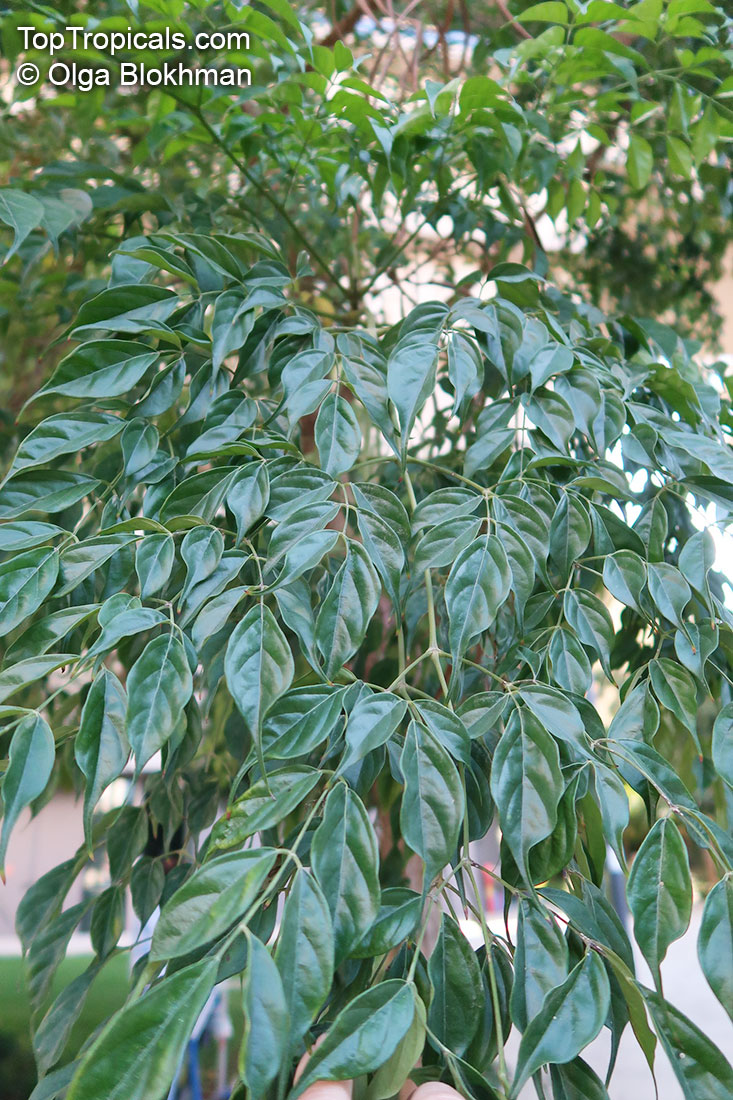
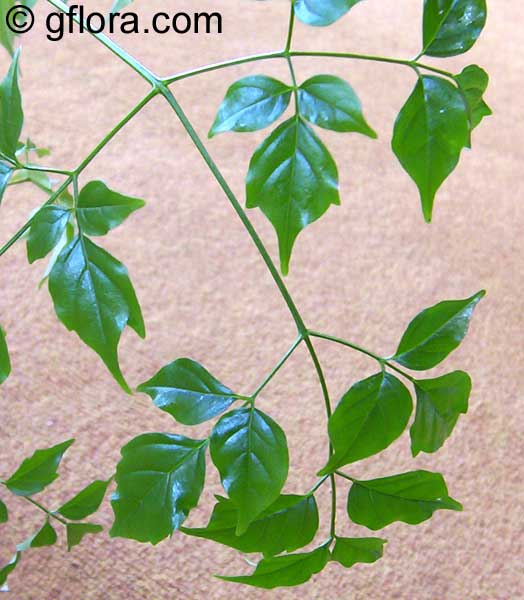
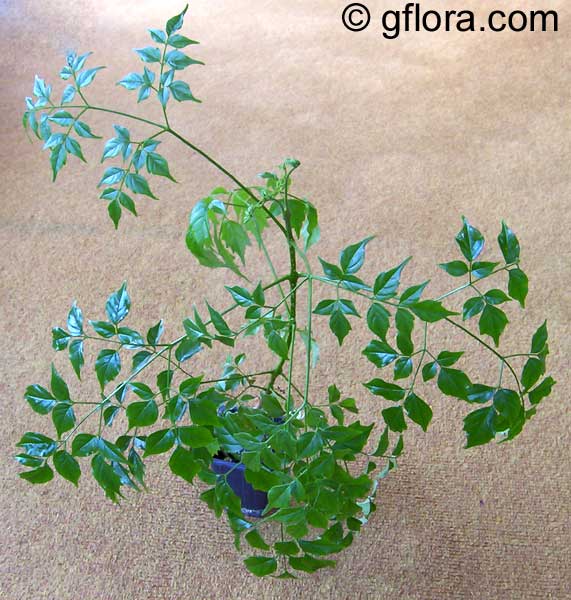
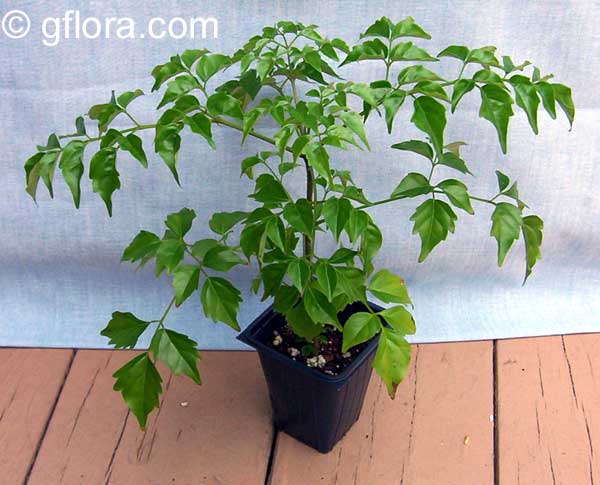
Botanical names: Radermachera sinica, Stereospermum sinicum
Common names: China Doll, Serpent Tree, Crystal Doll
Family: Bignoniaceae
Origin: South of China and Taiwan

A popular houseplant, this tree makes a handsome outdoor specimen in mild or cool climates near the coast and has some drought tolerance once established. The large, compound, twice-pinnate leaves are very distinctive. A mature specimen has pure-white or cream long-tubed flowers that are said to be carnation-fragrant. A young plant tends to have a single vertical stem with a leafy crown of bi-pinnate, shiny leaves. As it matures, more branching occurs and there may be several stems from the base. Clean and handsome, the foliage has a subtle sub-tropical look and combines well with other plants of that appearance. The plant is easy to grow. Moist soil with good drainage. Provide bright light, but avoid any direct sun indoors. Prefers warm conditions, minimum 50F in winter. Water moderately, but do not let dry out between waterings. Can tolerate low humidity.
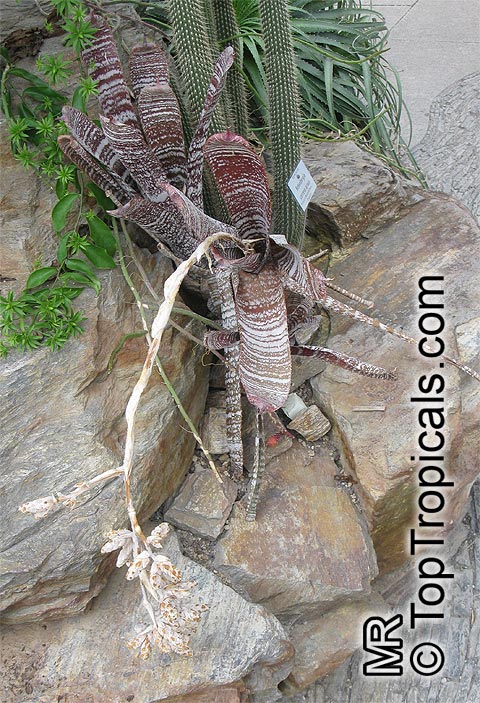
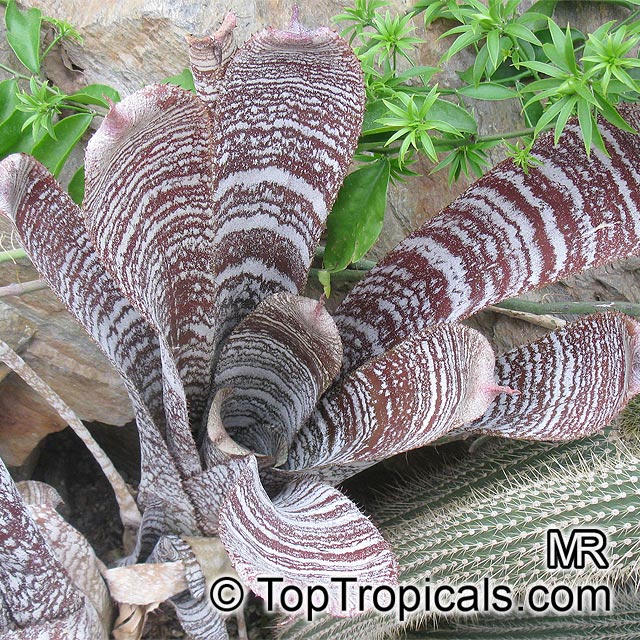
Botanical name: Hohenbergia correia-araujoi
Common name: Hohenbergia
Family: Bromeliaceae
Subfamily: Bromelioideae
Origin: Brazil
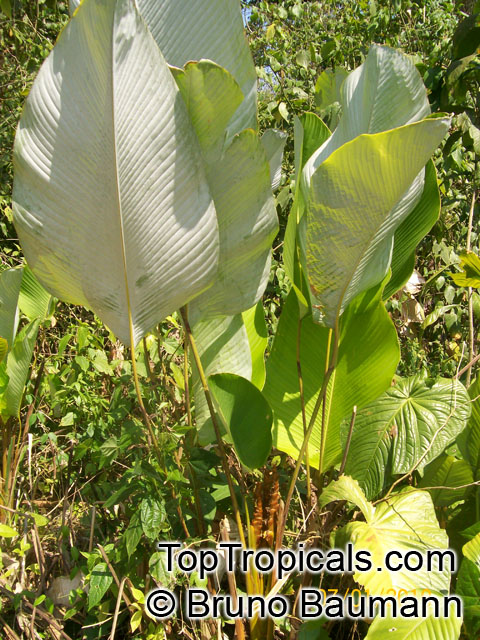
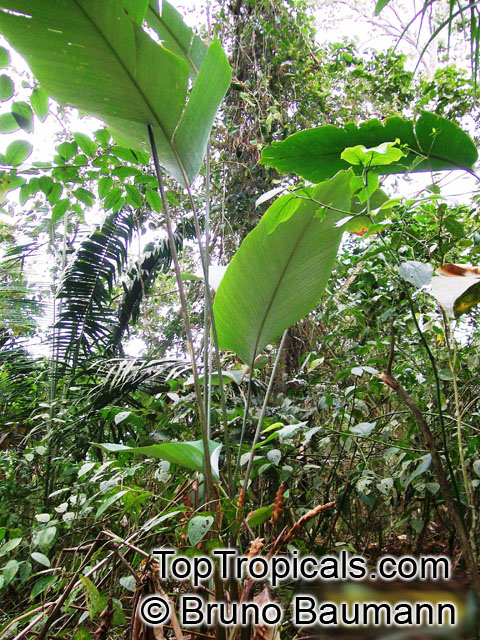
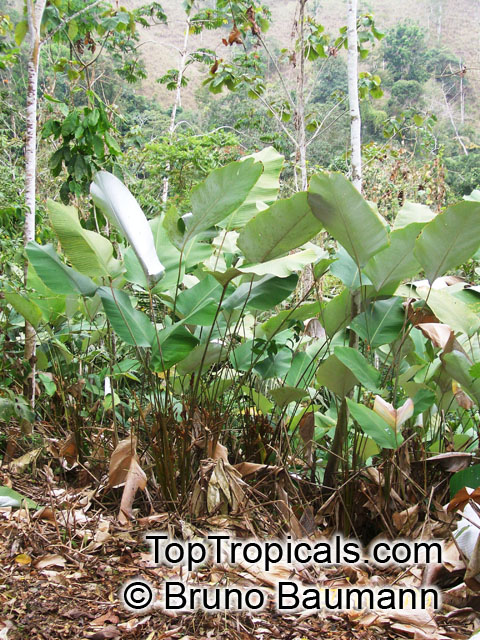
Botanical name: Calathea lutea
Common name: Cigar Calathea
Family: Marantaceae
Origin: Tropical America
Hardiness: 40°F
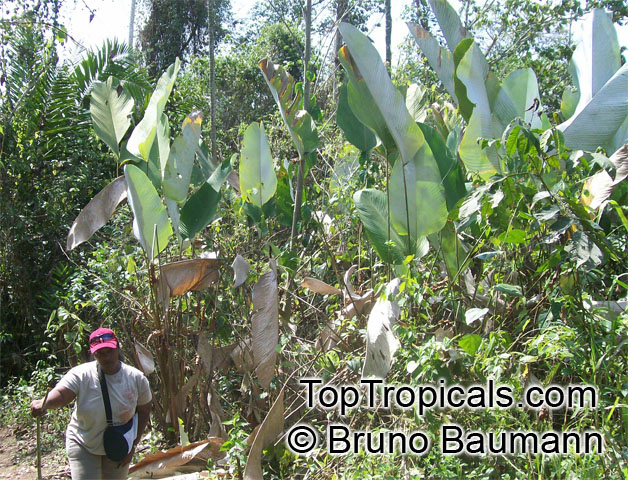
Calathea lutea can grow to a height of 2.5 m and produces cigar-shaped bracts. The paddle-shaped leaves have reflective silver undersides. The most common cultivar found locally produces brownish bracts.
In USDA zones below 10, grow as a houseplant or seasonal container specimen.
| Next | |
Use link to repeat this search:
https://toptropicals.com/cgi-bin/garden_catalog/cat.cgi?search_op=and&keyword_op=and&language=e&number=10&no_change_lang=1
&v1=reg&user=tt&sale=1&first=0