Loquat - Plant Encyclopedia Results
| Number of plants found: 4 |
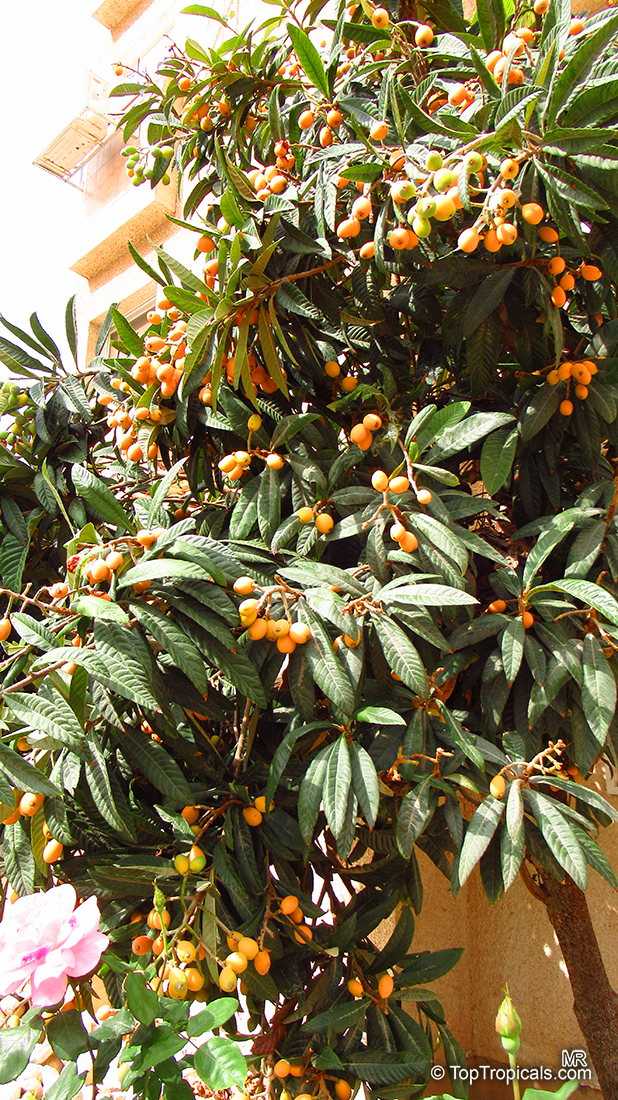
Botanical name: Eriobotrya japonica
Common names: Loquat, Japanese Plum, Nispero
Family: Rosaceae
Origin: China
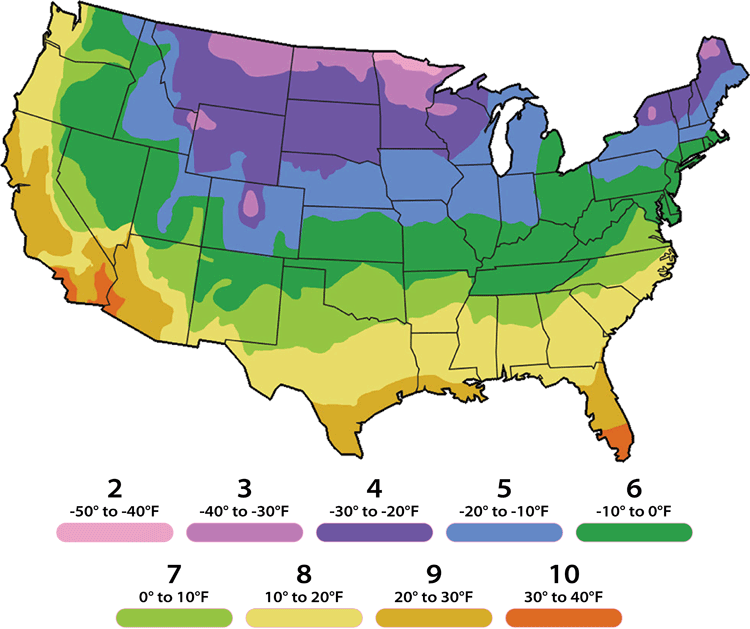
USDA Zone: 8-11
Cold tolerance: 25°F


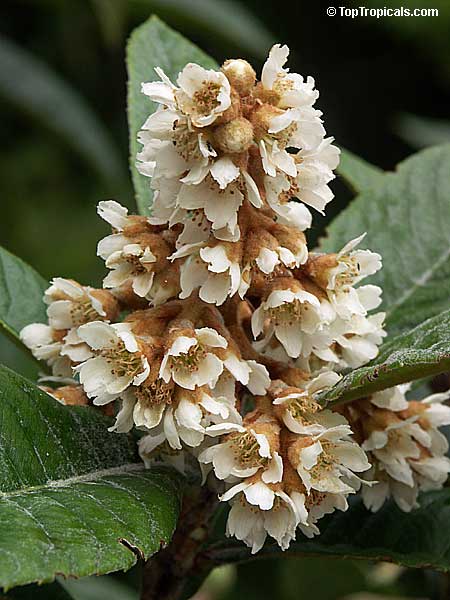
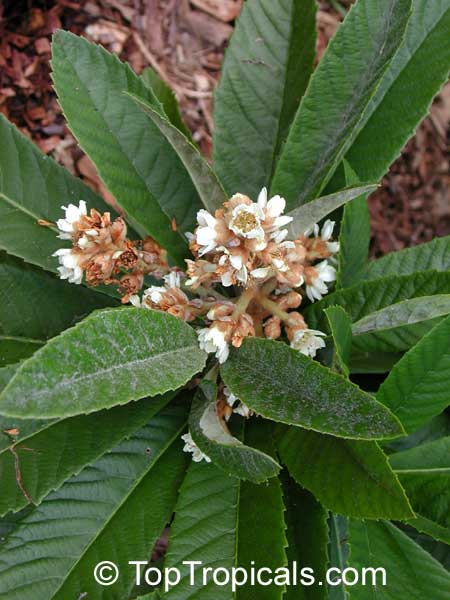
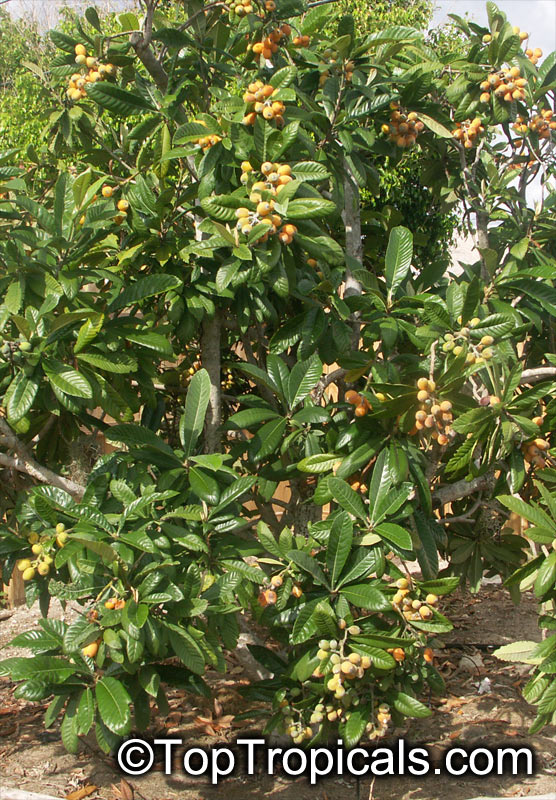
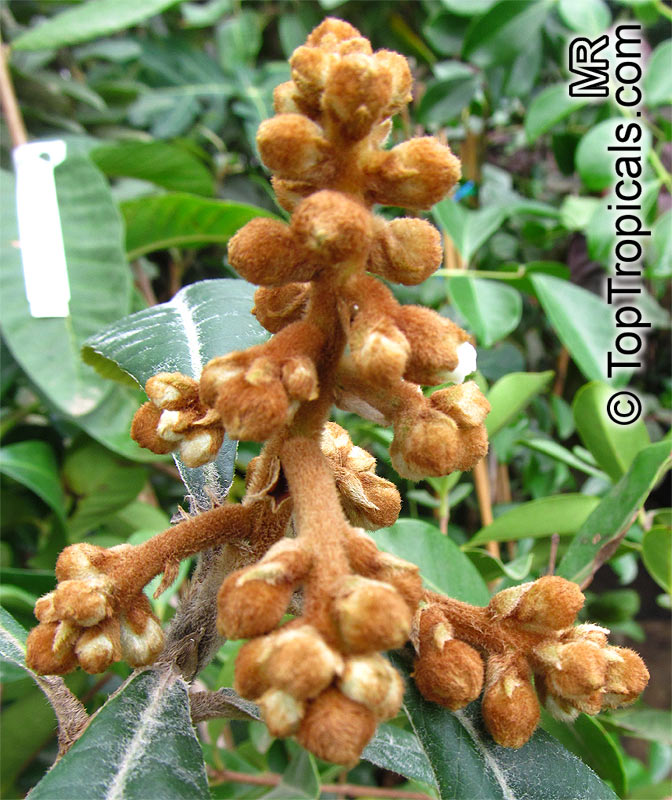
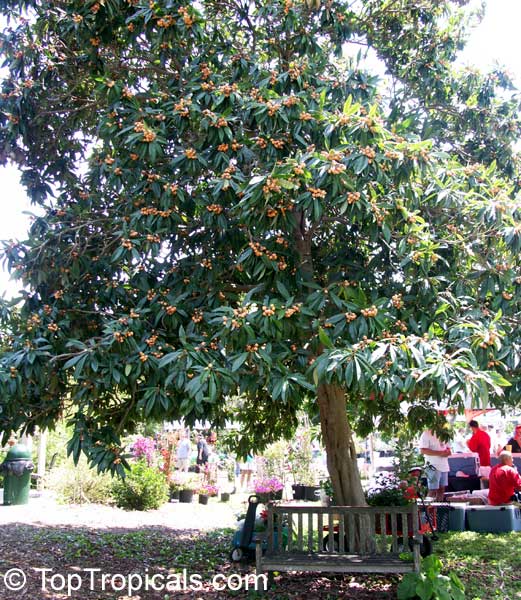
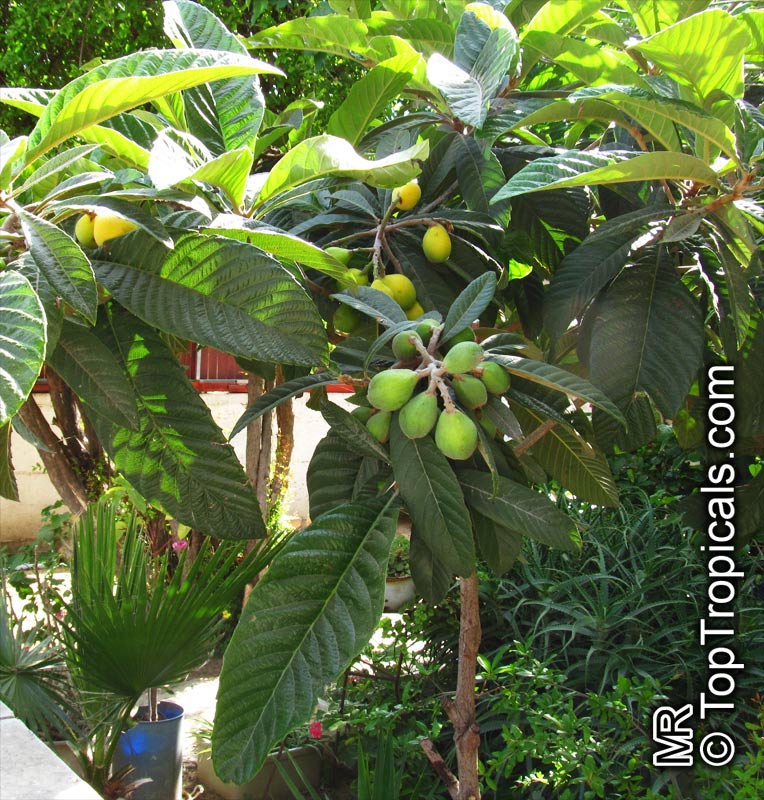
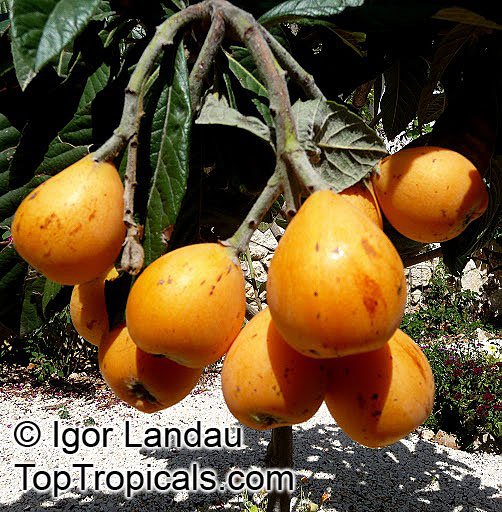
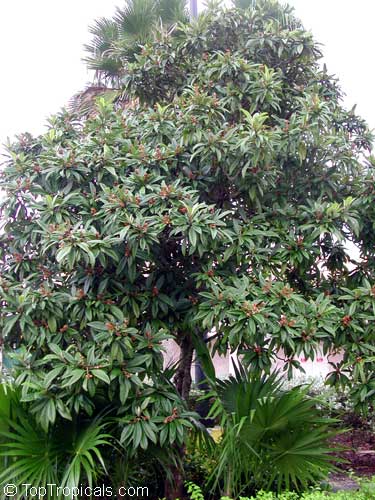
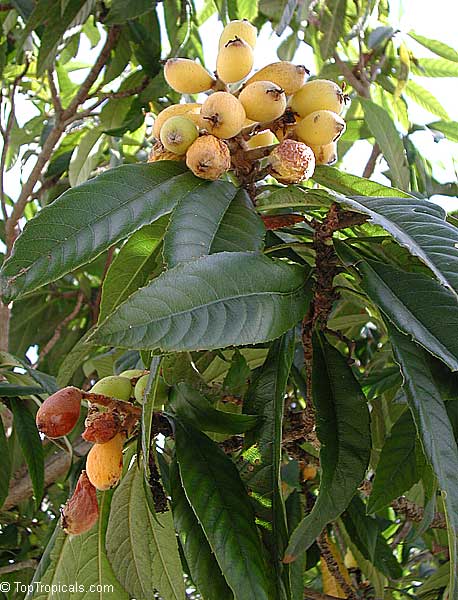
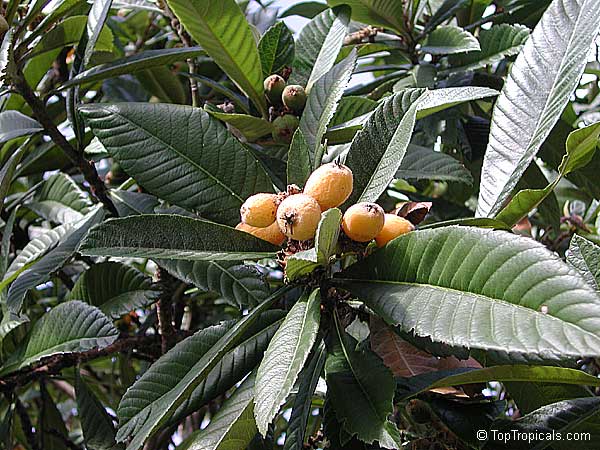
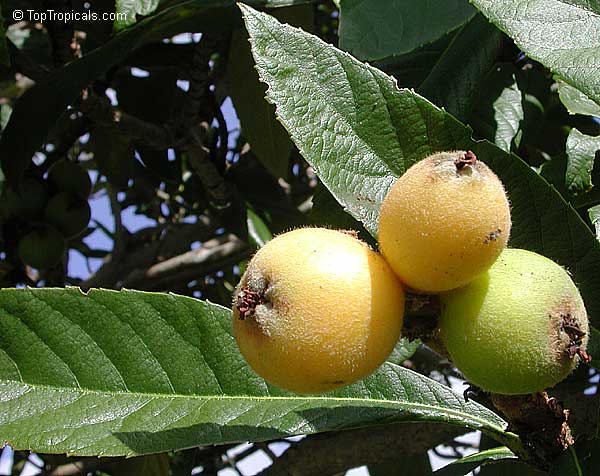
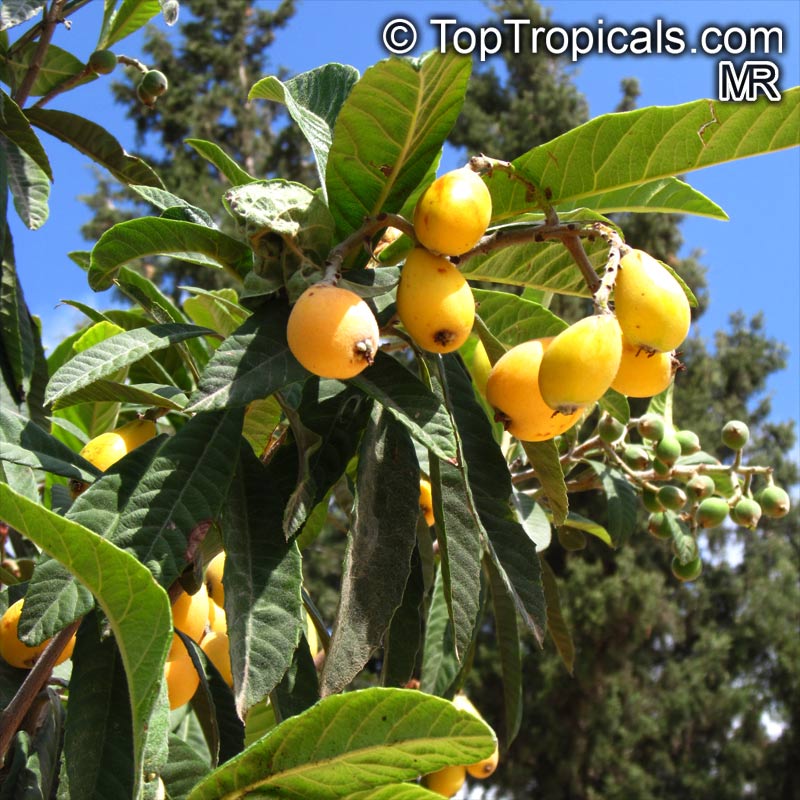
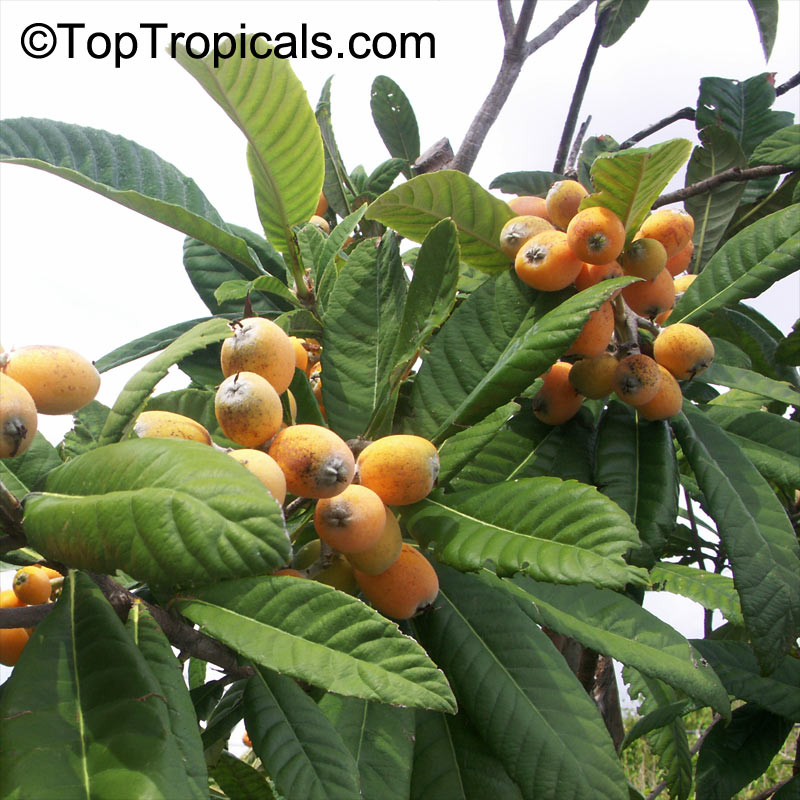
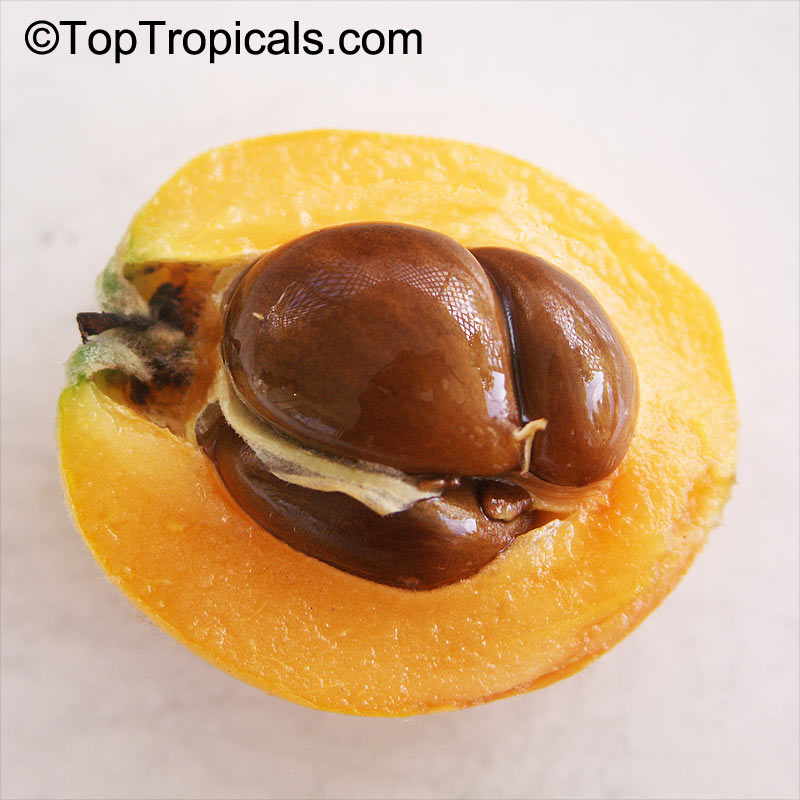
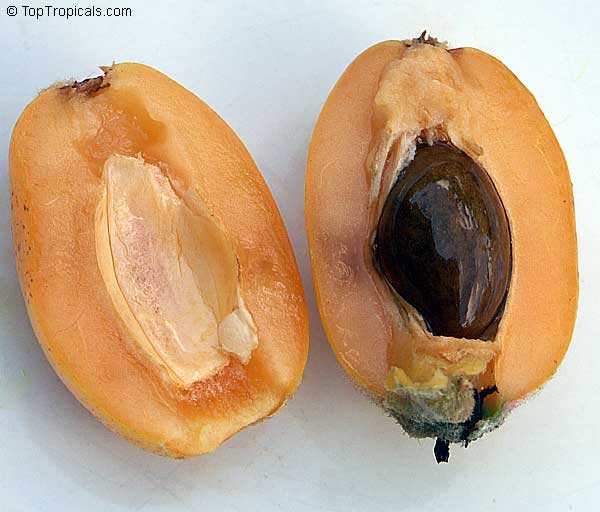
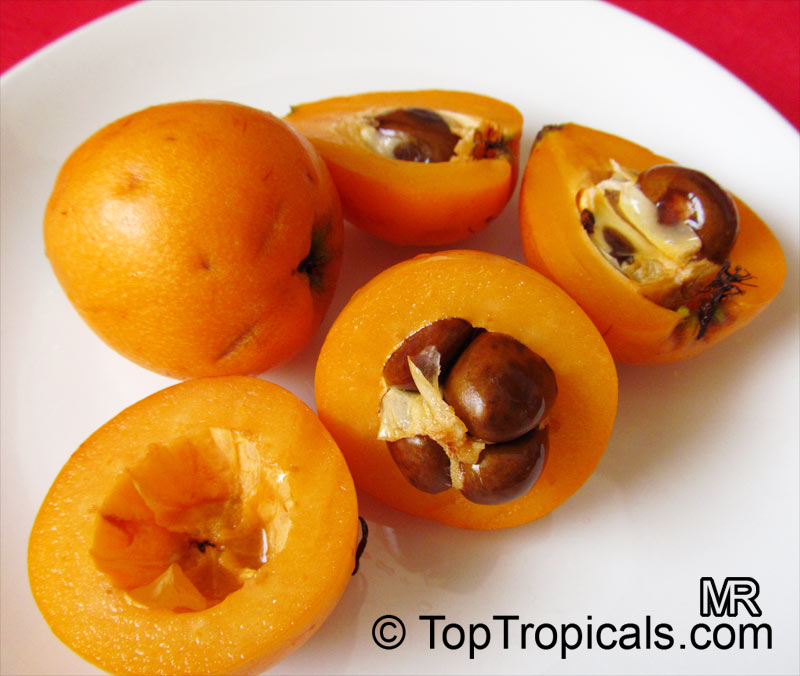
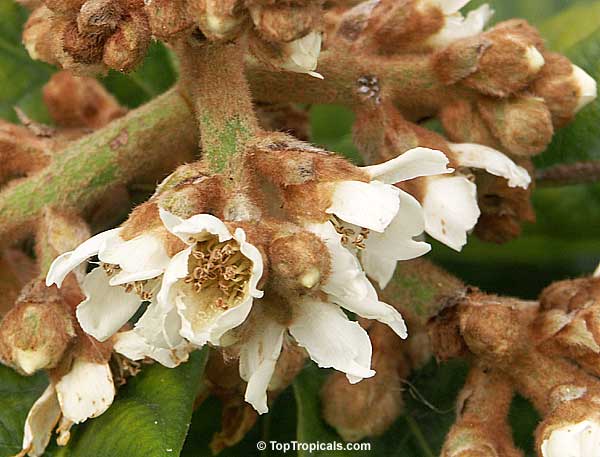
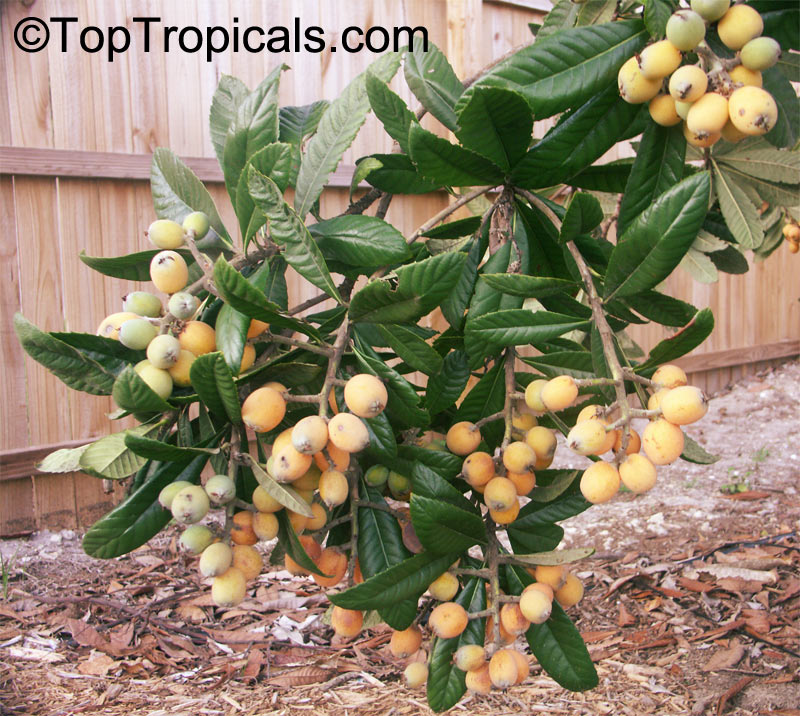
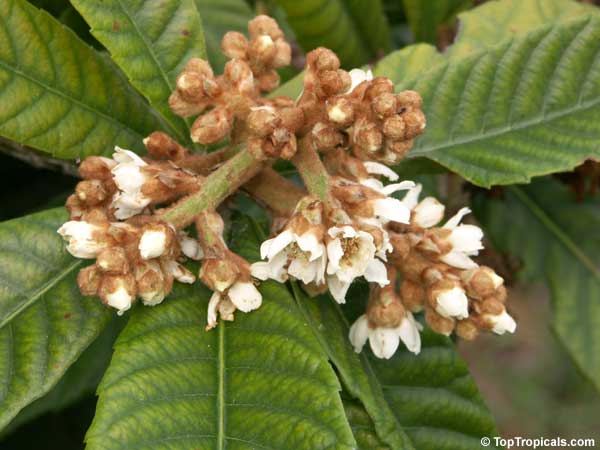
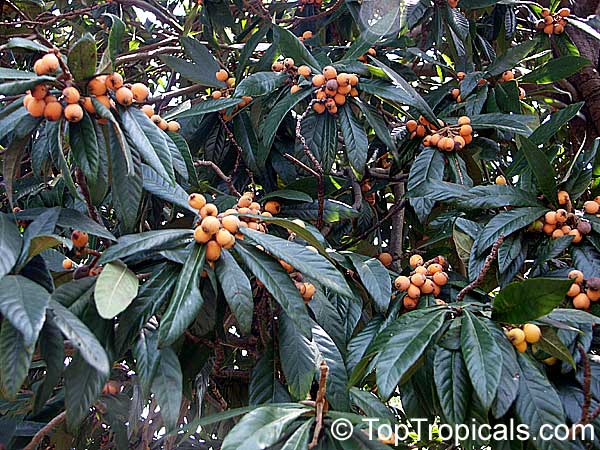
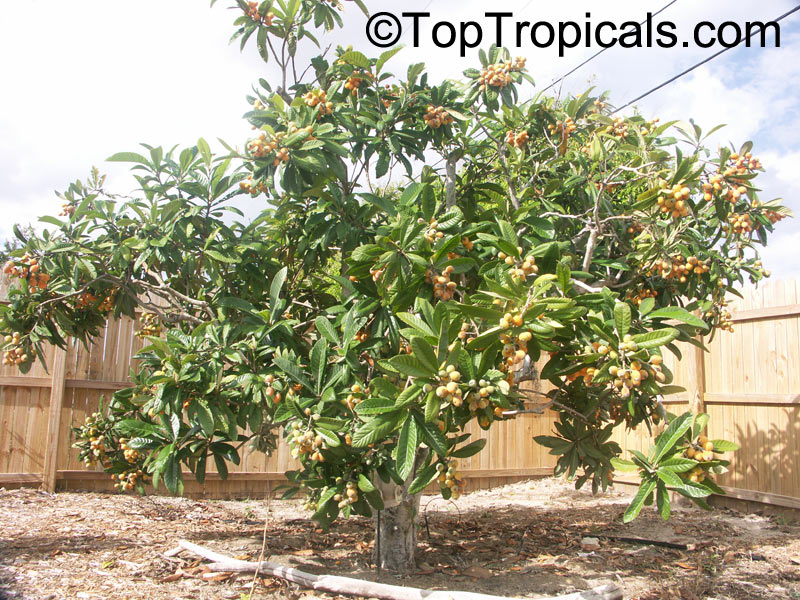
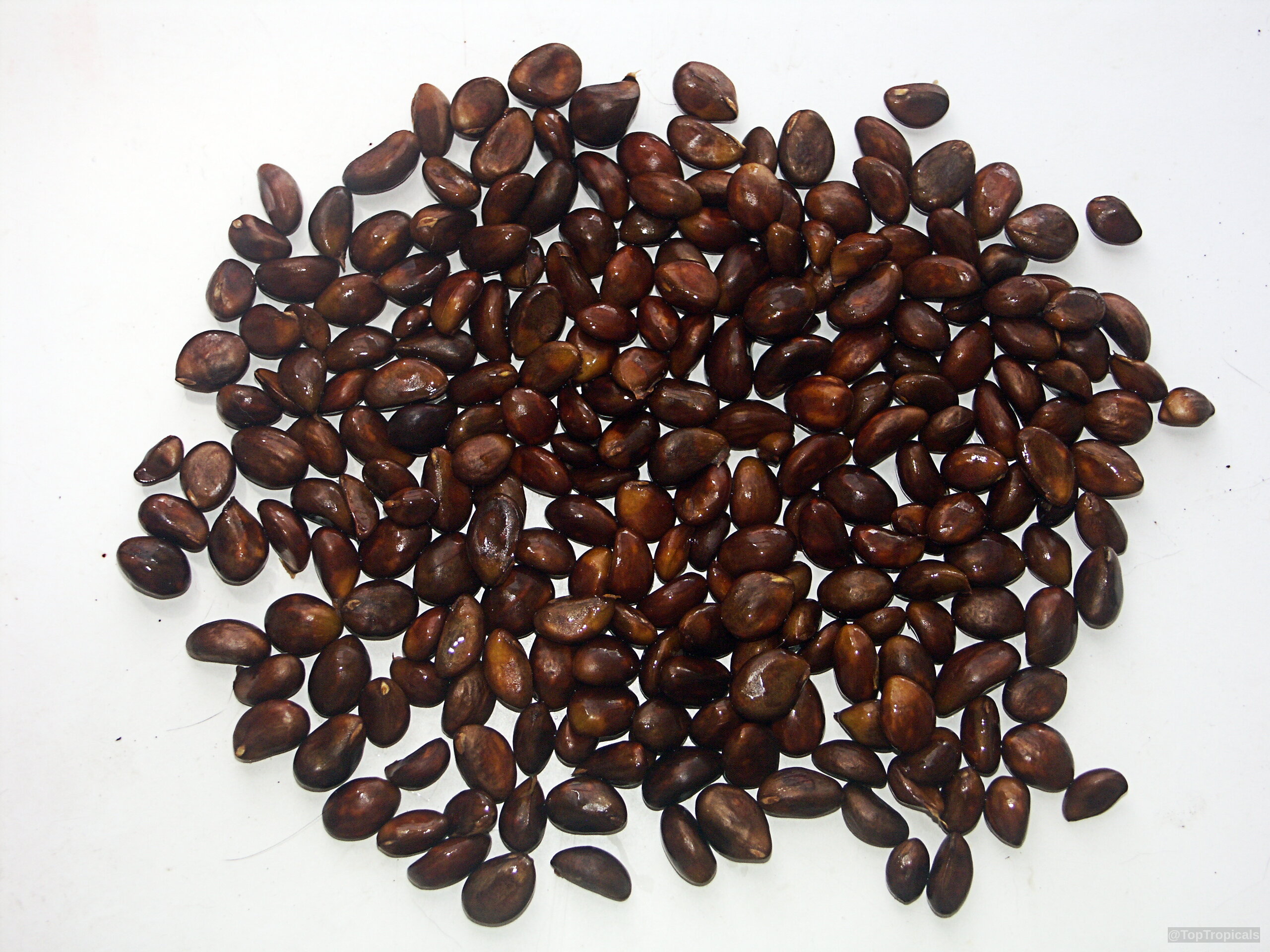
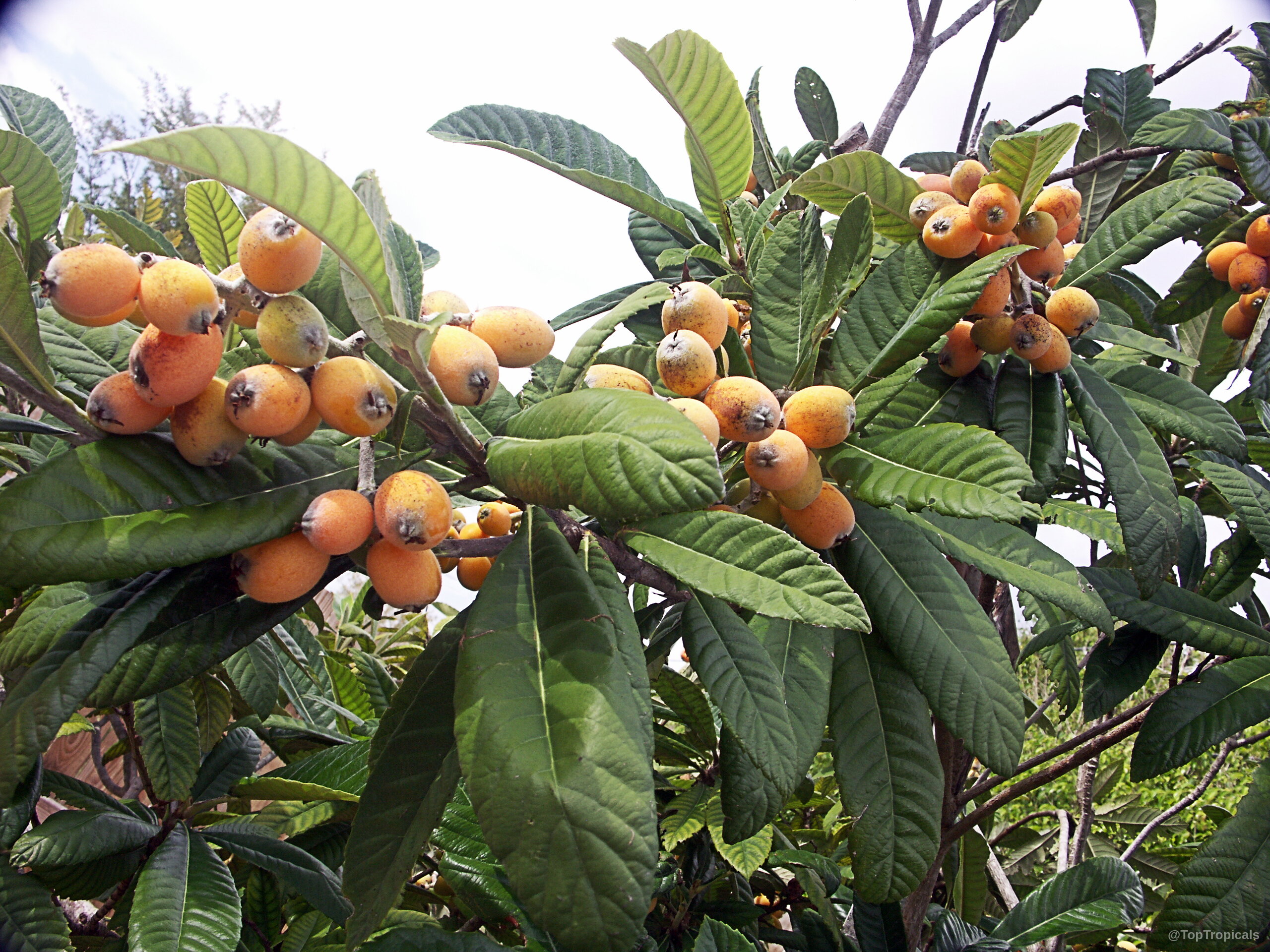
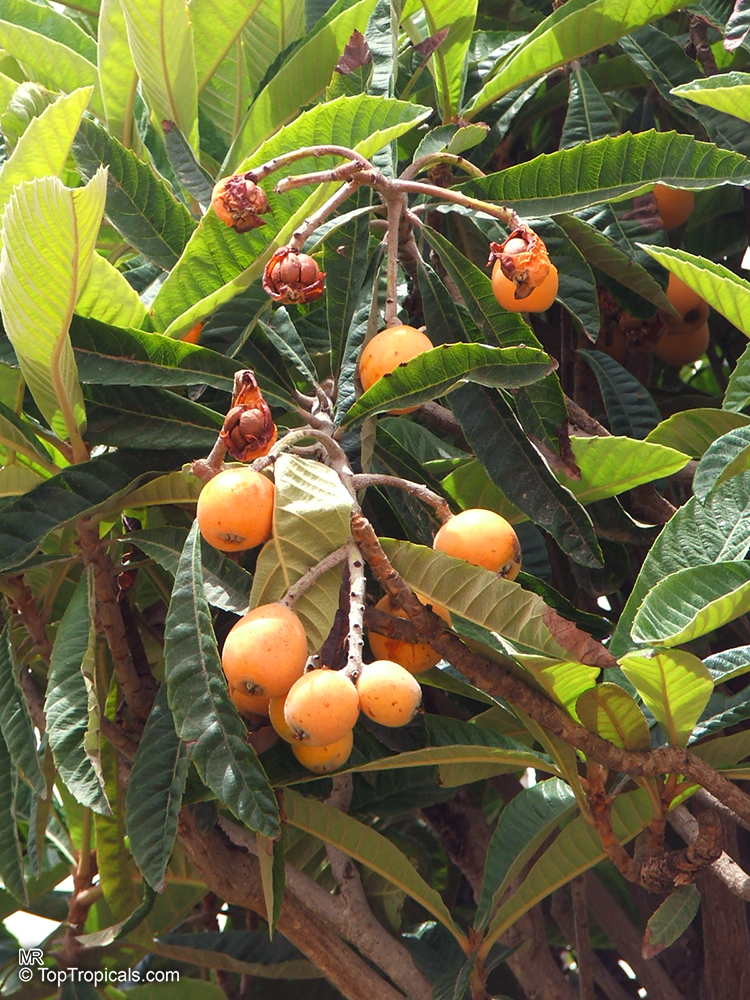
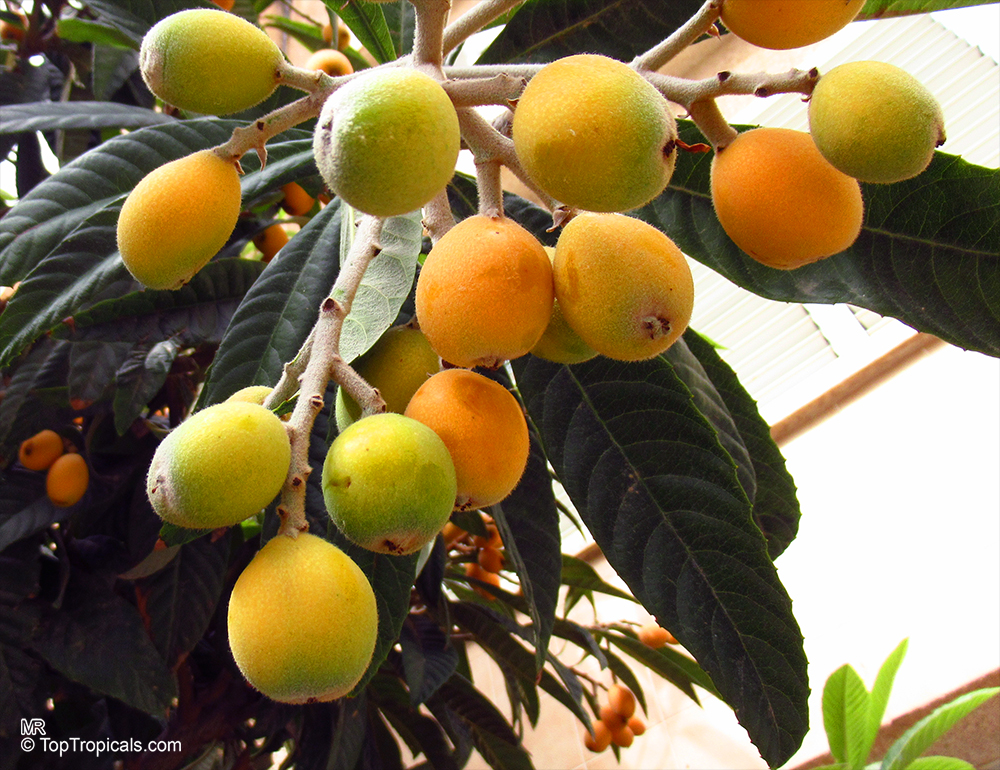
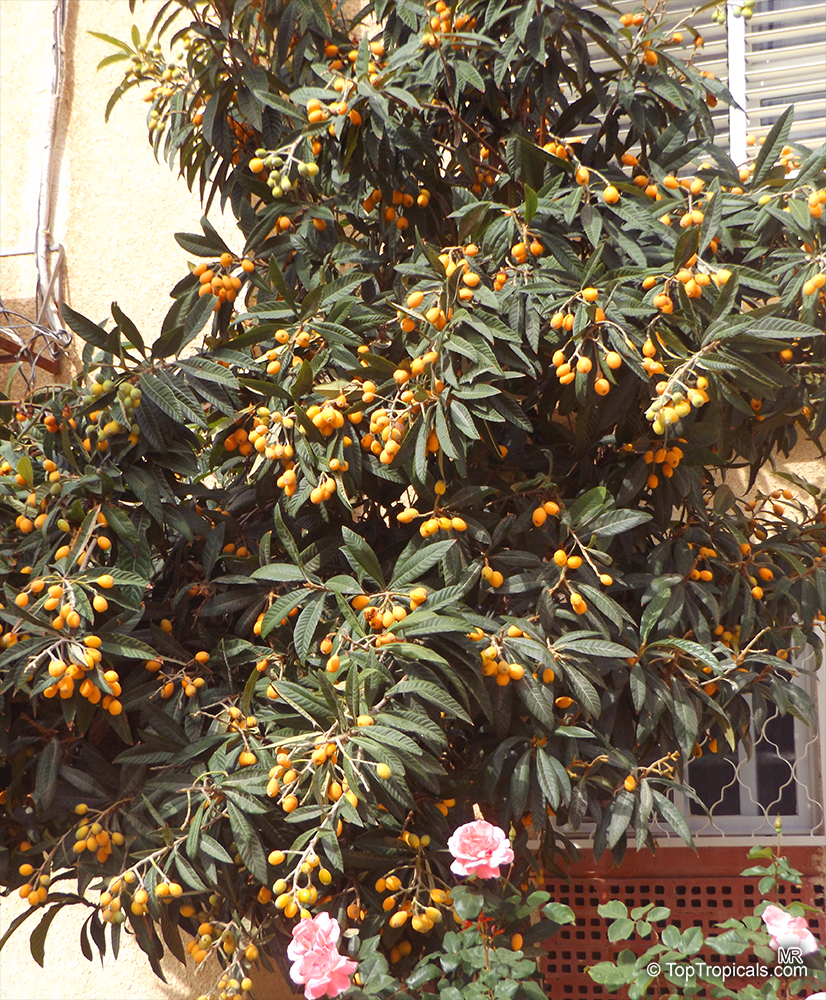
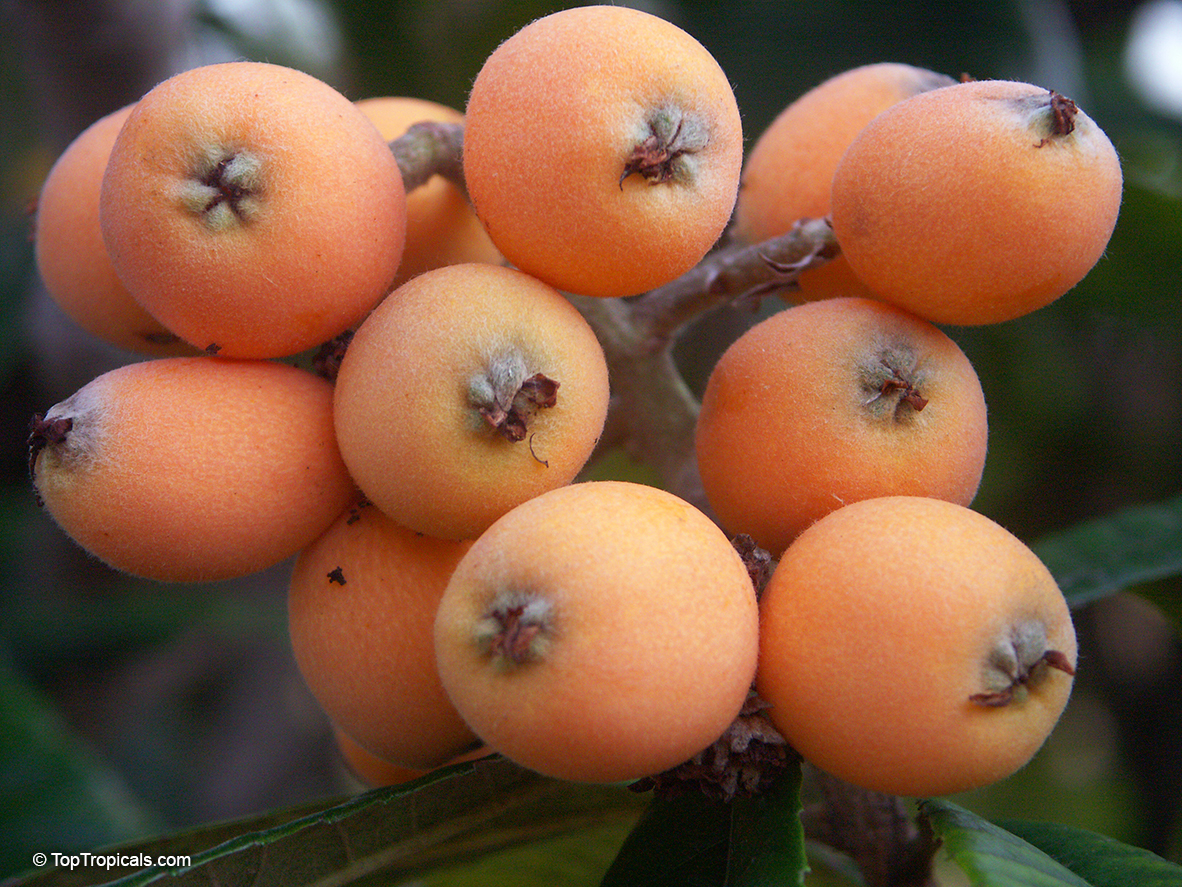
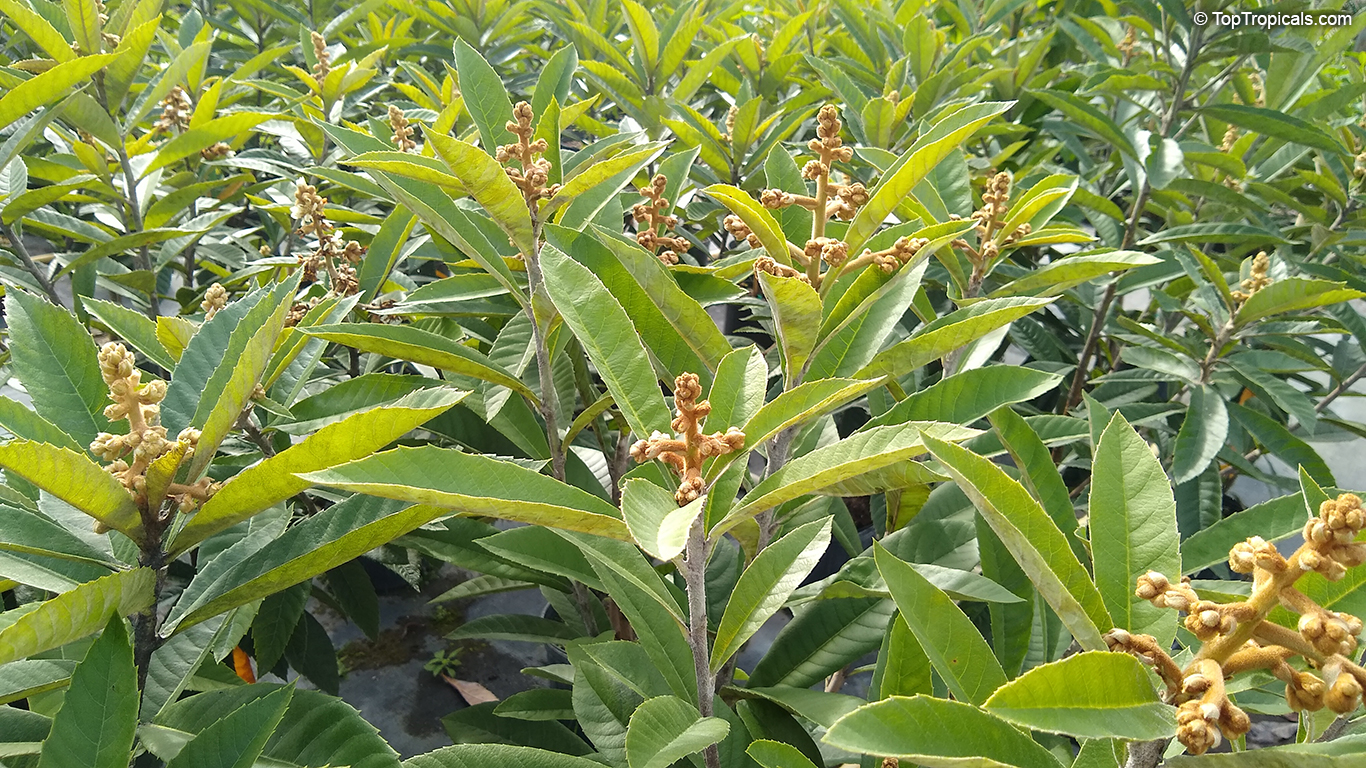
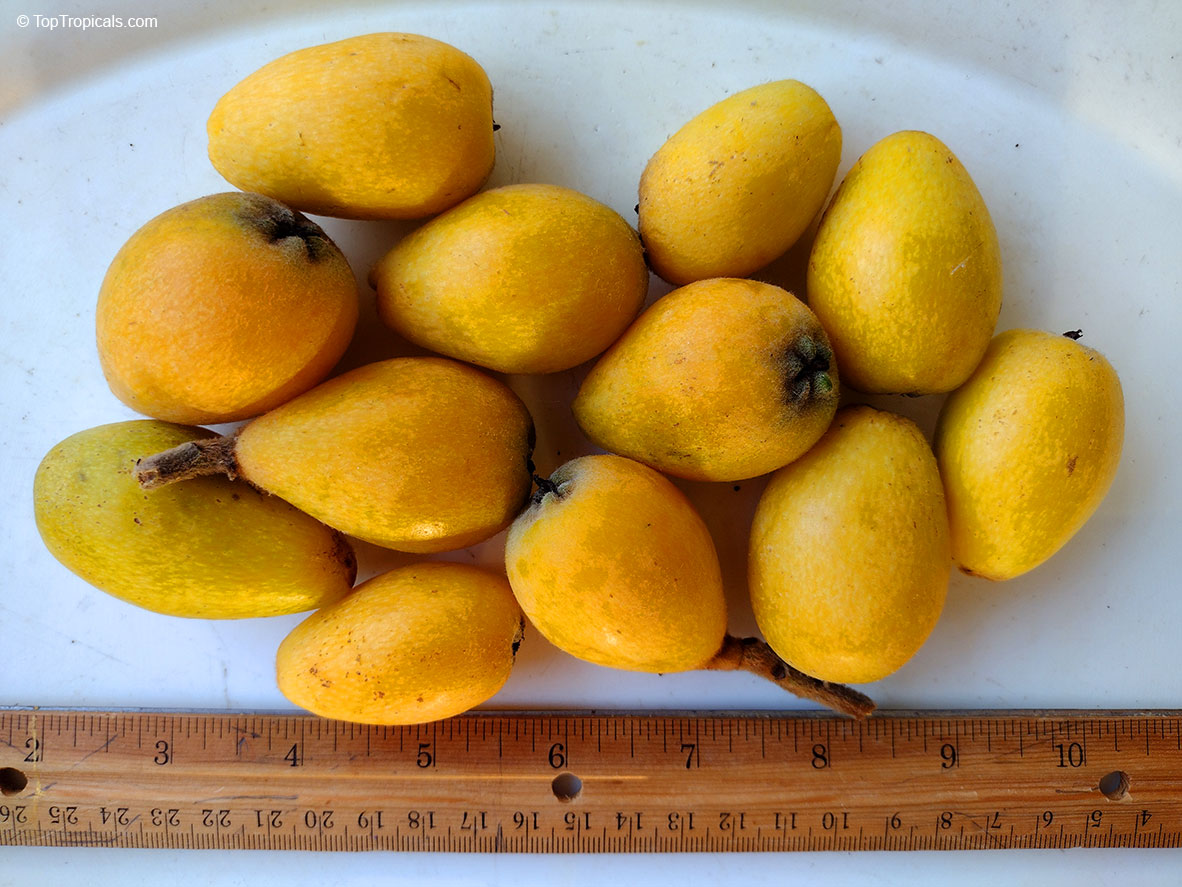
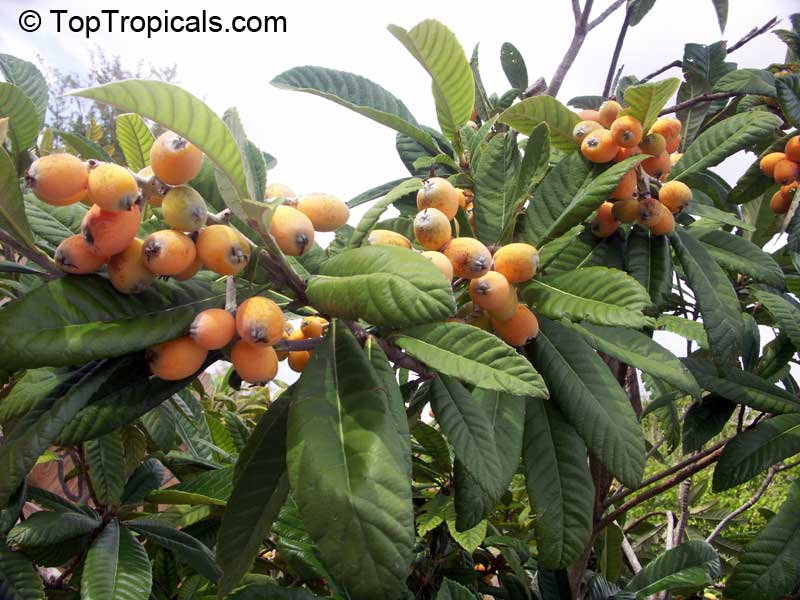
Eriobotrya japonica, commonly known as loquat or Japanese medlar, is an evergreen fruit tree in the Rosaceae family, native to southeastern China and cultivated in East Asia for centuries. It forms a rounded, dense crown and typically grows 10-25 ft tall. The large, leathery, strongly veined leaves are dark green above and covered with rusty-brown hairs beneath. Fragrant creamy white flowers appear in dense terminal clusters in fall or winter, followed by rounded to pear-shaped fruits that ripen in spring or early summer. The yellow to orange fruits have juicy, aromatic, sweet to tart flesh surrounding several large brown seeds. Numerous cultivars have been selected for fruit size, flavor, flesh color, and seed number.
Eriobotrya japonica grows best in full sun and fertile, well-drained soil, although it adapts to many soil types. Established trees tolerate moderate drought, but regular moisture improves fruit development. The tree itself tolerates light frost, while flowers and young fruits are considerably more cold-sensitive, so crop production is most reliable where winters are mild. Loquat can be grown as an ornamental shade tree even where fruiting is unreliable. Named cultivars are usually propagated by grafting or budding. It is generally suitable for USDA Zones 8-11.
More to read:
- PDF download. Overlooked fruit: tasty Loquat recipes. (from Tropical Treasures Magazine).




Recommended Fertilizer: SUNSHINE C-Cibus - Crop Nutrition Booster
SUNSHINE-Honey - sugar booster
Recommended Fertilizer: SUNSHINE C-Cibus - Crop Nutrition Booster
SUNSHINE-Honey - sugar booster
Local pickup only. This item is not available for shipping. Local delivery may be available in Ft. Myers or Sebring, Florida. Contact us for an estimate. Non-pickup orders are subject to restocking fees.
Recommended Fertilizer: SUNSHINE C-Cibus - Crop Nutrition Booster
SUNSHINE-Honey - sugar booster
Recommended Fertilizer: SUNSHINE C-Cibus - Crop Nutrition Booster
SUNSHINE-Honey - sugar booster
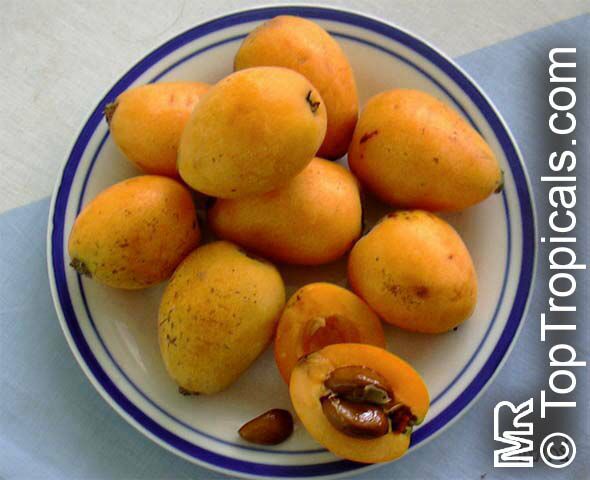
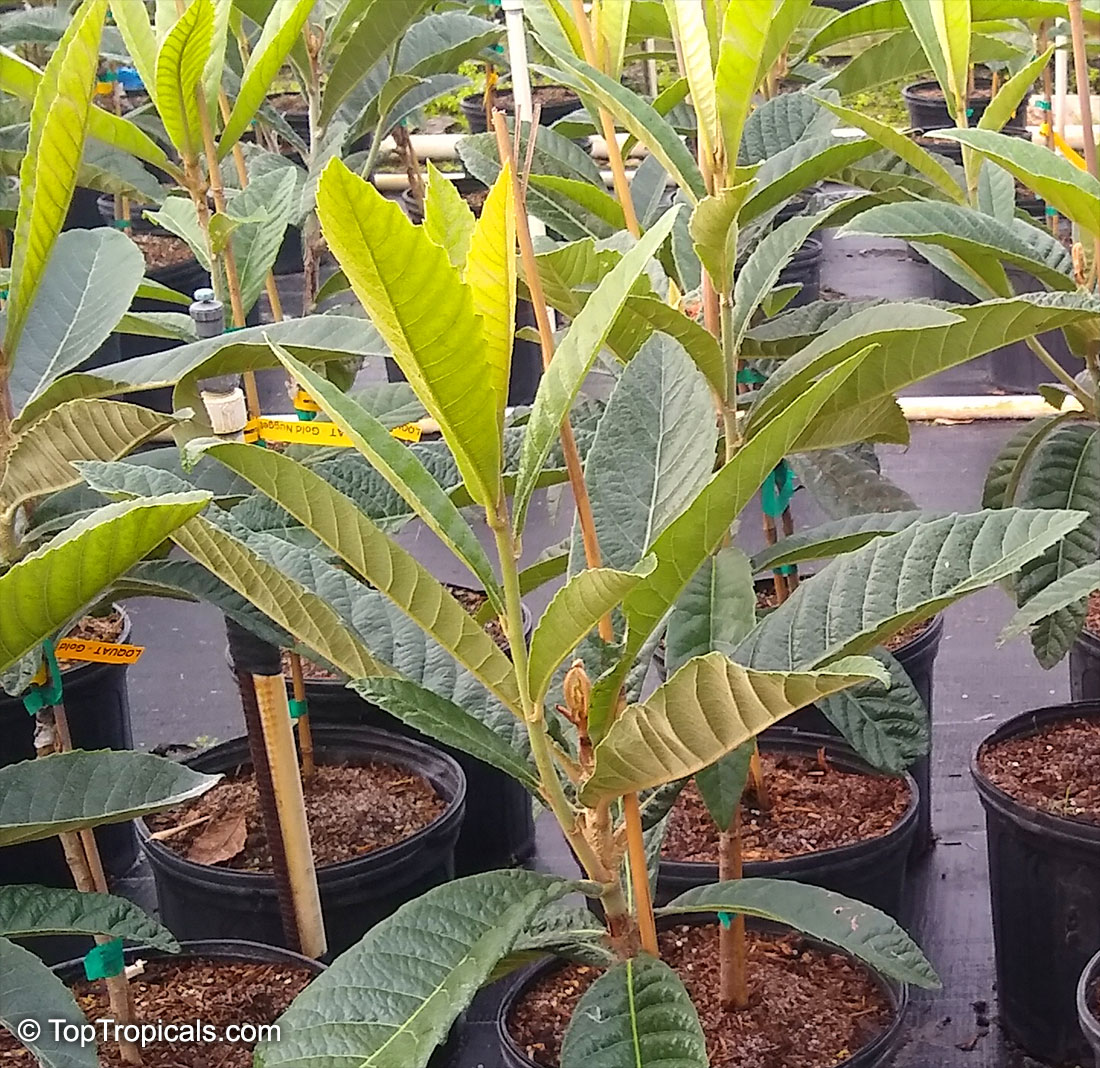
Very cold hardy fruit tree, easy to grow, drought tolerant, fast growing. Fruit are large size, yellow orange flesh, mildly sweet with very small seed inside. In Florida fruit ripens in late February-March. Fruit is great for eating fresh or making jam.
More about Loquat:
- Article
- Video
- PDF download. Overlooked fruit: tasty Loquat recipes. (from Tropical Treasures Magazine).
Recommended Fertilizer: SUNSHINE C-Cibus - Crop Nutrition Booster
SUNSHINE-Honey - sugar booster
Recommended Fertilizer: SUNSHINE C-Cibus - Crop Nutrition Booster
SUNSHINE-Honey - sugar booster
Local pickup only. This item is not available for shipping. Local delivery may be available in Ft. Myers or Sebring, Florida. Contact us for an estimate. Non-pickup orders are subject to restocking fees.
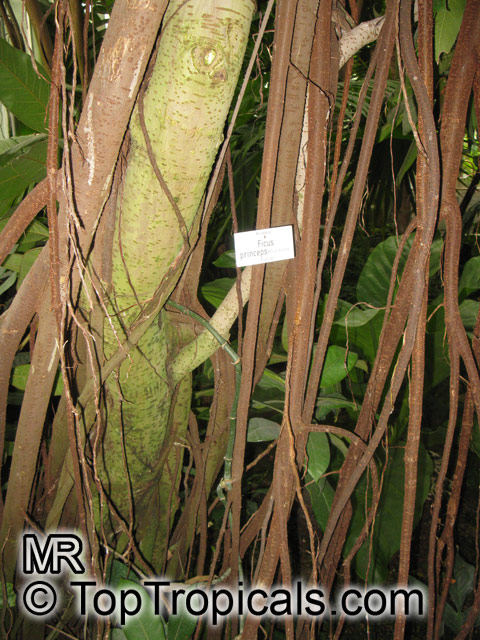
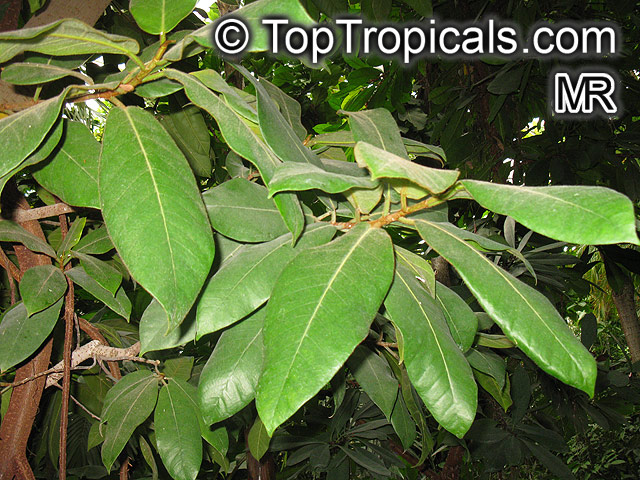
Botanical names: Ficus saussureana, Ficus afzelii, Ficus eriobotryoides, Ficus princeps
Common name: Loquat Leaf Fig
Family: Moraceae
Origin: Africa
USDA Zone: 8-10


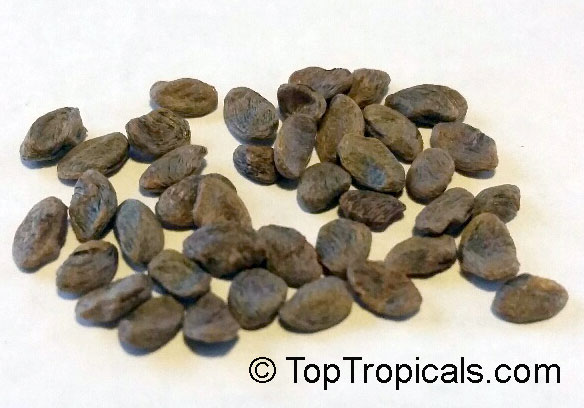
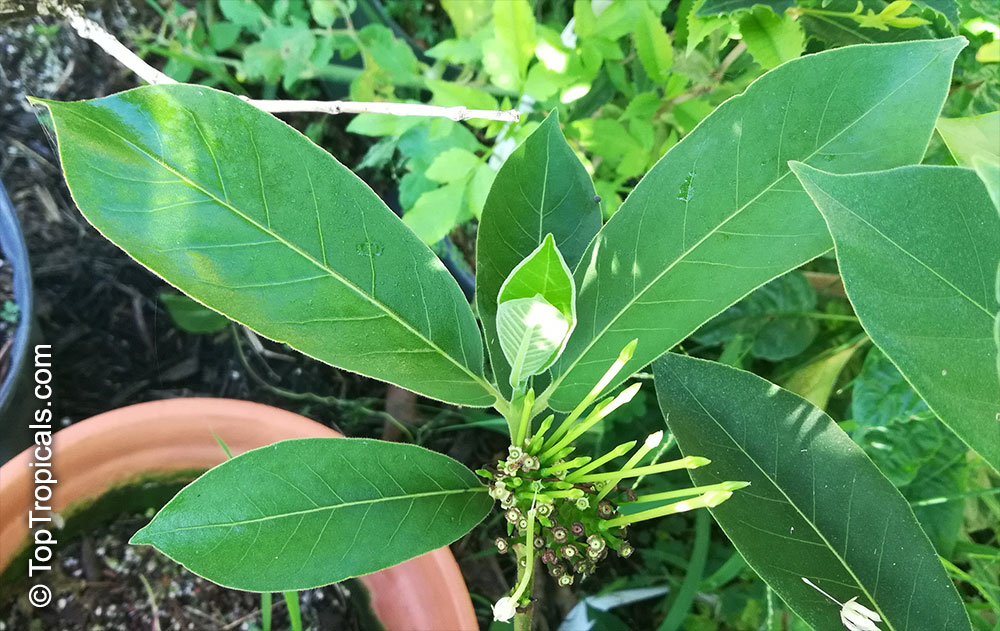
Botanical name: Oxyanthus sp.
Common names: Whipstick Tree, Wild Coffee, Zulu Loquat, Sand-forest Afro-loquat
Family: Rubiaceae
Origin: South Africa
USDA Zone: 9-11


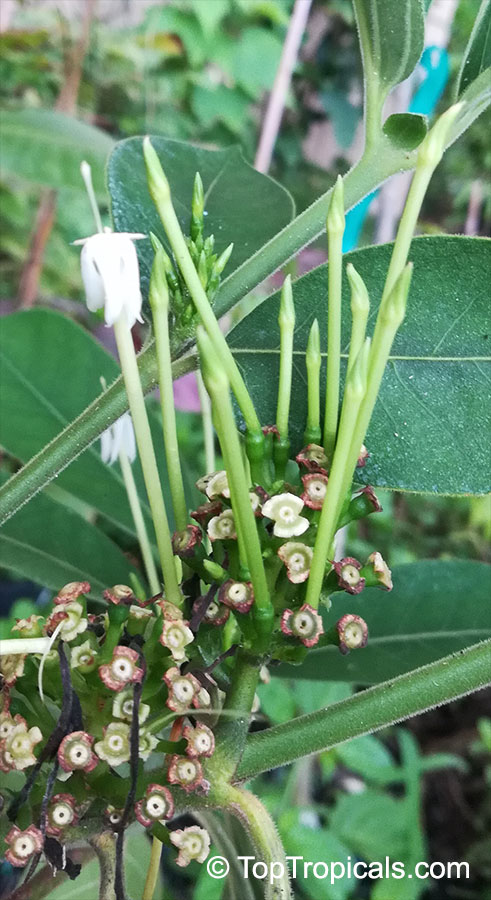
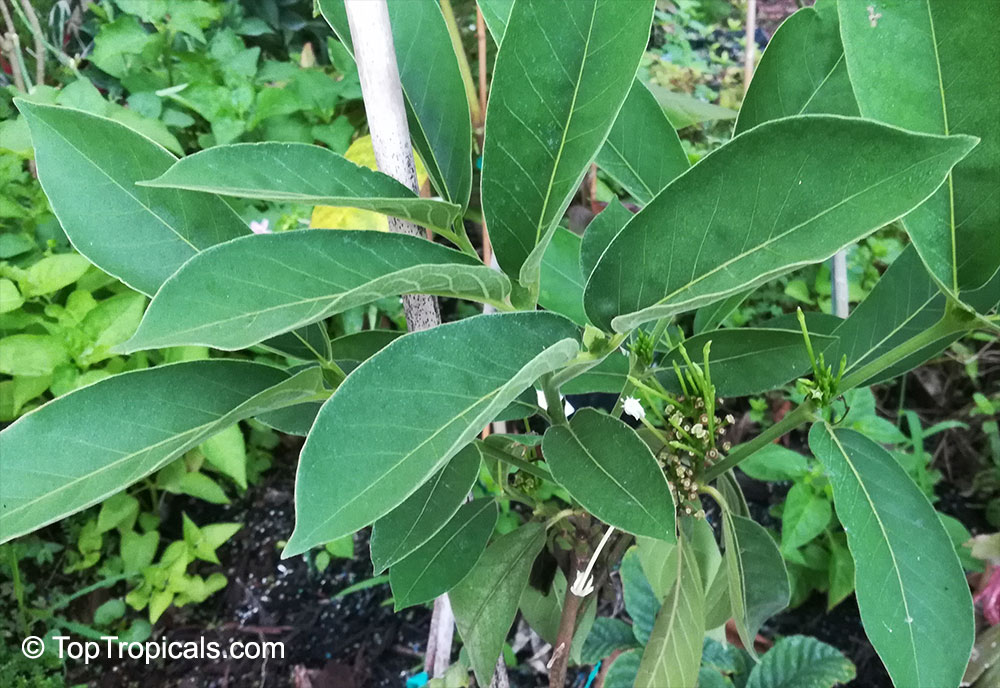
Oxyanthus sp. (Whipstick Tree) is a fascinating plant native to South Africa. It is a large shrub or small tree, reaching a height of 5 - 10 ft tall if grown as a shrub and 10 - 20 ft tall when grown as a tree. It has horizontal branches, resembling a large bush with a rounded canopy.
In warm climates it prefers full sun, though it will tolerate some light shade. It has a moderate water requirement, preferring regular deep soakings to keep the soil evenly moist. Each season is rewarded with fragrant, greenish-white, off-white flowers borne in dense heads of long slender corolla tubes. The blooms are showy and often bring an array of people to the garden. The flowers are followed by orange-yellow fruit.
The Whipstick Tree can be grown in pots in colder climates, however, drainage must be a priority as plants living in pots dry out more quickly. If grown in a pot, it should be placed in a sunny location and kept moist. As its water requirements are low it is a great choice for containers in drought prone areas or when water restrictions apply.
This striking evergreen can grow in USDA hardiness Zones 9-11, if provided with well-drained soil and plenty of sun. It is a hardy plant, tolerant of both heat and drought once established. Overall, it is a low-maintenance design and offers an abundance of color and structure with its unique foliage all year round.
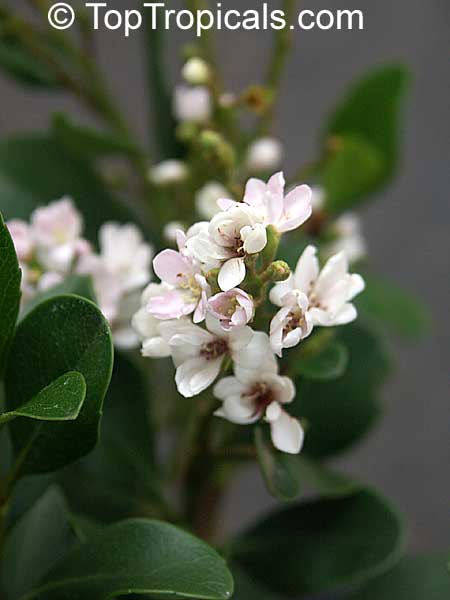
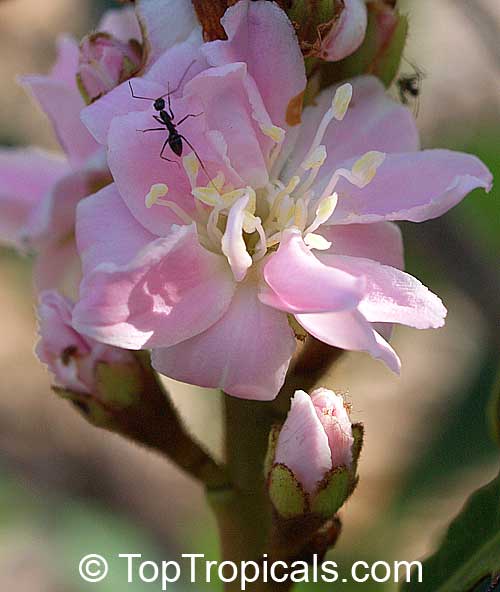
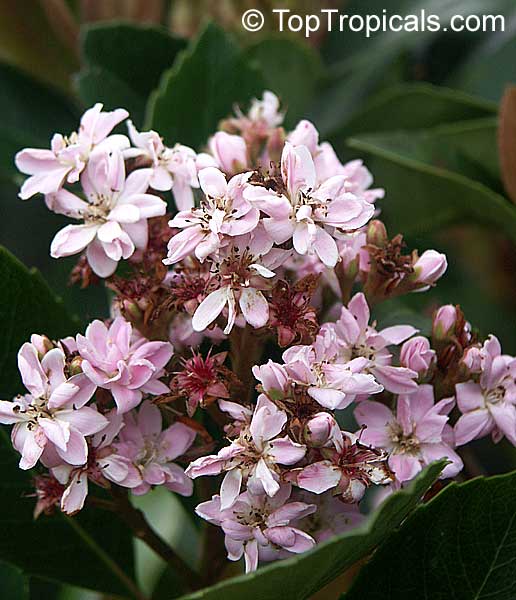
Botanical name: Rhaphiolepis sp.
Common name: Yeddo Hawthorn
Family: Rosaceae
Origin: Southeast Asia
USDA Zone: 9-10


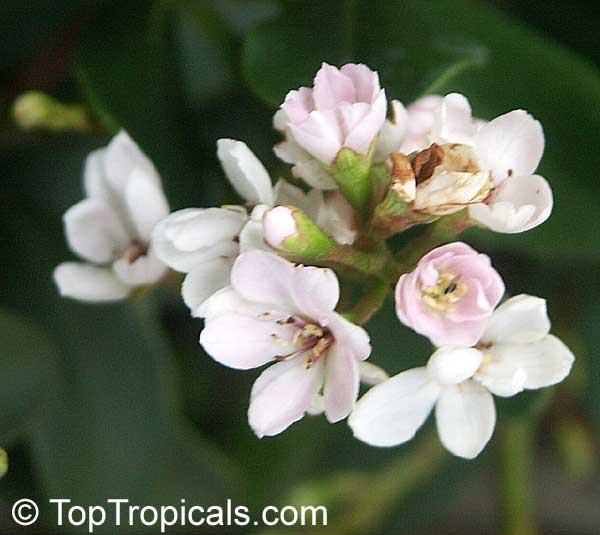
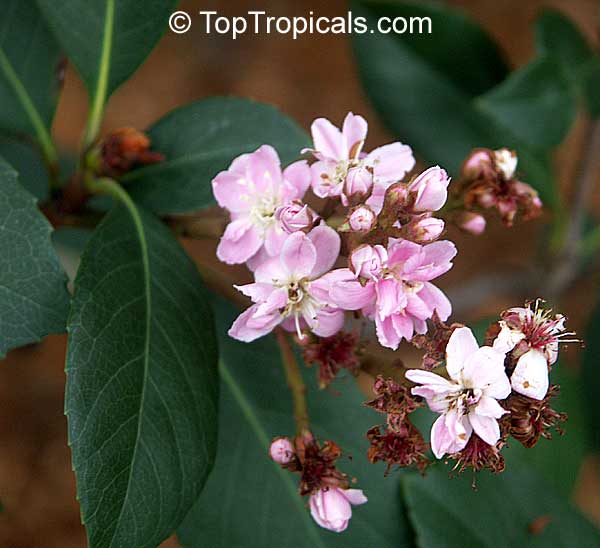
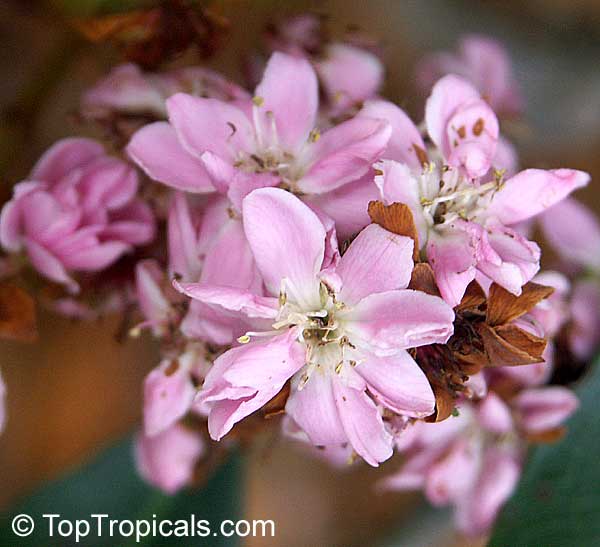
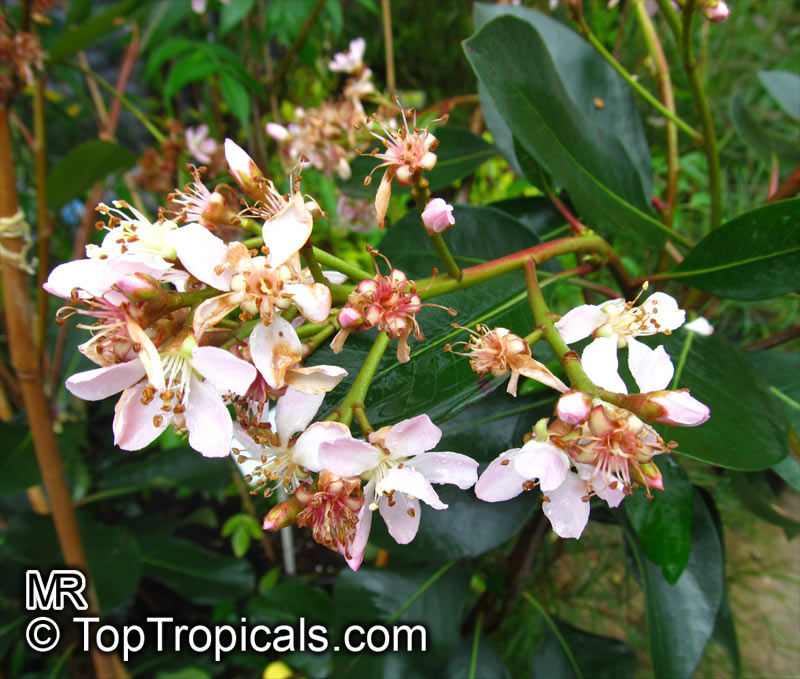
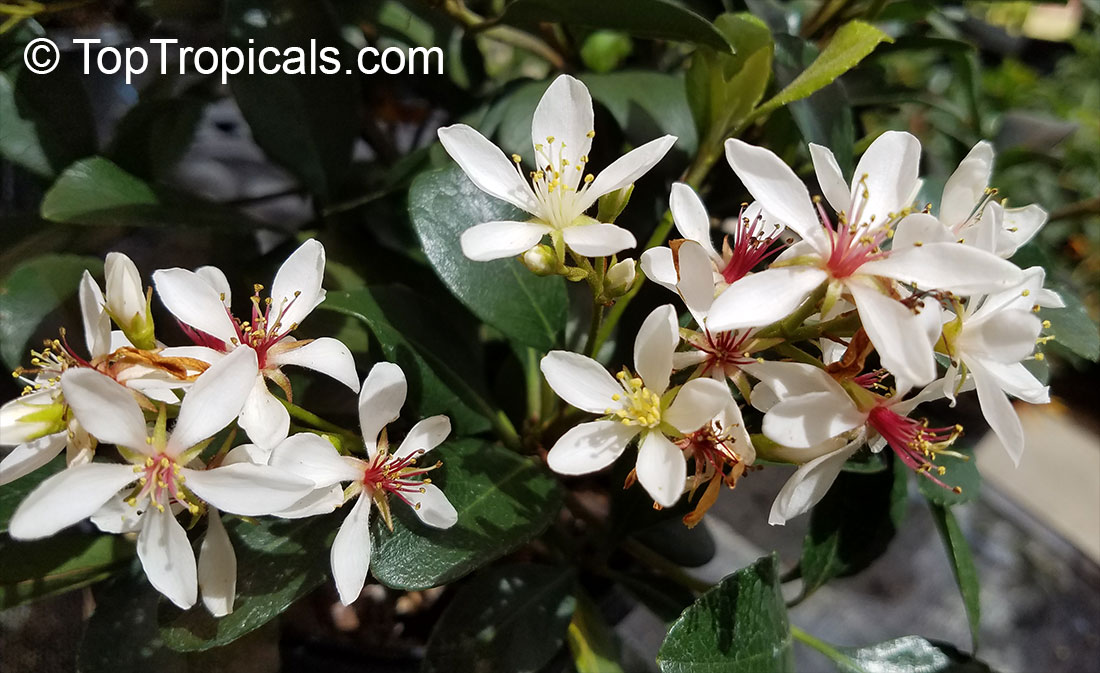
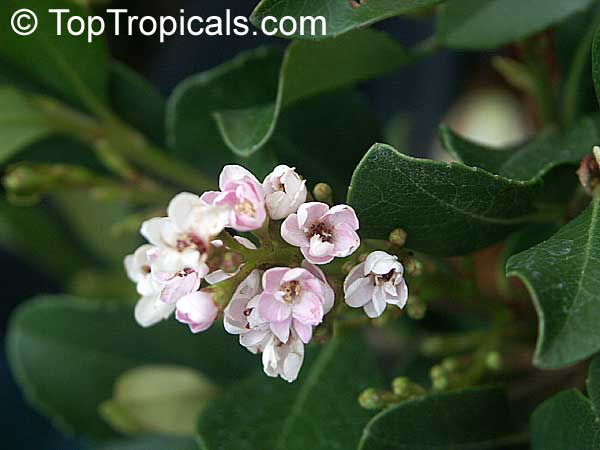
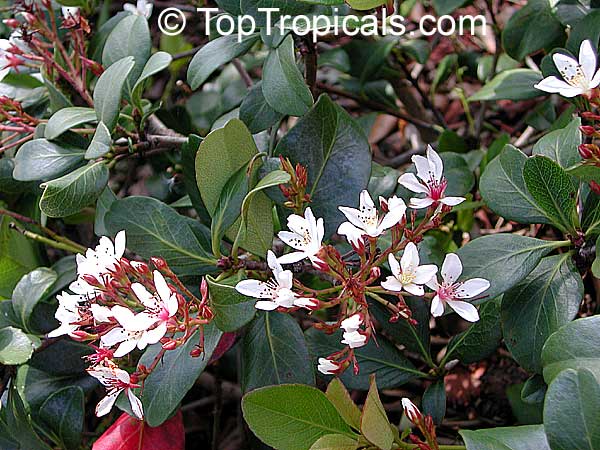
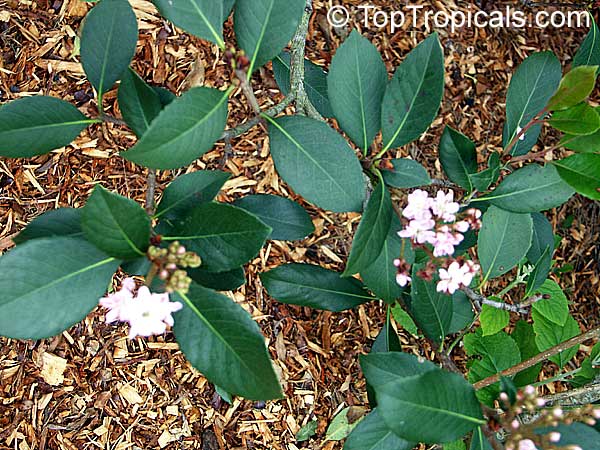
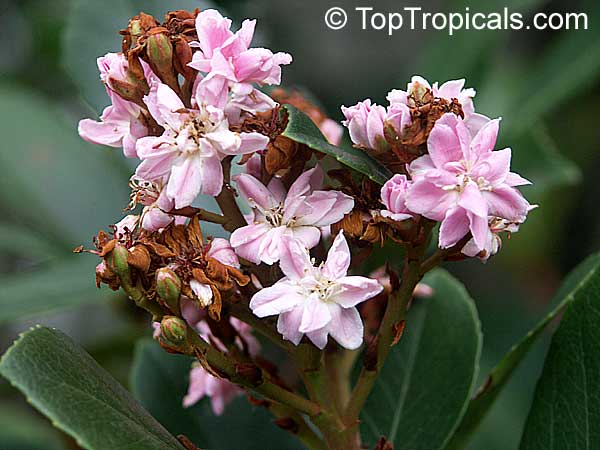
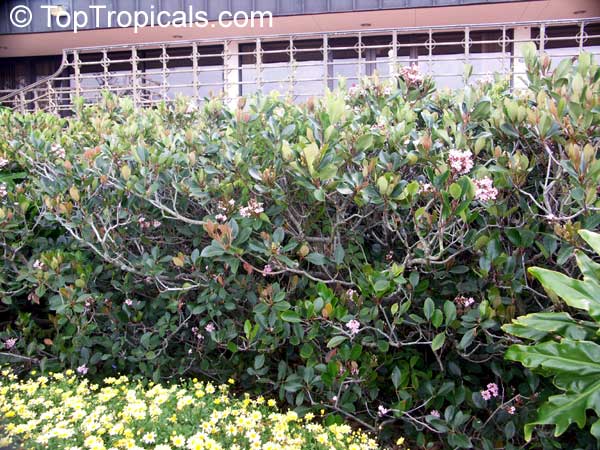
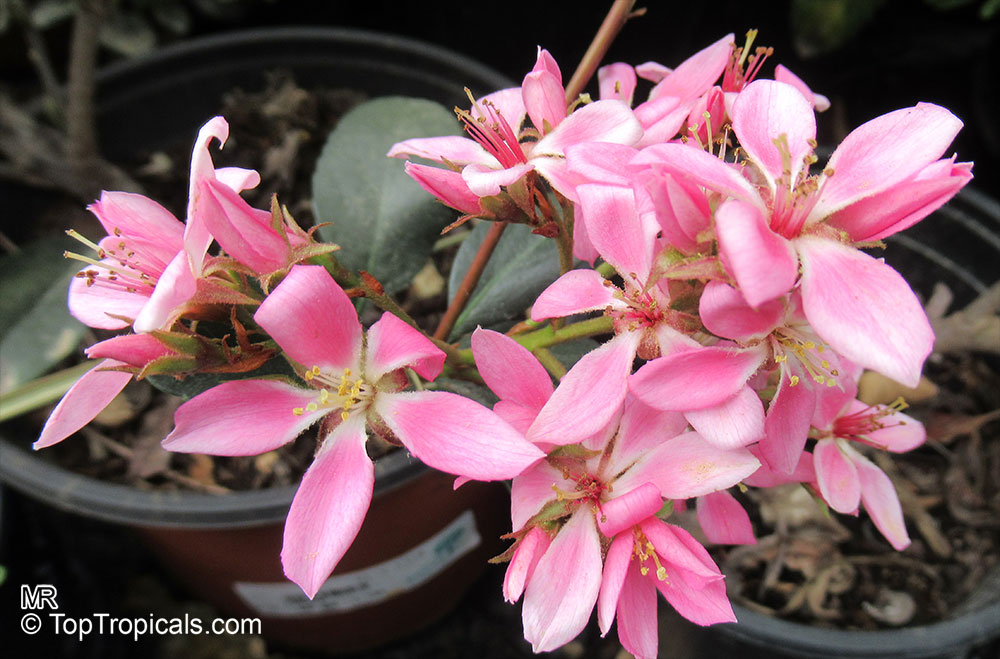
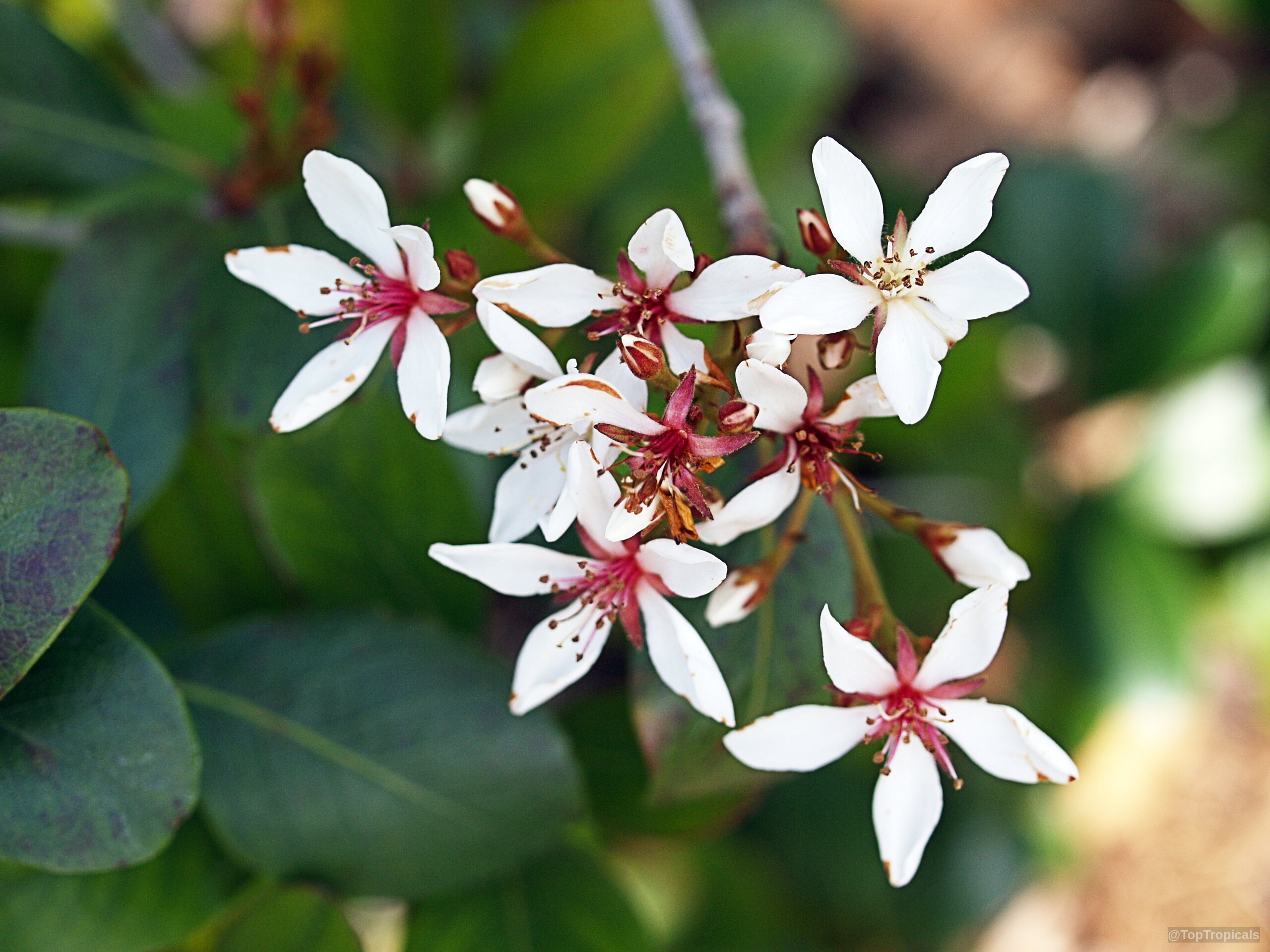
Rhaphiolepis are low growing, spreading evergreen shrubs with thick, leathery, serrated, oblong leaves. They are dark green on top and lighter on bottom. Star shaped flowers are held at branch tips in loose clusters and are white or light pink, with five petals, and may be lightly fragrant. Flowers are followed by blue-black fruits with 1 or 2 seeds and provide food for birds. Must have well drained soil whether in sun or part shade. Avoid overhead irrigation, especially at night.
The genus is closely related to Eriobotrya (Loquats), so closely in fact, that members of the two genera have hybridised with each other.


Use link to repeat this search:
https://toptropicals.com/cgi-bin/garden_catalog/cat.cgi?find=Loquat&search_op=and&keyword_op=and&language=e&number=10
&no_change_lang=1&user=tt&sale=1&first=0