Campanula sp. (Bellflower)
Botanical name: Campanula sp.
Common name: Bellflower
Family: Campanulaceae
Origin: Europe
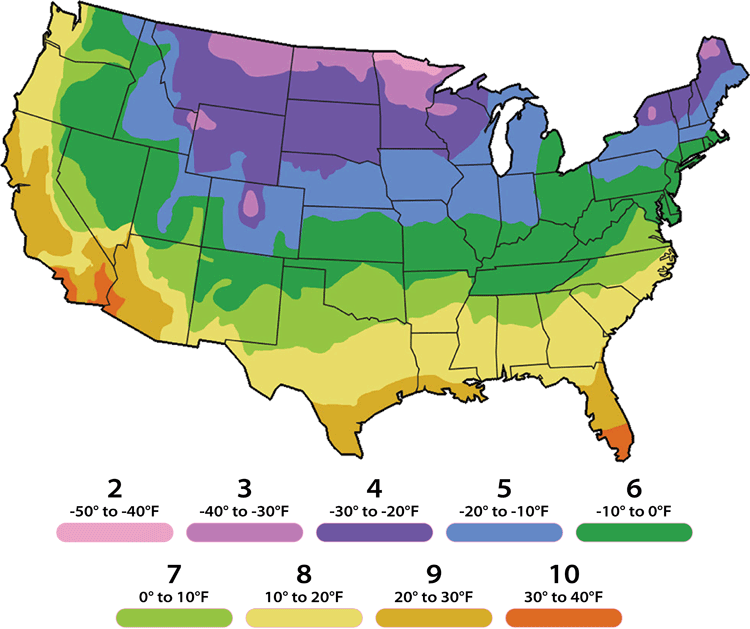
USDA Zone: 9-10
 Plant form: Small
 Mature height: 2-5 ft
 Sun exposure: Full sun or bright light indoor; semi-shade
 Cold tolerance: Tolerates light freezing to about 30°F for short periods (mature plants). Young plants must be protected.
 Watering: Regular; moderate

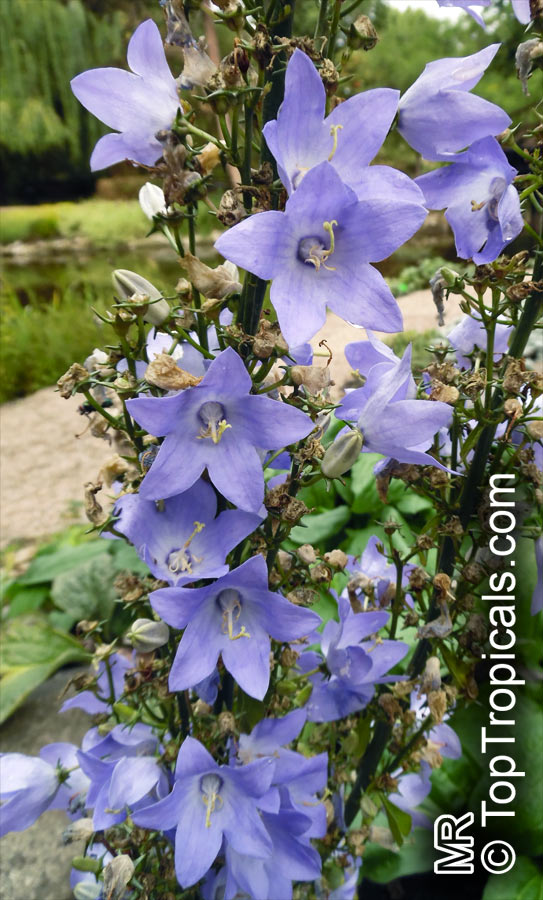
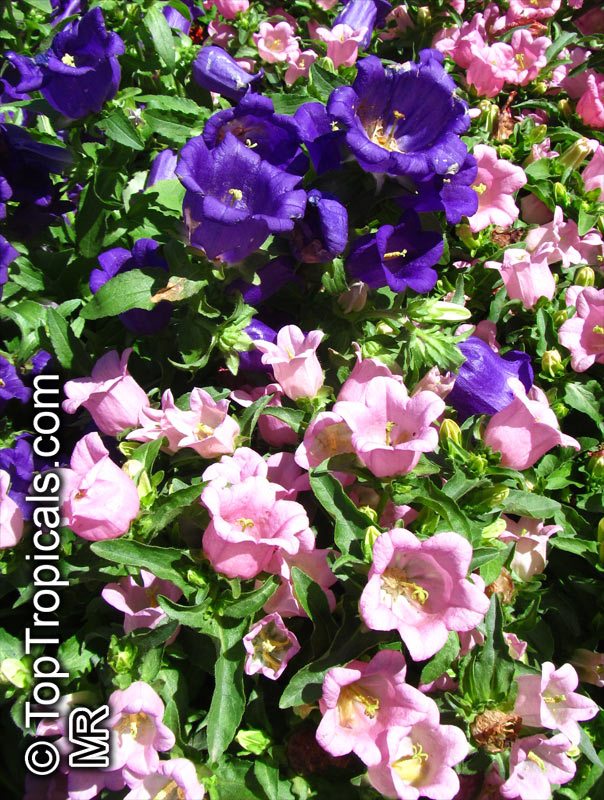
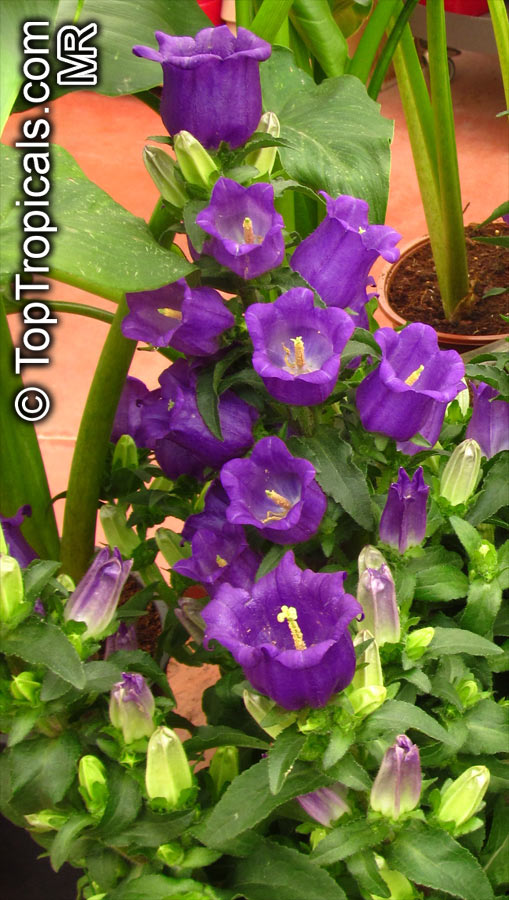
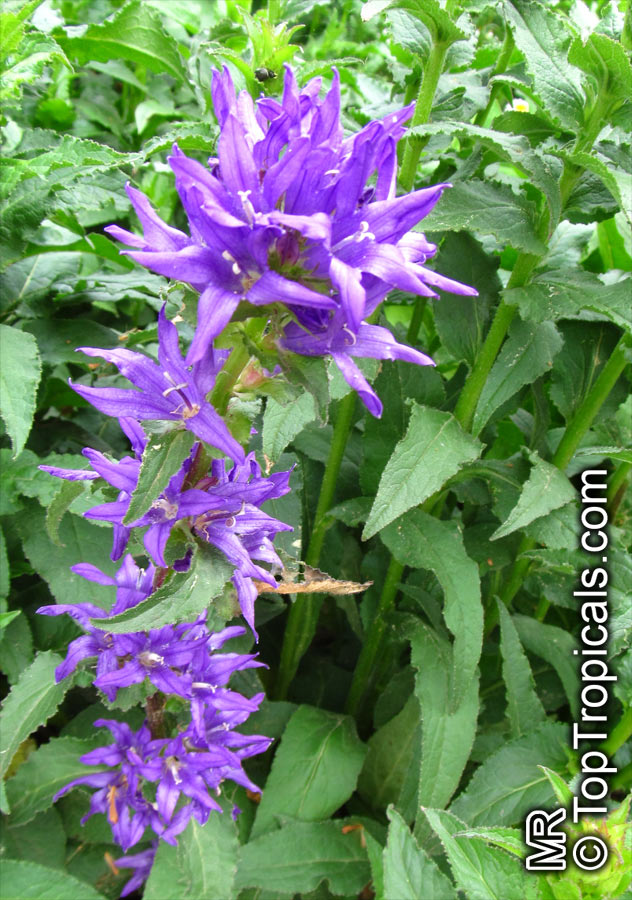
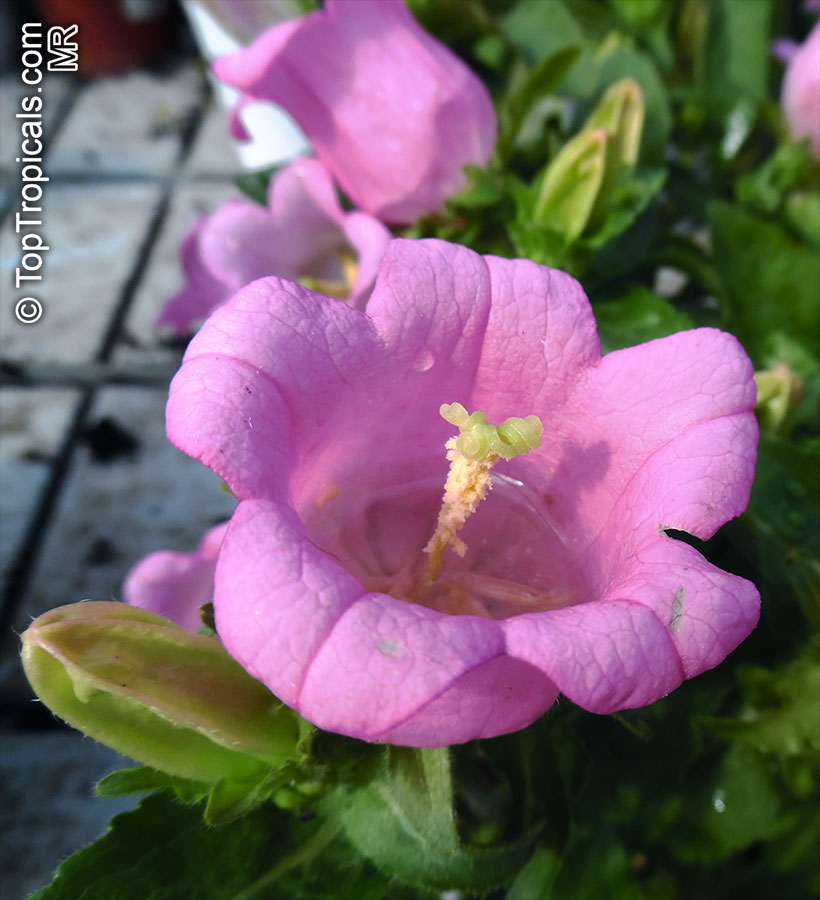
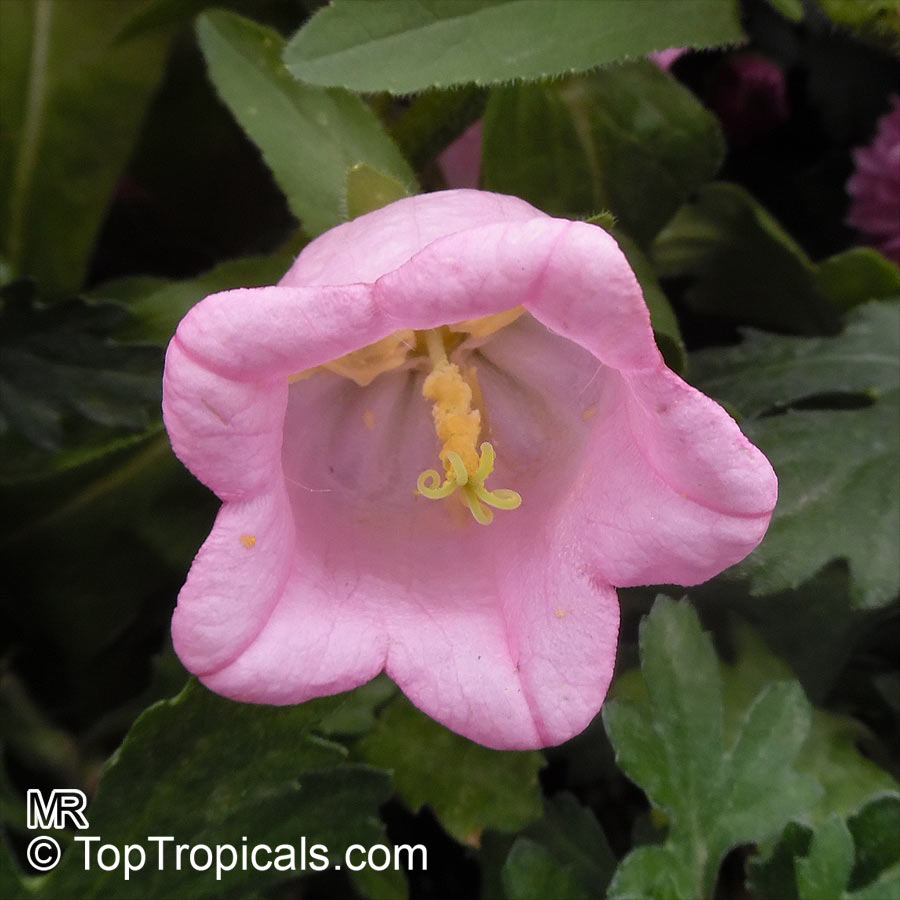
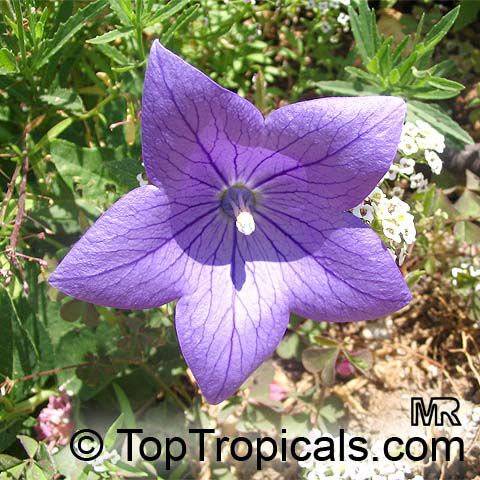
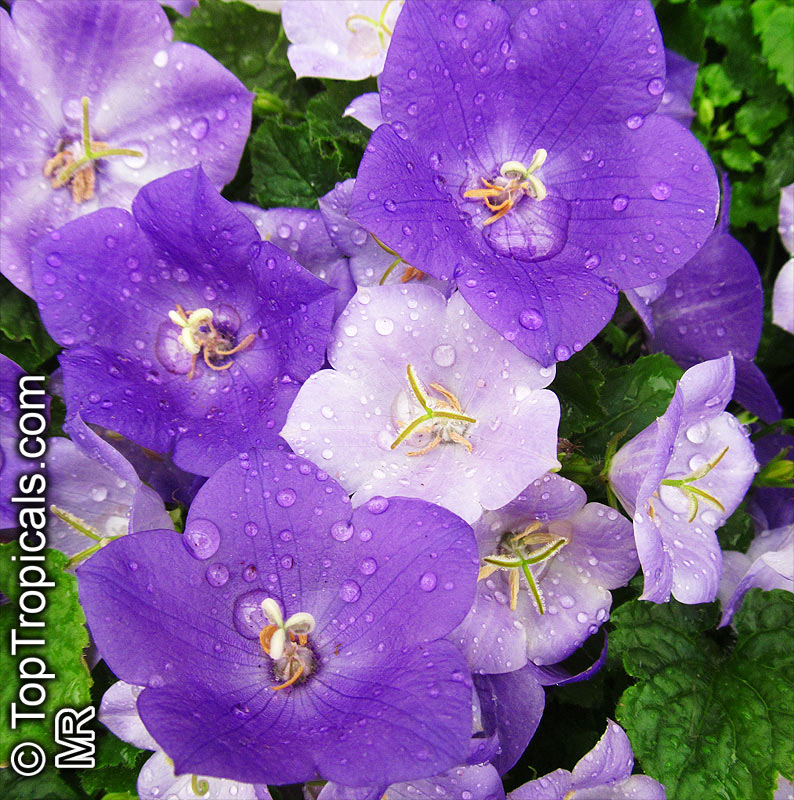
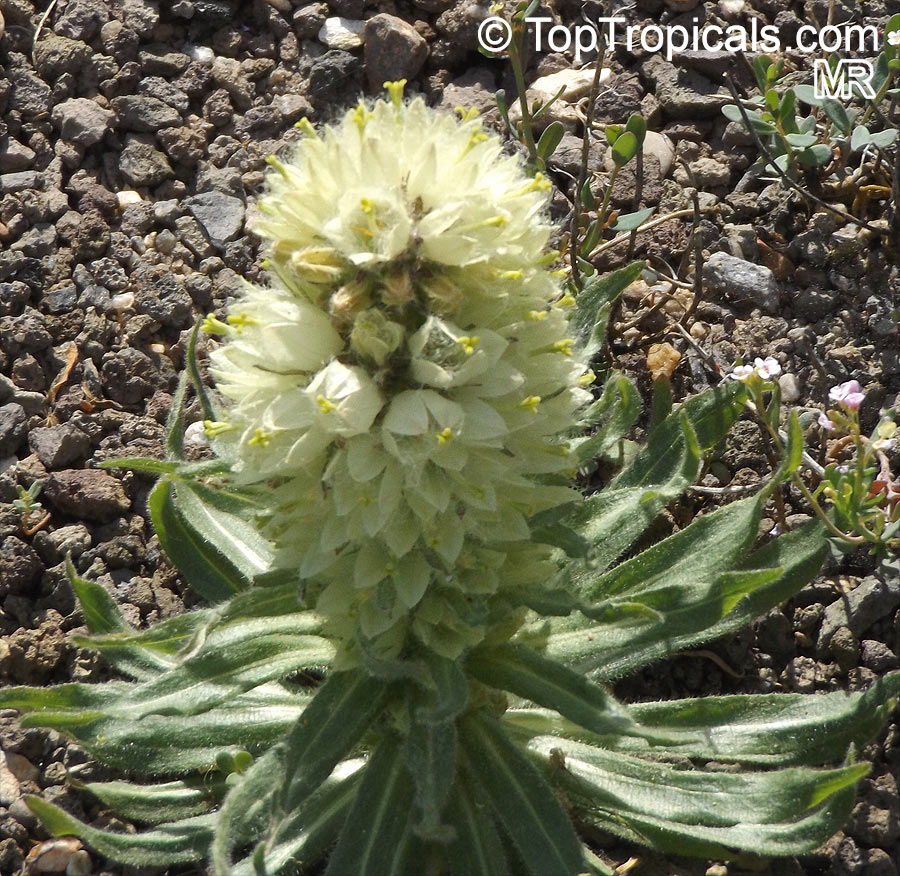
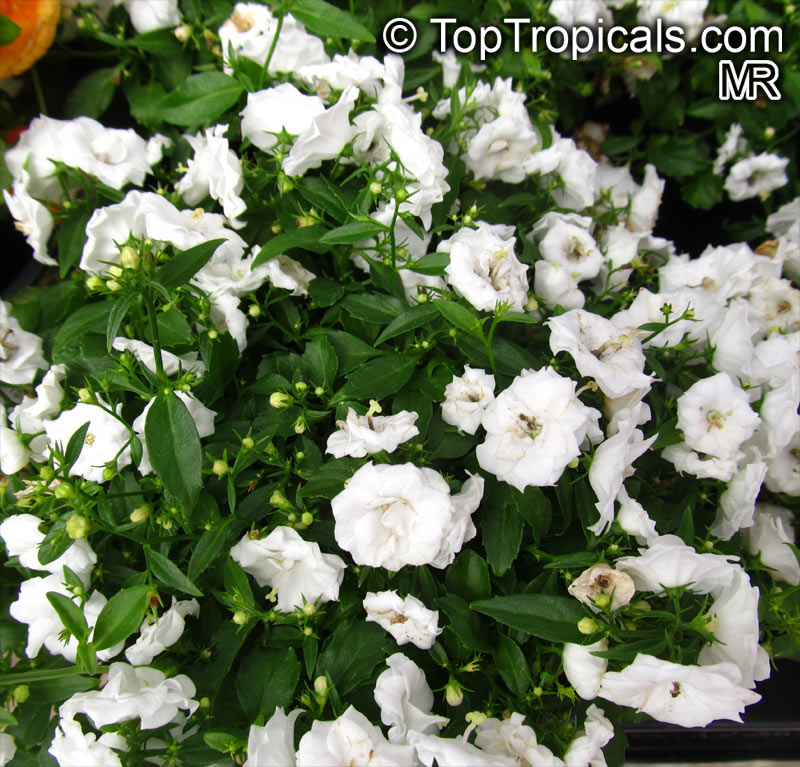
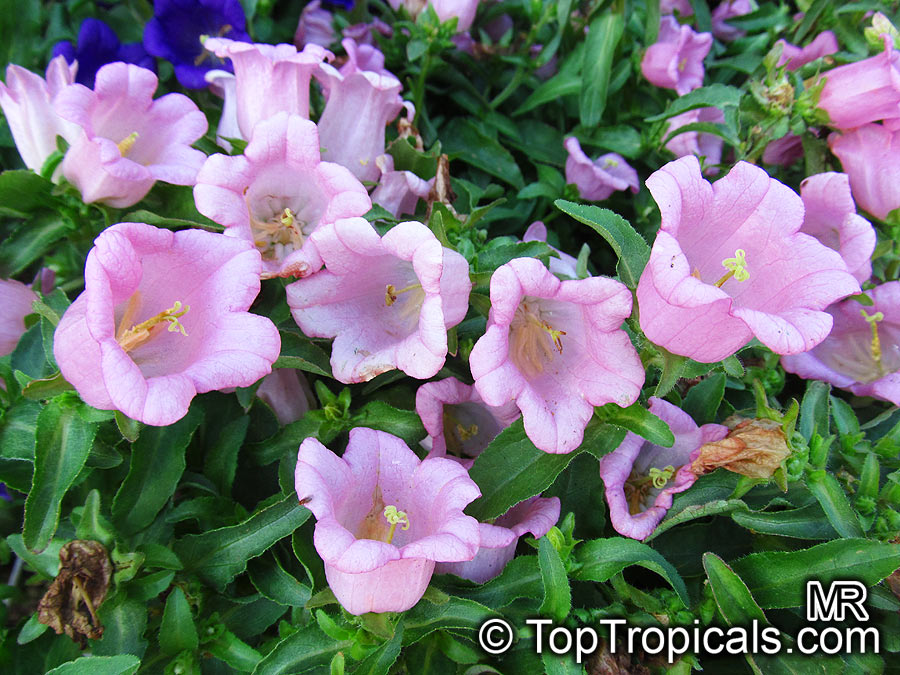
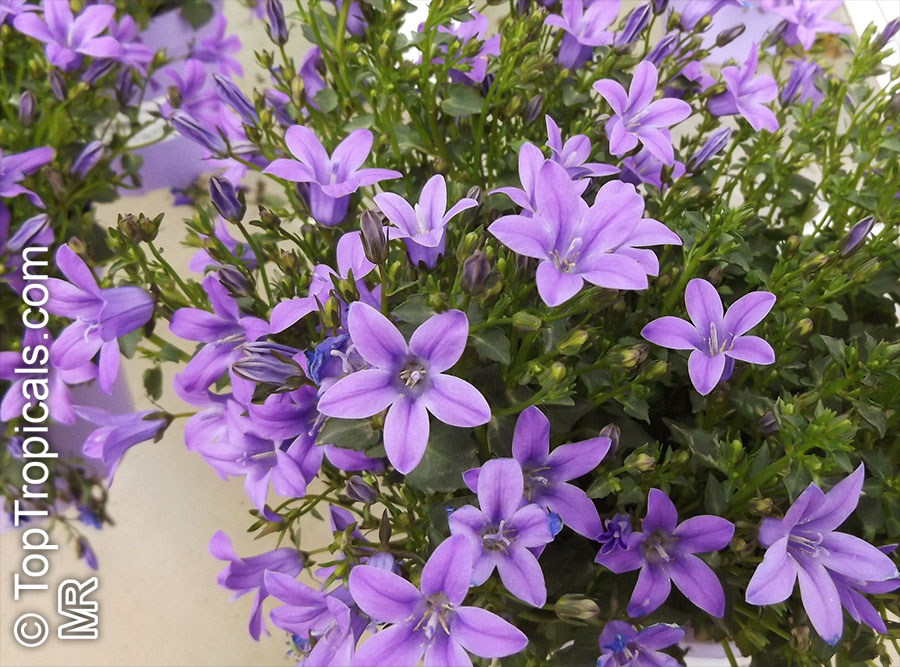
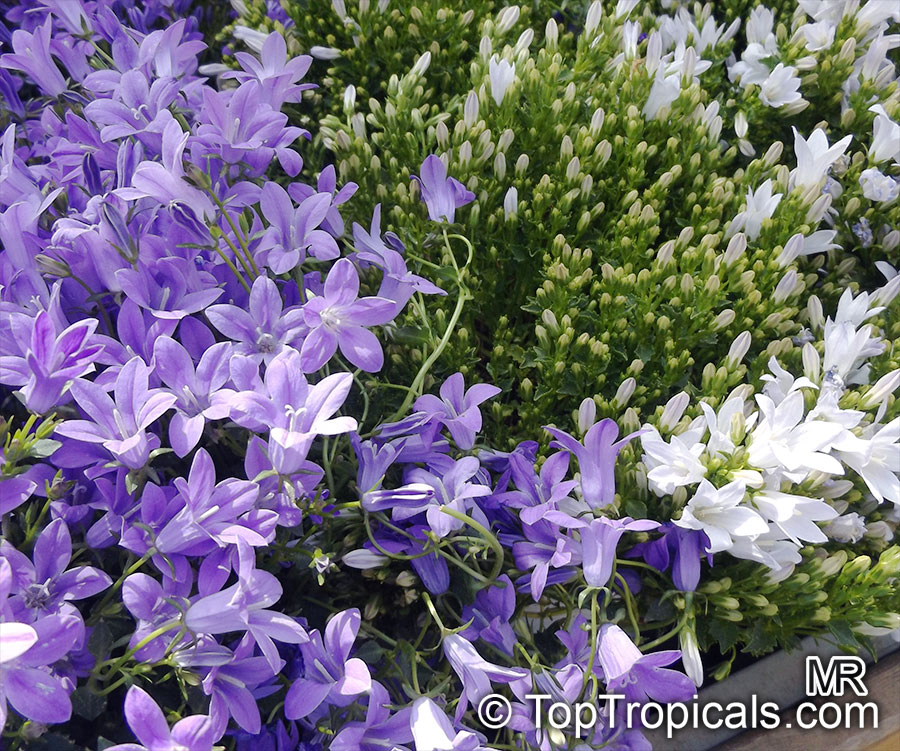
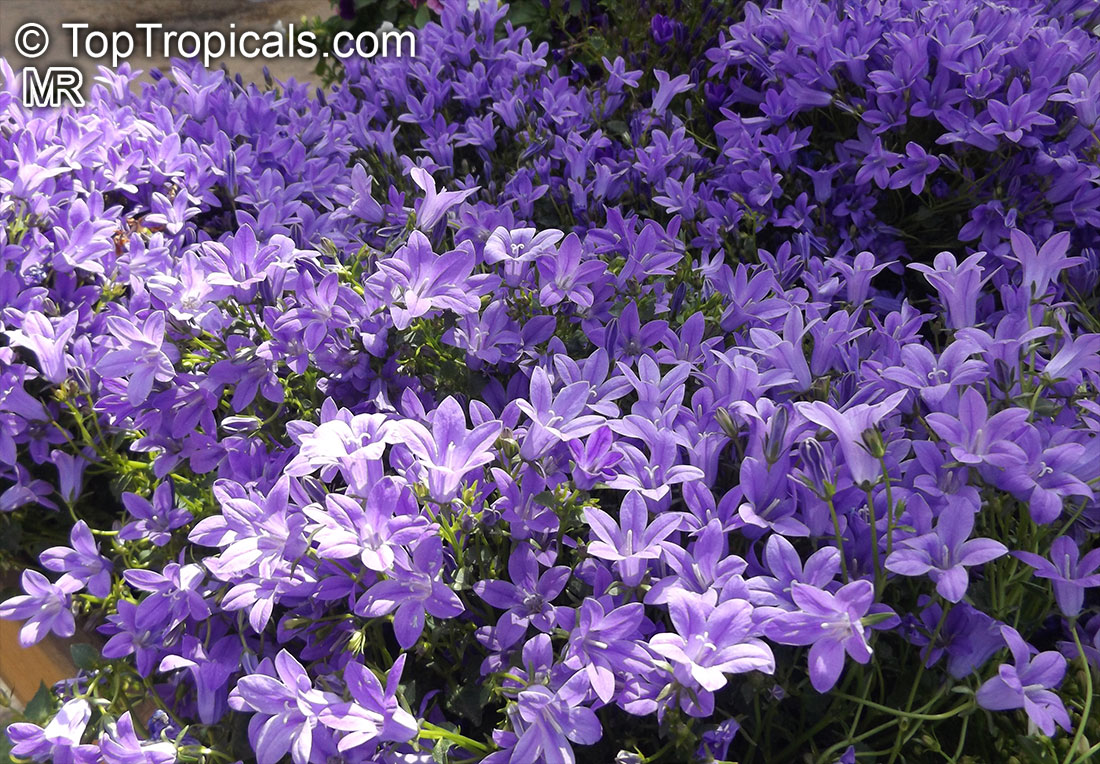
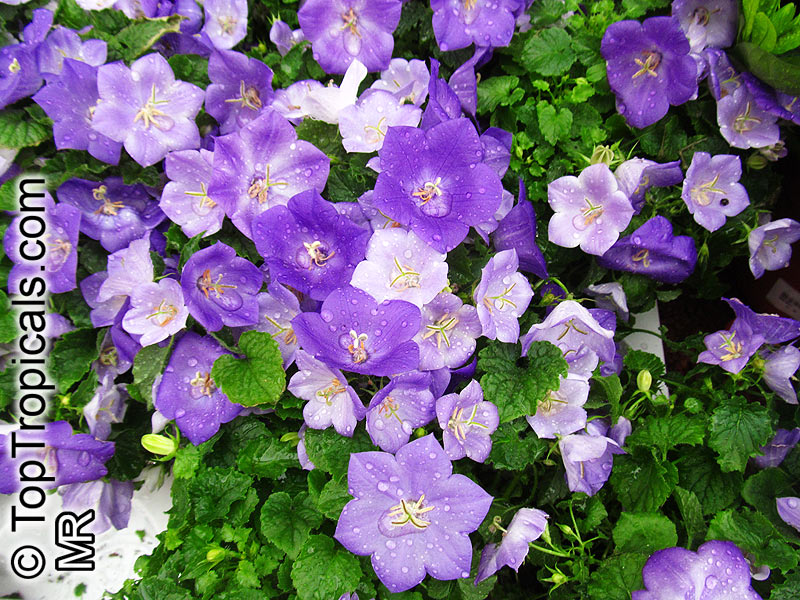
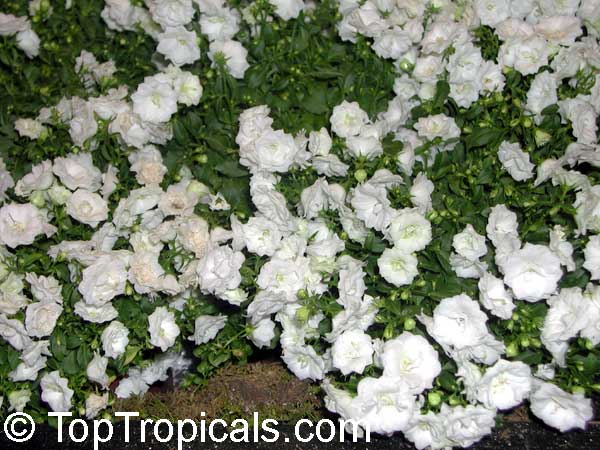
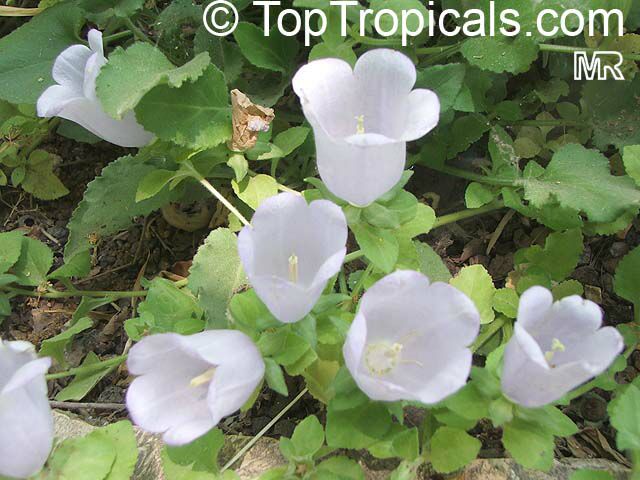
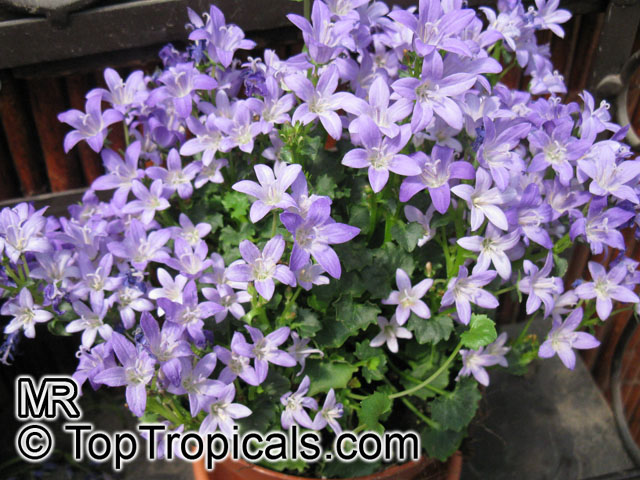
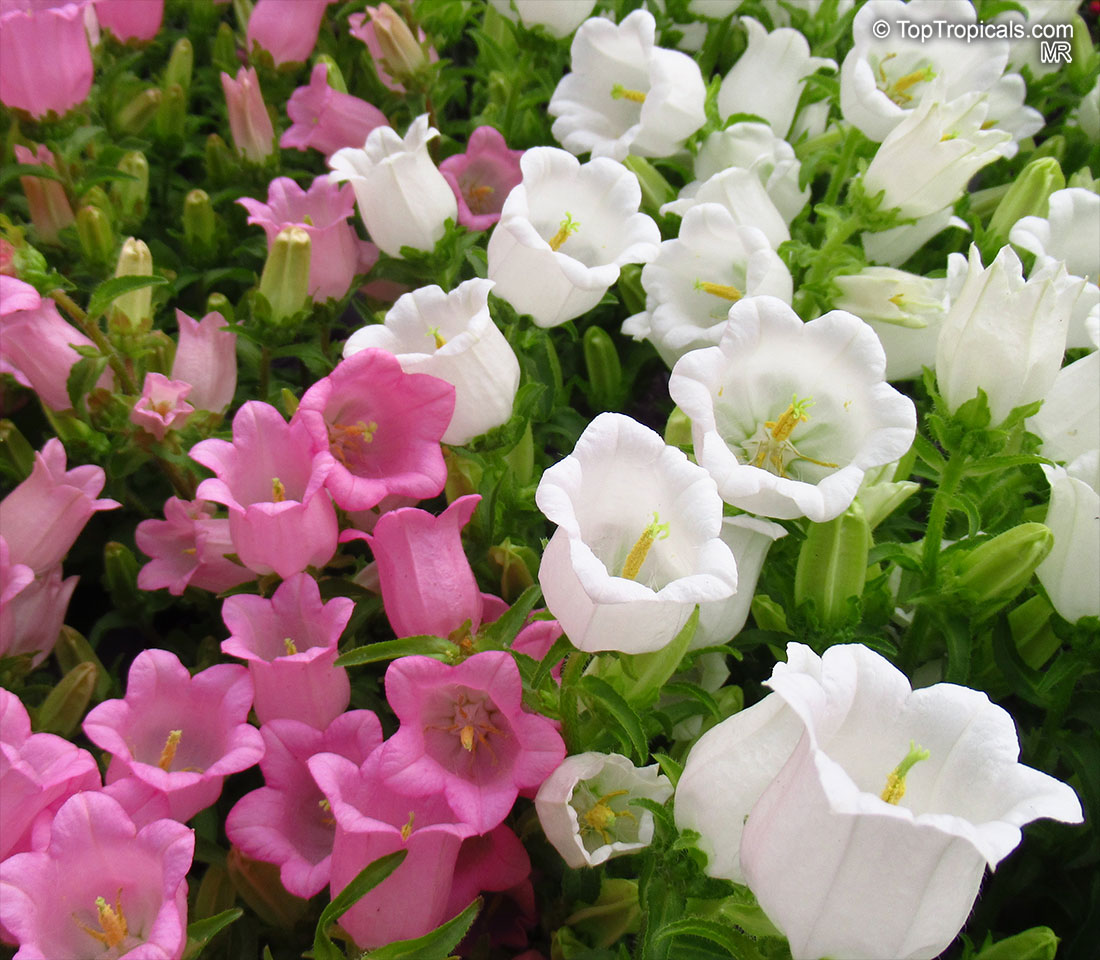
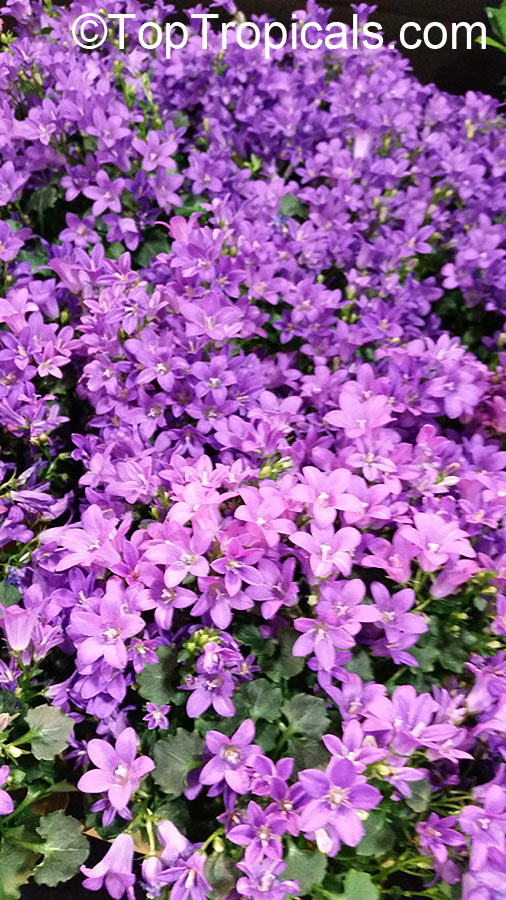
 Flower color: Pink; white and off-white; blue, lavender, purple
 Suitable for: Outdoors in the suitable USDA zone; small gardens, containers, and indoor growing
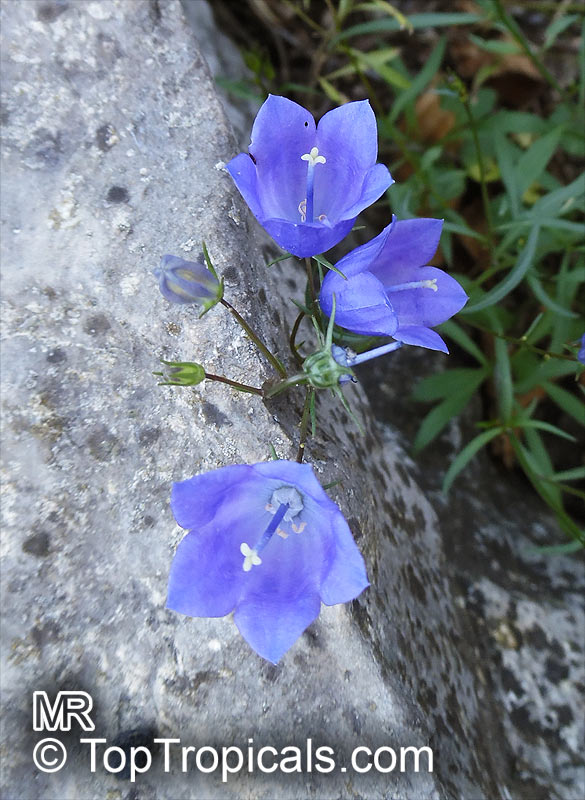
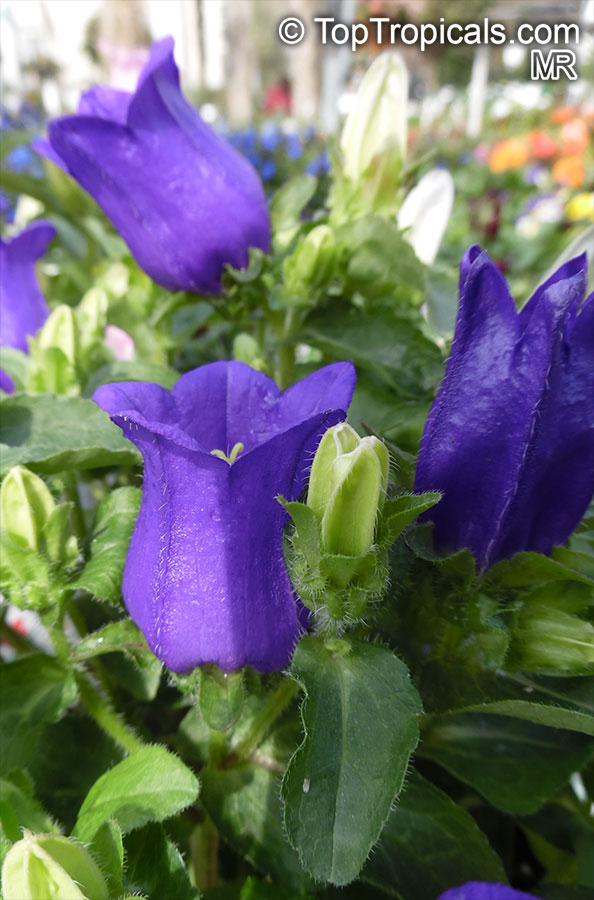
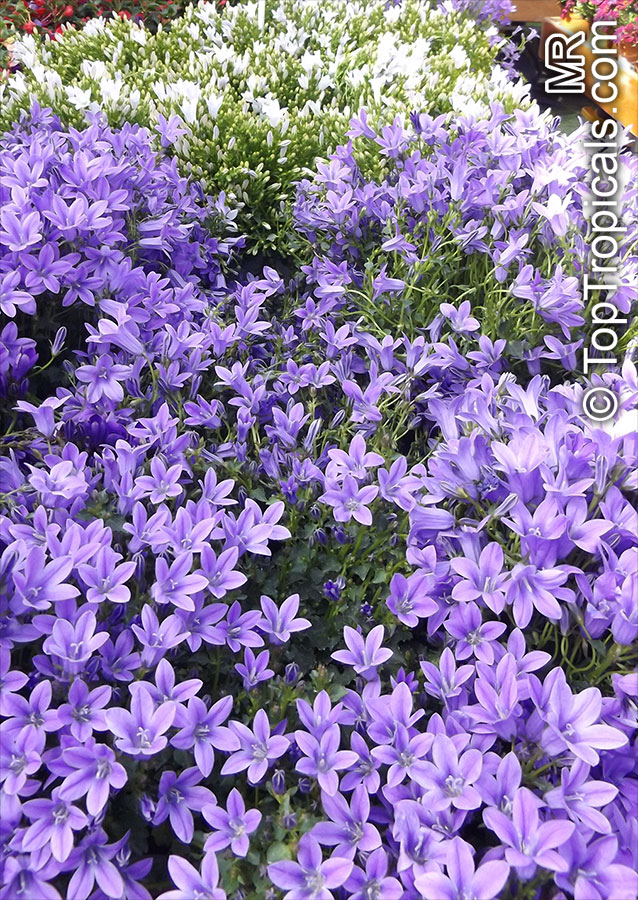
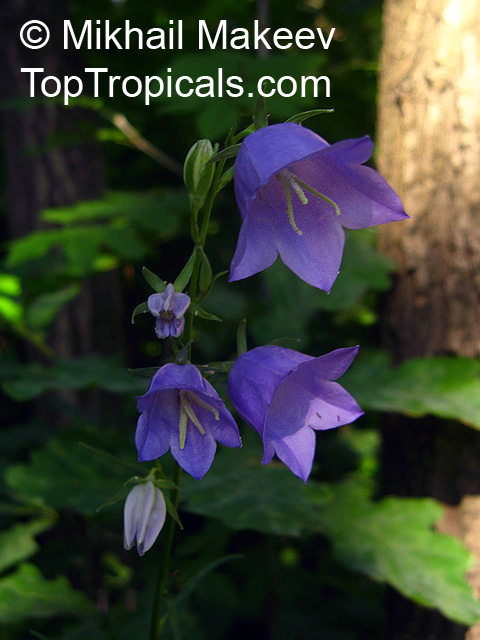
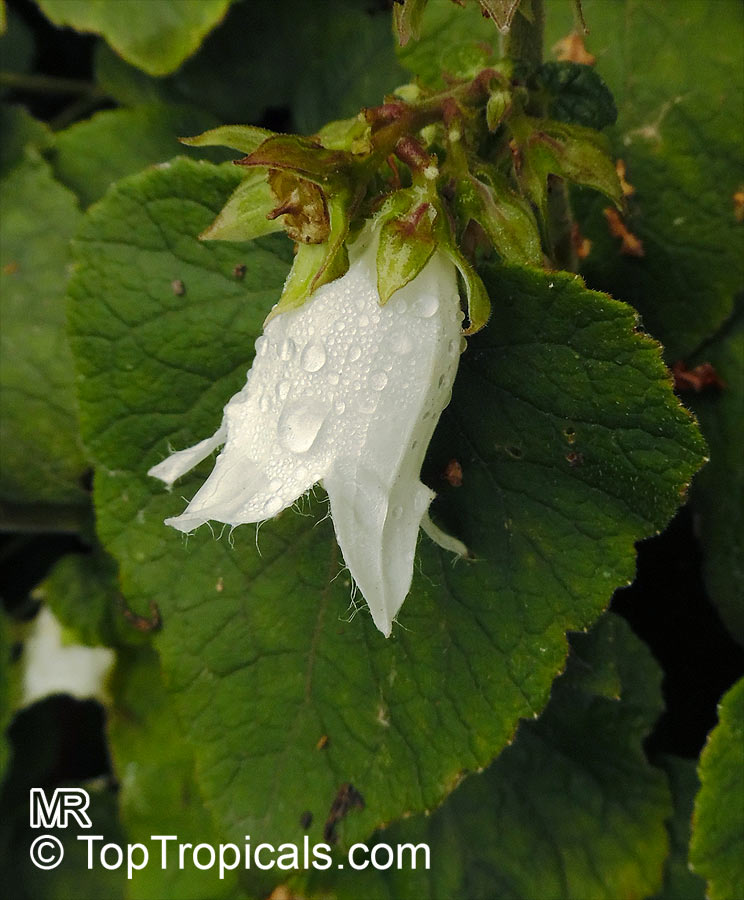
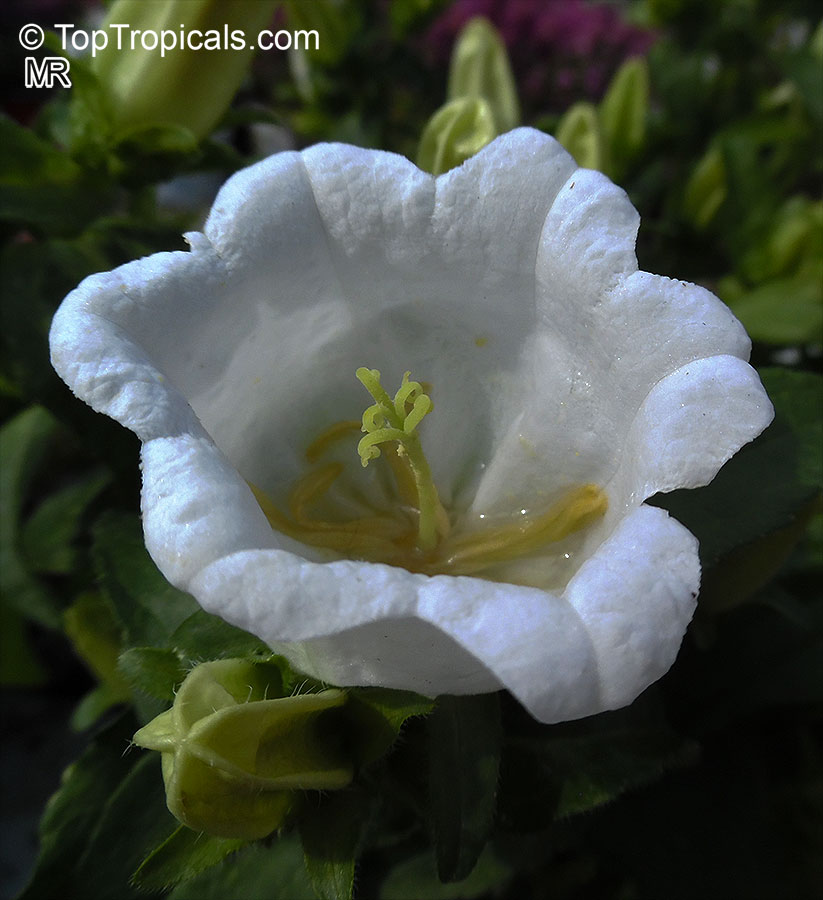
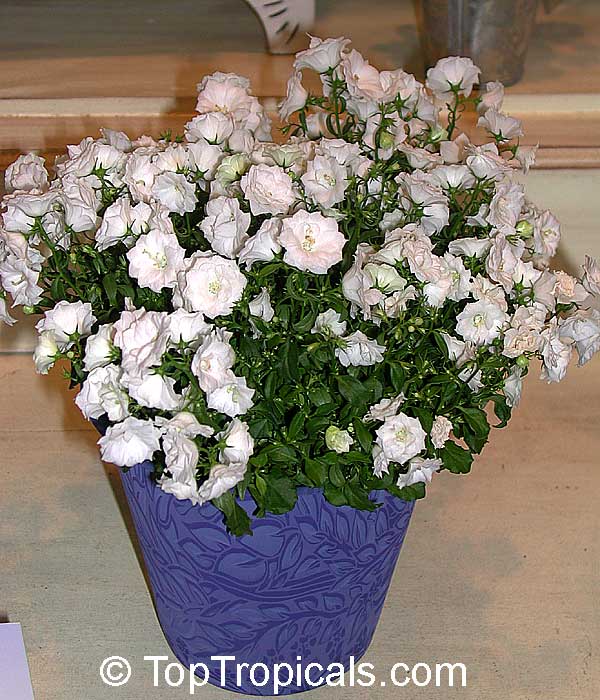
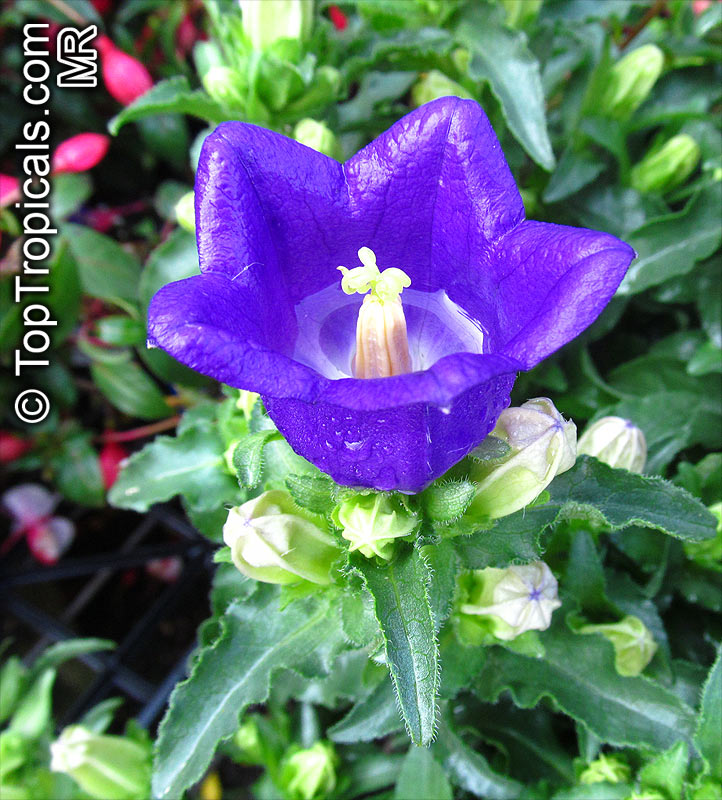
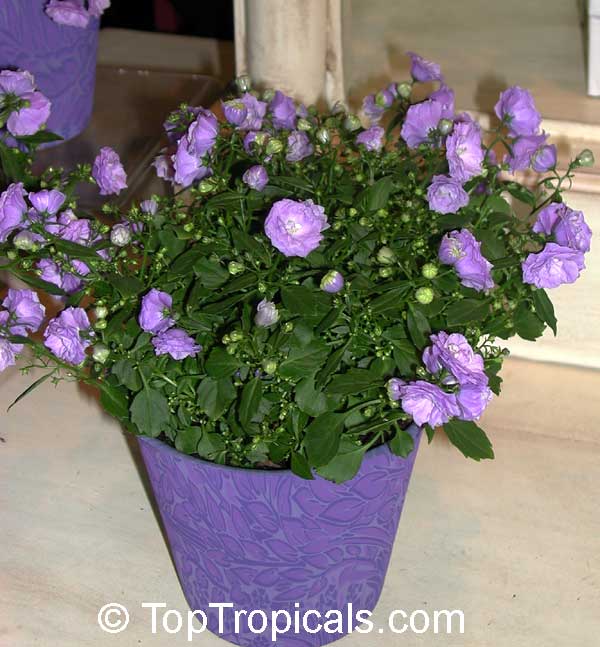
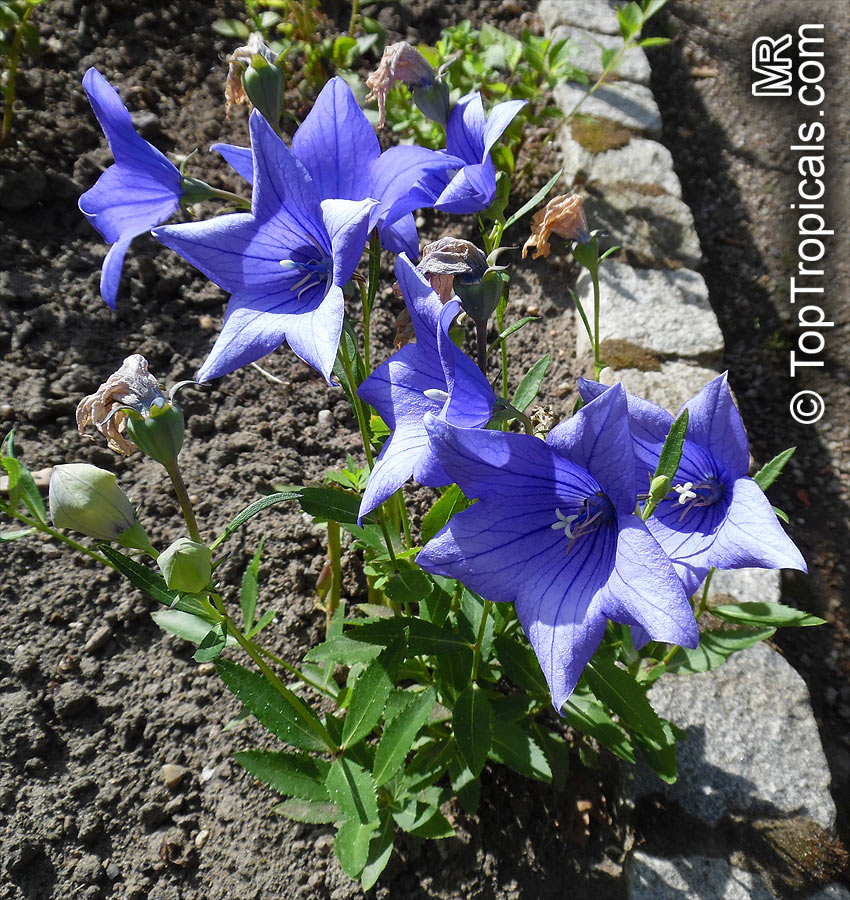
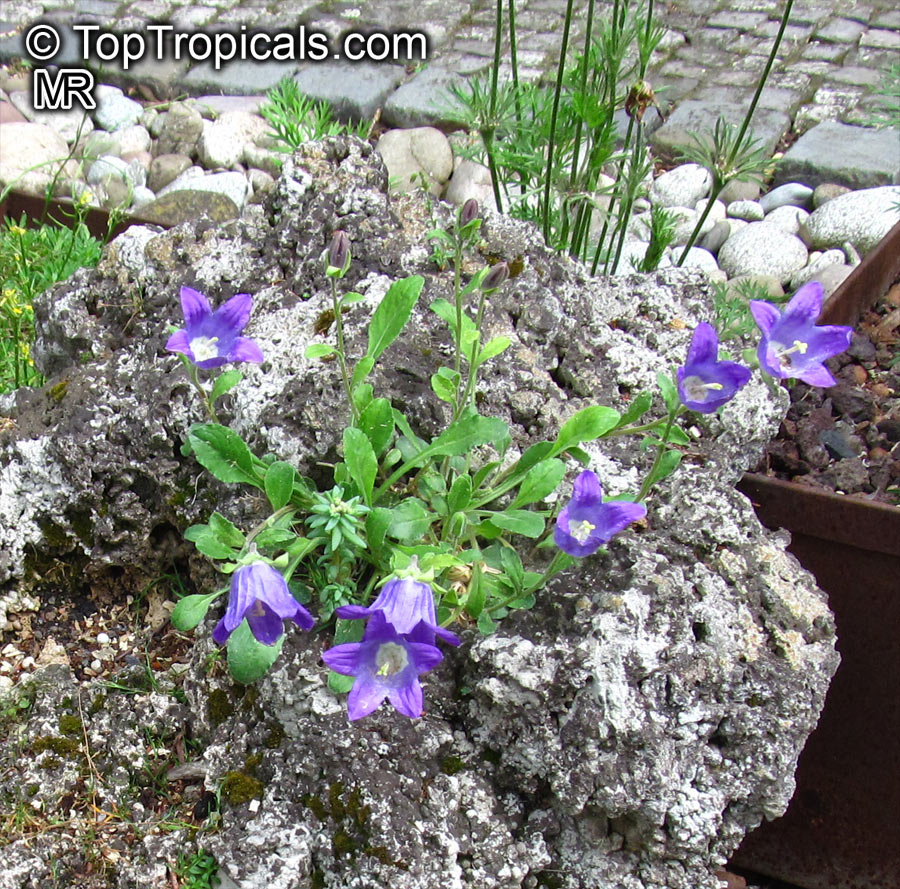
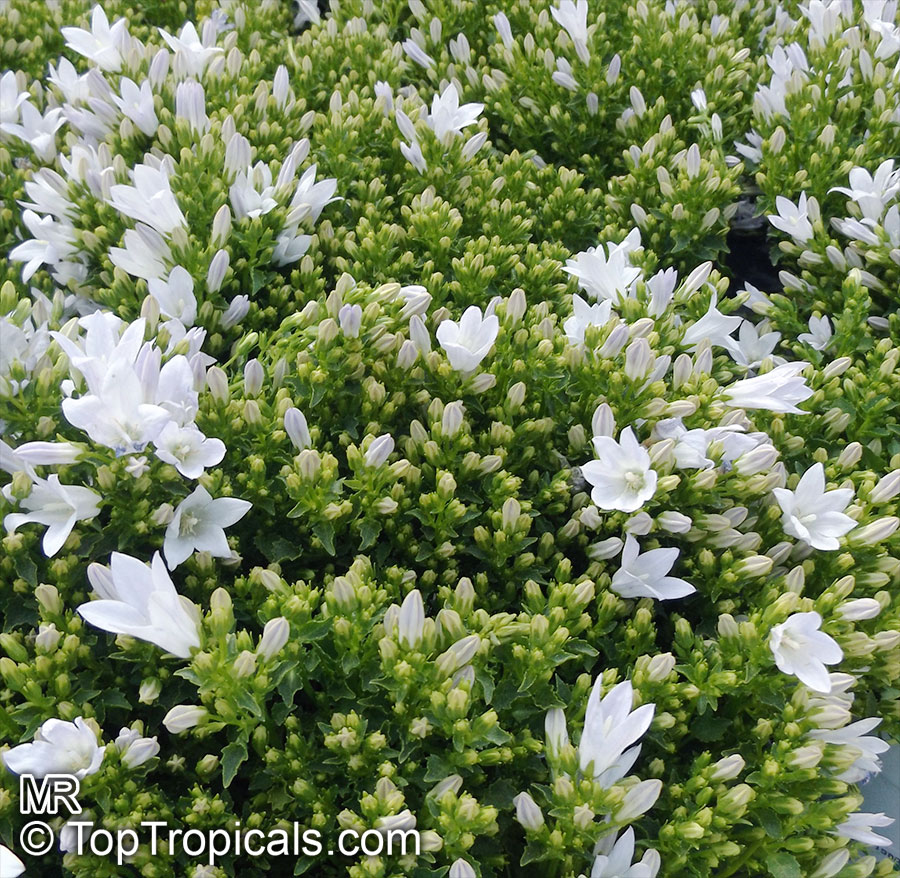
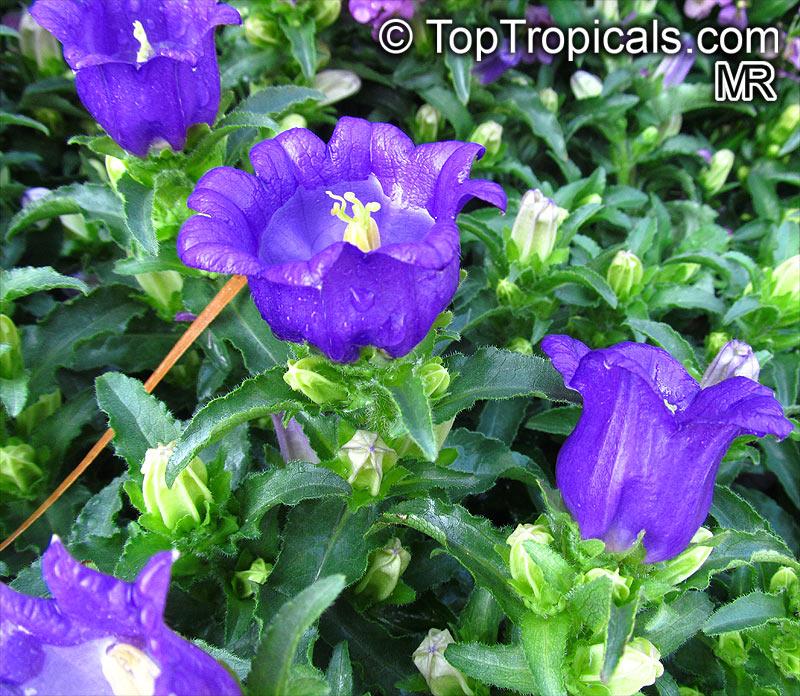
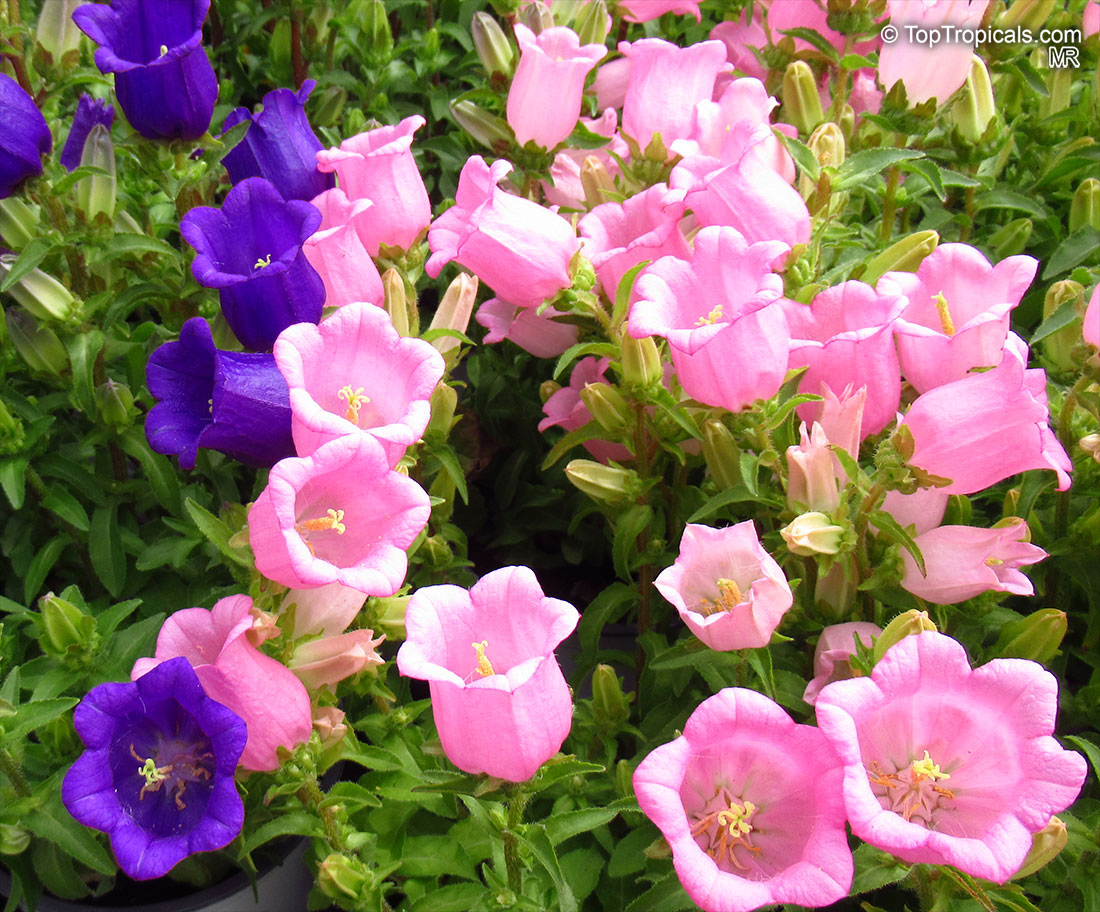
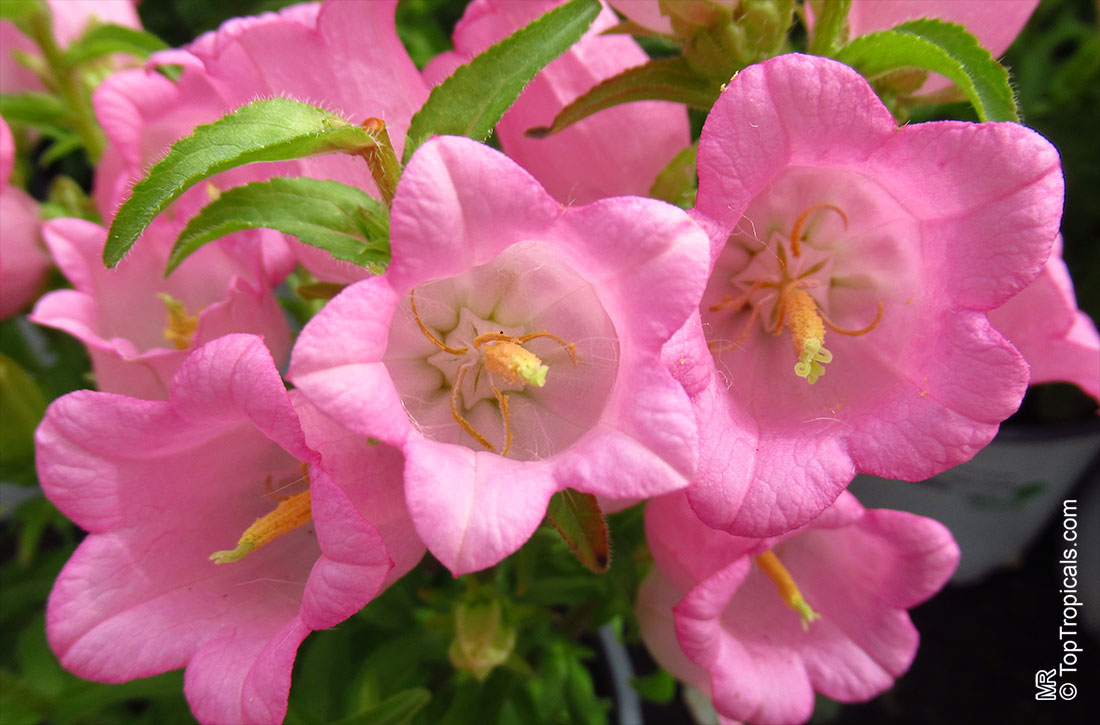
Campanula is one of two genera of bell-flowers in the family Campanulaceae, the other being Campanulastrum. It takes its name from their bell-shaped flowers, and campanula is Latin for 'little bell'. There are about 45 different species and several subspecies, including the northern European Campanula rotundifolia, commonly known as harebell in England and bluebell in Scotland where it grows in the wild, and the southern European Campanula medium, commonly known as Canterbury Bells which is a cultivated garden plant in the United Kingdom. As well as several species occurring naturally in the wild in northern Europe, there are many cultivated garden species. The species Campanula rapunculoides or Campanula rapunculus, commonly known as Rampion, Rampion bellflower, or Rover bellflower is an annual vegetable and a popular garden plant, though sometimes considered too invasive. There are blue, purple and white varieties.
Similar plants: Campanula sp. (Bellflower)