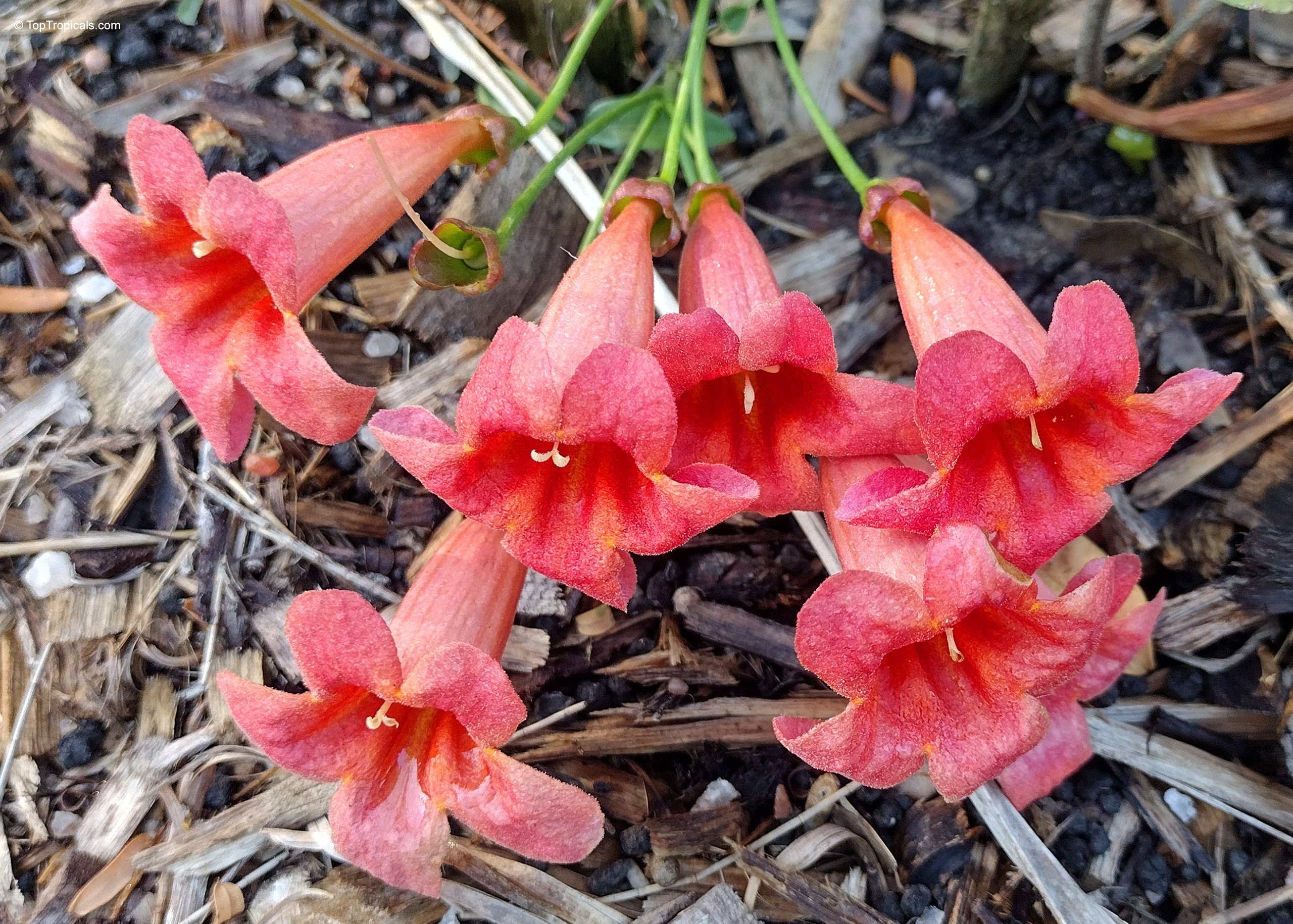
Bignonia capreolata (Crossvine)
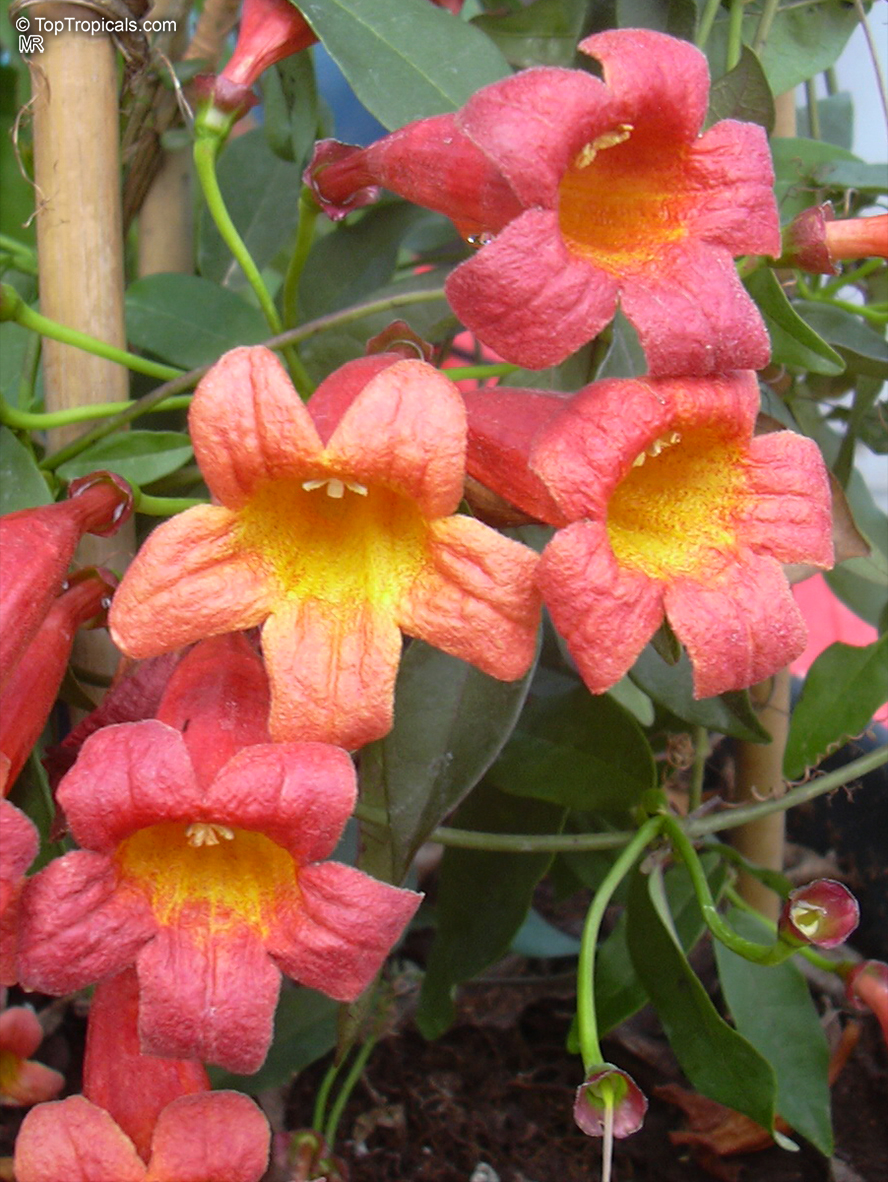
Botanical name: Bignonia capreolata
Common name: Crossvine
Family: Bignoniaceae
Origin: North America
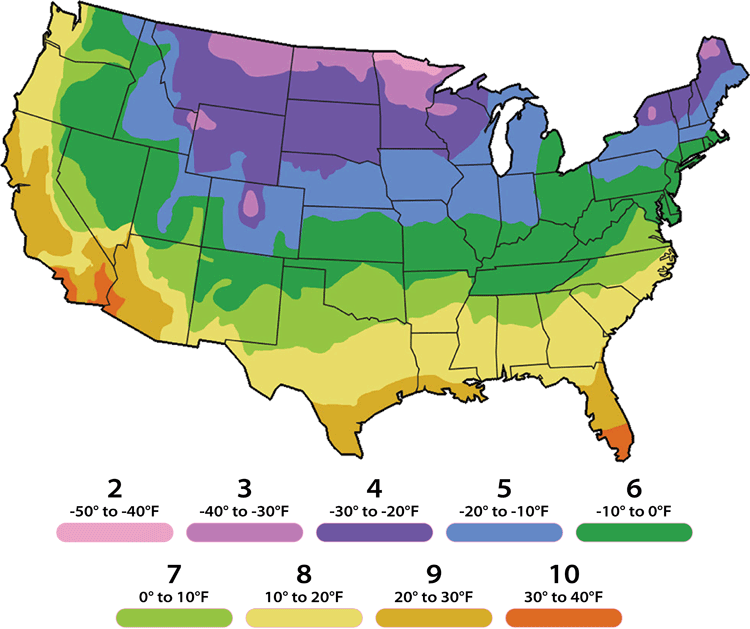
USDA Zone: 6-9
Cold tolerance: 15°F
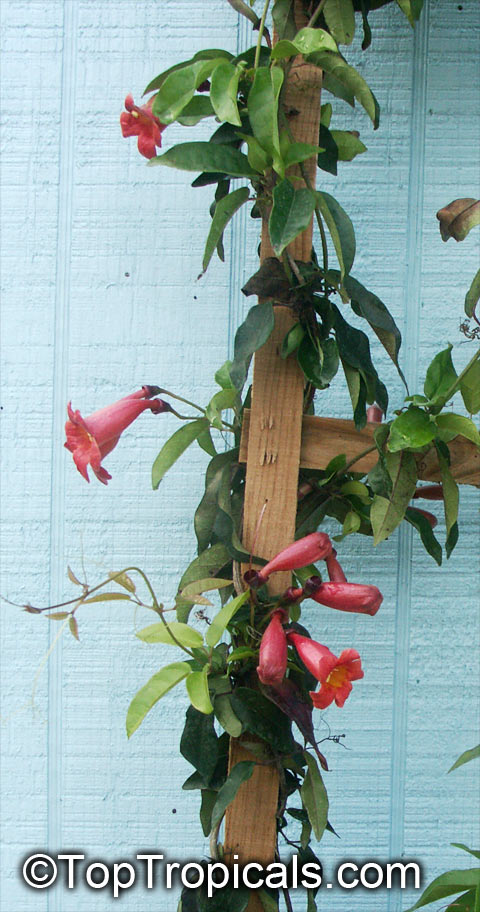
 Plant form: Climbing or creeping vine
 Sun exposure: Full sun or bright light indoor; semi-shade
 Cold tolerance: Tolerates light freezing to about 30°F for short periods (mature plants). Young plants must be protected.
 Watering: Regular
 Flower color: Red, crimson, vinous; yellow, orange
 Suitable for: Outdoors in the suitable USDA zone; small gardens, containers, and indoor growing
 Wildlife: Attracts butterflies and hummingbirds
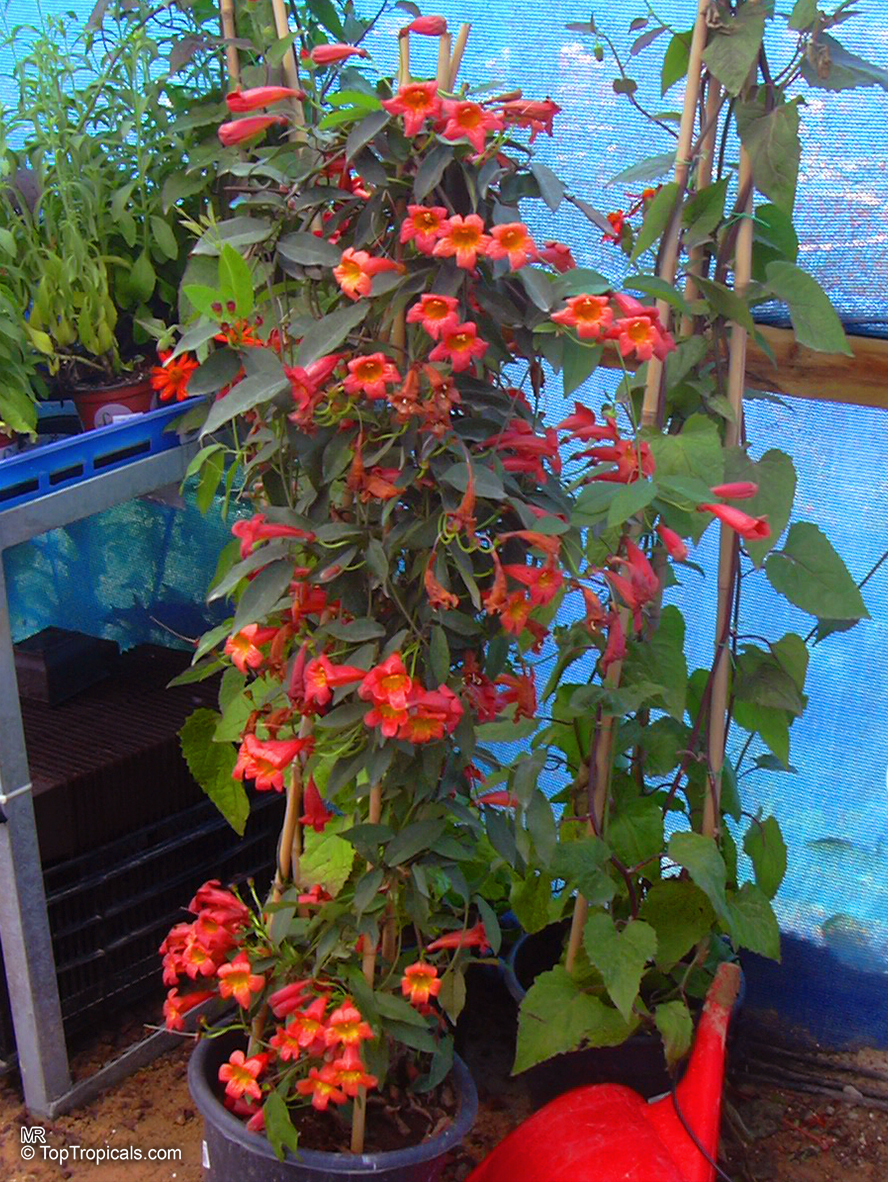
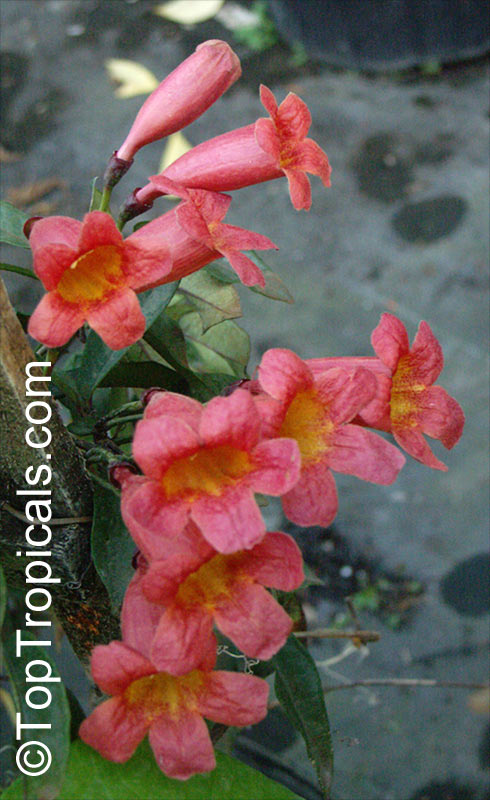
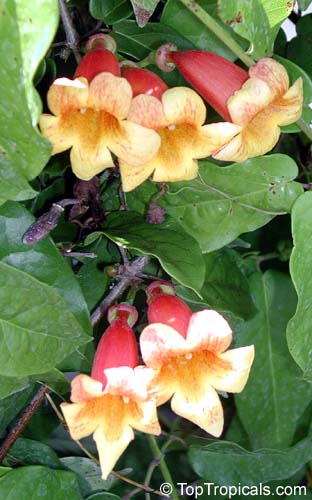
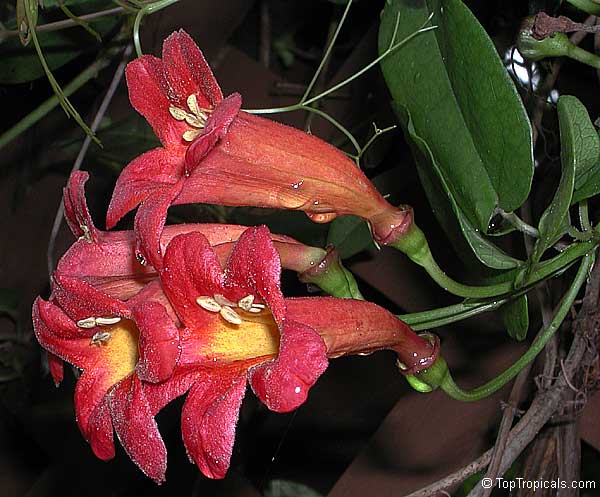
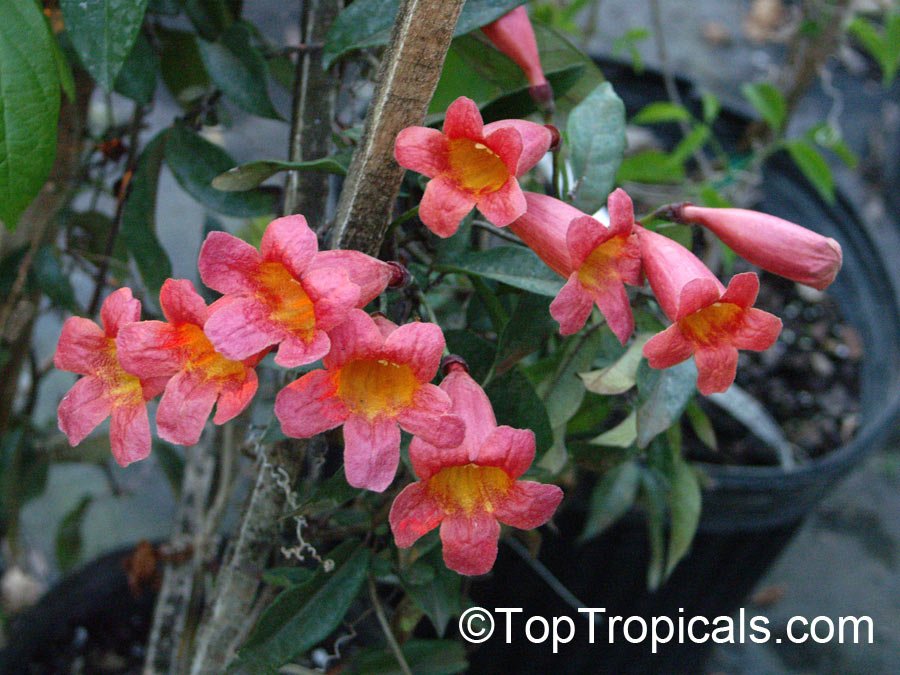
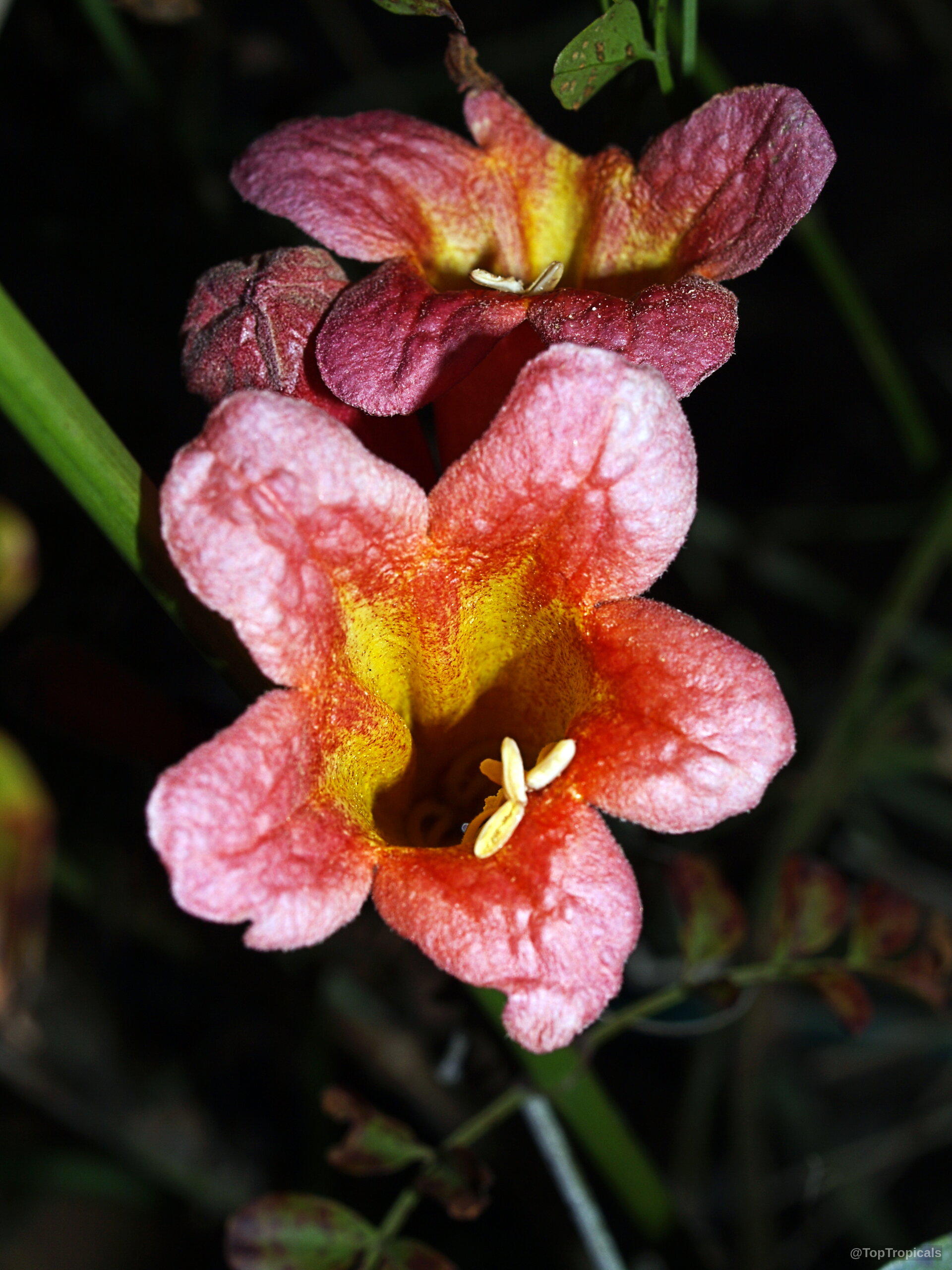
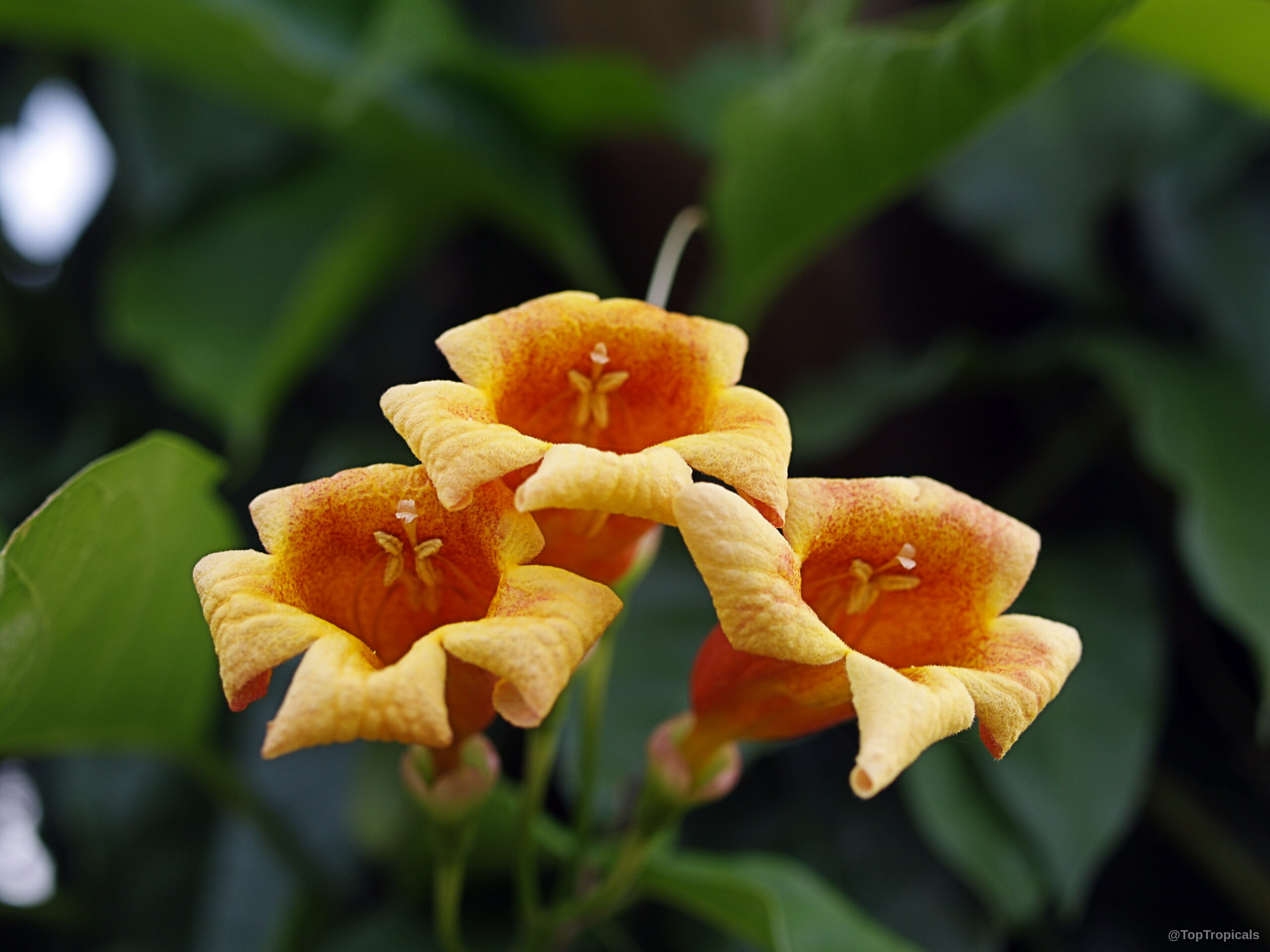
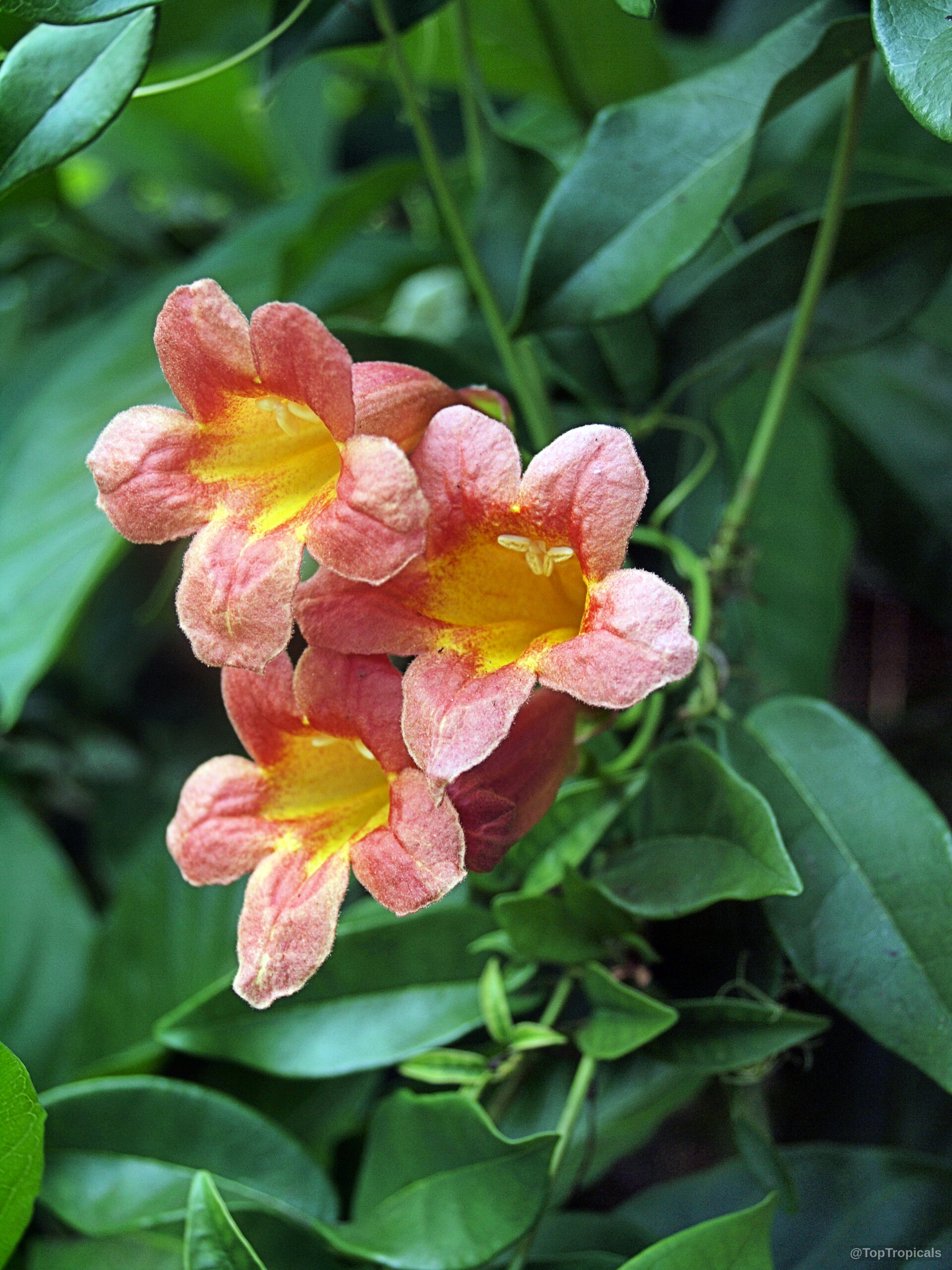
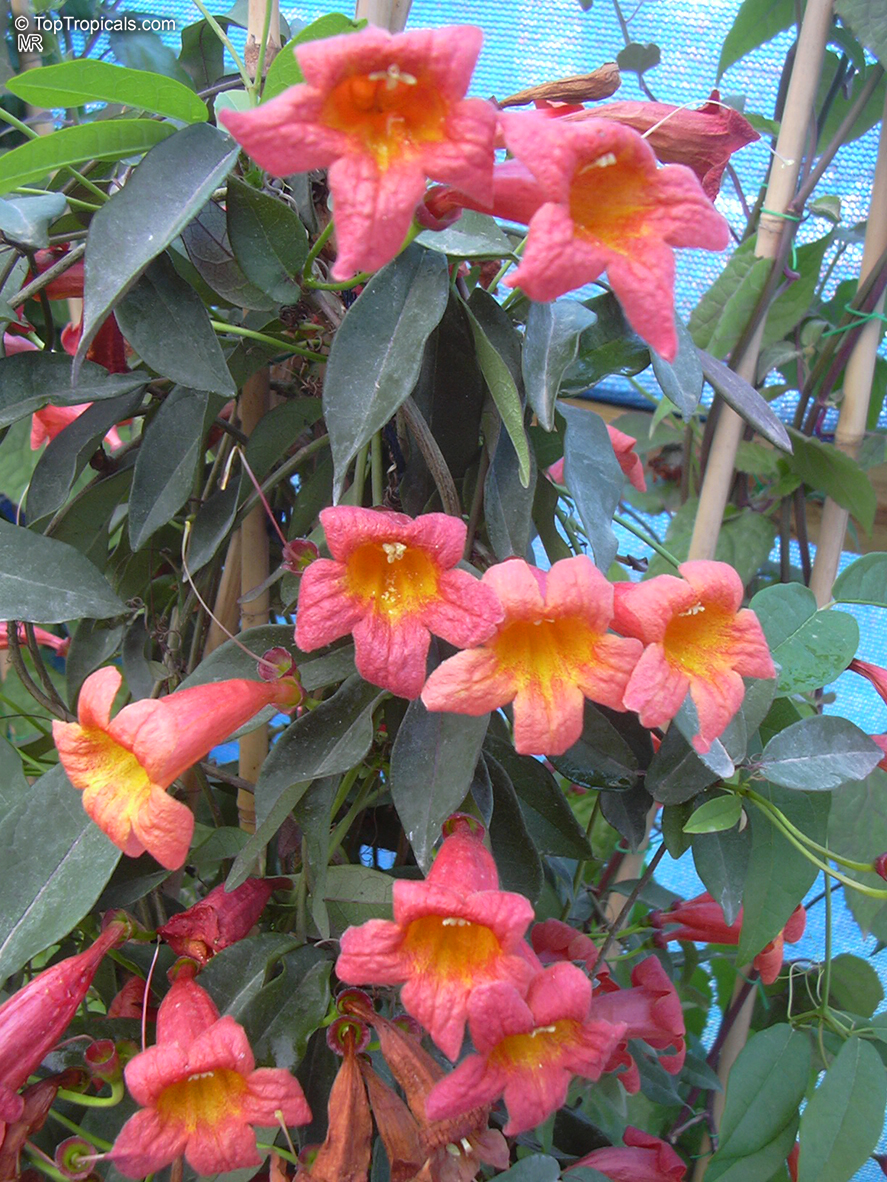
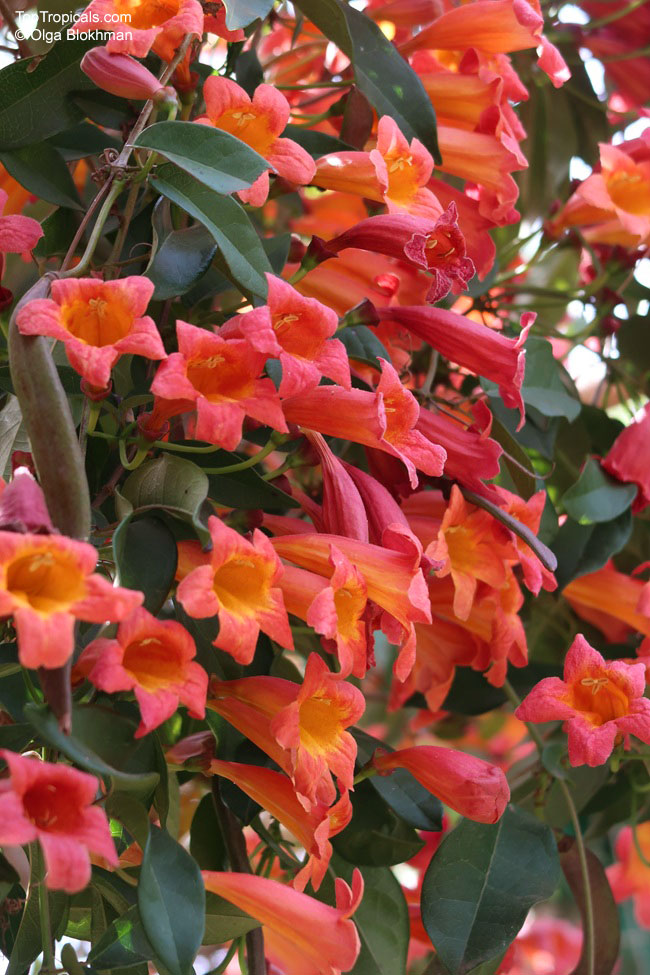
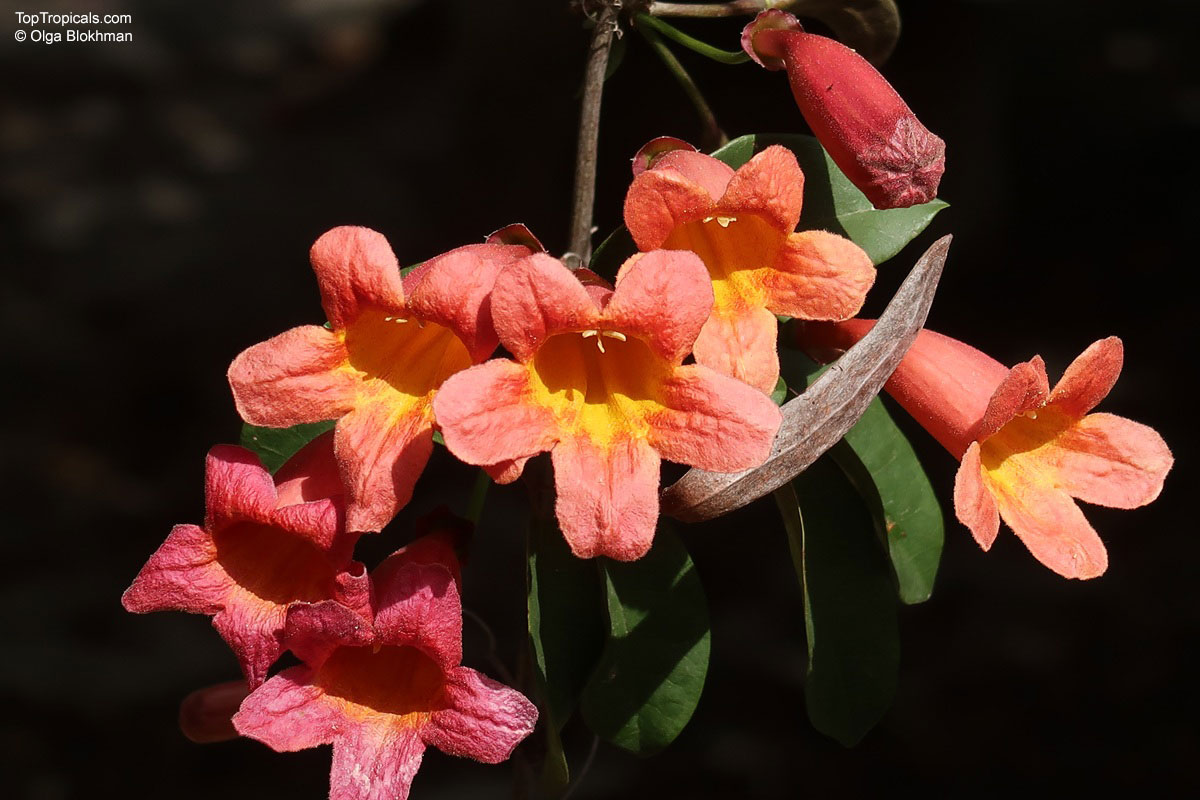
Bignonia capreolata, commonly known as Crossvine, is a vigorous woody vine in the Bignoniaceae family, native to the central, southeastern, and south-central United States. It occurs naturally in alluvial forests, mixed and deciduous woodlands, thickets, and moist hammocks, climbing high into trees. The opposite leaves have two glossy leaflets, with the terminal leaflet replaced by a branched tendril bearing adhesive disks that allow the vine to cling to bark and other supports. Its common name refers to the distinctive cross-shaped pattern visible in a transverse section of the mature stem. Clusters of tubular to funnel-shaped flowers are typically orange-red with yellowish throats and attract hummingbirds. Older names include Anisostichus capreolata and Doxantha capreolata. Plants of the World Online
Crossvine can climb 30-50 feet and is evergreen to semi-evergreen in warm climates, while foliage may turn reddish-purple in colder winters. It flowers best in full sun but tolerates considerable shade and grows in average to moist, well-drained soils. It spreads by root suckers and can cover fences, arbors, and large supports rapidly. Reliable horticultural sources place it in USDA Zones 5-9, although stems may die to the ground during severe Zone 5 winters and regrow from hardy roots.
Similar plants: Bignonia capreolata (Crossvine)
- Adenocalymna comosum (Yellow Trumpet Vine)
- Anemopaegma chamberlaynii (Yellow Trumpet Vine)
- Bignonia magnifica (Glowvine)
- Campsis grandiflora (Chinese Trumpet Creeper)
- Clytostoma callistegioides (Violet Trumpet Vine)
- Distictis buccinatoria (Mexican Blood Flower)
- Dolichandra unguis-cati (Cat's Claw)
- Jacaranda jasminoides (Dwarf Maroon Jacaranda)
- Mansoa verrucifera (Mansoa)
- Pandorea jasminoides (Pandora vine)