Agapanthus sp. (African Lily)
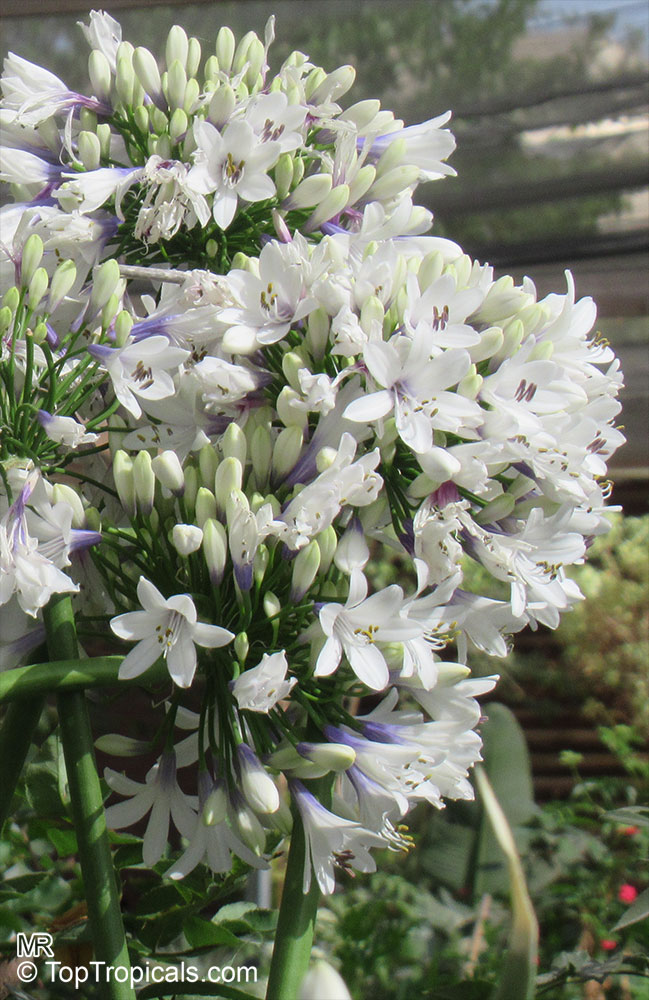
Botanical name: Agapanthus sp.
Common name: African Lily
Family: Amaryllidaceae (Formerly:Alliaceae / Liliaceae /Amaryllidaceae)
Subfamily: Agapanthoideae
Origin: South Africa

USDA Zone: 8-11
 Plant form: Small
 Mature height: 2-5 ft

 Sun exposure: Full sun or bright light indoor; semi-shade
 Cold tolerance: Tolerates light freezing to about 30°F for short periods (mature plants). Young plants must be protected.
 Watering: Moderate

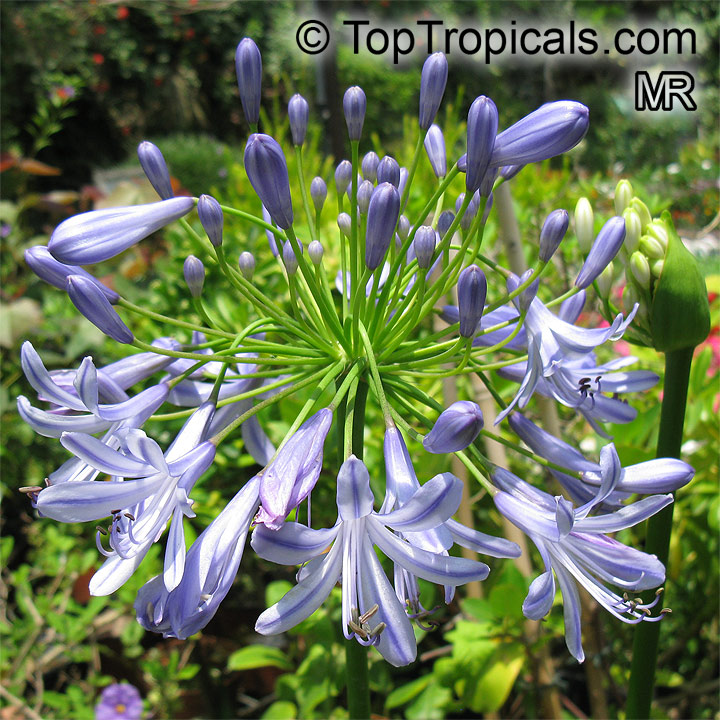
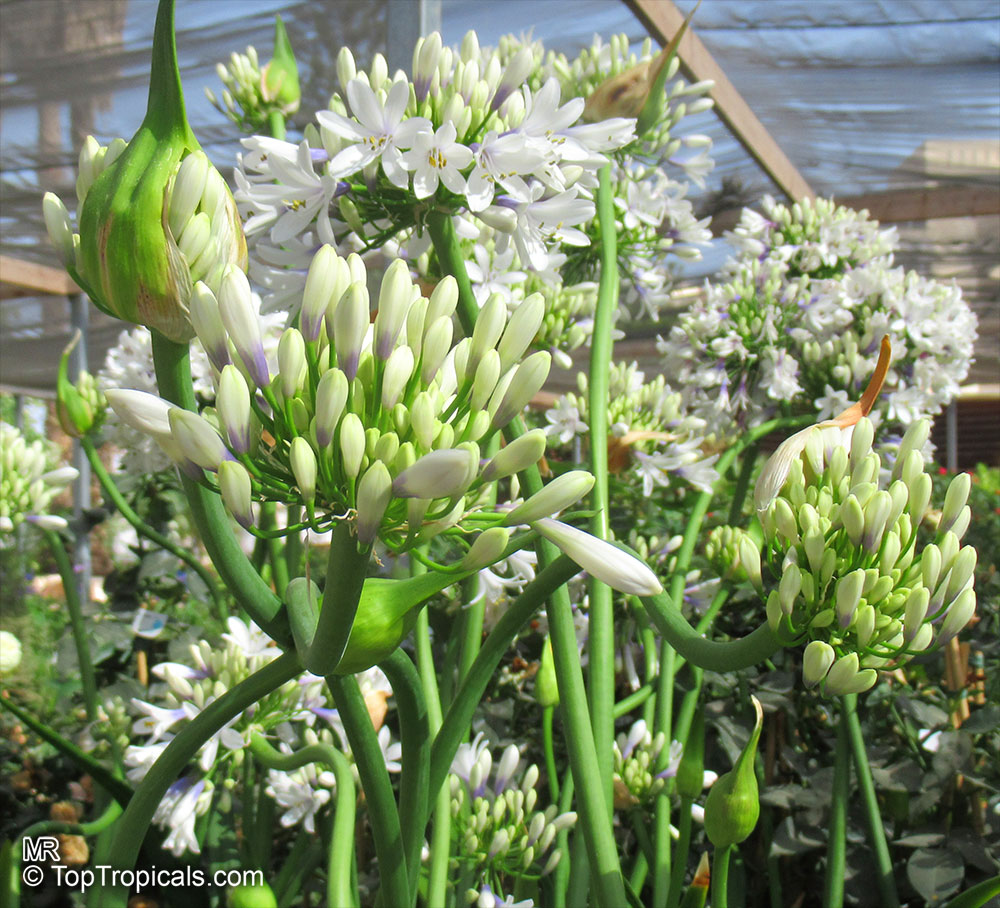
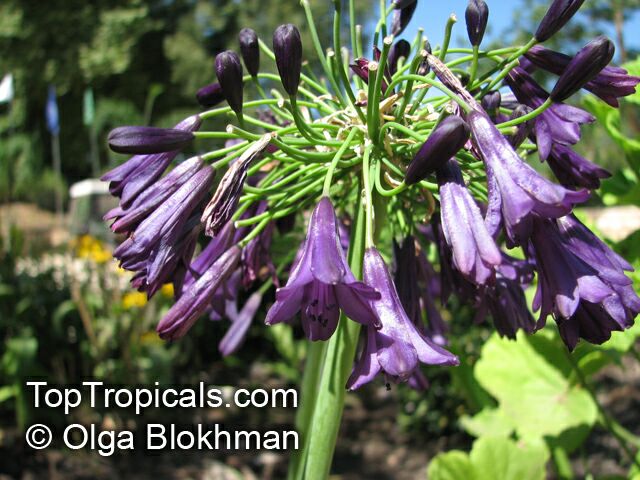
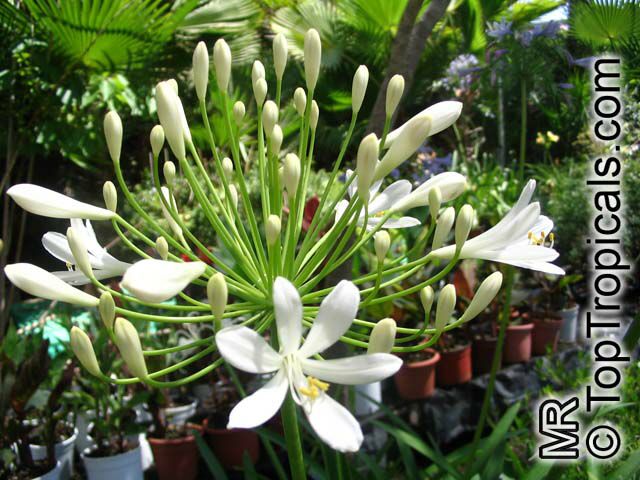
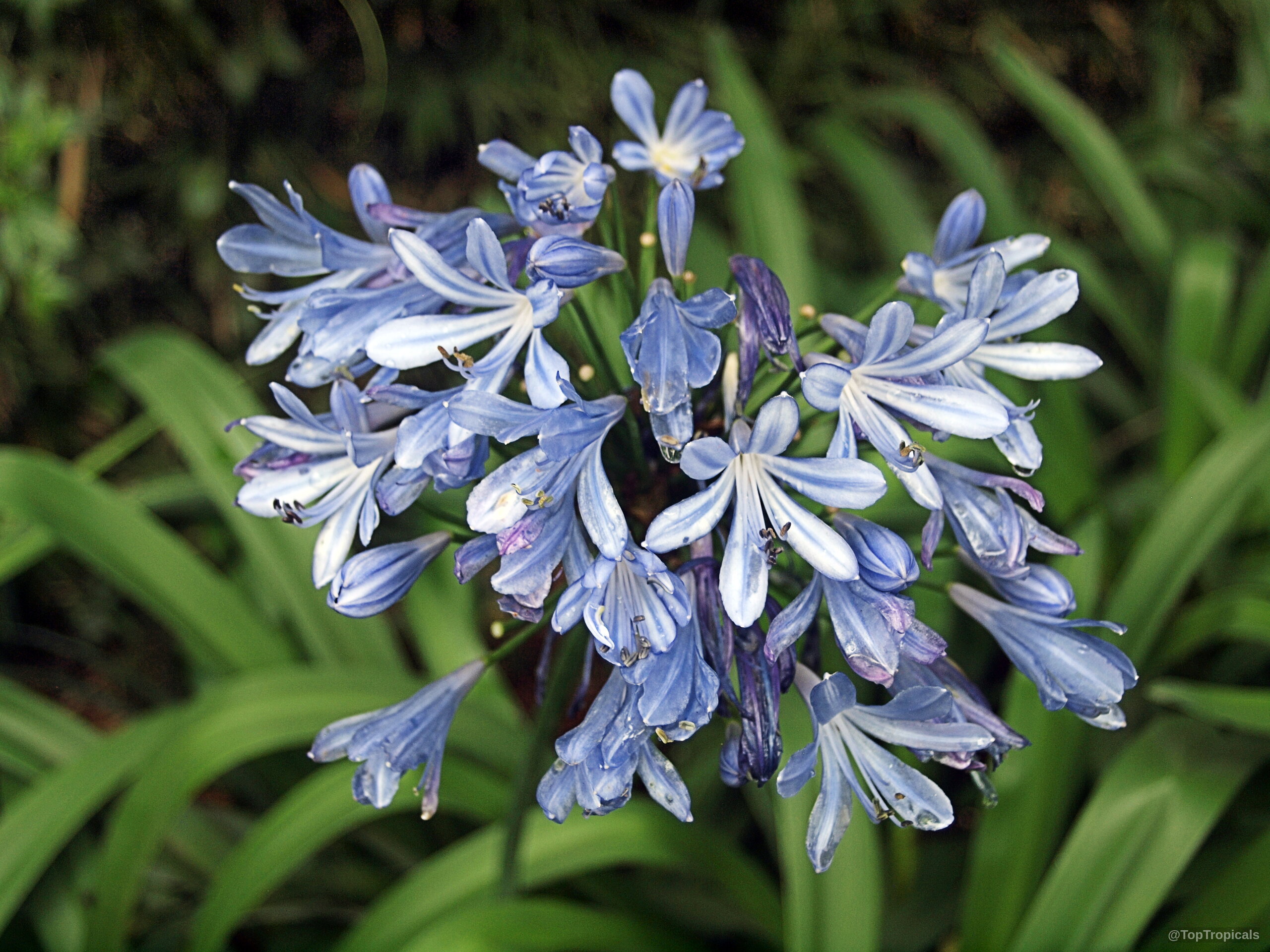
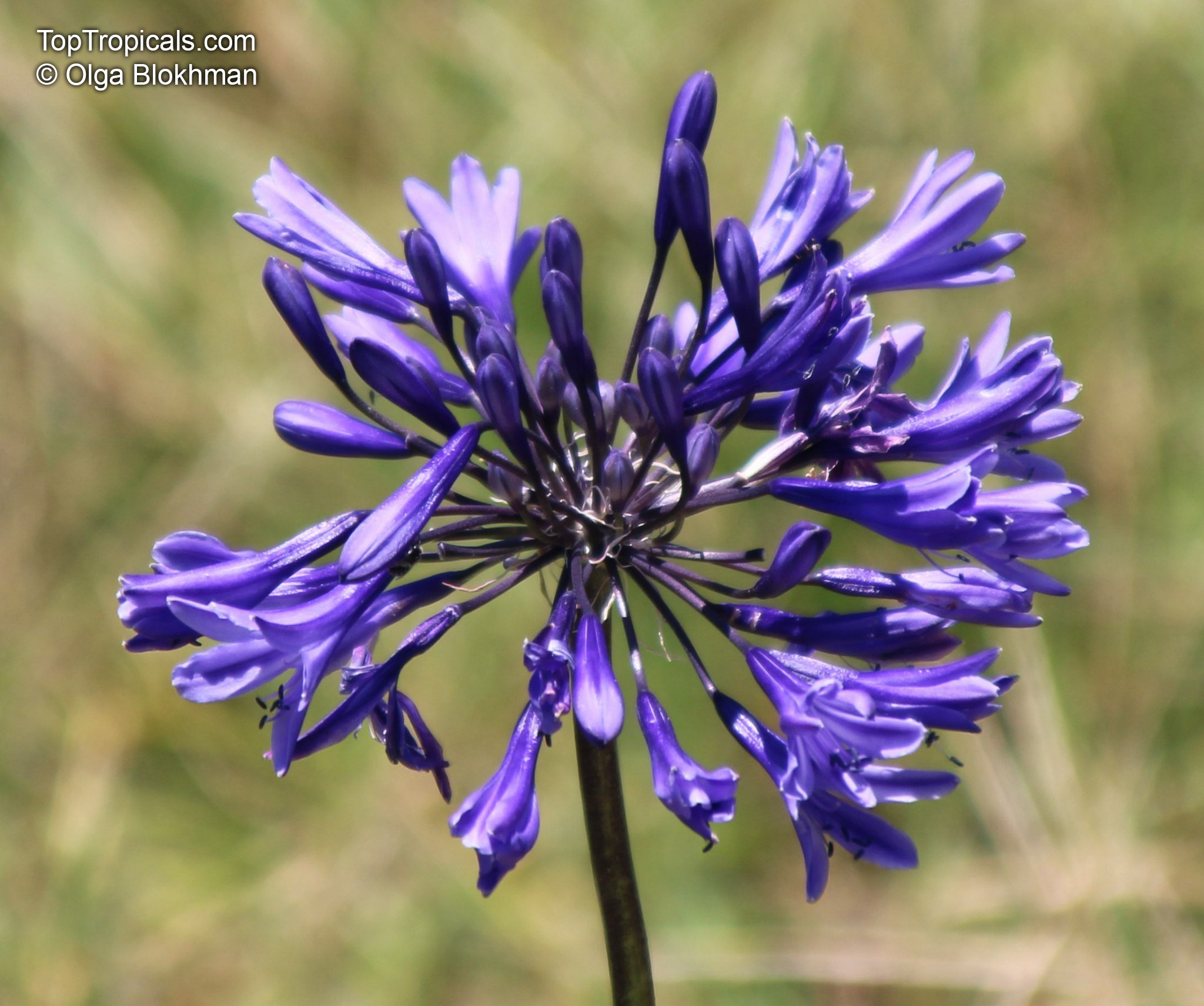
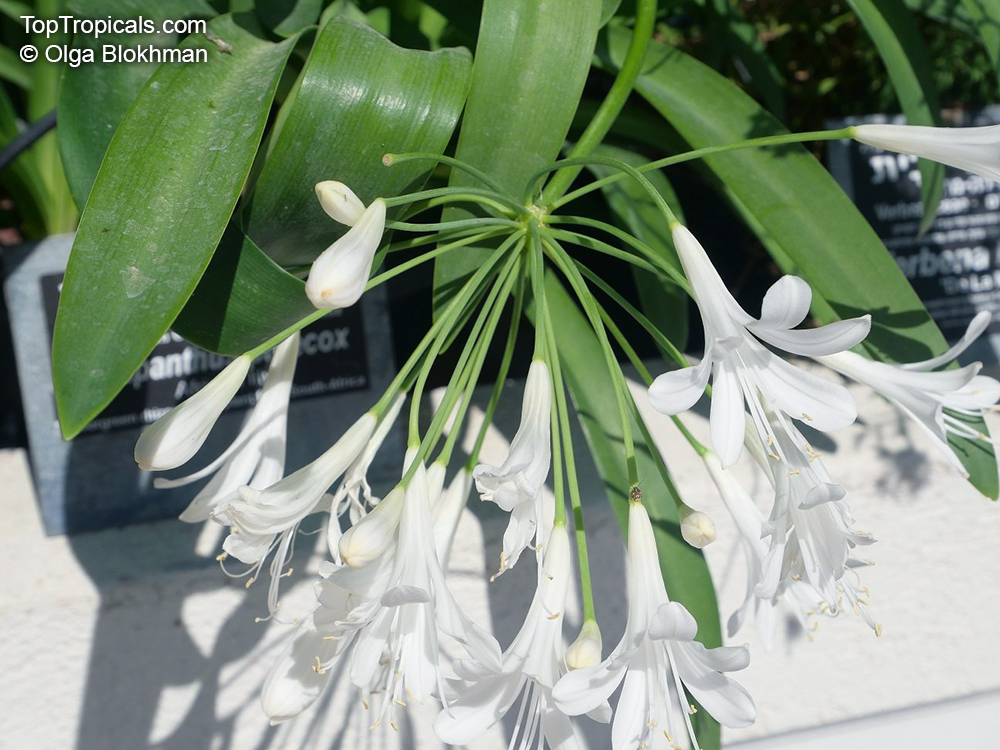
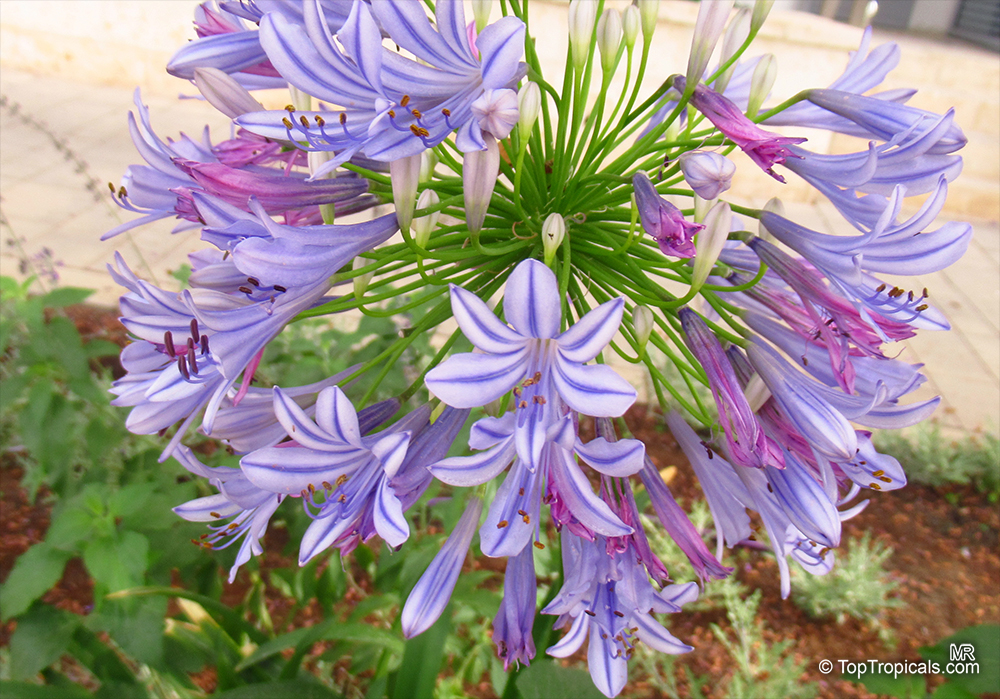
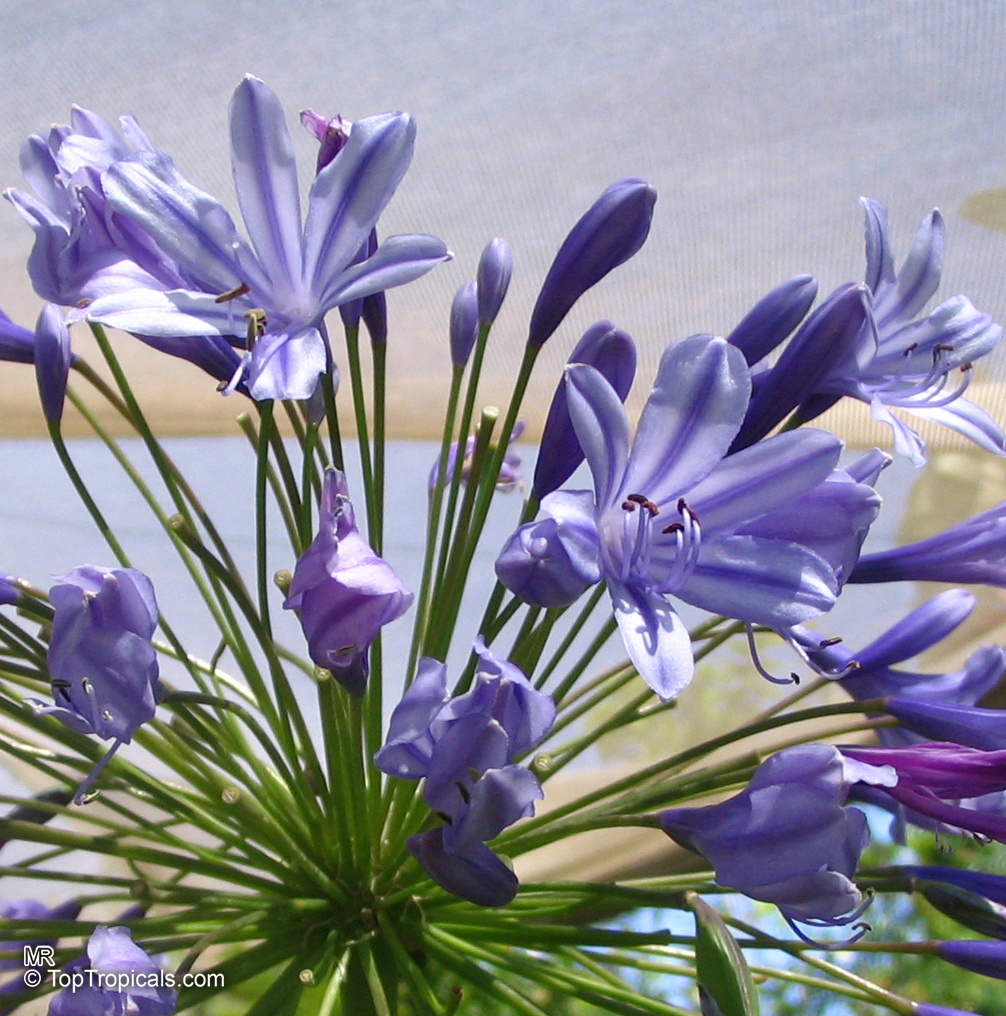
 Flower color: White and off-white; blue, lavender, purple
 Suitable for: Outdoors in the suitable USDA zone; small gardens, containers, and indoor growing
 Wildlife: Attracts butterflies and hummingbirds
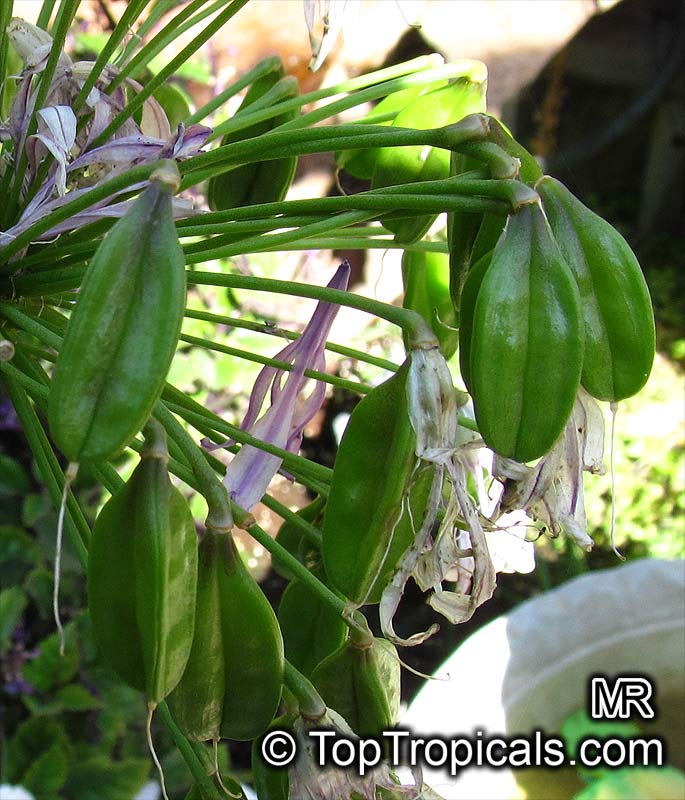
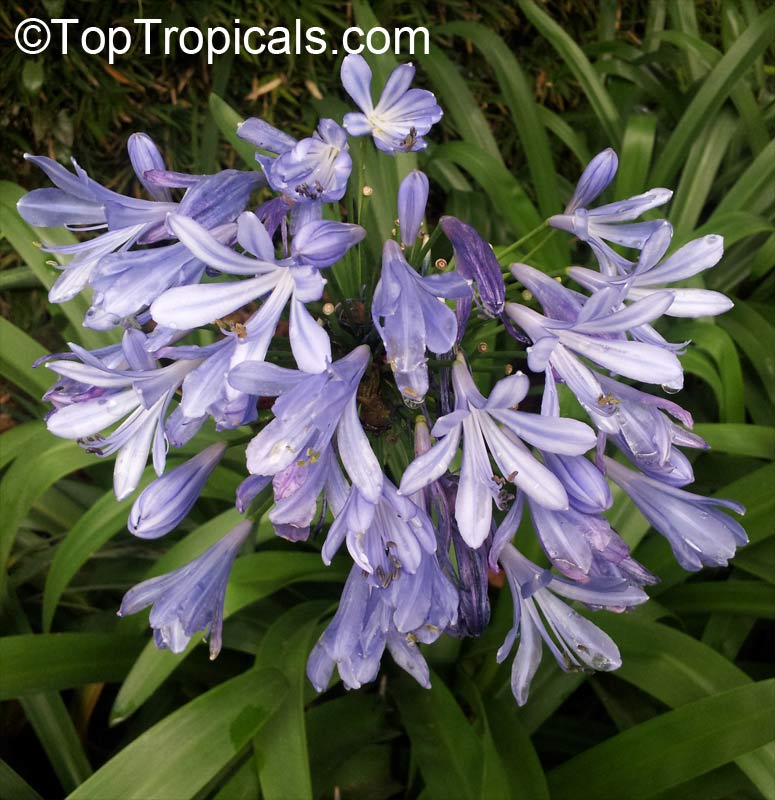
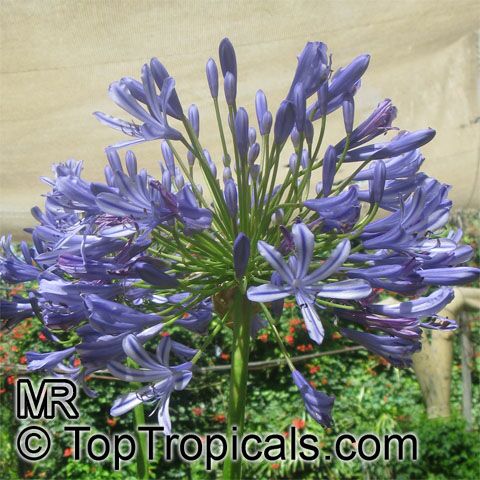
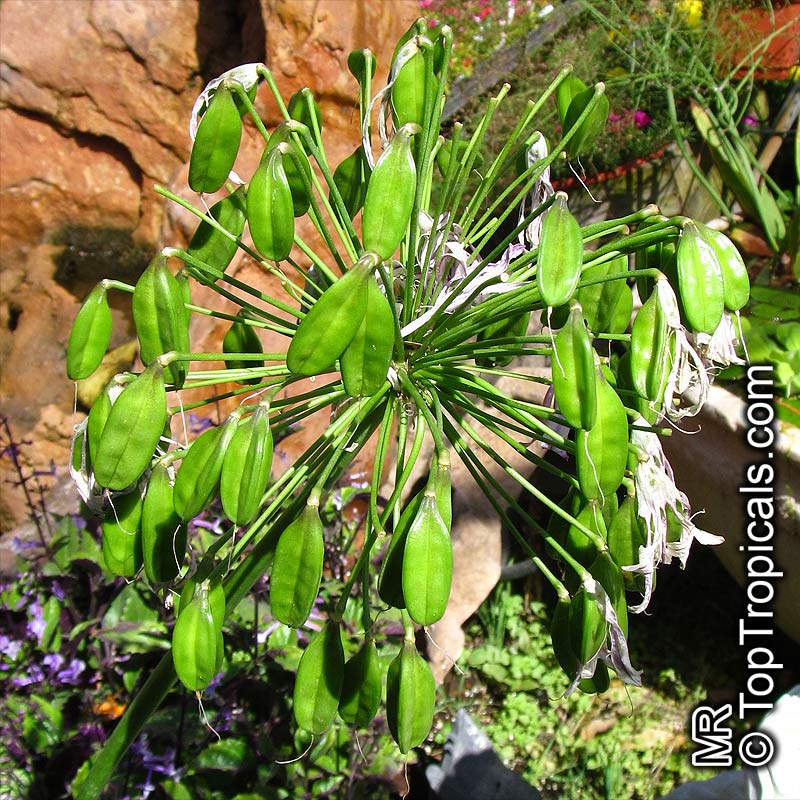
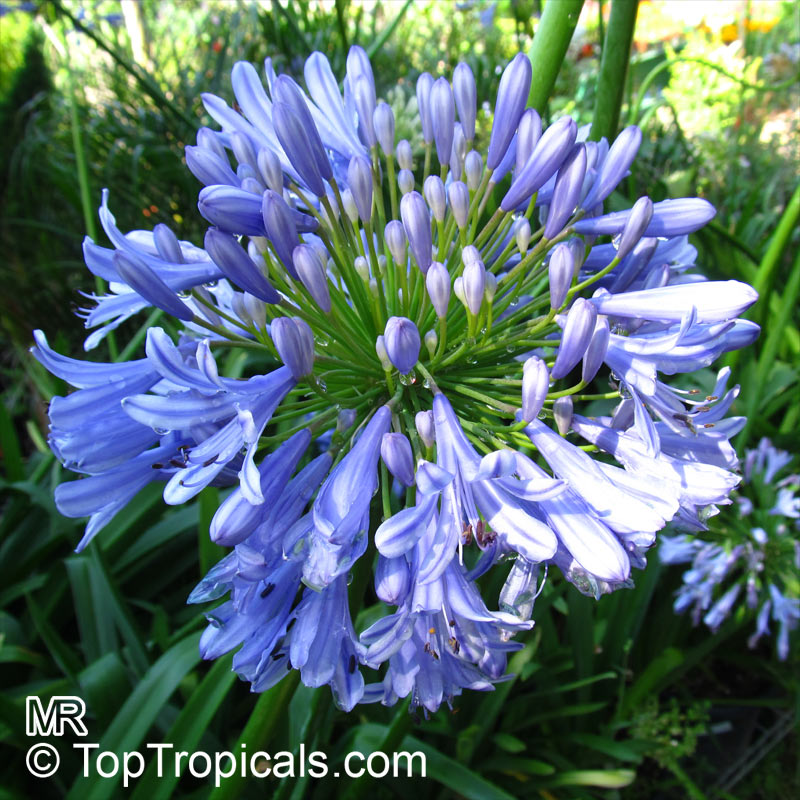
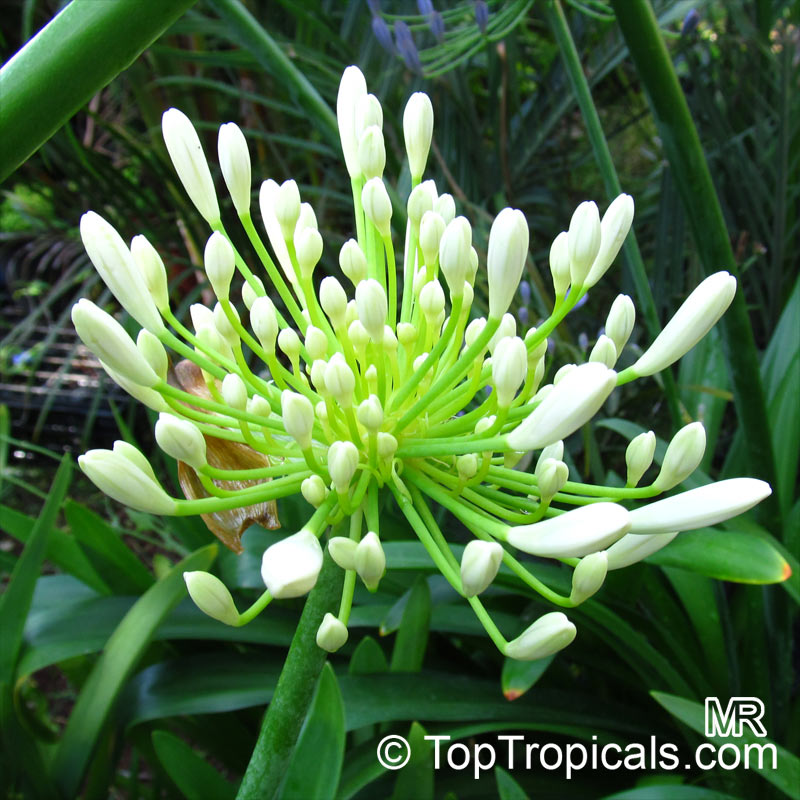
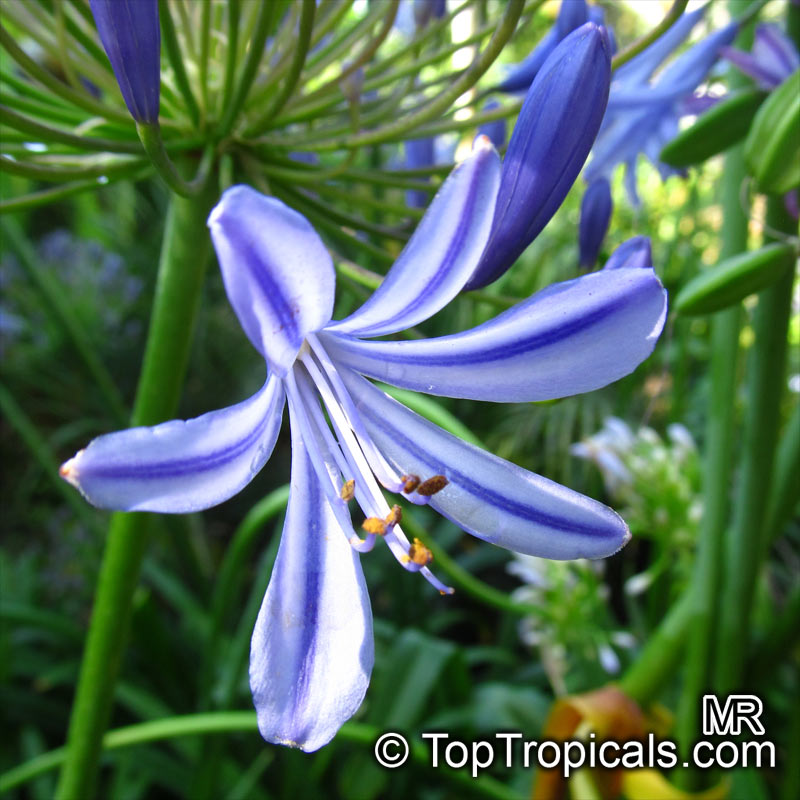
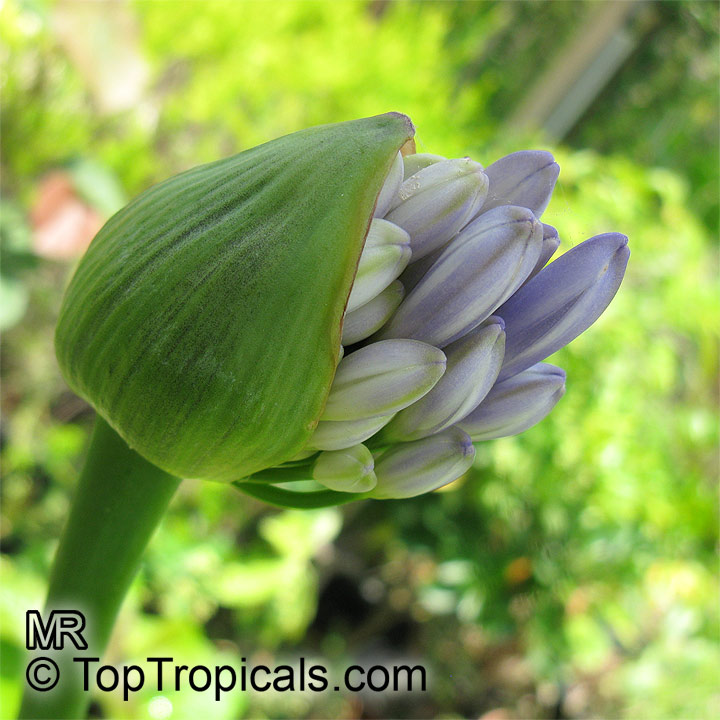
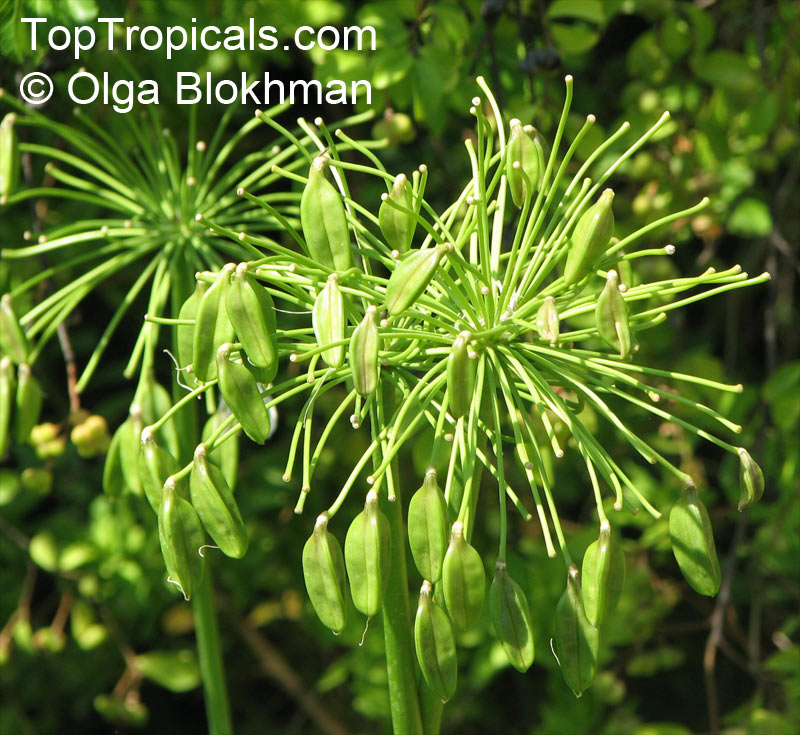
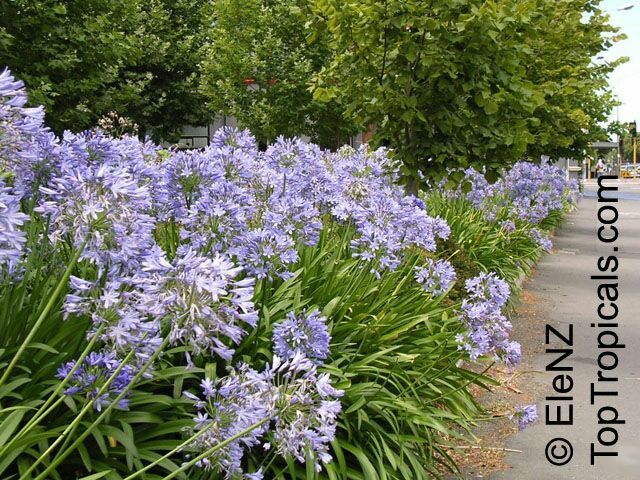
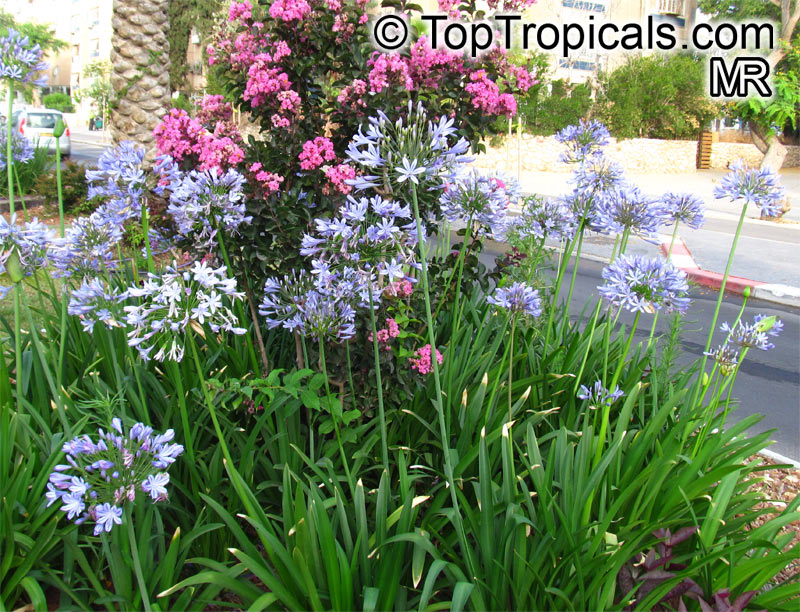
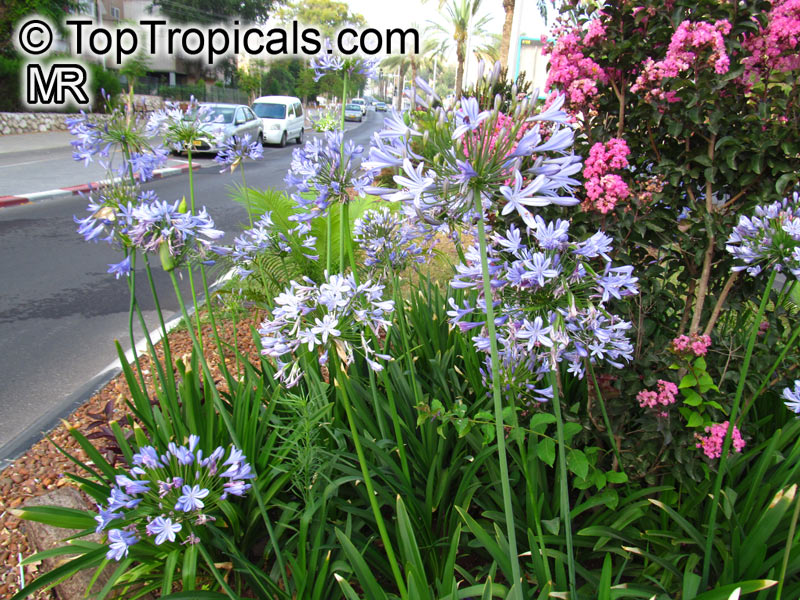
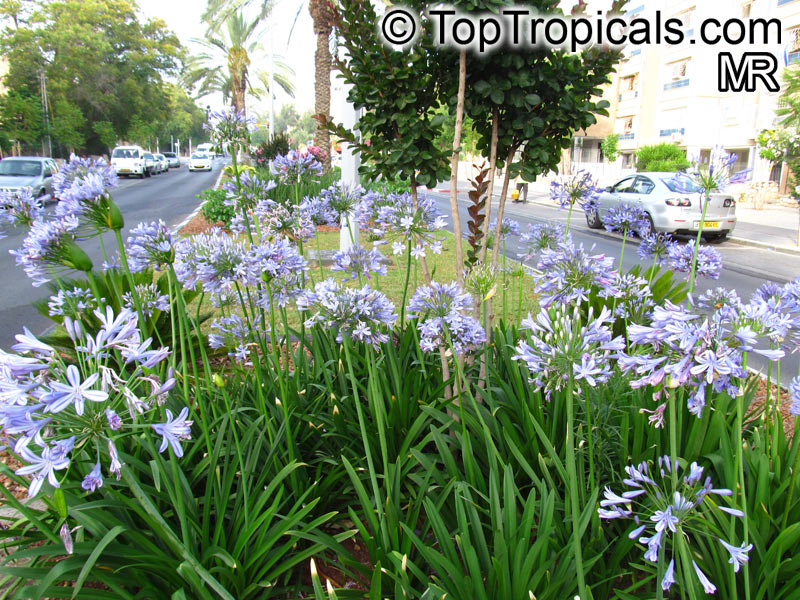
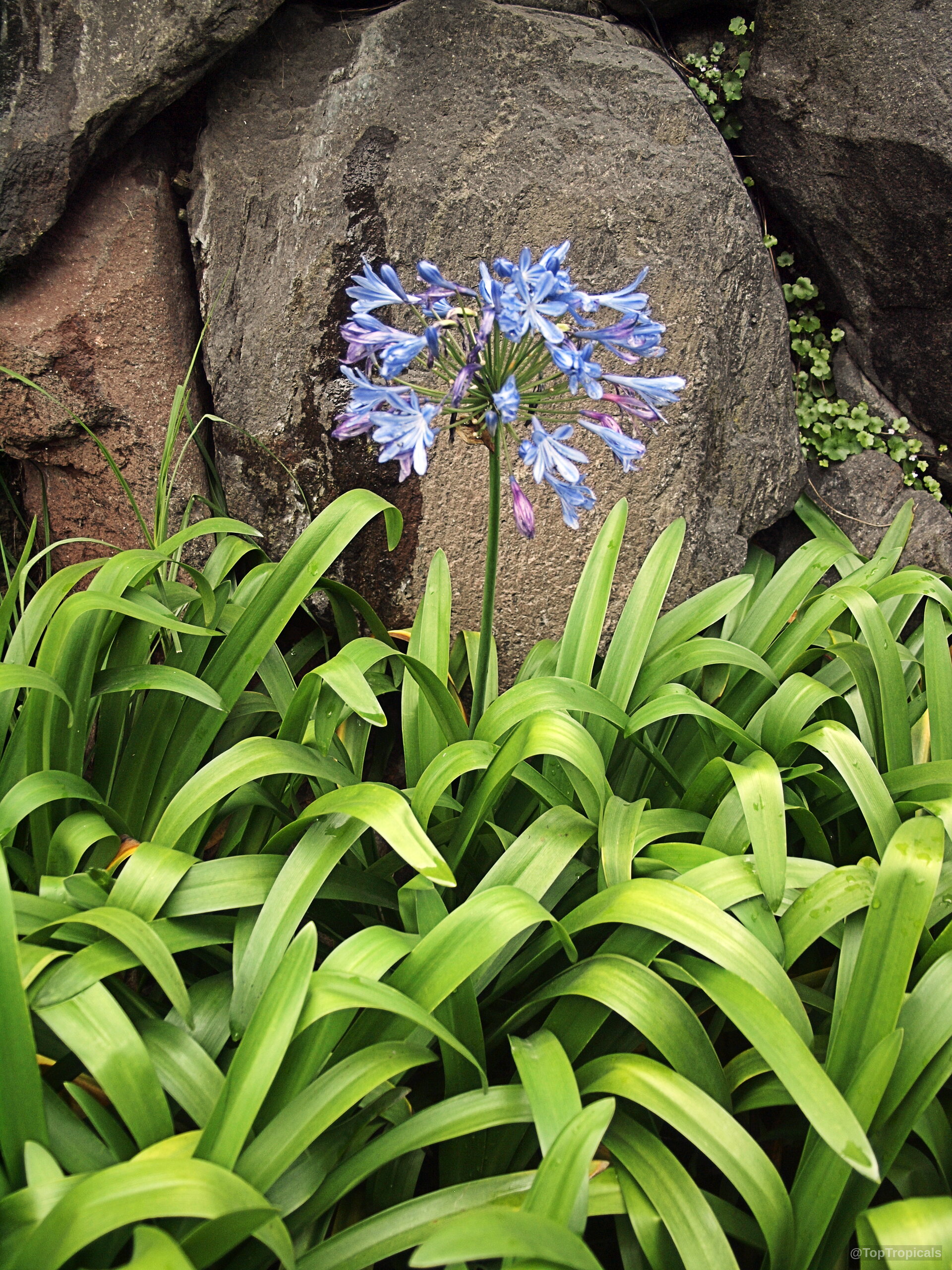
Agapanthus, commonly known as African Lily or Lily of the Nile, is a genus of rhizomatous perennials in the Amaryllidaceae family, native to southern Africa. Plants form dense clumps of strap-shaped green leaves and produce tall, leafless flower stalks topped by rounded umbels of numerous funnel-shaped flowers. Flower colors range from white and pale blue to rich violet-blue and deep purple, with bicolored forms also available. Species may be evergreen or deciduous, and garden plants include numerous cultivars and hybrids selected for flower color, compact growth, large flower heads, or variegated foliage. Popular cultivars include 'Peter Pan', 'Twister','Queen Mum', Black Pantha', and 'Storm Cloud'. Flowering plants are especially effective in borders, mass plantings, and large containers.
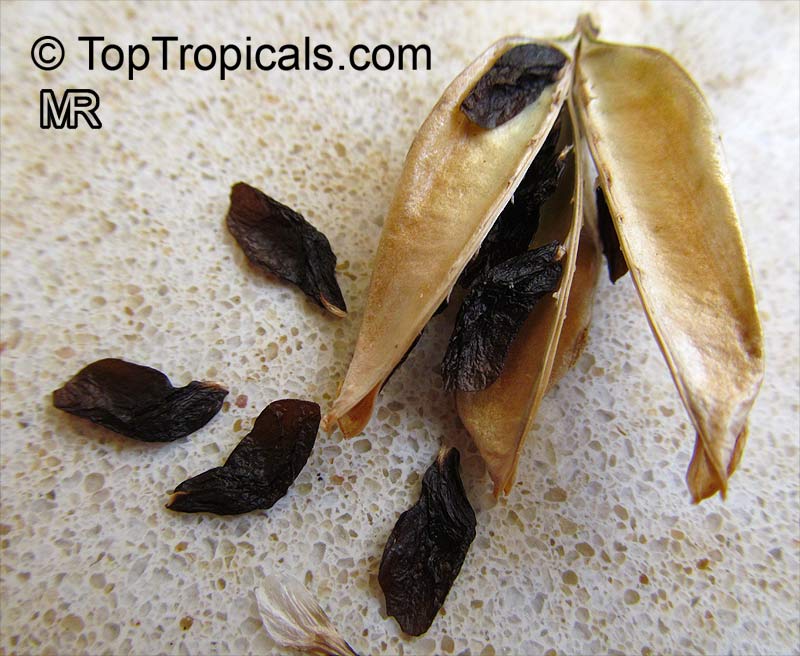
Agapanthus grows best in full sun to light shade and fertile, well-drained soil with regular moisture during active growth. Established plants tolerate some drought, while excessive winter moisture can damage dormant rhizomes. Plants flower particularly well in sunny positions and may remain in the same clump for years before division becomes necessary. Propagation is by division or seed, although named cultivars should be propagated vegetatively. Cold tolerance varies considerably among species and cultivars, with deciduous forms generally hardier than evergreen types. Depending on the selection, Agapanthus can be grown outdoors in approximately USDA Zones 8-11.