Garden Blog - Top Tropicals
Date: 19 Jul 2026
Curry Leaf Tree - one plant that changed millions of kitchens: Murraya koenigii
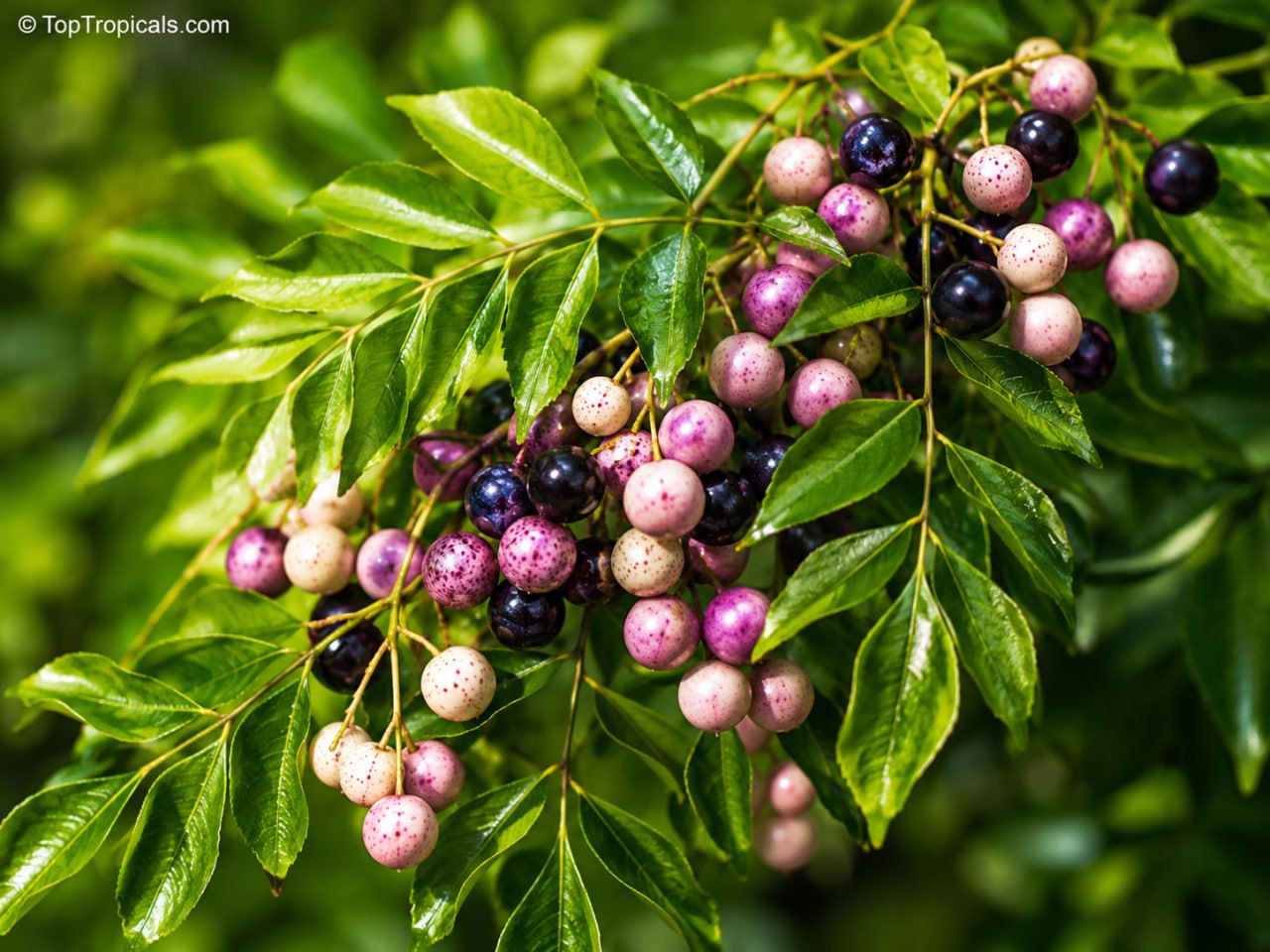
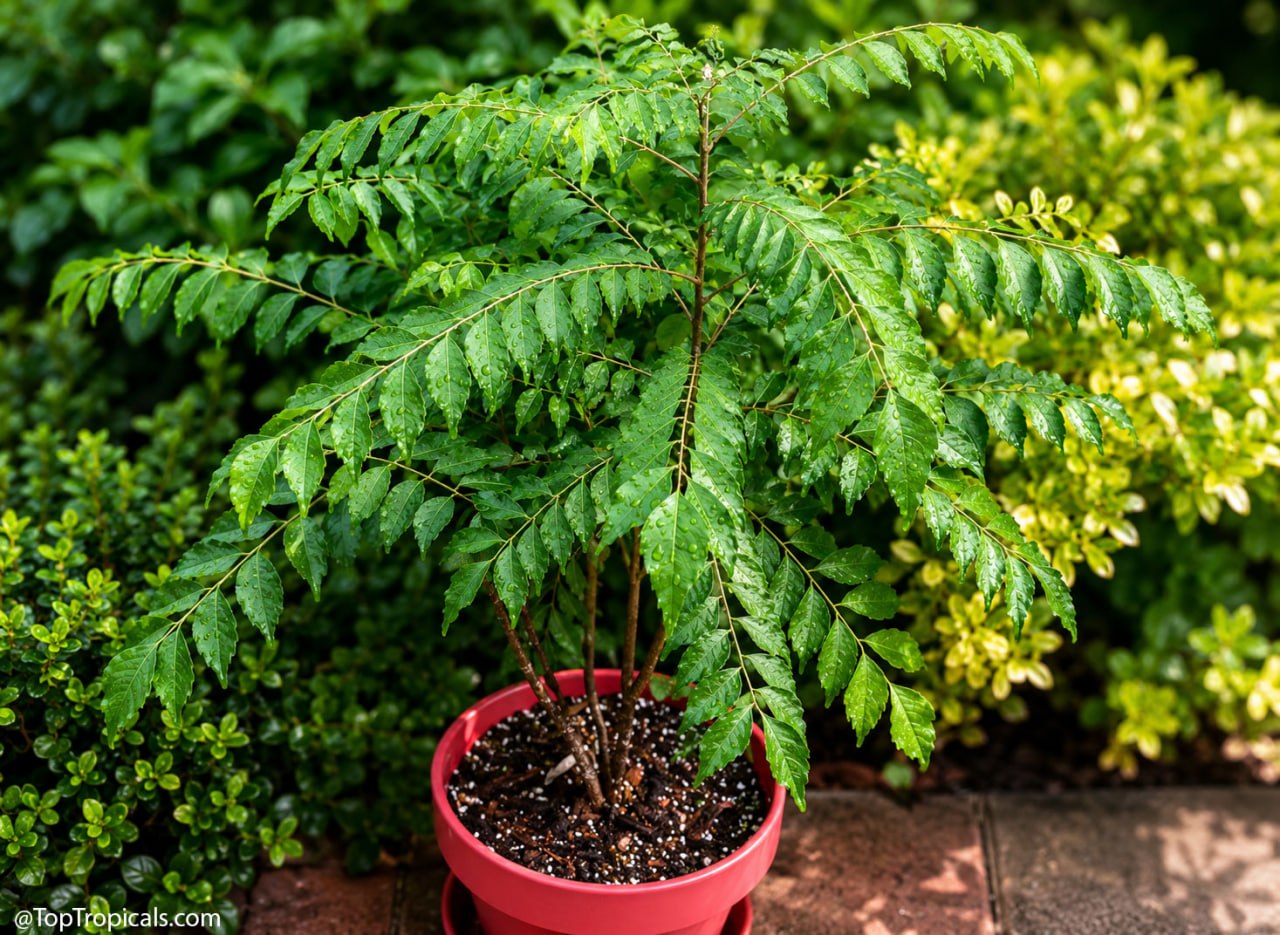
🍛 Curry Leaf Tree - one plant that changed millions of kitchens: Murraya koenigii
Think curry comes from a jar? Meet the 2,000-year-old tree behind the real flavor.
Walk into almost any western grocery store, and "curry" is a yellow powder sitting in a dusty glass jar.
But ask any traditional South Asian cook, and they'll tell you the truth: Real curry isn't a powder at all. It grows on a tree.
For over 2,000 years, the secret weapon of authentic Indian and Sri Lankan cuisine has been the Curry Leaf Tree (Murraya koenigii), also known as Curry Patta. Its glossy green leaves possess a completely irreplaceable aroma - a complex blend of bright citrus, toasted nuts, black pepper, and warm anise.
Once you smell it fresh, you realize why there is simply no substitute.
🌿 The great curry lie: Why your spice jar is missing the most important ingredient
Here is the irony that trips up millions of home cooks: Commercial curry powder rarely contains actual curry leaves.
Curry Powder: A British colonial invention blending dried spices like turmeric, cumin, fenugreek, and coriander.
Curry Leaves: A fresh, living herb that adds a bright, complex fragrance that dried powders could never hope to replicate.
🌿 The Culinary Magic: "Tadka"
How do you unlock the magic of this tree? You fry it.
In traditional cooking, fresh curry leaves are tossed into piping hot oil or ghee at the very beginning of a recipe (a technique known as tadka or tempering). Within seconds, the leaves crackle and pop, infusing the fat with powerful essential oils. This aromatic oil then carries the flavor flawlessly through curries, dals, rices, and stews.
🌿 More Than Just a Kitchen Essential
The Curry Leaf Tree pulls double duty in both the garden and wellness spaces.
Ancient Wellness: In Ayurveda (traditional Indian medicine), these leaves have been used for centuries to aid digestion and support healthy blood sugar levels. Today, modern nutritional science is actively studying the leaves for their high antioxidant content.
🌿 How to Grow Your Own Flavor Factory
☀️ Light & Soil: Full sun and well-drained soil
Size: 6–15 ft (but easily kept under 3 ft in a patio pot)
Cold Tolerance: Protect from frost
The best part? You don't need a tropical estate to grow one. Gardeners love the Curry Leaf Tree because it thrives in warm climates and adapts beautifully to container living.
Backyard Beauty: The tree itself is stunning. It features elegant, glossy foliage, clusters of highly fragrant white flowers, and striking purple-black berries.
If you live in a colder climate, simply pot it up and bring it indoors for the winter. Regular harvesting actually encourages the tree to push out fresh, tender new shoots - exactly what you want for dinner.
Skip the spice aisle. Ditch the dusty jars. If you want to elevate your cooking to a truly authentic level, it's time to grow your own.
🛒 Grow your own Curry Leaf
📚 Learn more:


· Murraya koenigii in Plant Encyclopedia
· Tropical fruit and plants that help keep blood pressure in balance
· What is Curry made of?
#Food_Forest #Discover
🟢 Join 👉 TopTropicals
Date: 18 Jul 2026
The Flowering Shrub That Keeps Blooming When Others Stop
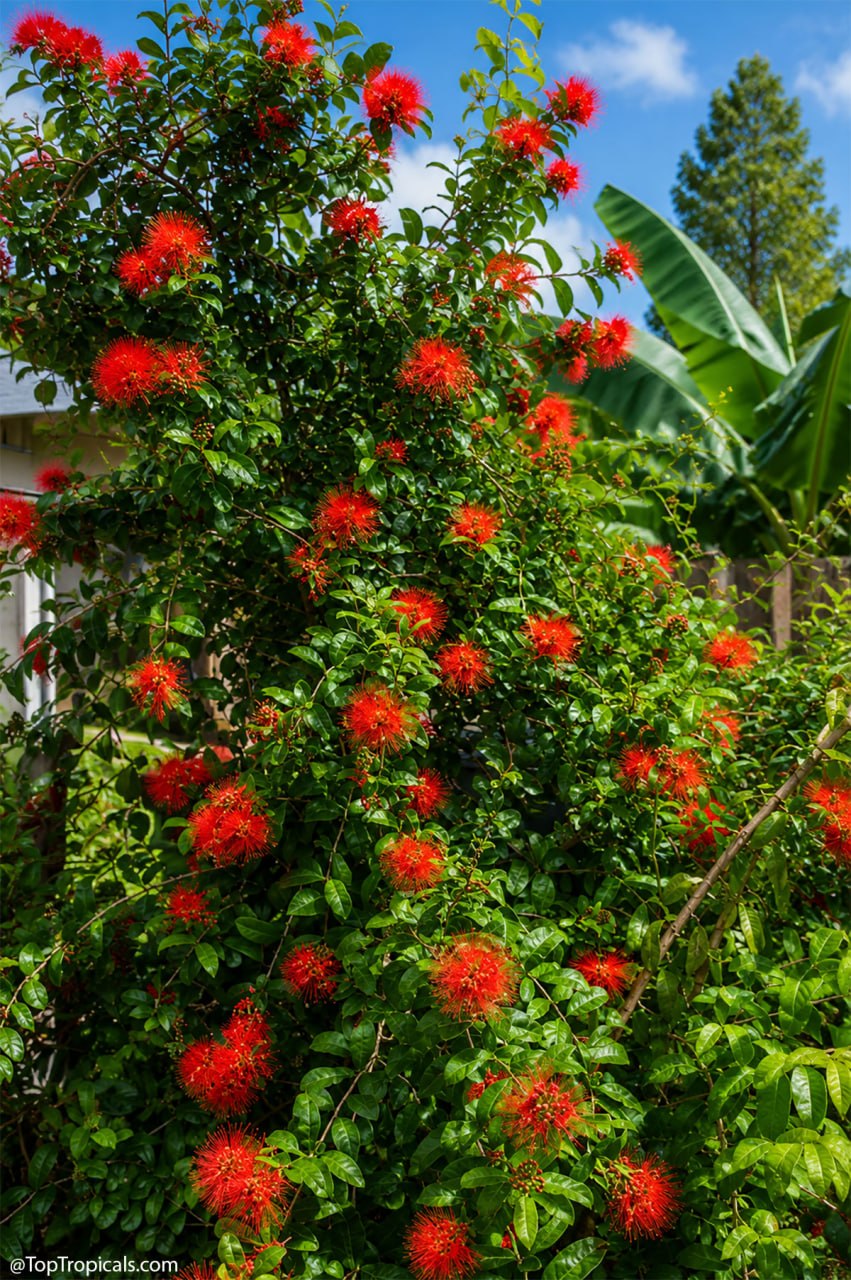
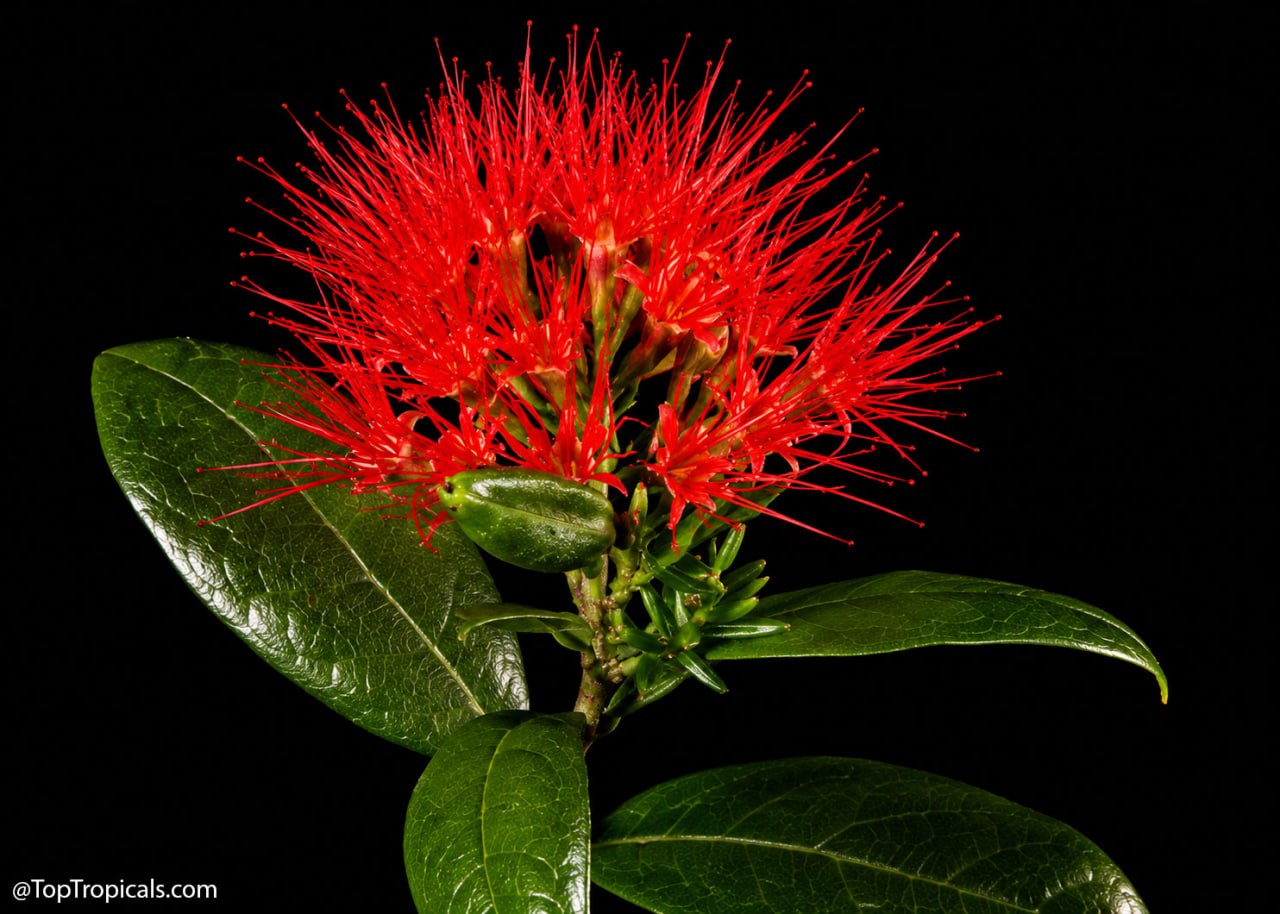
If you’re looking for a single plant that can steal the show for months on end, you need the Ball of Fire (Combretum constrictum).
At first glance, the flowers hardly look real. Instead of ordinary petals, each bloom forms a bright scarlet powderpuff made of dozens of long, delicate stamens. When hundreds of these fiery red clusters open at once, the entire shrub seems to glow from within - perfectly earning its dramatic name.
Unlike many tropical shrubs that bloom in short, fleeting bursts, Ball of Fire provides an explosion of color almost year-round in warm climates.
❤️ A Tropical Showpiece That’s Surprisingly Low-Maintenance
Despite its high-maintenance appearance, Ball of Fire is incredibly resilient. Once established in a sunny spot, it requires very little fuss:
· Drought Tolerant: Handles heatwaves and dry spells with ease.
· Sun-Loving: Thrives in full sun to maximize its bloom potential.
· Highly Adaptable: Can be grown as a sprawling shrub, trained onto a trellis as a climbing vine, or pruned into a compact ornamental tree.
· Surprisingly Cold-Hardy: While technically a tropical plant (best in Zones 9b-11), established plants are remarkably tough. If hit by a hard freeze, they can die back to the ground and bounce back with vigorous new growth in the spring - especially if the root system was protected with a thick layer of mulch.
Pro-Tip: Regular pruning doesn't just control its size (typically 5 to 7 feet); it actually encourages a fuller shape and even more prolific blooming.
❤️ A 24/7 Hummingbird and Butterfly Magnet
Those brilliant red flower clusters aren't just eye candy for humans. The nectar-rich blooms act as a natural feeding station for local wildlife. If you are trying to build a pollinator-friendly backyard, this shrub quickly becomes the busiest, most chaotic hub of hummingbird and butterfly activity in the neighborhood.
❤️ Perfect for Patios and Small Yards
Don't have a massive estate? No problem. Because it responds so beautifully to pruning, Ball of Fire adapts exceptionally well to large containers. This makes it an excellent focal point for patios, courtyards, and urban tropical gardens where ground space is at a premium.
❤️ Fast Facts: Why Gardeners Are Obsessed with Ball of Fire
📍Appearance: Brilliant crimson "powderpuff" blooms with long, glowing stamens.
📍Bloom Season: Near year-round in frost-free zones.
📍Wildlife Value: High-traffic magnet for hummingbirds and butterflies.
📍Versatility: Can be shaped into a shrub, vine, hedge, or patio tree.
📍Resilience: Loves intense heat, tolerates drought, and can bounce back from deep freezes once established.
When Ball of Fire reaches peak bloom, it’s easy to see why it stops gardeners in their tracks. Few plants produce such an intense, glowing display while asking for so little in return.
🛒 Plant the Shrub Everyone Notices
📚 Learn more:
· Combretum constrictum in Plant Encyclopedia
· Our favorite flowering shrub
· Watch out - Ball of Fire!
#Butterfly_Plants #Hedges_with_benefits #Discover


Date: 18 Jul 2026
🌿The Tree You can Harvest Again and Again
By Tatiana Anderson, Plant Expert, Top Tropicals
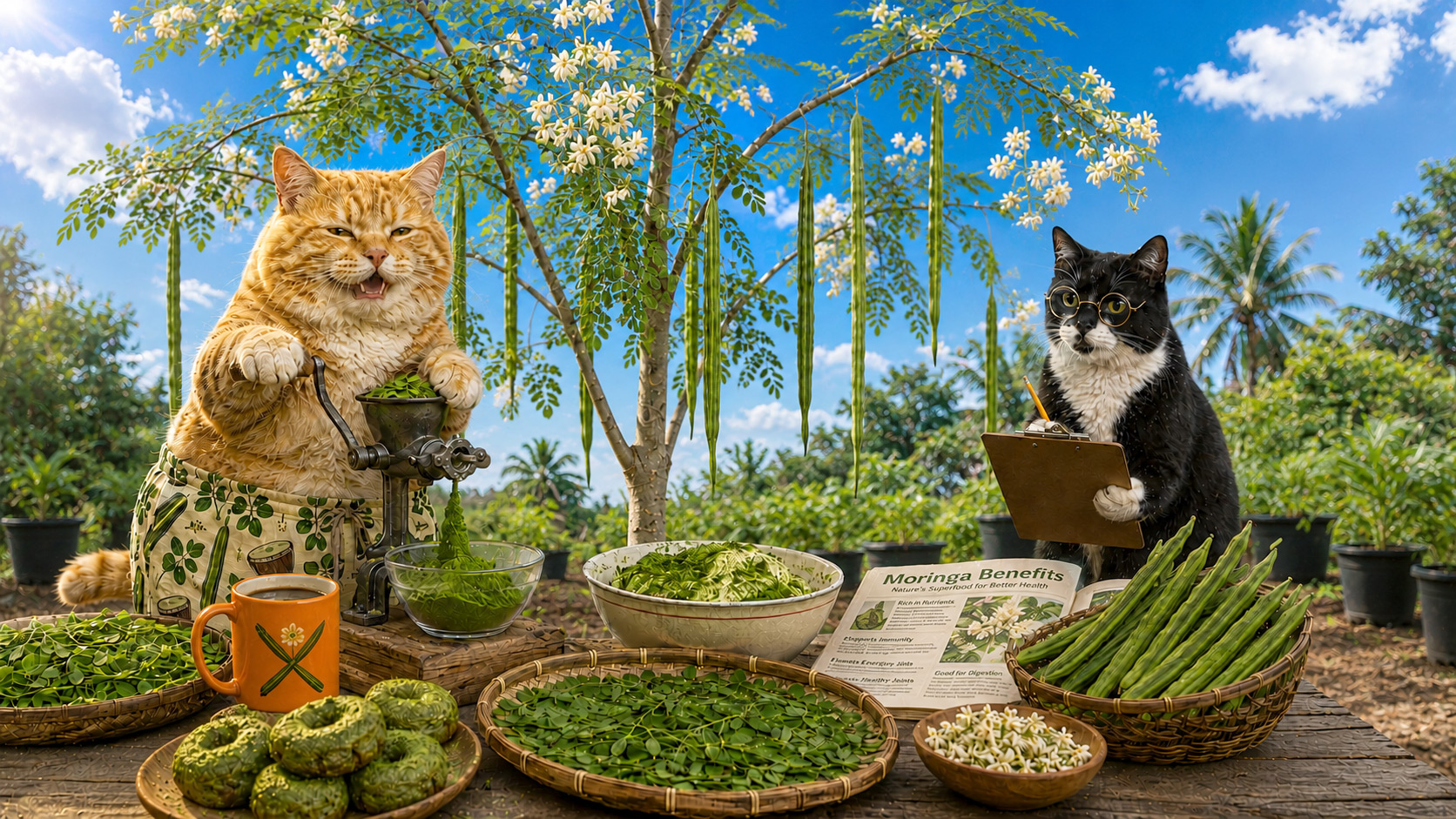
Smokey: The article says Moringa has benefits. It says nothing about donuts.
Sunshine: Exactly. I am testing whether the benefits transfer. The first twelve samples were inconclusive, so I need at least twenty more.
Smokey: How come your research always requires donuts?

Most edible plants give you one main harvest. A mango tree gives you mangoes. A lemon tree gives you lemons. Moringa oleifera works differently.
From one tree, you can harvest tender leaves for the kitchen, cook with the flowers, pick long green pods, and save the seeds. Cut the tree back, and it responds with fresh new growth.
Moringa is also known as the Drumstick Tree, Horseradish Tree, and Ben Oil Tree. It belongs to its own plant family, Moringaceae, and comes originally from India and nearby parts of South Asia, where it has been grown as a vegetable tree for generations.
Some people call it the Tree of Life. The name may sound dramatic, but the tree earns its reputation through what it actually does in the garden.
🏆 What Makes Moringa Unusual
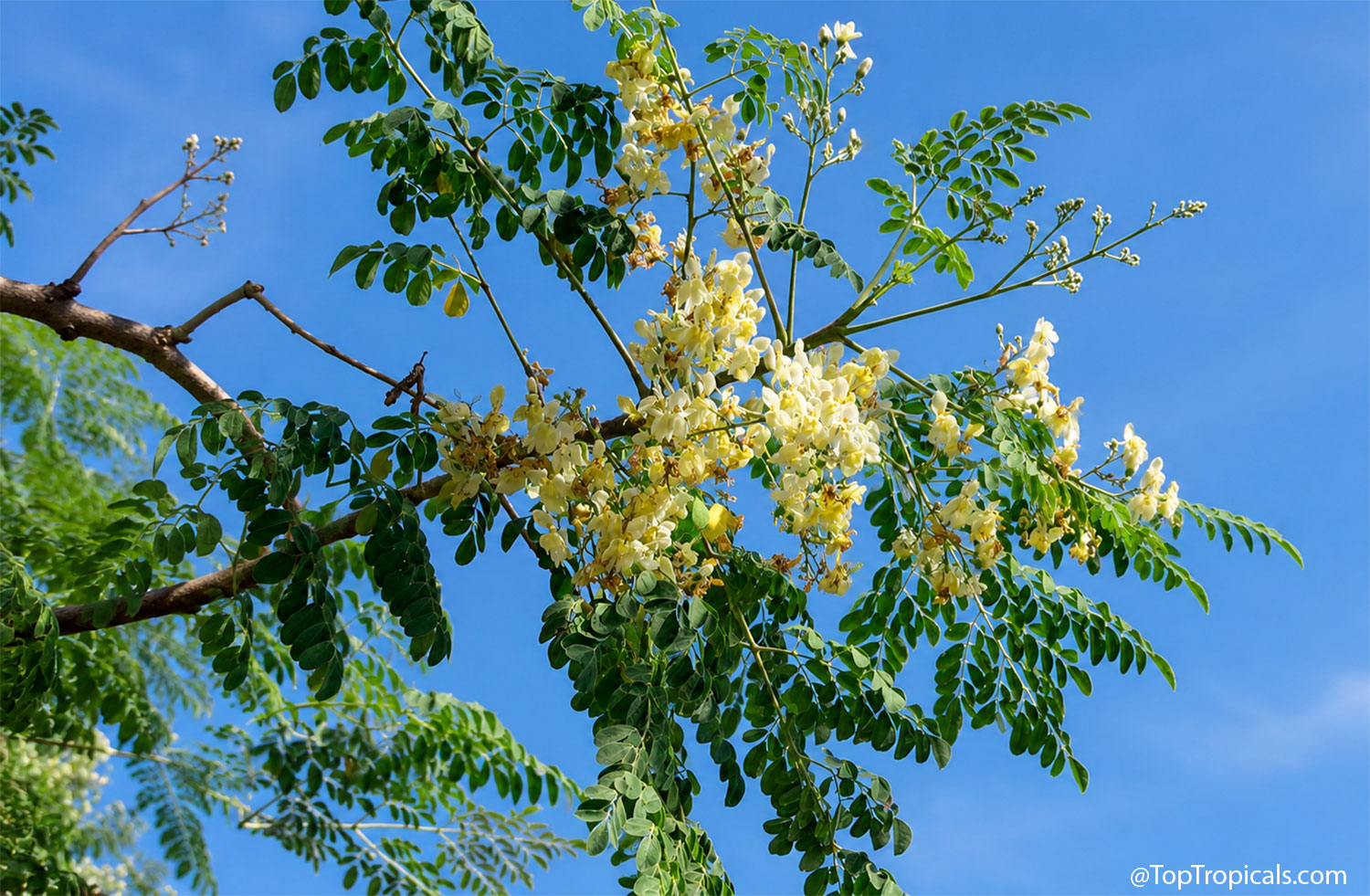
Most trees pick a lane: ornamental or practical. Moringa does not.
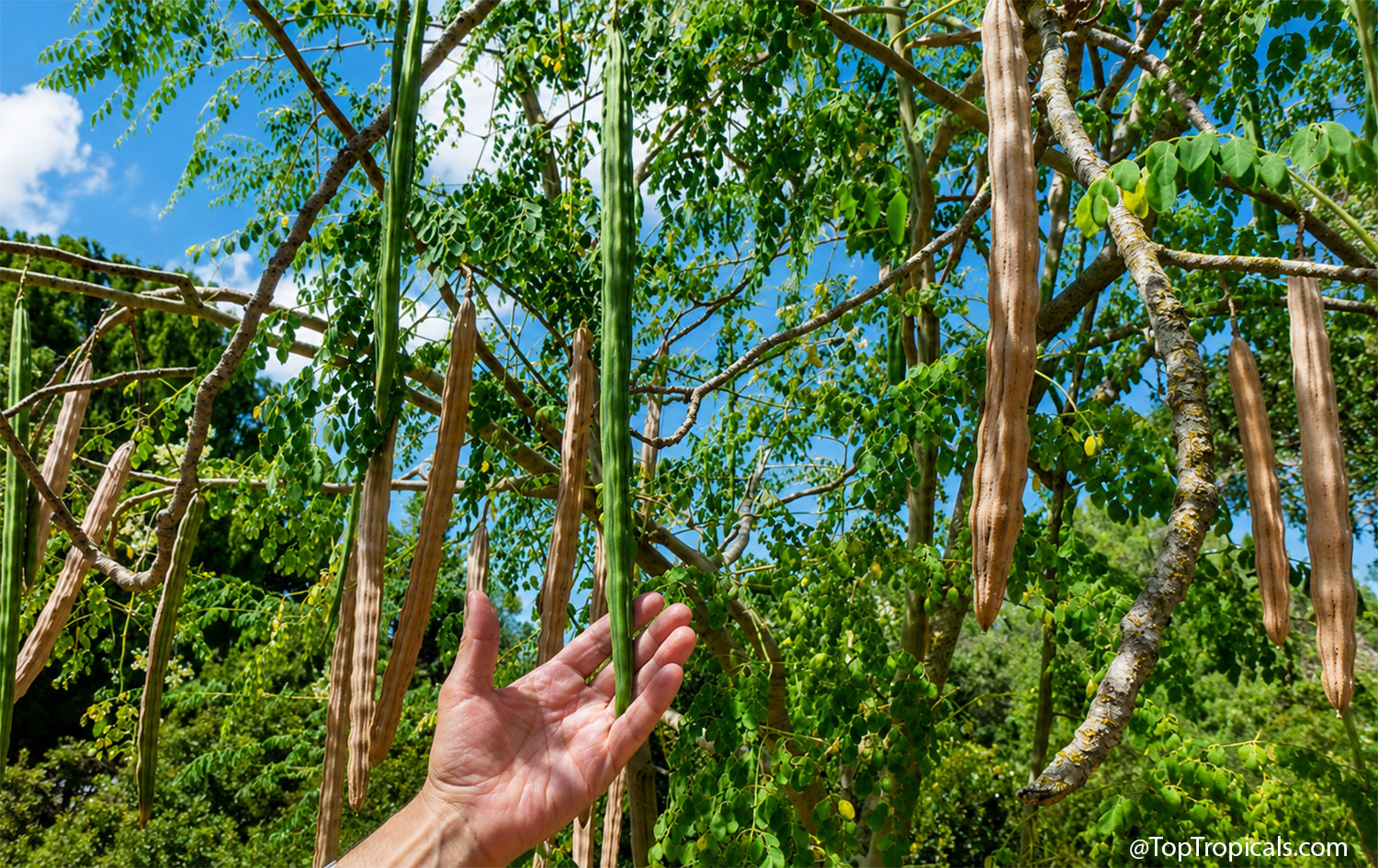
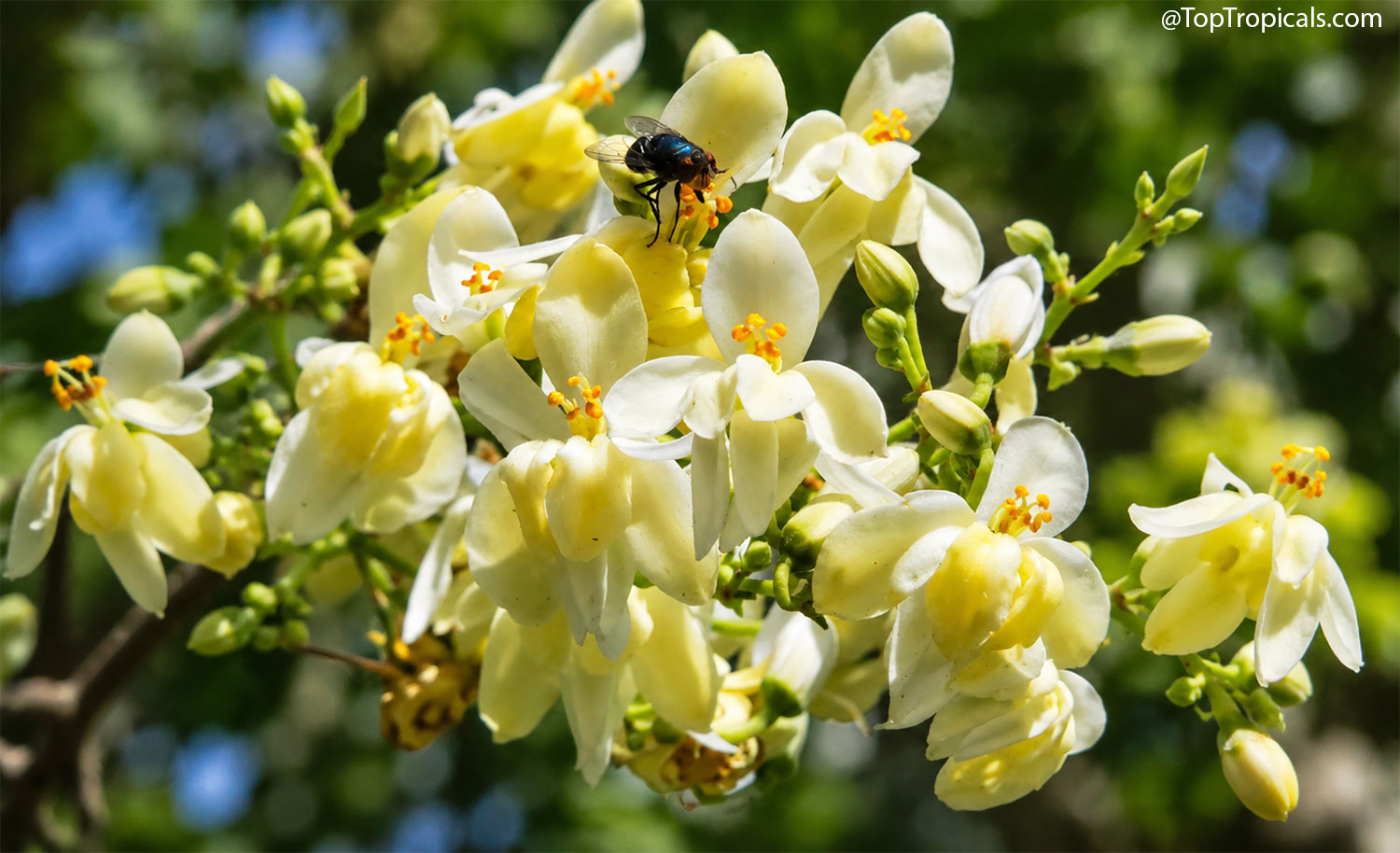
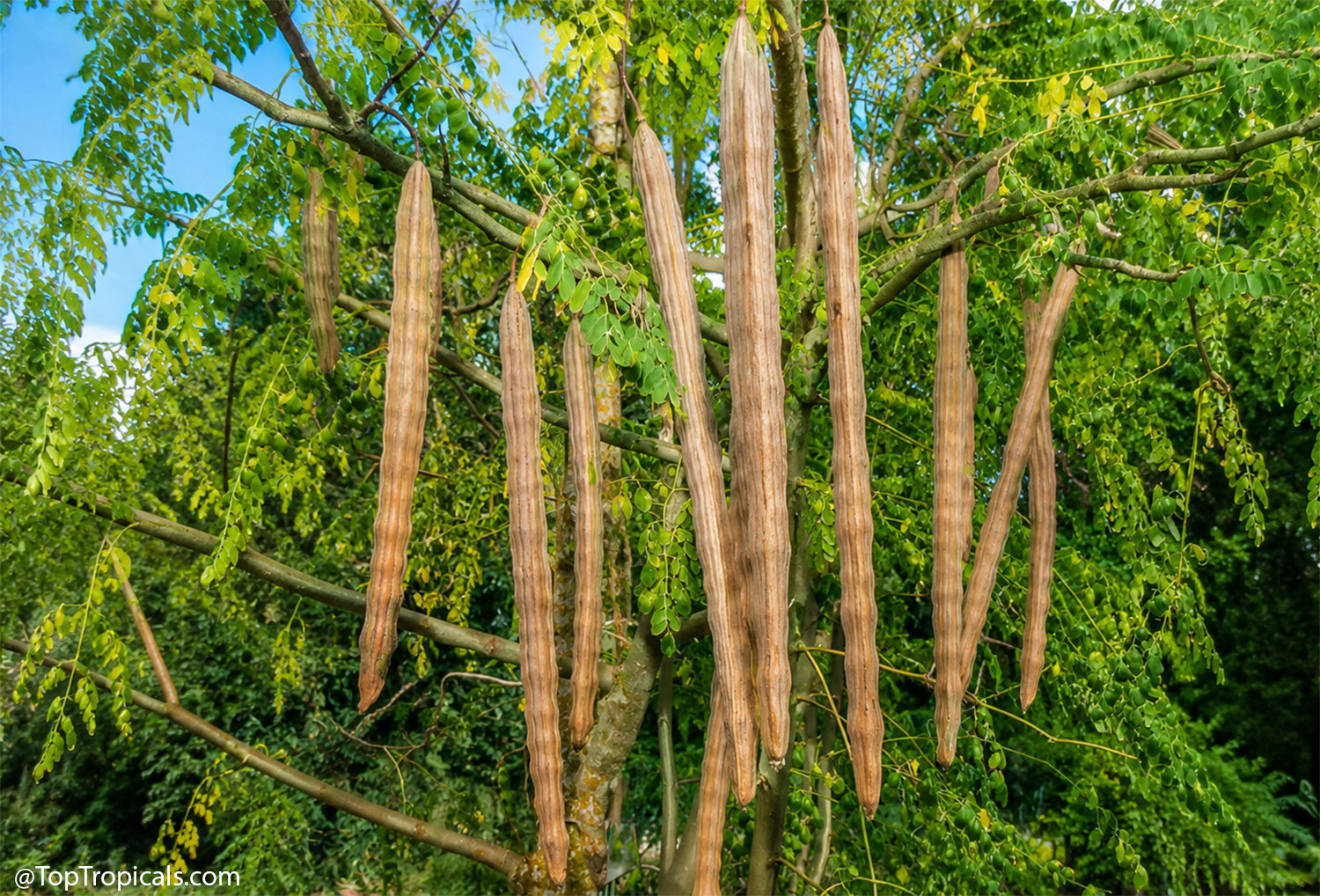
Its finely divided foliage gives the canopy a light, airy appearance, more like a fern or jacaranda than a dense shade tree. Sunlight filters through the branches instead of being completely blocked. The creamy white to pale yellow-white flowers appear in loose clusters and have a noticeable fragrance, followed by long, slender green pods, often more than a foot long, hanging from the branches like drumsticks.
Add fast growth in warm weather, good drought tolerance once established, and a tree that responds well to regular pruning, and you have a plant doing several jobs at once.
What can you harvest
🍃 Leaves
Young Moringa leaves are the most practical everyday harvest, used as cooked greens throughout South Asia, Africa, and other tropical regions. Pick the tender new growth and the tree responds by producing more.
💮 Flowers
The fragrant flowers are edible too, usually cooked rather than eaten raw. They can be added to omelets, stir-fries, and soups, or used as a garnish. A healthy tree in bloom may produce more flowers than one household can use.
 Pods
Pods
The long green pods are the reason for the name Drumstick Tree. Picked while young and tender, they are commonly used in curries, sambars, and stews. The tender interior is eaten, while the outer walls become fibrous and woody as the pods mature, so harvest them early, or scrape the soft flesh and seeds from older pods.
 Seeds
Seeds
Mature seeds have a long history of culinary and practical use, including as the source of ben oil. They are best used in moderation rather than eaten in large quantities.
⚠️ A note about the roots: older references sometimes describe Moringa roots as a substitute for horseradish. We do not recommend eating the roots or root bark because they contain compounds that may be unsafe. The leaves, flowers, and pods already provide plenty to harvest.
A Word on Nutrition
Moringa leaves have earned a solid reputation as a nutritious leafy green. They contain:
- Plant protein
- Fiber
- Beta-carotene
- Vitamin C
- Calcium
- Potassium
- Iron
- Antioxidant compounds
The exact nutritional values depend on whether the leaves are fresh, cooked, or dried. Drying concentrates some nutrients, while cooking may reduce others.
Researchers are studying Moringa for possible effects on blood sugar, inflammation, and other areas, but that research is still developing. It is better to think of Moringa leaves as a useful vegetable, similar to spinach or kale, rather than as a cure or medicine.
Anyone who is pregnant, taking medication, or managing a medical condition should speak with a healthcare professional before using concentrated Moringa products or making major dietary changes.
🍴 Six Simple Ways to Use Fresh Leaves 🌿

You do not need a complicated recipe.
- Add chopped leaves to an omelet during the final minute of cooking
- Stir a handful into soup or stew just before serving
- Saute the leaves with garlic as a quick side vegetable
- Blend a small amount into a smoothie
- Dry the leaves and steep them for tea
- Mix chopped leaves into flatbread dough, savory pancakes, or dal
- Or follow 😺 Sunshine's experimental recipe and make Moringa donuts. Please share the results with us - especially how many samples it takes before the research becomes conclusive.
Treat young Moringa leaves the same way you would treat any tender
cooking green.
 How To Grow Moringa
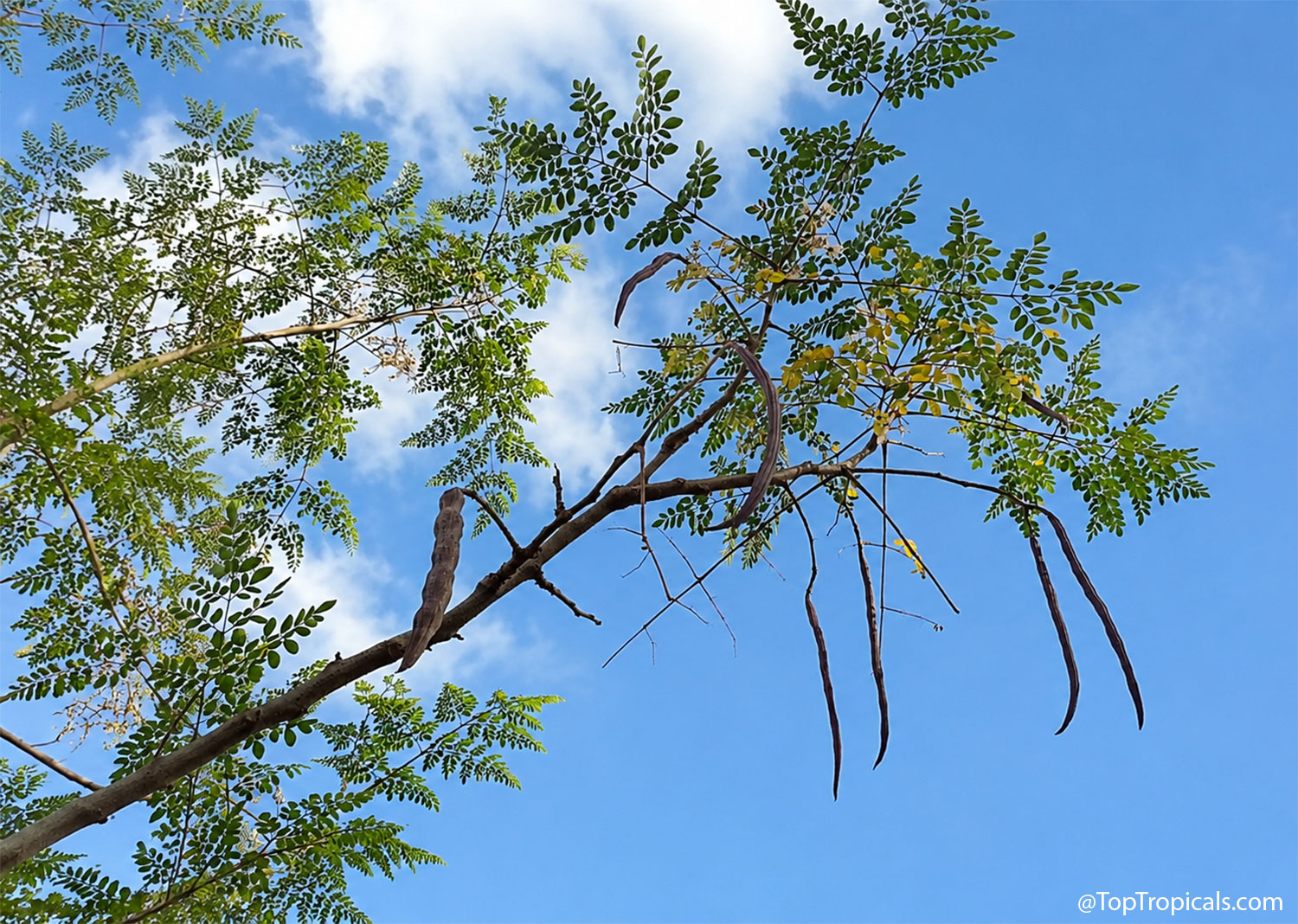
Moringa is one of the more forgiving edible trees, provided it gets three things: sun, heat, and drainage.
- Light: Plant Moringa in full sun for the strongest growth, flowering, and pod production.
- Temperature: Moringa grows most actively in warm weather, especially when temperatures remain above 70 degrees F. Growth slows significantly during cool weather.
- USDA zones: Moringa performs best outdoors year-round in USDA Zones 10-11. It can also be grown in Zone 9, but freezing weather may kill the top growth. Gardeners in colder zones can grow it in a large container or treat it as a fast-growing seasonal plant.
- Cold hardiness: Moringa is tropical and not reliably frost-hardy. Temperatures near 32 degrees F can damage leaves and young branches. A hard freeze may kill the tree to the ground, although an established plant may resprout from the roots when warm weather returns.
- Soil: Use fast-draining soil. Sandy or loose soil works well, and the tree often performs better in lean soil than in rich, soggy ground.
- Water: Water moderately while the plant is young. Once established, reduce watering and allow the soil to dry between waterings. Mature trees handle dry spells well but do not tolerate constantly wet roots.
- Pruning: In warm conditions, Moringa can grow quickly. Left alone, it tends to become tall, narrow, and open, with the best leaves moving out of reach. Cutting the tree back encourages branching, keeps the leaves within reach, and produces a steady flush of tender new growth.
- Harvesting: Once the tree is established, pruning and harvesting are almost the same activity. Regular cutting keeps the plant shorter, bushier, more manageable, and easier to harvest.
- Flowers and pods: Flowers and pods appear most reliably older trees, strong sunlight, and consistently warm growing conditions. Give a young tree time to establish before expecting a heavy crop of drumsticks.
- Fertilizing Moringa: Moringa can grow in relatively
lean soil, but container plants and frequently harvested trees benefit from
regular nutrition. Use a balanced fertilizer Green Magic
Controlled Release Fertilizer during active growth to
support healthy foliage, branching, flowering, and pod production. For
additional
plant support during active growth, explore Sunshine
Boosters.
💡Read more about Sunshine Boosters and plant nutrition
🏡 Growing Moringa in a Container
Gardeners outside tropical climates can still grow Moringa in a large container. Give it your sunniest spot, excellent drainage, warm temperatures, enough room for the roots, and regular pruning, then move it somewhere protected for winter.
Be realistic about what a container-grown plant is likely to produce. A potted Moringa is usually most useful for leaf production. It may provide a steady supply of fresh greens during the warm season even if it does not produce many pods, which may be exactly what gardeners growing it mainly for the kitchen are after.
Moringa in the Food Forest
Moringa fits naturally into a food forest or edible landscape. Its open canopy lets some light reach the plants growing below it, and regular pruning generates a steady supply of organic material for mulch, on top of the leaves, flowers, and pods you are already harvesting.
Moringa is not a legume and does not fix nitrogen. Its value here comes from fast growth, an open canopy, and how well it responds to repeated cutting back.
🛒 Grow Your Own
Top Tropicals offers living Moringa plants for gardeners who want fresh leaves, fragrant flowers, and homegrown drumstick pods within reach of their own kitchen.
📚 Learn More
Moringa does not ask a gardener to choose between beauty and usefulness. It offers graceful foliage, fragrant flowers, edible leaves, and unusual pods, all from the same plant.
Few trees give you that many reasons to grow one.
Smokey: That is the idea.
Sunshine: Finally, a plant that restocks itself.
Date: 17 Jul 2026
People who love to eat
🐾 People who love to eat
"People who love to eat are always the best People." - Julia Child
🐈📸 One of the Best PeopleCats - Timo - is silently reminding about dinner time at TopTropicals PeopleCats.Garden
#PeopleCats #Quotes
🟢 Join 👉 TopTropicals
Date: 17 Jul 2026
Grows in neglect: tough plant for tough spots
💪 Grows in neglect: tough plant for tough spots
The Plant That Thrives on Neglect (And Looks Incredible Doing It) Pedilanthus tithymaloides
Some plants demand constant watering, pristine soil, and endless coddling. Devil’s Backbone asks for almost nothing. If you have a hot, dry corner where other plants go to die, this architectural tropical is ready to step in and steal the show.
🌿 Why it's the Ultimate "Lazy Gardener" Plant
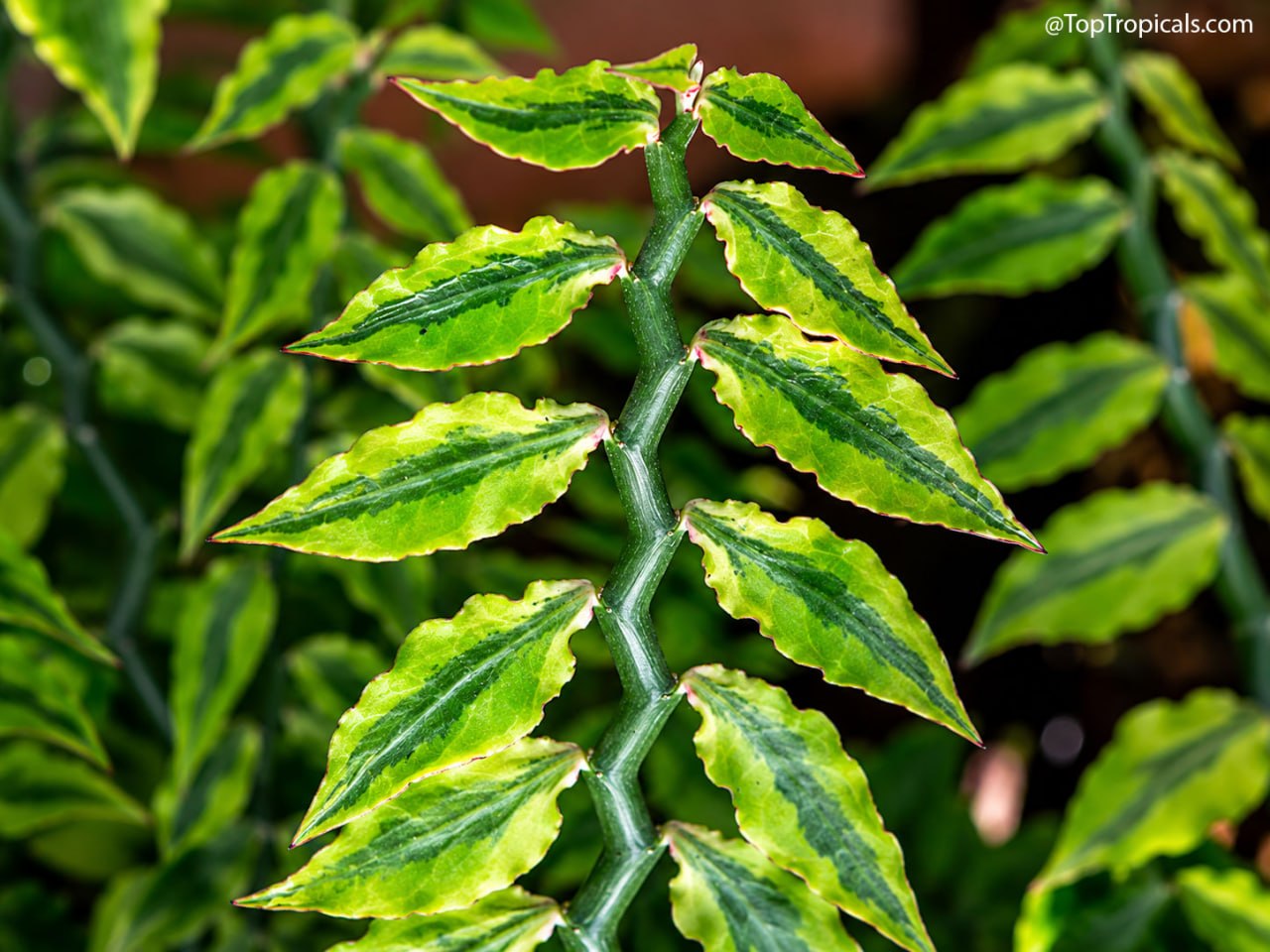
Scientifically known as Pedilanthus tithymaloides (or Euphorbia tithymaloides), this resilient beauty goes by many names: Jacob’s Ladder, Zig-Zag Plant, or Devil’s Backbone. It gets its dramatic nicknames from its bizarre, zig-zagging stems that bend sharply at every leaf, looking almost as if they were folded by hand.
Here is why it deserves a spot in your collection:
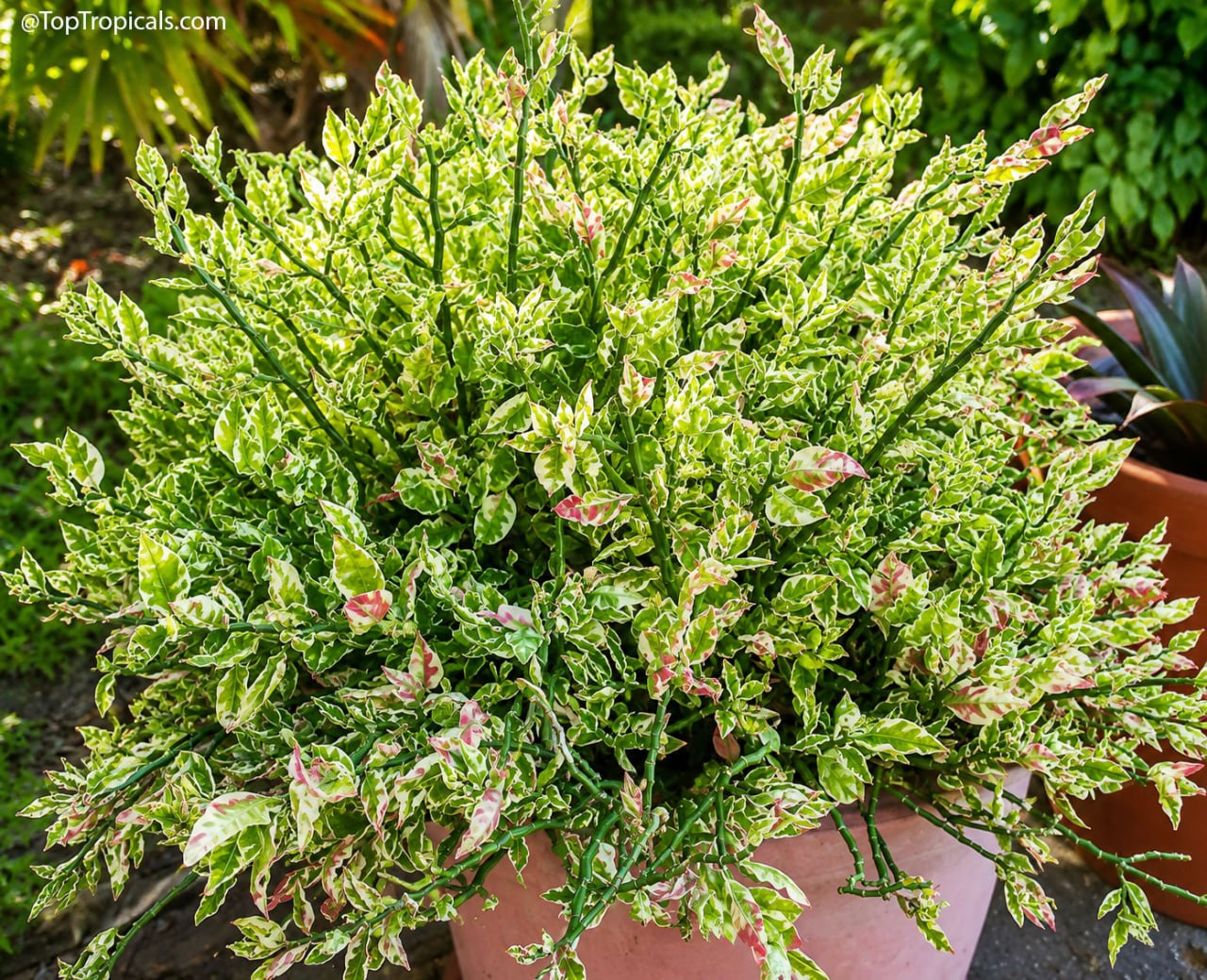
· Year-Round Show: The variegated variety features striking creamy-white leaf borders that blush a gorgeous pink when kissed by the bright sun.
· Built to Last: Native to the Caribbean and Central America, it shrugs off heat, drought, poor soil, salt air, and long periods of absolute forgetfulness.
· Wildlife Magnet: During its blooming season, it produces charming, slipper-shaped pink-red flowers that hummingbirds absolutely love.
· Free Plants for Life: It is ridiculously easy to propagate. A simple stem cutting roots quickly, meaning one plant can easily turn into a whole garden.
⚠️ A Quick Note on Safety: Like other members of the Euphorbia family, Devil's Backbone contains a milky white sap that can irritate your skin and eyes. Wear gloves when pruning.
🌿 Where to Plant It
In warm climates, it can grow into a dense, 3-4 foot shrub, making it perfect for borders or rock gardens. If you live somewhere with cold winters, don't worry - it makes an exceptionally tough, low-maintenance houseplant for your sunniest window.
👉 Real-World Nursery Note: While many references label this tropical as highly cold-sensitive, it is far tougher than people think. During the Record Florida freeze in February 2026, our landscape plantings of Devil’s Backbone right by the front gate endured several consecutive nights down to a brutal 25F and came through with absolutely zero damage!
🌿 Devil's Backbone Quick Stats
Cold Tolerance: Surprisingly hardy! Established plants can handle brief freezes down to 25F.
☀️ Light & Soil: Full sun to bright shade; needs excellent drainage, thrives in dry, sandy, or poor soils
🦋 Bonus Feature: Striking zig-zag structural stems and a favorite refueling stop for hummingbirds
Sometimes, the toughest plants are also the most interesting. If you're ready to add some major personality to your space without adding to your weekend chores, it's time to plant the Devil's Backbone.
🛒 Claim Your "Lazy Gardener" Plant
📚 Learn more:


· Pedilanthus tithymaloides in Plant Encyclopedia
· Grows in neglect: tough plant for tough spots
· The best undemanding plant for dry and hot area
· 9 awesome accent plants and vines that love heat and dry conditions
#Container_Garden #Nature_Wonders #Hedges_with_benefits #Discover
🟢 Join 👉 TopTropicals