Garden Blog - Top Tropicals
Date: 3 Jul 2026
🎆 250 Years of America, Still Growing
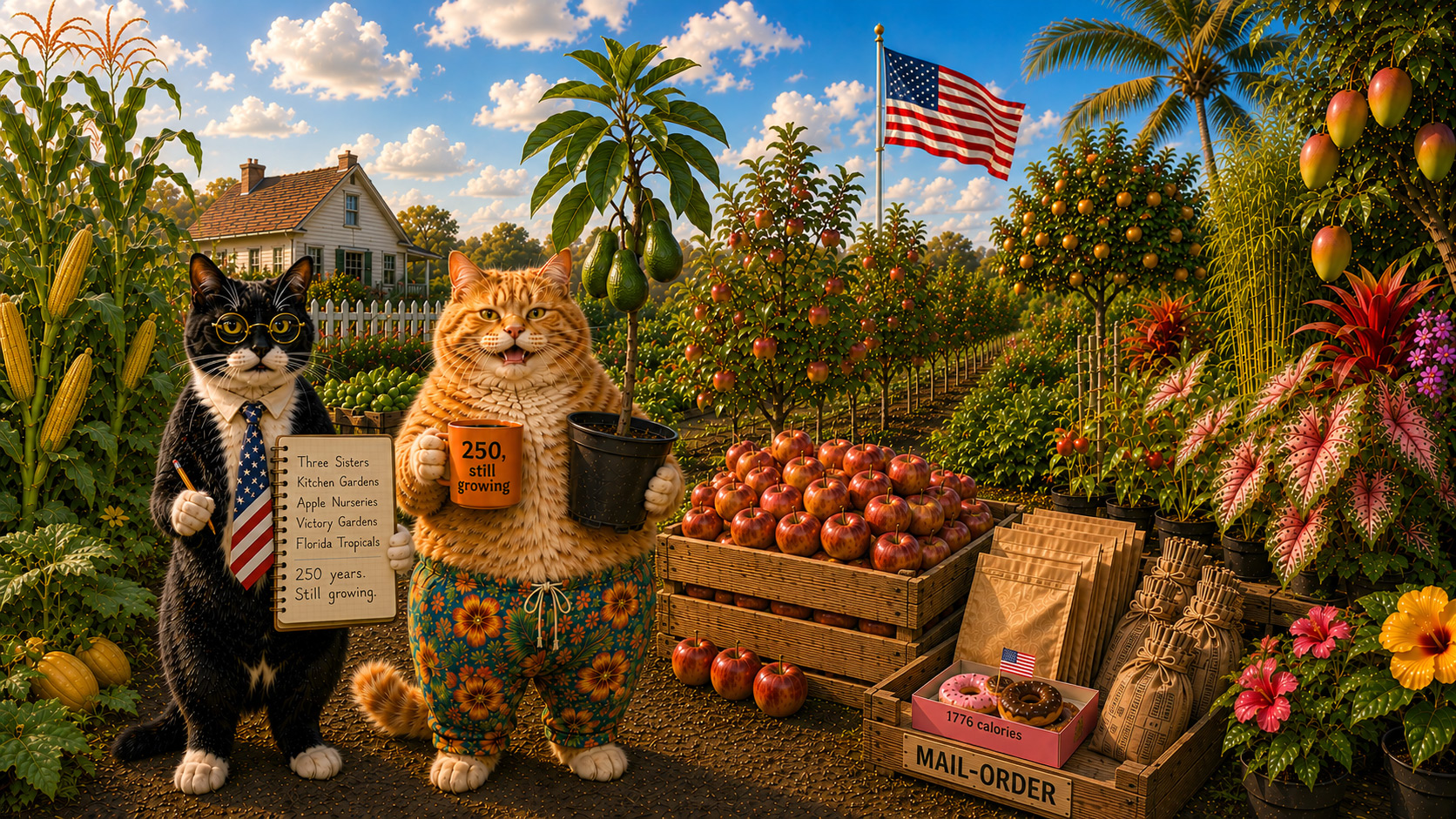
Smokey: Correct. And not all of that history happened on battlefields.
Sunshine: Some of it happened here. In yards. In small plots of ground.
Smokey: The way most lasting things happen.

Tomorrow, the United States turns 250. Most of what gets written about it will focus on documents, presidents, battlefields, and monuments. Those stories matter. But they are not the only place American history happened. Some of it happened in the ground. In backyards, in fields, in pots on windowsills, and in rows behind farmhouses. Quietly, without headlines, gardening has been part of American life from the very beginning.
Long before 1776, this land already had gardens. Indigenous farmers grew corn, beans, and squash together, a planting method later known as the Three Sisters. The corn gave the beans something to climb, the beans helped enrich the soil through nitrogen-fixing roots, and the squash spread low across the ground, shading out weeds and holding in moisture. This was farming built on cooperation between plants, refined over generations.
When colonists arrived, gardens were not decoration. They were survival. A kitchen garden supplied vegetables, herbs for cooking, and plants used as medicine when the nearest doctor was days away. Knowing how to grow food, and keep it through the winter, was a skill that could decide whether a family made it to spring.
Several of the country's early leaders were also genuine plant people. George Washington and Thomas Jefferson both gardened seriously, testing crops and keeping notes on what worked and what didn't. It was the same practical habit gardeners rely on today: pay attention, and adjust next season when something fails.
Few stories make that point better than John Chapman, the man history remembers as Johnny Appleseed. He was not simply scattering seeds at random. Through the early 1800s, he ran seedling nurseries ahead of settlers, so young apple trees would already be growing by the time families arrived. Setting a tree in the ground you may never sit under is its own kind of faith. He planted for people he would never meet.
As the country grew, so did the way people found new plants. Long before anyone could order online, seed catalogs arrived by mail, filled with descriptions of vegetables, flowers, and fruit trees a family might never have seen growing nearby. A catalog could bring a new tomato variety to a farm in Ohio or a rose to a porch in Georgia. That habit of discovering plants through the mail did not end. It just found new forms, and it is part of what a nursery like ours still does today.
Gardening carried the country through harder years too. During World War II, Victory Gardens turned lawns, schoolyards, and empty lots into food gardens. It was steady, unglamorous work that fed people, supported the home front, and gave families something useful to do when so much else felt out of their hands.
Florida adds its own chapter to that story. Here, gardening looked less like neat rows of familiar crops and more like an ongoing experiment. Spanish settlers brought citrus to Florida centuries ago. Growers replanted after hard freezes and kept moving south, chasing warmer ground. Plant explorers and nursery owners introduced mangos, palms, caladiums, bamboos, tropical fruit trees, and ornamentals from other tropical regions, testing what could take root in Florida's heat and humidity.
South Florida became something like an open-air laboratory, and in many ways, it still is. At Top Tropicals, we work in that same living laboratory every day, growing, testing, collecting, and sharing plants that still feel new to many American gardeners. Different decade, same instinct. Find a plant worth growing, learn how to grow it, and share it with anyone patient enough to try.
None of this happened quickly. A garden does not come together in one afternoon. It grows one seed, one season, one plant, one generation at a time. A country grows the same way.
As the country marks 250 years, it might be worth planting something of your own. Not because it will make headlines. Because years from now, someone may be glad you did.
👉 Plant Something for the Next Chapter
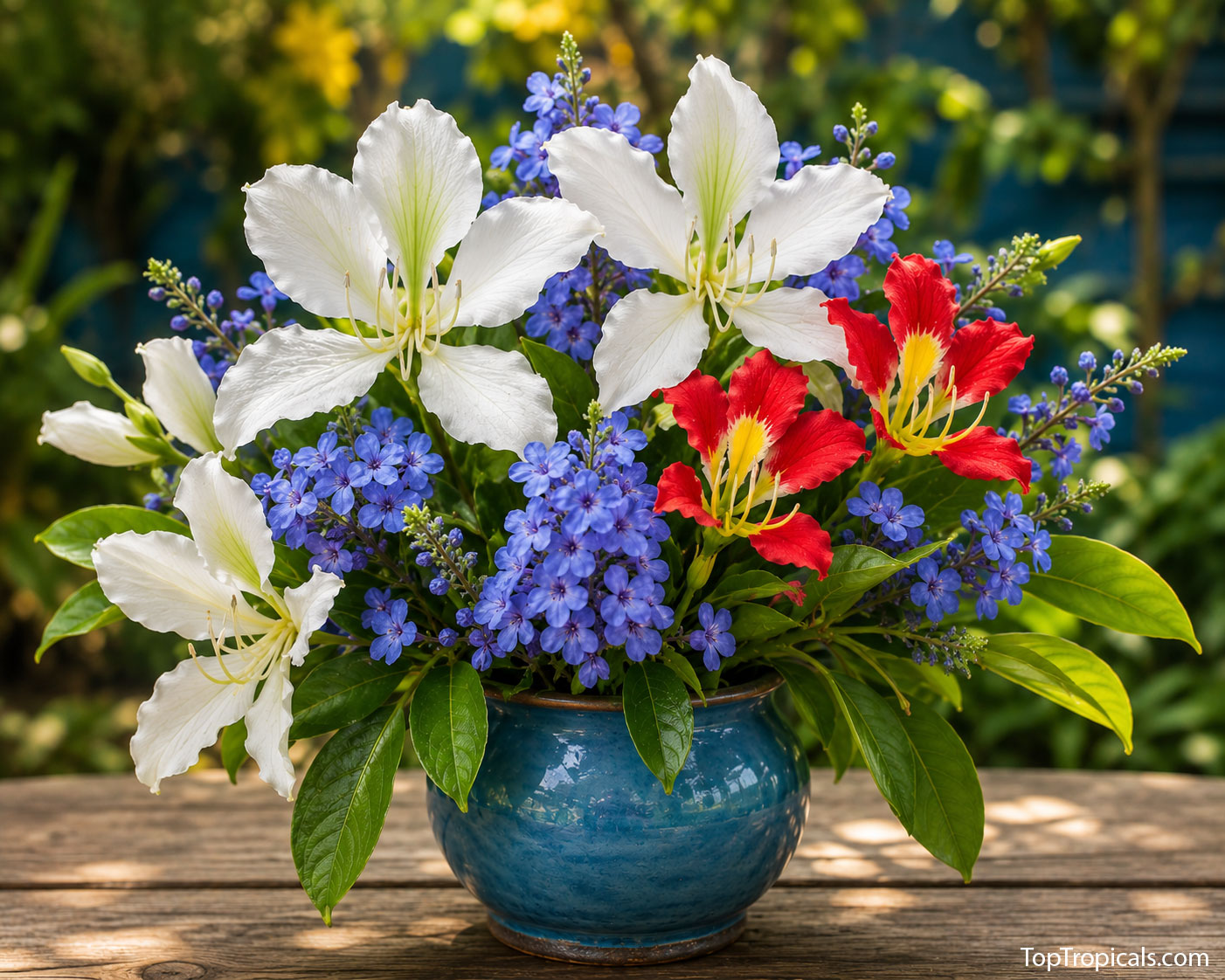
💐Flowers in the vase:
· Bauhinia alba, White orchid tree
· Bauhinia madagascariensis, Red Butterfly Orchid Tree
· Eranthemum pulchellum - Blue Sage, Lead Flower
Date: 3 Jul 2026
When you are a proud couch (potato) owner
Oversized puppy Sunshine
"The best way to appreciate your job is to imagine yourself without one." - Oscar Wilde
🐈📸 Oversized puppy Sunshine owns a couch at Top Tropicals Bfarm.
#PeopleCats
🟢 Join 👉 TopTropicals
Date: 3 Jul 2026
Why Gardeners Are Planting This Hardy Tropical Tree: Bauhinia alba
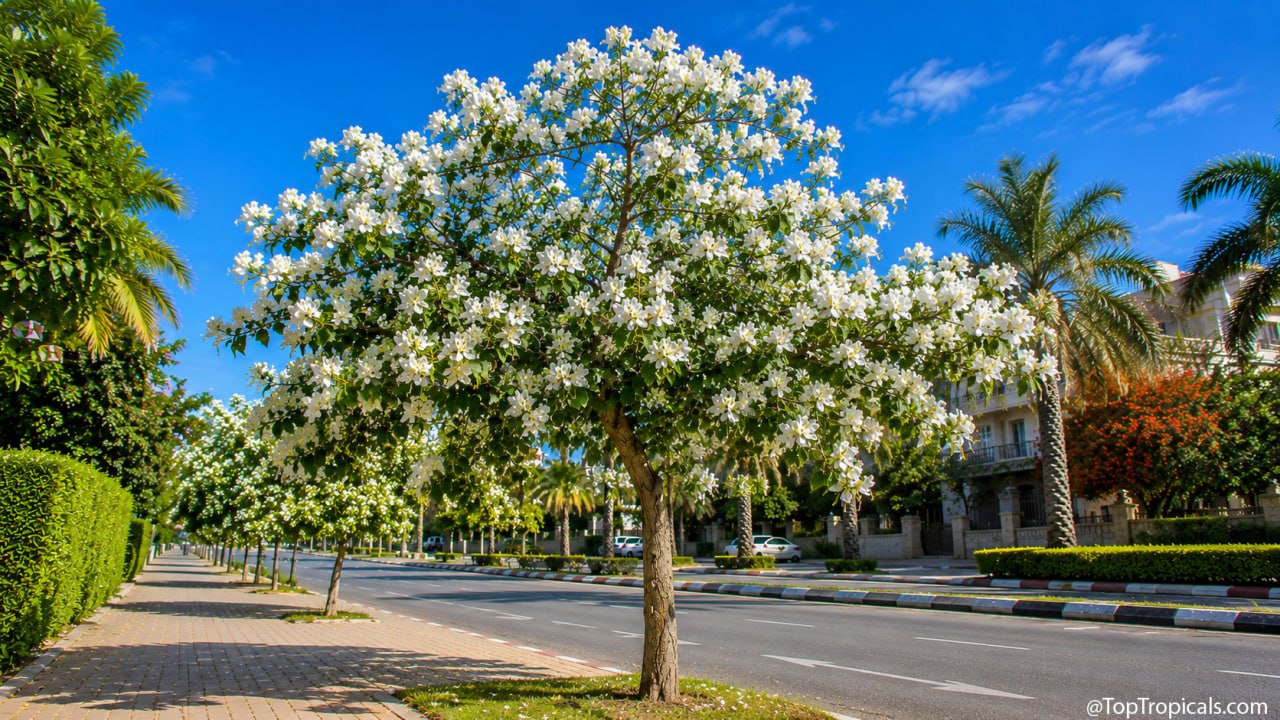
Bauhinia alba - White Orchid Tree
Bauhinia alba - White Orchid Tree
🌳 Why Gardeners Are Planting This Hardy Tropical Tree: Bauhinia alba
There's something special about a tree that gives you pure tropical beauty without demanding a flawless tropical climate. That's exactly why the White Orchid Tree has become a coveted favorite across warm-temperate and subtropical landscapes.
It grows fast, fills out into a gorgeous shade canopy, and covers itself with elegant, orchid-like blooms exactly when many other landscape plants are taking a winter break.
💮 A Tree Covered in Snow-White Orchids
The flowers are a total show-stopper. Large, pure white blooms featuring delicate, lemon-green markings appear from winter into spring, often returning with bonus flushes throughout the summer. They carry a light, subtle fragrance and stand out brilliantly against the canopy.
Even when it isn't blooming, the foliage is incredibly distinct. The tree features unique, twin-lobed "butterfly leaves" that bring an instant, unmistakable exotic texture to your yard.
White Orchid Tree Growing Guide
- 💮 Botanical Name: Bauhinia alba (candida)
- Cold Tolerance: Established trees handle brief dips to ~26°F
- ☀️ Light & Soil: Full sun and well-drained soil
- 🦋 Bonus Feature: A massive magnet for hummingbirds and bees
💮 Surprisingly Cold Hardy for a Tropical Specimen
Unlike most tropical flowering trees that fold at the first sign of a chill, the White Orchid Tree is considered one of the toughest members of the Bauhinia family.
Once fully established in the ground, it can tolerate brief temperature drops down to around 26F. This opens the door for gardeners who want that high-end exotic look but live just outside of a truly tropical zone.
💮 Fast Shade Without the Long Wait
If you're trying to fix a bare backyard quickly, this tree delivers. It is a rapid grower, quickly maturing into a perfectly sized medium specimen between 15 to 30 feet tall. Its broad, spreading umbrella canopy creates excellent, cooling filtered shade for patios, lawns, and understory garden beds.
Low-Maintenance Luxury: Once its root system is established, this tree is remarkably self-sufficient. It loves the full sun, isn't picky about soil as long as it drains well, and shows excellent drought tolerance.
💮 Bring the Tropics to Your Landscape
If you've been searching for a flowering specimen that combines rapid growth, cooling shade, and impressive resilience against a chilly night, the White Orchid Tree checks every single box.
🛒 Shop the white orchid tree and upgrade your landscape
📚 Learn more:
Bauhinia alba (candida) in Plant Encyclopedia
How to enhance your garden with hardy tropical: Fast Growing White Orchid Tree
How to grow Orchid Trees in pots
White Orchid Tree
Pure white and elegant
What is the best shade tree that is fast growing and beautiful?
Why Bauhinias are called Orchid Trees: orchid flowers with butterfly wings
#Hedges_with_benefits #Trees #Butterfly_Plants
🟢 Join 👉 TopTropicals
Date: 2 Jul 2026
Happy 250th Birthday, America!

Happy 250th Birthday, America!
 Happy 250th Birthday, America!
This weekend we celebrate 250 years of freedom, courage, and the pioneering spirit that continues to inspire us. Just like a great tree, our nation has grown from strong roots, weathered every season, and continues to bloom with new generations.
As gardeners, we know that the most beautiful things take time, patience, and care. Every flower, every fruit, and every shade tree reminds us that when we nurture something with love, it grows into something extraordinary.
Thank you for letting us be part of your gardening journey. Here's to beautiful gardens, abundant harvests, and another season of growing together.
🎆 Celebrate America's 250th Anniversary with Us!
Enjoy 10% OFF your order with coupon code:
🎆 HAPPY250 🎆
Min order $100. Excluding S/H. Exp. 7-5-2026
Use our FREE and DISCOUNTED SHIPPING for qualified orders
From all of us at Top Tropicals, we wish you and your family a joyful Independence Day filled with sunshine, blooming gardens, delicious backyard cookouts, and unforgettable memories!
Happy Birthday, America! 🎆
💐 Flowers in the vase:
· Bauhinia alba (candida), White orchid tree
· Bauhinia madagascariensis, Red Butterfly Orchid Tree
· Eranthemum pulchellum - Blue Sage, Lead Flower
🛒 Shop tropical plants
#Discounts
🟢 Join 👉 TopTropicals and share with your friends
Date: 2 Jul 2026
Electric purple and velvet green Tibouchina: when neighbors asking, What is that?

Glory Bush (Tibouchina multiflora, also known as Tibouchina grandifolia)
Glory Bush (Tibouchina multiflora, also known as Tibouchina grandifolia)
💜 Electric purple and velvet green Tibouchina: when neighbors asking, "What is that?"
Some plants blend into the background. Others force people to stop, point, and ask, "What is that?"
If you want a shrub that delivers lush tropical foliage, months of electric-purple blooms, and an unexpected splash of fall color, the Glory Bush (Tibouchina multiflora, also known as Tibouchina grandifolia) deserves a spot at the top of your wish list. It’s one of those rare, dramatic plants that looks spectacular even before it blooms - and becomes completely unforgettable when it does.
💜 Velvet Leaves That Beg to Be Touched
Long before the first flower buds appear, the Glory Bush is already putting on a masterclass in texture.
Its enormous, velvety leaves can stretch up to 10 inches across, growing even larger in partially shaded spots. Covered in a soft, silvery fuzz, the rich green foliage brings an instant, high-end tropical vibe to any landscape. Few ornamental shrubs offer this level of dramatic texture with so little fuss.
💜 Months of Electric Purple Blooms
When late summer arrives, the Glory Bush undergoes a total transformation.
The Peak Season: Starting in August and running straight through fall - and often well into winter - the bush erupts with large, upright clusters of vivid, royal purple flowers.
The intense color is a beacon for pollinators, turning your yard into a bustling haven for butterflies and hummingbirds.
💜 The Autumn Surprise Most People Miss
While famous for its purple petals, the Glory Bush has a hidden talent: unexpected fall color.
As the seasons shift, some of the older, mature leaves transform into brilliant shades of orange and fiery red before dropping. In warm-climate gardens where traditional autumn foliage is hard to come by, this striking contrast against the purple blooms is an absolute show-stopper.
💜 Low-Maintenance Luxury for Warm Climates
Don't let its exotic, high-maintenance looks fool you. The Glory Bush is incredibly resilient, especially in places like Florida and the Gulf Coast.
Fast-Growing: Quickly matures into a handsome, large structural shrub.
Versatile: Thrives in full sun to partial shade.
Resilient: Handles mild winters with ease once its root system is established.
Whether you plant it as a standalone specimen, a vibrant privacy screen, or a lush backdrop for smaller perennials, it instantly elevates the neighborhood standard.
Glory Bush Growing Guide
- 🌸 Bloom Time: August through Winter
- ☀️ Light: Full Sun to Partial Shade
- 🍂 Bonus Feature: Vibrant fall leaf changes
💜 Ready for a Garden Upgrade?
Why choose between a plant with great foliage and one with great flowers? The Glory Bush gives you both: giant touchable leaves, months of electric blooms, and a flash of autumn fire.
If you've been searching for that one perfect piece to bring dramatic color and unmistakable tropical character to your yard, this is the shrub that will finally steal the show.
Which specific area of your garden are you hoping to transform with a Glory Bush?
🛒 Add electric purple and velvet green to your yard
📚 Learn more:


· Tibouchina multiflora in Plant Encyclopedia
· What is the best purple flowering bush?
· Why this Tibouchina is so popular
#Hedges_with_benefits #Discover
🟢 Join 👉 TopTropicals