Garden Blog - Top Tropicals

Date: 22 Oct 2024

How to grow Jackfruit in a pot:
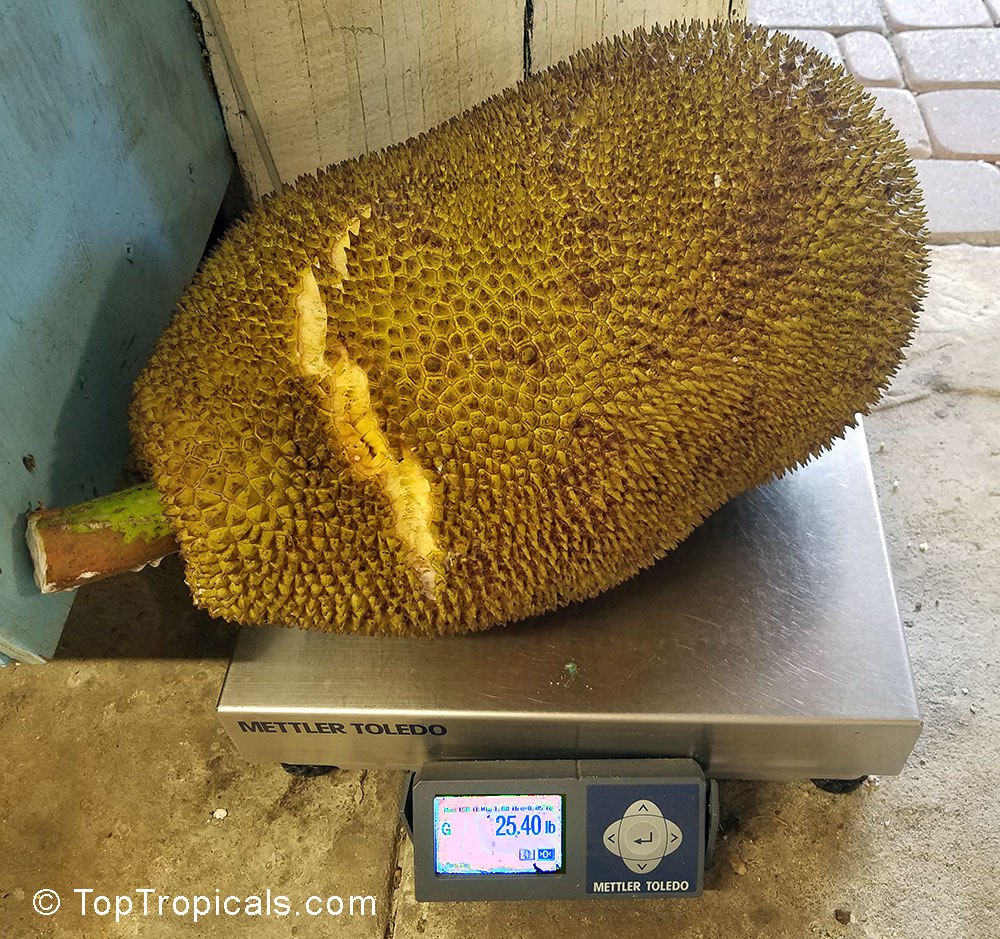
the biggest fruit in the world
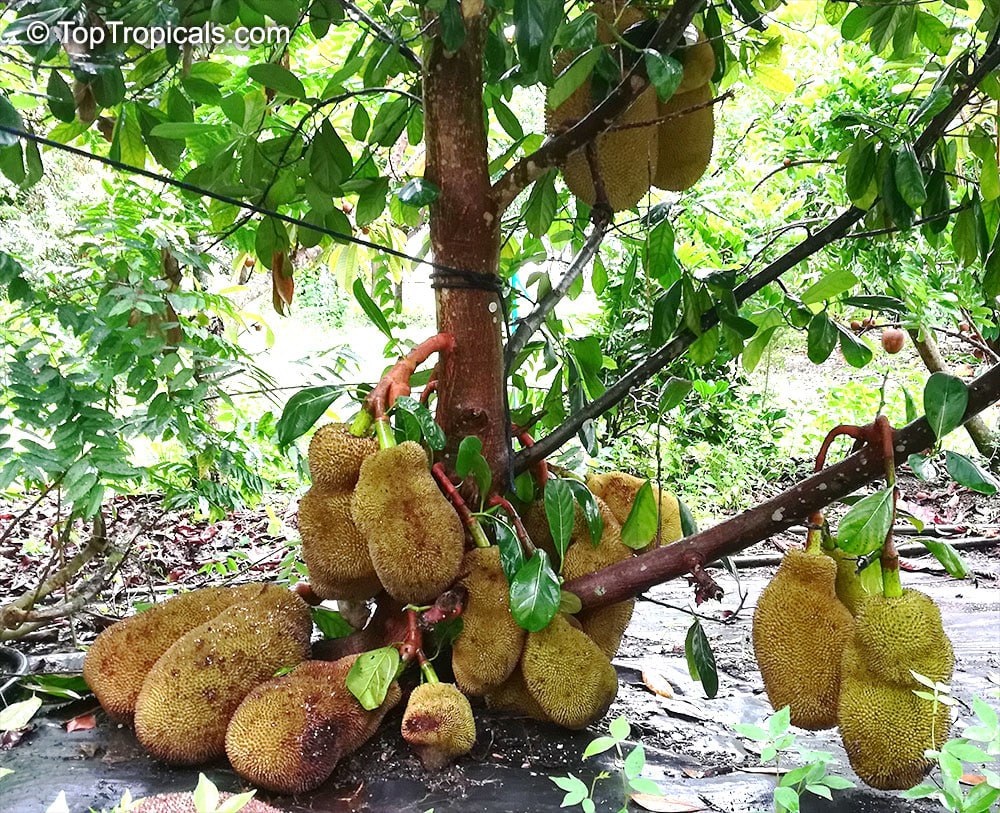
Jackfruit - Artocarpus heterophyllus

Q: Can I grow Jackfruit in a pot?

A: Yes, you can! Jackfruit trees, despite producing the largest tree-borne fruit in the world - up to 80 pounds and 36 inches long - can thrive and fruit in containers. The tree has a clever feature: it grows fruit only at the base of the trunk, allowing you to manage its height and size. With regular pruning, the tree can stay compact at just 6-7 feet tall, making it perfect for pot culture.

1. Getting started: pot sizes and growth tips

Start with: A 3-7 gallon container.
As it grows: Gradually increase to a 15-25 gallon pot by the time it reaches fruiting size (2-4 years).
Pruning is key: Keep the tree topped at 6-7 feet to focus its energy on fruit production.
Fertilize regularly: Use high-quality plant food like Sunshine Boosters C-Cibus to promote healthy growth and fruit development. C-Cibus is the best natural plant food for fruit and edibles.

2. Fun facts about Jackfruit - Artocarpus heterophyllus
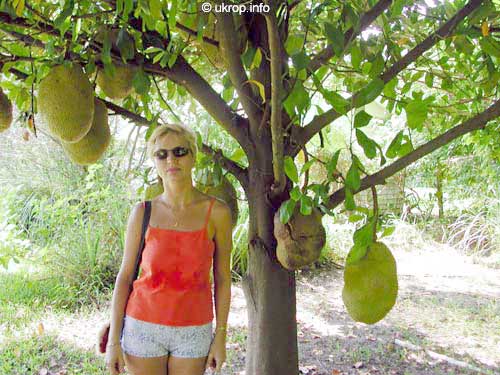
Jackfruit - Artocarpus heterophyllus

A mature Jackfruit tree can produce 200 pounds of fruit per year.
The fruit consists of large, sweet, yellow bulbs with a banana-like aroma.
Seedlings start fruiting within 3-4 years, with fruits ripening in just 4-6 months after flowering.

3. Cold tolerance of Jackfruit trees

Though often thought of as ultra-tropical, mature trees can withstand light frost for short periods without major damage. Keeping Jackfruit in pots also offers an easy way to move them indoors during cold spells if you're in a cooler climate.

4. Secrets for successful Jackfruit production

- Frost-free temperatures are essential.
- Use rich, organic soil with compost, manure, or peat moss.
- Maintain moist soil with regular watering.
- Constant pruning to keep the tree under 7 feet promotes healthy fruiting.
- Apply fertilizer and microelements regularly for better fruit quality.

By following these tips, you'll be able to enjoy the world's biggest fruit right from your patio!
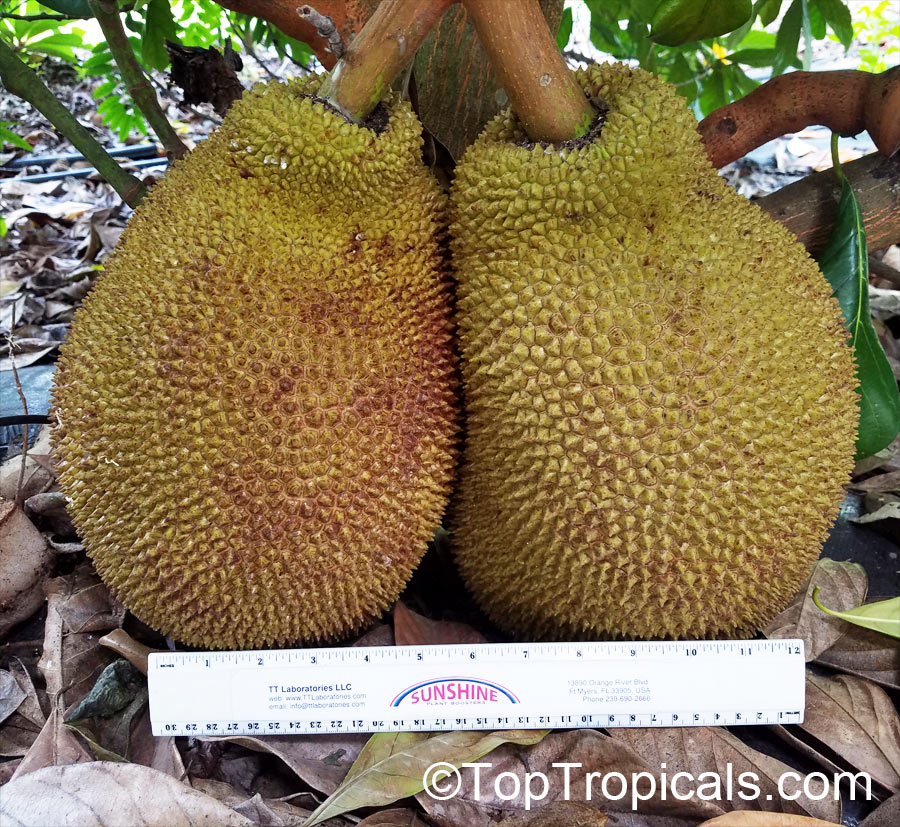
Jackfruit - Artocarpus heterophyllus

Learn more:
About Jackfruit
How to grow the biggest fruit on Earth
Cheena - Jackedack

Videos:
Jackfruit Fruit
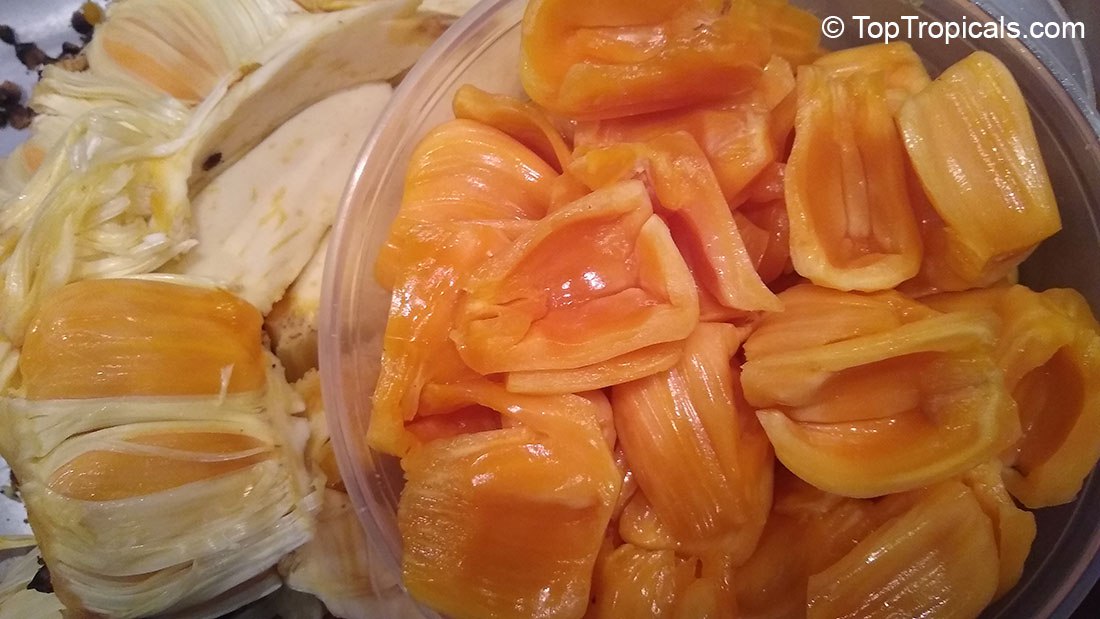
Jackfruit - Artocarpus heterophyllus

Jackfruit - Artocarpus heterophyllus

Date: 2 May 2019

How to propagate plants from cuttings. Top (Tropicals) secrets.

TopTropicals.com

Q: After pruning my jasmine, I have so many branches and I don't have a heart to through them away, can I use them to make more plants? Please tell me what size cuttings and do I need to remove leaves? Should I just stick them in the ground? Will they root? I don't know if you will be willing to share your secrets?

A: We are always happy to know that you grow more plants, and make our World better! These are some useful tips for the propagation of tropical plants using cuttings:

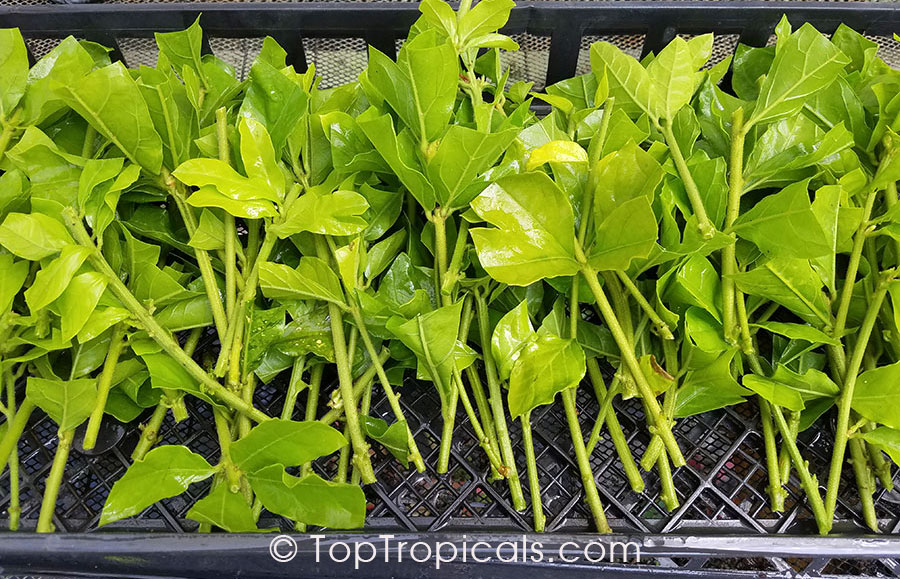
- Cuttings and leaves. Use cuttings 2-5" long. Strip leaves from the bottom. Cut larger leaves in half to reduce evaporation.
- Soak cuttings for 15-30 min in SUNSHINE solution.
- Mix. Use special well-drained mix with lots of soil conditioner: we have a special professional propagation mix for cuttings.
- Mist. Put community pots or trays with cuttings in mist, or if you don't have mist - cover the pot with a clear plastic bag to create a mini-greenhouse.
- Shade. Keep propagation pots in bright shade and never allow direct sun rays.
- Rooting hormone: yes, use it if you have it. Not only it promotes root formation but also prevents from fungus so the cuttings won't rot. We use Dip-N-Grow.
- Rooting and food. Check in 2-3 weeks for roots. Once you see the little roots, begin fertilizing with a special Baby-Plant Food and make sure never exceed recommended doze otherwise you may kill the cuttings.
- Establishing. Once roots start growing, plant in 4" pots in a well-drained potting mix and watch the beauty grow! Gradually move to the full sun only when little plants establish and start new growth.

If you are lucky to make more rare plants than you can use, contact us, we will buy them from you or trade for your dream plants! In fact, one of our customers from many years ago started selling us baby plants that he propagated from our plants, and now has a successful business (Karma Nursery); we buy a lot of plants from him every month!

For more ideas on tropical plant propagation, see also:
- Secrets of turtle tank propagation
- 5 secrets of propagation

Date: 29 Apr 2024

Fun Facts: Cacao beans

Cacao Chocolate Tree (Theobroma cacao)

Cacao Chocolate Tree (Theobroma cacao)

Cacao Chocolate Tree (Theobroma cacao)

Cacao Chocolate Tree (Theobroma cacao)

Cacao Chocolate Tree (Theobroma cacao)

Cacao Chocolate Tree (Theobroma cacao)

Cacao Chocolate Tree (Theobroma cacao)

Cacao Chocolate Tree (Theobroma cacao)

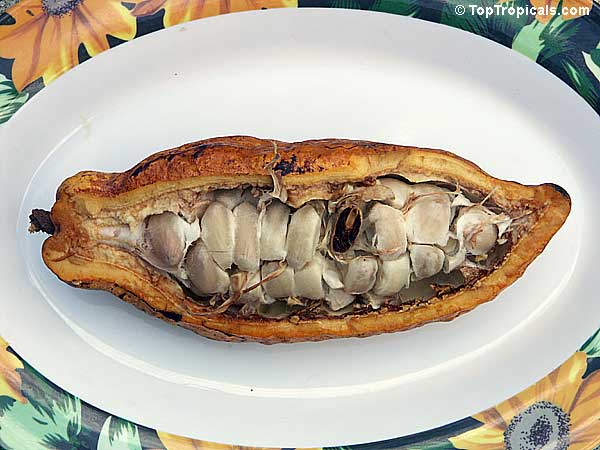
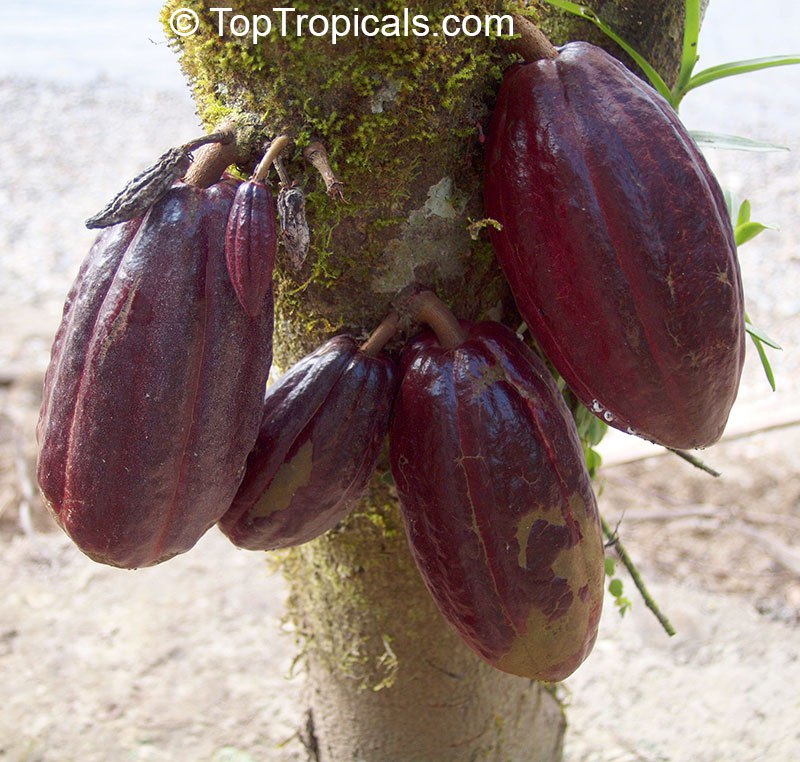
📖 Fun Facts: Cacao beans (Theobroma cacao) were used to make chocolate, and the ancient Maya and Aztec civilizations valued cacao beans as currency 💰 Can we use chocolate as money?
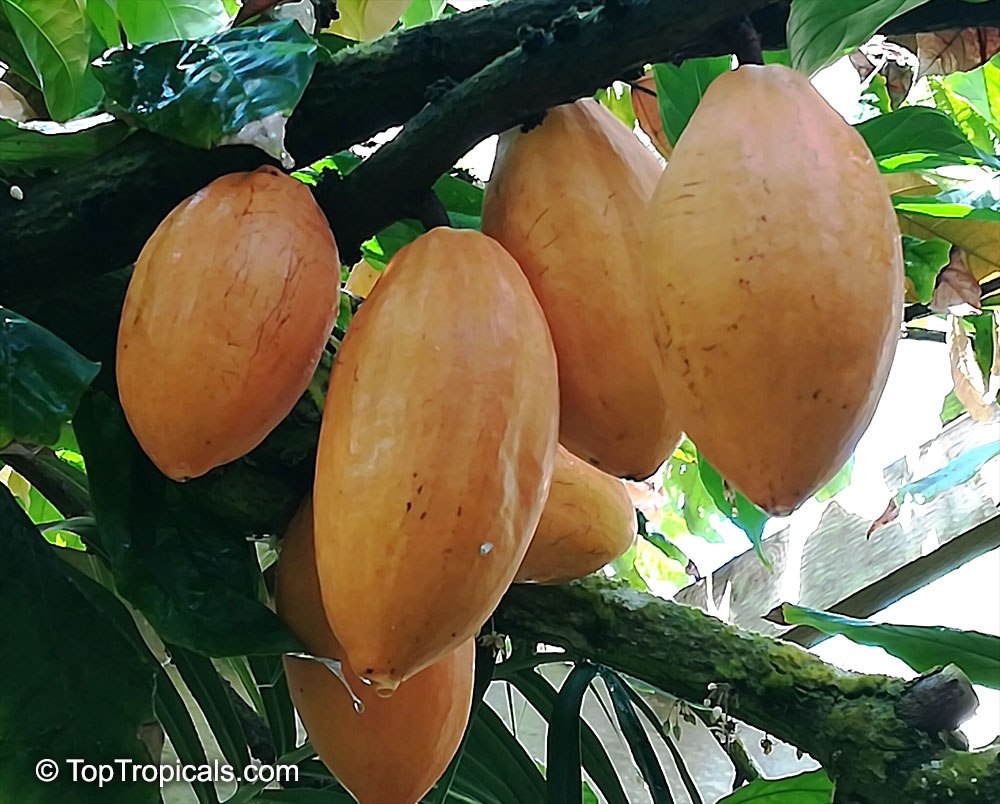
  • 🍫 Chocolate tree has large dark green leaves that shade the fruit pods which grow directly from the trunk and branches.
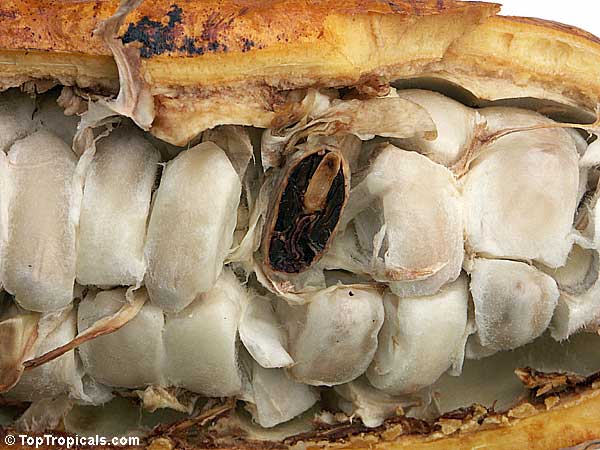
  • 🍫 The flesh of the fruit is eaten as a dessert, and the seeds are the raw material of chocolate. Hot chocolate can be made by drying the seeds, roasting, grinding, and adding milk.
  • 🍫 This exotic rare tree makes a gem of a houseplant collection.


🛒Get your own Chocolate Tree

#Fun_Facts #Food_Forest

JOIN 👉 @TopTropicals

Date: 26 Apr 2025

Fun Facts About the Guava Flower

Guava Flower

🌸 Fun Facts About the Guava Flower
  • 🌸 Frilly and Fabulous - Guava flowers may be small, but they're packed with fluffy white stamens that give them a soft, powder-puff look.
  • 🌸 Pollinator Magnet - Bees and butterflies love guava blooms, making them a great addition to a pollinator-friendly garden.
  • 🌸 Scent-sational - The flowers have a light, pleasant fragrance that adds a touch of sweetness before the fruit even arrives.
  • 🌸 Bloom to Fruit - Each flower can turn into a delicious guava fruit, making them both beautiful and productive.
  • 🌸 Part of the Showy Family - Guava (Psidium) belongs to the Myrtaceae family, which also includes eye-catching bloomers like Eucalyptus, Bottlebrush (Callistemon), and the stunning Rose Apple (Syzygium).


📚 More from previous posts about: #Guava

🛒 Shop Guava Trees

#Food_Forest #Guava #Fun_facts

🔴 Join 👉 TopTropicals

Date: 13 Apr 2025

Why do the Chinese drink tea?

Why do the Chinese drink tea?
🌱 Why do the Chinese drink tea?

  • 🍃 It actually has to do with the Chinese theory of the five elements - wood, metal, fire, water, and earth:

木 金 火 水 土

  • 🍃 Tea comes from a plant - Camellia sinensis - the Tea Leaf Tree - that is used to make all true teas: green, black, white, and oolong. The Tea Tree contains the element of wood (木) 🌳

  • 🍃 When it's roasted in a cast-iron pan, it gains the element of metal (金)

  • 🍃 Then it's dried over fire, adding the element of fire (火) 🔥

  • 🍃 When it's brewed with boiling water, the element of water enters (水) 💦

  • 🍃 Finally, tea is poured into a clay vessel, symbolizing the element of earth (土) 🍯

  • 🍃 In this way, all five elements - wood, metal, fire, water, and earth - come together in a single cup.

  • 🍃 The plant grows slowly and can thrive in containers or frost-free gardens with sun to semi-shade.


🛒 Grow your own tea

📚Learn more from previous posts:
Tea facts
How to grow your own tea?
Where does the tea come from?
Instructions how to make tea from tea leaves (PDF)

#Food_Forest #Remedies #Fun_facts

🔴 Join 👉 TopTropicals