Garden Blog - Top Tropicals

Date: 19 Jul 2025

🔥 Too hot to function?
20% off QUALITY fertilizers
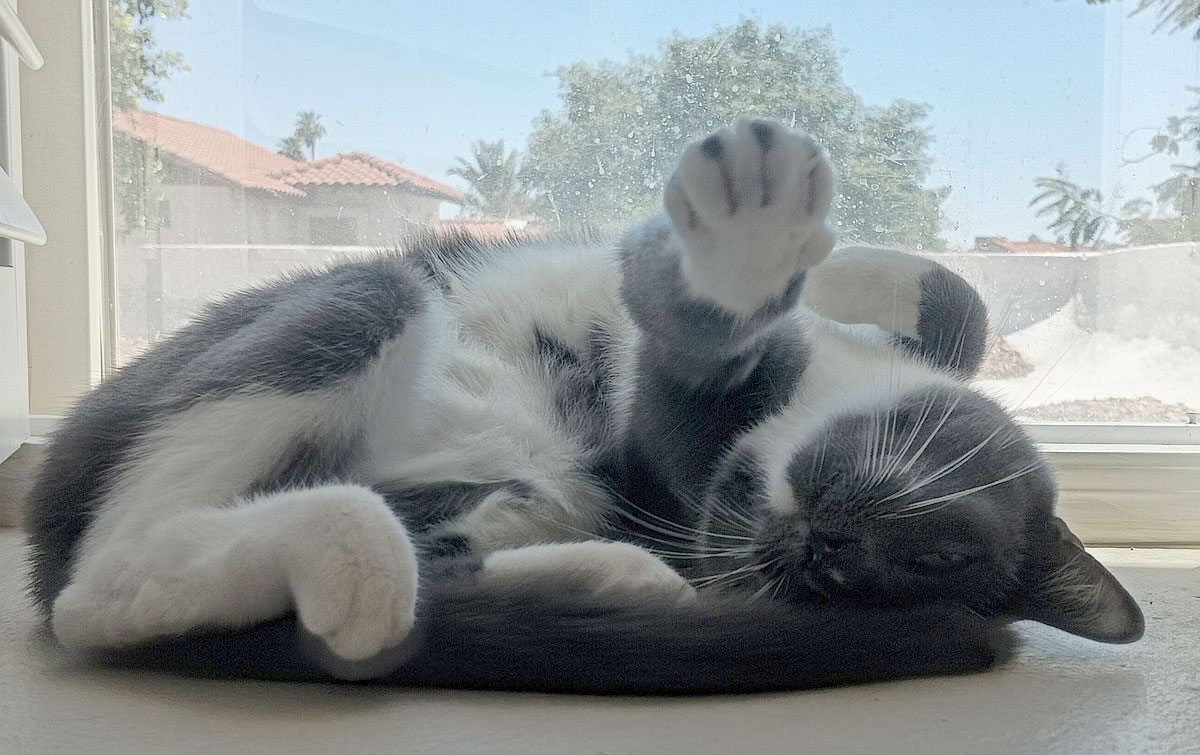
Macaron  the  tuxedo  cat  lying  lazily  on  his  side  in  a  sunny  windowsill,  one  paw  raised  mid-stretch  as  he  naps  through  the  summer 
 heat.

When it gets this hot, even Macaron the cat gives up on pretending to care. He flops sideways, paw in the air like he's surrendering to the sun, and doesn't move for hours. Your plants? They’re doing the same.

That's not neglect. It's survival.

If your tropical plant suddenly stopped growing, it's not mad at you - it's on summer strike. And the worst thing you can do is try to push it with a shovel of cheap dry fertilizer.

In our next column we will tell you how to save plants from heat stress, root burn, or just plain summer sulking. Macaron's Paw of Approval 🐾.

While you're at it - give your plants the gentle support they actually need - and save!

Use code FERTI20 to save 20% on fertilizers and garden supplies!

No minimum order. Offer Ends July 24, 2025.
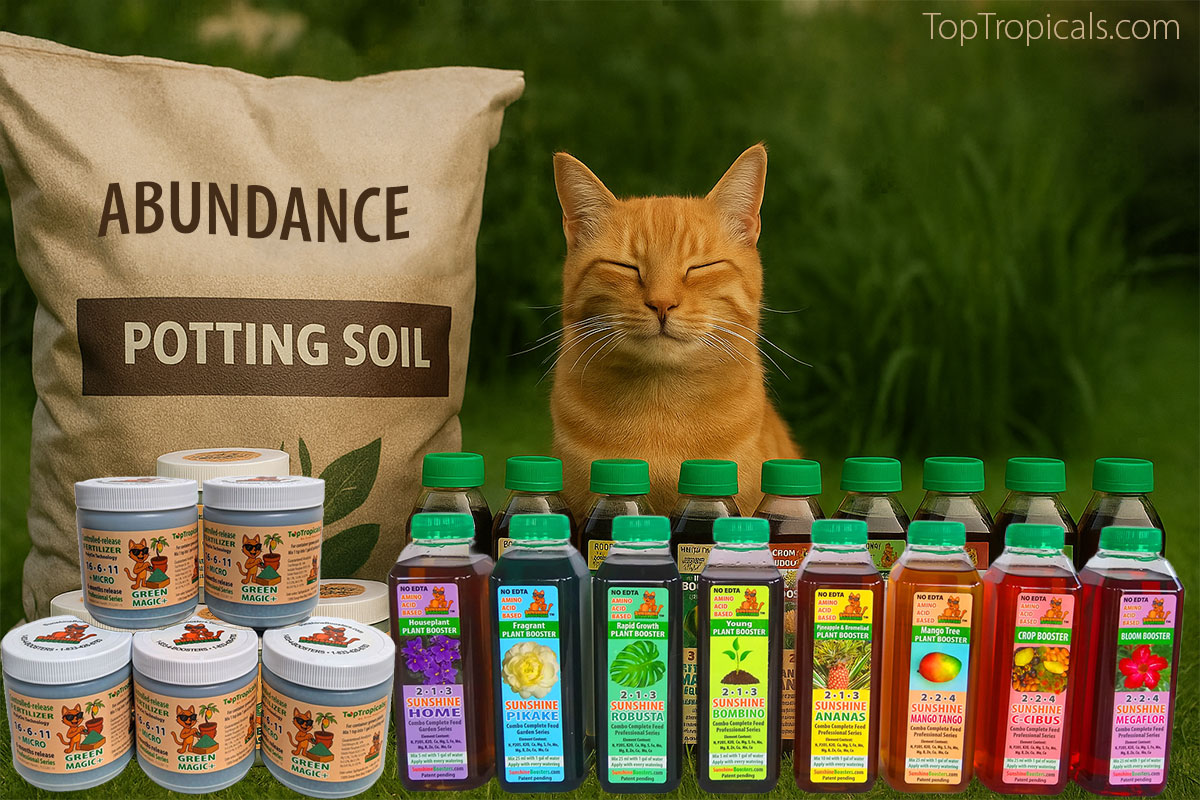
Shop fertilizers and garden supplies Orange  cat  with  garden  supplies  and  fertilizers

Date: 31 Jul 2025

Shady spots aren't a problem - they're an opportunity

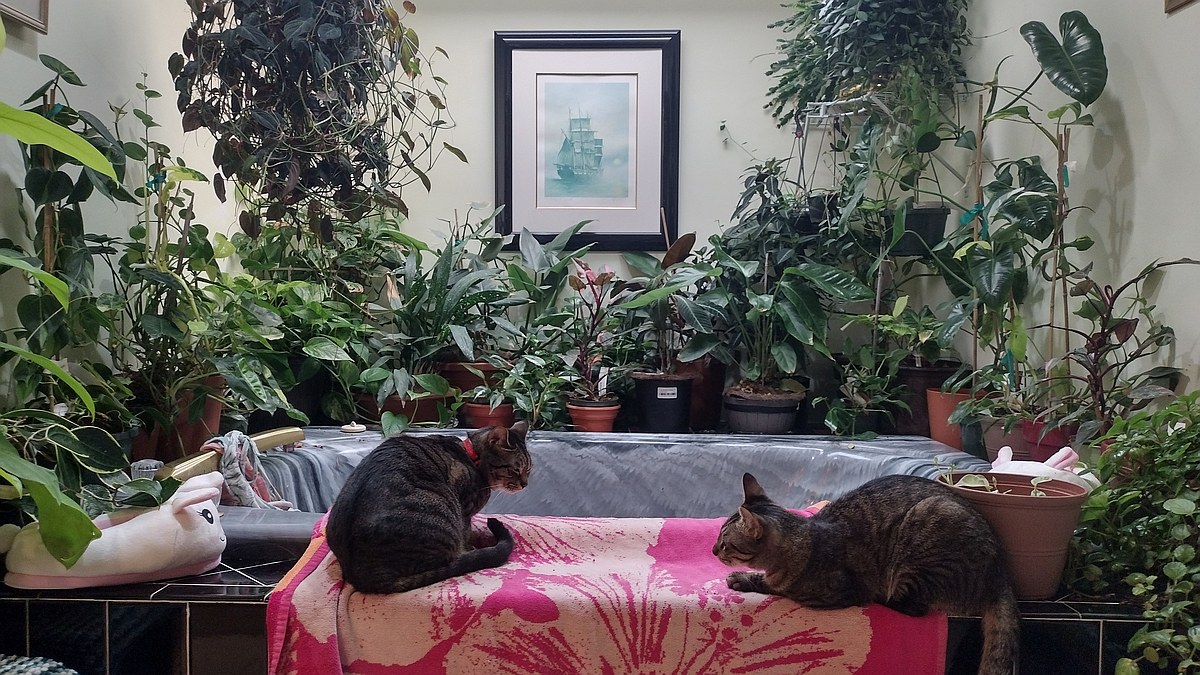
Niki  and  Cash,  the  PeopleCats.garden  rescued  cats,  lounging  on  a  pink  towel  in  front  of  a  bathtub  surrounded  by  tropical  houseplants.  The  room  is  filled  with  lush  green  foliage,  hanging  vines,  and  potted  plants,  creating  a  peaceful  indoor 
 jungle.

Photo above: Niki and Cash, the Top Tropicals PeopleCats-in-residence, lounging in a lush indoor jungle

Most tropical gardens have at least one corner that gets morning light, filtered sun, or just bright shade - and that's exactly where Anthuriums thrive, along with many other shade-loving plants. That makes them ideal for spaces where other tropicals struggle.

Don't have a greenhouse? You don't need one. Anthuriums do beautifully on a shaded porch, in a screened lanai, or even indoors near a north or east-facing window. They're perfect for:

  • Bathrooms with natural light
  • Bright kitchens with indirect sun
  • Shaded entryways or under eaves
  • Hanging baskets under tree cover
  • Mounting on cork or wood in humid areas

Even a small space can feel like a tropical conservatory with the right plant - and Anthuriums bring that look without being demanding. They grow slowly, stay manageable, and don't need constant pruning or repotting.

Best of all, they reward consistency. Keep them warm, give them some humidity, water when the top inch feels dry, and they'll stay healthy for years. No drama - just quiet, lasting beauty. If you've never grown tropicals in the shade, this is where to start.

Watch Top Tropicals videos about anthuriums

Shop Shade Garden

Date: 28 Dec 2018

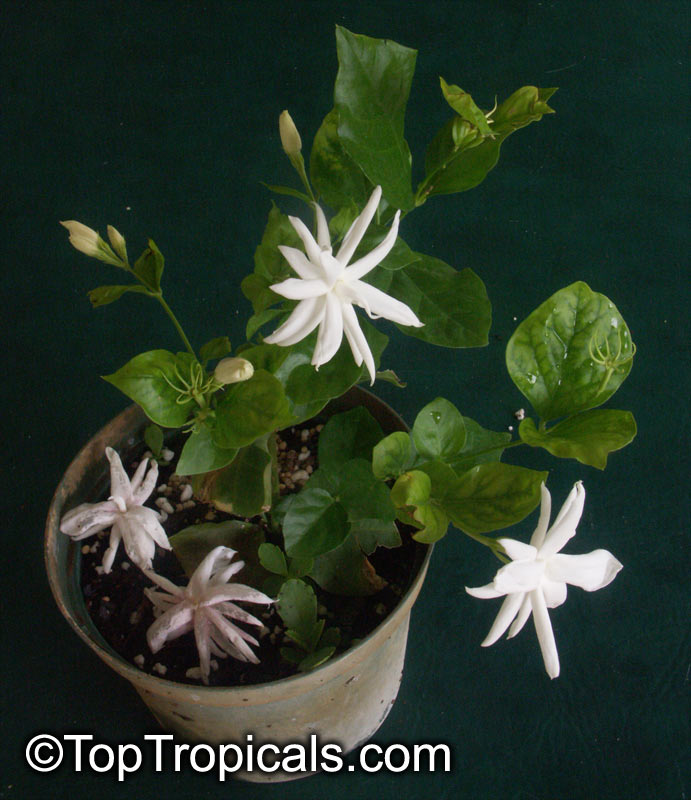
How to get a Jasmine to bloom.
Caring for jasmines as container plants during Winter

TopTropicals.com

Locate the jasmine plant where it will receive bright filtered light at least six hours every day.

Put a few pebbles in a shallow plate or tray and pour fresh water over the pebbles. Set the pot on the pebbles, but don't let the water level touch the bottom of the pot. This increases the humidity in the air around the jasmine. Keep the plant away from wood stoves, heat vents and radiators.

Water the jasmine when the top 1/2 inch of the soil feels dry. Don't let the soil get soggy, and never let the pot sit in water. Water the plant sparingly during the winter.

Feed jasmine twice a month between Spring and early Fall, using a granulated slow-release, or water-soluble houseplant fertilizer mixed at half strength. Don't fertilize during the winter months.

Prune the jasmine as needed to maintain the desired shape. Never prune in winter, as the plant will be preparing to bud.

Encourage the jasmine to bloom by putting it in a cool room at night for four to five weeks during Fall to Early Winter. The plant should get plenty of sunlight during the day, but during the night, move it to a pitch-dark room where the temperature is between 40 and 50 degrees F. After four to five weeks, leave the plant in its regular, daytime location. The plant should start blooming in mid-Winter to early Spring.

See all jasmine plants...

Date: 6 Dec 2018

Why starting tropicals from seed indoors is better than outside?

TopTropicals.com

Q: I am in Texas, it is getting cold, but I bought these seeds the last two packs, as I didn't want to miss them, was looking for a long time and found you had them. Should I wait until spring to plant them?

A: You can grow tropical plants from seed year round and don't have to wait until warm weather outside. It is, in fact, beneficial to start tropicals indoors in a controlled temperature, moisture and humidity. Seeds of some species are very sensitive to excess water and/or require a certain range of temperature for germination... Besides, it's so much fun!
First, read the basics: Happy Hobby: growing tropicals from seeds

Advantages of indoor growing from seed

It is easier to keep under control indoors:

1) Temperature and Light. Although many tropical seeds require higher temperature and bright light for germination (hot sun may help), it may be hard to avoid overheating and drying out when you put trays in full sun. Using heat pads and additional lighting indoors makes germination smooth, even may take a little longer than in hot sun.
2) Soil moisture. If you ever lost your seeds or tiny seedlings to a heavy summer rain, you sure will appreciate your own moisture-controlled environment! Just make sure to use the right soil mix.
3) Air humidity. Indoor air is drier than outside. It may not be best for some tropical plants, but definitely perfect for seed health - they will never get moldy considering you keep your eye on the plantings.
4) Pre-treatment. Some seeds require scarification (sanding down hard shell), others stratification (cold treatment), but all seeds will benefit from SUNSHINE-S soak before planting. It is easier to do in your home lab. Based on our experience, using Sunshine pre-treatment reduces the risk of fungal damage and improves germination from 30 to 65%.
5) After germination culture. Watching seedlings closely in your home environment and giving them all that is needed for healthy, fast growth - miscroelements and first fertilizer - will help to establish young plants just in time before planting them out in Spring-Summer.

Read more: From Kristi - how to grow tropicals from seed.

Check out our seeds selection...

Date: 19 Sep 2018

A Sacred Earthworm: benefit or damage?

by Mark Hooten

TopTropicals.com

Q: We have lots of earthworms in our soil. I've heard they are beneficial for the plants, it it true? Or should I try (and how) to get rid of them at least for container plants?

A: From my earliest childhood, I remember learning that "earthworms" are wonderful, beneficial creatures for our gardens. I had heard that they improved the soil by both aerating it via the tiny tunnels they dig from burrowing activities, AND leaving their droppings which act as fertilizer. However, both my personal experiences and studies have shown otherwise. The truth is that the vast majority of earthworms we encounter in our daily horticultural practices are not even native to North America. In fact, they were introduced from Europe, beginning with the colonial period, mostly accidentally in things like the ballasts of ships, and from soil from around the roots of plants being imported. However, once they arrived here, they began to irreparably alter the natural eco-systems of our forests... Continue reading...