Garden Blog - Top Tropicals

Date: 16 Mar 2026

🌱 💪 Green Magic + SUNSHINE Boosters: A Complete System for Strong Plant Growth

By Tatiana Anderson, Horticulture Expert at Top Tropicals with Smokey & Sunshine help
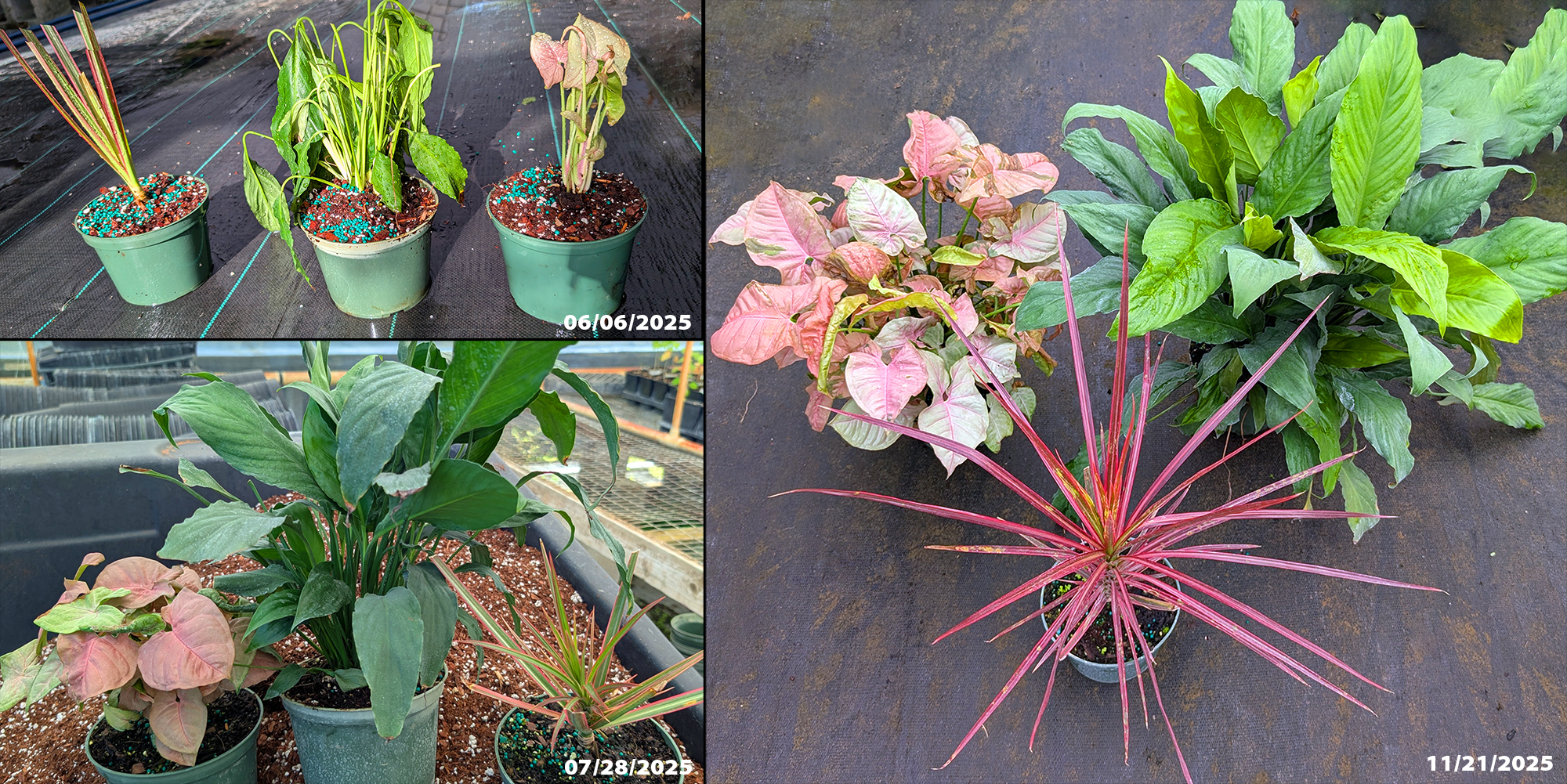
Nearly  dead  houseplants  (Dracaena,  Syngonium,  and  Spathiphyllum) 
 recovering  and  growing  vigorously  after  treatment  with  Green  Magic 
 fertilizer  and  Sunshine  Robusta  plant 
 booster.

Green Magic recovery test with SUNSHINE Robusta support: Dracaena, Syngonium, and Spathiphyllum revived from severe stress and growing vigorously.

☀️🌱 Sunshine Boosters: Complete Plant Nutrition

Sunshine Boosters provide complete plant nutrition, including Calcium and micronutrients that plants need for strong growth. Because nutrients are delivered in liquid form, plants can absorb them quickly and respond almost immediately.

The Practical Problem

Liquid feeding works well, but it requires frequent application. In real gardens, many growers simply do not have time to add liquid fertilizer with every watering.

Green Magic: The Foundation

Green Magic solves this problem by providing steady background nutrition through controlled-release fertilizer. It feeds plants gradually, so they continue receiving nutrients even between liquid feedings.

Why This Combination Works

Together, this system provides both complete nutrition and steady feeding. Sunshine Boosters supply fast nutrients and Calcium, while Green Magic maintains a stable nutrient supply between feedings.

✍️ How to Feed Your Plants

📅 Step 1 – Start of the Growing Season

  • Apply Green Magic around the root zone every 6 months.

    In ground:
    • Small Shrubs (1–3 feet): Use approximately 1/4 to 1/2 cup per plant
    • Established Trees: Use 1/2 lb to 1 lb of product per 1 inch of trunk diameter.
    • Small In-Ground Ornamentals: A common "spoon" rate is roughly 1 teaspoon per gallon of estimated root volume (or per sq. ft. of surface area).
    • Spread evenly around the dripline. Avoid piling the granules against the base or trunk of the plant. For best results, lightly rake the granules into the top 1–2 inches of soil.
    Container plants:
    • Apply 1 tea spoon per 1 gal of soil (mix in with soil) every 6 months during active growth period, or with every re-potting.
  • Water normally after application.
  • Adjustment for Temperature. Because Green Magic is temperature-controlled, adjust your rate if your local climate is extreme:
    • Cooler Climates (<60°F average): Increase the rate by 20% to ensure enough nutrients are released.
    • Hot Climates (> 80°F average): Decrease the rate by 20% to prevent over-releasing as the heat speeds up the process.

☀️🌿 Step 2 – Active Growing Season

  • Apply Sunshine Boosters during the growing season.
  • Regular feeding (maintenance): Mix with tap water according to the ratio on the label. For SUNSHINE Robusta use 25 ml (5 tsp)per gallon of water and spray leaves every 5-7 days during active growth.
  • Correction feeding ("medicine" dose): if plants show visible nutrient deficiencies, combine SUNSHINE Robusta with SUNSHINE Superfood and spray every 5–7 days until new growth appears healthy. All SUNSHINE Boosters products are compatible and can be mixed with water in the same sprayer.
  • Best time to spray: early morning or evening when temperatures are cooler and leaves can absorb nutrients efficiently.
  • Important: spray both the top and underside of leaves for maximum absorption.
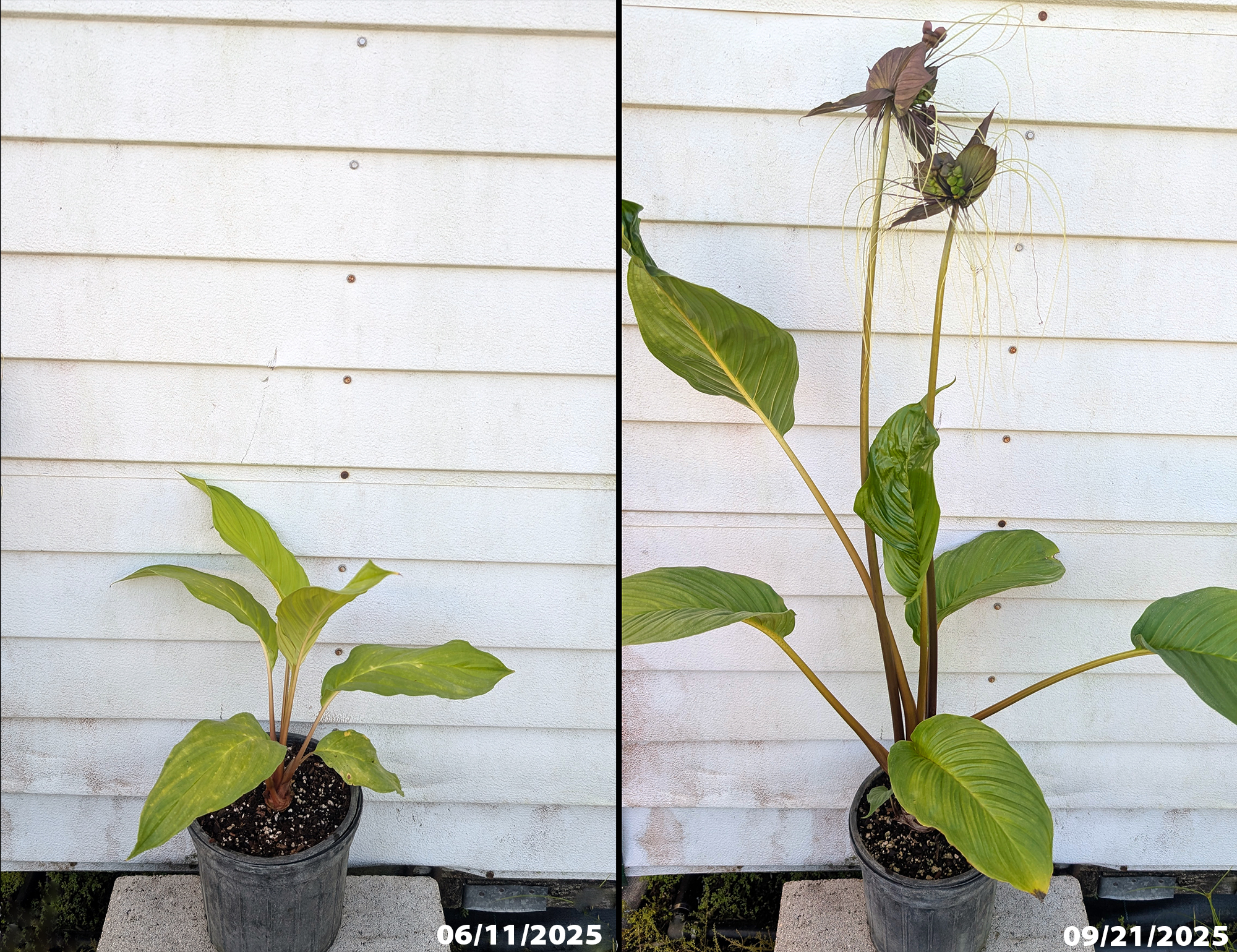
Tacca  plant  (bat  flower)  showing  strong  vegetative  growth  and  flower 
 bud  development  in  the  same  season  after  feeding  with  Green  Magic 
 fertilizer.

Tacca (bat flower) showing vigorous growth and producing flower buds in the same season after feeding with Green Magic.
Swipe left/right to see all data ↔️

📊 Seasonal feeding schedule with Green Magic and Sunshine Boosters.

Season Product Method Goal
Spring (March) Green Magic Soil Surface 6-month steady nutrient base.
Growing Season Sunshine Boosters Foliar (Every 5-7 days) Calcium & Bio-available growth power.
Late Summer Green Magic Soil Surface Replenish foundation for Fall.
Winter Sunshine Epi Foliar/Drench Cold tolerance and shipping recovery.

Quick Dose Reference

  • Green Magic: 1 teaspoon per 1 gallon of soil volume.
  • Sunshine Boosters: 25 ml (5 tsp) per 1 gallon of water.
  • Pro Tip: Always spray in the early morning or late evening to prevent leaf scorch and ensure maximum absorption through the stomata.

❓Frequently Asked Questions: Plant Nutrition & Fertilizer

General Fertilizer Concepts

Why is the "Spring Fertilizer Rush" a problem?
Most gardeners apply a large amount of traditional fertilizer once in March. This creates a "roller coaster" effect where plants get a sudden spike of nutrients followed by weeks of starvation. This leads to inconsistent growth and potential "fertilizer burn."

What is "fertilizer burn"?
Traditional fertilizers are made of soluble salts. When too many salts accumulate around the roots, they actually pull water out of the plant tissues (osmosis), dehydrating the plant and damaging sensitive root tips and leaf edges.

Is there a difference between "Slow-Release" and "Controlled-Release"?
Yes.

  • Slow-Release: Relies on natural factors like moisture and soil microbes to break down. It is often unpredictable.
  • Controlled-Release: Uses engineered polymer membranes (like Polyon) to release nutrients at a specific, predictable rate based primarily on temperature.

Green Magic & Temperature

How does temperature affect my fertilizer?
Most fertilizers are lab-tested at 75°F. In hot climates (90°F+), the nutrients release much faster. A "6-month" fertilizer might only last 3 months in the summer heat.

How should I adjust Green Magic for my local weather?

  • Cooler Climates (<60°F): Increase the application rate by 20%.
  • Hot Climates (> 80°F): Decrease the application rate by 20% to prevent over-releasing.

The Calcium Gap

Why doesn't Green Magic contain Calcium?
Calcium salts are highly soluble and can destabilize the polymer coating used in controlled-release granules. Therefore, most high-quality granules leave Calcium out. You can provide Calcium by using SUNSHINE Boosters

Why is Calcium so important for new growth?
Calcium is the "bone" of the plant, building strong cell walls. Unlike other nutrients, it is immobile—the plant cannot move it from old leaves to new ones. If you don't provide a constant supply, new leaves and fruit will emerge distorted or weak.

Advanced Science & Troubleshooting

What makes Sunshine Boosters "Bioavailable"?
Unlike most liquid fertilizers that use EDTA chelators, Sunshine Boosters are amino-acid based. They use organic acids and glycine to escort minerals into the plant, allowing it to incorporate nutrients into its proteins almost immediately.

Will these fertilizers affect the taste of my fruit?
No. Sunshine Boosters are made from pharmaceutical-grade components and contain no urea or harmful salts, ensuring your harvest (like Mangoes or Avocados) has a pure, natural flavor without a chemical aftertaste.

✨ Green Magic - 15% Off This Week

Give Your Plants a Strong Start This Spring
Green Magic - 15% OFF.

Build the foundation for the entire growing season with a steady, long-lasting nutrient base.

No coupon needed. The discount is automatically applied at checkout.
Offer valid through 03/21/2026. Discount applies to Green Magic products only. Not valid on previous purchases and cannot be combined with other promotions or discounts. Offer subject to change without notice.
Sunshine: So Green Magic feeds the plant for months. Does that mean I can forget about Sunshine Boosters?

Smokey: Not quite. Green Magic is the steady base diet. Sunshine Boosters are the weekly power drink during active growth.

Sunshine: Ah. Like my regular meals and donuts on top.

Smokey: Exactly. Plants eat slowly from Green Magic, and once a week they get a fresh boost.

Sunshine: Sprinkle once, then boosters every week. The plant grows, I drink coffee, and nobody forgets anything important.

Smokey: Except where you left the donuts.

Sunshine: Smokey... nobody forgets donuts. Ever
🛒 Feed your plants

✍️ Learn more about fertilizers

Date: 13 Apr 2026

🌸 Secrets of Blooming Plumerias

Plumeria  Orange  KLS  stands  out  with  a  rare  mix  of  five  colors  -  peach, 
 yellow,  orange,  white,  and  crimson  -  all  blending  into  one  vivid  bloom. 
 Fragrant  and  eye-catching,  it’s  a  truly  unique  plumeria.

Plumeria Orange KLS stands out with a rare mix of five colors - peach, yellow, orange, white, and crimson - all blending into one vivid bloom. Fragrant and eye-catching, it’s a truly unique plumeria.

Practical Growing Tips (Keep It Simple)

  • Sun: Full sun is key. 6+ hours daily for best blooms.
  • Soil: Fast-draining mix. In pots, use cactus mix or add perlite and sand. The best soil for Plumerias is a 50:50 mix of Abundance potting soil with coarse sand.
  • Watering: Water well, then let soil dry out before watering again.
  • Containers: Excellent for pots. Easier control and mobility.
  • Feeding: Light feeding during active growth helps more blooms. Use liquid Sunshine Boosters Megaflor for profuse blooming and controlled release Green Magic fertilizer every 6 months.
  • Airflow: Good airflow keeps plants healthy and clean.
  • Spacing: Give each plant room - better shape and more flowers.

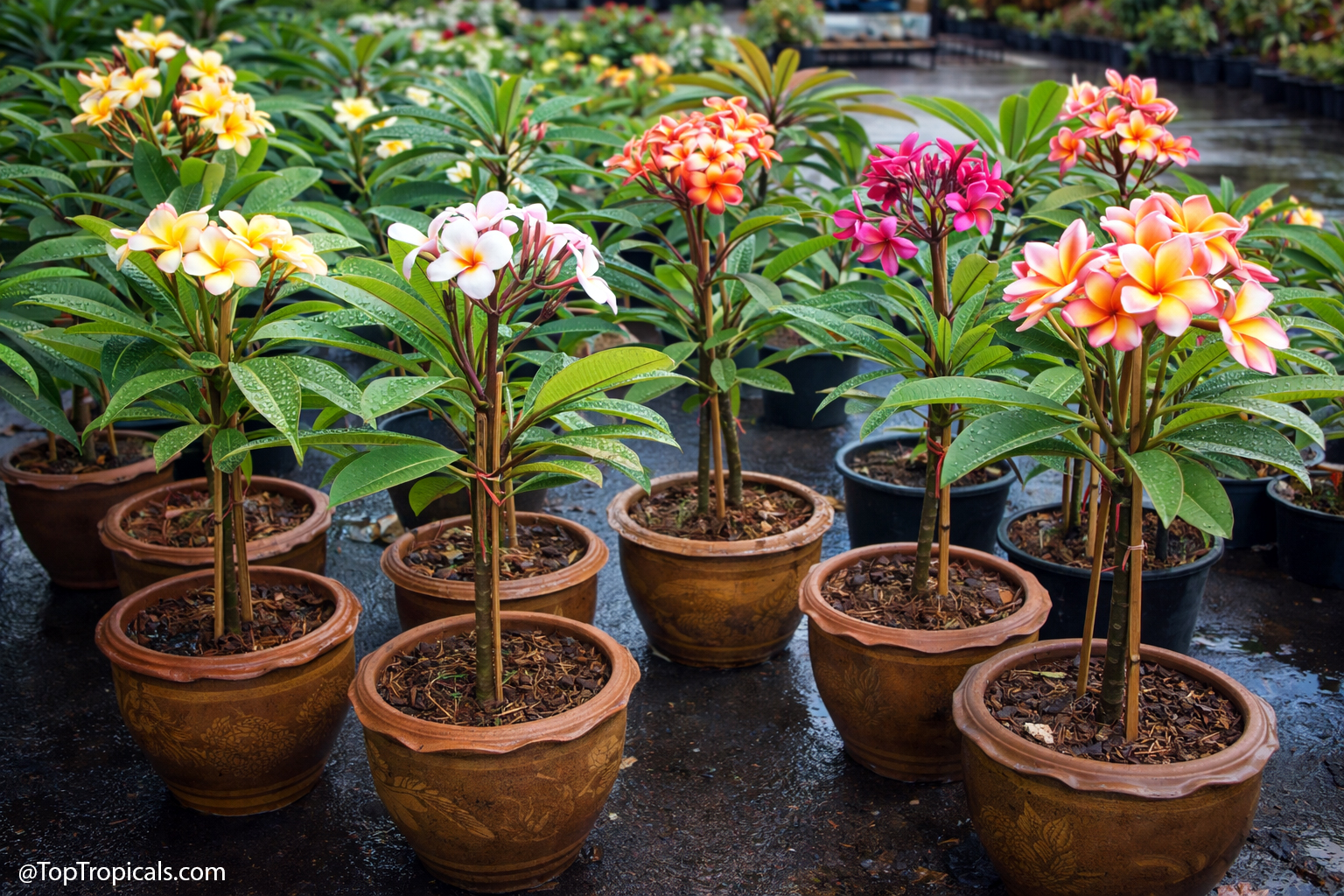
Blooming  plumeria  plants  in  multiple  pots  with  colorful  flowers, 
 arranged  outdoors  in  a  nursery  setting  after  rain.

Blooming plumeria plants in pots after rain.

Winter Care (Very Important)

  • Temperature: Protect from freeze. Below 40F they need protection.
  • Dormancy: Leaves drop in winter. This is normal.
  • Watering: Almost dry during dormancy.
  • Indoors: Move containers inside if frost is expected.
  • Light: Bright spot is enough. No need for full sun in dormancy.
  • No feeding: Do not fertilize during winter rest.
  • Restart: Resume watering when new growth appears in spring.

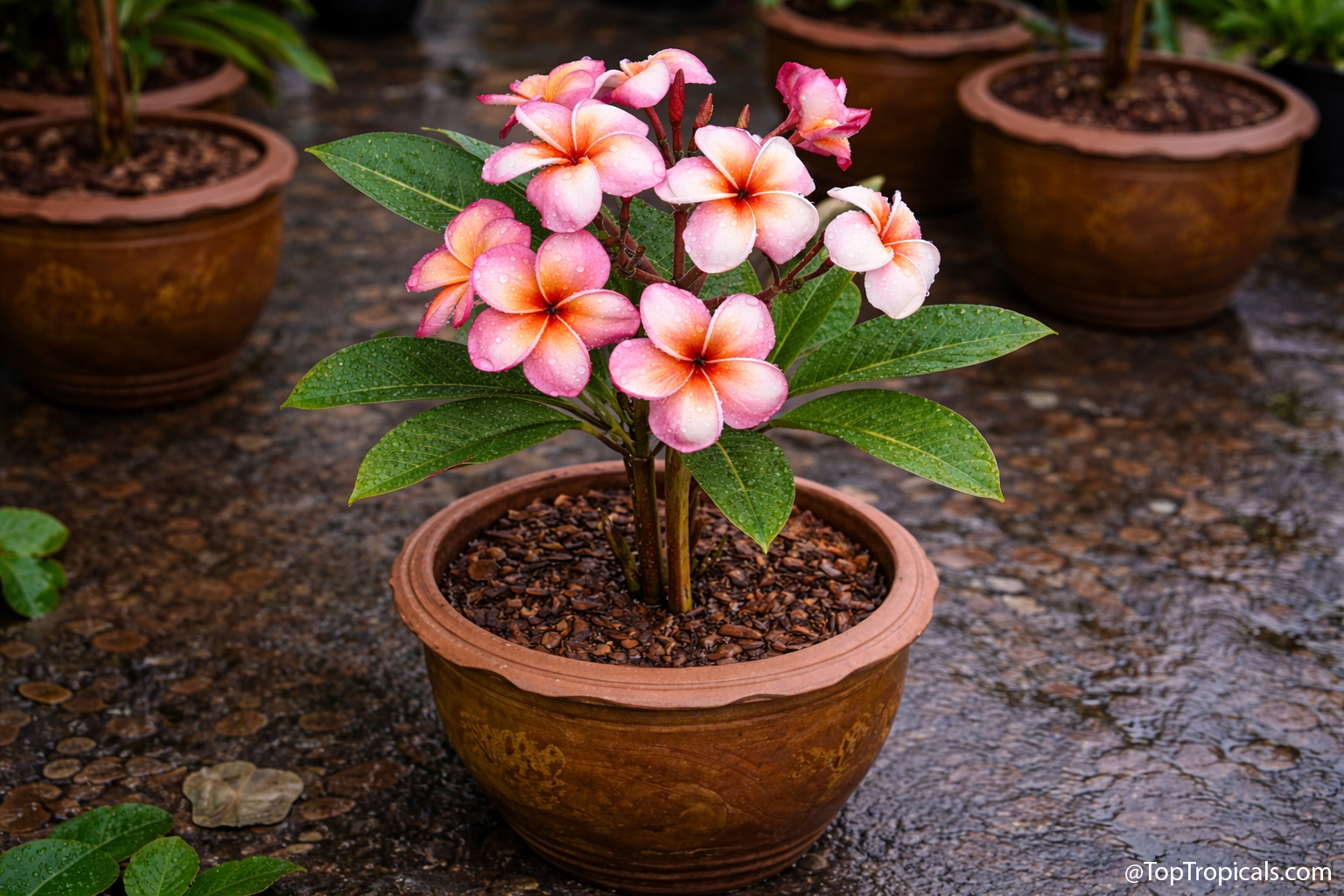
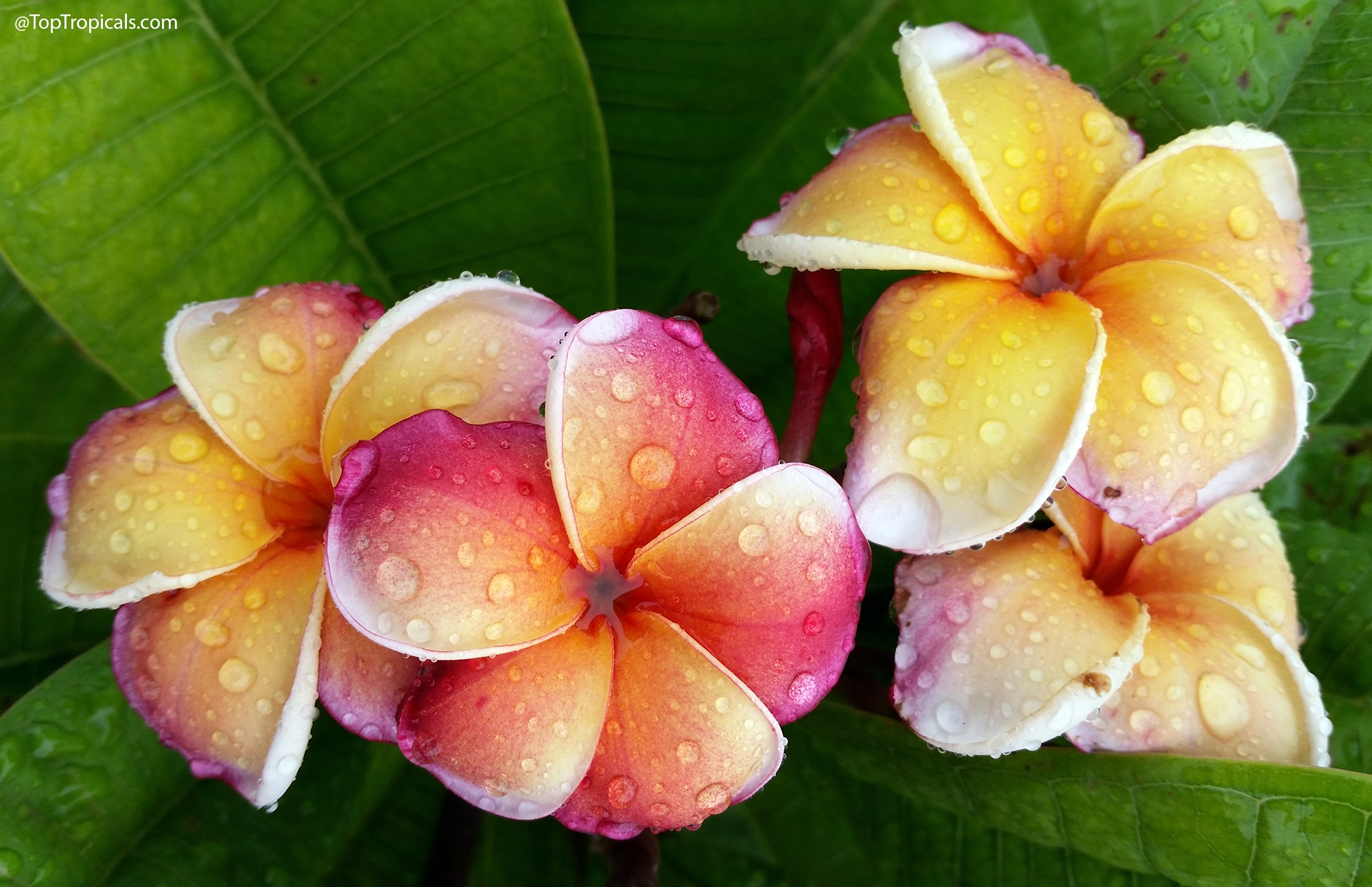
potted  plumeria  plant  pink  orange  flowers  with  water  droplets  on  leaves
    and  petals

Potted plumeria in bloom.

About Plumeria Rust (Florida Reality)

If you are growing plumerias in Florida, you will likely see plumeria rust at some point. It shows up as orange powdery spots on the underside of leaves and can cause leaves to yellow and drop early. It is driven by high humidity and is most common in the fall, right before the plant naturally starts dropping its leaves.

It looks alarming, but it is mostly a cosmetic issue and does not harm the plant long term. Good airflow, full sun, and avoiding overhead watering help reduce it. If needed, you can remove affected leaves or use a simple fungicide (in our experience, the most effective one for Plumeria rust is Southern Ag Garden Friendly Fungicide), but in most cases the plant grows right through it and comes back clean with fresh growth.

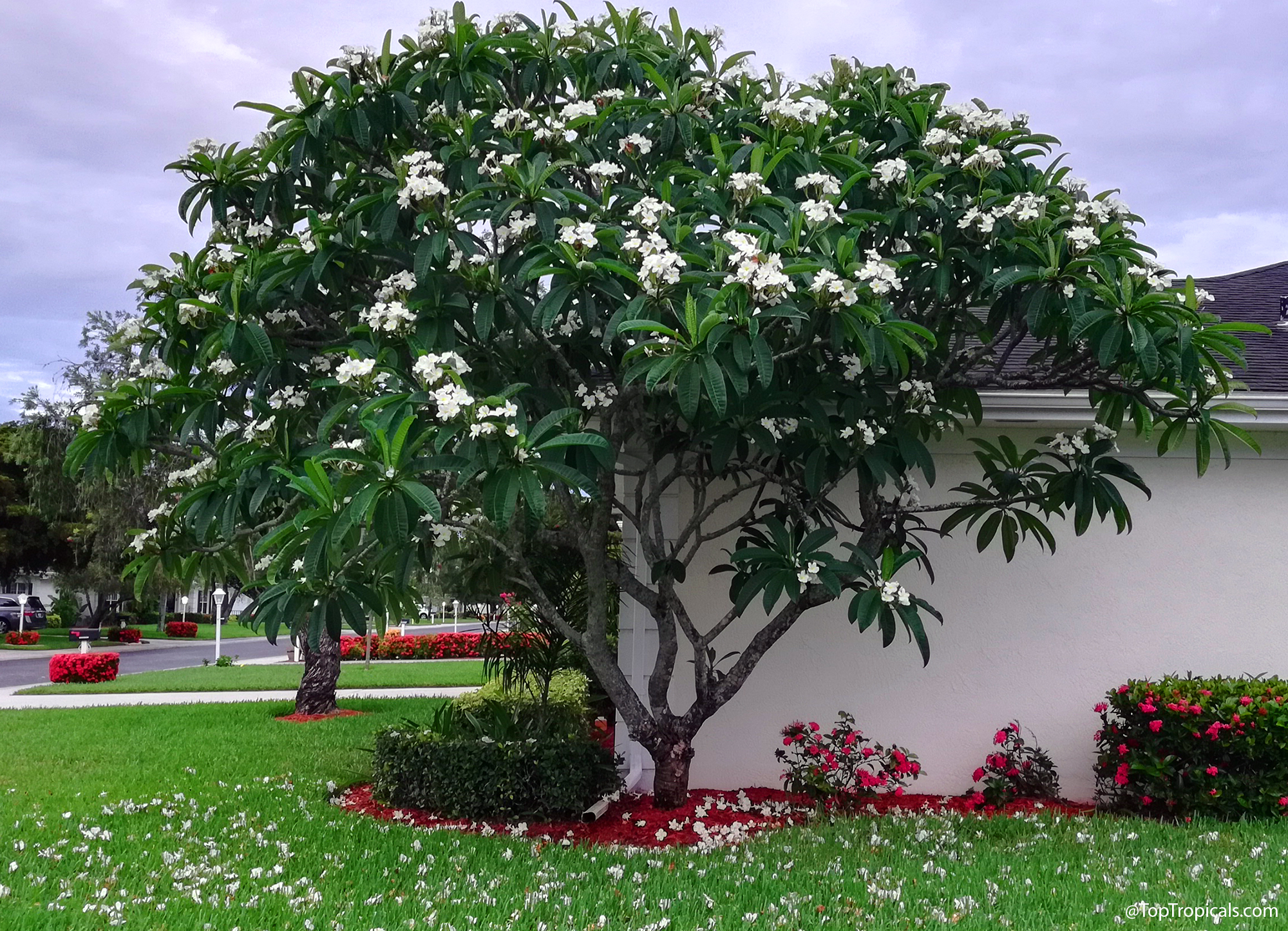
white  plumeria  tree  full  bloom  in  yard  with  green  leaves  and  fallen 
 flowers  on 
 grass

White and Yellow Plumerias are the most fragrant.

Plumeria Fragrance - Bring It Anywhere

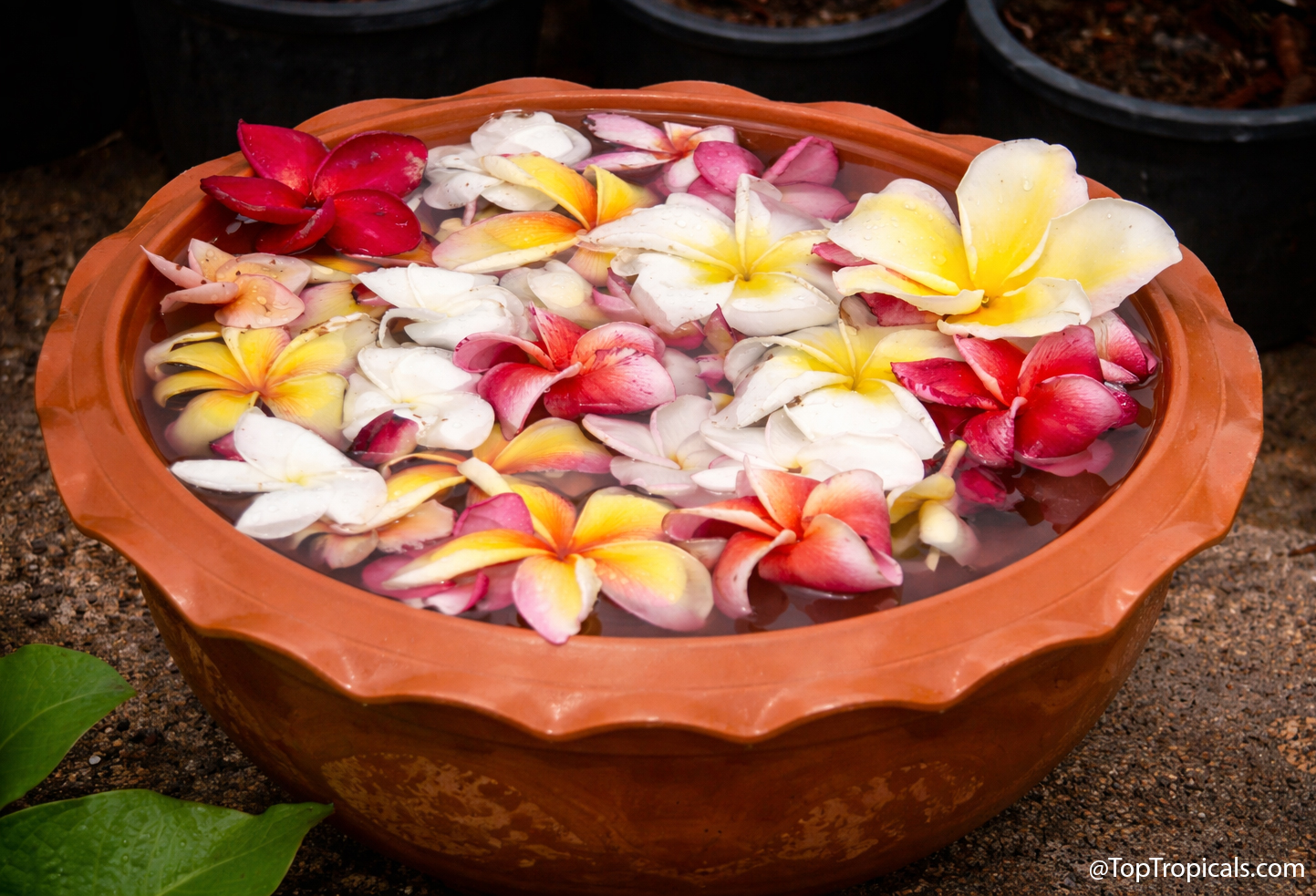
That scent does not have to stay in the garden. Fresh plumeria flowers can be brought inside and placed in a small bowl of water they will float and gently perfume the room. You can make a simple lei, keep a few blooms on a table, or even place a flower in your car on a hot day - the warmth releases the fragrance.

Terracotta  bowl  filled  with  floating  plumeria  flowers  in  white,  yellow,
    pink,  and  red,  set  outdoors  on  wet  ground  in  a  garden 
 setting.

Bowl with Plumeria flowers creates a scented space anywhere

🎥 Watch Plumeria videos

📚 Learn about Plumerias from our Blog

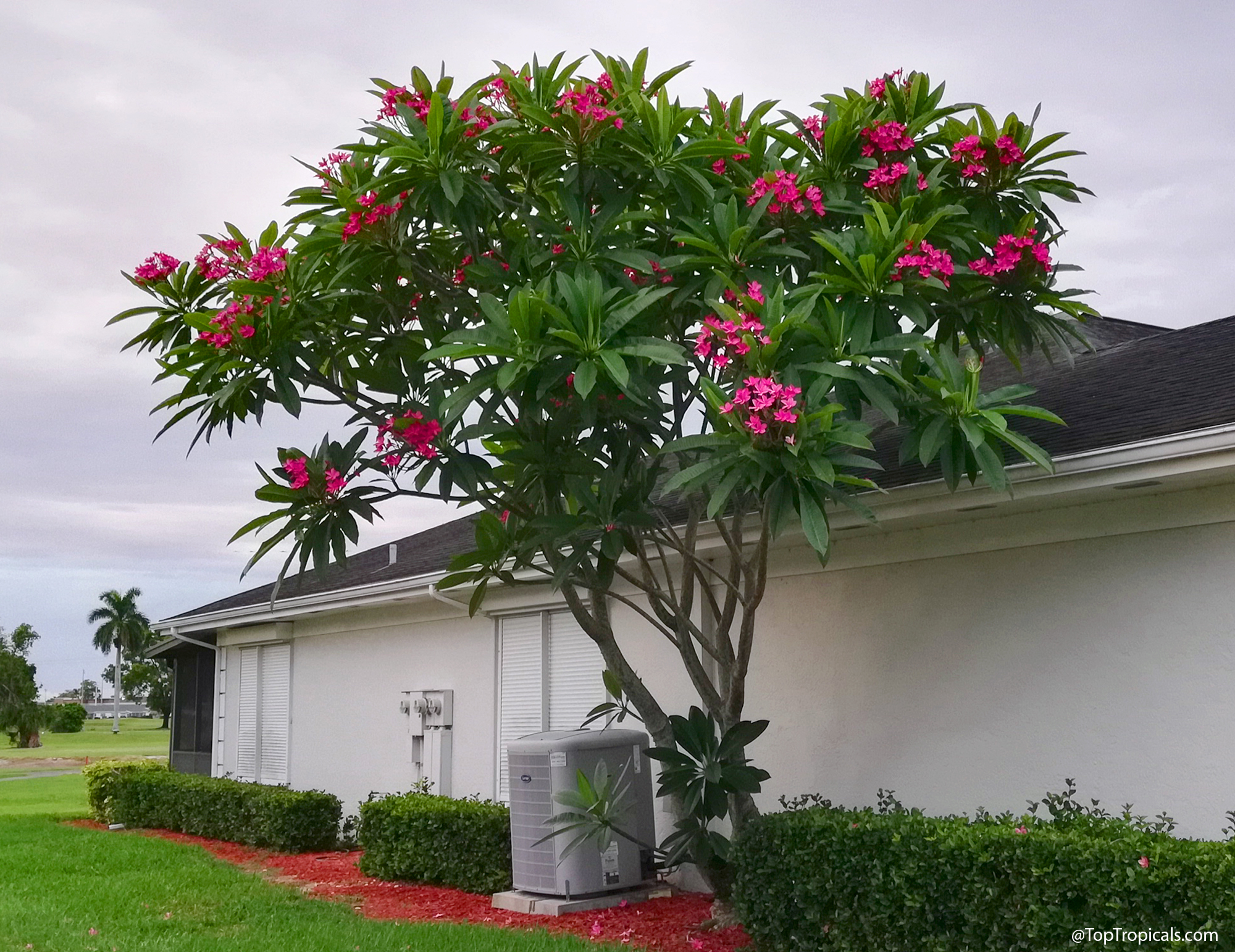
red  plumeria  tree  full  bloom  pink  red  flowers  in  residential  yard 
 tropical  flowering  tree

Red Plumeria is not just fragrant, it is one of the most spectacular trees when in full bloom

Build Your Plumeria Paradise - Save 10%
Get 10% off with coupon code PLUMERIA2026 on plumeria trees.
Offer valid through 04/15/2026.
Discount applies to plumeria plants only. Not valid on previous purchases and cannot be combined with other promotions or discounts. Offer subject to change without notice.

Date: 22 Apr 2026

Secrets of Real Mango Flavor

Top-down  view  of  a  white  tray  filled  with  assorted  mango  varieties  in 
 different  shapes  and  colors,  including  green,  yellow,  red,  and  orange, 
 arranged  outdoors  on  a  textured  surface.

A colorful mix of mango varieties - different shapes, colors, and flavors all in one harvest.

Mango Practical Growing Tips (Keep It Simple)

  • Sun: Full sun is key. 6–8+ hours daily for best growth and fruiting.
  • Soil: Excellent drainage is critical. In pots, use well-draining mix with added perlite or sand. Mango does not like wet roots.
  • Watering: Water deeply, then let soil dry slightly before watering again. Avoid constantly wet soil.
  • Containers: Excellent for pots. Condo mango varieties stay compact and are easy to manage on patios.
  • Feeding: Light but consistent feeding during active growth makes a big difference. Use controlled-release Green Magic for steady nutrition, and supplement with liquid Sunshine Boosters Mango Tango during warm months to push growth and fruiting.
  • USDA Zones: Best suited for Zones 9b–11. In Zone 9b, choose a warm, protected microclimate (south-facing wall, patio, or near structures) and be prepared to protect during cold snaps. In Zones 10–11, mango grows reliably in-ground. If you live in colder zones, grow in a pot so you can move the tree indoors or protect it during cold weather.
  • Cold Protection: Protect young trees during cold nights. Use cover or place near a wall or warm microclimate. Mature trees are more tolerant.
  • Airflow: Good airflow helps prevent disease and keeps growth clean.
  • Spacing: Give the tree room for light and airflow. Even compact trees benefit from space.

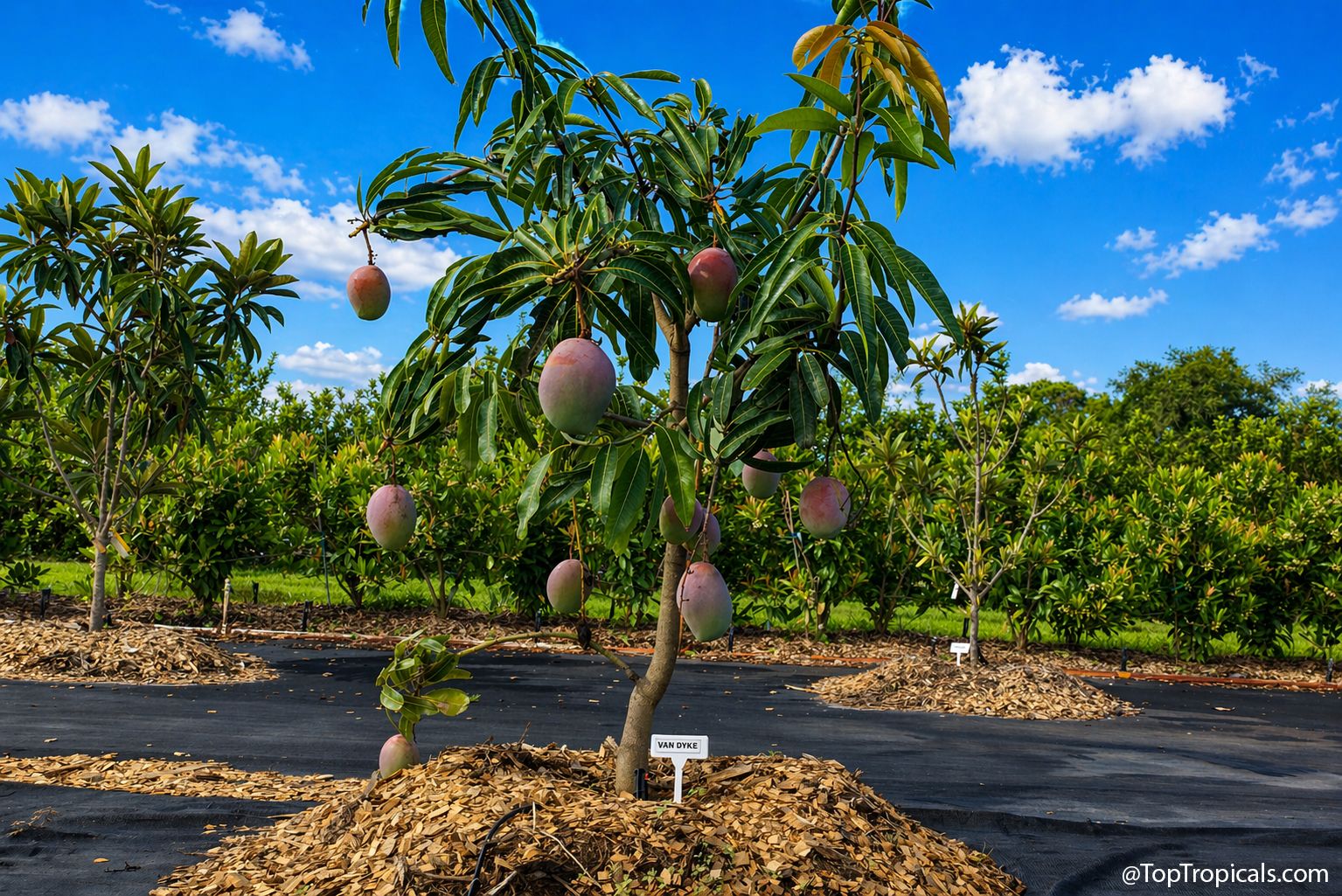
Mango  tree  Van  Dyke  growing  in  an  orchard,  loaded  with  ripening  mango 
 fruits,  surrounded  by  mulch  and  irrigation,  under  a  bright  blue  sky  with 
 scattered  clouds.

A fruiting mango tree Van Dyke in the grove, heavy with developing mangoes and enjoying full sun.

Mango Winter Care (Very Important)

Mango is not a truly cold-hardy plant. It performs best in USDA Zone 9b and warmer, where freezes are rare and short. In borderline areas, winter protection becomes part of the routine. Mango trees should be covered during cold nights, and planting near a south-facing wall helps protect from cold winds. That small microclimate can make a real difference. If your winters are less predictable, growing mango in a container becomes the simplest solution. It gives you full control — you can move the tree to a protected space when temperatures drop, and bring it back into the sun when conditions improve.

That is where condo mango varieties make the most sense. They are naturally compact, easier to manage in pots, and still produce full-size, high-quality fruit. You get all the benefits of a mango tree without needing a large yard or perfect climate — just sun, a container, and a bit of seasonal movement when needed.

📚 Mango tips from our Blog

Growing Mango in a Pot (Condo Mango Made Easy)

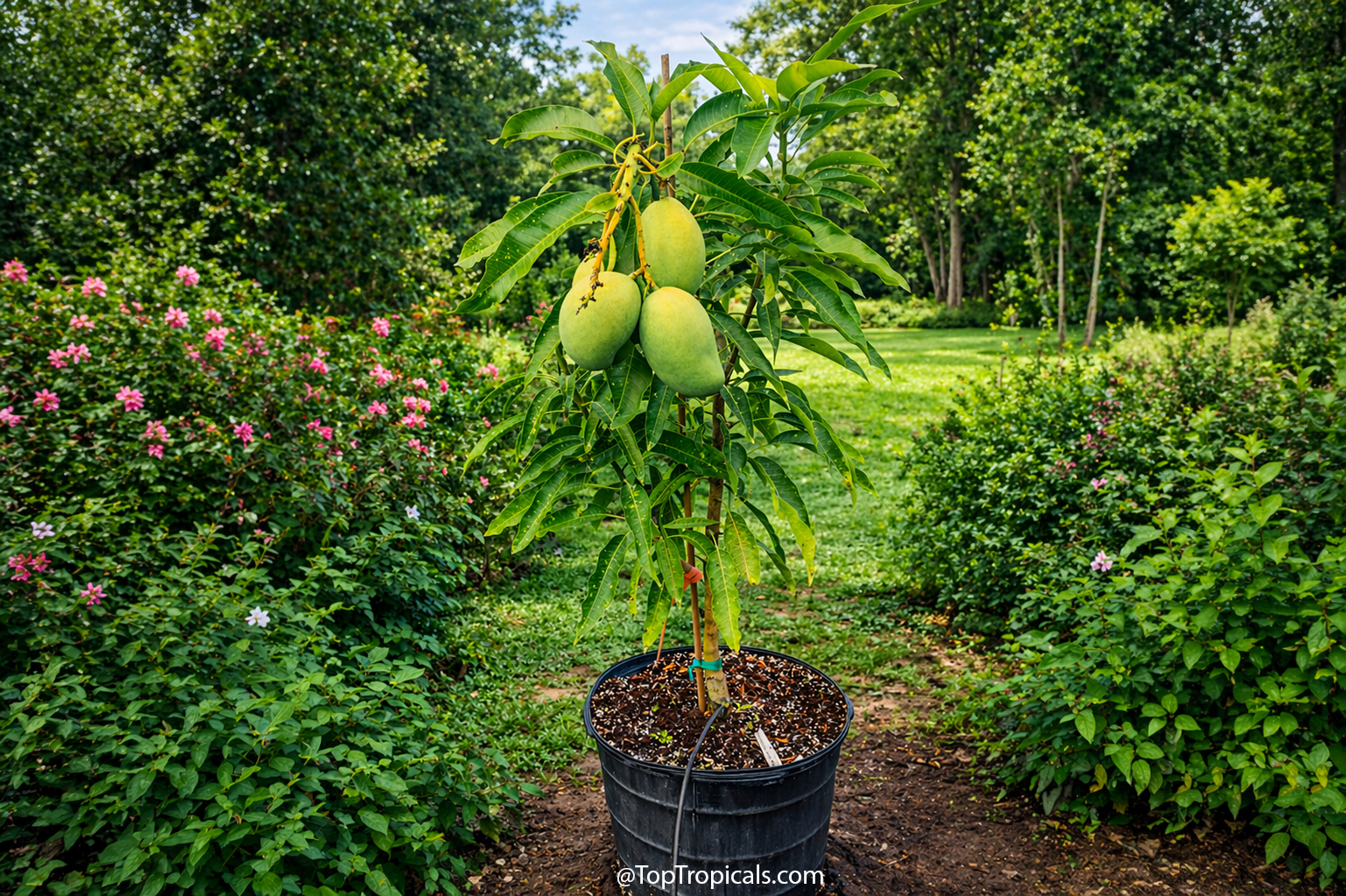
Young  mango  tree  growing  in  a  large  black  nursery  pot,  supported  with 
 stakes  and  drip  irrigation,  bearing  several  green  mango  fruits,  set  in  a 
 lush  garden  with  flowering  shrubs  and  a  sunny  lawn  in  the  background.

Young mango tree in a container, already holding fruit and thriving in a sunny garden setting.

Growing mango in a container is one of the easiest ways to control size, soil, and winter protection. Condo mango varieties stay naturally compact and adapt well to pots, making them ideal for patios, small spaces, or colder climates. You get full flexibility — move the tree when needed, manage its growth, and still enjoy real tree-ripened fruit.

  • Pot size: Start with 3–7 gallon, move up to 15–25 gallon as the tree grows.
  • Soil: Use fast-draining mix such as Abundance soilles mix.
  • Sun: Place in full sun. More light = better growth and fruiting.
  • Watering: Water deeply, then let soil dry slightly before next watering.
  • Feeding: Use controlled-release Green Magic for steady nutrition, plus liquid Sunshine Boosters Mango Tango during active growth.
  • Climate Flexibility: Can be grown in any USDA zone when kept in a container. Simply move indoors or to a protected area during cold weather to keep the tree safe.
  • Pruning: Light pruning keeps the tree compact and productive.

Once you taste a real mango from your own tree, everything changes. It is no longer something you buy — it is something you grow, wait for, and look forward to every season. What felt like hype suddenly makes sense. The passion people have for mango is not exaggerated — it just comes from a completely different experience.

And for people who have never tasted a fresh, juicy mango warmed by the sun, that moment comes as a surprise — the first time they realize what mango is actually supposed to taste like.

As Smokey quietly puts it: Now you know.

📚 More about Condo Mango

🛒 Shop Condo Mango

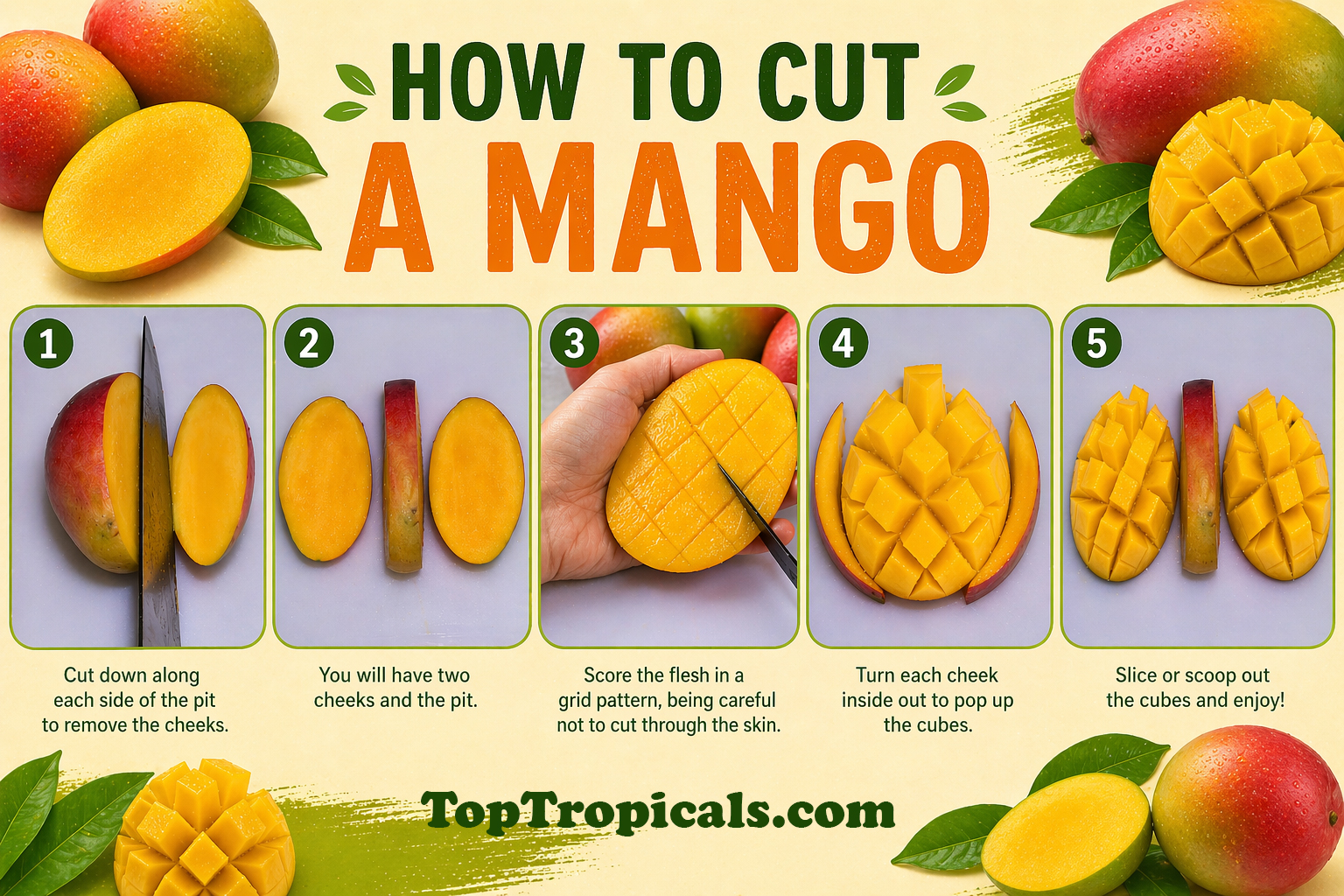
Landscape  infographic  showing  how  to  cut  a  mango  in  five  steps.  Step  1 
 -  slicing  along  each  side  of  the  pit.  Step  2  -  separating  the  two  cheeks  and
    the  pit.  Step  3  -  scoring  the  mango  flesh  in  a  grid  pattern.  Step  4  - 
 turning  the  cheek  inside  out  to  create  cubes.  Step  5  -  scooping  or  slicing 
 the  cubes  to  eat.  Bright  yellow  background  with  whole  and  cut  mangoes  and 
 green  leaves  decorating  the  layout.

Simple step-by-step guide to cutting a mango into clean, easy cubes - from slicing off the cheeks to popping and scooping the fruit.

🎥 Watch Mango videos

🛒 Shop Mango Trees

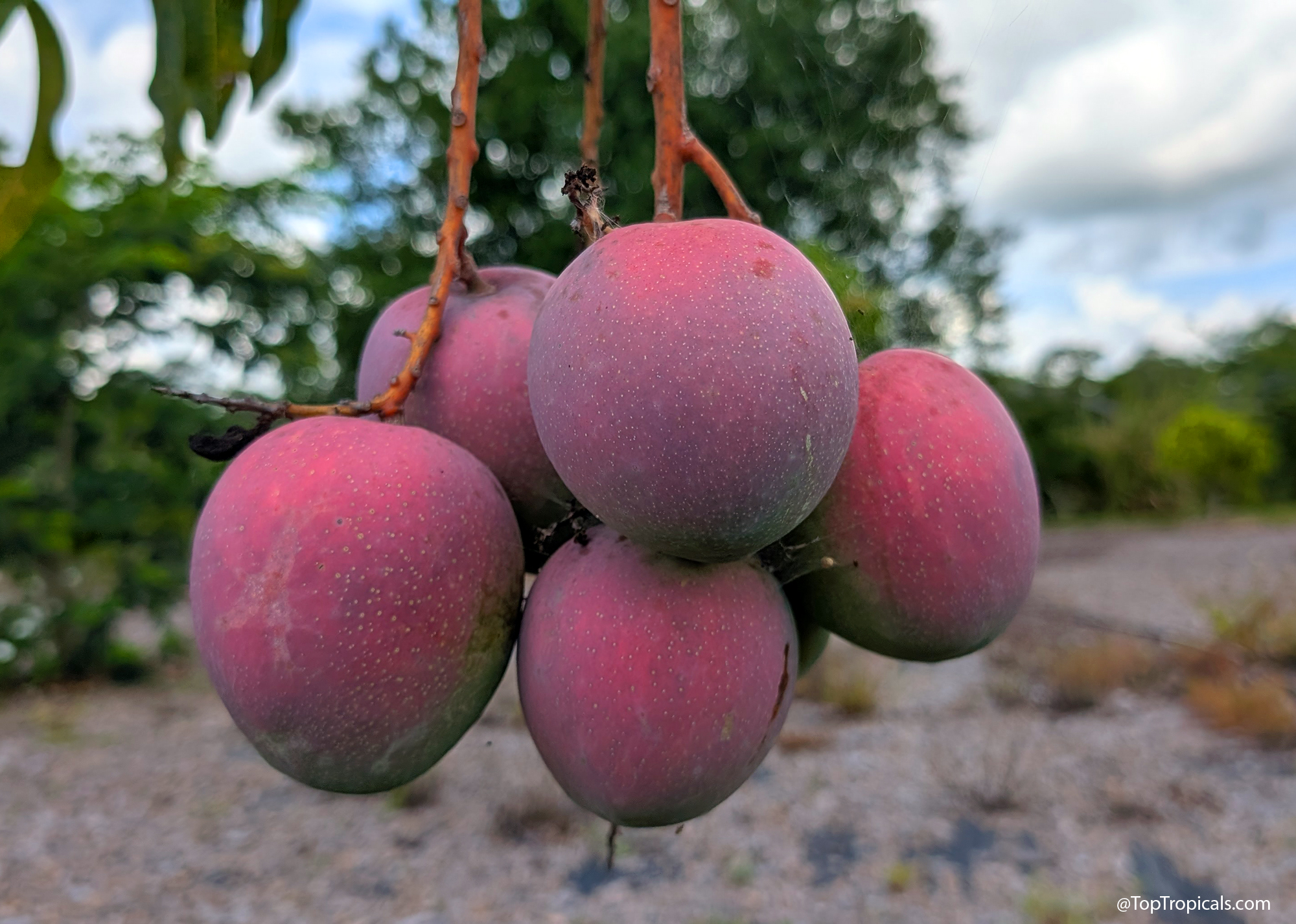
Close-up  of  a  cluster  of  ripening  mangoes  hanging  from  a  branch, 
 showing  red  and  purple  blush  tones  against  a  blurred  outdoor  background.

Cluster of ripening mangoes developing rich color on the tree just before harvest.

Taste the Mango Difference - Save 10%

Once you taste a real mango from your own tree, everything changes. Now you know. Get 10% off with coupon code MANGO2026 on 3 gal mango trees.
Offer valid through 04/28/2026.
Discount applies to 3 gal plants only. Not valid on previous purchases and cannot be combined with other promotions or discounts. Offer subject to change without notice.

Date: 25 Apr 2026

🎁 Mothers Day plant gift guide: something for every kind of mom

Skip the bouquet, give her something that grows

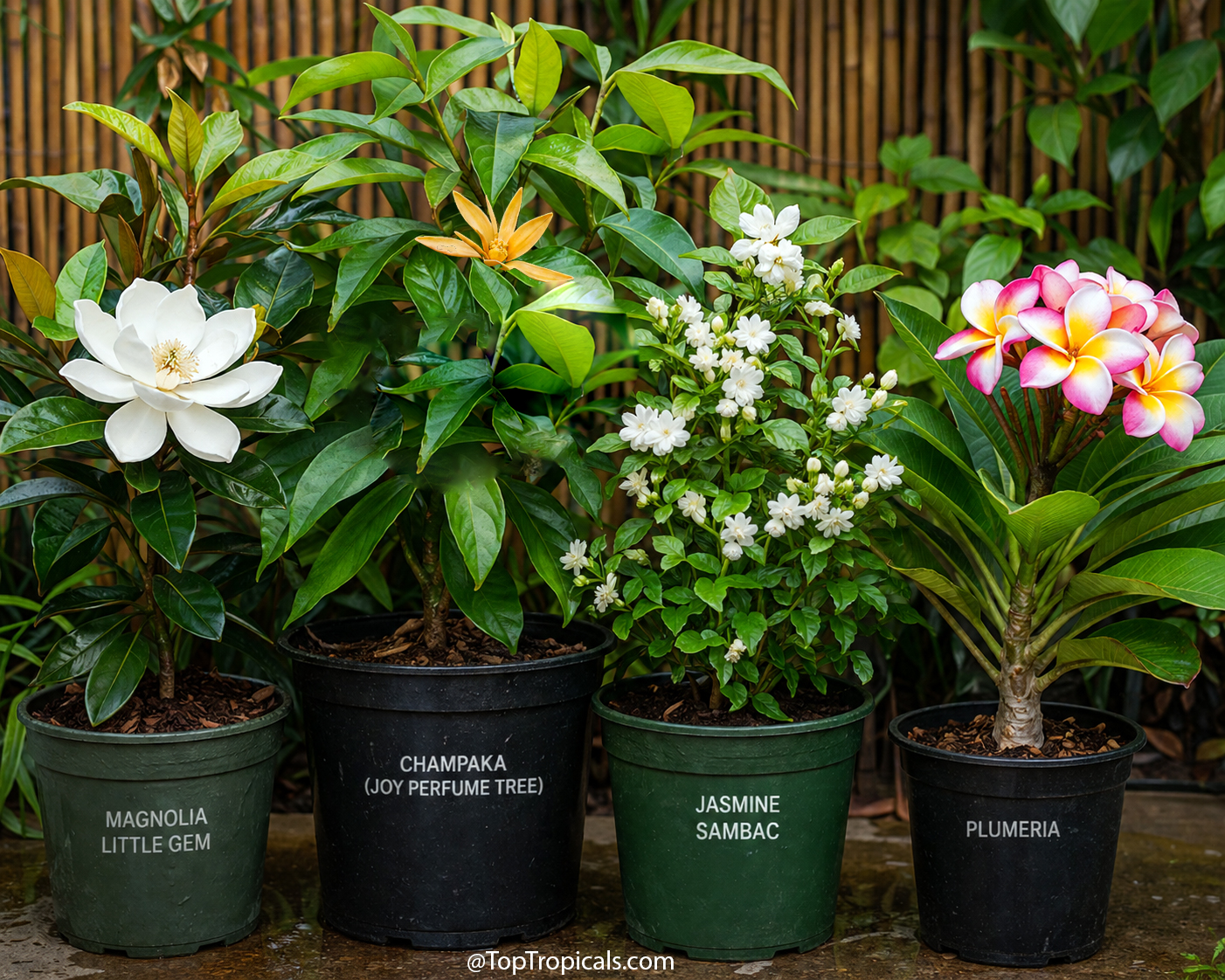
Four  potted  tropical  plants  in  bloom  -  Magnolia  Little  Gem,  Champaka, 
 Jasmine  Sambac,  and  Plumeria  -  arranged  on  gravel  in  a  garden  setting 
 against  a  light 
 fence.

Magnolia Little Gem, Champaka, Jasmine Sambac, and Plumeria

Some gifts last a few days. These don't. Right now, these plants are at their best in our nursery - full, established, and ready to impress the moment she sees them. This year, give her something that doesn’t fade. Pick a plant that will keep growing, blooming, and reminding her of you long after Mother's Day is over. Here are a few easy ways to choose the right one.

All of these grow well in containers and are beginner-friendly.

1. For moms who love fragrance - give her living perfume ✨

These are the plants people remember. Soft, rich scent that fills the garden, patio, or even a warm evening indoors.

  • Champaka Joy Perfume Tree - the legendary Joy perfume flower - rich, sweet, and unmistakably bubble gum-like.
  • Magnolia Little Gem - the classic Southern magnolia in a smaller form - big, creamy, fragrant blooms that never go out of style.
  • Wrightia religiosa - a sacred Buddhist tree - delicate white flowers with a soft jasmine fragrance that feels calm and refined.
  • href="https://toptropicals.com/store/findname/Jasminum-Sambac.htm?utm_source=mlist" >Jasmine Sambac - intensely fragrant and impossible to ignore - once you have it, you won’t want a garden without it
  • Plumeria - the iconic Aloha flower - bold color, rich perfume, and pure tropical feeling in bloom.
  • Parijat Tree Jasmine (Nyctanthes arbor-tristis) - blooms at night and fills the air with a gentle, unforgettable fragrance.

🛒 Shop Perfume plants

2. For easy care and everyday enjoyment - beautiful, low maintenance choices 🌸

  • Jatropha podagrica - Buddha Belly - a quirky caudex plant with a swollen trunk and bright red flowers that shows character without needing much care.
  • Dorstenia bahiensis - Mattress Button Plant - a strange, sculptural plant with flat, button-like blooms that always gets people curious.
  • Columnea - Flying Goldfish Plant - trailing stems covered in bright orange flowers that look just like little goldfish in motion.
  • Adeniums - collectible forms in many colors - bold caudex shapes and striking blooms, easy to grow and hard to stop collecting.

🛒 Shop Indoor Garden

3. For the plant collector - rare, unusual, unforgettable 🔮

For moms who already have a garden... and still want something different.

  • Rainbow Eucalyptus - a one-of-a-kind tree with peeling bark that reveals streaks of green, orange, red, and purple like living artwork.
  • Tacca Bat Head Lily - an unforgettable plant with dark, bat-shaped flowers and long whiskers that look almost unreal.
  • Dwarf Ceiba Princess - a rare, compact silk floss tree with a sculptural trunk and soft, showy blooms that feel truly special.

🛒 Shop Rare Plants

4. For the fruit lover - grow something she can enjoy and taste 🍒

A gift that turns into harvest. Fresh fruit, right from her own garden.

  • Jaboticaba - a truly unique fruit tree that produces sweet, grape-like fruit right on the trunk, turning it into a conversation piece.
  • Rose Apple - crisp, refreshing fruit with a light floral taste and a beautiful ornamental tree to match.
  • Java Plum (Jambolan) - deep purple fruit with a sweet-tart flavor, loved for both its taste and its shade tree presence.
  • Mango - the king of tropical fruit - rich, sweet, and incredibly rewarding to grow in your own garden.
  • Avocado - creamy, nutrient-rich fruit from a tree that becomes a long-term staple in the garden.
  • Eugenia cherries - Surinam Cherry, Rio Grande and Grumichama - compact trees with glossy foliage and delicious, dark cherries that are easy to grow and quick to fruit.

🛒 Shop Fruit trees and edibles

Potted  tropical  fruit  trees  including  jaboticaba,  Wax  jambu,  Java  plum,
   mango,  avocado,  and  Eugenia  cherries  arranged  in  a  nursery  setting  on 
 gravel.

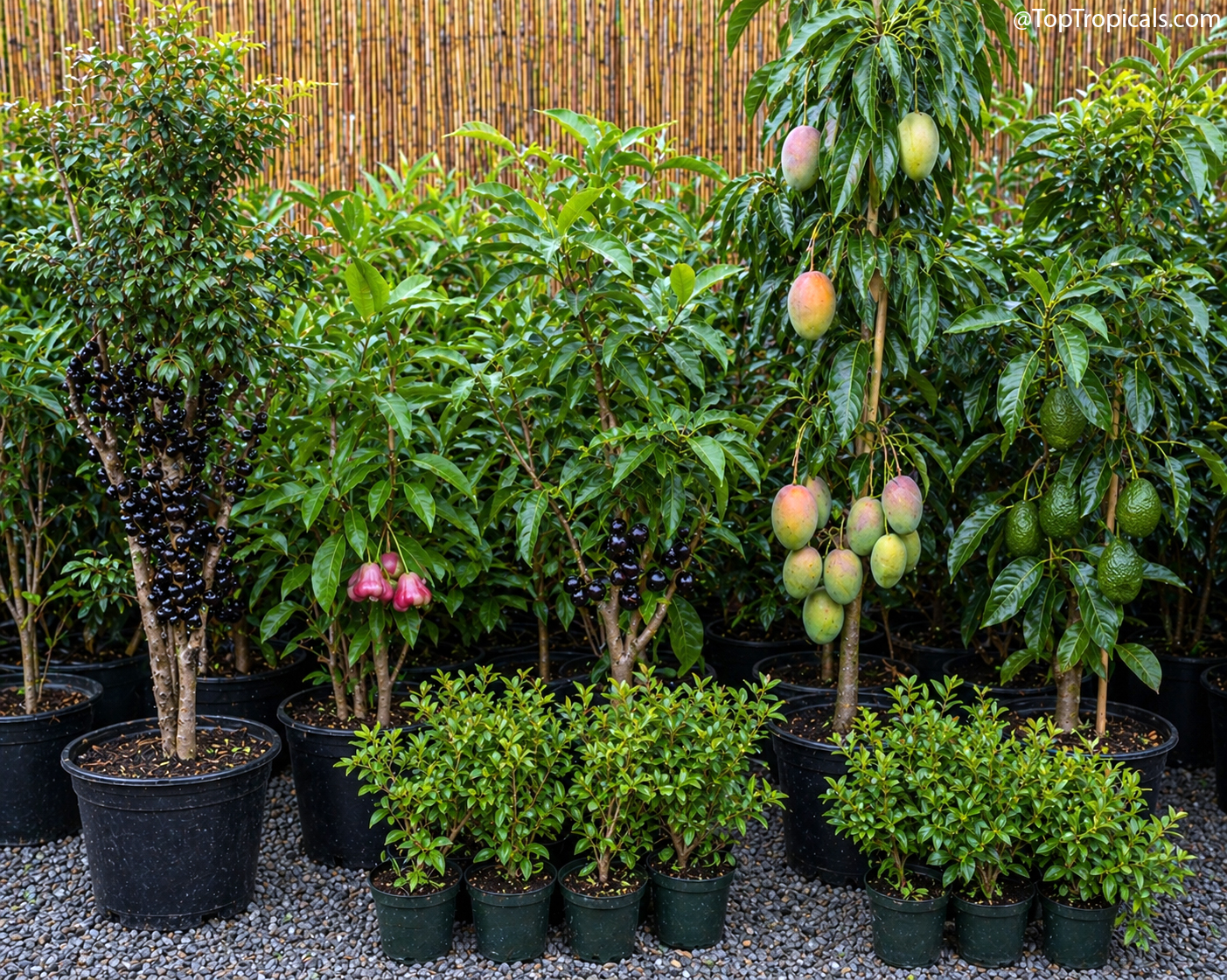
Tropical fruit trees selection - from Jaboticaba fruiting on the trunk to Mango, Avocado, and rare Eugenia cherries - a great mix for building a productive food forest.

Mothers Day Gift Card 💌

Mother’s  Day  themed  Top  Tropicals  gift  certificate  with  a  pink 
 decorative  frame  filled  with  jasmine,  plumeria,  magnolia,  and  champaka 
 flowers,  tropical  fruits  across  the  center,  and  a  Happy  Mothers  Day  banner 
 at  the  top,  with  space  for  certificate  details  and 
 message.

Mother’s Day Top Tropicals gift certificate

Still not sure what to choose? A gift card keeps it simple. She can pick exactly what she wants, when she is ready for it. No guessing, no pressure - just something she will actually enjoy.

Get 15% extra value on gift certificates. Just mention Mother’s Day in the message field. For example, a $100 certificate becomes $115. A $50 certificate becomes $57.50.
Offer valid through 05/12/2026.
Bonus value applies to gift certificates only. Must include “Mother's Day” in the message field at checkout. Not valid on previous purchases and cannot be combined with other promotions or discounts. Offer subject to change without notice.

Date: 4 Sep 2025

📅 Do not miss: September 6 - Fall Plant Market!

September  6,  2025  -  Fall  Plant  Market  at  Top  Tropicals

Saturday, September 6, 2025: 9 am - 4 pm

Fall is just around the corner, but Florida is still full of sunshine and growing energy! It’s one of the best times to plant - cooler days are coming, but there are still months of warmth ahead for your garden to thrive. Our nursery is bursting with big, healthy plants that grew all summer long - loaded with blooms, fruit, and lush foliage, ready to shine in your yard.
Come stroll the gardens with our PeopleCats, enjoy the most beautiful season for planting, and let us help you find the perfect picks for your space. Bring your friends and family for a weekend of fun, color, and fresh ideas - this is your moment to plant, grow, and enjoy!

Explore the Event

Event Highlights:

30% OFF online prices
FREE plant with any purchase (including Guava)
Gift bags for first 25 customers with $50+ order
Special deals on select plants
Exciting raffle prizes
Green Magic fertilizer FREE samples
The LAST PERFORMANCE of the Famous Hand Pan Lady! (She is moving from Florida)
See her previous performance at Top Tropicals - here and here.

Event discounts valid at both locations:

Ft Myers Garden Center: 13890 Orange River, Ft Myers, FL
Sebring B-Farm: 9100 McRoy Rd, Sebring, FL

to confirm attendance
RSVP on Facebook!