Garden Blog - Top Tropicals

Date: 1 May 2024

Why this blue tropical flower has a violet fragrance?
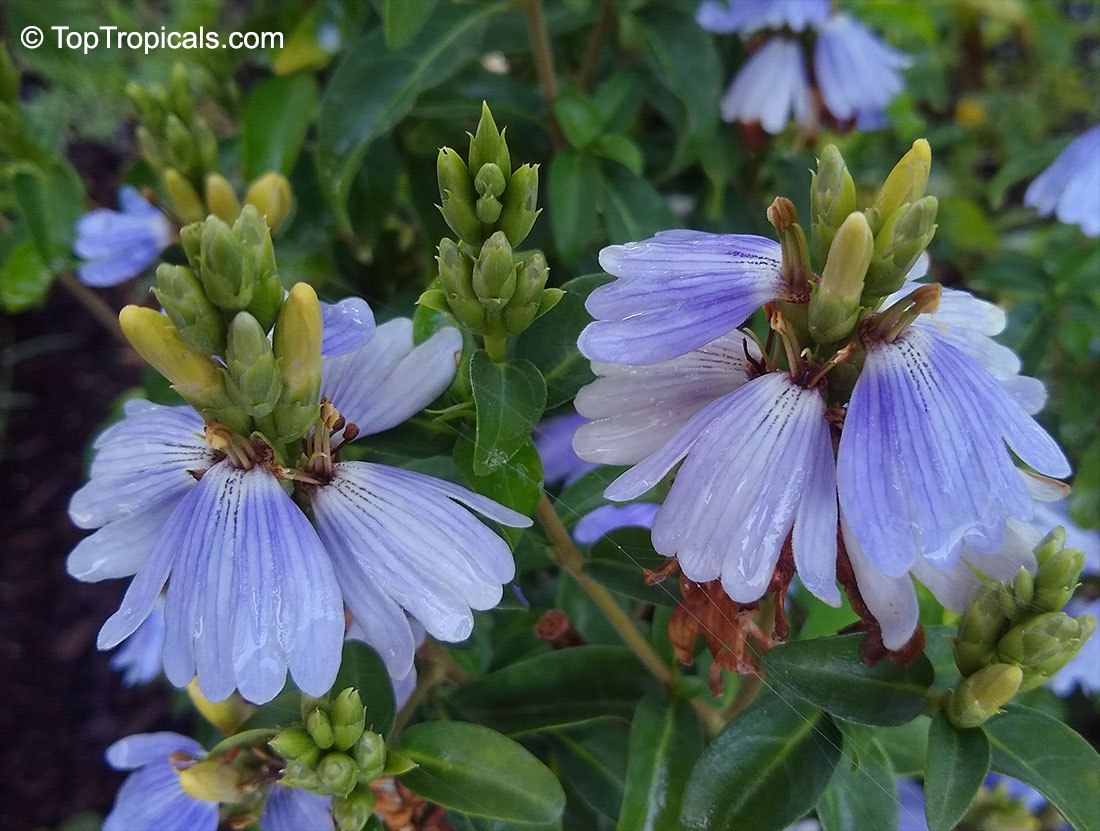
Mazabuka, Blue Lips (Sclerochiton harveyanus)
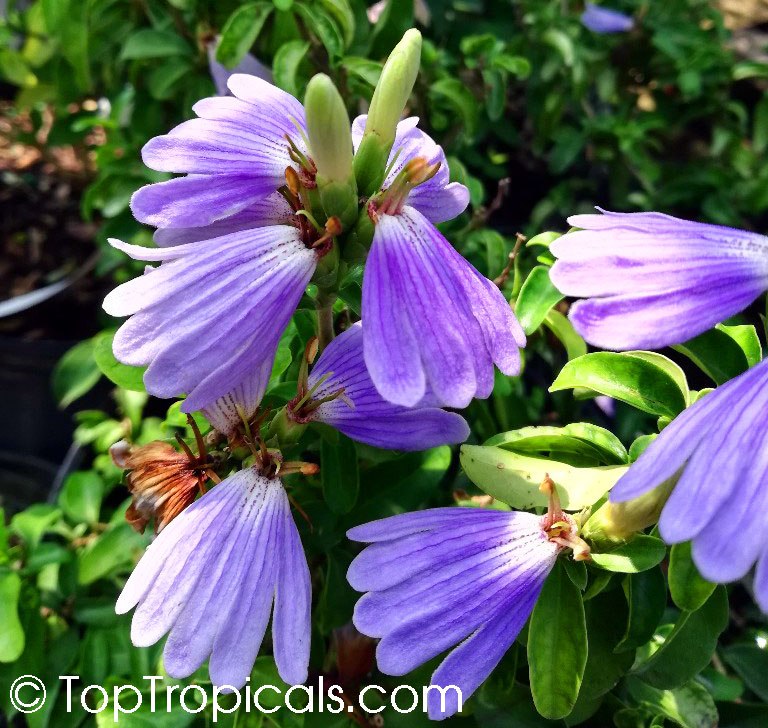
Mazabuka, Blue Lips (Sclerochiton harveyanus)
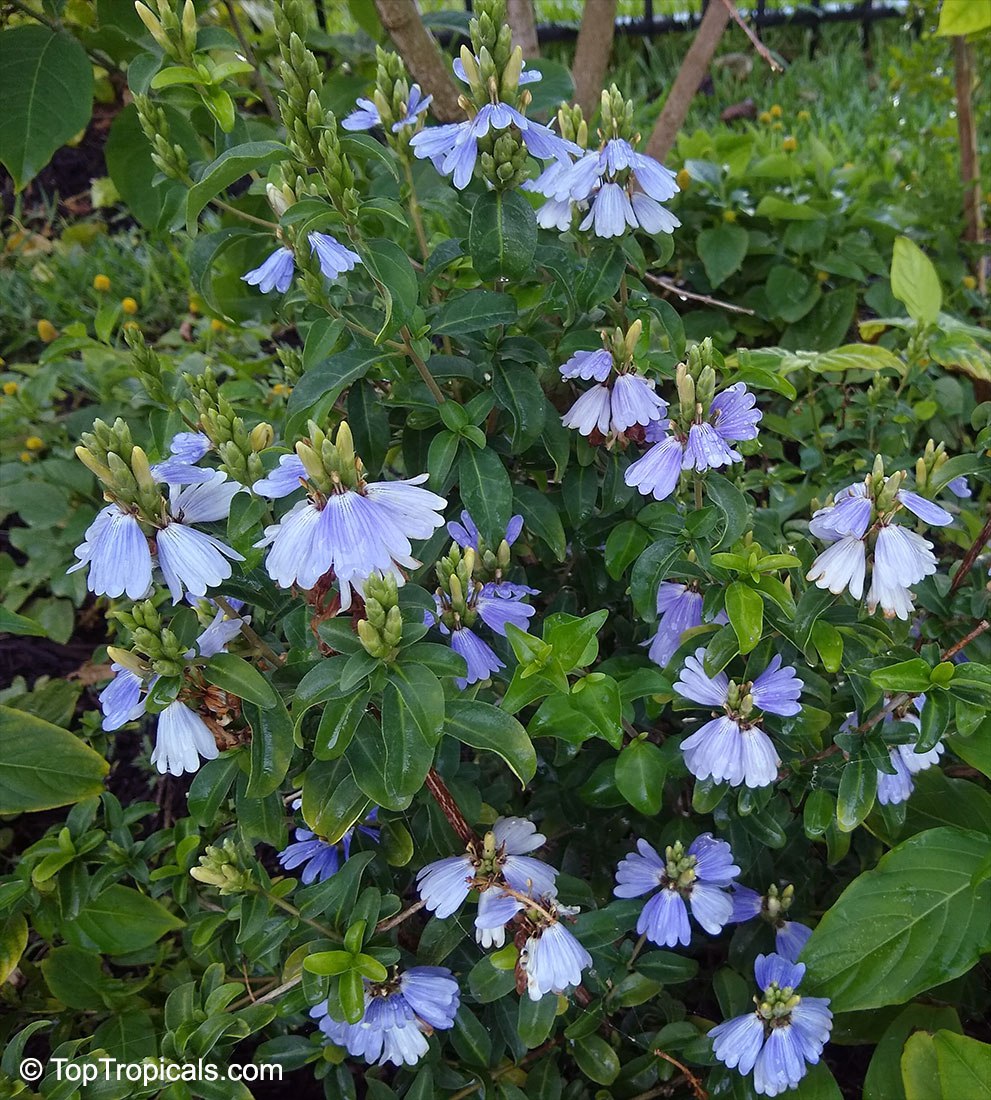
Mazabuka, Blue Lips (Sclerochiton harveyanus)
Mazabuka, Blue Lips (Sclerochiton harveyanus)

Mazabuka, Blue Lips (Sclerochiton harveyanus)

Mazabuka, Blue Lips (Sclerochiton harveyanus)

Mazabuka, Blue Lips (Sclerochiton harveyanus)

Mazabuka, Blue Lips (Sclerochiton harveyanus)

Why this blue tropical flower has a violet fragrance?

You already saw one unusual blue flower of Tropics - Lead Flower. This one is even more interesting!

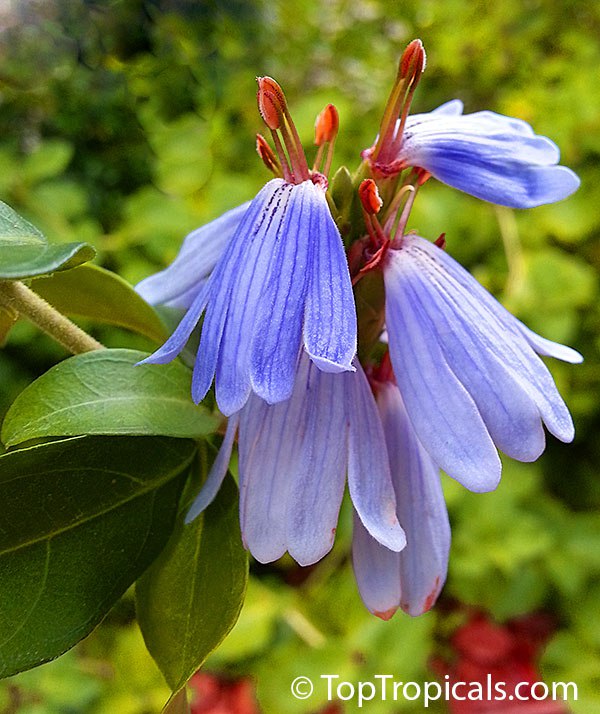
👄 Mazabuka, or Blue Lips (Sclerochiton harveyanus) has mauve-blue, unusually lipped flowers that are lightly violet-lavender-fragrant!
  • 💙 Blue Lips create a pretty floral display on this shade-loving shrub with its attractive glossy green foliage.
  • 💙 Flowers are mauve-blue to purple and the lower petals are ribbed, giving the impression of lips, hence the common name.
  • 💙 Five fringed lobes, equal in size, short and rounded, are the flowers distinguishing feature.
  • 💙 Shade lover. Will happily bloom in the shade!


🐝🐦 The numerous flowers produced in summer are attractive to pollinating insects which encourage insect-feeding birds into the garden.

📚 Learn more: Surprising Violet fragrance of the Blue Lips

🛒 Order Blue Lips

#Perfume_Plants #Shade_Garden #Butterfly_Plants

JOIN 👉 @TopTropicals
Date: 3 Sep 2025

Why gardeners say this is the best Mulberry ever

Illinois Everbearing Mulberry - Morus alba x rubra

💗 Why gardeners say this is the best Mulberry ever

  • 🍇 Illinois Everbearing Mulberry (Morus alba x rubra) is a recent discovery we’re excited to share. It may be the best variety we’ve grown, and if you only plant one mulberry, this should be the one.
  • 🍇 Very hardy and adaptable. Illinois everbearing is a cross between the white and red mulberry, and it seems to have inherited the best qualities of both. It is suitable for USDA zones from 5 to 10! It survives -20F and even colder, yet it also thrives in heat and poor soils. That wide adaptability makes it one of the most dependable fruiting mulberries for many regions.
  • 🍇 Quick shade, quick fruit, long season. The tree grows fast, about 3 to 5 feet a year, turning into a 20 to 30 ft shade tree in just a few years. It has a long, everbearing harvest season and early start: some people have even had fruit the first year after planting. The berries are about an inch and a half long, shaped like stretched out blackberries. They ripen steadily through summer, not all at once, which is why it is called everbearing. That means you can walk out and pick handfuls from July right into September.
  • 🍇Delicious and abundant. The flavor is what really sets it apart. Sweet, juicy, with a little tang, many gardeners say it is the best tasting mulberry they have had. You can eat them fresh, dry them, or cook them down for jam. Birds love them too, so you may end up sharing. But there will be enough for all: it produces abundant yields of 15 to 25 pounds per tree by year two or three.
  • 🍇 Easy to grow. It is a low maintenance tree, generally free of pests and diseases. Once established it is easygoing.
  • 🍇 Universal and long-lived. Plant it for the fruit, plant it for the shade, or plant it for the wildlife it draws in. Its foliage is also attractive, with deeply carved, oak-like leaves that add ornamental value to the tree. Illinois everbearing is not just a productive tree, it becomes part of the rhythm of your summer garden. While most mulberries live a few decades, some Illinois Everbearing trees may endure much longer with good care.


🛒 Pick your Mulberry tree

📚 Learn more:


📱 Dwarf Everbearing Mulberry

#Food_Forest

🟢 Join 👉 TopTropicals

Date: 19 May 2016

Care of mail-order plants during hot summer

Q: I live in California and about a month ago ordered several plants from you, including fruit trees (Carambola, Mango, Avocado) and flowering trees (Xanthostemon, Adeniums, Champaca, Ylang Ylang). They were all doing well until I tried to move them into full sun, when they got leaf burn immediately. Ylang Ylang was doing great in a shade, but I repotted it from 1 gal into 3 gal and it is drooping leaves now. It has been very hot (over 100F) and dry (humidity is less than 25%). Any suggestions?

A: Hot summer can be pretty challenging time for establishing new plants. These are some guidelines to make your summer gardening more successful and rewarding.

1. You can order plants at any time, but keep your eye on your local weather forecast and try to chose cooler periods to schedule your plant shipments. Here at TopTropcals we monitor weather at destinations, and we can also delay shipment per your request until more favorable conditions.

2. During hot Summer months, many plants are still OK to ship, and to be planted, many species are heat tolerant. It's usually safe to ship most succulents, including Desert roses and Euphorbias. Some fruit trees are pretty easy too, like Loquats, Mango, Eugenias. Many flowering trees can take heat: Acacias, Clusias, Jatropha, Sausage Tree, Plumerias and many others. Check our full list of plants suitable for hot and dry conditions. Most jasmines, including Jasmine Sambac and Trachelospermum make also a safe choice for hot weather planting.

3. Use shade cloth or simply white sheets to protect young plants and new plantings from hot sun.

4. When establishing mail ordered plants during hot weather, keep them in shade for longer period of time than average recommended 1-2 weeks. Give them a chance to establish really well. In areas with low air humidity, try to create a simple mist system. It can be purchased in your local Home Depot for only $20 and set up takes only 10 minutes! It makes a big difference and can help you save many plants from hot weather stress.

5. Although it may seem that during hot weather plants need more water due to high evaporation, be careful with watering, and check soil with your finger before watering - don't water if it is still wet. Combination of "hot and wet" can be as harmful for the root system as "cold and wet" during winter. Protect root systems from overheating: covering black pots with white cloth will work. Remember when temperature is above 90F, most of plants slow down their metabolism, which means roots slow down or even stop pumping water and become more vulnerable to overwatering. For the same reason, do not hurry to step up into bigger container if roots haven't filled yet the existing pot.

Date: 5 Feb 2026

How to get three colors on the same plant: Yesterday, Today, and Tomorrow

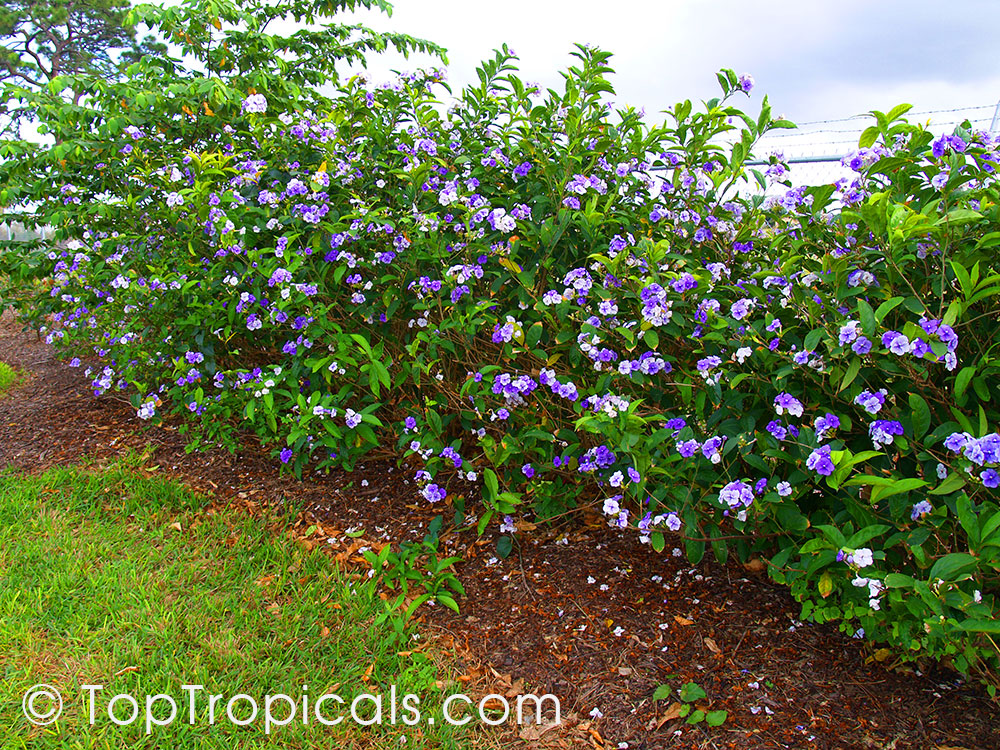
Brunfelsia grandiflora - Yesterday, Today, and Tomorrow

🌸 How to get three colors on the same plant: Yesterday, Today, and Tomorrow

  • 💜 Brunfelsia is one of those plants that makes people stop mid-sentence.
  • It blooms in shade, smells incredible at night, and then does something unexpected - the flowers change color over just three days.
  • 💜 Purple. Lavender. White.
  • All at the same time, on one plant.
  • 💜 It is easy to grow, loves warm weather and part shade, and turns any garden path or patio into an instant conversation starter. Once it starts blooming, it just keeps going.
  • 💜 These are the most interesting varieties known as Yesterday-Today-Tomorrow for their magical color transformation from purple to lavender to white over three days: B. grandiflora, B. paucifolia, B. australis.


🛒 Explore Brunfelsias - the ultmate shade flowers

📚 Learn more:


#Perfume_Plants #Hedges_with_benefits #Container_Garden #Shade_Garden

🟢 Join 👉 TopTropicals

Date: 19 Aug 2019

Colorful Yesterday-Today-Tomorrow

Q: I have a large oak in front of the house and nothing grows under it, even grass. Can you recommend me a compact, colorful flowering shrub that will tolerate shade location and still will bloom for me? I love fragrant flowers, that would be nice... Also, I am a snowbird staying in Florida mostly from Fall to Spring so I miss the flowering season! Any winter bloomers? Or am I asking for too much?

A: There is a plant for every location and every need! Here is a perfect plant for you, Brunfelsia grandiflora - Yesterday-Today-Tomorrow. It is a winter bloomer and it enjoys filtered light. In fact, in full sun Brunfellsia leaves sometimes turn yellowish, so a shade location will be perfect for it, leaves will be healthy and dark green.
It is a beautiful specimen plant. The unusual popular name of this medium-sized shrub becomes clear to anyone who observes it over the course of two or three days. Its tubular fragrant flowers change from purple to lavender and then to white over a three day period (First they open as rich lavender-blue; then they change to pale lavender and finally to almost white before they fall). Then all three colors can be seen on the same plant. It grows to about 3-6 ft and does best in filtered sunlight. Blooms fall to winter.

Check out all Brunfelsias from our store - they all are shade lover and free-flowering!

And here is a list of all winter flowering plants for you... and a Winter-Flowering Guide for Snow Birds (PDF file) that includes many late-season trees, shrubs and fruiting plants.