Date: 22 Oct 2025
💞 Cassia or Bauhinia?
Looking for a small tree that blooms like fireworks but still fits on your patio? We hear this question all the time at Top Tropicals: Cassia or Bauhinia? Both are tropical showstoppers, but they shine in very different ways.
🌞 Cassias: Sunshine Fireworks
Cassia trees are some of the most rewarding tropical bloomers you can grow. Fast-growing, free-flowering, and surprisingly cold-tolerant, they thrive in full sun and summer heat. Their bright clusters come in shades of yellow, orange, pink, red, and even multicolor blends. The famous Rainbow Cassias show swirls of coral, gold, and rose on the same tree, creating a living fireworks display.
For gardeners in warm regions, these trees become spectacular focal points in the landscape. In containers, compact yellow forms like Cassia didymobotrya (Popcorn Cassia) and Senna alata (Empress Candles) stay manageable and bloom freely through summer.
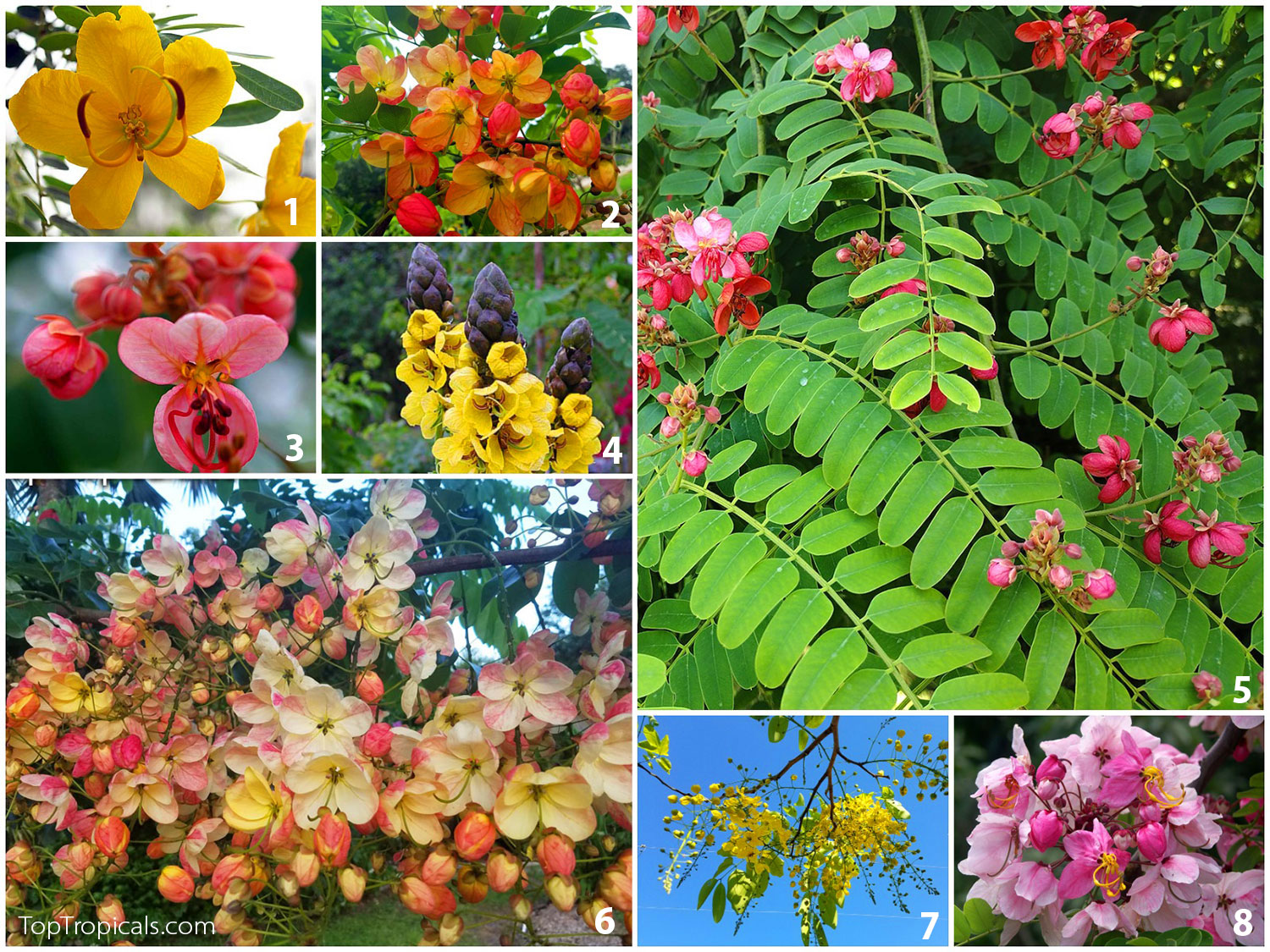
Cassias can also be grown in pots with pruning and patience. Once mature, they reward you with breathtaking color that turns any patio or pool deck into a tropical show. Most showy cassias (numbers correspond to the photos in the collage above):
- Cassia bicapsularis (Butterfly Bush) - is a fast-growing, low-maintenance shrub covered in bright yellow, butterfly-like blooms from fall through winter.
- Cassia x natalensis (Rainbow Cassia)
- Cassia grandis (Red cassia) - a medium size tree having profuse blooms of dark pink to crimson flowers throughout the Spring.
- Cassia didymobotrya (Popcorn Cassia), small tree producing golden-yellow flowers with a distinct scent of peanut butter that open from brown buds in late summer and autumn. Similar to Senna alata (Empress Candles)
- Cassia roxburghii (Ceylon Senna) - graceful tree with spreading, drooping branches appearing to be overweighed by its wealth of clustering red blossoms.
- Cassia x nodosa (Pink Shower) - is a spectacular medium-sized, fast-growing tree with cascading clusters of fragrant pink-and-white appleblossom blooms in spring and summer.
- Cassia fistula (Golden Shower) - to many tropical gardeners, the most beautiful of cassias with masses of bright gold flower clusters appear on almost every branch.
- Cassia javanica (Apple Blossom) - dazzles with dense clusters of pink-to-white blossoms that change shades as they bloom, creating a spectacular display that lasts for months.
"Cassias love the heat and sunshine," says Tatiana Anderson, Top Tropicals Plant Expert. "They are perfect for anyone who wants big bursts of color and doesn’t mind giving them space and light to grow."
Bauhinia Magic: Orchid-Like Blooms in a Compact Size
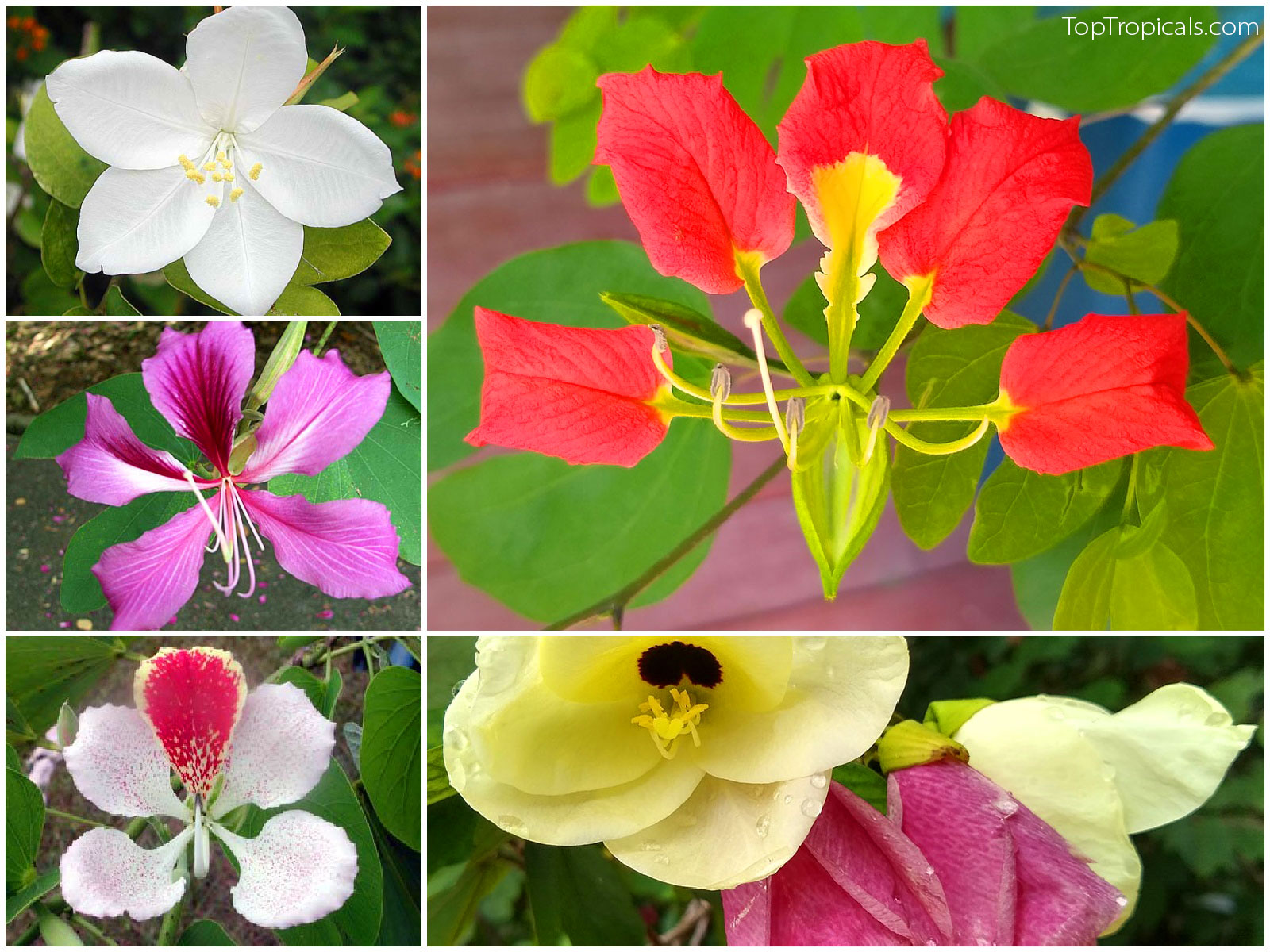
Bauhinia orchid trees: top left – Bauhinia acuminata (Dwarf White Orchid Tree), middle left – Bauhinia blakeana (Hong Kong Orchid Tree), bottom left – Bauhinia monandra (Napoleon’s Plume Orchid Tree), top right – Bauhinia madagascariensis (Red Dwarf Orchid Tree), and bottom right – Bauhinia tomentosa (Yellow Orchid Tree)
Bauhinia trees known as Orchid Trees, bring a touch of tropical luxury to any space. Their butterfly-shaped leaves and orchid-like blossoms appear in shades of red, pink, purple, white, and yellow, often lasting up to ten months a year. Bauhinias are ideal for gardeners who want nonstop color in a manageable size. Most species grow well in large pots and bloom young, often within the first season.
The following compact varieties stay neat and flower almost continuously in warm weather:
- Bauhinia madagascariensis (Red Butterfly Orchid Tree). Blooms from winter through fall, up to 10 months a year. The most cold-hardy of all.
- Bauhinia blakeana (Hong Kong Orchid Tree). A large tree in the ground, but compact in pots if trimmed. Grafted trees flower right away. Winter bloomer, cold hardy to light frost.
- Bauhinia tomentosa (Yellow Orchid Tree). Flowers from Winter through Summer, cold hardy to light frost.
- Bauhinia acuminata (Dwarf White Orchid Tree). Blooms from summer through winter. Less cold hardy.
- Bauhinia monandra (Napoleon's Plume Orchid Tree). Almost everblooming with the longest flowering period. Less cold hardy.
The Hong Kong Orchid Tree is especially prized because it is sterile and produces no messy seed pods, keeping patios clean. Grafted Buhinia blakeana trees begin blooming while still small, making them perfect for containers or tight spaces.
"Bauhinias are generous bloomers," Tatiana explains. "They respond beautifully to regular feeding and full sun. If nights turn too cold, just move the pot to a sunny porch - they’ll keep their tropical charm most of the year."
Give them full sun, regular fertilizer, and a well-drained mix such as Sunshine Abundance, and they will reward you with months of vivid blooms. When nights turn too cold, simply move the pot to a sunny porch or bright window. Bauhinias adjust beautifully and keep their tropical grace year after year.
🎥 Watch Short Videos:
💲 Special Offer – 20% off Cassias and Bauhinias!
Get 20% OFF Cassias and Bauhinias with code
RAINBOW2025
Min order $100. Excluding S/H, valid online only, cannot be combined with other offers.
Hurry, offer expires October 30, 2025!
Date: 7 Oct 2025
⭐ The Winter Stars: 8 Flowering Trees That Steal the Show
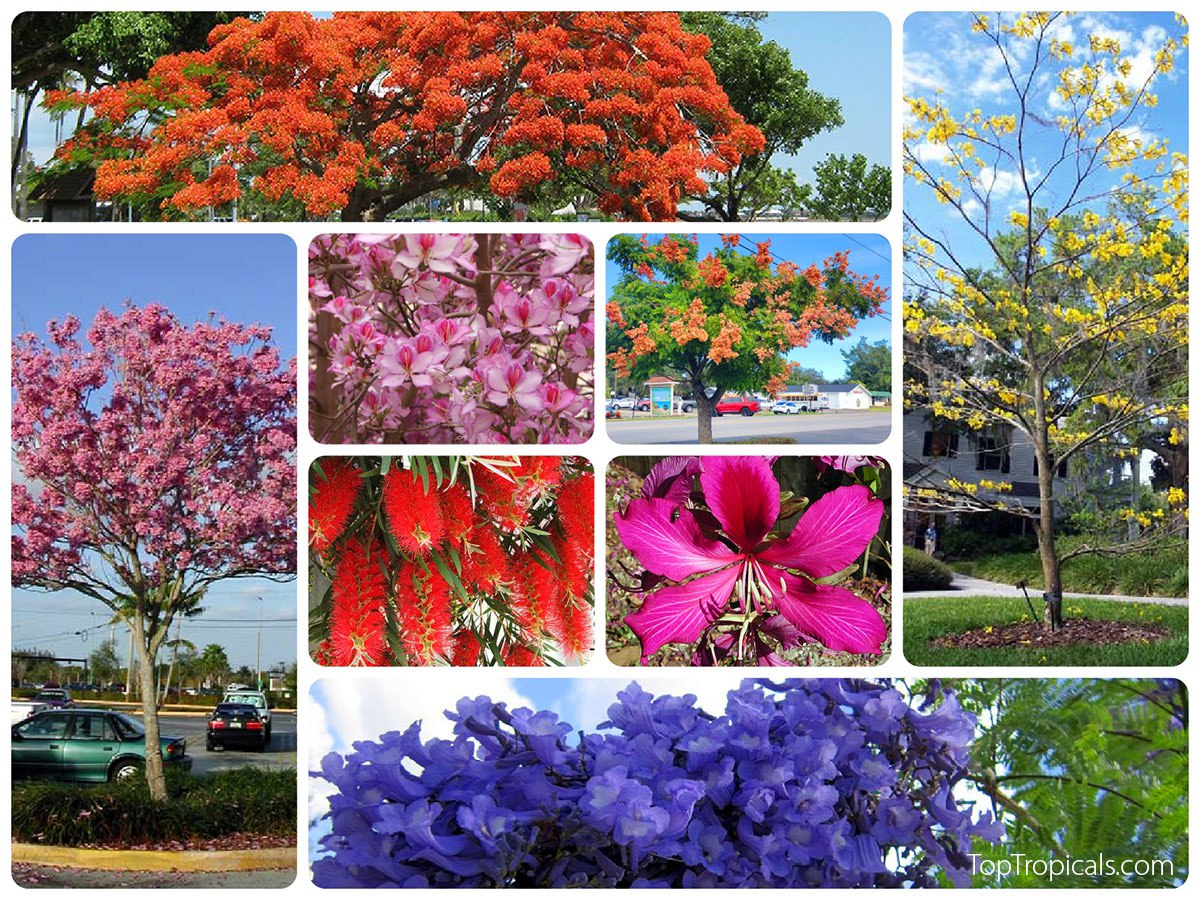
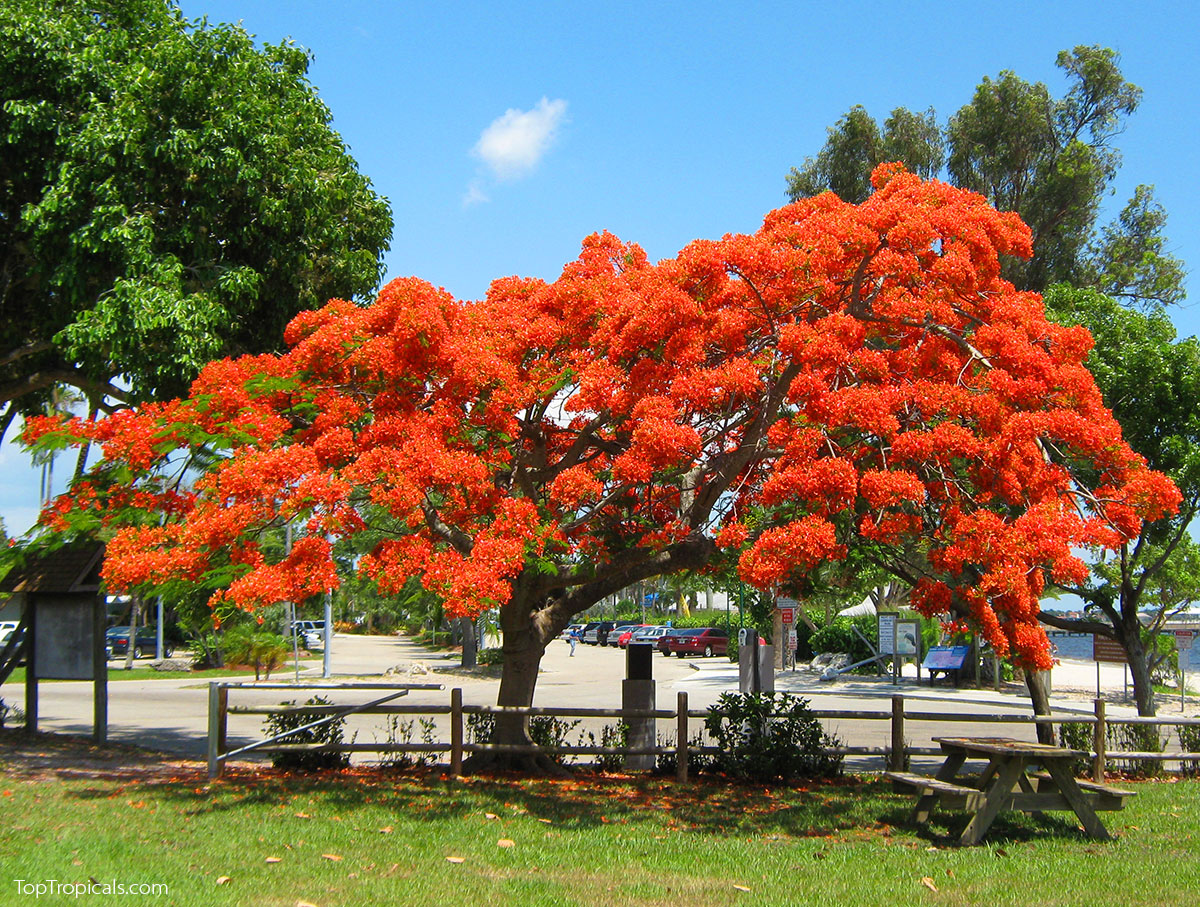
8 Best Flowering Trees That Bloom in Winter: Royal Poinciana with red-orange canopy, Dwarf Pink Tabebuia, Dwarf Golden Tabebuia, Pink Butterfly Orchid Tree, Golden Rain Tree, Weeping Red Bottlebrush, Hong Kong Orchid Tree, and Jacaranda with purple flowers.
Royal Poinciana (Delonix regia)
The diva of tropical trees. Huge red-orange flowers blanket the branches
from late winter through summer. If you’ve ever seen one in full
bloom, you know — it stops traffic.
Best in large yards or open spaces, but young ones do great in big pots for
a few years.
🛒 Shop
Tatiana: “If you want a tree that makes
people
say ‘wow,’ this is it.”
Tabebuia chrysotricha – Dwarf Golden Tabebuia
Small tree, big drama. It turns solid gold just before new leaves appear. Blooms while completely bare — a stunning contrast of yellow on brown wood. Perfect for patios, courtyards, and containers. Handles cool nights down to the mid-20s F. Bright, cheerful, and forgiving — the kind of tree that always looks like it’s celebrating. 🛒 Shop
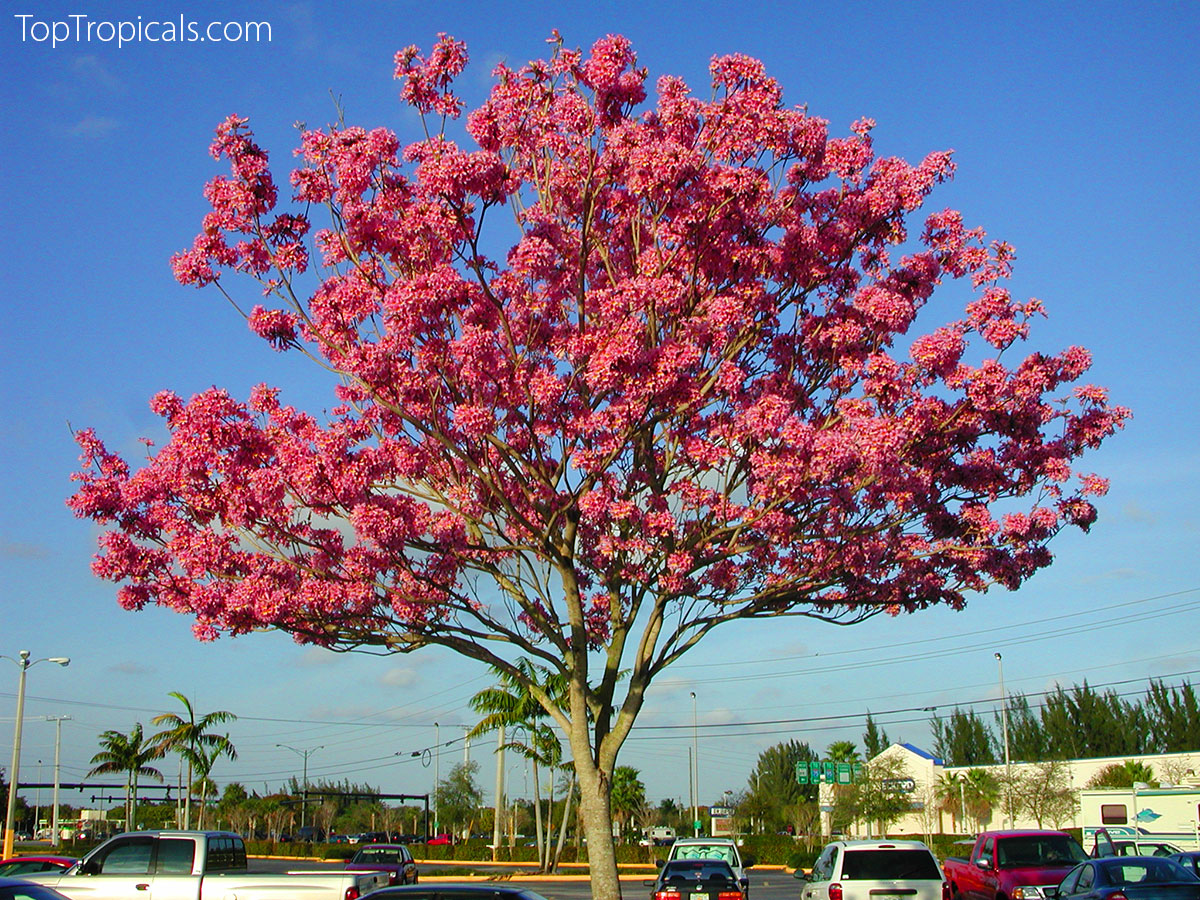
Tabebuia impetiginosa – Dwarf Pink Tabebuia (Pau D’Arco)
The Florida “cherry blossom.” Pink-lavender flowers smother the branches each winter, often before any leaves return. Thrives in sandy soil, tolerates drought, and grows beautifully in large planters or pots indoors near a sunny window. Ideal for seasonal residents or anyone who wants color when everything else is asleep. 🛒 Shop
Jacaranda mimosifolia
If color had music, this would be jazz. Soft, fern-like leaves and cascades of violet-blue trumpet flowers — airy, elegant, unforgettable. Outdoors, it makes a graceful shade tree; in containers, it stays compact with regular pruning. Jacarandas reward patience — they bloom bigger each year. 🛒 Shop
Koelreuteria paniculata – Golden Rain Tree
A favorite for its surprises — golden blooms in summer, pink paper lantern pods in fall, and bronze leaves before rest. Fast-growing, tough, and easy. Loves full sun and moderate water. Great for open lawns or patio tubs. The kind of tree that gives you something new to look at every month. 🛒 Shop
Callistemon citrinus – Bottlebrush Tree
The hummingbird magnet.
Bright red, brush-shaped flowers bloom several times a year —
sometimes even in cool weather.
The dwarf form, ‘Little John,’ stays about 4 feet tall, perfect
for pots or small borders.
Trim lightly after flowering to keep it compact and colorful. 🛒
Shop
Tatiana: “If you’ve never grown a
tropical tree before — start here. It’s the friendliest
one.”
Bauhinia variegata – Pink Butterfly Tree
Graceful, fragrant, and forgiving. Its pink-lavender orchid-like flowers open from late winter through spring, filling the garden with color and pollinators. It’s fast-growing, drought-tolerant, and excellent for both ground and pots. Even the buds are edible — a fun bonus for adventurous gardeners. 🛒 Shop
Bauhinia blakeana – Hong Kong Orchid Tree
The queen of them all.
Huge magenta-purple blooms that last for months, from fall through spring.
Fragrant, clean (no messy seed pods), and perfect for patios or large
decorative containers.
Give it sun, a little water, and it will reward you with bloom after bloom.
🛒 Shop
Tatiana: “It’s the one tree that never lets winter
win.”
A note on grafted Hong Kong Orchid Trees: Most Hong Kong Orchid Trees are grafted, and that’s actually a big advantage. Because they don’t grow from seed, grafted plants mature faster and begin blooming while still small — sometimes within the first year. That makes them perfect for patio pots or small gardens where space is limited.
Bringing the Tropics Home
Whether your garden faces the Gulf or your window faces the snow, these trees let you live in color year-round. Plant them outdoors in warm zones or grow them in pots indoors — they adapt, they bloom, they brighten every corner.
Gardening isn’t about waiting for spring — it’s about finding joy in every season. And when a tree blooms in January, that joy feels twice as sweet.
🛒 Shop Winter Flowering Plants
✍️ Winter Bloomer Q&A
Q: Can these trees really bloom indoors?
Yes! Smaller species like Bottlebrush ‘Little John,’ Dwarf Tabebuias, and many Bauhinias bloom beautifully in pots with bright light or grow lamps.
Q: Do they lose their leaves in winter?
Some, like Tabebuias and Jacarandas, drop leaves right before blooming — it’s normal and part of their charm. Others, like Bottlebrush, stay evergreen.
Q: What fertilizer works best?
We use Sunshine Boosters — gentle, balanced, and perfect for tropicals. Feed every 2–3 weeks during active growth.
Q: How do I know when to water?
Touch the soil! If it’s dry an inch or two down, water deeply. Overwatering is the main mistake with tropicals.
Q: Can they handle frost?
A quick dip into the upper 20s F is fine for most mature trees. Cover young ones or move containers under shelter if colder.
Q: Which are best for beginners?
Start with Bottlebrush ‘Little John’ or Golden Tabebuia — compact, colorful, and nearly foolproof.
Q: When will they bloom?
Usually within few years if they get enough sun and warmth. Grafted plants blooms much sooner
Q: Which of these trees are best for pot growing?
For patios, balconies, or indoor sunrooms, choose the compact or grafted types:
- Tabebuia chrysotricha, Dwarf Golden Tabebuia, bright and easy.
- Tabebuia impetiginosa, Dwarf Pink Tabebuia, hardy and long-blooming.
- Callistemon ‘Little John’ – stays neat and flowers all year.
- Grafted Bauhinia blakeana – blooms while young, perfect for pots.
🎥 Watch videos of Dwarf trees in bloom:
Date: 7 Oct 2025
🌸 Caring for Winter-Blooming Trees

Tips from Top Tropicals Plant Expert - Tatiana Anderson
When northern gardens fade into gray, our tropicals wake up. Winter is color season here - and even if you live up north, you can still enjoy these same flowering trees indoors or on a sunny patio.
From the fiery Royal Poinciana to the golden Tabebuia and violet Jacaranda, these eight trees prove that winter can bloom anywhere
 How to Care for Winter-Flowering Trees
We're often asked, at Top Tropicals, “Can I really grow tropical trees in winter?” Yes — with the right light and care, you can. Here’s what works best both outdoors and indoors, according to our expert, Tatiana Anderson.
🌡️ Fall Planting Guide
Let’s talk about timing, because that’s the part most people get nervous about. Everyone asks: “Isn’t it too cool to plant now?” — and the answer is no! Fall and early winter are actually the best months for tropicals in Zones 9 to 11.
Here’s why: the air has cooled off, but the soil is still warm. Roots love that combination. They quietly spread underground while the rest of the plant takes a break. By spring, those roots are ready to feed a burst of new growth — and that’s when you’ll see the first big flush of flowers.
Pick a sunny spot that gets plenty of light — six to eight hours if you can. Loosen the soil and mix in compost or pine bark so it drains well. Dig a hole about twice as wide as the pot and just as deep. Set the plant level with the ground, backfill, and water it deeply to settle everything in. Then add mulch — two or three inches is plenty — but keep it away from the trunk so it can breathe.
Tatiana’s tip: “Fall planting builds roots while everyone else is resting. By spring, your tree wakes up ready to grow.”
🌳 Outdoor Care (Warm Climates Zones 9–11)
Now, let’s talk about what happens after planting — because real gardening starts once the plant is yours. Tropical trees thrive on routine: steady sunlight, deep watering, and just a bit of attention.
Water them about once a week when the weather is mild, more often if it’s dry or windy. Always check the soil first — if it feels dry two inches down, go ahead and water. Mulch helps more than most people realize — it keeps roots cool in summer and warm in winter, and it saves you from watering as often.
Now, for those of you in Zone 9, here’s the truth: your trees can take a chill, but they don’t love surprises. A quick night in the upper 20s F won’t hurt mature plants, but young ones appreciate a little help — a frost cloth or being planted at the south side.
And don’t underestimate the wind. Cold, dry gusts can burn leaves faster than frost. Use fences, hedges, or taller shrubs as windbreaks, and take advantage of microclimates — those warm pockets next to the house, brick patios, or corners that get extra afternoon sun.
Tatiana’s tip: “A tropical garden in Zone 9 isn’t about fighting nature — it’s about cooperating with it. Find the warm corners, protect from the cold wind, and your trees will thank you with flowers all winter.”
🏚️ Indoor & Patio Care (Cooler Climates)
For our northern friends — yes, you can grow tropicals indoors! You just need good light, warm air, and a little attention.
Pick a large pot, with drainage holes and a light tropical soil mix. Place it in a bright window — south or southwest if you can — or under grow lights for about 12–14 hours a day. Keep temperatures between 65 and 85 F, and water when the top inch of soil dries out.
Misting helps keep leaves clean and adds humidity. Rotate the pot every couple of weeks so all sides get sun. In summer, move your plant outdoors gradually so it can enjoy real sunlight — then bring it back in before nights drop below 40 F.
Tatiana’s tip: “Don’t be afraid of growing trees in pots. They adapt beautifully — just select the right trees and pay attention to their needs.”
✔️ Learn more: Secrets of Winter planting - tropical planting breaks the rules.
🎥 Watch short videos about Winter Bloomers:
💲 Special Offer – 20% off Winter Bloomers!
Get 20% OFF winter bloomers with code
BLOOM2025
Min order $100. Excluding S/H, valid online only, cannot be combined with other offers.
Hurry, offer expires October 13, 2025!
Date: 28 Sep 2025
Guava Tree Plant Care
Tips from Top Tropicals Plant Expert - Tatiana Anderson
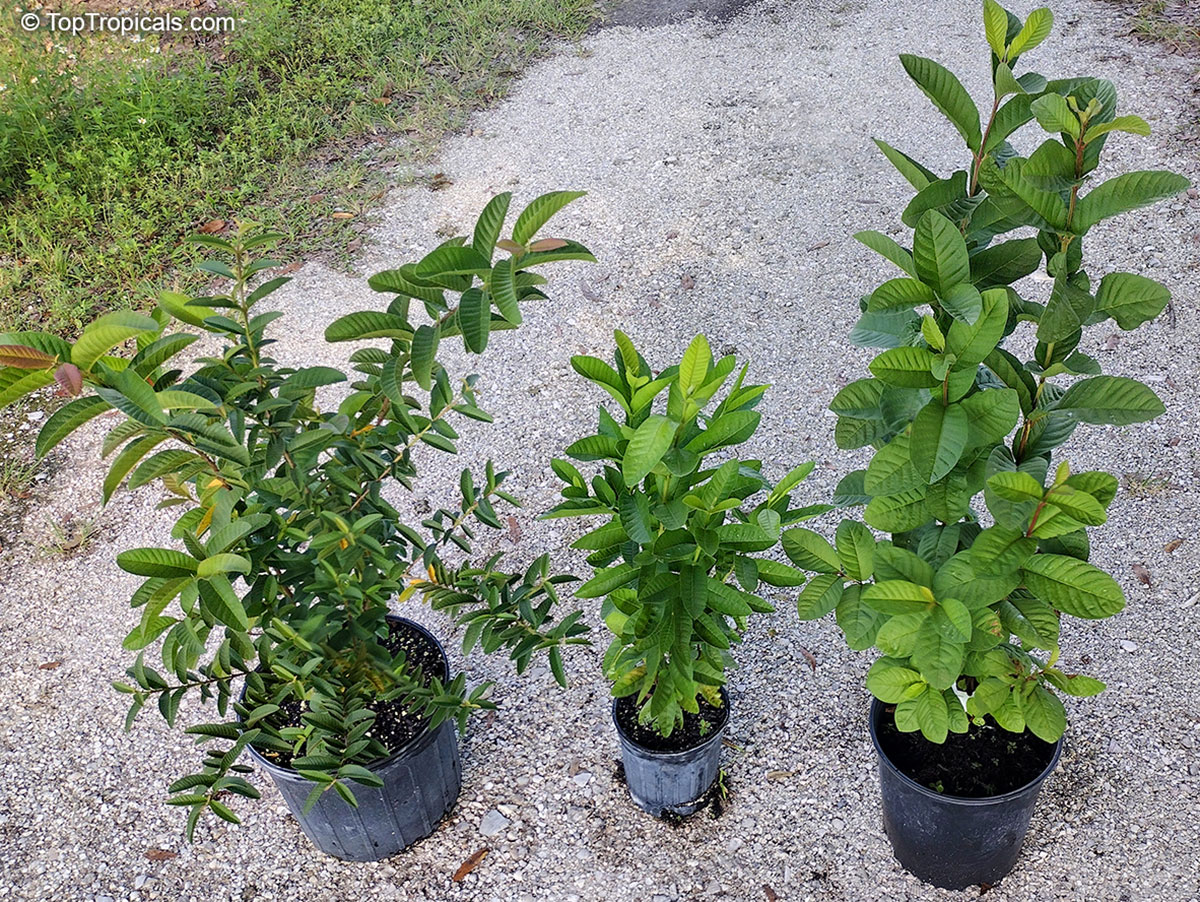
Where to Plant Outdoors
Guavas love full sun — aim for 6–8 hours of direct light. They’re adaptable to many soils but do best in well-drained, organic-enriched mixes. Plant them in a spot where you can water easily; guavas are thirsty trees during fruiting.
Container & Indoor Growing
Don’t have space or live in a cooler climate? Guavas thrive in large pots. Use well-drained potting mix. LINK TO OUR SOIL Keep them on a sunny patio during warm months and bring them indoors when nights dip below freezing. Compact varieties like Dwarf Hawaiian Rainbow or Tikal are especially good for pots.
Winter Care
Mature guavas can handle a light frost (down into the high 20s F), but young plants need protection. If planted outdoors, cover them with frost cloth on cold nights. Container guavas can be wheeled into a garage, greenhouse, or bright indoor window until the weather warms.
Watering and Fertilizing
Water deeply once or twice a week, more often in hot weather or when fruit is developing. They don’t like soggy soil, but they won’t complain about short floods either. Fertilize 3–4 times a year during the growing season with a balanced fruit tree fertilizer. Guavas especially love potassium and phosphorus for strong flowering and heavy crops. We recommend liquid crop booster Sunshine C-Cibus and balanced controlled release fertilizer Green Magic.
Pruning
Prune after fruiting to keep them compact and open up airflow. Remove crossing or dead branches. In containers, trim back vigorous shoots regularly to manage size and encourage more fruiting wood.
Pests and Problems
Guavas are generally tough and pest-resistant. The main thing to watch for in humid or rainy climates is mealybugs - those cottony white clusters on leaves or stems. They're easy to manage with neem oil or a quick spray of horticultural soap.
Fruit time
Guavas fruit young - often within a year or two.
Pollination
Guavas are self-pollinating, so you'll get fruit even with a single tree. Planting more than one tree, however, often boosts harvests and gives you a longer fruiting season.
If you've ever wanted instant gratification from a fruit tree, guava is it.
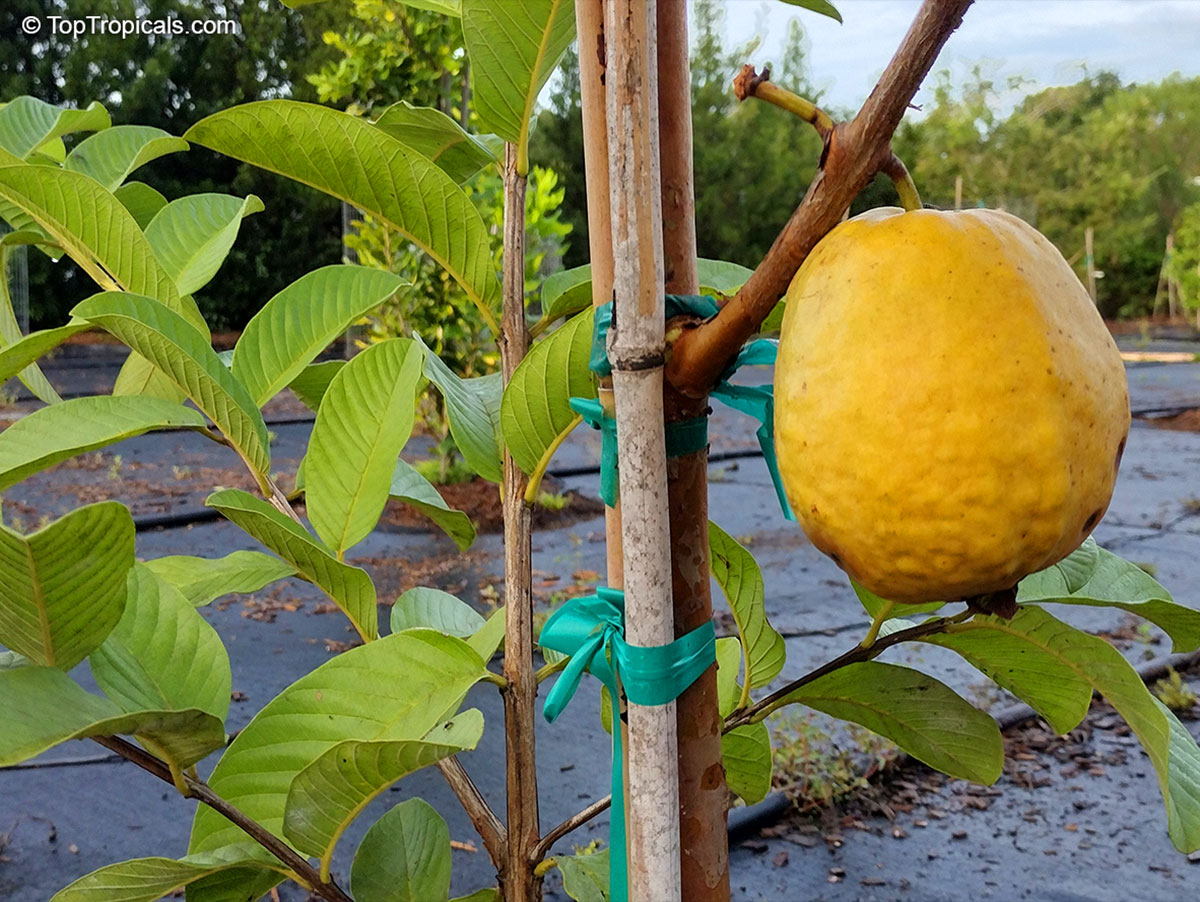
🍴 Guava Recipes
With all that fruit, the next question is always: "What do I do with it?" Here are our favorites:
Cas Guava: Make Agua de Cas
Boil halved Cas Guava fruits with sugar, simmer, strain, and bottle. Dilute with water when serving. The concentrate keeps for months in the fridge.
Check out the recipe.-
Hawaiian Gold: Make Drinks
Perfect for Mojitos or Margaritas. Sweet, tangy juice pairs beautifully with lime and mint. Learn more
-
Araca Pera: Guava Wine
Famous in Brazil, where the fruit is turned into a vibrant rosу wine. Locals say it’s the taste of summer in a glass — and yes, you can make it at home too. Learn more...
-
Quick snack: Guava Grilled Cheese
Spread guava paste or fresh mashed fruit with cheese, grill until golden. Sweet and savory heaven. Learn more...
-
Simple Guava Juice
Blend ripe guavas with water, ice, and a little sugar if you like. Instant refreshment.
✅Ready to Grow? Whether you want fresh juice, sweet fruit, or even your own guava wine, we’ve got the best varieties in stock right now. Your future self, sipping guava juice on a hot summer afternoon, will thank you.
Date: 28 Sep 2025
Guava: The Healthiest Fruit You Can Grow
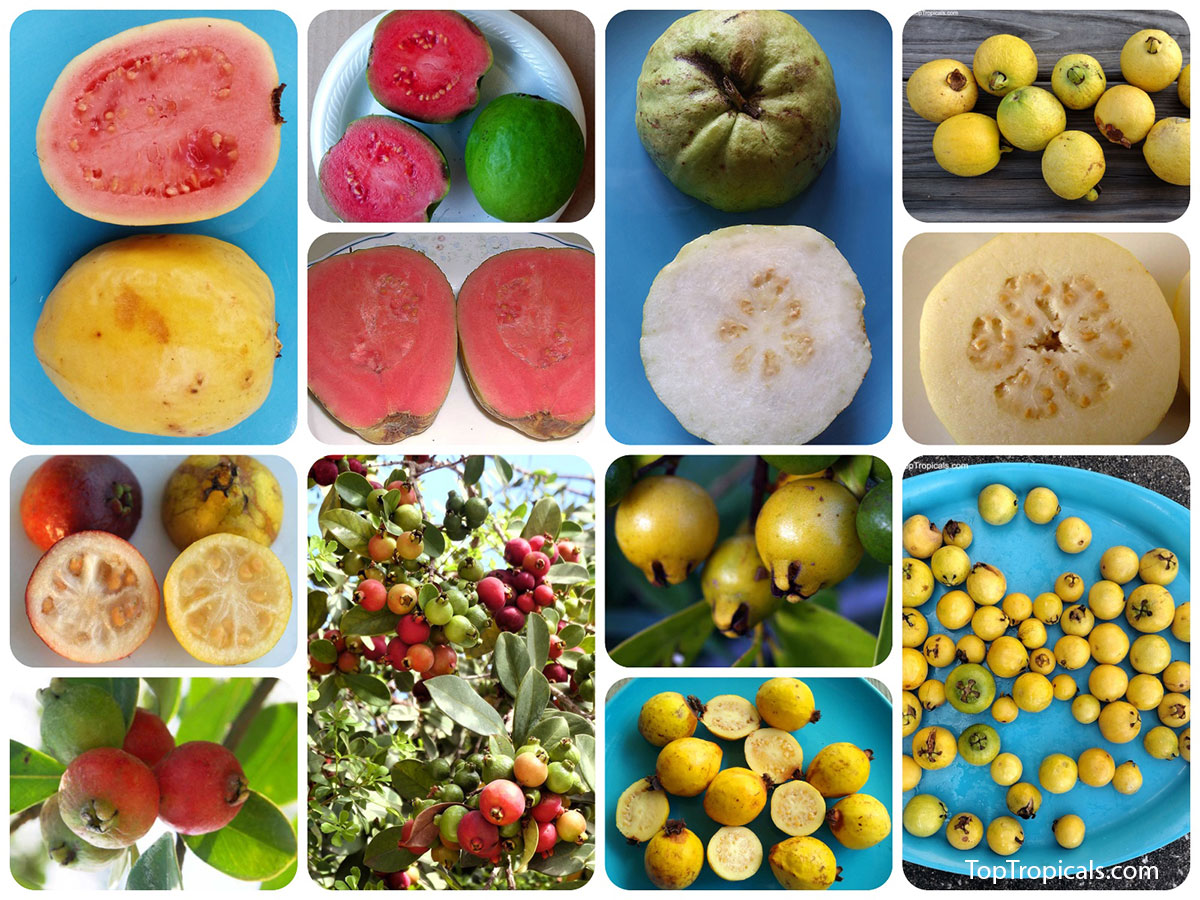
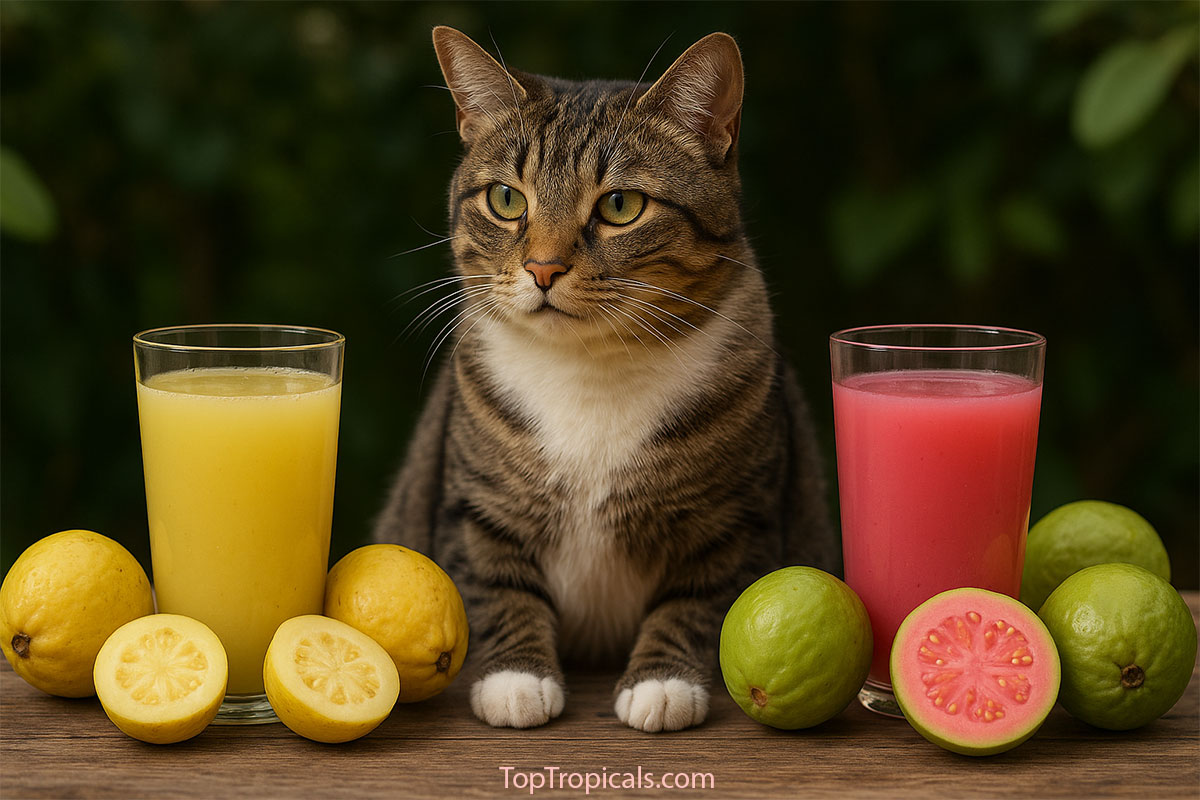
Guava varieties: Pink flesh (upper left quarter), White flesh and Cas (upper right quarter), Red Cattley Guava (bottom left quarter) and Golden Cattley (bottom right quarter).
Let’s talk Guava. Few fruits check as many boxes: flavor, productivity, health, and adaptability. We’ve grown guava trees at Top Tropicals for years here in Florida, and it never fails to surprise people with how easy it is — and how quickly it rewards you.
🌿 Health Benefits
We know the first question:"Why guava in addition to all the other fruit trees I could plant?"Because guava is one of the healthiest tropical fruits you can eat and grow — and it produces faster than almost anything else.
- Vitamin C powerhouse — guava has four times more vitamin C than oranges. One fruit covers your daily needs and then some.
- Potassium and fiber — good for balancing blood pressure and keeping your heart strong.
- Antioxidants like lycopene and vitamin C — these keep your skin glowing and help protect your cells from damage.
- Dietary fiber — aids digestion and helps keep blood sugar steady.
- Guava is a true"food as medicine"tree you can plant right in your backyard or in pot.
♥️ Our Favorite Varieties are Available Now
We currently have a DOZEN excellent guava varieties in stock selected by our plant expert Tatiana Anderson — something special for every garden. Our top picks are:
Pink Guavas
- Barbie Pink – Yellow pear-shaped fruit with thick pink flesh, sweet and juicy. Cold hardy for a tropical fruit. The best seller.
- Hong Kong – Large, round, smooth pink fruit. Sweet flavor, very few seeds, and very productive.
- Tikal – Our top pick. Fast-growing, disease-resistant, and produces the sweetest pink guavas with very few seeds.
White Guavas
- Indonesian White – Aromatic, classic white-fleshed guava with an excellent tropical flavor.
- Kilo White – Giant fruit up to 2 lbs (1 kilo) each! Few seeds, creamy white flesh, and fruits even in containers.
Compact/Dwarf
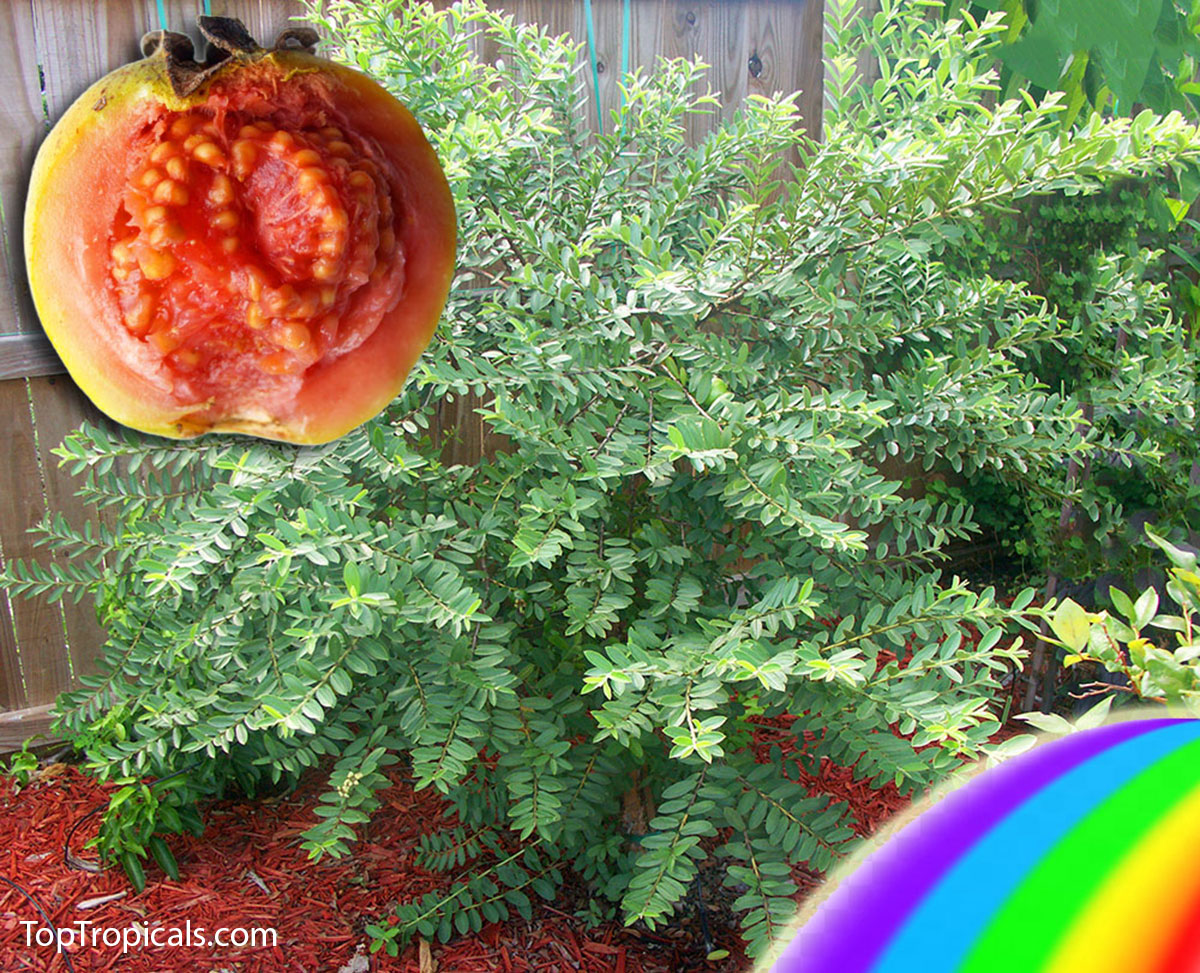
Dwarf Guava Hawaiian Rainbow
- Dwarf Hawaiian Rainbow – Stays under 6 ft, perfect for patios and pots, yet produces full-sized fruit.
Specialty Varieties
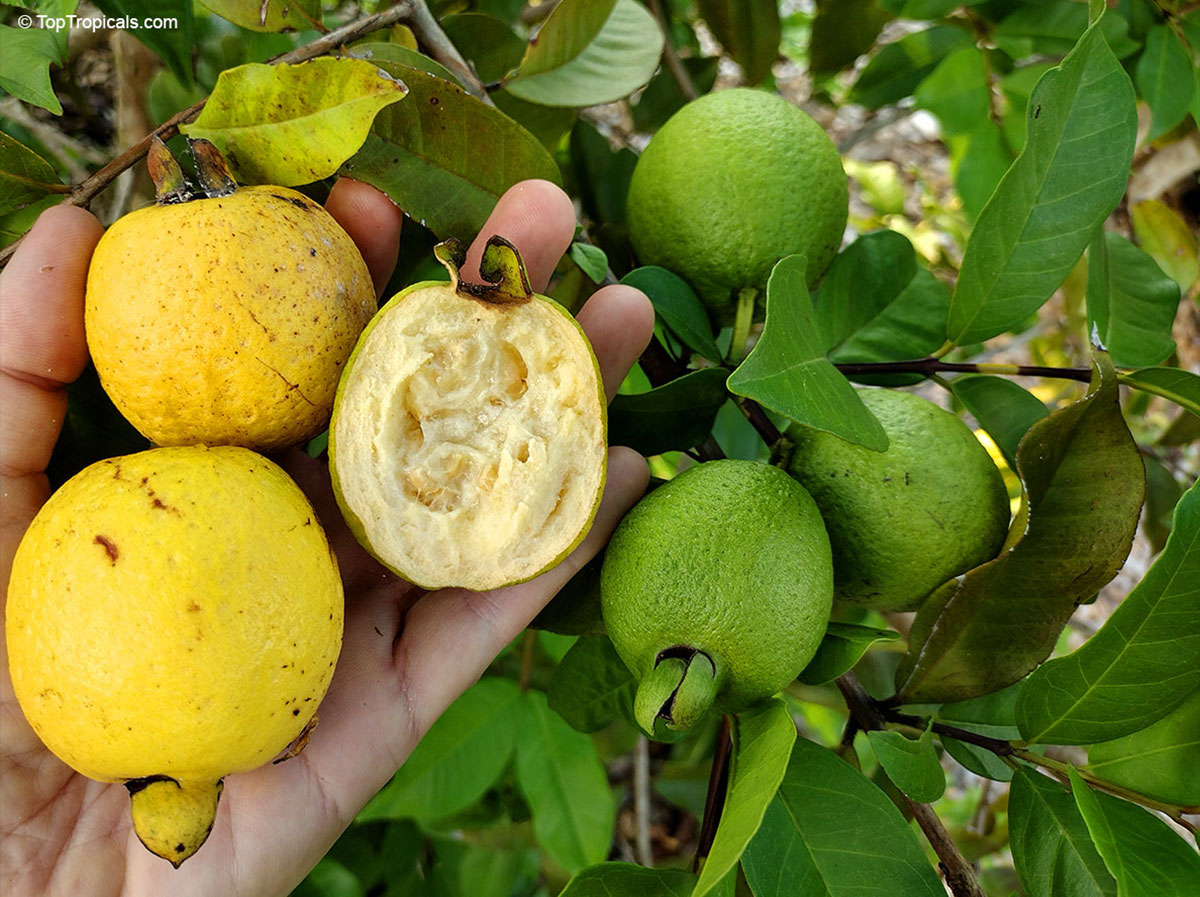
Cas Guava with zero sugar for Costa Rican Agua de Cas drink
- Cas Guava – Bold, tangy, almost zero sugar. The traditional Costa Rican Agua de Cas drink comes from this fruit. Cold hardy.
- Hawaiian Gold, Yellow Strawberry Guava – The sweetest Strawberry Guava, golden fruit, great for fresh eating and drinks.
- Brazilian Araca Pera – Rare hybrid used for Guava Wine in Brazil. Tart, concentrated juice makes excellent wine, sorbet, or jelly. Learn more...
- Pineapple Guava, Guavasteen – Feijoa sellowiana. Strongly perfumed fruit, best enjoyed when the pulp is mixed with sugar – like forest strawberries. Cold-hardy, tolerates freeze, and doubles as a great windbreak. Learn more...
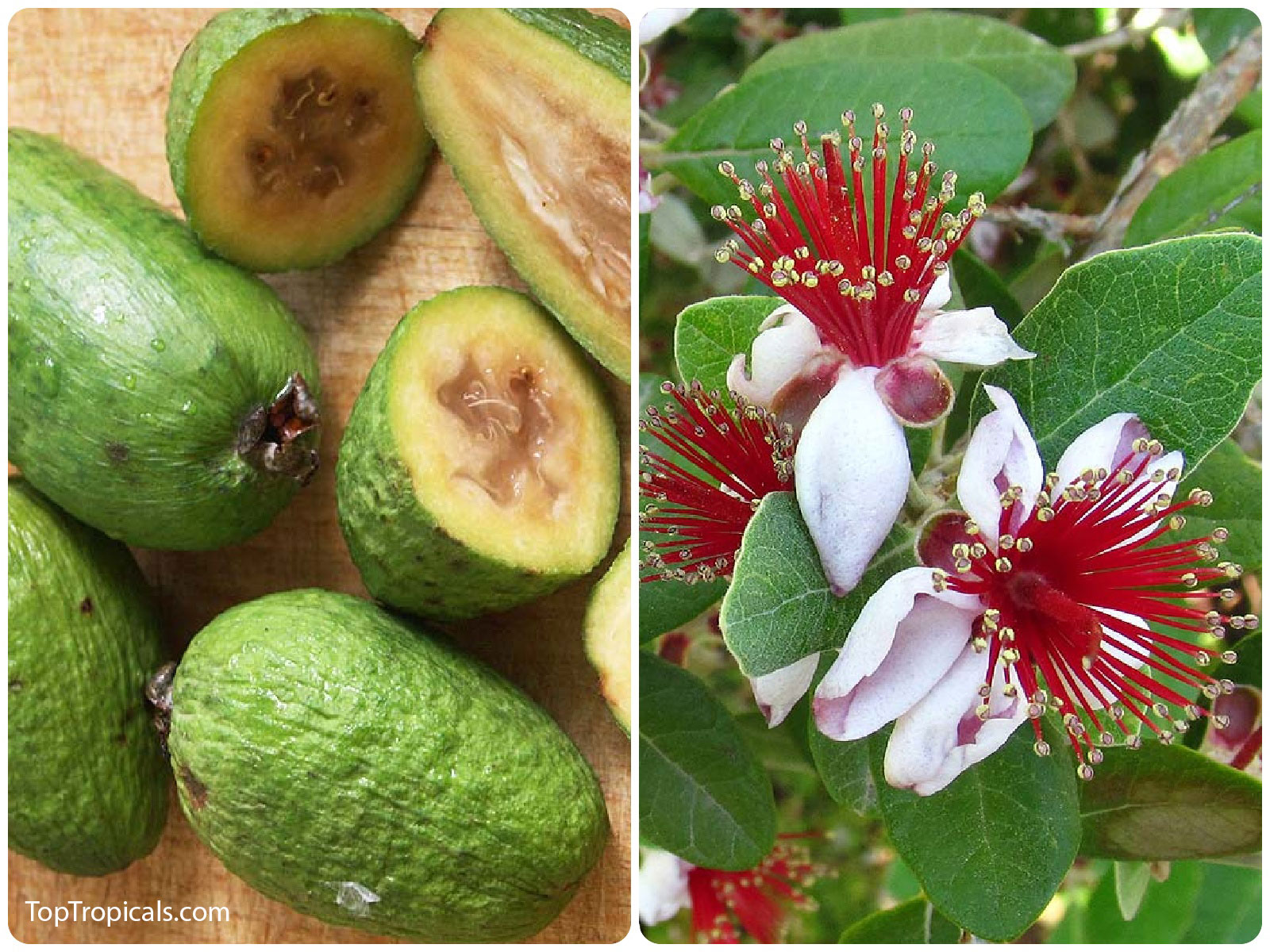
Pineapple Guava, Guavasteen – Feijoa sellowiana
Every one of these thrives here in Florida or in warm climate. Some are better in pots, some as landscape trees, but all produce generously.
🎥 Watch short videos about Guava:
💲 Special Offer – 20% off Guava Fruit Plants!
Get 20% OFF already discounted Guava plants with code
GUAVA2025
Min order $100. Excluding S/H, valid online only, cannot be combined with other offers.
Hurry, offer expires October 02, 2025!