Garden Blog - Top Tropicals

Date: 31 Oct 2025

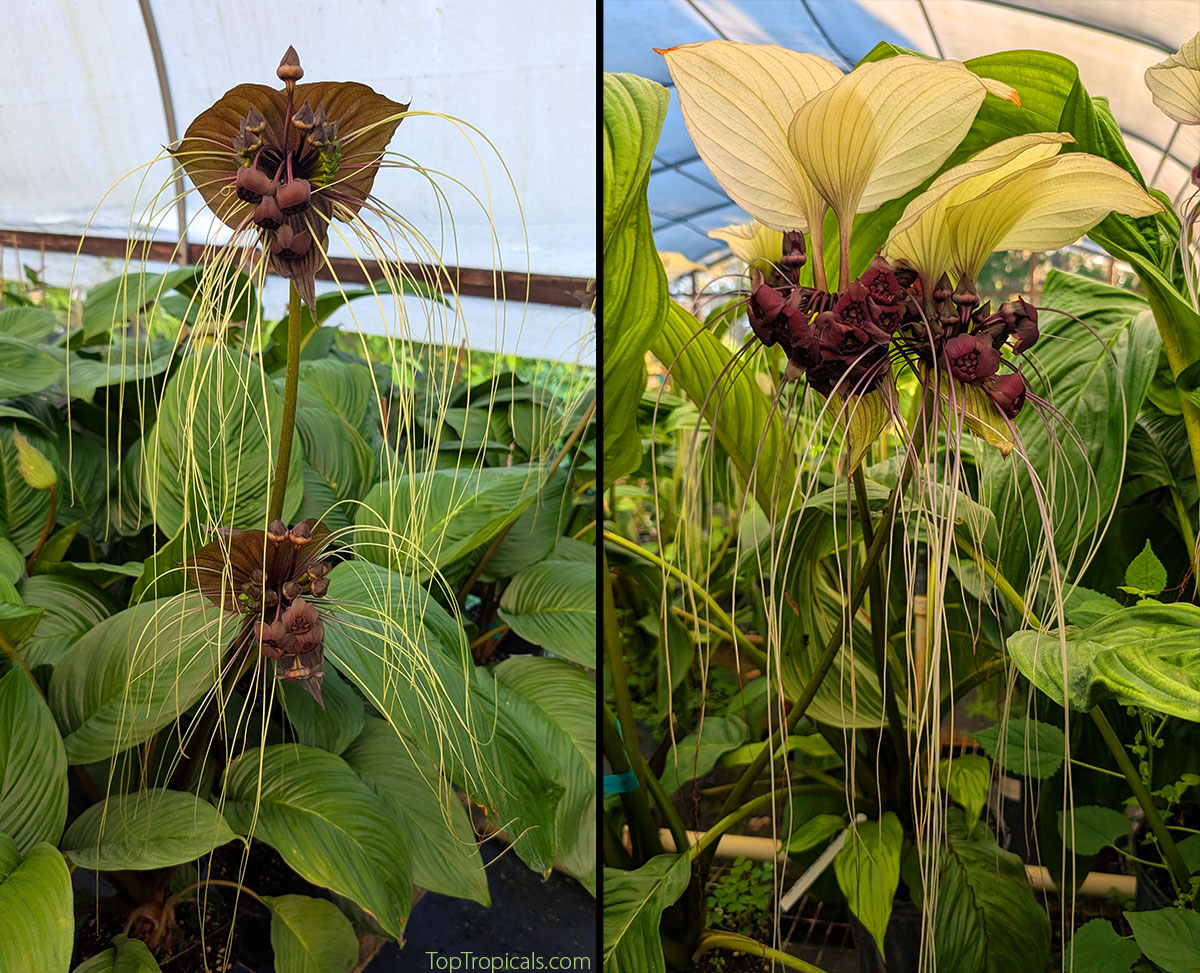
Black  Bat  Lily  and  White  Bat  Lily  plants  blooming  together  in  the  Top 
 Tropicals  greenhouse,  showing  contrast  between  dark  maroon  and  ivory  bracts 
 with  long  trailing 
 whiskers.

Black and White Bat Lilies (Tacca chantrieri and Tacca nivea) side by side in bloom

How to Care for Bat Lilies

by Top Tropicals Plant Expert Tatiana Anderson

🌞 Light

  • Bright, filtered light. Morning sun or dappled shade is perfect.
  • Avoid direct midday sun outdoors — it can scorch the leaves.
  • Indoors, place near a bright window with sheer curtains or use a grow light.

🌡️ Temperature

  • Warm and stable, ideally 70-85 F during the day.
  • Protect from cold drafts or sudden chills.
  • Ideally, do not let temperature drop below 45 F, although Taccas can tolerate short period of upper 30's.

💧 Watering

  • Keep soil evenly moist but not soggy.
  • Water when the top inch feels barely dry.
  • Use lukewarm water.
  • Avoid letting the pot sit in water.

💨 Humidity

  • High humidity (60-80%) is key.
  • Mist leaves often, use a humidity tray, or keep near a humidifier.
  • In greenhouses or bathrooms with a skylight, it thrives naturally.

🌱 Soil

  • Use rich, loose, well-draining mix
  • Combine bark, peat, and perlite for ideal airflow around the roots.
  • Best mix for growing tropical Tacca in pots - soilless potting mix Abundance . It provides perfect drainage and has a texture similar to a jungle rainforest media.

🍽️ Feeding

  • During growth season (Spring through Fall), feed with Green Magic controlled release fertilizer every 6 months. For even better results, you may apply liquid fertilizer Sunshine Boosters Rubusta.
  • Stop feeding dry fertilizer in cooler months when growth slows. Liquid Sunshine Boosters are safe to use with every watering, year around.

🏡 Indoor Growing

  • Great for bright bathrooms, sunrooms, or any warm, humid corner.
  • Rotate pot occasionally for even growth.
  • Keep away from heating vents and AC drafts.

🌴 Outdoor Growing (in warm climates)

  • Partial shade or filtered light under trees.
  • Excellent in large containers that can be brought inside for winter.
  • Shelter from heavy rain and wind.

Sunshine: "So… it’s a diva?"
Smokey: "Exactly. But take care of it - and it rewards you with wings!"
Smokey and Sunshine: "Happy Halloween!"

🎥 Watch Short Videos:

🛒 Grow your own gothic masterpiece:
Shop Bat Head Lily Tacca
Date: 7 Nov 2025

Cats now demand cable!

Riki the cat is watching TV

💻 Cats now demand cable!


"The kiss of the sun for pardon,
The song of the birds for mirth,
One is nearer God's heart in a garden
Than anywhere else on earth."

-
Dorothy Frances Gurney

🐱 Every cat deserves a good show. Who needs Netflix when you have Catflix? Our cats got Cat TV. What about yours?

📱

🐈📸 Riki is watching his TV bird show at TopTropicals PeopleCats.Garden

#PeopleCats #Quotes

🟢 Join 👉 TopTropicals

Date: 7 Aug 2025

Blackberry Jam Fruit - the sweetest surprise

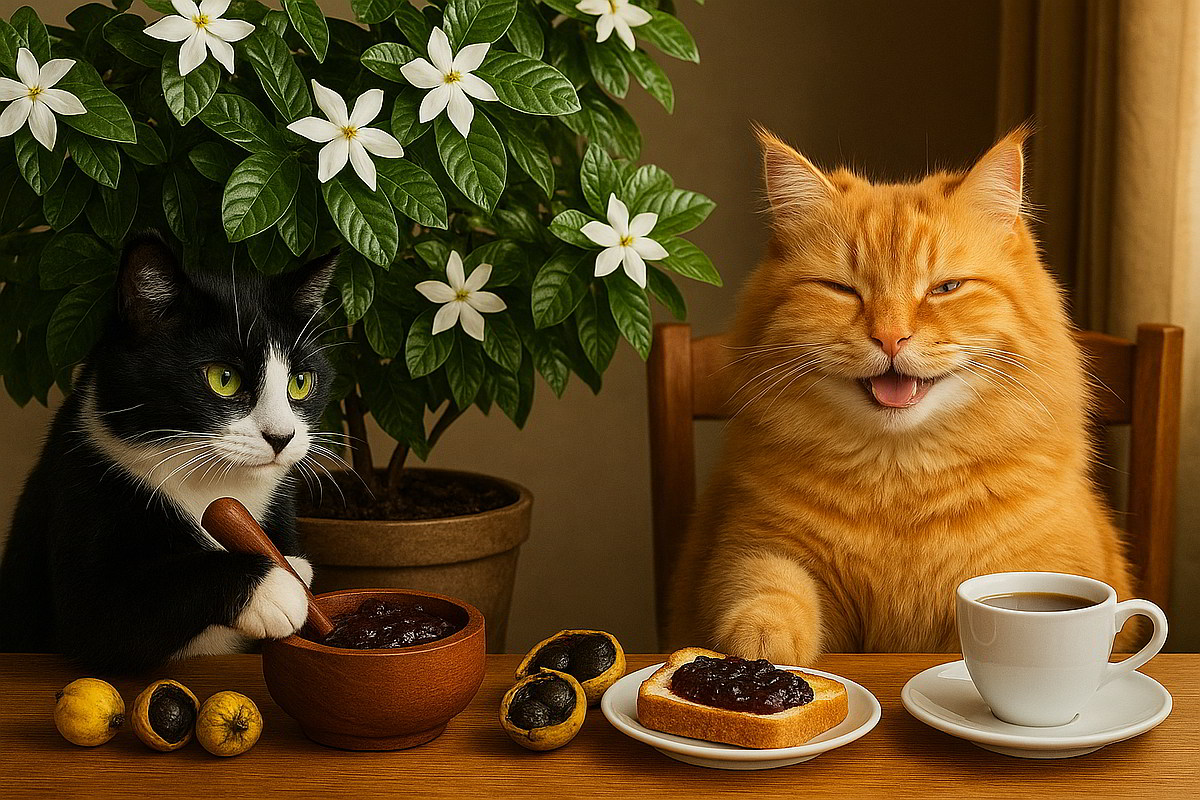
A  tuxedo  cat  making  jam  from  Blackberry  Jam  Fruit  (Randia  formosa)  while  an  orange  cat  smiles  in  a  chair,  sipping  tea  beside  a  large  flowering  Randia  plant  in  a  cozy,  sunlit  room.

Tea and Jam with the PeopleCats – A Tropical Afternoon Beneath the Randia

Meet the cats behind the jam! The tuxedo cat is none other than Google-the-cat - our beloved elder and one of the original cat-fathers of Top Tropicals PeopleCats.garden. At 18 years old, he’s still sharp, curious, and very much in charge. The orange fluffball? He represents the universal image of cat joy - and we’ve got a few real-life orange sunshine residents just like him.

Why do you include cats in a plant newsletter?

Because they’re part of the garden. Our rescued PeopleCats live among the plants, nap under the mango trees, inspect new arrivals, and occasionally steal a sunspot meant for seedlings. They’re not mascots — they’re part of our team. Sharing their presence is like showing a part of the soul of our space.🐈

Are the cat images real or AI-generated?

All our cats are real! We take lots of pictures and videos. And a few images are AI-generated illustrations inspired by our real PeopleCats.garden residents. While not literal photographs, they are creative interpretations that capture the spirit of our tropical home and its furry citizens.🐾

Are the stories about the cats true?

Mostly! The jam-making, tea-drinking, and greenhouse meetings are creative interpretations - but inspired by real personalities. We use AI scenes to bring their spirit to life. Real cats. Real plants. Imagined adventures.🐱

Watch Top Tropicals videos about PeopleCats

Shop Blackberry Jam Plants

Date: 18 Aug 2025

🌟Repotting FAQ

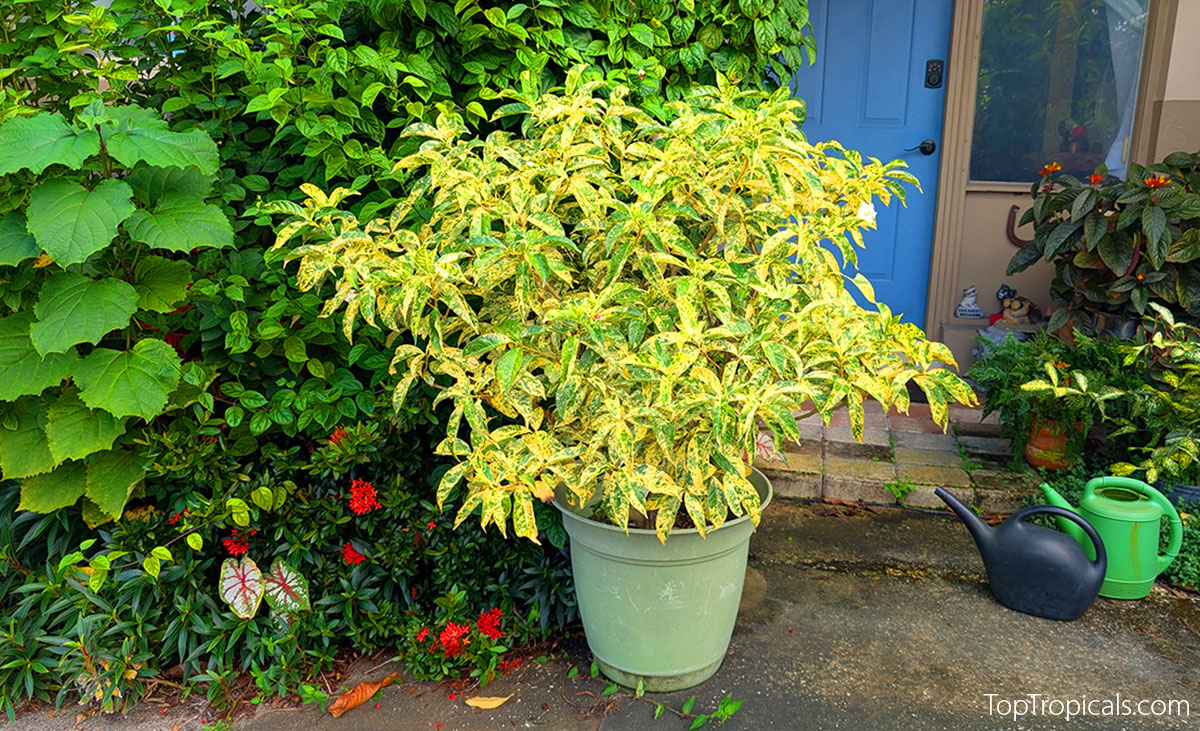
Tabernaemontana  variegated  in  container

Q: How big should the new pot be?

A: Only a few inches larger than the old one. Oversized pots hold too much moisture and may cause root rot.

Q: Why are plastic pots better than ceramic?

A: Plastic pots are lighter, easier to handle, and you can cut them if a root-bound plant is stuck. Ceramic pots are heavy, breakable, and often lack drainage.

Q: How do I safely remove a plant from its pot?

A: Turn the pot upside down and let gravity help. Never pull by the stems or leaves. If stuck, lay the pot on its side and squeeze or tap it. Cut the pot if needed.

Q: Should I remove old soil from the roots?

A: No. Roots have tiny hairs that absorb water and nutrients. Shaking off soil damages them and sets the plant back.

Q: Why must the plant sit at the same soil level?

A: Planting too deep suffocates the stem, and planting too high exposes roots. Keeping the same level protects the root crown.

Q: How soon should I water again after repotting?

A: Water thoroughly right after repotting, then wait until the top inch of soil dries before watering again.

🌱 Done! Your plant now has room to grow stronger before fall.

Shop Garden Supplies

Date: 17 Sep 2025

Mulberry Care and Growing Tips

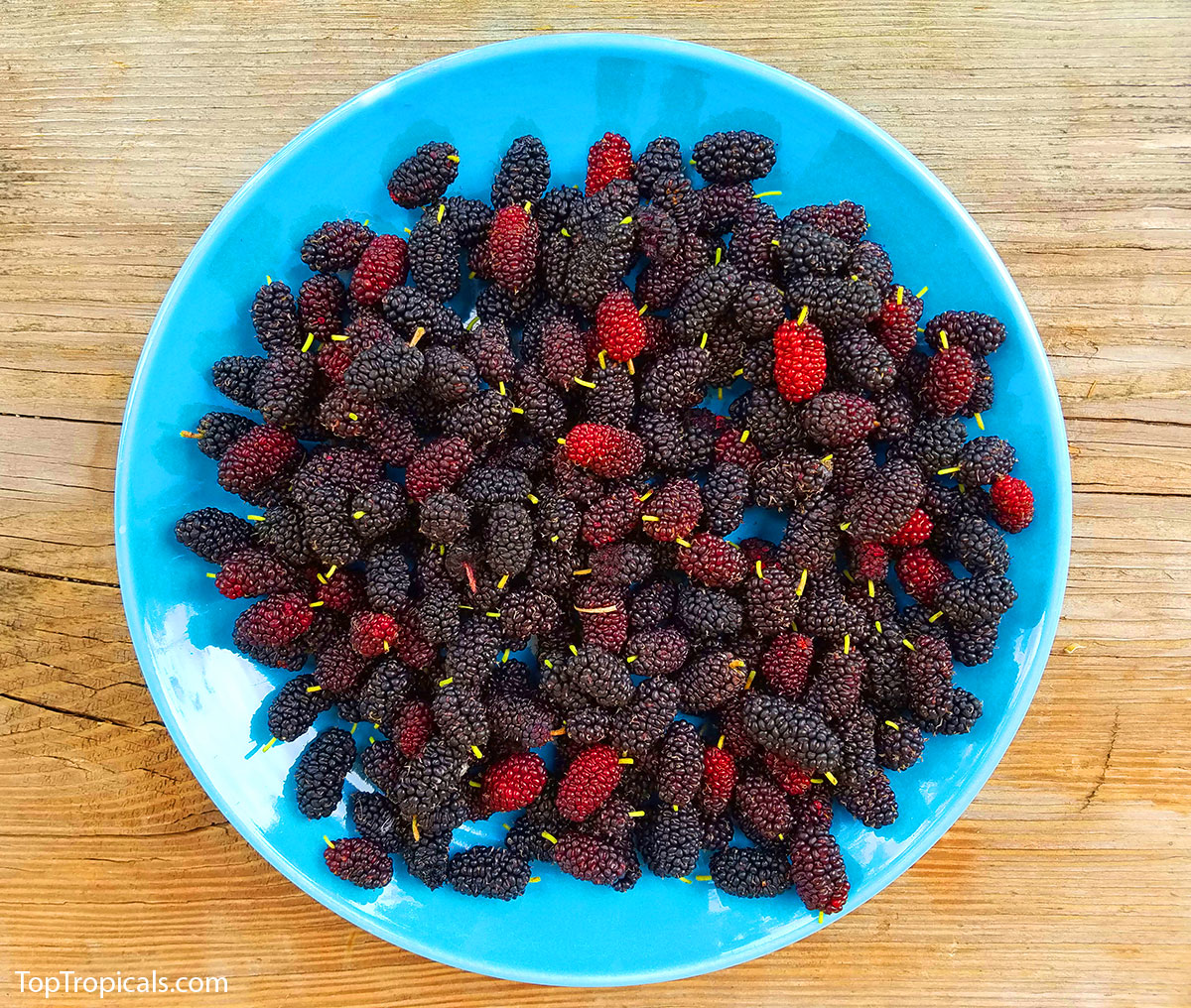
Mulberry  fruit  on  a  plate

Mulberries are tough, low-maintenance fruit trees that adapt to many conditions.

  • Climate: Hardy from USDA zone 5 to 10.
  • Soil: Grow well in almost any soil; prefer good drainage.
  • Watering: Regular watering during dry spells; drought tolerant once etablished.
  • Growth: 3–5 feet per year, producing fruit early.
  • Pruning: Annual pruning controls size and improves branching.
  • Pot culture: Dwarf types thrive in containers, staying 6–7 feet tall. Use a large pot, water consistently, and prune lightly. Use Abundance potting mix for best results.
  • Fertilizer: For reliable production, fertilizer regularly. Apply Sunshine C-Cibus liquid booster with every watering, or Green Magic controlled release fertilizer every 5-6 months.

❓ Mulberry FAQ


How soon will a mulberry fruit?

One to two years, sometimes the very first season.

What climates are suitable?

USDA zones 5–10, from -20F winters to hot summers.

How tall do they get?

Standard trees 20–30 ft; dwarfs 6–10 ft in pots.

Do I need more than one tree?

No, they are self-pollinating.

What do they taste like?

Sweet and juicy, like a blend of blackberry and raspberry.

How long is the harvest?

Everbearing types ripen gradually from summer into fall.

Do birds eat them?

Yes, but trees are so productive there’s plenty to share.

Are they messy?

Dark-fruited varieties can stain; white mulberries do not.

Can I grow them in containers?

Yes, dwarf types (Dwarf Everbearing, Issai) fruit well in pots.

How long do they live?

Many live for decades; Illinois Everbearing can endure for generations.

What are the health benefits?

Mulberries are low-glycemic, support healthy blood sugar, improve heart health, and are rich in antioxidants.

Shop Mulberries