Date: 15 Oct 2020
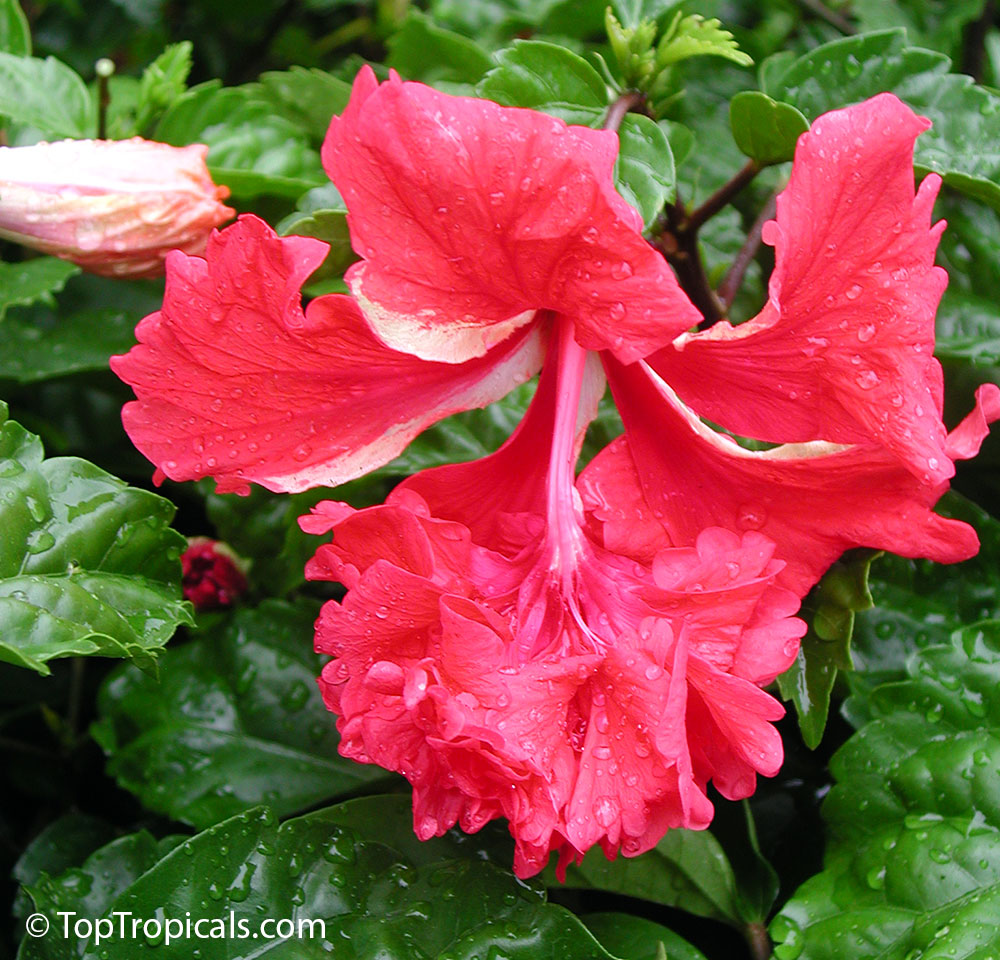
Plant of the Month: Hibiscus El Capitolio
Stevie's Pick: what's in bloom?
Our exotic plant grower Steven Gowdy will spotlight the most interesting plants he discovers and recommends today while working in TopTropicals greenhouses.
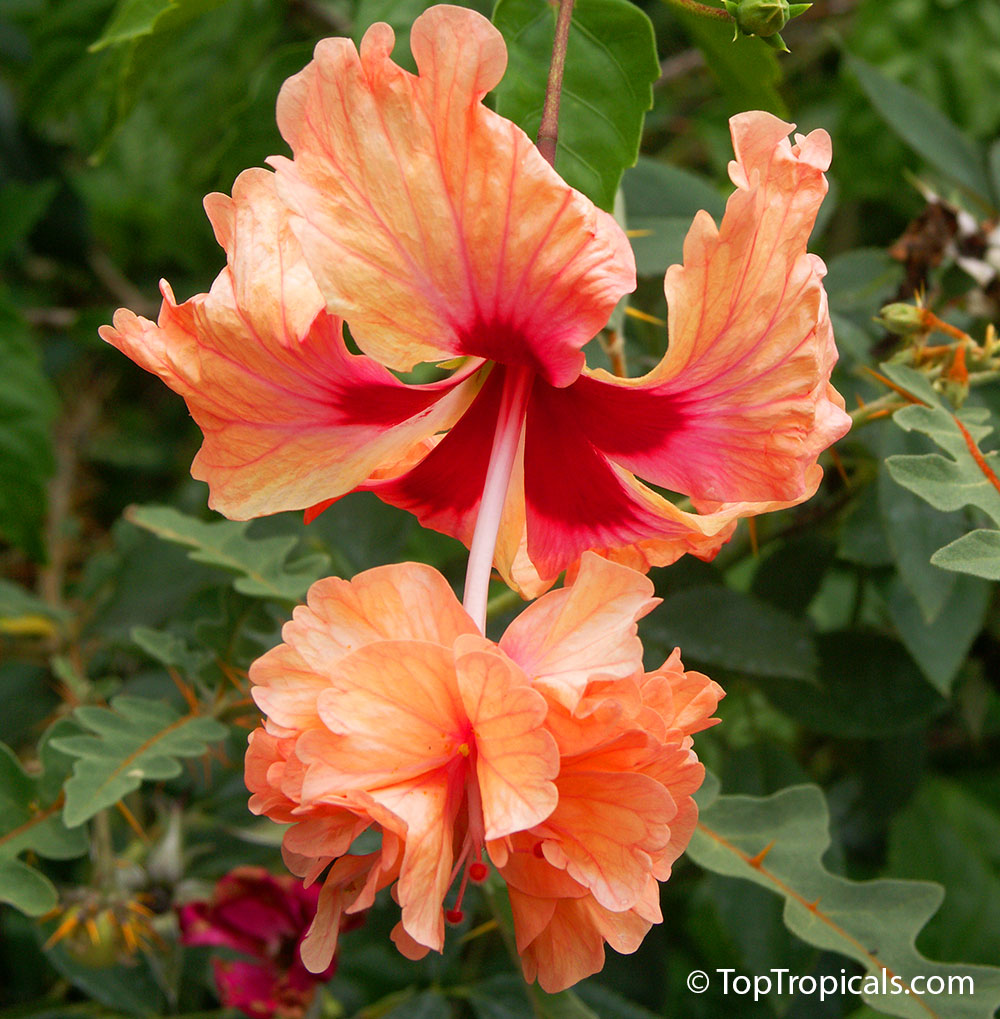
OMG! These plants are awesome. The flowers are stunning, ruffled,
brightly colored. These are very unique double flowers about 5"long, with ruffled
petals, followed by a sort of a stamen, than more ruffled petals... Wow.
These are the perfect plants - they can be grown in a container or in-ground, in
full sun. They are drought and disease resistant, ever-blooming, can be
pruned into a standard weeping tree, or pruned into a bush... It's a convenient,
dream plant! Prune frequently, because it blooms on new wood.
Hibiscus El Capitolio grows best in zones 9 through 11. In colder
climates leave it in a container outside in the summer months, but bring inside in
the winter months.
Remember - ever-blooming! You prune and they will flower all year long.
These are fabulous plants that will satisfy any first-time or experienced
gardener: you just can't go wrong El Capitolio! They will have you growing
happiness... That's true.


Stevie with Kristi and Jamie celebrating his Happy Birthday. Check out Stevie's painting "TopTropicals Theme"
Date: 10 Oct 2020
Trimming and treating Adeniums in winter
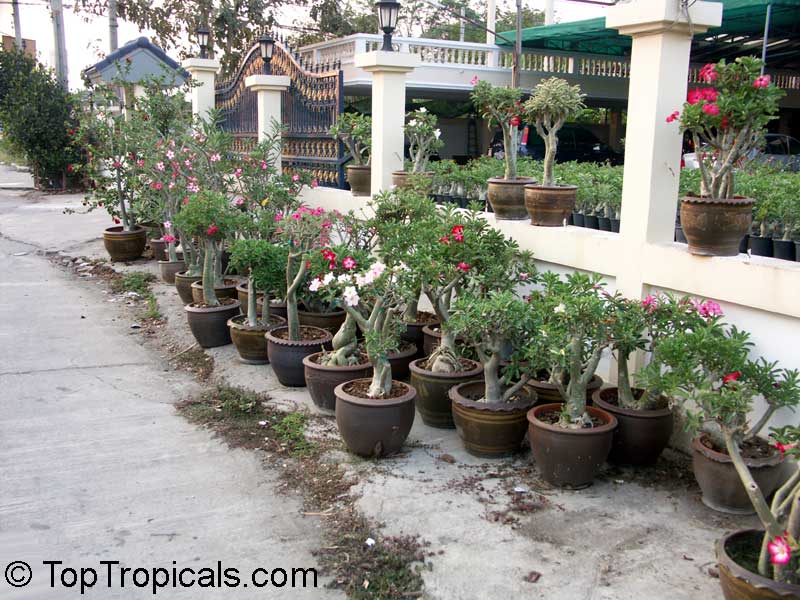
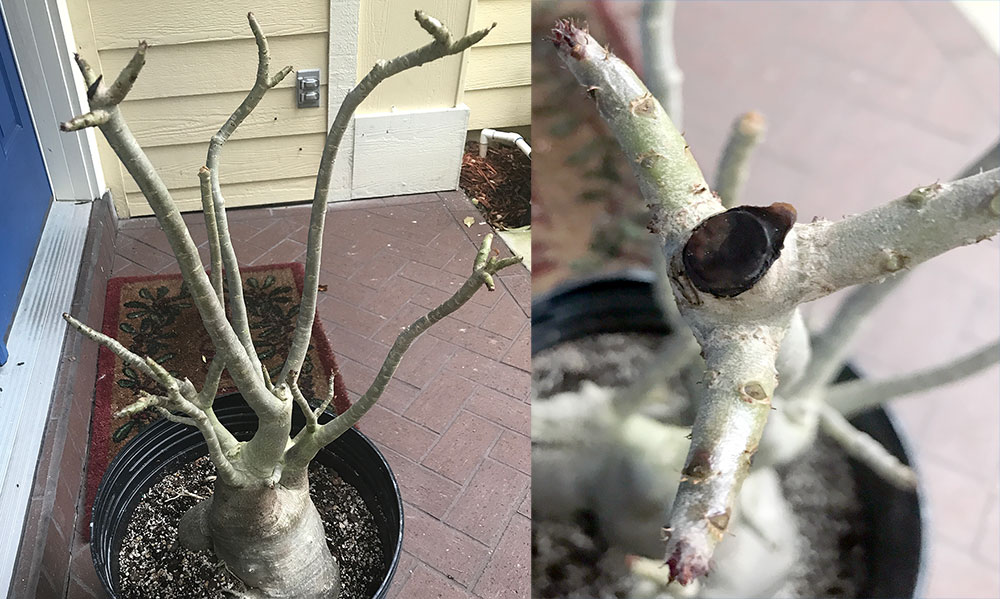
Q: My desert rose below dropped leaves after I replanted it in a bigger pot. I noticed that one of the branches that had been pruned is black at the tip. Please let me know if the section of the branch that turned black needs to be cut. I also wasn't sure how often to water it since the leaves have all dropped. None of the other dessert roses have dropped their leaves but they are all younger plants. Any advice would be much appreciated.
A: Your plant looks healthy and vigorous overall. Dropping leaves
after repotting, or shipping, especially at this time of the year, is normal
in Adeniums. They are deciduous and stay leafless from Fall to Spring.
Some individual specimens can go into dormancy sooner than others - all depends
on conditions: temperature, light, exposure, etc. and individual plant's
"clock".
The black spot on the cut branch may be a sign of a fungus as a result of
excess water.
You may carefully clean/rub it with a paper tower dipped in Hydrogen
Peroxide (pharmacy grade). Then rinse with fresh water.
Keep the plant warm and in a dry spot. Once leaves are dropped, it doesn't
need much water. Once a week watering is enough.
Date: 4 Oct 2020
New video: Ground orchids.
All-summer colors for shady gardens
WATCH NEW VIDEO
Did you know orchids can be grown in the ground?
Orchids have a mystique that seems to set them apart from most other
flowers... they are elegant and almost unreal in their perfection... The symmetry
of the flowers has led to the orchid being a symbol of a perfect beauty.
But not every gardener has luck growing traditional orchids. Some complain
about their special maintenance:
"Mount them on a tree, do not overwater... and all that hassle just for
once-a-year flower?" Sounds familiar?
Terrestrial orchids (a.k.a. ground orchids) grow in regular garden soil
instead of in the air on tree branches. And they bloom almost year round!...
Ground orchids are available from our store.
Stay updated with TopTropicals Videos by subscribing to our channel at YouTube.com/TopTropicals and get our latest video news of what is fruiting and blooming!
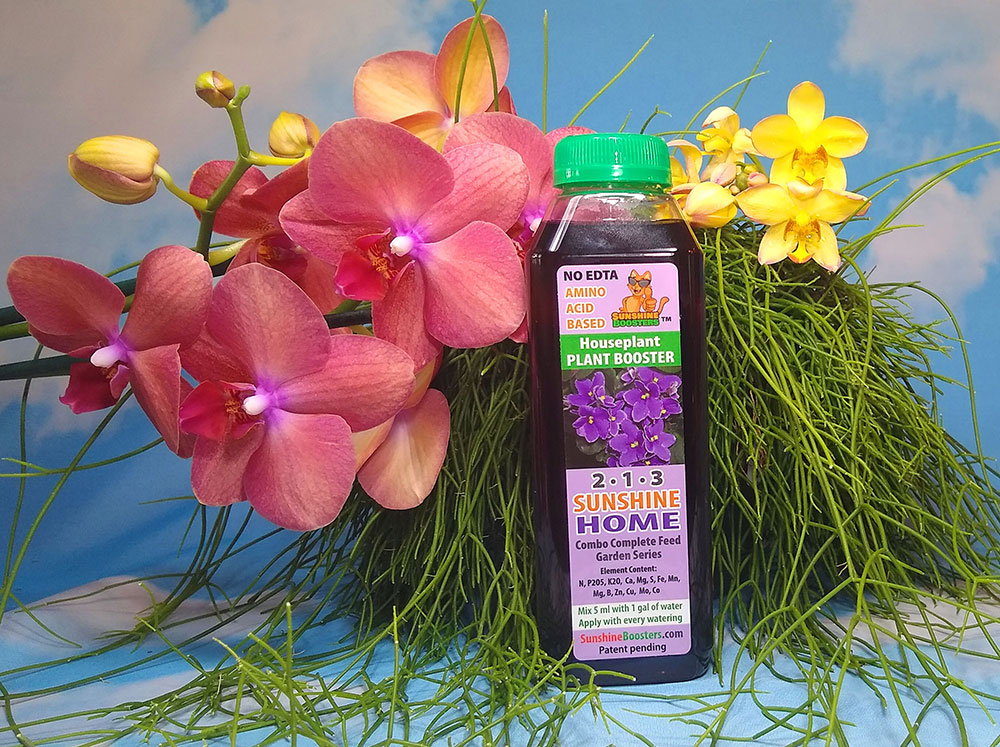
Remember to get plant food for your orchids and Ground
orchids!
In the photo: Sunshine-Home
Date: 2 Aug 2020
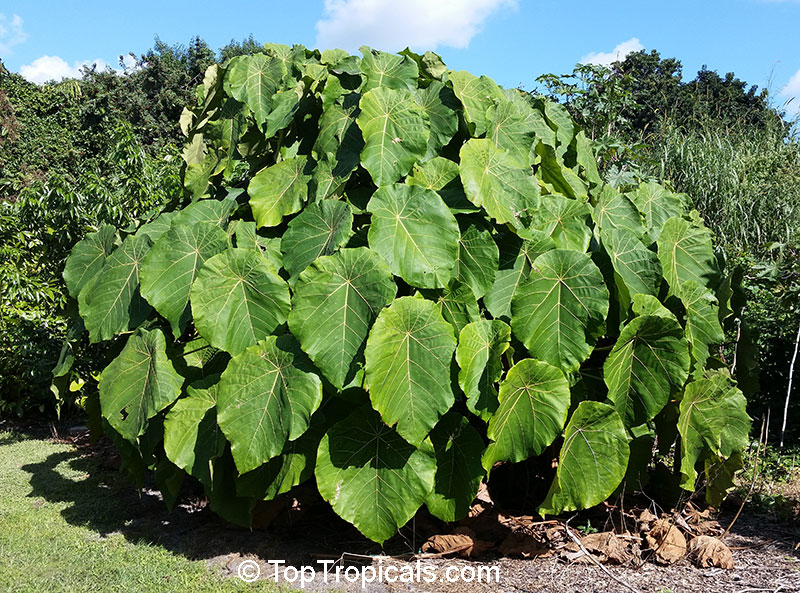
Macaranga grandifolia - Elephant Ear Tree
The very quintessence of tropical foliage luxury
by Mark Hooten, the Garden Doc
Why is this wonderful little tree so unknown here in Florida? I can only guess it's because people don't see them, and therefor don't know about them, and that basically no nurseries grow them. Yet it's one of the most utterly spectacular foliage plants conceivable... Provided with an appropriately warm climate such as South Florida or elsewhere, there is no reason they should not be seen more often (for purposes of utter awe).
CONTINUE READING >>

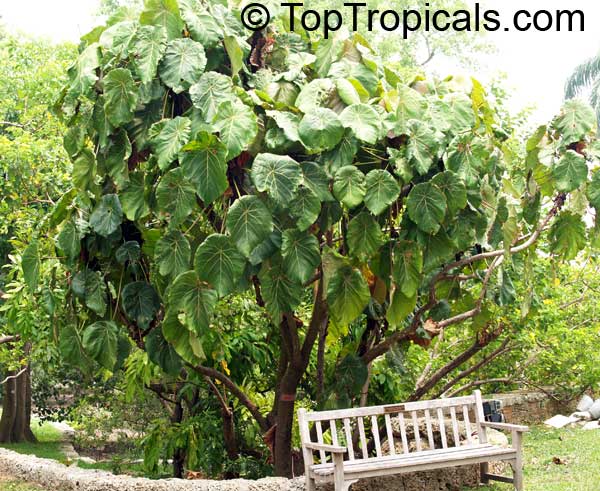

Macaranga's genuinely grand foliage much more resembles the ears of actual elephants (esp. the Asian species) than do the leaves of the much more commonly known and grown "elephant ears" meaning certain Alocasia and Colocasia
Date: 22 Apr 2020
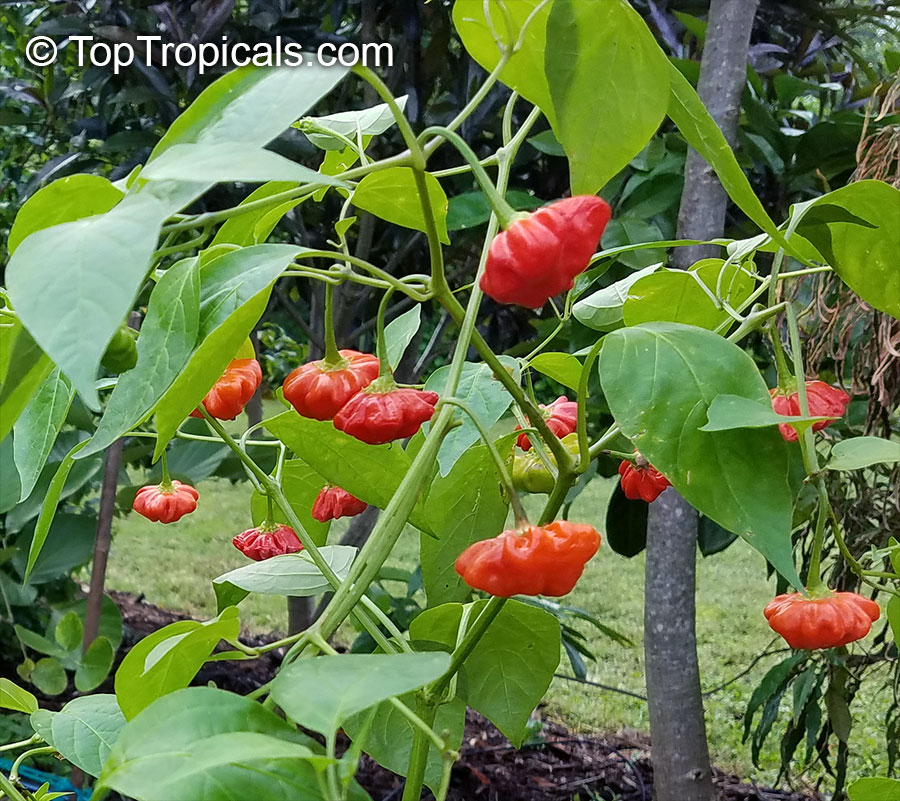
Quirky Brazilian Starfish Pepper
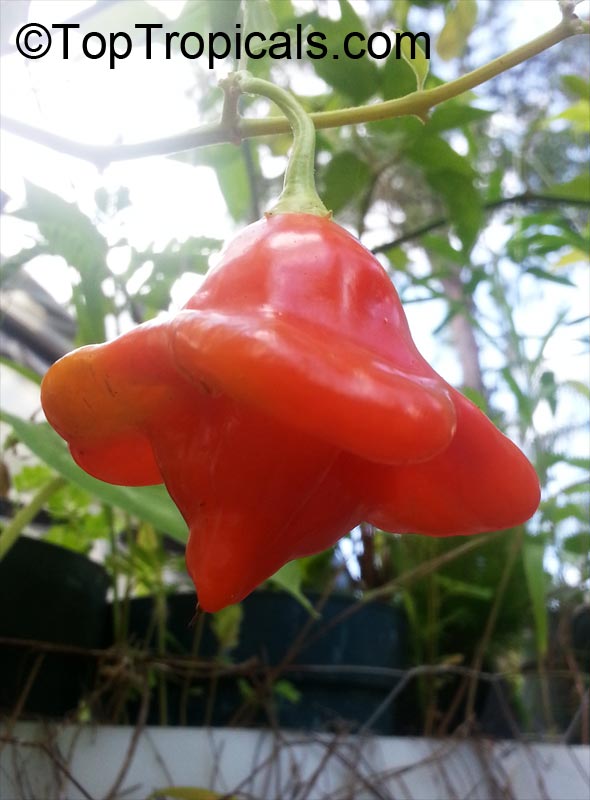
by Onika Amell, tropical plant expert
There is something very rewarding in growing your own peppers. Brazilian
Starfish pepper - Capsicum baccatum is a little bomb of flavor! This is not a plant you
will find just anywhere in the United States.
This is a very uniquely shaped pepper which makes it an excellent
ornamental plant. But unlike many other peppers with pretty faces and lacking in
flavor, the Brazilian Starfish pepper is delicious too. It is hailed for the
complex floral and fruity undertones and a medium level of heat for most folks.
These fruity and juicy, crunchy peppers are perfect for pickling or just eating
raw in salads or salsas. They are irresistible in a glass pickling jar
because of their unique shape. Bold and crisp, this pepper is much sought after by
foodies and gardeners alike.