Garden Blog - Top Tropicals

Date: 24 May 2019

Heavenly Angel's Trumpet
TopTropicals.com

By Onika Amell, tropical flower specialist

Q: Can you please tell me which zones are the best for growing Angel Trumpets? When do they bloom and is there a specific fertilizer to use on them? Do you sell any variegated varieties?

A: If you are lucky enough to live in an area that doesn't freeze or only has light frosts, you can grow Brugmansia (common name Angel Trumpet) outside all year long. They are only entirely hardy in USDA zones 9-12, but they remain very popular throughout the United States. They do really well in coastal settings in the Southwest. They are simply glorious in the coastal areas of South California. In the southwestern states, as well as in the tropics, they bloom spectacularly throughout the spring, summer, and autumn.

Angel Trumpets are very heavy feeders and they need huge amounts of nitrogen. You can use a standard balanced slow-release fertilizer on Brugmansia, but then you must apply it very generously. We've created a specialized fertilizer just for them. Angel Trumpet Delight is a perfect Brugmansia food for frequent monthly feed. It's a 30-day Smart-Release formula that works wonders for Angel Trumpets. A a well-balanced combination of macro- and micro- nutrients with a slow release action, it provides continuous feed, maintains vigor and disease resistance. It also contains coated nitrogen, early release nutrients and extra iron (water soluble and chelated) for quick green-up.

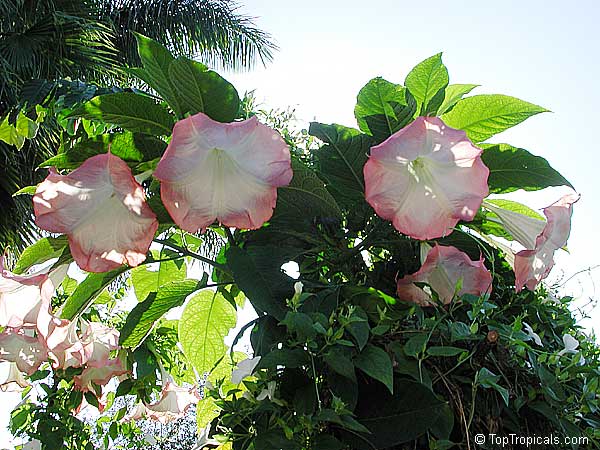
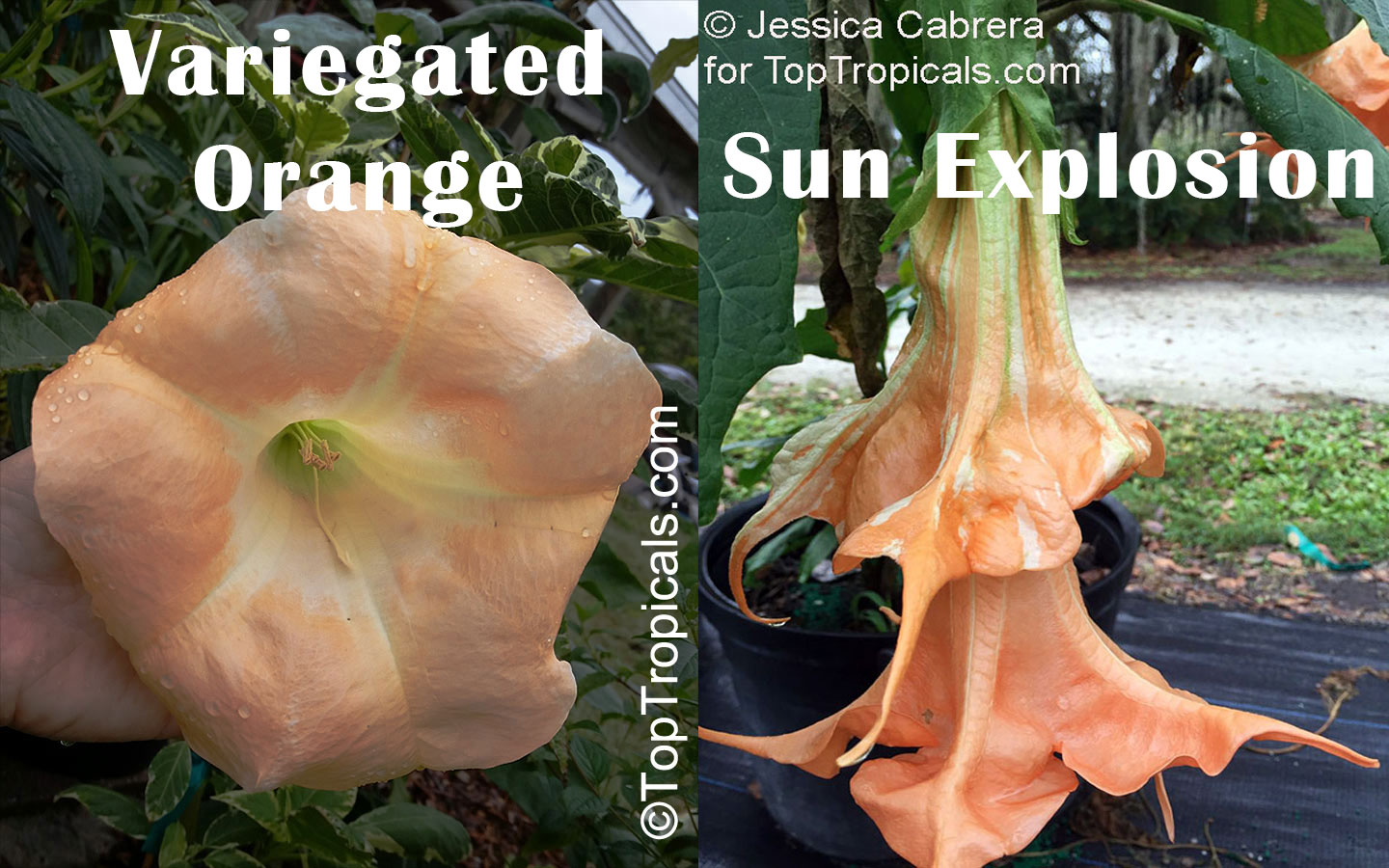
Angel Trumpets come in a dazzling array of colors: orange, yellow, green, white, pink, red, emerald and even purple (closely related Datura). One of our favorites is the beautiful Variegated Orange Angel Trumpet, a new hybrid with variegated leaves and a large single bloom that starts white and turns orange. Another amazing variety is "Sun Explosion" - with a variegated orange flower.

Most folks are usually in awe of the enormous trumpet flowers when they see it for the very first time. They most definitely need to be planted where they can be admired… near a deck, terrace, lanai or, entryway. The blossoms are short-lived, but numerous, continuous, and truly show-stopping! And they smell so good! This is a must have in any tropical garden. They can be grown either as a bush or a small tree. They are easy peasy to grow and root extremely easily, making them great as pass-along gifts for friends. They are sun-loving and super fast-growing plants. Plenty of water and fertilizers keep them happy and at their best. Did I mention they smell good too? ;)

TopTropicals.com

Date: 21 May 2019

Colors of Cannas

TopTropicals.com

By Onika Amell, tropical flower specialist

Q: I'm a beginner gardener and looking for something easy to grow that will add a lot of color to my garden fast.

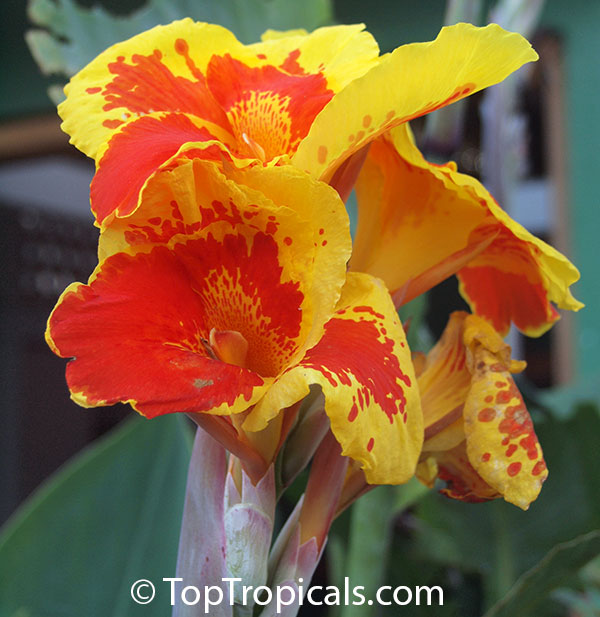
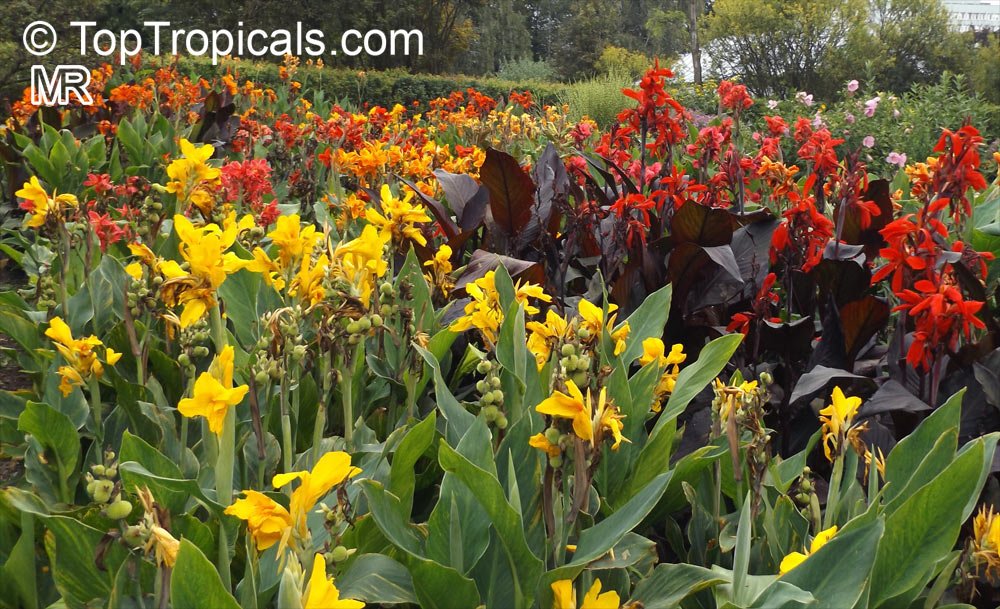
A: Try growing Canna lilies. They are a favorite of many gardeners as they are so easy to grow and always provide a reliable, beautiful show of flowers. In fact, Cannas are one of those plants that are spectacular even if they never bloomed. The leaves are tropical-looking, banana-like and huge! They range in a wide variety of shades and colors, always accentuating the large showy flowers on top.
One of our favorite cannas right now is Canna Cleopatra - very striking and most unique. Large yellow flowers speckled with red spots, or red flowers and even flowers with a little bit of both. Foliage is exotic and very beautiful, often dark green, dark chocolate or a combination of both. This is a canna that will definitely illuminate your garden!

Caring for Cannas

Cannas like a lot of water, full sun and high heat. They are also heavy feeders and prefer soils that are well drained, organically rich and moist. The leaves will quickly tell you when the plant is hungry. Feed your cannas weekly with a water-soluble 20-20-20 fertilizer Broad Leaf Plus, and they will quickly respond with beautiful, lush growth. Deadhead often to encourage continued flowering. Cannas are winter hardy in US hardiness zones 7 and warmer. If you live in colder areas, the rhizomes need to be lifted in the fall, and stored indoors in a dark, warm spot until spring arrives. Be sure to divide clumps every three or four years. Give them lots of room as they grow into large plants, forming spreading colonies up to 7 feet high and 4 feet wide. Show them off in mass plantings, in large containers or in mixed flower borders. Lure in hummingbirds with these beauties!

TopTropicals.com

Date: 2 Oct 2024

Florida Native Plant Sale

Florida  Native  Plant  Sale

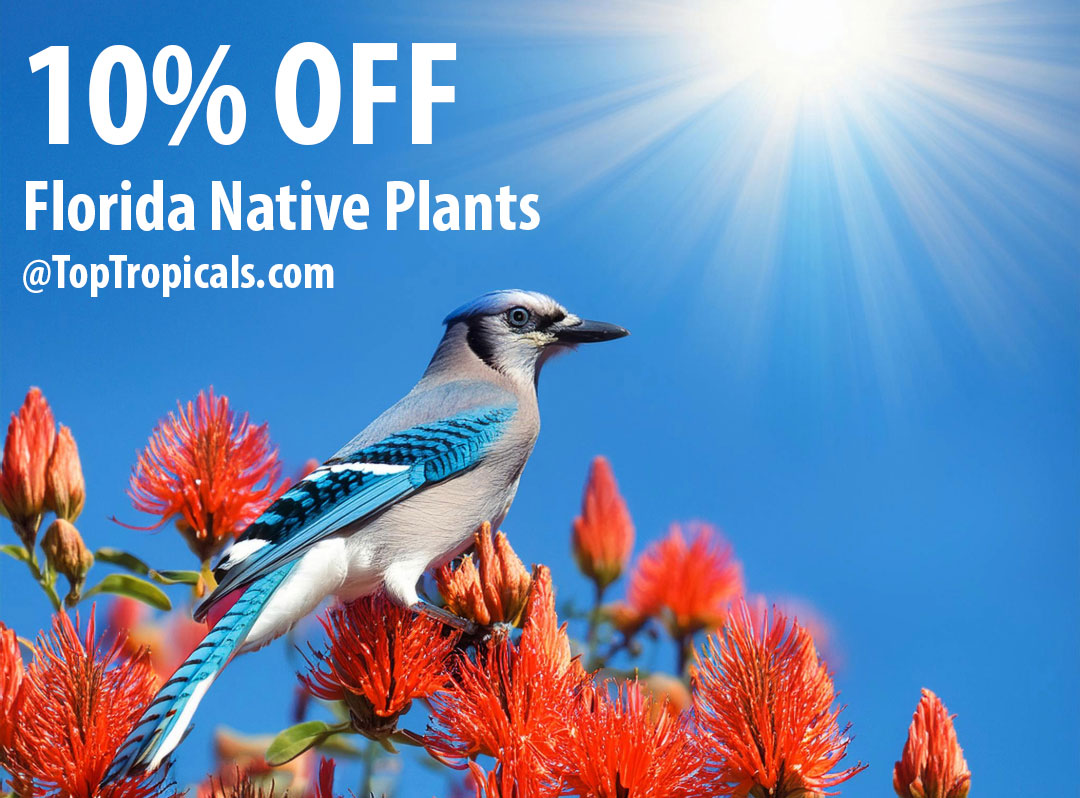
One Week Only: Instant 10% OFF

Take advantage of this limited time offer: 10% OFF Florida Native plants! With cooler weather on the way, these hardy plants are perfect for fall and winter planting. They're easy to establish and offer numerous benefits, especially for those in HOA communities.

Why choose Florida natives?

- HOA approved and welcomed
- Adapted to the local climate and soil
- Require less water, fertilizer, and fewer pesticides (if any, thanks to natural insect predators)
- Easy to grow - perfect for beginners - Provide essential habitat and food for local wildlife, including birds and butterflies

Go native and make your landscape thrive!

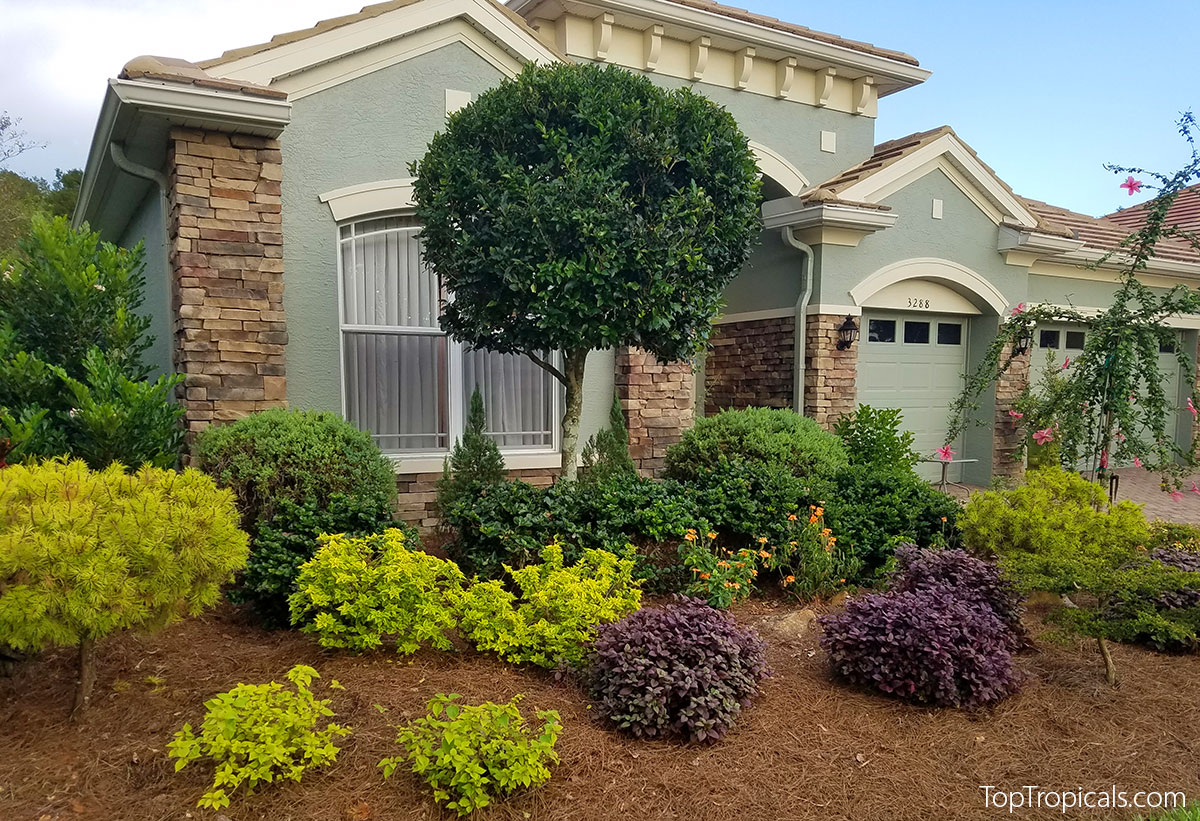
Florida  landscape

Date: 27 Jan 2024

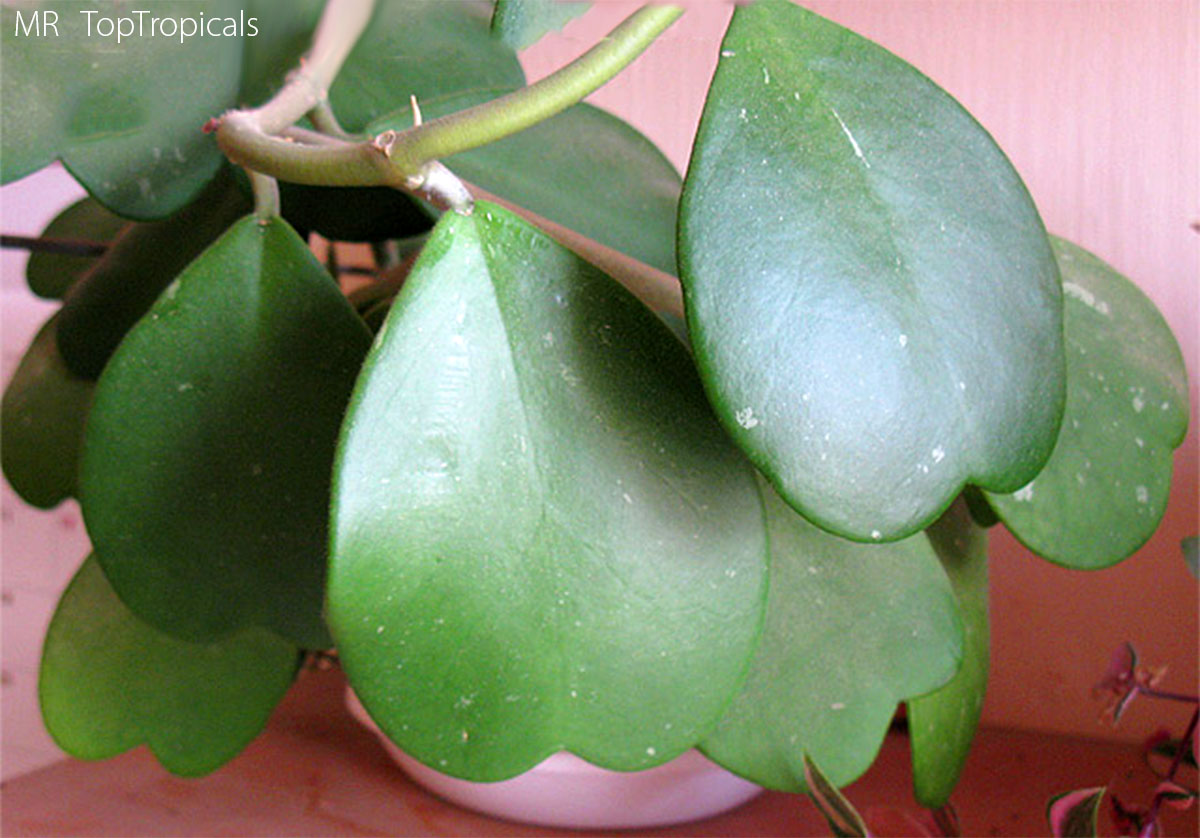
Valentine Sweetheart Hoya:
a must gift for your Valentine

Hoya  kerrii  -  Sweetheart,  Valentine  Hoya

Q: What plant can you recommend for a Valentines Day present?

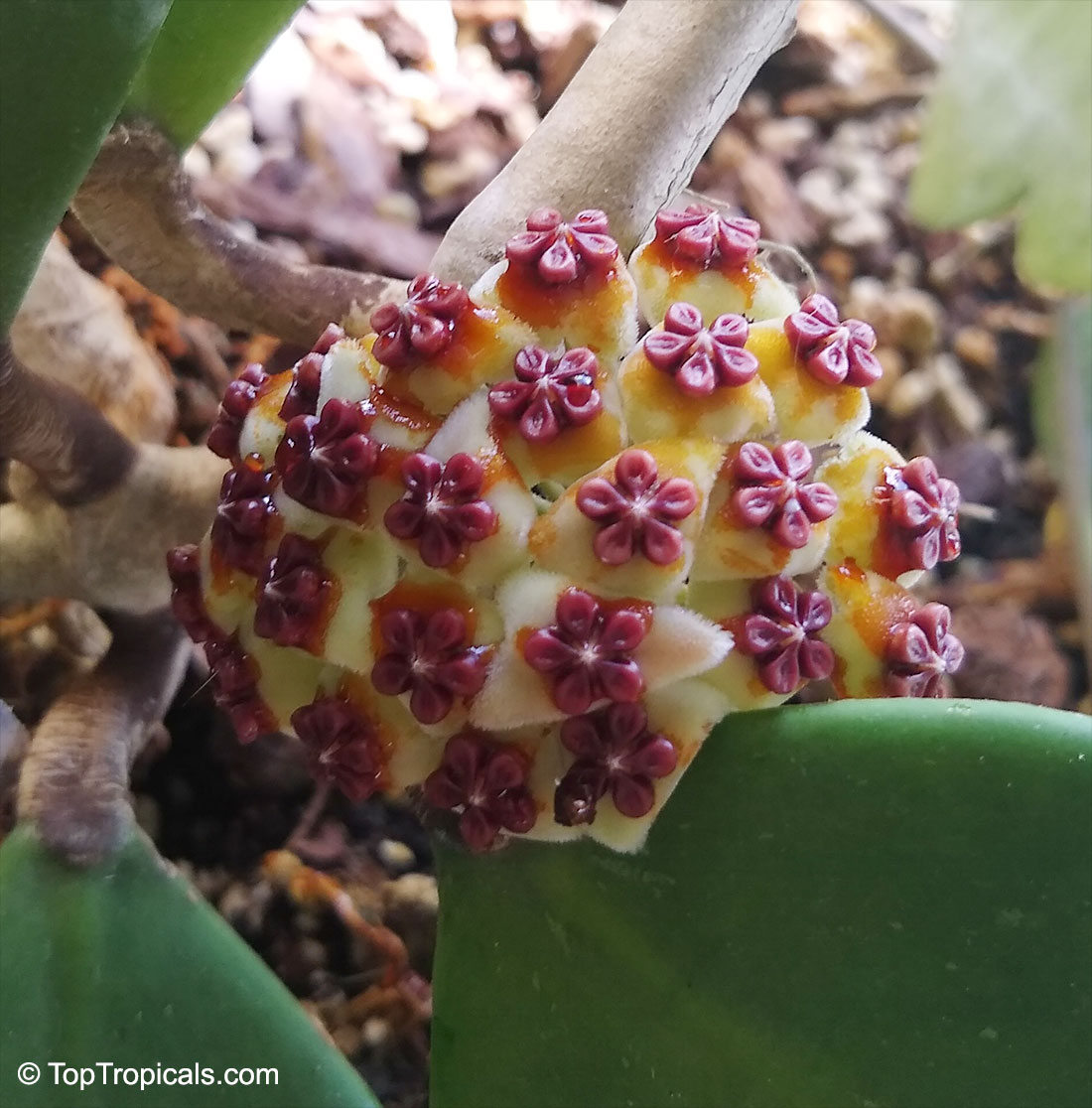
A: There is a perfect plant specifically for Valentine's Day! When it comes to finding the ideal plant for an occasion, it doesn't get better than this one. The Sweetheart Hoya, also known as Valentine Hoya or Hoya kerrii, is not only easy to grow but also easy-ship, making it the most user-friendly of all houseplants. Its popularity has soared in recent years, thanks to its unique and quirky "heart" shaped leaves that appeal to everyone and bring smiles to faces. In addition to these charming leaves, the Sweetheart Hoya produces fragrant, beautiful flowers resembling tiny red stars. These flowers are not only stunning but also waxy, durable, and long-lasting.

Caring for the Sweetheart Hoya is a breeze, requiring only minimal attention. It can likely thrive with just one good watering a month - that's how hardy it is. While this plant prefers a reasonably well-lit room for optimal growth, it can still fare well in shadier spots, making it a versatile addition to any home or office. Don't wait till the last moment, get your Valentine's present now - the best one ever!

We have large developed plants, ready to bloom!
Buy one (for her/him) - get one free, for yourself!

Hoya  kerrii  -  Sweetheart,  Valentine  Hoya

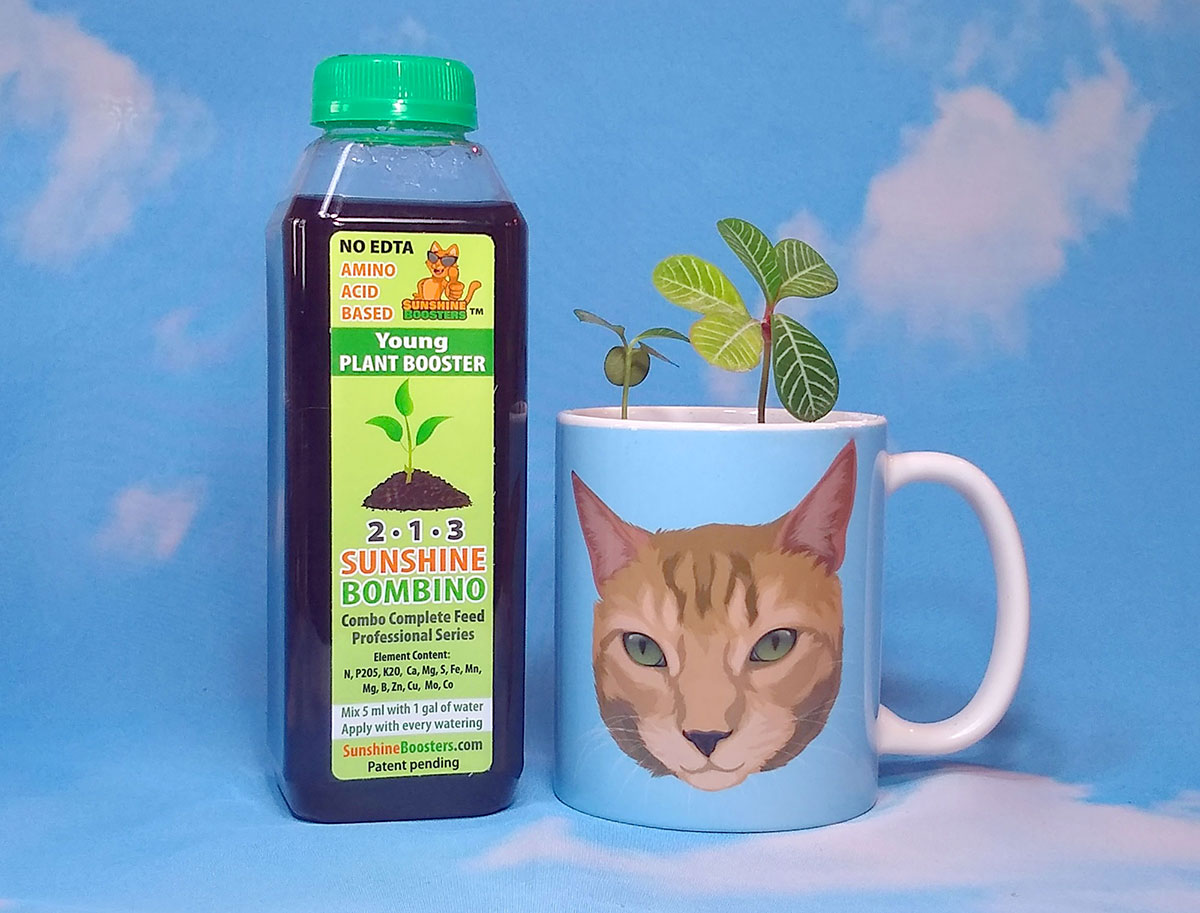
Don't forget some plant food for it!

SUNSHINE Bombino - Young Plant Vigor Booster

SUNSHINE  Bombino  -  Young  Plant  Vigor  Booster

Date: 28 Jun 2023

Six reasons to grow
Elephant Ears in your garden

Pomegranate  fruit

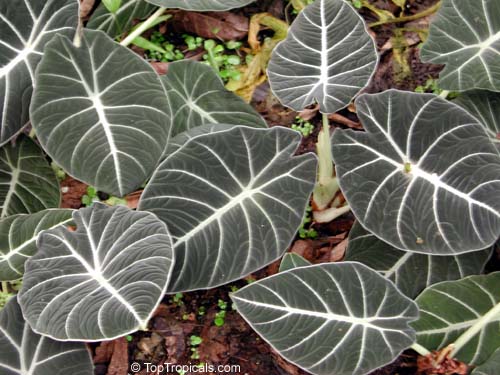
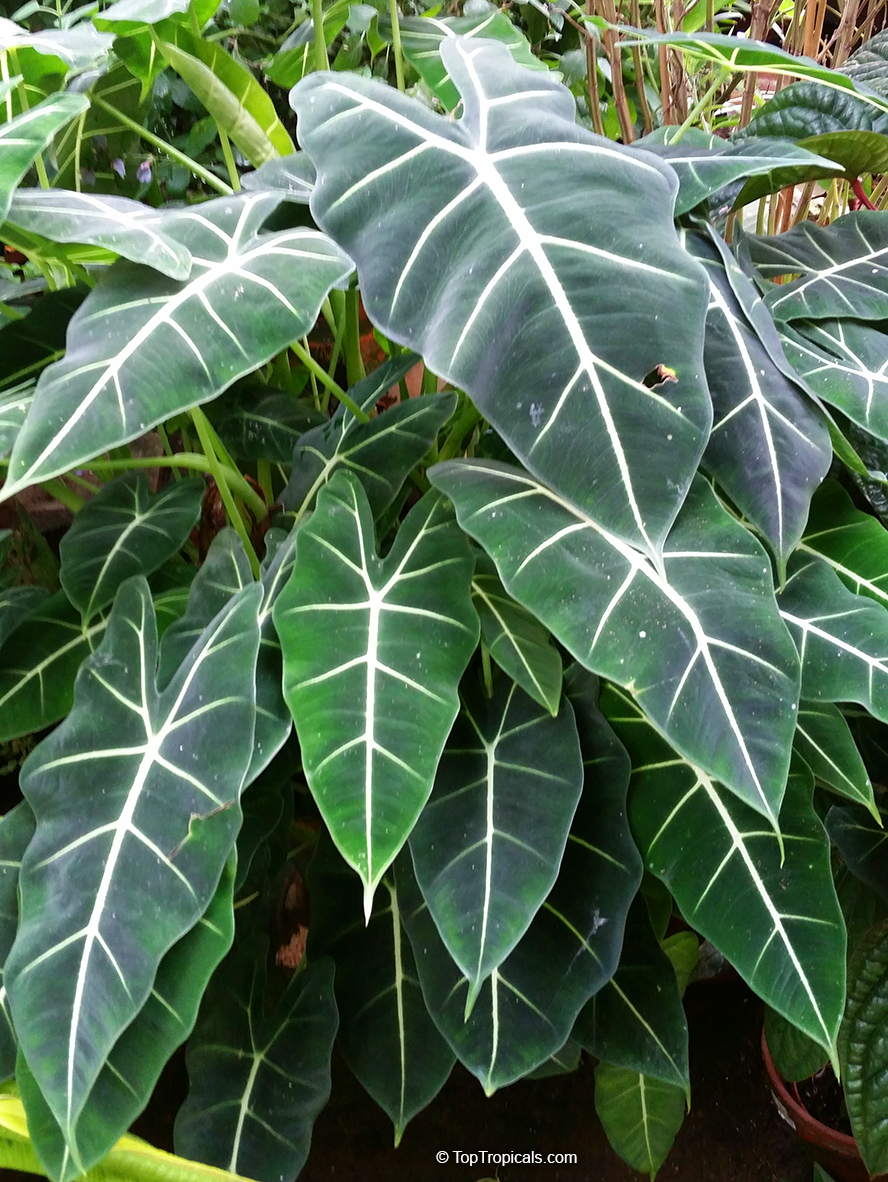
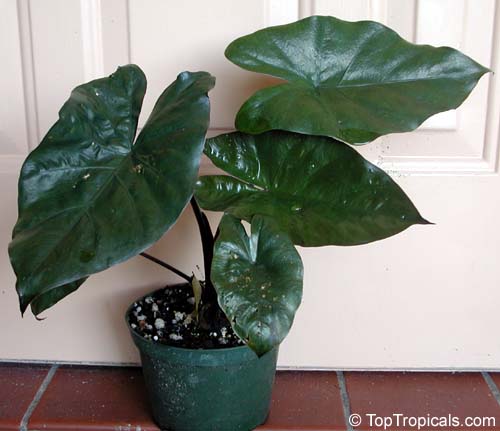
Alocasias and Colocasias, commonly known as Elephant Ears, are both remarkable and popular plants that can bring a touch of tropical elegance to any garden. Here's why they are often considered great additions:

1. Striking Foliage: One of the most captivating features of colocasias and alocasias is their large, lush foliage. The leaves can be enormous, resembling the shape of elephant ears, hence the common name. The foliage is usually rich green, but there are also varieties with hues of purple, black, or variegated patterns. These vibrant leaves create a dramatic focal point in any garden setting.

2. Tropical Aesthetic: Colocasias and alocasias have a distinct tropical vibe that can transform your garden into a lush oasis. Their exotic appearance lends itself well to creating a tropical-themed garden or adding a bold accent to other styles of landscaping. Their large, architectural leaves add a sense of drama and create a stunning backdrop for other plants.

3. Versatility: These plants can be grown in various garden settings. They work well in containers, making them suitable for patio gardens or balcony displays. In larger landscapes, colocasias and alocasias can be planted directly in the ground, either as standalone specimens or as part of mixed border plantings. They can also be utilized around water features or in bog gardens since they enjoy moist conditions.

4. Low Maintenance: Once established, colocasias and alocasias are generally low maintenance plants. They thrive in full to partial shade, preferring a consistently moist soil. Regular watering and occasional fertilization will help them grow vigorously. While they are generally hardy, some varieties may require protection during colder months or overwintering in frost-prone regions.

5. Impressive Size: With proper care and favorable growing conditions, colocasias and alocasias can reach impressive sizes. Some varieties can grow several feet tall, creating a stunning vertical element in the garden. Their size and presence make them ideal for adding structure and height to planting arrangements.

6. Unique Varieties: Colocasias and alocasias offer a wide range of cultivars and species, each with its own distinct characteristics. From the classic Colocasia esculenta to the more exotic Alocasia macrorrhizos, there are numerous options to choose from. You can select plants with different leaf shapes, colors, and patterns to suit your taste and garden design.

Alocasia  Elephant  Ears

Alocasia  in  a  pot