Garden Blog - Top Tropicals

Date: 19 Jul 2019

Growing Coconuts from seeds
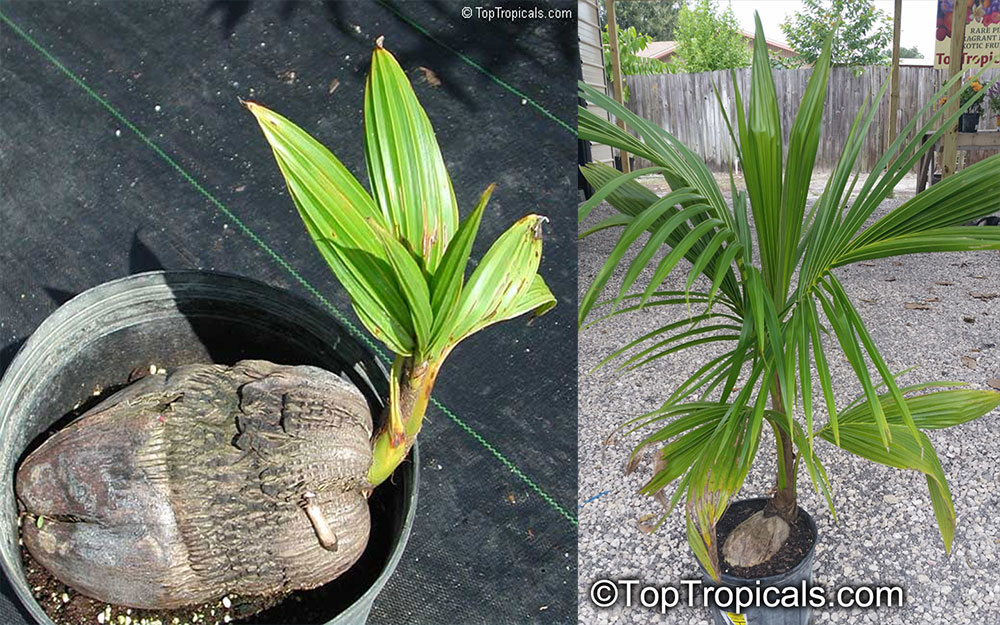
Q: Good afternoon Anna, hope all is well. I have a question regarding Coconut growth. When I planted my coconuts seeds I notice they had water in it, after checking 6 months later I took one out from the pot and shock to see if still had water but notice no water shaken inside, still, no plant growing on all 6 seeds but no water noise inside of them. Can you indicate if I should discard them or are they still have a chance they will germinate?

A: Coconut seeds normally germinate within a month from planting. If there is no growth within 6 month, chances are the seed was not ripe enough, or didn't have proper conditions for germination.
To grow a coconut palm from seed, place the nut on top of the soil (if in a pot, must be at least 3 gal pot) on its side, and bury it in soil half-way. Keep it warm (75F or higher, the warmer the better), in full sun, and soil must stay moist. Start fertilizing when the seed sprouts.

RECOMMENDED FERTILIZER:

Purple Palm Food - Smart Release Palm Booster

Photo below:

James Coconuts, one of our customer service reps, will be happy to answer all your questions! (Anna Banana, Stevie, or Onika can help when Coconuts is out of the office).


Date: 21 Jun 2019

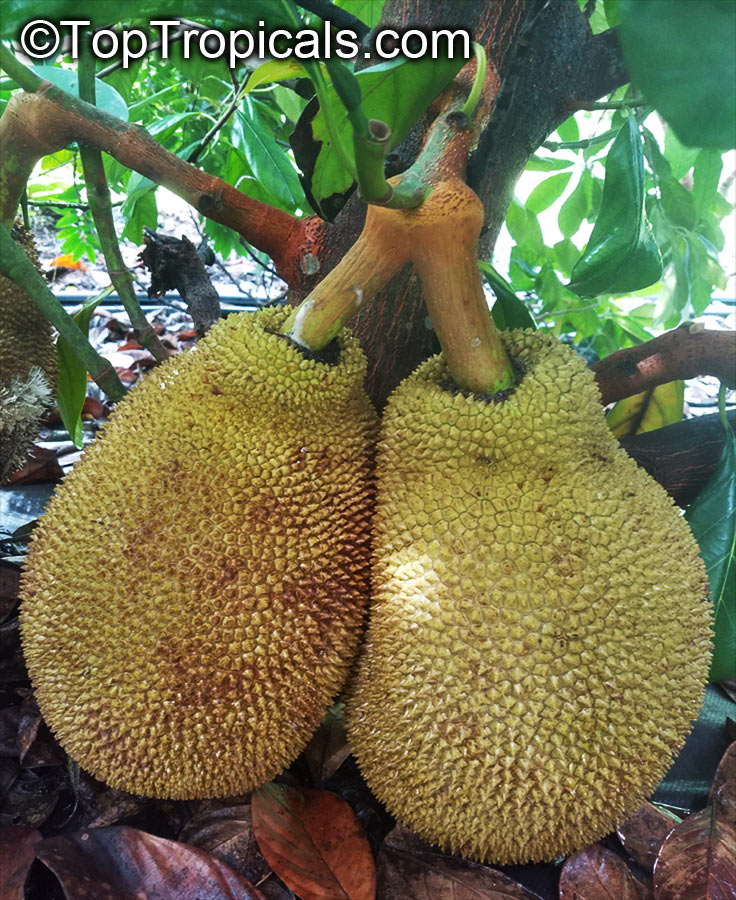
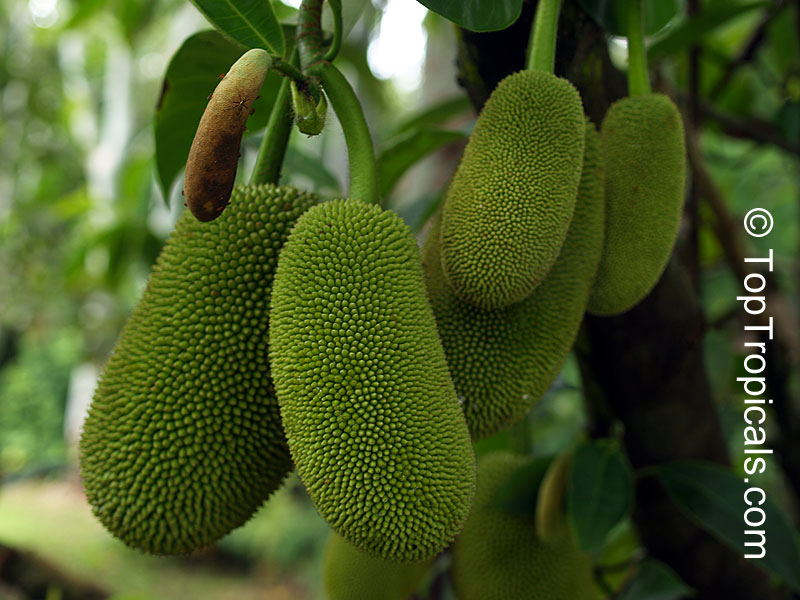
Growing Jackfruit in a pot

Q: I have a young jackfruit tree, and I wanted to know, is a 25 pot enough for an adult tree?

A: 25 to 50 gal should be eventually a good size pot for growing a Jackfruit tree. Keep in mind the following:
1. Start with a smaller container, only slightly bigger than the root system. Do not plant directly into a large container, this may create a risk for root rot.
2. Step up the tree in a bigger container every year as it grows bigger. With every repotting, trim both branches and roots to compact the plant and to encourage branching out.
3. Jackfruit trees should be kept pruned under 6-7 ft in pots and 10-12 ft in the ground. This makes healthy fruit production more efficient and keeps fruit at the base of the tree.

Date: 16 Jun 2019

Repotting Artocarpus with a taproot in ground

Q: The Chempedak I bought from you almost 3 years ago which I had repotted twice has a thick taproot growing in the ground, which I noticed this past winter. I was going to repot into the largest size pot almost half of a 55-g rain barrel. Can I try to dig/save as much of the taproot before repotting, will it die if I had to shorten/cut what I can't dig out completely? I hate to put it in the ground for fear it may not make it when we have severe cold/long hours of frost. I live in west Cocoa, Central Florida, 9b.

A: Yes, you can repot the tree and keep it in reasonable size container after trimming the roots. Most of the tropical trees (fruit trees not an exception) can be grown in containers even if in Nature they grow into vigorous large trees. The key is, trim the roots every time you transplant it. The process is similar to trimming branches and both don't hurt the plant as long as done right and moderately. You should trim the overgrown and spreading limbs at the same time. You may trim as much as 10% off root system at the time of repotting. This will cause the root system to branch out and become fuller, similar to branches, which is a good thing. If a tree grows a taproot like in your case, it is not necessary to try "saving" and digging out the whole root that may go down for a few feet. You may cut it off without major damage to the tree since the rest of its root system will continue to support the plant metabolism. Just keep in mind that the plant will be stressed for a while - so put it in bright shade and water regularly until signs of stress go away (wilted or dropping leaves may occur). This particular type of tree - Artocarpus - is pretty strong and vigorous so the stress should be minimal.

Date: 13 Jun 2019

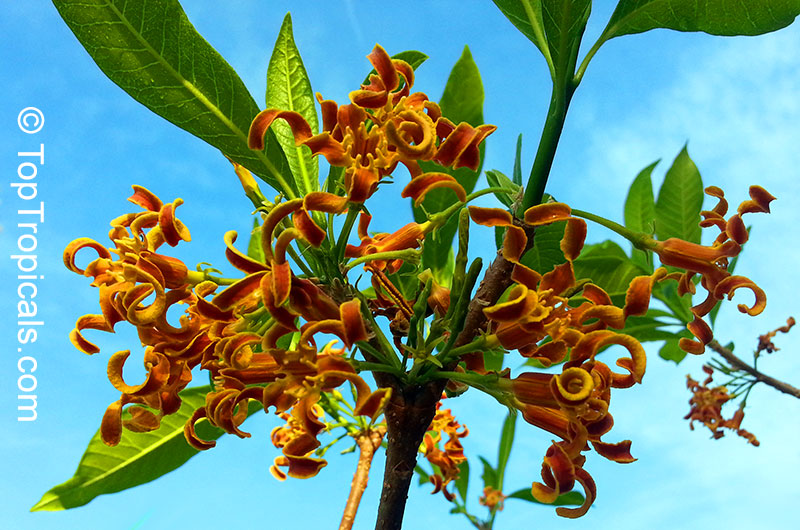
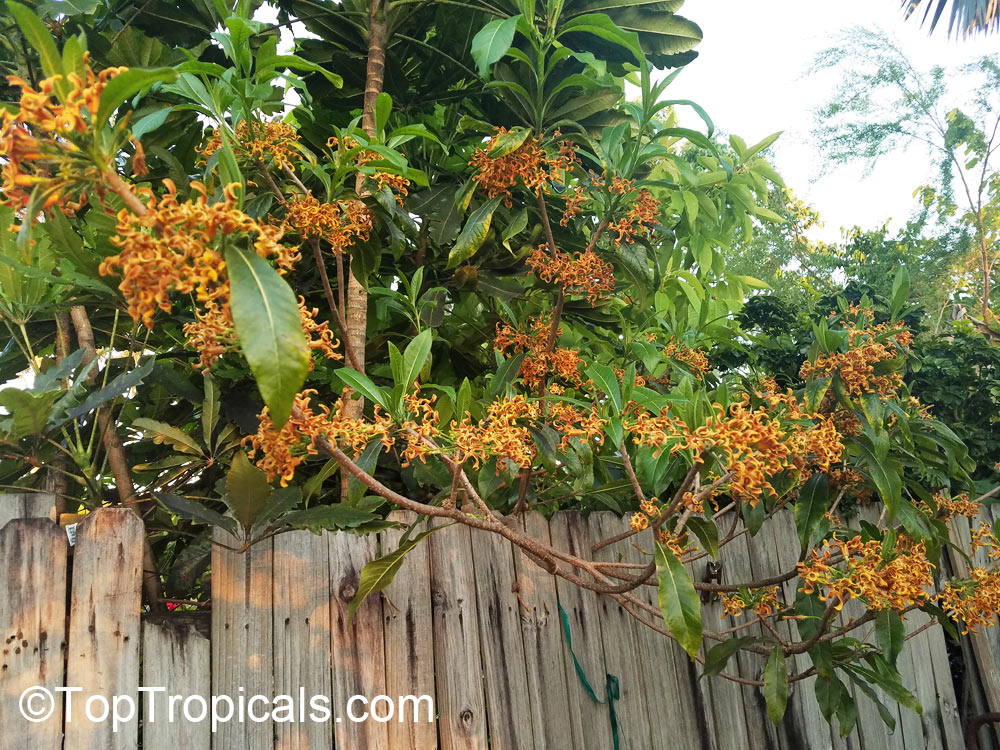
How to get Strophanthus tree to bloom?

Q: I purchased from you three of these plants - Strophanthus bovinii and I wonder if you could help me. The plants are out of control growing large limbs to the sides and I would like it to grow more upright. Is this possible? Second, it does not flower. What type of fertilizer should I use and how often? How about the watering schedule? I have them in an eastern exposure but possibly they are not getting enough sun? Right in front of them, there is a large tree outside the curb of my house. What should I do about that?

A: Strophanthus bovinii - Wood shaving flower, is quite a unique plant that is very rare in cultivation, this is why very little information is available on its cultivation due to limited experience among gardeners. We have had this plant in our garden for over 12 years and this is what we can advise.
In the nature (Madagascar) it supposedly grows into a large tree, however, from our experience, it tends to be rather bushy, umbrella-like large shrub. Yes, you can train it into a tree by trimming branches growing side-wise, and by removing lower branches. The best time for pruning is early spring when the tree starts new growth and re-leafs (it is semi-deciduous). As far as flowering, the plant is very particular about blooming season, with profuse flowering in Summer (here in SW Florida), however it may produce more flowers sporadically throughout the year.
It thrives in full sun but will tolerate bright filtered light. If a large tree is shading it too much, try to trim some limbs of that large tree to allow more light. Water needs of Strophanthus bovinii are very moderate, so you can rely on your sprinkler system or water once a week for established plants.
You should use 2 types of fertilizers - slow release (once a month) and water-soluble bloom booster (frequent applications are safe):
Pink N Good Daily Plant Food - Flower Booster
Tropical Allure - Smart-Release Booster

Date: 4 Jun 2019

Plants for South Texas and other hot states

Q: Pretty much adore last newsletter. Haven't been buying because our weather here in deep south Texas is so bad it is stunting and killing even the Tamaulipan Scrub! Do you have a cure for that? :) I have every expectation the new grafted Plumeria I purchased from you last year will bloom soon. One of my favorite plants. Thanks again and keep up the good works.

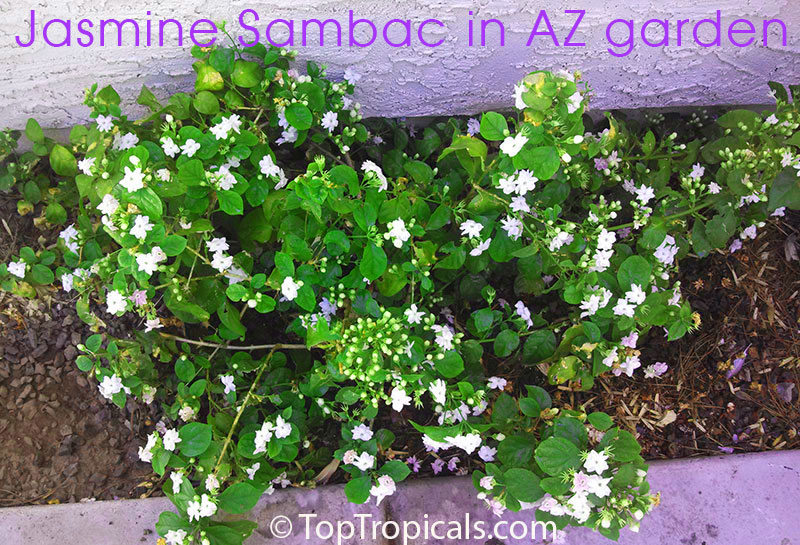
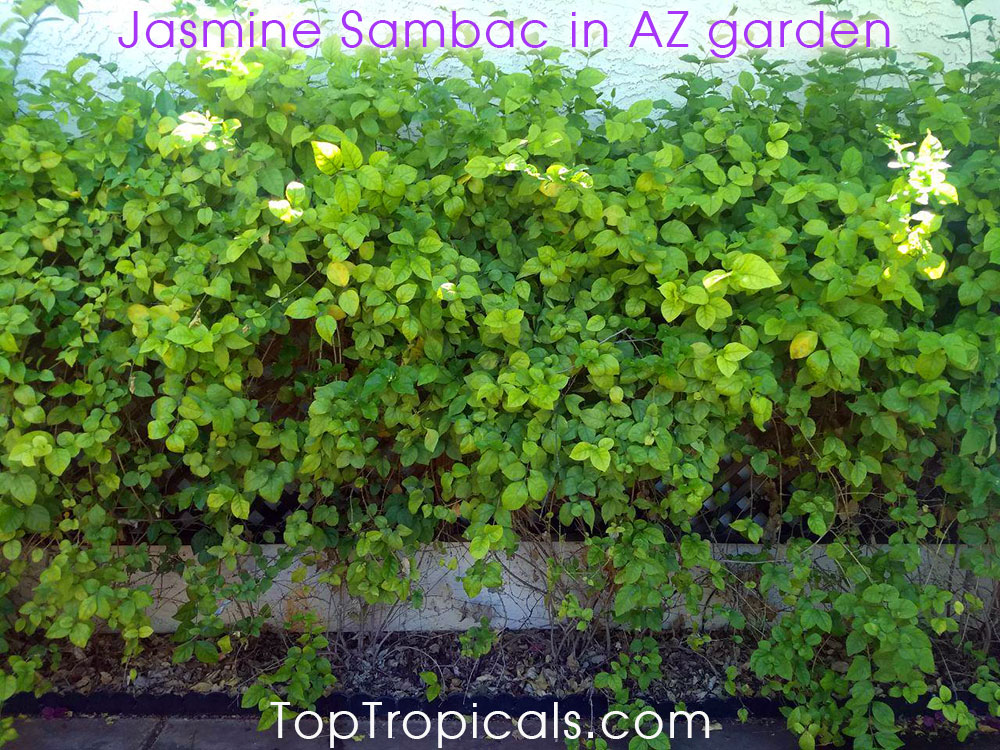
A: Yes, there is a "cure" - using biostimulants that improve drought- and heat- resistance (SUNSHINE boosters), plus the right plant selection. In fact, there is a large number of tropical rare plants that can be successfully grown in hot climates like yours. One of our partners lives in hot and dry Arizona area and has an amazing tropical garden that includes many fruit trees (Mango, Persimmons, Pomegranates, Loquats, etc). Here you can see a few pics from his garden.
Your choice is absolutely right about plumerias. Other easy plants would be Desert roses - Adeniums, and Fancy Euphorbia millii - all these come in so many varieties of colors and bloom throughout most of the year. Our special recommendations for you would be also:

Bougainvillea Dwarf Pixie
Jasmine sambac
Calliandra selloi Pink Lilian
Dracaena marginata Tricolor - Colorama, Money Tree
Hamelia patens Lime Sizzler - Variegated Fire Bush
Jatropha berlandieri - Buddah Belly
Pedilanthus tithymaloides - Devils Backbone
Trachelospermum asiaticum Mandaianum - Dwarf Confederate Jasmine

See full list of more plants that are suitable for hot and dry landscapes.

Apply fertilizers, miscroelements, and plant stimulants for improving heat tolerance