Date: 17 Oct 2018
October Tropical Garden: to do list
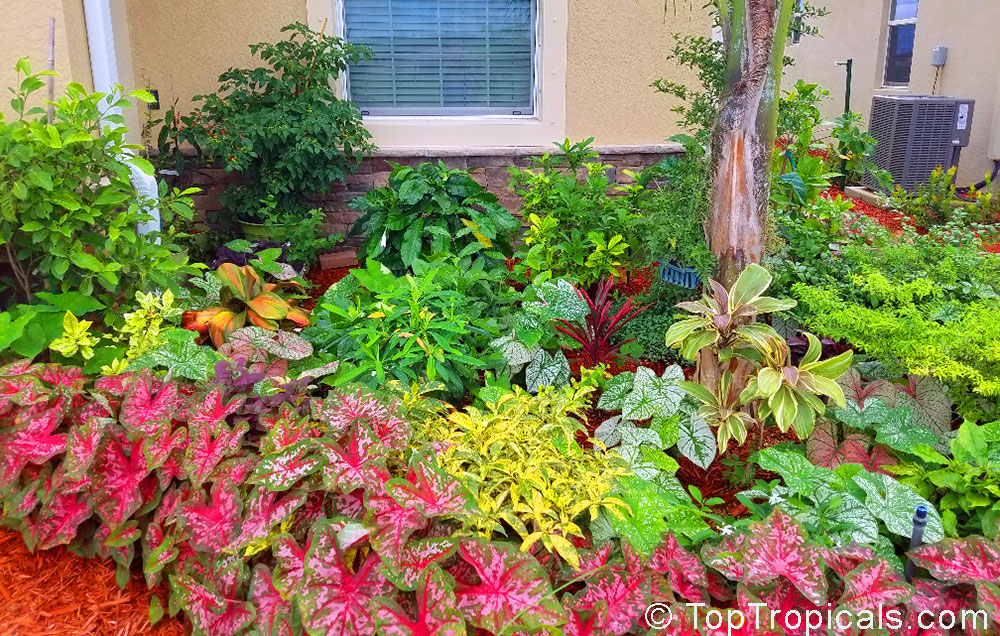
1. Prune. Last pruning before winter. Check the trees and shrubs one more time. Cut away dead wood and remove crossing limbs and branches.
2. Mulch. Continue to mulch to stop weeds and get ready for winter. Keep mulch 1-2 inches away from the stems. Evenings are starting to cool, so it is more comfortable working in the garden.
3. Pest control. Check for mealy bugs and scales. Remember that a garden with many kinds of plants has fewer pests than gardens with lots of mass plantings. So keep up with variety! Avoid pest magnets like Oleander, Oak, Hibiscus which require constant spraying.
4. Propagation. You still can take cuttings but do it as soon as possible. Days are getting shorter and less sunlight signals thу plants to slow down their growth. Cuttings will not root as quickly.
5. Seeds. Consider growing vegetables and perennials from seeds
Date: 29 Jul 2018
Fragrant garden
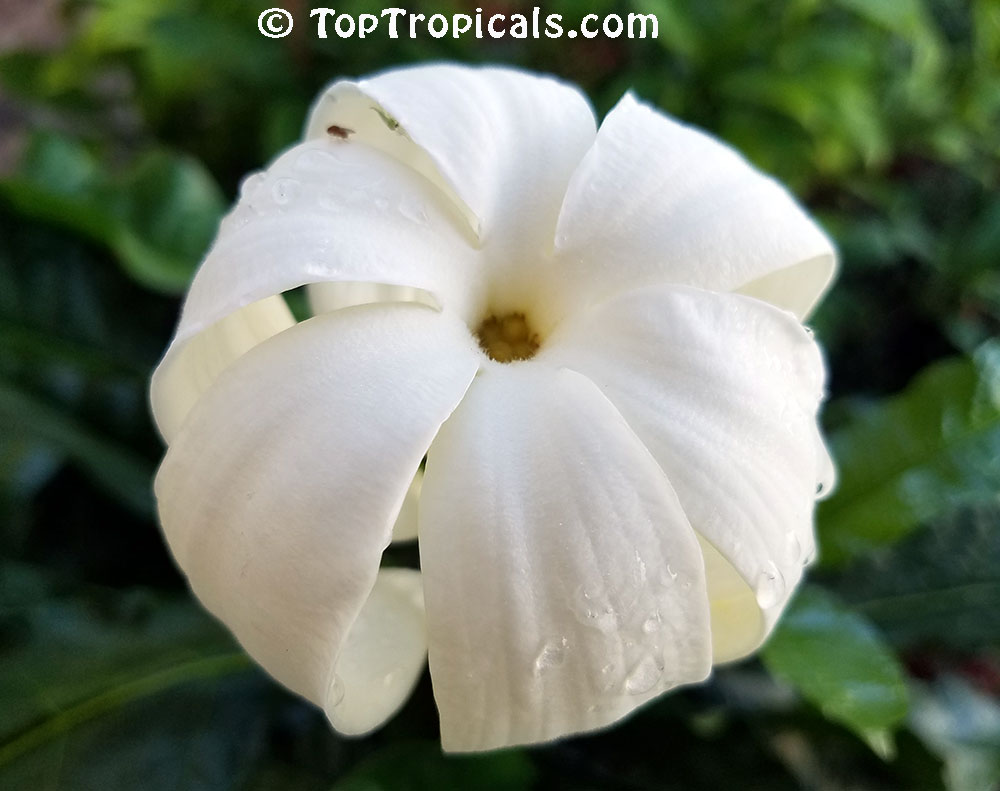
Q: I love fragrant plants and I want to make a fragrant garden. Your website offers amazing selection. A friend of mine told me I should be careful with planting fragrant plants next to each other, and that mix of fragrances may create a funny combination. Are there any flowers that don't go together?
A: Flower scents, unlike perfumes, are pure natural and not as intoxicating to create funny combinations. Although some of them can be strong and even overwhelming. Example - Night Blooming Jasmine, Cestrum nocturnum, which fragrance at night is super-sweet; however most people like it. Reality is, even Night Blooming Jasmine planted next to Gardenia won't create a bad mixture, although one scent may somewhat take over another. In any case, with wind blowing in your garden, you will never be disappointed with fragrant garden. Some plants, like Ylang Ylang - Cananga odorata, or Magnolia champaca, create very fine fragrance that can be smelled yards away, other flowers you will need to stick your nose into.
Check out plants for fragrant garden
Date: 10 Nov 2025
♥️ Honoring Veterans Day with Garden Savings

Veterans Day is a time to honor those who served and protected our country. To show our gratitude, we are offering special discounts on plants, fertilizers, and garden supplies. It’s the perfect chance to add something new to your collection while celebrating those who made it possible for all of us to enjoy the peace of our gardens.
Celebrate Veterans Day with 20% OFF your entire order – our way of saying thank you.
Get 15% OFF tropical plants with code
VETERANS2025
Min order $100 (excluding S/H), valid online only, cannot be combined with other offers and not applicable to existing or past orders.
Hurry, offer expires November 15 2025!
Date: 6 Dec 2025
🌿 Bring the Jungle Inside: Winter Survival Guide Part 1: Lighting ❄️

Smokey: "Winter lighting must be precise. I need this light exactly at 14
inches."
Sunshine: "Sure. I am holding this… little number thing."
Smokey: "It reads humidity. Your main job is to look cute."
🌞 LIGHT, TEMPERATURE, PLACEMENT
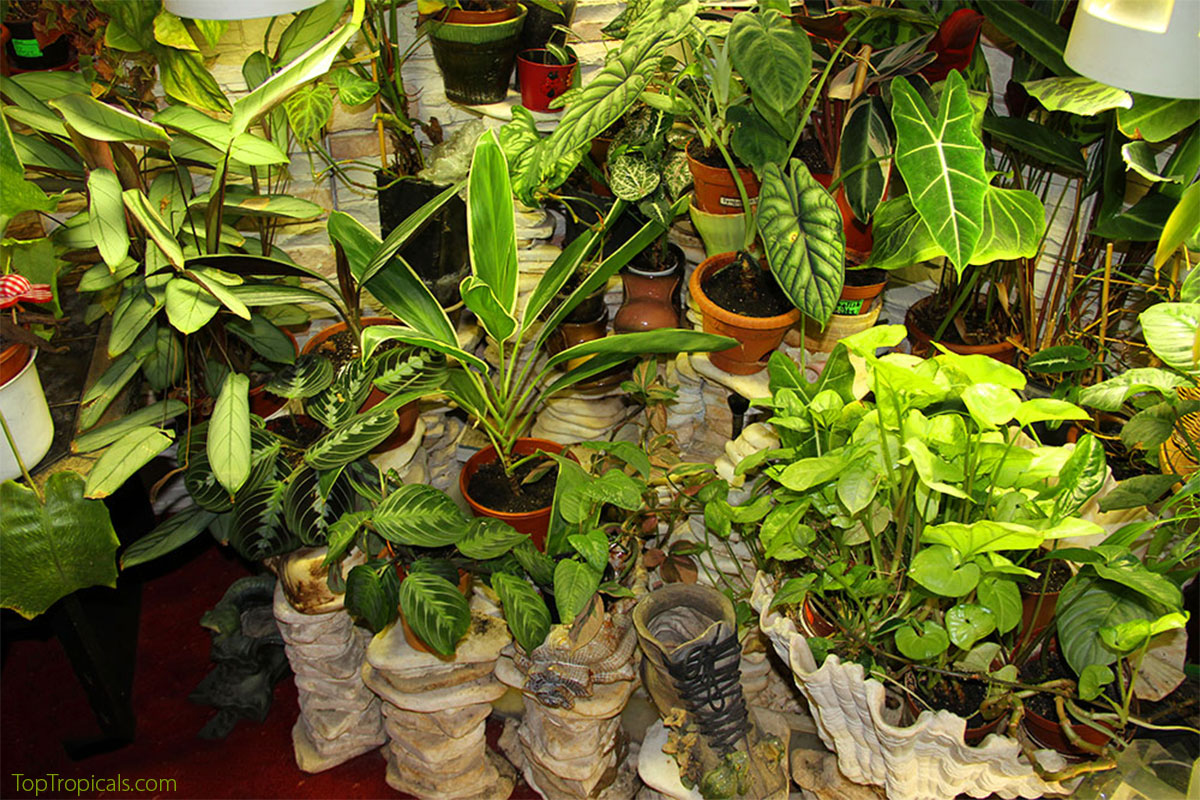
Winter indoors is a different kind of battlefield. Dark rooms. Dry air. Cold windows. Random drafts. Weak light. Sad plants. We've been talking about keeping your tropicals alive outdoors previously. But some of you have no choice this time of year. You have to bring the jungle inside.
If that is you, then this is your plant survival guide.
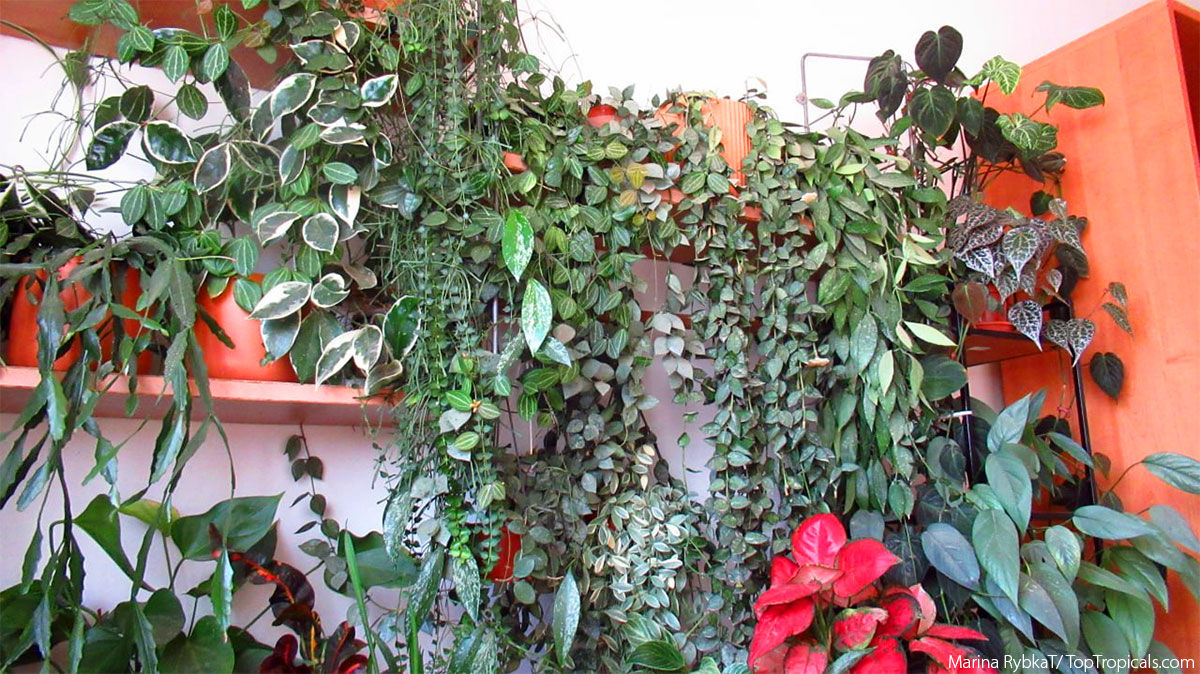
☀️ LIGHT: THE WINTER LIFELINE
Light advice here comes straight from our in-house expert, Michael Dubinovsky, a high-tech lighting engineer with over 30 years of hands-on experience. If he says brightness beats hours, trust him.
Here is the truth: Indoor light in winter is 10 to 50 times weaker than outdoors. Short days. Low-angle sun. Windows filtering half the useful light. It all adds up.
Tropicals need 10 to 12 hours of real brightness. Winter sun cannot do that on its own. Not even in a big window. So we help them.
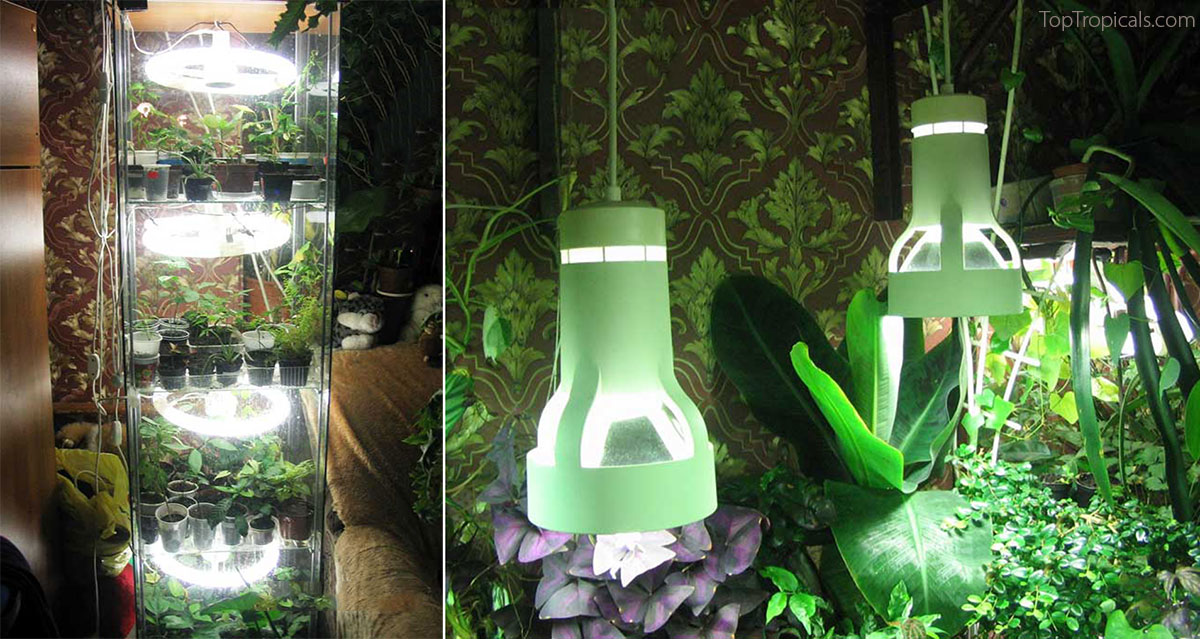
Use bright LED shop lights or utility lights. 5000K to 6500K CCT. High lumen output. Skip decorative bulbs. Skip purple grow fancy toy lights. If you want a single plant light, even a clamp lamp is fine if you screw in a bright daylight LED bulb.
Panels work best for plant clusters. Bars for shelves. Bulbs for single plants. And grouping plants under one bright panel always beats spreading them out.
Distance matters: keep LEDs about 12 to 18 inches above the leaves. Too close: leaf burn. Too far: stretching, weak stems.
Leaves reaching up? Light is too high or too weak. Leaves curling down? Light is too close.
If you want a reality check, download any smartphone lux meter app. Most indoor corners are 50 to 200 lux without supplemental light. Tropicals want much more
And a quick tip about windows: winter sun comes in sideways. A spot that looks bright at noon can go dull by 2 PM. Don't count of window light
Bright light or long hours
People try to fix weak light by running it for 16 or 18 hours. That does not work. Plants care more about light intensity. A few hours of strong light beats all-day dim light. If the light is weak, adding more hours will not change anything except your electric bill.
Simple rule: Short duration but bright is always better than long duration but weak. - by Michael, Top Tropicals lighting expert
No need for fancy horticultural panels
You do not need purple grow lights. You do not need special horticultural fixtures. You do not need expensive panels unless you want real winter growth.
For winter plant holding till spring, the inexpensive solution works great:
- Bright LED daylight bulbs (5000K to 6500K) from hardware store
- High lumen output
- Inexpensive clamp lamps
- Aim directly at the plant from 12 to 18 inches
This setup keeps tropicals happy until spring without buying anything fancy. Save the money for soil, pots, or your next plant.
Indoor plant lighting safety note:
- Use timers. Keep cords dry. Do not overload outlets.
- Do not hang lights over humidifiers.
- And do not put fixtures on piles of books to raise them. People do this.
✔️ WINTER INDOOR FAQ: TEMPERATURE AND PLACEMENT
Q: I am in Home Depot. Which light do I buy?
A: LED shop light, daylight color (5000K to 6500K), high lumens. Skip fancy plant bulbs.
Q: Can I use clamp lamps or floor lamps for plants?
A: Yes. Clamp lamps with a bright daylight LED bulb work great for winter holding.
Q: Do I need special horticultural grow lights?
A: No. A bright LED daylight bulb works fine for winter. Save the fancy lights for real growth projects.
Q: How far should the light be from the plant?
A: About 12 to 18 inches above the leaves. Too close burns. Too far stretches.
Q: Can I run weak lights for 18 hours to compensate?
A: No. Weak light plus long hours still equals a weak plant. Brightness matters more than hours.
Q: How do I know if a spot is bright enough?
A: Use a free phone lux app. Most indoor corners are much too dim for tropicals.
Q: I have a huge window. Why do I still need LEDs?
A: Indoor winter light is weak, short, and filtered by glass. Plants want intensity, not just a big window.
Q: My window faces north. Now what?
A: North windows are decorative only. Use supplemental lighting or move the plant.
📚 Learn more:
Date: 15 Jan 2026
When the Black Bat Lily decides to bloom
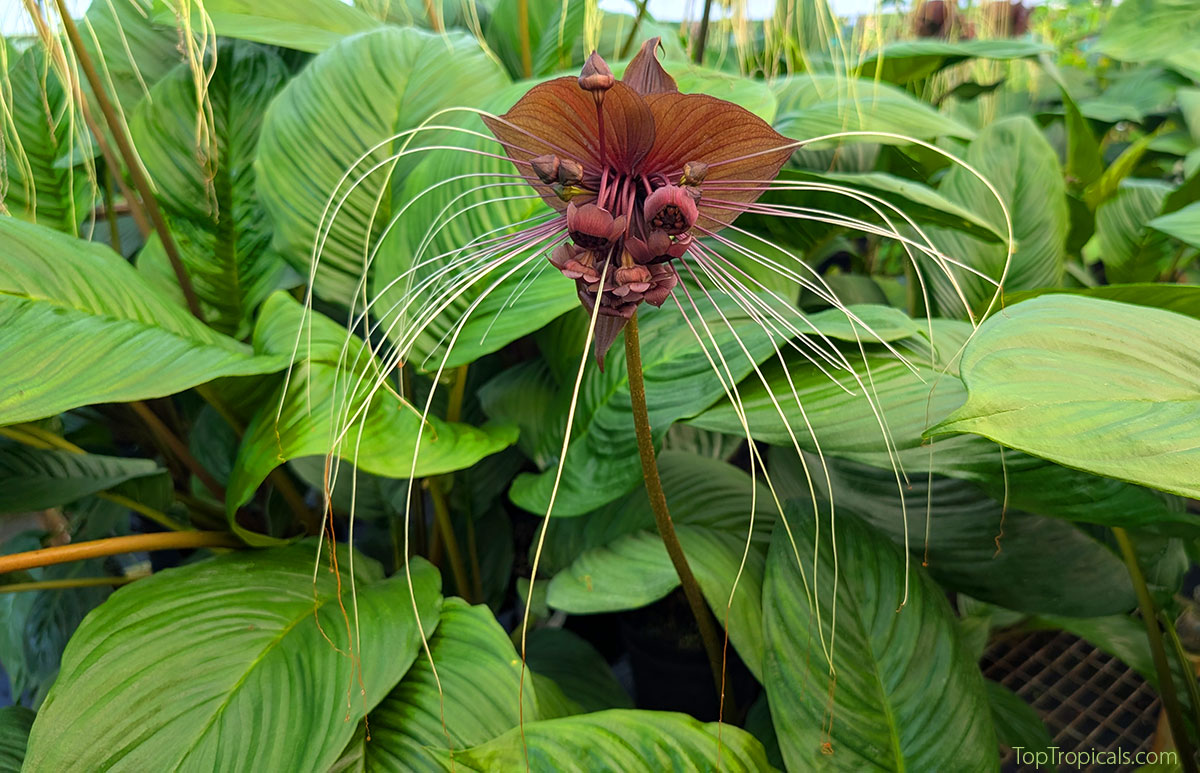
Every so often a plant blooms and the whole greenhouse seems to slow down.
That is what happened this week with the Black Bat Lily, Tacca chantrieri. We have grown Taccas for years, but when the black ones open properly, it still feels special. The flowers are dark and quiet, almost unreal up close. They do not shout for attention. They make you lean in.
Right now, we have a lot of them blooming at the same time. If you have never seen one in person, photos only get you part of the way there. The wings are darker than you expect, and the whiskers seem to go on forever. People walk into the greenhouse, stop, stare, and usually ask the same question: "Is that real?" - Yes. It is.
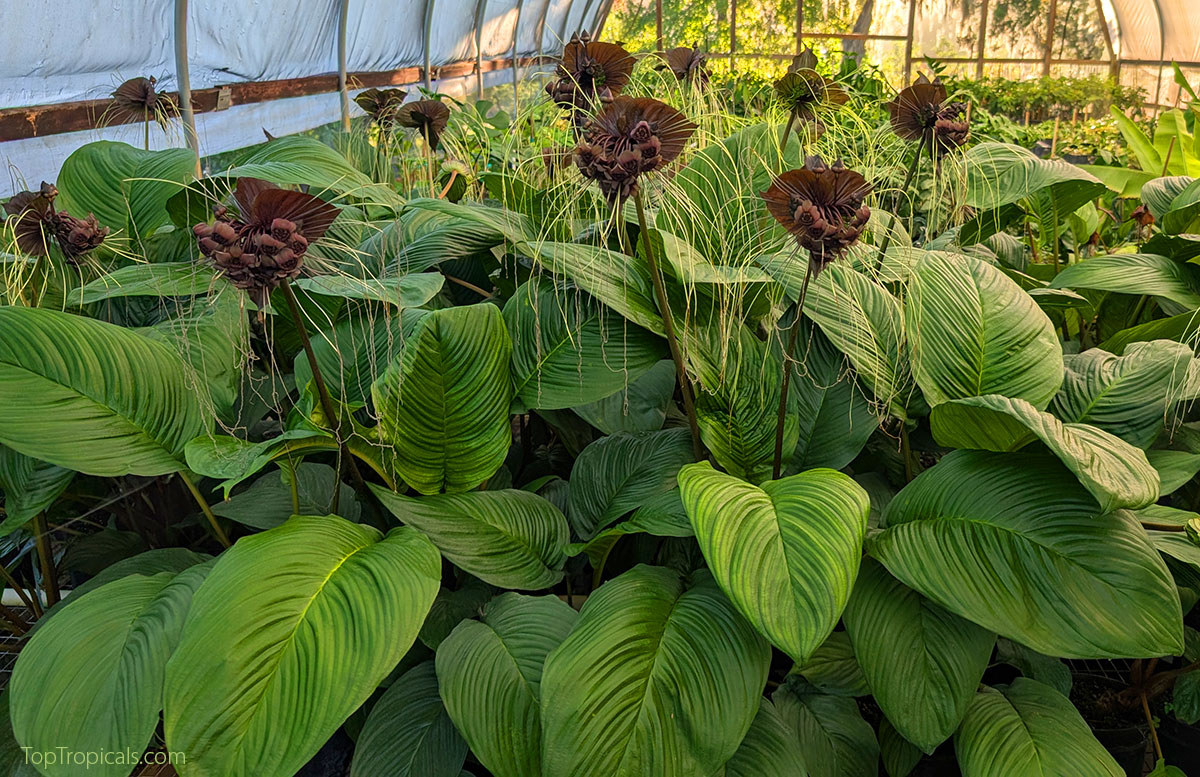
A quick honest note, because this matters. The blooms themselves are delicate and may not travel well. That is just the nature of this plant. The plants, however, are strong, well established. With the right conditions, they bloom again. This is not a one-time trick.
Black Tacca is not a beginner houseplant, but it is also not impossible. It likes filtered light, steady warmth, and humidity. It does especially well in a greenhouse or a bright indoor spot where you already keep plants that enjoy moisture. It is the kind of plant you keep close, not one you forget in the corner.
We are offering them now simply because they are ready and looking their best. If you have been waiting for one, this is a good moment.
You can see the Black Bat Lily here: https://toptropicals.com/store/item/2345.htm
Just wanted to share something we are enjoying in the greenhouse right now. Some plants come and go. Some stay with you.
Tacca (Bat Lily) FAQ
What is Tacca?
Tacca, also known as Bat Lily or Devil Flower, is a tropical plant grown for its unusual bat-shaped flowers with long whisker-like filaments. The most popular species is Tacca chantrieri, the Black Bat Lily.
Is Tacca hard to grow?
Tacca is not a beginner plant, but it is not impossible. It does best with warmth, humidity, and filtered light. Gardeners who already grow orchids, calatheas, or other humidity-loving plants usually do well with Tacca.
Does Tacca need a greenhouse?
A greenhouse is ideal, but not required. Tacca can be grown indoors in a bright spot with indirect light and good humidity, such as near a humidifier or in a bright bathroom with a window or skylight.
Will my Tacca arrive in bloom?
Plants may be blooming in the greenhouse, but flowers are often removed before shipping because they are delicate and do not travel well. The plants are well established and capable of blooming again with proper care.
How often does Tacca bloom?
Tacca does not bloom constantly. It may take time to establish before flowering, but once settled, it can bloom seasonally and may produce multiple flowers in warm, humid conditions.
Does Tacca grow from a bulb?
Tacca grows from a rhizome, not a bulb. The rhizome stores energy and allows the plant to regrow and bloom again.
Why does Tacca have long whiskers?
The long filaments are thought to help attract pollinators such as flies by mimicking the look of decaying organic matter. While unusual, this is part of the plant's natural pollination strategy.
✍️ More about growing Tacca🛒 Get your own Tacca plant
🎥Watch our videos about Tacca