Garden Blog - Top Tropicals

Date: 21 Jun 2026

🍓The Strawberry Moon Rises: A Gardener's Excuse to Go Outside

Sunshine,  an  orange  tabby  cat,  compares  a  strawberry-glazed  donut  to 
 the  Strawberry  Moon  while  Smokey,  a  tuxedo  cat  wearing  glasses,  inspects 
 Strawberry  Tree  and  Strawberry  Guava  plants  at  Top 
 Tropicals.
Sunshine: Look at my strawberry-glazed donut. Same as the Strawberry Moon. I have been waiting for this all month. They say moon gardening is useful. Let's go planting!
Smokey: Science hasn't found much evidence for it.
Sunshine: Then what's the point?
Smokey: If the moon gets people into the garden, that's good enough for me.

On the evening of Monday, June 29, 2026, the full Strawberry Moon will rise low in the southeastern sky. Whether you follow a lunar calendar or not, it's a good excuse to spend a little time outside on a summer evening.

🌛 What Is the Strawberry Moon, Exactly?

Many of the familiar full moon names come from Native American traditions and reflect seasonal events in nature. June's full moon was named for the season when wild strawberries ripen across much of North America, not for any color in the sky. Despite the name, the moon won't glow pink or red. If it looks warm or golden, that's simply because any full moon takes on an amber tint when it hangs low near the horizon, the same atmospheric effect that paints sunsets orange. The "strawberry" is about the harvest, not the hue.

This year, the Strawberry Moon rises on the evening of June 29 and will appear low in the southeastern sky, making it a particularly beautiful moon to watch as dusk settles in.

🌓 Moon Gardening, an Old and Honest Tradition

For generations, gardeners across Europe and beyond timed their planting, pruning, and harvesting to the phases of the moon. Plant root crops during a waning moon, some traditions say, and leafy crops during a waxing one. Prune during certain phases to slow regrowth, harvest herbs at others for better potency. These calendars were passed down through generations of careful observers who paid close attention to their land and their results, and many still follow them today.

Modern science has found little evidence that lunar gravity or moonlight significantly affects plant growth. Yet the tradition persists, and plenty of growers still find real value in the rhythm it brings to the gardening year.

💡What We Know For Sure

Here's the practical truth, and it's the same one Smokey arrived at after thinking it over. Whether or not the moon influences your plants, the act of walking through your garden definitely does. A moon-phase calendar that gets you outside to check on your plants, pull a few weeds, prune back something leggy, top off the mulch, or water a thirsty pot is helping your garden, regardless of what's happening overhead.

The benefit isn't necessarily lunar. It's attention.

A garden rarely thrives because of a single grand effort. It thrives because of dozens of small ones: a little pruning, a little watering, a few weeds pulled before they become many.

Gardens reward the gardeners who show up, and if a full moon is your reminder to show up, that's a perfectly good reason to keep watching the sky.

📅 Beyond the Harvest

Not everything in a garden needs to produce a yield to be worthwhile. Marking the seasons the way our ancestors did, a strawberry moon in June, a harvest moon in fall, a snow moon in February, gives us small, recurring reasons to notice what's changing around us. It's a rhythm, not a requirement.

Think of the Strawberry Moon as a good excuse to take a walk through the garden.

The Strawberry Moon doesn't have to improve anything to be worth celebrating. It only needs to get you outside on a warm June evening, which, honestly, isn't a high bar to clear.

A Strawberry Moon Collection, Just for Fun

Sunshine immediately concluded that any moon named after strawberries deserved a few strawberry-themed plants. We couldn't argue with that logic, so we pulled together a few Top Tropicals favorites that fit the theme.

🍓 Strawberry Tree

Close-up  of  ripe  red  Strawberry  Tree  fruit  (Muntingia  calabura) 
 arranged  on  fresh  green  leaves  with  several  white  five-petaled  flowers  and 
 flower  buds,  displayed  on  a  rustic  wooden 
 surface.

The Strawberry Tree (Muntingia calabura) often carries flowers and fruit at the same time. Sweet red berries, delicate white blossoms, and lush foliage make this fast-growing tropical tree both ornamental and productive throughout much of the year.

Close-up  of  the  rare  yellow-fruited  Strawberry  Tree  (Muntingia 
 calabura)  showing  ripe  golden-yellow  berries  alongside  white  five-petaled 
 flowers  and  green  developing  fruit  among  textured  green 
 leaves.

A rare yellow-fruited form of Muntingia calabura (Strawberry Tree), displaying sweet golden berries, delicate white flowers, and immature green fruit all at the same time. This unusual selection offers the same fast growth and continuous fruiting as the red type, but with attractive yellow fruit that is seldom seen in cultivation.

Strawberry Tree (Muntingia calabura), also known as Jamaican Cherry, grows quickly and produces dainty white flowers resembling strawberry flowers, followed by an abundance of small cotton-candy-sweet berries that birds, wildlife, gardeners and their kids all appreciate.

📚 Learn more from Top Tropicals Garden Blog

🍓 Strawberry Guava

Strawberry Guava (Psidium littorale) brings glossy foliage and sweet, perfumed fruit that tastes something like its namesake crossed with a guava.
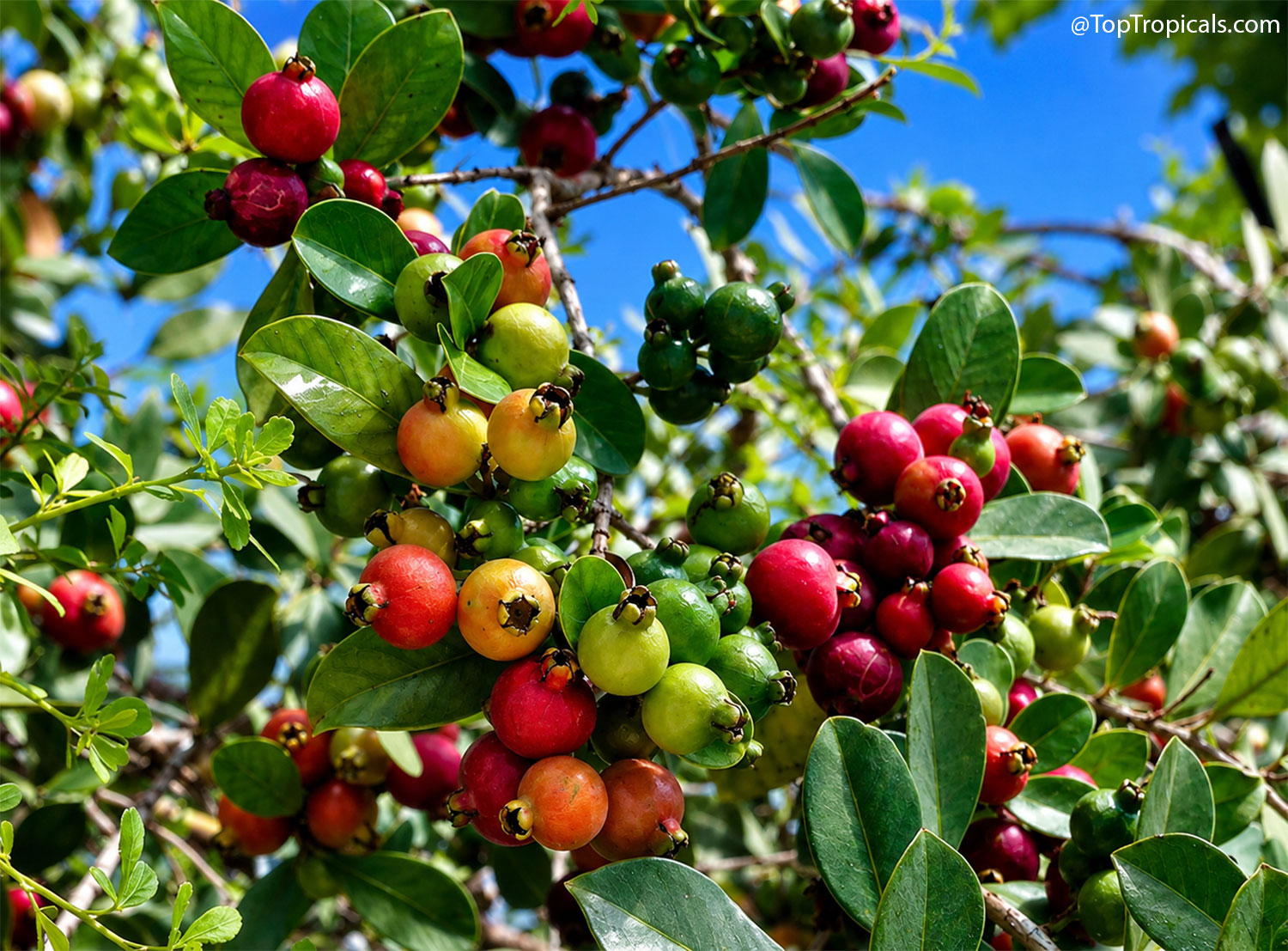
Close-up  of  a  strawberry  guava  branch  loaded  with  fruit  in  different 
 stages  of  ripening,  from  green  and  yellow  to  bright  pink-red.  Glossy 
 evergreen  leaves  surround  the  colorful  clusters  against  a  clear  blue 
 sky.

Strawberry Guava (Psidium littorale, or cattleianum) often carries fruit in multiple stages of ripening at once, creating a colorful display of green, golden, and ruby-red berries. The sweet, aromatic fruit is prized for fresh eating and attracts birds and wildlife to the garden.

🍓 Strawberry Dragon Fruit

Dragon Fruit Vietnamese Jaina Strawberry White (Hylocereus undatus ) produces bright pink fruit with refreshing white flesh and a flavor often described as a blend of strawberry, melon, and kiwi. Its enormous night-blooming flowers are every bit as impressive as the fruit, turning this vigorous climbing cactus into a spectacular summer showpiece.

Plate  of  Vietnamese  Jaina  Strawberry  White  dragon  fruit  showing  several
    whole  pink-skinned  fruits  alongside  sliced  fruit  revealing  bright  white 
 flesh  speckled  with  tiny  black 
 seeds.

Vietnamese Jaina Strawberry White Dragon Fruit is prized for its refreshing white flesh and mild sweet flavor with hints of strawberry, melon, and kiwi. The vivid pink skin and striking black-speckled interior make it as beautiful on the table as it is delicious to eat.

🍓 Strawberry Ginger

Coral Ginger Borneo Strawberry Pink (Riedelia coralina) is one of the rarest gingers in cultivation, producing unusual strawberry-pink flower spikes that seem almost too exotic to be real. The edible blooms have a pleasant spicy fragrance and flavor, making this New Guinea treasure as interesting to taste as it is to admire.

Whether you came for the moon or the plants, we hope you discovered something interesting. They just happen to share a name with the moon overhead this June, and that felt like reason enough to give them a little spotlight.

Close-up  of  Riedelia  coralina  (Coral  Ginger)  showing  an  unusual 
 strawberry-pink  flower  spike  emerging  among  large  glossy  tropical  leaves, 
 with  the  curved  tubular  flowers  standing  out  against  a  lush  green  jungle 
 background.

Riedelia coralina, known as Coral Ginger or Borneo Strawberry Pink, produces one of the most unusual flower displays in the ginger family. Its striking strawberry-pink blooms rise above lush foliage, creating a tropical focal point rarely seen outside specialized collections.

🍓🌱 How to Grow Them

If you live in a frost-free climate (USDA Zones 10+), simply plant these strawberry gems in the ground and enjoy. Strawberry Guava can tolerate occasional frosts down to about 28F once established.

Not so lucky? Many gardeners successfully grow Strawberry Guava, Strawberry Dragon Fruit, and Strawberry Tree in containers, moving them indoors or to a protected location during winter. You don't need a tropical climate to enjoy tropical fruit.

🏡 See You Outside

Whether you believe in moon gardening or not, June 29 is a good night to step outside, find an open view of the southeastern sky, and watch the Strawberry Moon rise. Bring a cup of tea, walk the garden beds while there's still light, pull a few weeds, and let the evening settle in around you.

And that may be the real lesson of the Strawberry Moon.

Sunshine: The Strawberry Moon is out. Time for gardening.
Smokey: What does the moon calendar recommend?
Sunshine: I have no idea. I left it on the kitchen table. Both hands are full.
Smokey: Of course they are. Coffee and donuts. Let's start with the weeds.
👉Start your Strawberry Moon Collection

Date: 23 Mar 2020

Garden Sustainability Tips: Live your Life. Dig your Garden.

You can grow herbs and vegetables that can be easy incorporated into your home landscape. You don't need a raised bed for a few little things that will come really handy for your kitchen.

1. Parsley. Get a small 4"pot parsley plant from a local garden center. It grows super fast and just one plant can provide great healthy addition for your cooking for a few months. Plant in in full sun, under a tree or shrub, where it gets hit by a sprinkler.
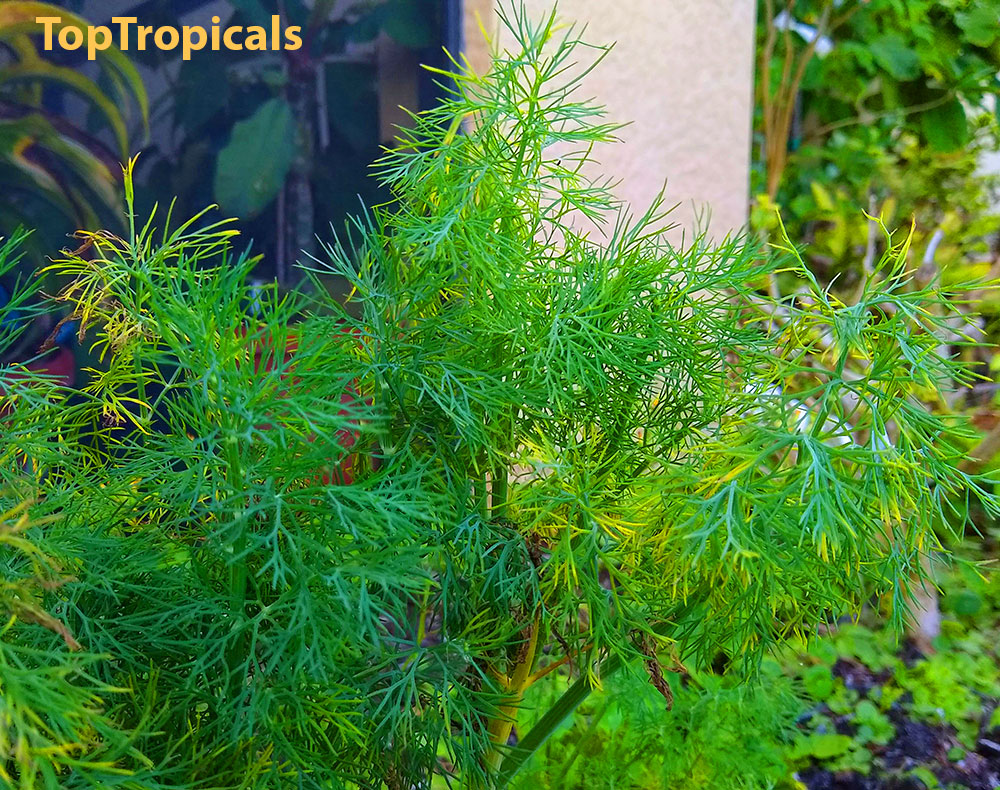
2. Dill. This one grows from seeds quickly and easily. It also needs full sun and regular water.
3. Chives, or Green Onion. Don't through away"bulbs"from chives you got from the store. Stick them in the ground, pretty much anywhere in your garden. You will have supply of fresh chives loaded with vitamins right away (withing a few days!) and for many months. You can also plant an onion bulb (root-end down... duh) - this one will produce greens even faster!
4. Bay Leaf. If you live in a mild climate, plant a Bay Leaf in your yard (closer to the door - closer to the kitchen!). It is a wonderful healthy spice for soups and stews that makes them super flavorful. If your winters are cold, keep the plant in a pot. Bay Leaf makes a great undemanding houseplant that needs bright light, but very little water.
5. Cherry tomatoes are easy to grow, heat tolerant and even grow in lower light, so they are easy to incorporate into any existing landscape. Get Sunshine Boosters to double your crop: see how it works.
6. More herbs and spices. Check out our large selection of herbs and spices - they are on sale today!
7. Garden work is a great exercise. While the gym is closed - get to gardening. Read about Fun workout and Calories Burning Gardening.
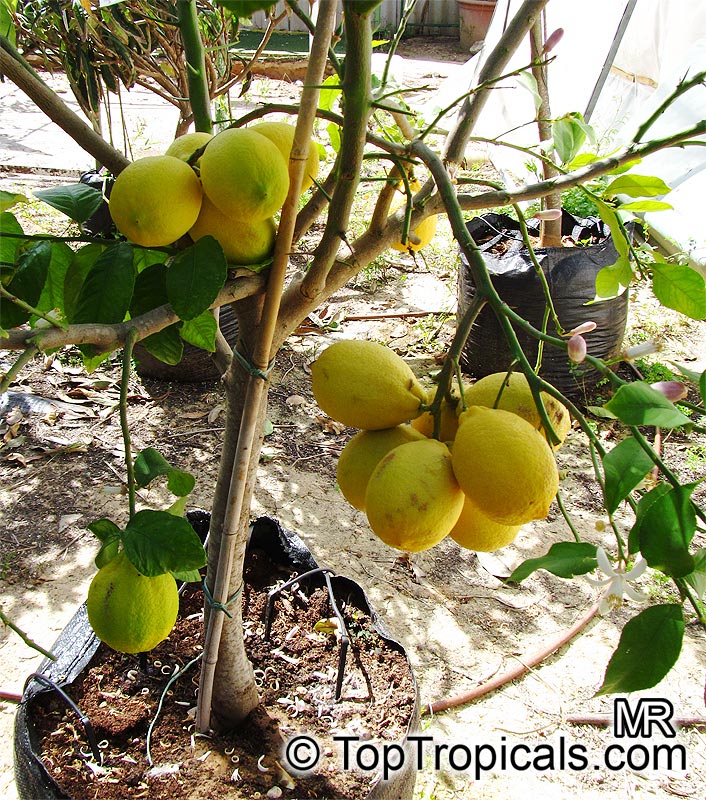
8. Lemons. Vitamin C is your best friend for boosting immune system, and Lemons have tons of it! In areas where citrus can grow outside, Lemon tree is a must-have for your garden, or at least find a friend who has one! Citrus also makes a great house plant, so you can keep it in a pot, too. Just make sure to have a grafted tree that will produce right away.

Lemon Juice Health Booster Recipe

1. Squeeze juice from 1 lemon and mix it with 1 cup of water.
2. Add ice cubes and 1-2 tbsp of any flavored syrup (optional). You may add some fresh mint for Mojito flavor.
3. Enjoy this drink at least once a day.
4. Get a bunch of lemons, squeeze fresh juice into ice cube trays and freeze. 1 lemon = makes 1 ice cube. Store in freezer and use 1-2 cubes to make the above drink, daily.

Besides being rich in vitamin C that will boost your immune system, Lemon juice is a Natural medicine that helps to treat:
- cold and flu
- headaches and high blood pressure
- stomach problems
- insomnia
- and much more
Drinking lemon juice on regular basis will make your body stronger and more resistant to infections and many illnesses.

Please take good care of yourself and your loved ones. Stay healthy.

Date: 20 Oct 2018

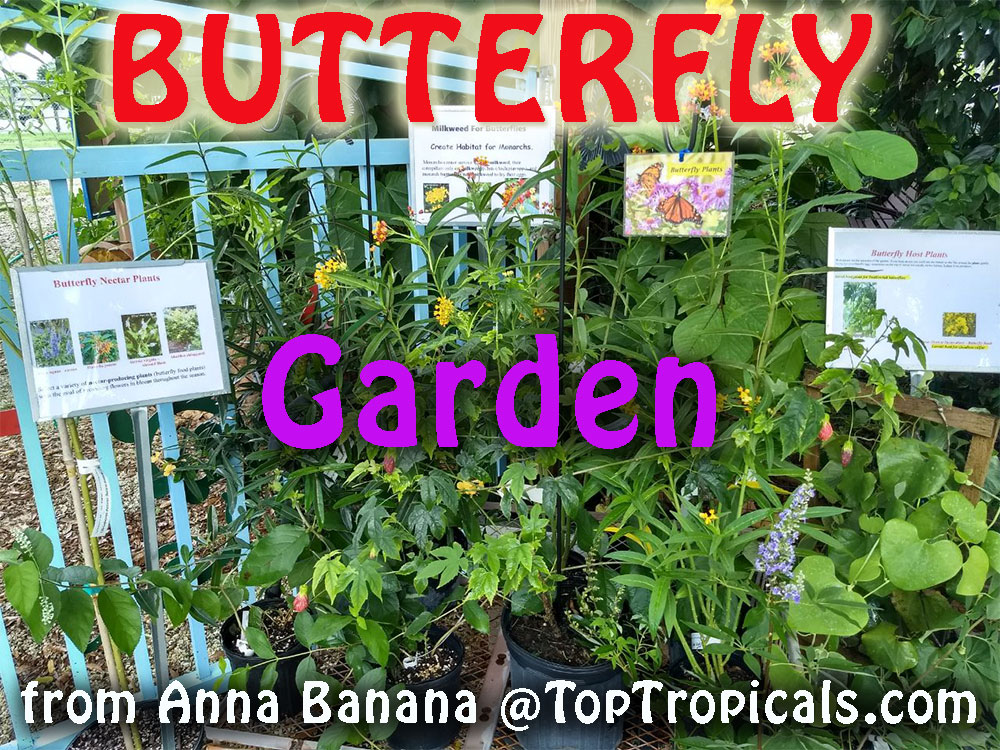
Butterfly Garden from Anna Banana

TopTropicals.com

Butterfly facts

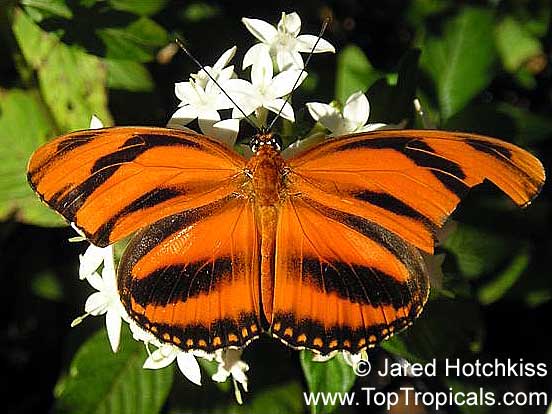
1. There are approximately 20,000 different species of butterflies, the largest of which is the Queen Alexandra Birdwing with a wingspan of 11 inches.
2. Female butterflies can lay over 1000 eggs during their short lifetime.
3. Butterflies lay their eggs on host plants which usually hatch within a few days, then turning into caterpillars. The caterpillar will then eat until it sheds it's skin several times, called instars, finally emerging from the chrysalis as a beautiful butterfly.
4. Butterflies are born to breed, their goal being to mate and begin the cycle again. Most live only a few days except the Monarch which can live up to six months.
5. Monarch butterflies migrate to Mexico every fall and remain there until spring when they make the return migration.
6. Due to the continuing destruction of the rain forests, where the largest population of butterflies are found, their numbers are dwindling. We encourage you to plant a butterfly garden!!

Remember:

- A sunny, less windy location is best, however, Zebras love to float in the shade of bushes and trees.
- The more host and nectar plants you have, the more butterflies will be attracted to your garden.
- Butterflies"puddle". They like a wet sandy area where they congregate and sip minerals and nutrients from the wet sand and water.
- Rocks to rest and enjoy their beautiful garden, and don't forget a bench or hammock for yourself.

FREE butterfly garden guide from Anna Banana

For our local Florida customers, it is a perfect time now to start a garden with plants for butterflies that will appear first thing in Spring. Establish these plants now for the Spring blooms that will attract the Beauty into your garden!
Stop by our Garden Center to check out our Butterfly Plants display, or simply call Anna Banana for a free consultation on Butterfly Garden at 239-771-8081.

Hurry up while butterfly plants are on 4-day sale!

TopTropicals.com

Date: 24 Jun 2018

Full Sun Garden vs Shade Garden

"Someone is sitting in the shade today because someone planted a tree a long time ago." (Warren Buffett)

Q: I live in California and I have a large area of my garden in full shade. Are there any plants that will be happy there? I am looking for something colorful. I also have a smaller area in front of the house that has full sun almost all day long, but I am afraid this can be too hot for flowering plants? Can you recommend something?

A: Full sun gardens have a strong, bright look while shade gardens have cooler, subdued appearance. Both types of gardens are fun to design and maintain as long as you pick the right plants.
Full Sun Garden is the easiest to grow. Depending on exposure, it may require some plants that can tolerate the hottest summer days and the dry conditions in your area. The good news is, the majority of tropical and subtropical plants prefer full sun, so you have a large selection to pick from - fruit trees, flowering trees, shrubs, vines, and small perennials. The more sun, the more flowers and fruit you will get! However, keep in mind that sun gardens require more water, but generous mulching will help to minimize watering.
Shade Garden is much more restful in appearance, but sometimes may be a little more difficult to work with. As shade trees grow bigger and thicker, it may become too dark; nothing will grow in total darkness. In this case you need to prune back some branches to let more light in. Filtered sunlight or dappled light coming through the leaves of the trees is beneficial and considered light shade, which would be the best light conditions for shade loving plants to thrive. Although shady cooler spaces attract more insects and will require more attention to control them, they also have some advantages over sun gardens. You can enjoy working in cooler conditions, and your garden will require less water. Many foliage plants look more deeply colored and healthier than in full sun; white flowers shine instead of looking washed out!
Our favorite shade plants are fragrant brunfelsias , clerodendrums, and of course colorful gingers and heliconias. You may also consider ornamental foliage of Calatheas, lush Alocasias, Colocasias, and colorful Cordylines. Check out our shade loving plant list for more colorful suggestions. These are also great for indoor gardens!

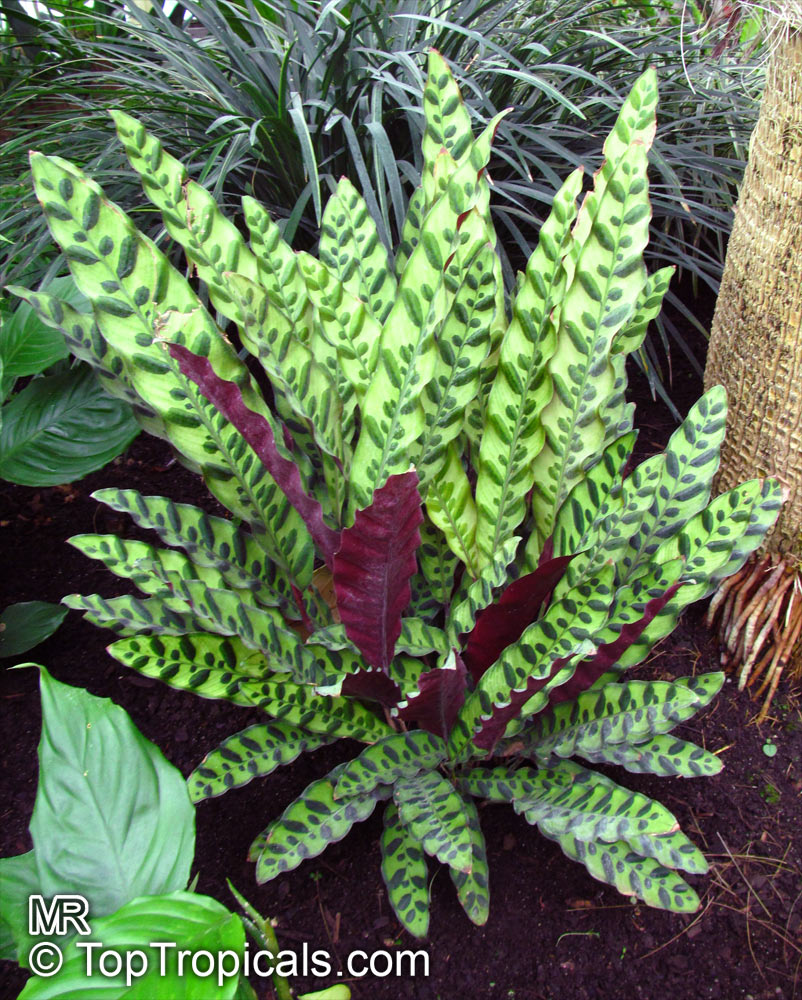
On the photo: Calathea lancifolia Rattlesnake

Date: 9 Mar 2022

Grow Your Own Food

How to garden in South Central Florida

by Ed Jones, the Booster guy

Plant  horoscope:  Pisces

...We are very excited about the garden season this year and feel like we have the best chance yet of producing some nice veggies since we have been here. I sure hope so as there is nothing better than fresh food from your own garden. If you are not growing your own fruits and vegetables, I would recommend that you give it a try...
...When we lived in Indiana, we had a nice little garden in front of our house and we also had about a half acre planted with tomatoes, potatoes, squashes of all kinds, corn, popcorn, pumpkins, and many other veggies...
...Since my wife and I moved to Florida in 2019, we have continued growing our own vegetable garden. Now, I must say that it has been quite the experience trying to learn when to plant things here in south central Florida. It seems that the summer sun can be so hot that even plants like tomatoes, that love the heat, can't survive?...
Based on our experience, here are some secrets how to do it right...

CONTINUE READING >>

Top  Tropicals:  Learn  more  about  this  subject

Tomatoes