Date: 2 May 2019
Breathtaking Queen's Wreath
By Onika Amell, tropical flower specialist
Q: I've just moved from Virginia to Sarasota, Florida. I'm looking for a vine similar to Wisteria to grow in my new garden. I've so enjoyed my Wisteria vine and I'm hoping to find something equally spectacular for my FL garden. Truth is, I'm getting older and won't be able to keep up with the hard-core maintenance Wisteria needs to keep it in under control. Is there a similar vine you can recommend that is just as showstopping as Wisteria?
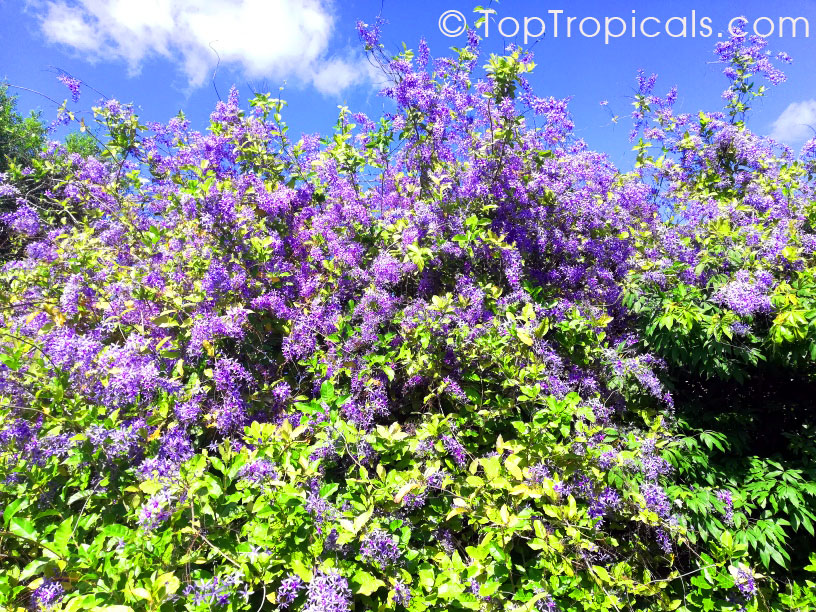
A: The vine that immediately comes to mind is Petrea Volubilis or Queens wreath. It looks similar to Wisteria, and though a fast and strong climber, it's not invasive or
destructive at all. An occasional pruning is all it will need to maintain it.
Much like Wisteria it gives a glorious show of flowers when spring arrives.
Masses of long, mauve flowers will continue to appear on and off in summer with
another burst of flowers in the fall. Flowers are up to a foot in length!
Hummingbirds, bees, and butterflies will all be impressed with you for
growing this charmer.
Snip off the gorgeous flowers, put them in shallow bowls of water
around your home and be the envy of all your friends and house guests!
This vine prefers the warmth of Zone 10 to thrive, but it will survive
in areas of Zone 9B when it borders zone 10A, especially if it's placed in a
protected area. It grows best in full sun but will tolerate part shade. It's
great for coastal gardens and once established, it has good drought
tolerance, medium salt tolerance, and good wind tolerance. It has no major pest
problems, which is always a bonus.
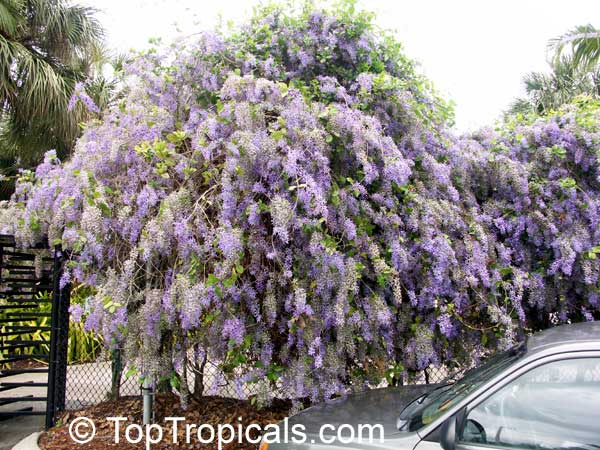
Grow and shape it as you like: a large bush, a small tree or a
breathtaking espalier. Some people plant Petrea vine by a tree to create that much
sought-after ethereal wisteria effect. This is no doubt a very charming vine
and a must-have for those who are in love with Wisteria but scared of its
vigorous growth and ongoing maintenance.
For Wisteria lovers we also recommend its spectacular tropical relative
Millettia reticulata - Evergreen Wisteria.

Date: 3 May 2024
Best picks of the Season
Special SALE deals - from our horticulturist
These plants are large, developed and beautiful NOW!
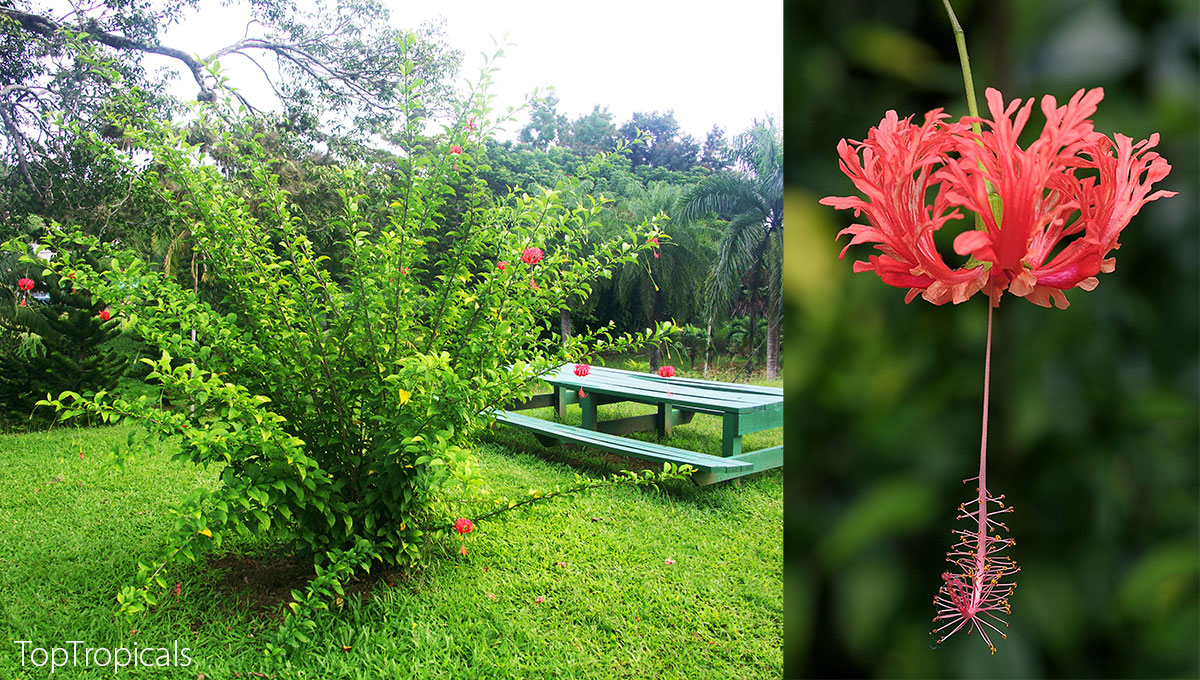
Hibiscus schizopetalus - Coral Hibiscus. Spectacular weeping tree hibiscus, rare and hard to find. Grows rapidly and blooms freely. Flowers look like parachutes and can be recognized by the fringed and lacy petals which are bent backward. It has slender and gracefully curved stems. Can be trained into a showy standard.
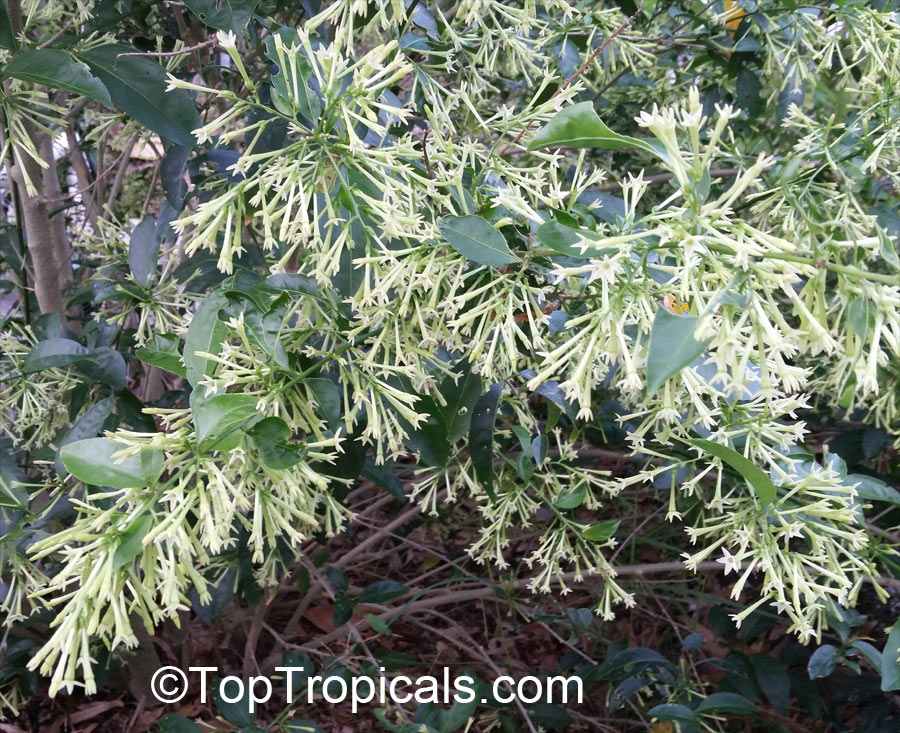
Cestrum nocturnum - Night blooming jasmine. Garden favorite - the sweetest fragrance at night is intoxicating. One of the most famous and desirable fragrant plants. Flowers are pale yellow to white, open at night and stay extremely fragrant until sunrise. These flowers are widely used in India and other countries of South Asia for perfumery, medicinal applications and in religious ceremonies. Best location will be near driveway, window or entrance, where the magic fragrance can be appreciated.
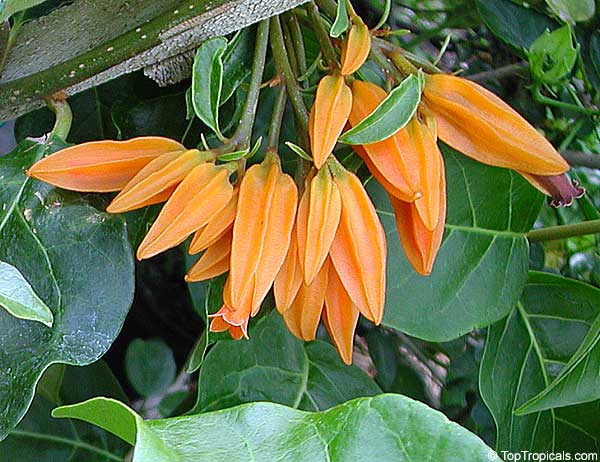
Juanulloa aurantiaca - Gold Finger plant, Mexican Spoon Flower - this one is soooo pretty! Unusual looking vine or shrub with yellow-orange fleshy flowers, everblooming and a VERY fast growing. Rare, collectible plant.
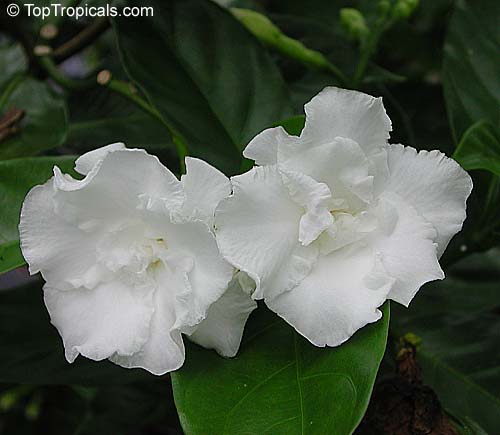
Tabernaemontana Flore Pleno - Crape Jasmine, Carnation of India, Florida Gardenia - this fast growing bush with waxy leaves and beautiful fragrant flowers is a must in tropical garden. Easy to grow and free flowering, dense bush.
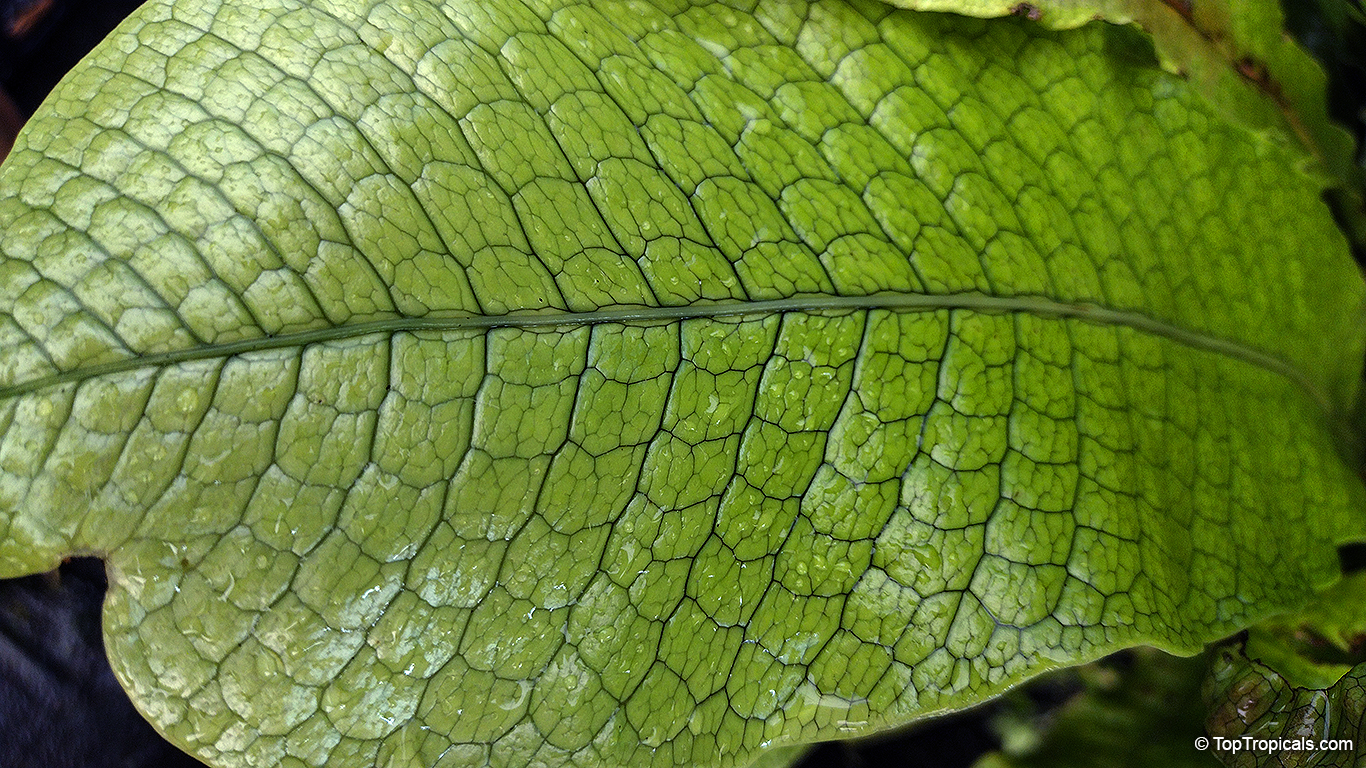
Microsorum musifolium - Alligator Fern, Crocodile Fern from Australasia. Perfect for shade! An epiphytic fern with cool alligator-skin looking leaves. The strikingly shaped, light green fronds of the fern form a lovely backdrop to its stunning stiff, leathery, dark green alligator-skin foliage. Perfect as a houseplant, or planted under a tree. Grows to 2-3 ft in height and likes a sheltered, semi-shaded location, no direct sunlight.
Date: 23 May 2024
The Magic of 3
top tropical trees
from the legends of Caribbean
Yellow Poinciana, Jacaranda, and Royal Poinciana:
Three happy colors of the Tropics

While traveling through the vibrant and diverse Caribbean, we acquired three exquisite local paintings. Two of these are masterfully rendered on jacaranda wood plates, and the third is beautifully crafted on a calabash. These stunning pieces of art celebrate the three most spectacular and revered flowering trees of the Tropics: Yellow Poinciana, Jacaranda, and Royal Poinciana.
These trees are not only visually stunning but also deeply embedded in Caribbean culture, legends, and folk remedies.
The Yellow
Poinciana, with its bright golden blossoms, is often associated with joy and
sunlight, symbolizing the warmth of the Caribbean spirit.
The Jacaranda,
known for its striking lavender-blue flowers, is a symbol of wisdom and
rebirth, often blooming in a breathtaking display that signals the change of
seasons.
The Royal
Poinciana, with its fiery red and orange flowers, is a symbol of passion and
energy, often referred to as the "Flamboyant" tree due to its bold and dramatic
appearance.
These trees hold a special place in the hearts of the Caribbean people. They are featured in numerous local stories and songs, and their flowers and leaves are used in traditional remedies and rituals. Owning these paintings feels like possessing a piece of the Caribbean's soul and its natural beauty.
Now, we are fortunate to have not only the paintings but also the actual trees. Watching them grow and bloom in our garden brings a piece of the Caribbean to our home, a constant reminder of our travels and the vibrant culture we experienced. These trees and their representations in art are a testament to the region's rich heritage and its enduring connection to nature.
Get them now while we have them. No need to go too far into Caribbean!
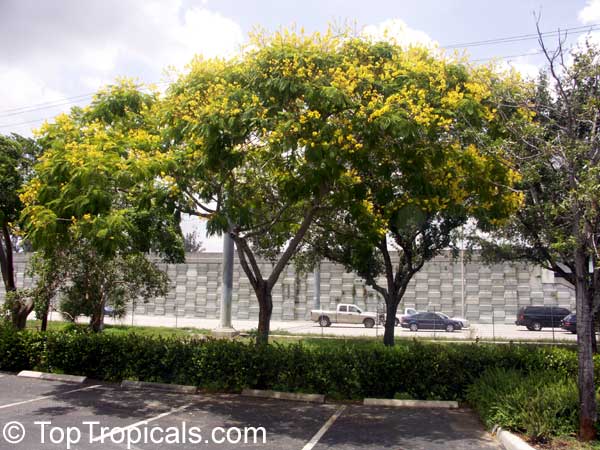
Peltophorum africanum - Golden Flamboyant, Yellow Poinciana. An excellent garden shade tree, beautiful in flower. This variety starts flowering at young age, in 3 gal pot.
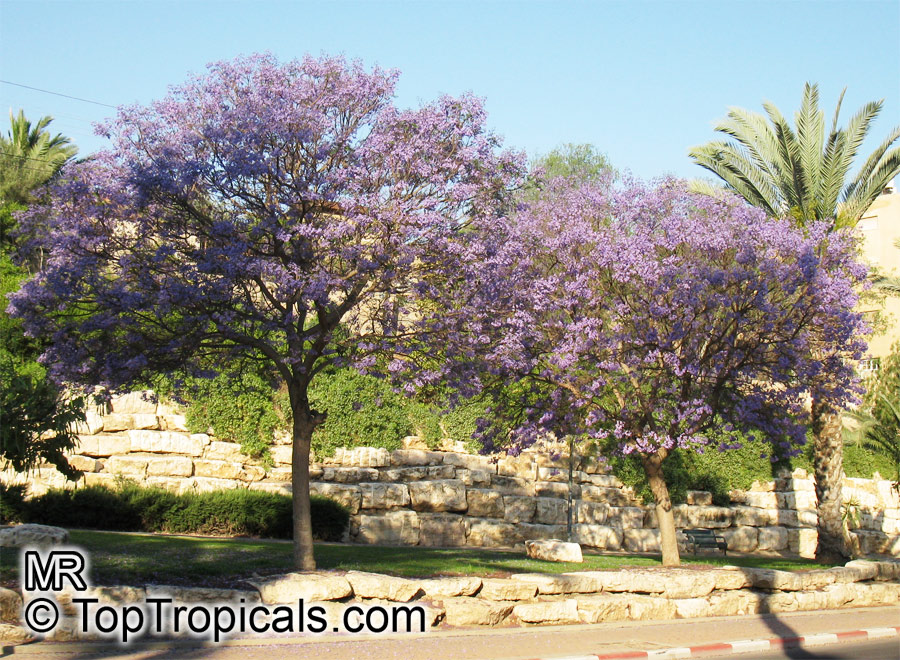
Jacaranda mimosifolia - Hypnotizing bluish-purple, trumpet-like flowers create the magical image of the tree. Incredible, long-lasting purple blooms. When the trumpet-shaped blooms finally fall, they form a lilac carpet beneath the awe-inspiring Jacaranda for luxuriant curb appeal...
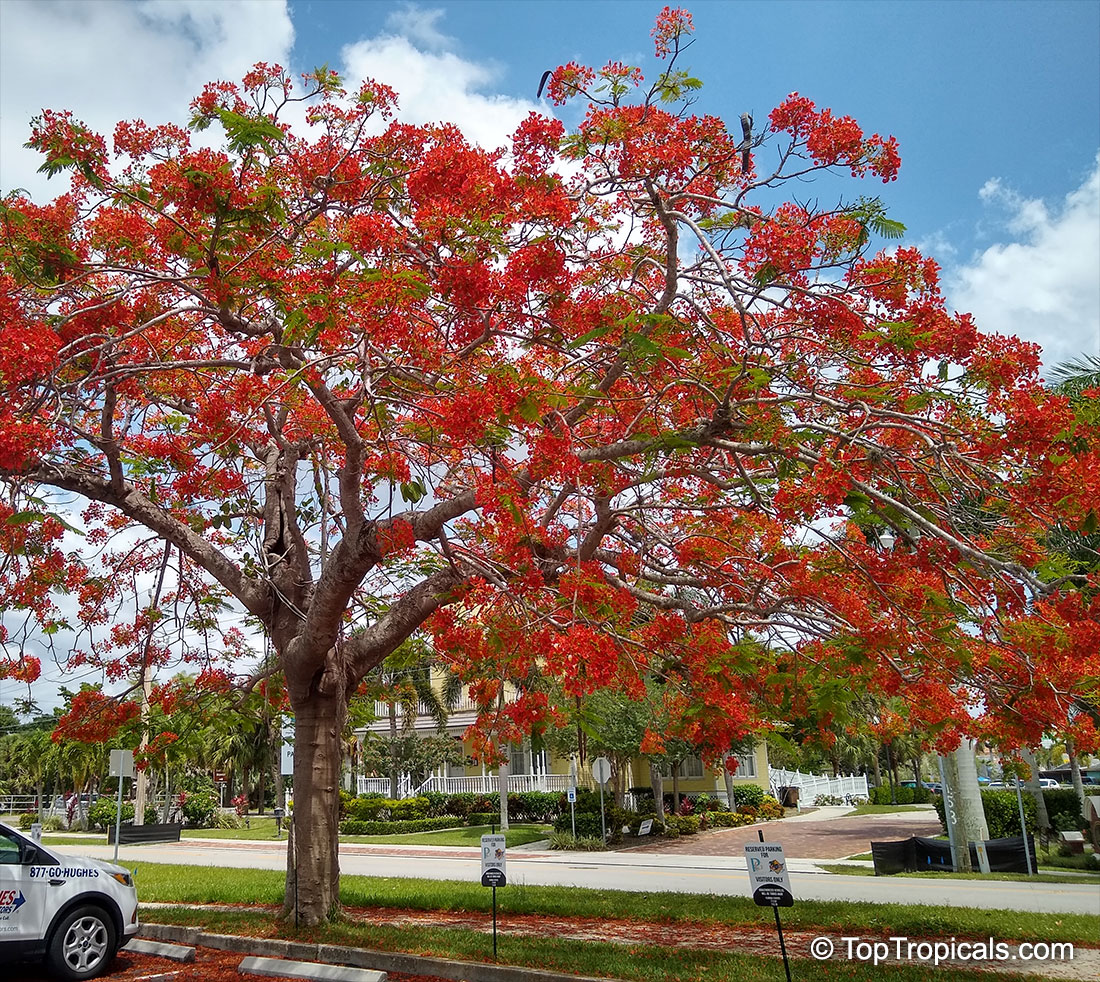
Royal poinciana, Flamboyant tree, Delonix regia - "One of the most spectacular flowering trees in the USA, and probably among the top 10 on this planet. In full bloom, it is like a regal elephant caparisoned in red and yellow brilliance." (Larry M. Schokman, The Kampong, National Tropical Botanic Garden)
Date: 2 Jun 2024
How to attract more butterflies to your garden?
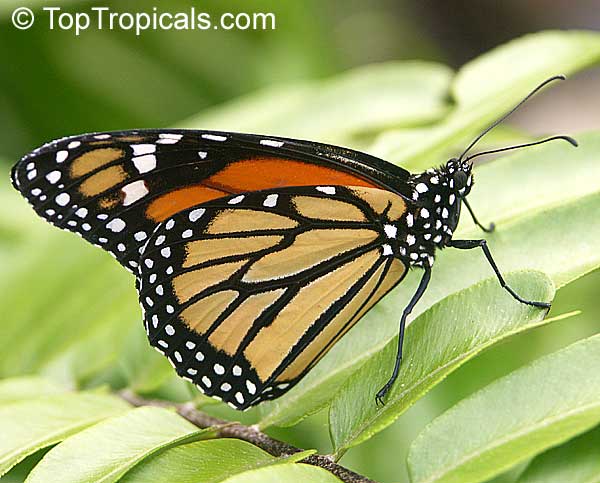
Monarch Butterfly
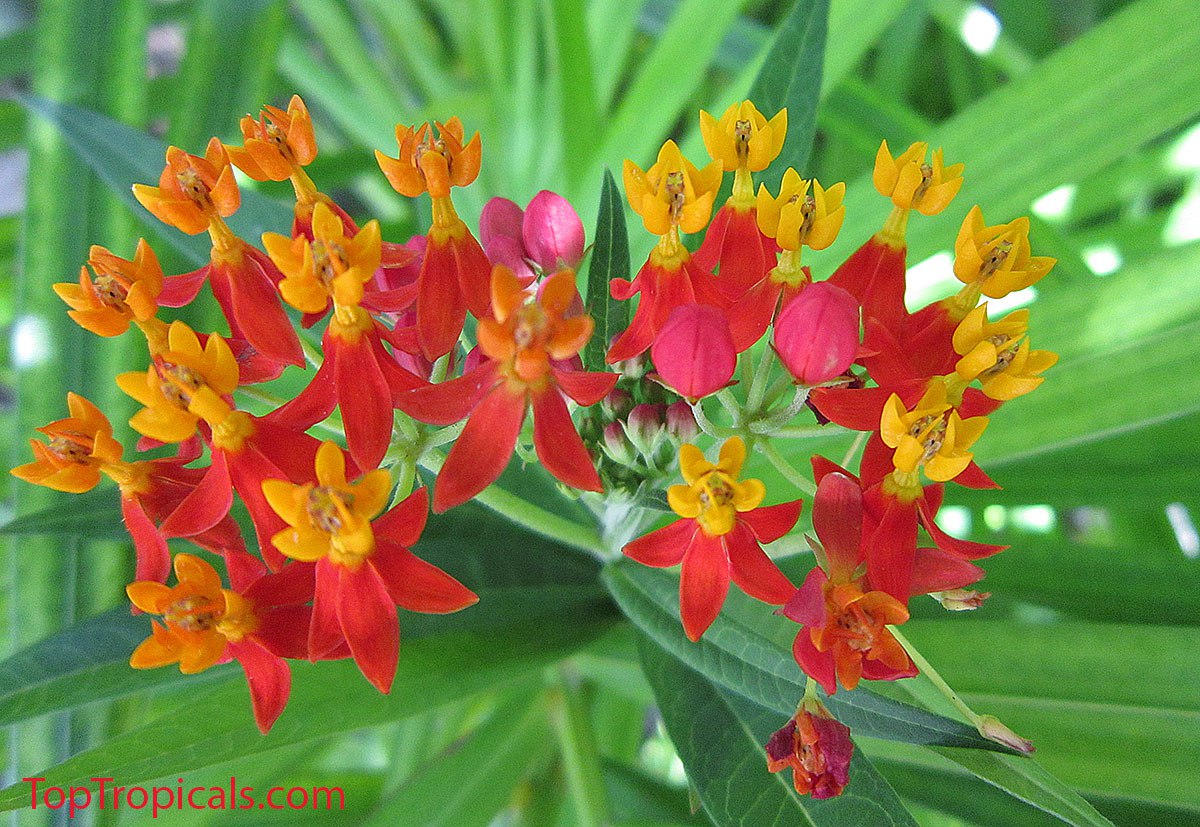
Milkweed
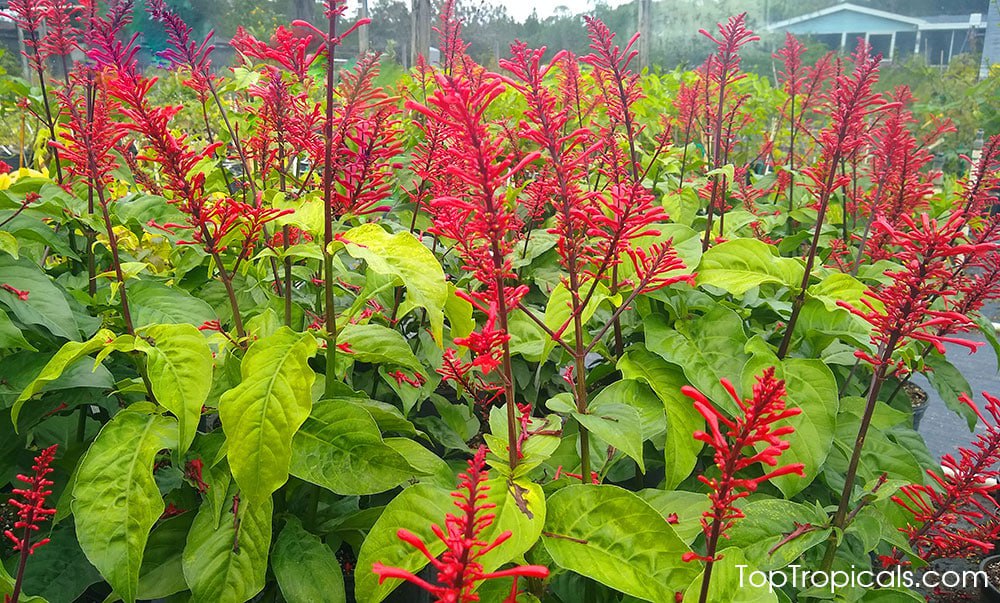
Odontonema
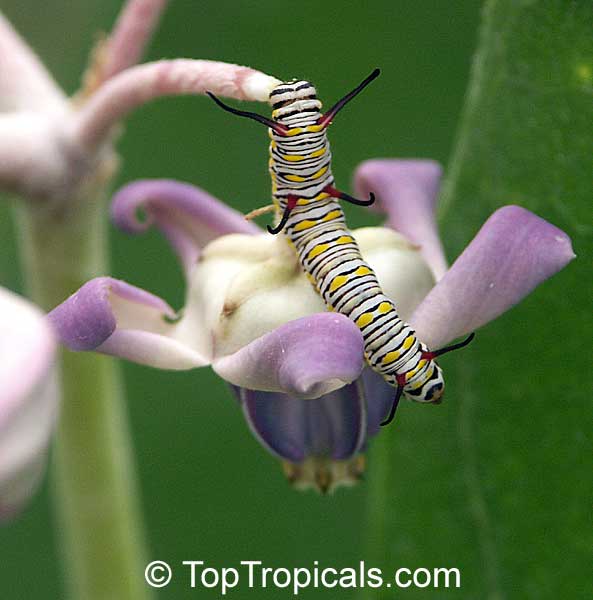
Giant Milkweed

How to attract more butterflies to your garden?
Attracting butterflies to your garden can be a fun and rewarding experience. Here are some tips to help you create a butterfly-friendly environment.
- 💐 Choose the right plants: butterflies are attracted to nectar-producing flowers such as odontonemas.
- 💐 Plant lots of bright flowers, especially of yellow and pink colors like some cassias which seem to be the pleasant to butterfly's eye.
- 💐 Use a variety of flowers to attract different species of butterflies. Check the list of butterfly-attracting tropical plants.
- 💐 Provide food for caterpillars: butterflies lay their eggs on specific host plants that caterpillars will eat. For example, monarch butterflies lay their eggs on milkweed. Passion flower (Passiflora) and Aristolochia that we introduced earlier, are also great butterfly hosts, but be prepared to sacrifice some leaves!
- 💐 Provide a water source: butterflies need a source of water to drink from. A shallow dish or birdbath with rocks in it will provide a place for butterflies to rest and drink.
- 💐 Avoid using pesticides: they can harm butterflies and other beneficial insects. Try using natural methods to control pests in your garden.
- 💐 Create a sunny spot: butterflies love warm, sunny spots. Plant your butterfly garden in an area that receives at least six hours of direct sunlight each day.
- 💐 Add a butterfly house to provide shelter for butterflies during bad weather and at night.
📸 Milkweed, Odontonema, Giant Milkweed
🛒 Shop Butterfly Garden
#Butterfly_Plants
🏵 TopTropicals
Date: 21 May 2019
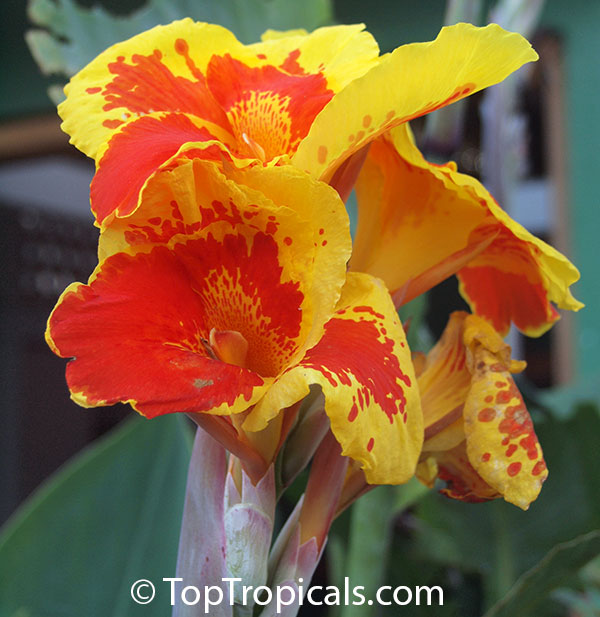
Colors of Cannas
By Onika Amell, tropical flower specialist
Q: I'm a beginner gardener and looking for something easy to grow that will add a lot of color to my garden fast.
A: Try growing Canna lilies. They are a favorite of many
gardeners as they are so easy to grow and always provide a reliable, beautiful show
of flowers. In fact, Cannas are one of those plants that are spectacular even
if they never bloomed. The leaves are tropical-looking, banana-like and huge!
They range in a wide variety of shades and colors, always accentuating the
large showy flowers on top.
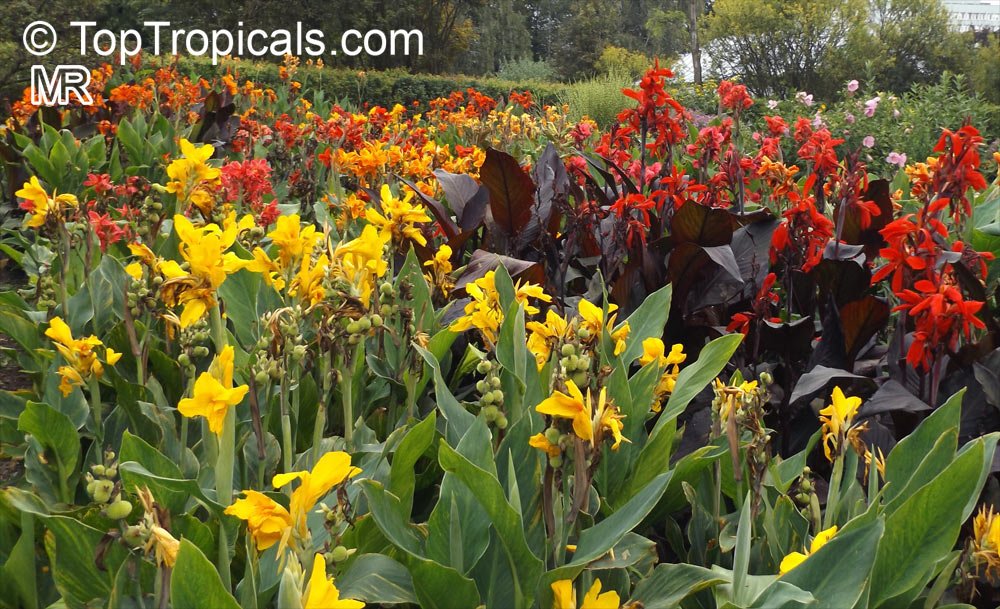
One of our favorite cannas right now is Canna Cleopatra - very striking and most unique. Large yellow flowers
speckled with red spots, or red flowers and even flowers with a little bit of
both. Foliage is exotic and very beautiful, often dark green,
dark chocolate or a combination of both. This is a canna that will
definitely illuminate
your garden!
Caring for Cannas
Cannas like a lot of water, full sun and high heat. They are also heavy feeders and prefer soils that are well drained, organically rich and moist. The leaves will quickly tell you when the plant is hungry. Feed your cannas weekly with a water-soluble 20-20-20 fertilizer Broad Leaf Plus, and they will quickly respond with beautiful, lush growth. Deadhead often to encourage continued flowering. Cannas are winter hardy in US hardiness zones 7 and warmer. If you live in colder areas, the rhizomes need to be lifted in the fall, and stored indoors in a dark, warm spot until spring arrives. Be sure to divide clumps every three or four years. Give them lots of room as they grow into large plants, forming spreading colonies up to 7 feet high and 4 feet wide. Show them off in mass plantings, in large containers or in mixed flower borders. Lure in hummingbirds with these beauties!