Garden Blog - Top Tropicals

Date: 31 Oct 2025

👻 When plants grow wings...

Smokey  the  black-and-white  tuxedo  cat  stands  upright  holding  a  glowing 
 jack-o'-lantern  filled  with  tropical  fruit,  while  Sunshine  the  fluffy  ginger
    tabby 
 lounges  in  a  hammock  under  string  lights,  sipping  cocoa.  Around  them  are 
 pumpkins,  lanterns,  and  tropical  plants  under  a  warm  twilight  sky.

🌴 Twilight in the garden. Smokey is holding a glowing pumpkin. Sunshine is sipping cocoa.

Sunshine: "Smokey, why does that plant look like it wants to fly away?"
Smokey: "That’s the Bat Lily - Tacca. It’s rare, it’s weird, and it’s in bloom just in time for Halloween."
Sunshine: "Figures. You always find the spooky ones."

Meet the Bat Lily (Tacca)

Tacca is also called the Bat Lily or Devil Flower. This tropical wonder grows bat-shaped wings and foot-long whiskers. The black form (Tacca chantrieri) looks straight out of a gothic dream, while the white one (Tacca nivea) is ghost-like and elegant.

Some of our plants are blooming right now in the nursery — true Halloween magic! Blooms are delicate and may not travel, but the plants are strong and will flower again soon in your care.
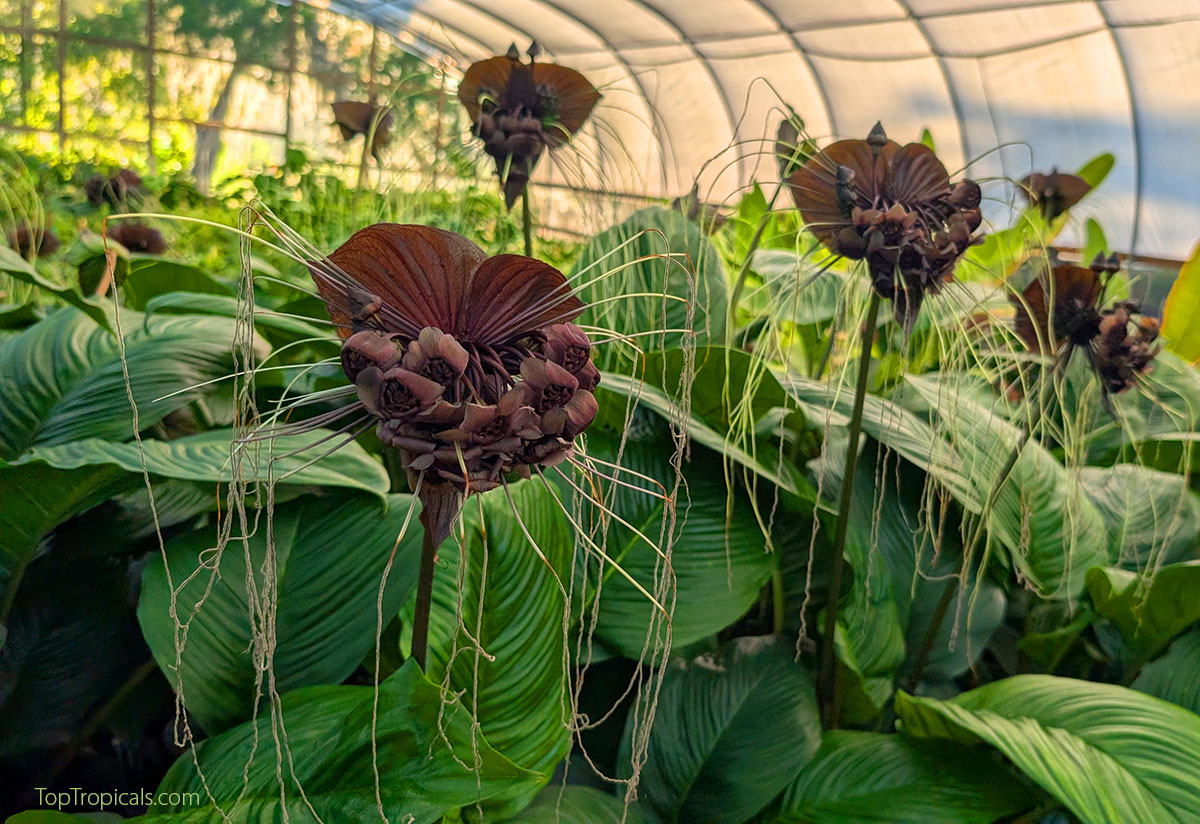
Black  Bat  Lily  (Tacca  chantrieri)  plants  in  bloom  inside  the  Top 
 Tropicals  greenhouse,  showing  dark  maroon  bracts  and  long  pale  whiskers 
 rising  above  large  green 
 leaves.

Black Bat Lily (Tacca chantrieri) with dark maroon wings and long whiskers
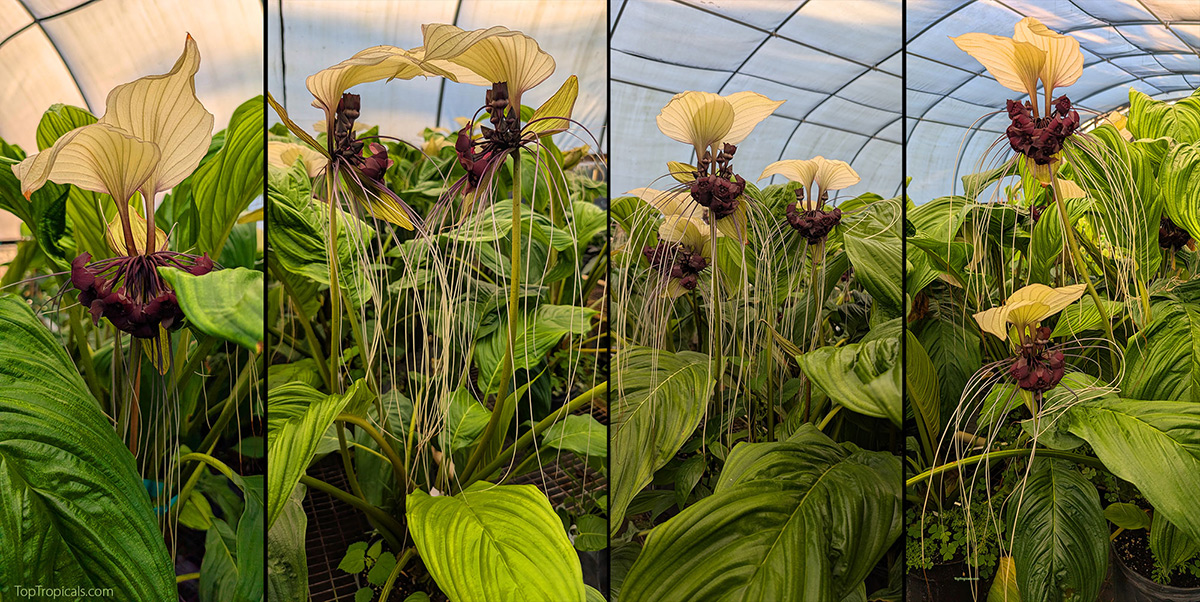
Close-up  of  White  Bat  Lily  (Tacca  nivea)  plants  in  a  greenhouse  at  Top 
 Tropicals,  showing  large  white  bracts  and  long  trailing  whiskers  above 
 glossy  green 
 leaves.

White Bat Lily (Tacca nivea) in bloom with wide ivory wings

"The White Bat Lily (Tacca nivea) is bold and sculptural, with oversized ivory wings that command attention. Its pale bracts stretch wide above clusters of deep maroon flowers, and long, silvery whiskers spill gracefully through the foliage. In filtered light, the plant seems to glow from within — elegant, crisp, and perfectly balanced between the strange and the beautiful. If I could pick, I’d go with the White Tacca. It feels more architectural, more balanced — those oversized wings catch light in a way that shows off every vein and curve. It looks engineered by nature, almost like an alien design prototype that actually works.

The Black Bat Lily (Tacca chantrieri) feels alive with shadow. Its dark maroon wings and wiry whiskers make it look like something that fluttered out of the jungle at dusk. The bloom’s layered structure and near-black sheen give it a quiet power — mysterious, understated, but impossible to ignore. But if I were designing mood lighting for a greenhouse at night, the Black Tacca wins. It’s subtle, mysterious, like a secret only visible up close. Together, they’re perfect opposites — yin and yang of the tropical underworld: white for daylight, black for moonlight." — says Tatiana Anderson, Top Tropicals Plant Expert

Special Offer: Discounts on Rare Tacca Plants

Grow your own Bat Lilies — White or Black — at a special Halloween price!

Get 25% OFF Tacca plants with code

TACCA2025

Min order $25 (excluding S/H), valid online only, cannot be combined with other offers.

Hurry, offer expires November 03, 2025!

🎃 Storewide Halloween Sale – For Everything Beyond Tacca

Not into spooky plants? Enjoy savings on all other tropical plants across the store!

Get 15% OFF tropical plants with code

HALLOWEEN2025

Min order $100 (excluding S/H), valid online only, cannot be combined with other offers.

Hurry, offer expires November 03 2025!
👉 Collect Tacca plants:

Black - Tacca chantrieri

White - Tacca nivea

Green - Tacca leontopetaloides

Date: 1 May 2025

🌸 Plumeria Power: The Signature Scent of the Tropics

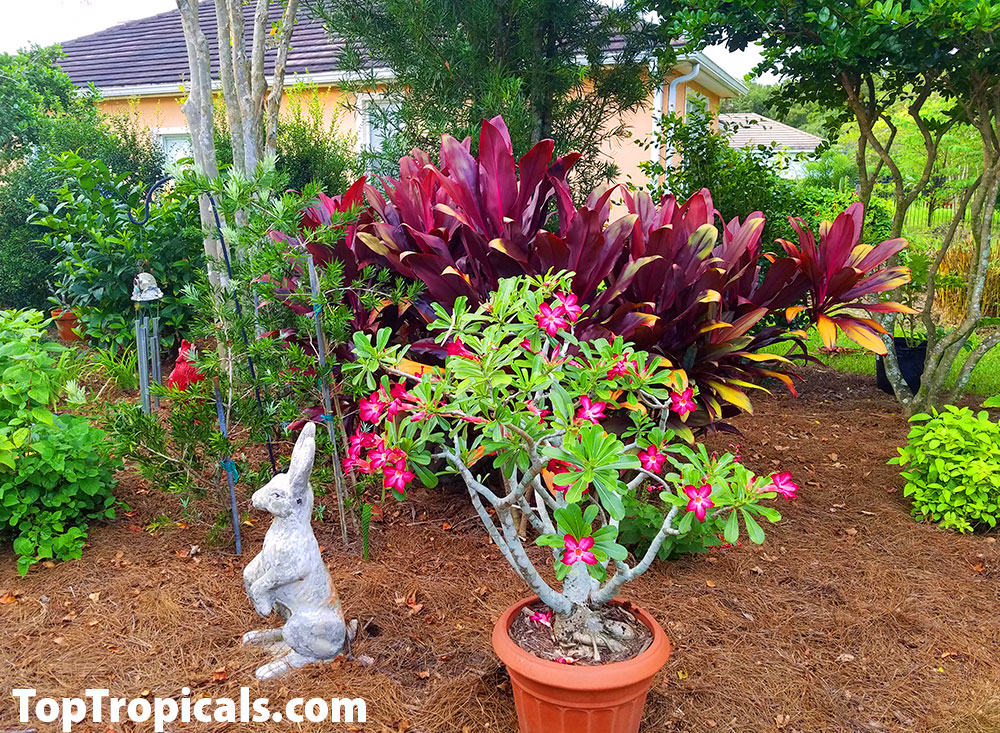
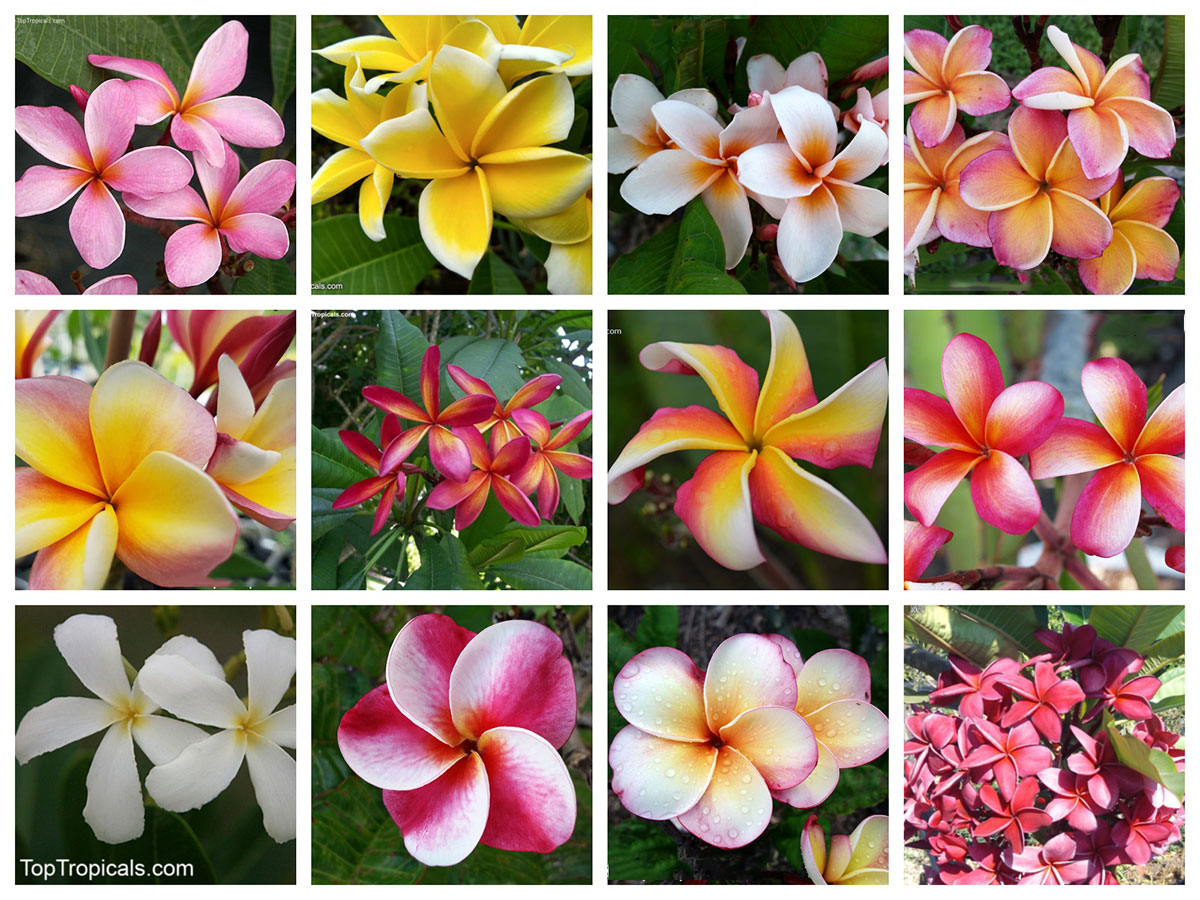
Plumeria  collage

Q: What is the most fragrant variety of Plumeria? Are some colors more fragrant than others? How do you keep Plumeria blooming?

A: From Kristi, TopTropicals Flower Expert: At Top Tropicals, we used to think yellow Plumeria was the most fragrant. That was until we discovered multi-colored hybrids and stunning "rainbow" varieties! These rare beauties are prized not just for their sweet, strong fragrance but also for their dazzling mix of tropical colors.

We just received new arrivals of stunning new Plumeria varieties - but quantities are limited, so don't wait! Choose your favorite colors and bring home the irresistible scent of the tropics.

Plumerias are famous for their rich colors and unforgettable fragrance. With just a few simple steps, you can grow your own blooming tree and enjoy flowers just like in the pictures.

5 simple rules how to grow a fragrant Plumeria

1. Use well-drained soil. Choose a potting mix rich in perlite, bark, and coconut fiber. We recommend Sunshine Abundance professional soil mix for best results.

2. Choose the right container. Use a pot just slightly larger than the root ball to prevent water-logging. Plumeria prefers dry conditions - water only when the soil is slightly dry.

3. Give it full sun. Plumeria needs plenty of light to bloom. If grown indoors, place it in the brightest spot and bring it outside for sunbathing whenever possible.

4. Let it rest in winter. Plumeria drops its leaves and goes dormant during the cooler months. When this happens, reduce watering to a minimum and let the plant rest until new growth begins.

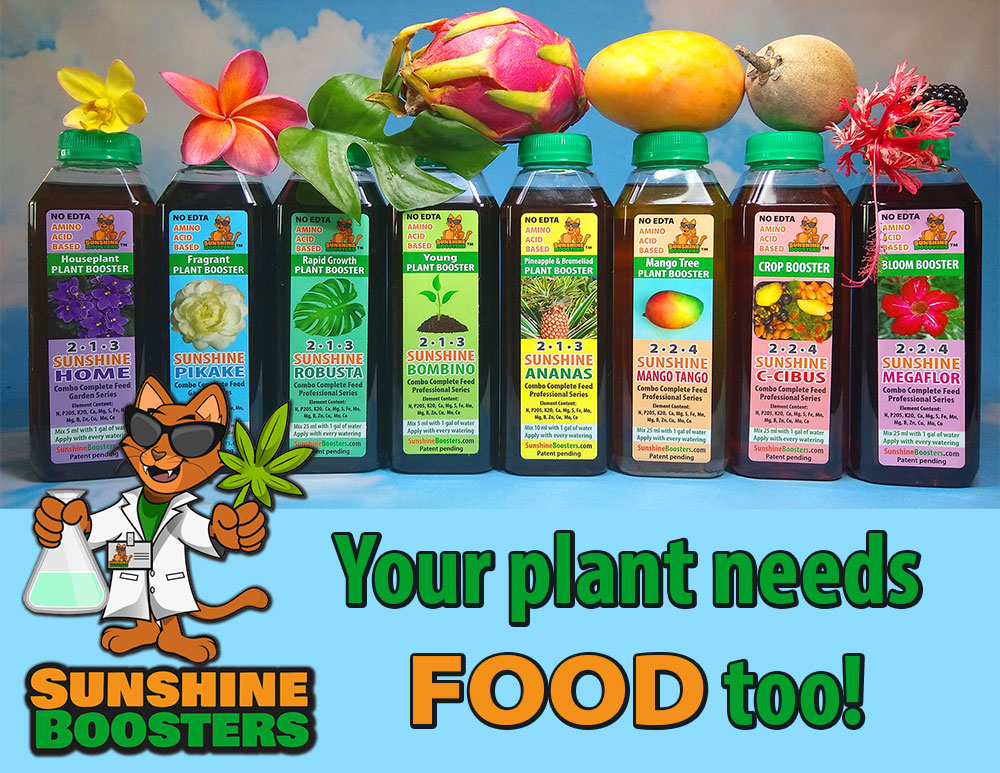
5. Feed it to bloom. Plumeria is a heavy feeder and needs fertilizer to flower well. Use a plant food high in phosphorus, like Sunsine Megaflor Bloom Booster liquid fertilizer. It's safe to use with every watering, all year round.

New Video of Exotic Plumeria Hybrids

Check out different varieties of Plumerias in full bloom. Just look at these colors in this short video !

Date: 19 Jan 2021

Healthy Plants: Q&A from Mr Booster

Fertilizing in Winter

Q: I have many tropical plants in my garden, both in the ground and in pots. I realize it is wintertime and some of them, the Hydrangea, Hibiscuses, and roses are in bloom but the rest of them seem wilty and droopy. Is it alright to fertilize them now, or should I wait for a few days? I have an all purpose tropical fertilizer and a 20-20-20 also. Please advise what to do.

A: During wintertime, tropicals may suffer from low temperatures and lack of sunshine which causes droopy leaves, and leaf loss.
Regardless of the cause and plant condition, you should NEVER apply traditional dry fertilizers during cool months. When cold, dry fertilizers (EDTA-chelated) may create nutrient lock up in soil and damage the roots. Dry fertilizers (both granulated and water-soluble) can be used only during hot season - when min temperatures stay above 65F for at least a week in a row, and daytime temperatures are over 75-80F. During hot, active growth season plant metabolism increases. This provides less chance for a chemical root burn, as the nutrients are used up quickly.

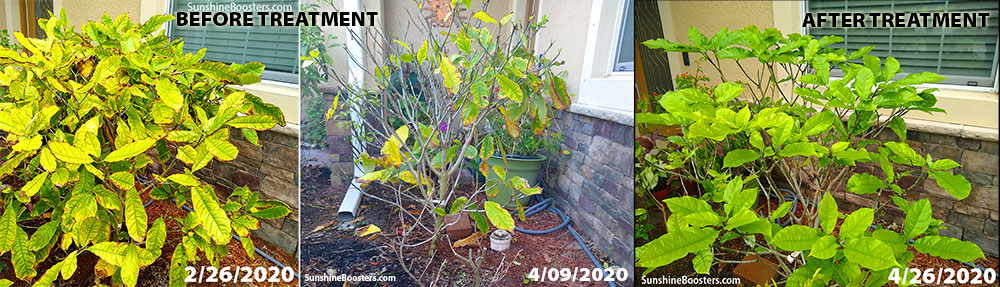
However, liquid fertilizers, as long as they are amino-acid based, can be used year round. From our own experience last winter, we discovered that fertilizing sickly looking plants (with signs of cold damage and root issues) with Sunshine Boosters actually revived those plants. Sunshine Boosters even brought back to life some hopeless specimens. Take a look at this gardenia that grows in our garden (picture above). See full article.
In your case, it would be beneficial to use a mild formula of liquid boosters in combination with Sunshine Epi -a natural plant hormone that boost their growth and helps to cope with cold-, temperature- and low-light-related stress.

These are the products we recommend:
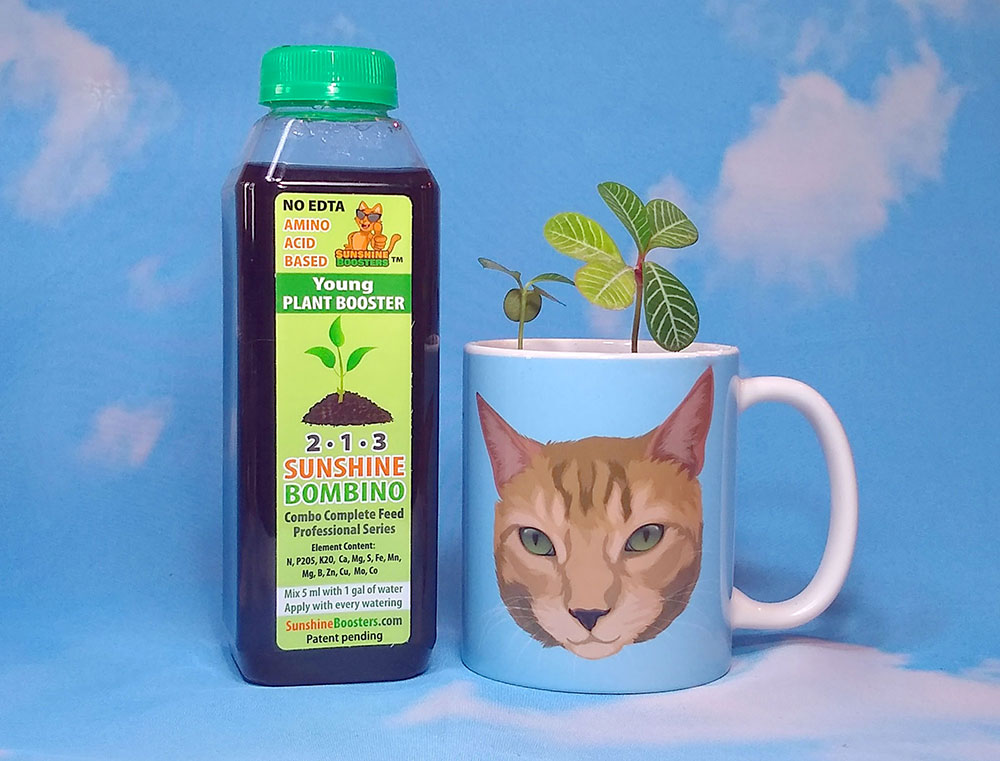
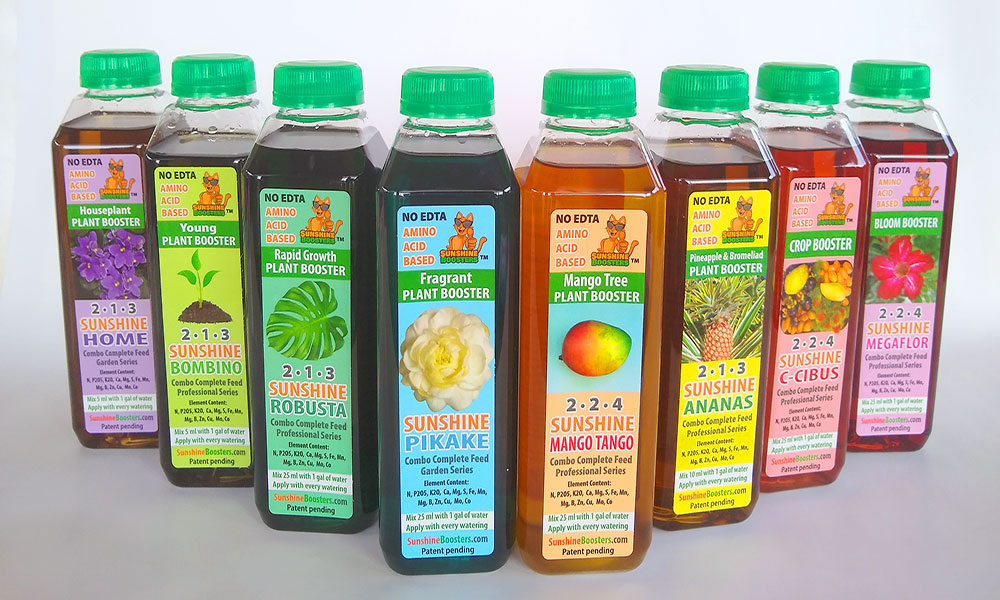
- Sunshine Bombino - add to every watering
- Sunshine Epi - twice a month as foliage spray

Since you grow plants in pots, feeding program is especially essential, because plants are limited with a container size where roots can't reach out to more food in the outer soil. In professional nursery set up with injector irrigation systems, container plants are fed daily (depending on season, more than once a day) with every watering. This is why greenhouse plants are so healthy looking.
So feel free to give your plants Sunshine boosters with every watering, dozing according to the label. During cold period, plants need less frequent watering, so fertilizer input will be balanced accordingly, it will depend on temperature and plant metabolism.

Sunshine Bombino - mild, "pampering" formula for young and tender plants, as well as plants recovering from stress and/or winter damage.

Date: 13 Jul 2023

Fertilizing during rainy season

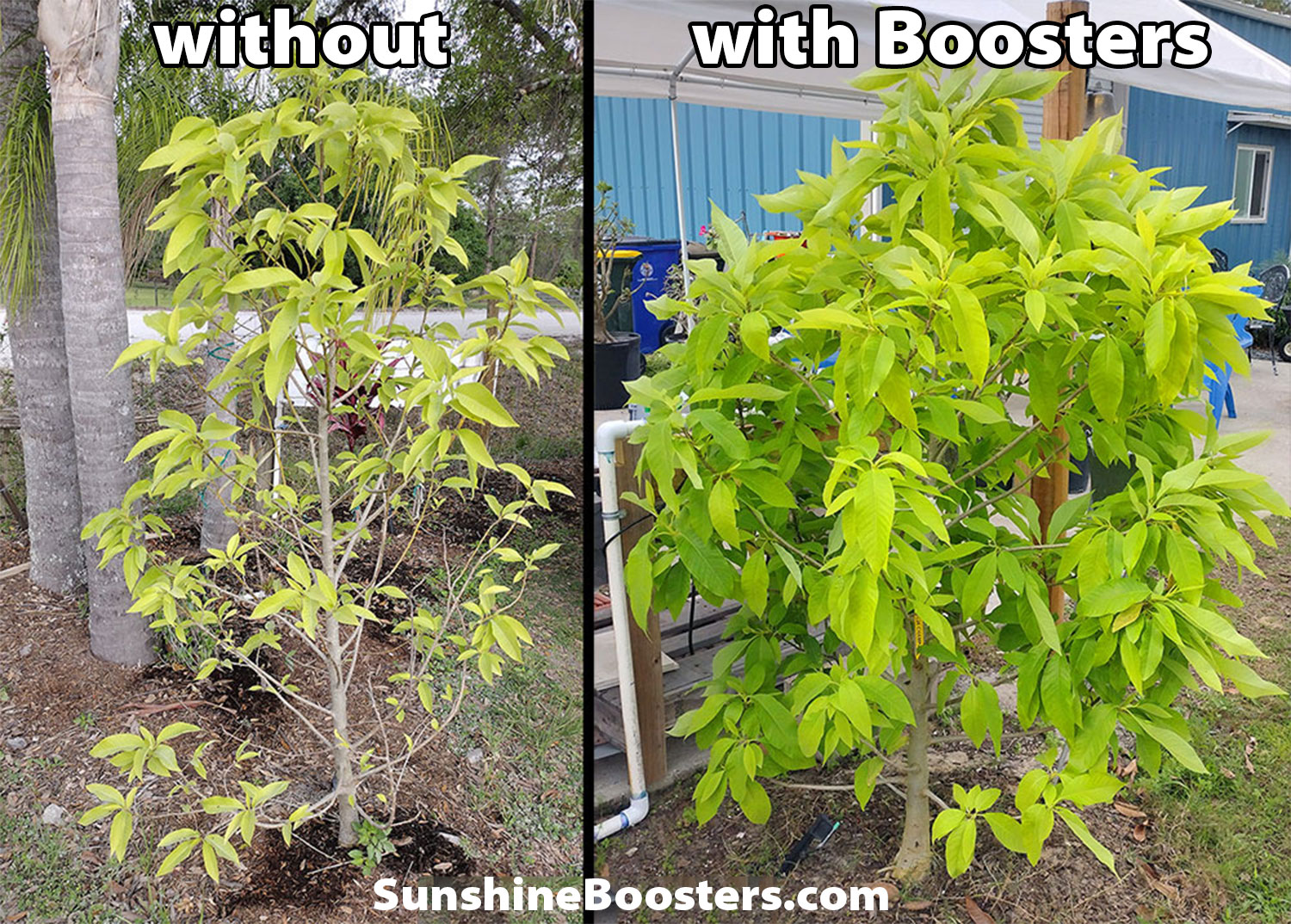
Champaka  trees  without  and  with  Sunshine  Boosters

Q: I have installed your Robuster unit to fertilize my fruit trees, but here in Florida, it is the rainy season and most of the time I do not need to irrigate during the summer. What do you recommend to keep up with fertilizing program?

A: This is what we recommend for fertilizing during rainy season:

For in the ground plants

If there are frequent rains, it's not necessary to use any fertilizers except for slowly soluble ones. During rainy periods, use a slow release fertilizer. Simply scatter 3 oz per 100 square ft. You can adjust the amount based on your specific area and number of plants.

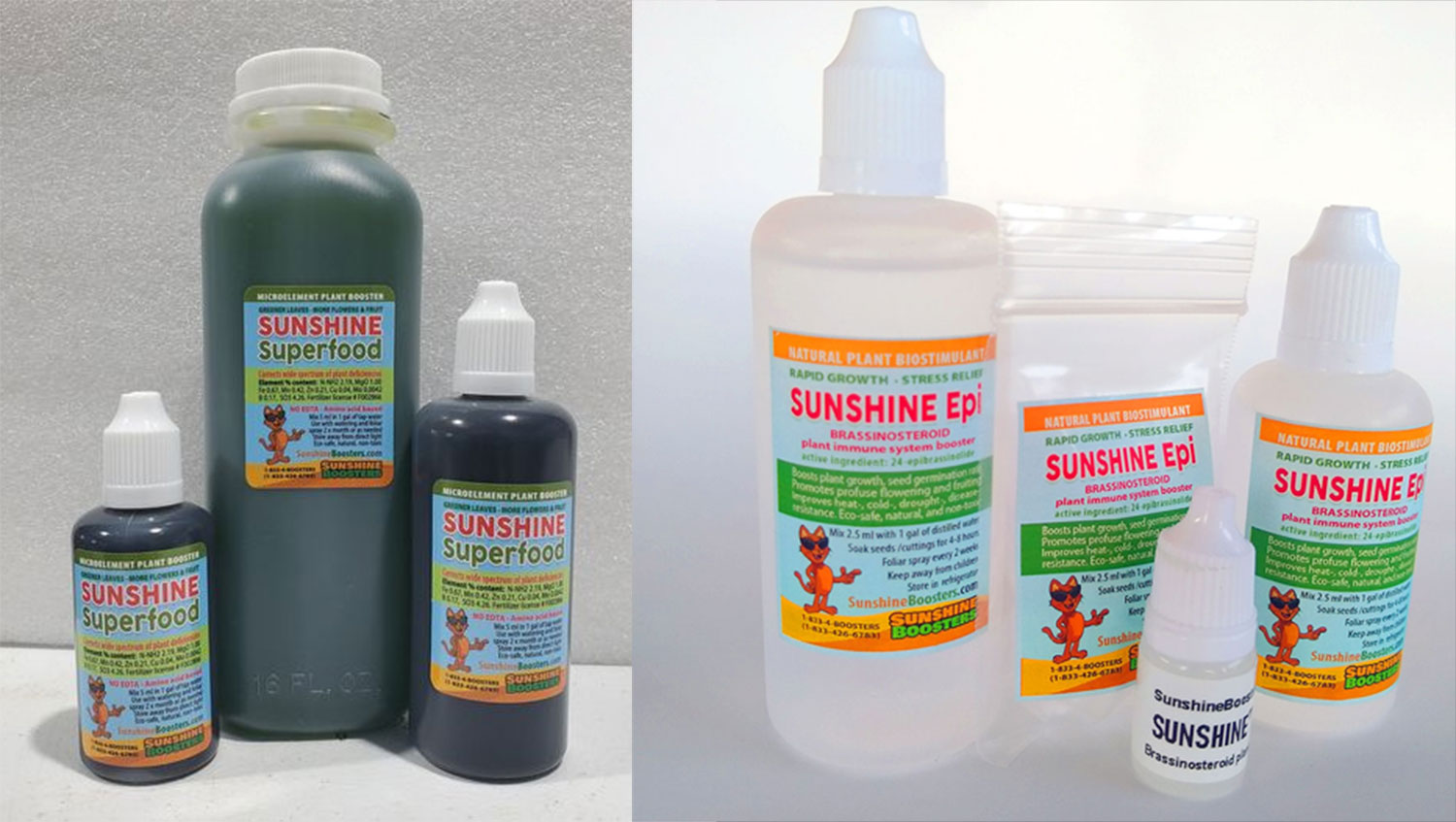
Additionally, for foliar treatments, use Sunshine SuperFood microelement supplement and Sunshine Epi biostimulator.
When you water next time, regardless of whether it rained or not, resume using liquid Sunshine Boosters.

Sunshine  Superfood  and  Epi

For potted plants

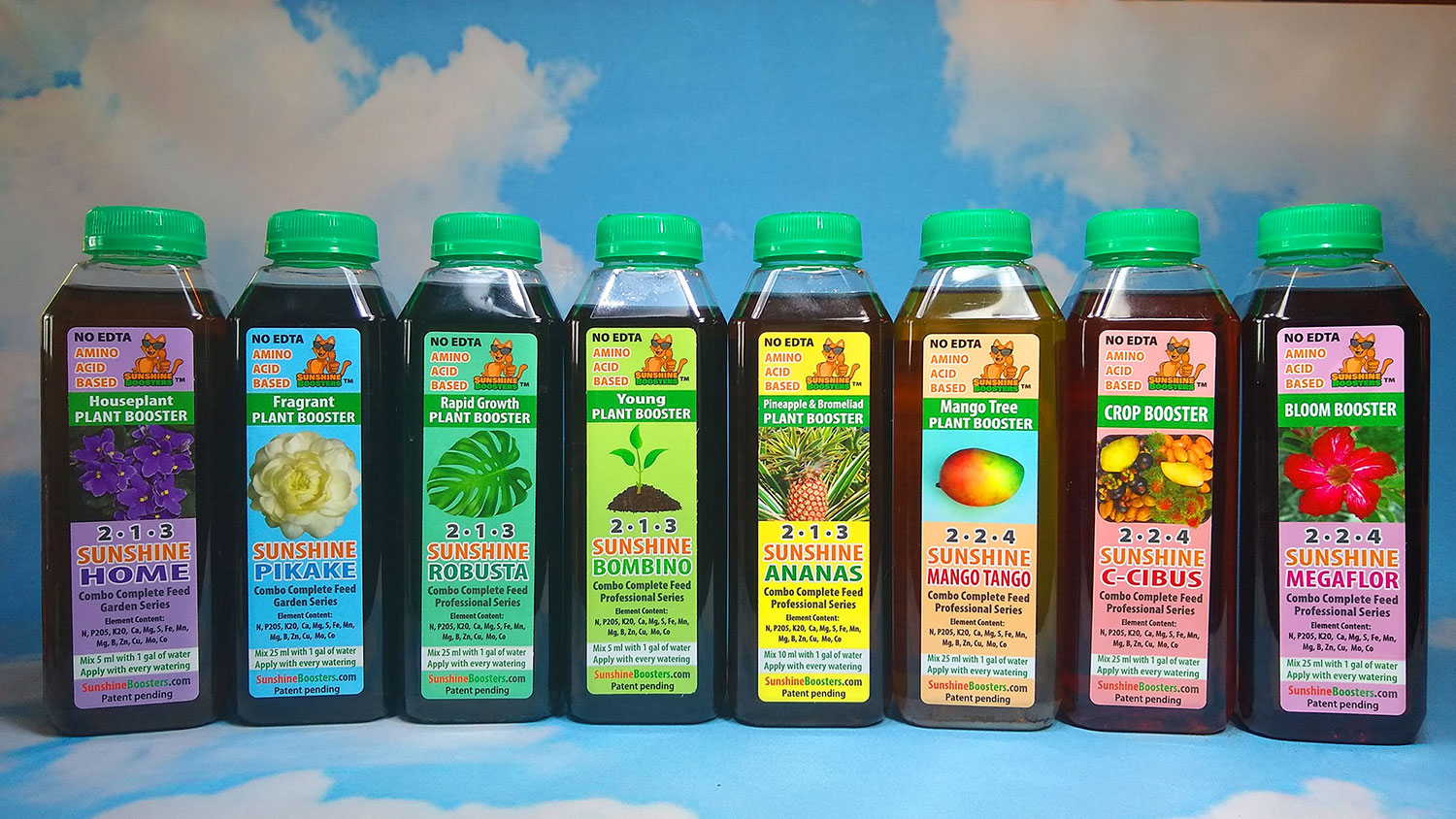
When you water your potted plants, use liquid Sunshine Boosters. Every 1 or 2 weeks (we recommend weekly), apply Sunshine Garden Series (the same type you are using when watering) for foliar treatment. Use the same dosage as you would for watering. By following these recommendations, you can ensure that your plants receive the appropriate nutrients during the rainy season.

Sunshine  Boosters  Garden  Series

the  Robuster

Date: 16 Dec 2021

Why should you use Sunshine Boosters?

by Ed Jones, the Booster guy

...You have heard it before, but I will tell you again. Sunshine Boosters are safe to use with every watering. It means that you can use Sunshine Boosters amino acid based fertilizers whenever you water your plants, even in the winter. Why is that so important?..

...We normally stop using dry, timed release, fertilizers around the first of November and not resume using them until the first part of March. This is true in many areas of the deep south where the ground stays above freezing year round...

However, it is safe to use Sunshine Boosters during these cooler months... Temperature does not play a role in the absorption of nutrients when using Sunshine Boosters...

To find out how it works, see Ed's new Article Why should you use Sunshine Boosters. If you want to learn even more in depth, check out his blog: Micronutrients Delivery Systems.

As of this writing, all Sunshine Boosters are on Holiday Sale. There are boosters for all different types of plants. Check them out and -

Give your plants a little something extra for Christmas!

CONTINUE READING >>