Date: 8 Aug 2019
How to grow Parijat indoors in winter
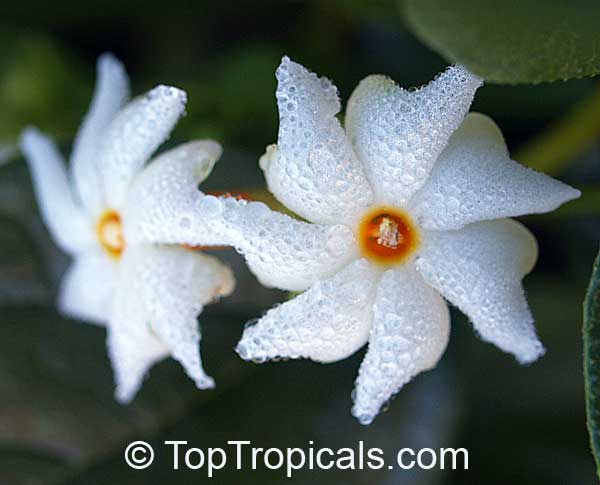
Q: I purchased Parijat plant last year spring. It had good growth in Summer, after that I kept the plant inside the house in winter. A couple of weeks it was ok, after that the plant lost leaves. What is a better idea for growing Parijat plant indoors in Winter?
A: Nyctanthes arbor-tristis, Parijat - is a semi-deciduous plant, which
means, it may lose its leaves during unfavorable conditions such as drought,
cold, low light and/or humidity. In your case, the plant dropped leaves because
of the stress of moving indoors that includes reducing light and humidity
levels. When a tropical plant loses leaves during winter, this means it goes
into a dormant stage. If this happens, you need to reduce watering and keep the
plant on a dry side, water in only when the top level of the soil feels dry
to touch. Do not fertilize.
Try to place the plant in a well-lit spot such as a windowsill. If the
windowsill and the window glass feel too cold for touch during wintertime,
you may place a sheet of a Styrofoam underneath the pot, and a sheet of a
bubble-wrap between the plant and the window glass, to create an extra barrier
from cold. The plant may re-leaf during wintertime; if not, it may wait until
spring, be patient.
Bring it back into outdoor light when minimum temperatures rise above
65F and resume fertilizing.
Recommended fertilizers for fragrant plants:
Pink N Good Daily Plant Food - Flower Booster
Plumeria Top Dress - Smart-Release Booster
SUNSHINE SuperFood - microelement supplement

Date: 24 Jul 2019
Plants that are not for eating
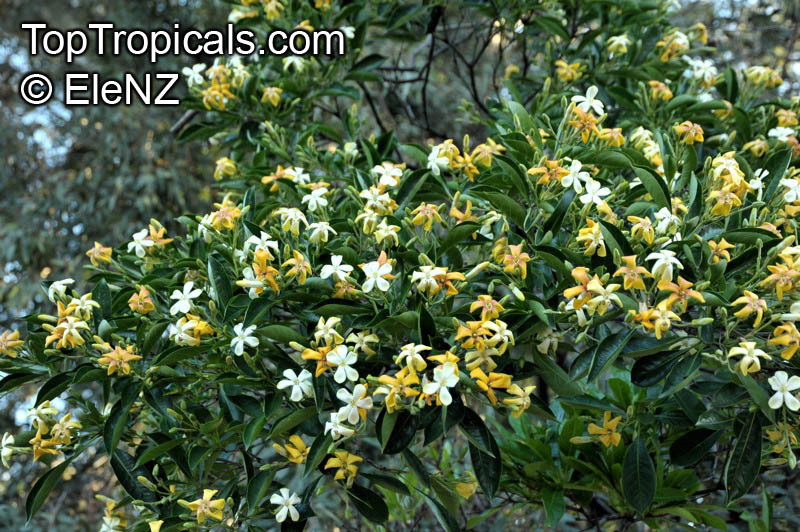
Q: On the website, it says that the pua keni keni tree is toxic. Do you know how toxic? Is it mild irritation or can someone die from ingesting any part of the plant?
A: Pua Keni Keni, Fagraea - seeds (and especially flesh of the fruit) are toxic, so we recommend to always wash your hands after handling them. Obviously, nobody in our team ever tried to eat them to check how toxic they are and if they are deadly.
In general, one must be careful when using plants for purposes other than ornamental growing, especially for consumption. While some obvious edibles (cultivated fruit, vegetables, herbs) are generally safe, but some individuals may have severe reactions - for example, many people are allergic to mangoes; other people may be sensitive to only mango leaves.
A number of plants that have parts commonly consumed for food, have other parts toxic or poisonous. Example: Potato - Solanum tuberosum - has edible tubers feeding the whole planet population, but this plant's fruit is highly toxic and even deadly if eaten. Fruit from a Potato plant look like tiny little green tomatoes since Potato belongs to the same family as Tomato - Nightshade, but it is super poisonous, while Tomato fruit is perfectly edible. So one must watch out and especially educate little children about not tasting anything directly from the garden.
As far as animals concern, in Nature they know what is poisonous and what is edible. Have you ever seen dead birds around a tree with poisonous fruit/seeds? Animals have their own sense for it. So if your concern is for pets, it is normally safe to have pets around plants with irritating or even poisonous parts. However, if your dog has a bad habit of chewing on stuff, you may use extra caution there.
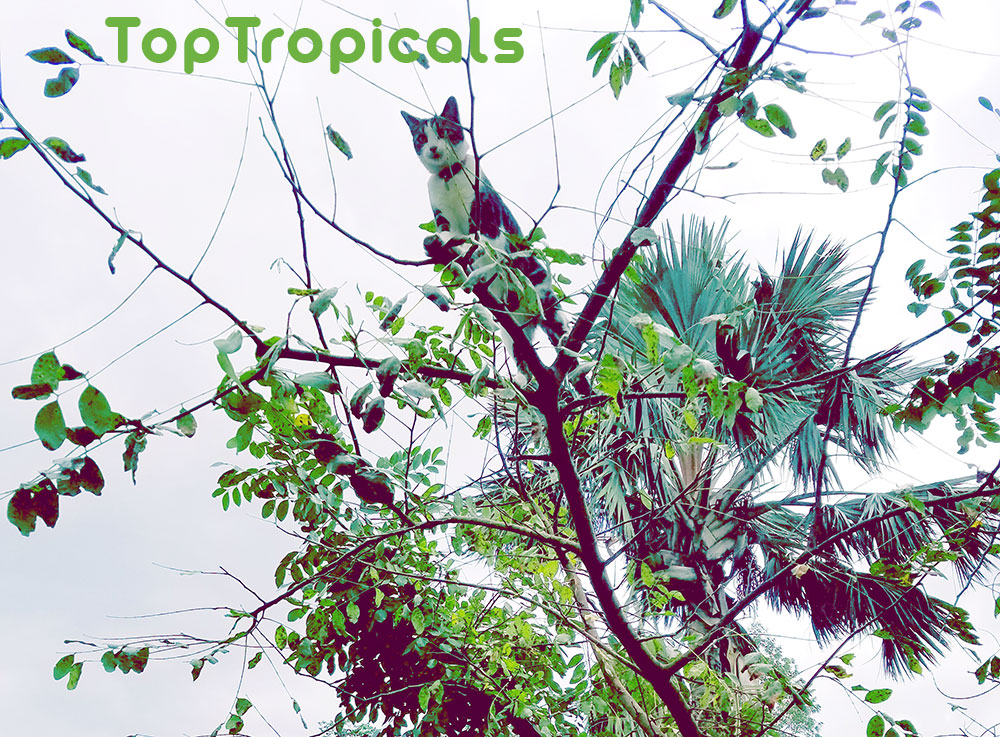
Photo below:
Riki-Tiki-Tavi exploring TopTropicals Gardens.
Date: 19 Jul 2019
Growing Coconuts from seeds
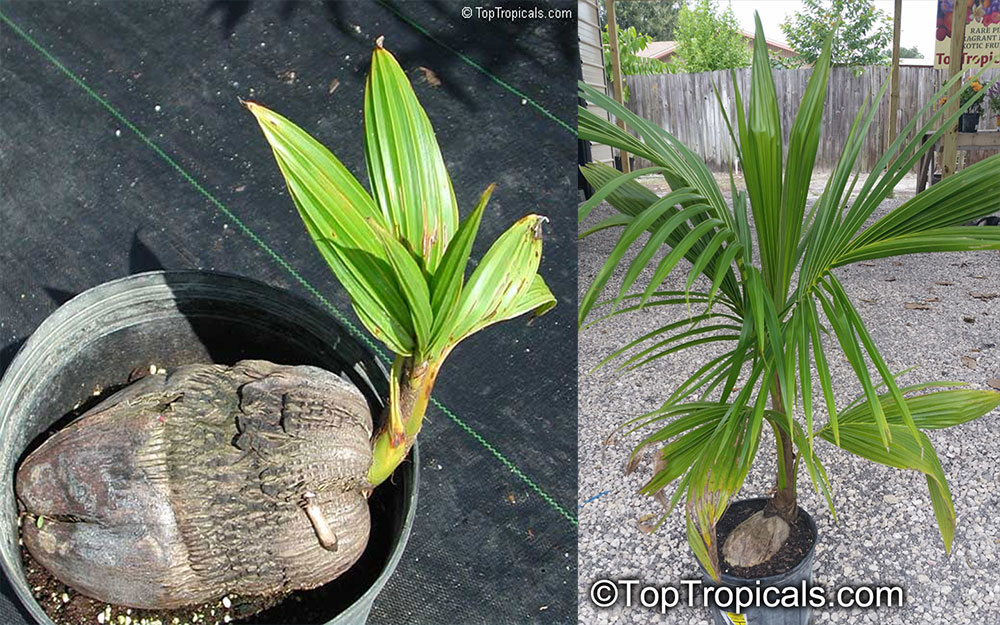
Q: Good afternoon Anna, hope all is well. I have a question regarding Coconut growth. When I planted my coconuts seeds I notice they had water in it, after checking 6 months later I took one out from the pot and shock to see if still had water but notice no water shaken inside, still, no plant growing on all 6 seeds but no water noise inside of them. Can you indicate if I should discard them or are they still have a chance they will germinate?
A: Coconut seeds normally germinate within a month from planting.
If there is no growth within 6 month, chances are the seed was not ripe
enough, or didn't have proper conditions for germination.
To grow a coconut palm from seed, place the nut on top of the soil (if
in a pot, must be at least 3 gal pot) on its side, and bury it in soil
half-way. Keep it warm (75F or higher, the warmer the better), in full sun, and
soil must stay moist. Start fertilizing when the seed sprouts.
RECOMMENDED FERTILIZER:
Purple Palm Food - Smart Release Palm Booster
Photo below:
James Coconuts, one of our customer service reps, will be happy to answer all your questions! (Anna Banana, Stevie, or Onika can help when Coconuts is out of the office).

Date: 21 Jun 2019
Growing Jackfruit in a pot
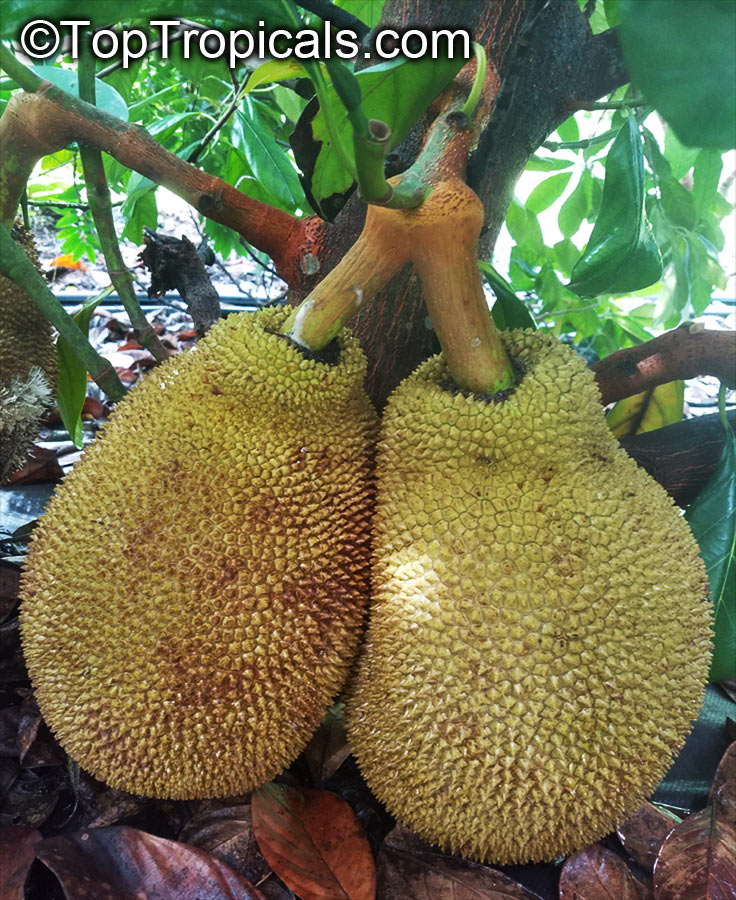
Q: I have a young jackfruit tree, and I wanted to know, is a 25 pot enough for an adult tree?
A: 25 to 50 gal should be eventually a good size pot for growing
a Jackfruit tree. Keep in mind the following:
1. Start with a smaller container, only slightly bigger than the root
system. Do not plant directly into a large container, this may create a risk
for root rot.
2. Step up the tree in a bigger container every year as it grows
bigger. With every repotting, trim both branches and roots to compact the plant and
to encourage branching out.
3. Jackfruit trees should be kept pruned under 6-7 ft in pots and 10-12
ft in the ground. This makes healthy fruit production more efficient and
keeps fruit at the base of the tree.
Date: 16 Jun 2019
Repotting Artocarpus with a taproot in ground
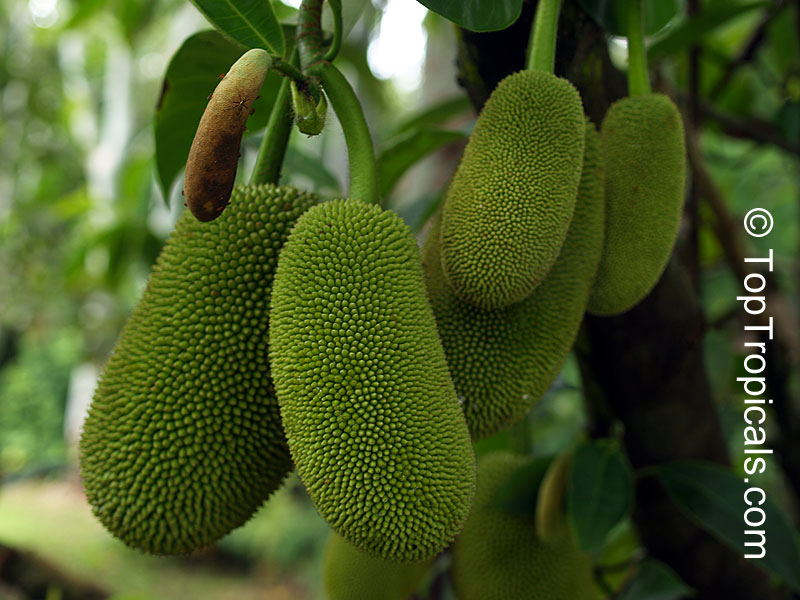
Q: The Chempedak I bought from you almost 3 years ago which I had repotted twice has a thick taproot growing in the ground, which I noticed this past winter. I was going to repot into the largest size pot almost half of a 55-g rain barrel. Can I try to dig/save as much of the taproot before repotting, will it die if I had to shorten/cut what I can't dig out completely? I hate to put it in the ground for fear it may not make it when we have severe cold/long hours of frost. I live in west Cocoa, Central Florida, 9b.
A: Yes, you can repot the tree and keep it in reasonable size container after trimming the roots. Most of the tropical trees (fruit trees not an exception) can be grown in containers even if in Nature they grow into vigorous large trees. The key is, trim the roots every time you transplant it. The process is similar to trimming branches and both don't hurt the plant as long as done right and moderately. You should trim the overgrown and spreading limbs at the same time. You may trim as much as 10% off root system at the time of repotting. This will cause the root system to branch out and become fuller, similar to branches, which is a good thing. If a tree grows a taproot like in your case, it is not necessary to try "saving" and digging out the whole root that may go down for a few feet. You may cut it off without major damage to the tree since the rest of its root system will continue to support the plant metabolism. Just keep in mind that the plant will be stressed for a while - so put it in bright shade and water regularly until signs of stress go away (wilted or dropping leaves may occur). This particular type of tree - Artocarpus - is pretty strong and vigorous so the stress should be minimal.