PeopleCats amid COVID-Cat-20
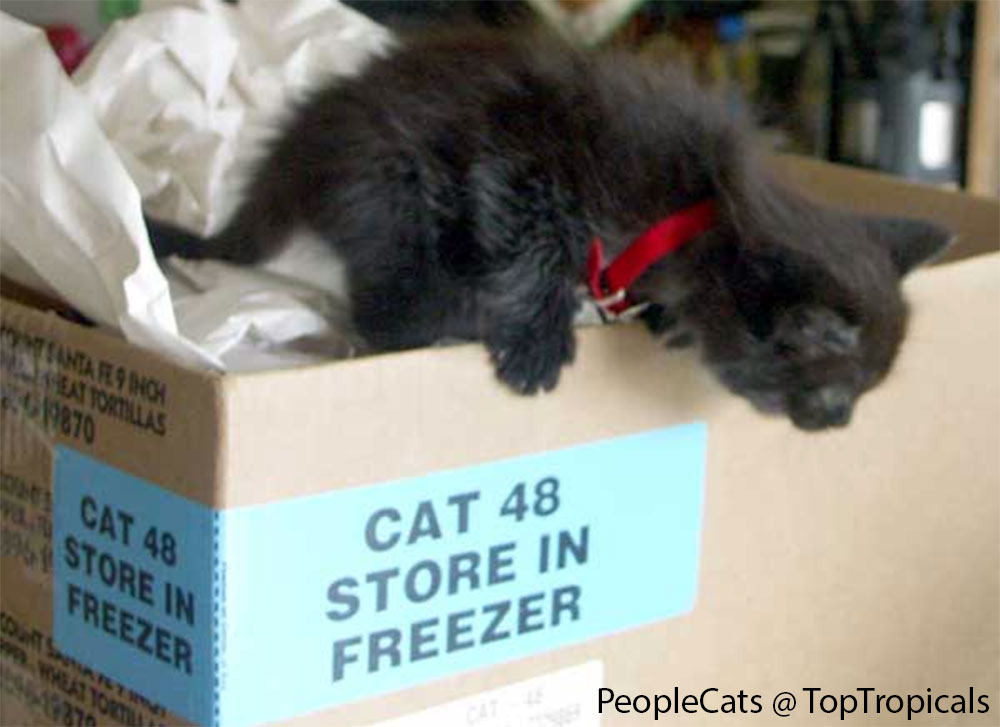
"It's not the size of the cat in the fight, it's the size of the
fight in the cat"
- Mark Twain -
While the whole world is suffering the virus attack, cats are no
exception. They do not get COVID-19, but they have their own coronavirus - a
respiratory condition that may become very dangerous for them. And although cat
coronavirus does not affect humans, we can transfer it to other cats
through our hands/petting, shared bowls and bedding, etc.
At TopTropicals, we had several cats sick with the flu and it took us a
long time and long hospital bills to bring them back to health! Below we are
sharing with you a few tips from our own experience that may help you fight and
treat cat coronavirus, that we call "Covid-Cat-20".
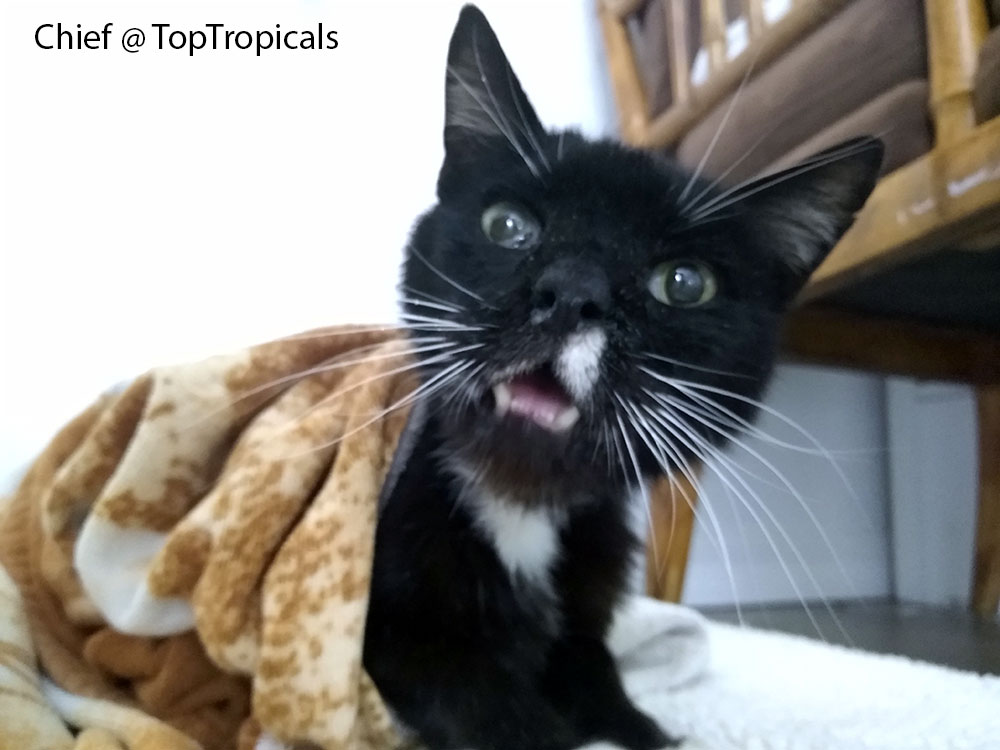
Chief is breathing through his mouth: "Stuffed nose sucks!"
How to treat Cat Coronavirus
When cats get a flu/virus/cold, they suffer congestion, sneeze and
cough. Just like us humans. But for cats, stuffed nose is much worse trouble,
because they can't smell food = they won't eat it! In tough cases, they won't
even drink any water. Due to specifics of cat metabolism, if a cat doesn't eat
and/or drink for more than a couple of days, it may become life-threatening.
It is not the virus that kills a cat, it is dehydration, lack of nutrition,
and possible secondary infections.
- Vet. During Covid-19 lockdown, many animal hospitals are
closed, but if you are lucky to find a vet, it is wise to give the cat a
long-lasting shot of antibiotic. You can't treat a virus with antibiotic, but it will
prevent secondary infections (like pneumonia, etc.)
- Water is absolutely essential! Make sure your Cat drinks water. If
he (she) doesn't want to drink on his own, you need to give him water with a
syringe. As often as you can. Little by little. Or, ask a vet to put a
"water pouch" under cat's skin. This will save the cat from dehydration.
- Food is the main key! Your cat must eat a normal size portion per
day in order to fight the illness. Because he can't smell, it's possible he
won't eat on his own. Offer him a smelly, soft/wet food of room temperature or
slightly warmer: usually tuna works well. Get Salmon Oil and put on top of the food: it is smelly, plus a great
vitamin supplement.
- Hand-feeding. If congestion is bad, even a smelly tuna may not
help. Mix a spoonful of pate with some water and try to hand-feed this "soup" to
the cat either using syringe, or a small spoon. Little by little. Remember,
his nose is stuffed and he can't swallow and breath at the same time, so it
must be tiny bites. (Wrap the entire cat tightly in a large thick towel to
save yourself lots of scratching damage, leaving out just the face. Guaranteed,
he won't like the procedure and you will be surprised how strong he is for a
sick cat.)
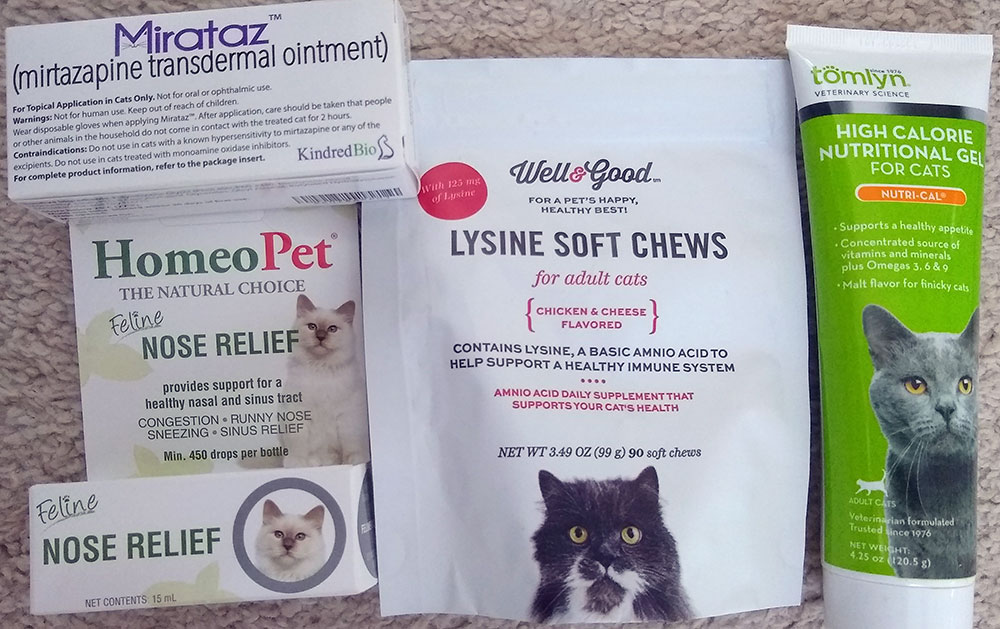
- Supplements. For an extra nutrition support, you may use Critical nutrition food and other protein supplements. Consult your vet
and you may want to try the following aids: High Calorie Liquid or Gel
(easier to administer), HomeoPet Nose Relief (for de-congestion), Lysine
Soft Chews, and Mirataz ointment (to promote appetite).
- Rest. Keep the cat indoors, in a warm place, away from drafts.
Cover with a towel to make comfy. Keep lights dimmed. Change bedding, towels,
blankets at least daily to keep clean, get rid of germs and drooling
accidents.
- Quarantine from other cats, the cat coronavirus is super
catchy! Find that spare room. Bleach, soap, alcohol and Hand Sanitizer - are your friends now to maintain germ- and virus-free
environment.
- Mild cases. Some cats have mild symptoms (we've noticed that black
cats and tuxedo cats are more susceptible regardless of age). In this case,
do not panic - just give them time to recover. Lots of rest, privacy, and be
sure to monitor water/food intake!
- Tough cases. Most cats look lethargic when sick. At some point, if
within 3-4 days you don't see improvement and the coughing continues, you
need x-ray to rule out pneumonia.
Stay well and healthy, PeopleCats!
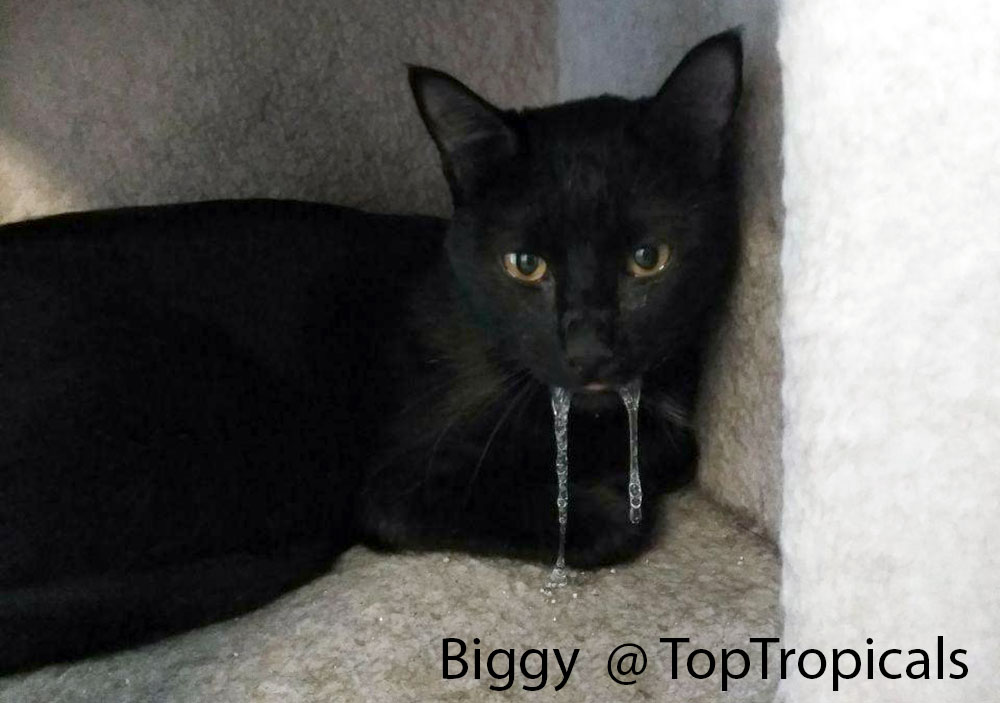
Biggy sneezed... Ooops, sorry for no mask!
TopTropicals PeopleCat Club
Thank you everybody for supporting us in helping PeopleCat Community!
Make
your kind donation today and receive a surprise gift from us. Every little
bit helps! Thank you and God bless you and your pets!
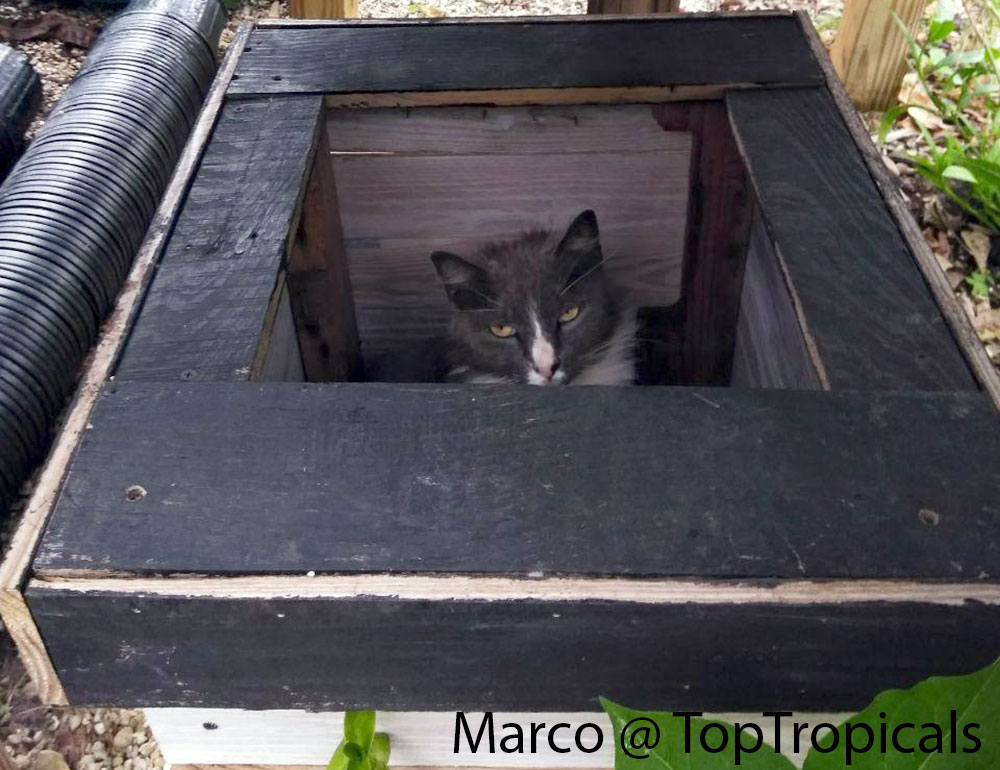
Coughing Marco is practicing Social Distancing