Garden Blog - Top Tropicals

Date: 4 Mar 2021

Healthy Plants: Q&A from Mr Booster
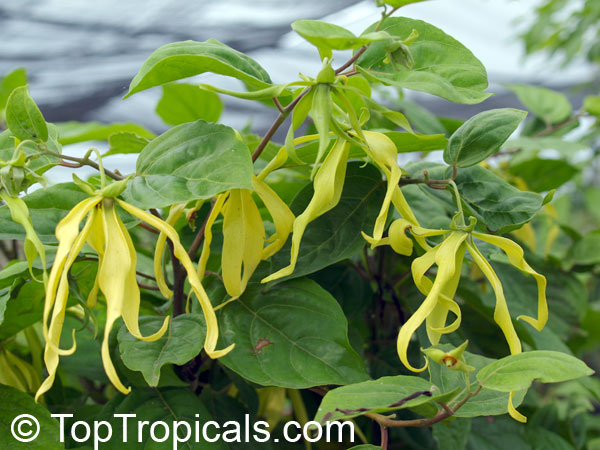
Ylang Ylang leaves after winter

Q: Hi, I purchased ylang ylang tree a couple of years ago. It's grown quite well in my Greenhouse but I'm having some trouble figuring out if I'm watering it too much not enough or if it has an insect. Can you please take a look at my photos and maybe give me a suggestion of what my problem might be?
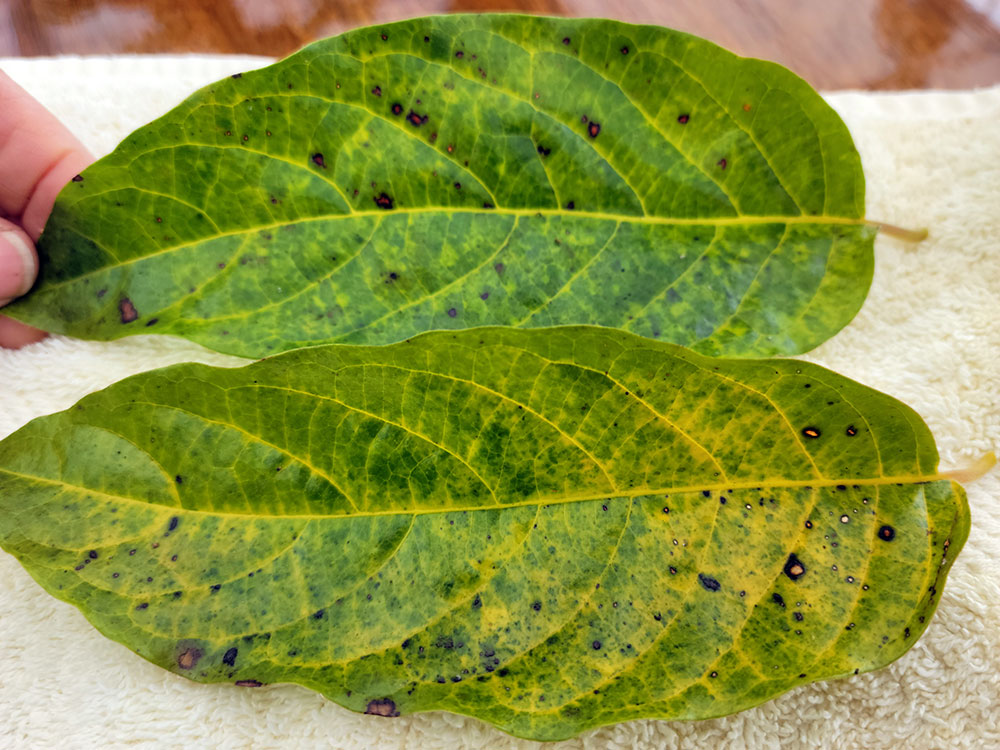
A: It is normal for Ylang Ylang tree to get dark spots during winter time. Sometimes Cananga gets whole branches darkened (especially dwarf variety fruiticosa), some may even fall off. But they will be replaced with new growth in Spring-Summer. There is nothing wrong with your plant, it is just a reaction to cold and short day light when you keep this plant indoors. These leaves eventually will fall off as the weather warms up, and will be replaced with a new fresh green growth.
Luckily, Cananga is not susceptible to insects and diseases, but its leaves can look unattractive in winter. Make sure to keep watering at minimum until temperatures raise to 80's.
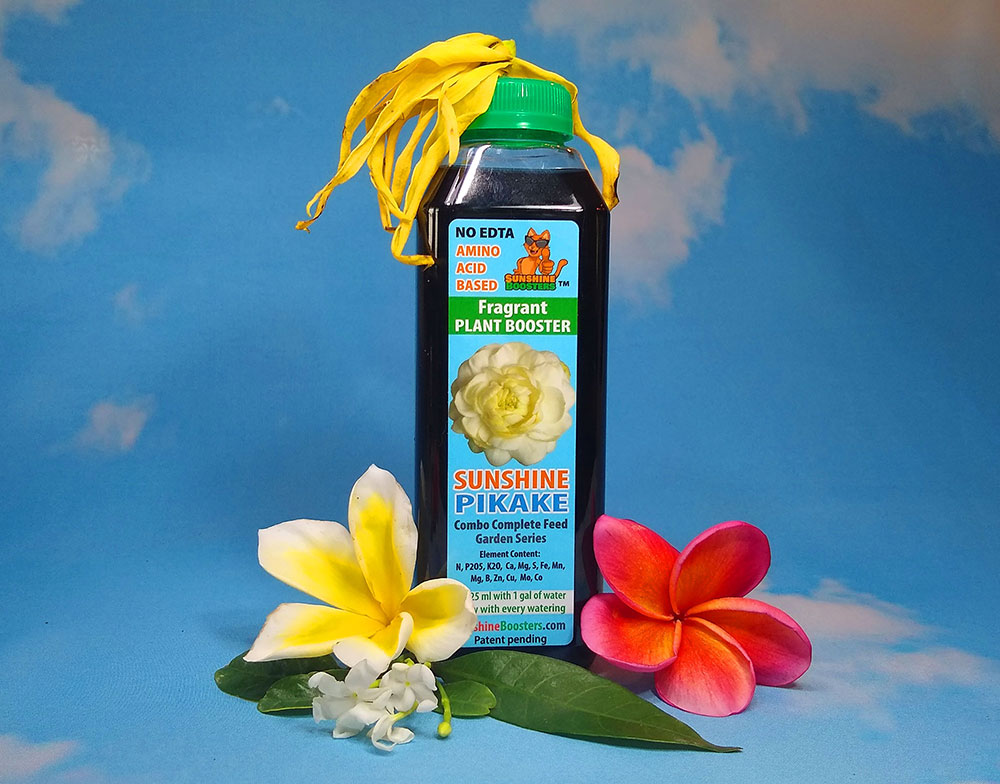
Start fertilizing as soon as new growth appears. We recommend SUNSHINE Pikake - Fragrant Flower Booster, an ultimate fertilizer for fragrant plants.

Date: 19 Jan 2021

Healthy Plants: Q&A from Mr Booster

Fertilizing in Winter

Q: I have many tropical plants in my garden, both in the ground and in pots. I realize it is wintertime and some of them, the Hydrangea, Hibiscuses, and roses are in bloom but the rest of them seem wilty and droopy. Is it alright to fertilize them now, or should I wait for a few days? I have an all purpose tropical fertilizer and a 20-20-20 also. Please advise what to do.

A: During wintertime, tropicals may suffer from low temperatures and lack of sunshine which causes droopy leaves, and leaf loss.
Regardless of the cause and plant condition, you should NEVER apply traditional dry fertilizers during cool months. When cold, dry fertilizers (EDTA-chelated) may create nutrient lock up in soil and damage the roots. Dry fertilizers (both granulated and water-soluble) can be used only during hot season - when min temperatures stay above 65F for at least a week in a row, and daytime temperatures are over 75-80F. During hot, active growth season plant metabolism increases. This provides less chance for a chemical root burn, as the nutrients are used up quickly.

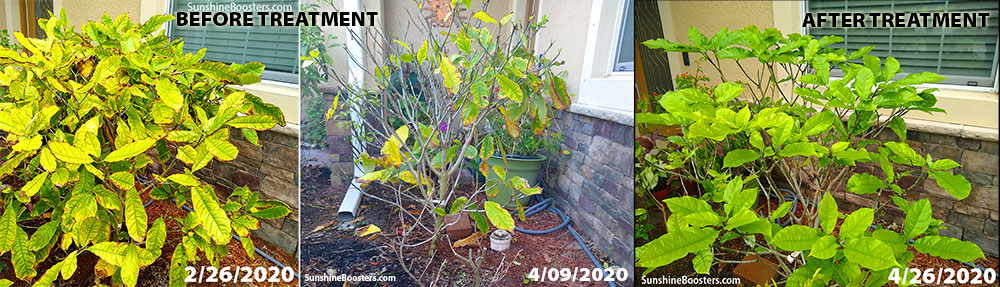
However, liquid fertilizers, as long as they are amino-acid based, can be used year round. From our own experience last winter, we discovered that fertilizing sickly looking plants (with signs of cold damage and root issues) with Sunshine Boosters actually revived those plants. Sunshine Boosters even brought back to life some hopeless specimens. Take a look at this gardenia that grows in our garden (picture above). See full article.
In your case, it would be beneficial to use a mild formula of liquid boosters in combination with Sunshine Epi -a natural plant hormone that boost their growth and helps to cope with cold-, temperature- and low-light-related stress.

These are the products we recommend:
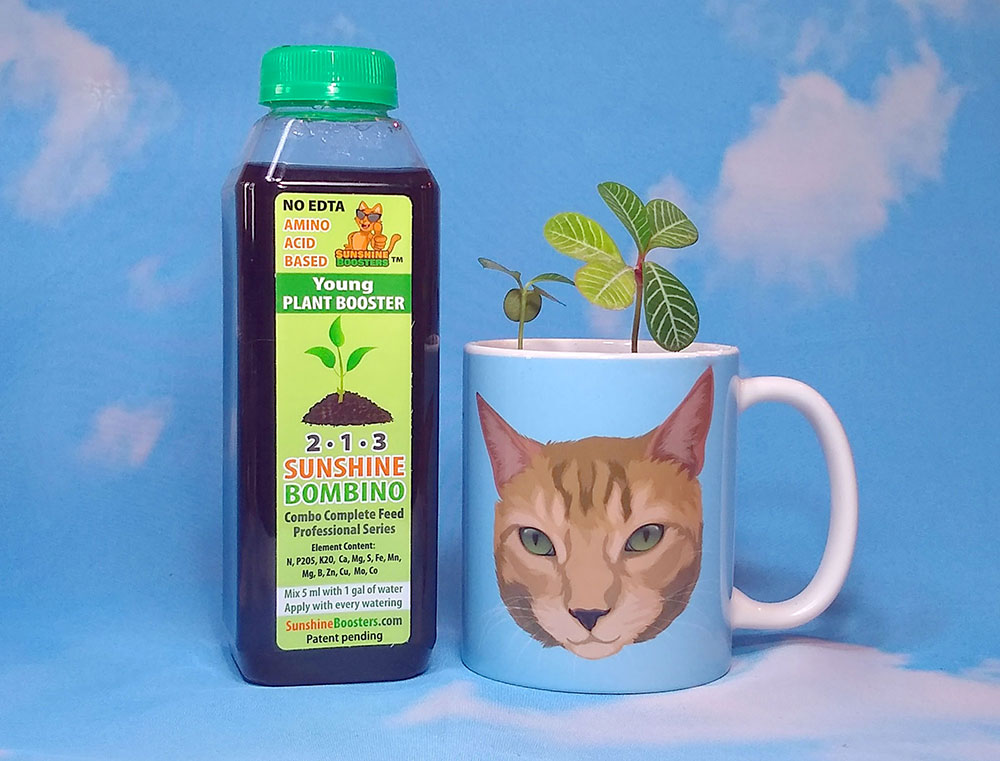
- Sunshine Bombino - add to every watering
- Sunshine Epi - twice a month as foliage spray

Since you grow plants in pots, feeding program is especially essential, because plants are limited with a container size where roots can't reach out to more food in the outer soil. In professional nursery set up with injector irrigation systems, container plants are fed daily (depending on season, more than once a day) with every watering. This is why greenhouse plants are so healthy looking.
So feel free to give your plants Sunshine boosters with every watering, dozing according to the label. During cold period, plants need less frequent watering, so fertilizer input will be balanced accordingly, it will depend on temperature and plant metabolism.

Sunshine Bombino - mild, "pampering" formula for young and tender plants, as well as plants recovering from stress and/or winter damage.

Date: 4 Nov 2024

10 key tips for successful overwintering of tropical plants indoors

10 key tips for successful overwintering of tropical plants indoors

10 key tips for successful overwintering of tropical plants indoors


1. Maximize Light:
The more light, the better. There's no such thing as too much indoor light. If windows aren't enough, use LED grow lights, which stay cool and won't dry the air. Rotate plants every few days to prevent uneven leaf loss.

2. Reduce Watering: Less light and cooler temperatures mean plants need less water. Allow the soil to dry between waterings, and avoid overwatering - combination of cold + wet is especially harmful.

3. Maintain Moderate Temperatures: Most tropicals are happy with daytime temperatures around 75F and nights at 50-60F. In sunrooms or greenhouses, some can handle 45F if watering is kept to a minimum.

4. Boost Humidity: Avoid placing plants near heaters or vents that dry the air. Misting daily helps, or place pots on trays filled with water and pebbles to raise humidity around them.

5. Monitor for Pests: Check leaves weekly to catch insect problems early, as pests can cause serious damage or even kill the plant indoors.

6. Fertilize Smart: Use ONLY liquid, amino-acid-based fertilizers like Sunshine Boosters throughout winter; they won't burn roots since their dosage adjusts with reduced watering. Avoid dry, granulated, and EDTA-based fertilizers during winter and dormancy.

7. Use Micro-Nutrients: Along with macro-elements (fertilizers), supplement with micro-elements like Sunshine Superfood and bio-stimulants such as Sunshine Epi to build strong plants with robust immune systems, better able to withstand unfavorable conditions and resist diseases.

8. Hold Off on Pruning: Leaf drop and leggy growth are normal responses to winter. Wait until spring to prune, when new growth starts, to encourage branching and healthy foliage.

9. Don't Repot Yet: During dormancy, roots slow their growth. Repotting too soon risks root rot. Wait until spring when new growth appears to transplant into a larger container. Typically, roots grow in proportion to the above-ground parts.

10. Let Them Rest: Winter is a natural resting period. Avoid forcing growth - your plants will reward your patience with vibrant leaves and flowers when spring returns.

🛒 Shop Indoor plants

#How_to

🔴 Join 👉 TopTropicals

Date: 20 Nov 2024

Sunshine Boosters Winter Use

The magic fertilizer in action

Crazy  banana  with  Sunshine  boosters

Do you remember that Sunshine Boosters fertilizers can be applied year-round?

As natural fertilizers, their scientifically created formulas provide perfectly balanced nutrition for your plants throughout the year. Follow the instructions on the labels and apply Sunshine Boosters with every watering. Give your plants extra boost during winter months! The fertilizer amount is balanced, adjusting proportionally to the water amount, which is tailored to the plant's winter needs. Unlike dry fertilizers, Sunshine Boosters can be used all year without fear of burning plants with excessive nutrient lockup.

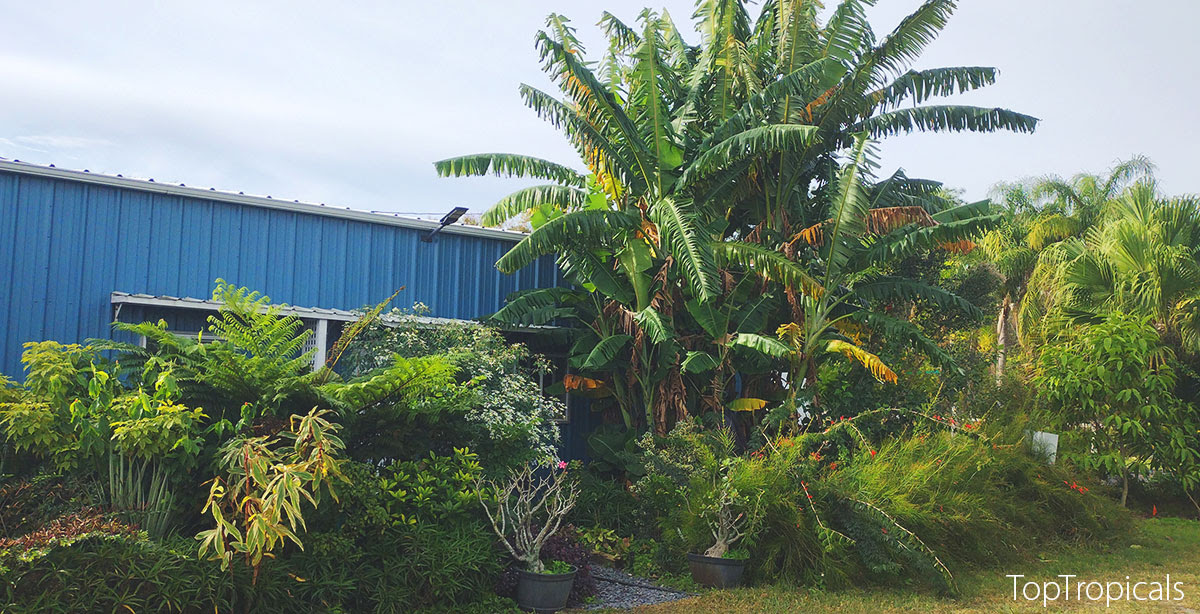
Those who visited on B-Farm in Sebring, have noticed our little garden by the office, with plants that are always happy and vigorous - year around. They are irrigated automatically with Sunshine Boosters using the Robuster injector. We are proud of our "crazy banana", it is taller than the building, we honestly have never seen a banana of that size! The solution we are using there is Sunshine Robusta (also available for pick up in 2.5 gal jugs).

Save on Sunshine Boosters with the discount code above!

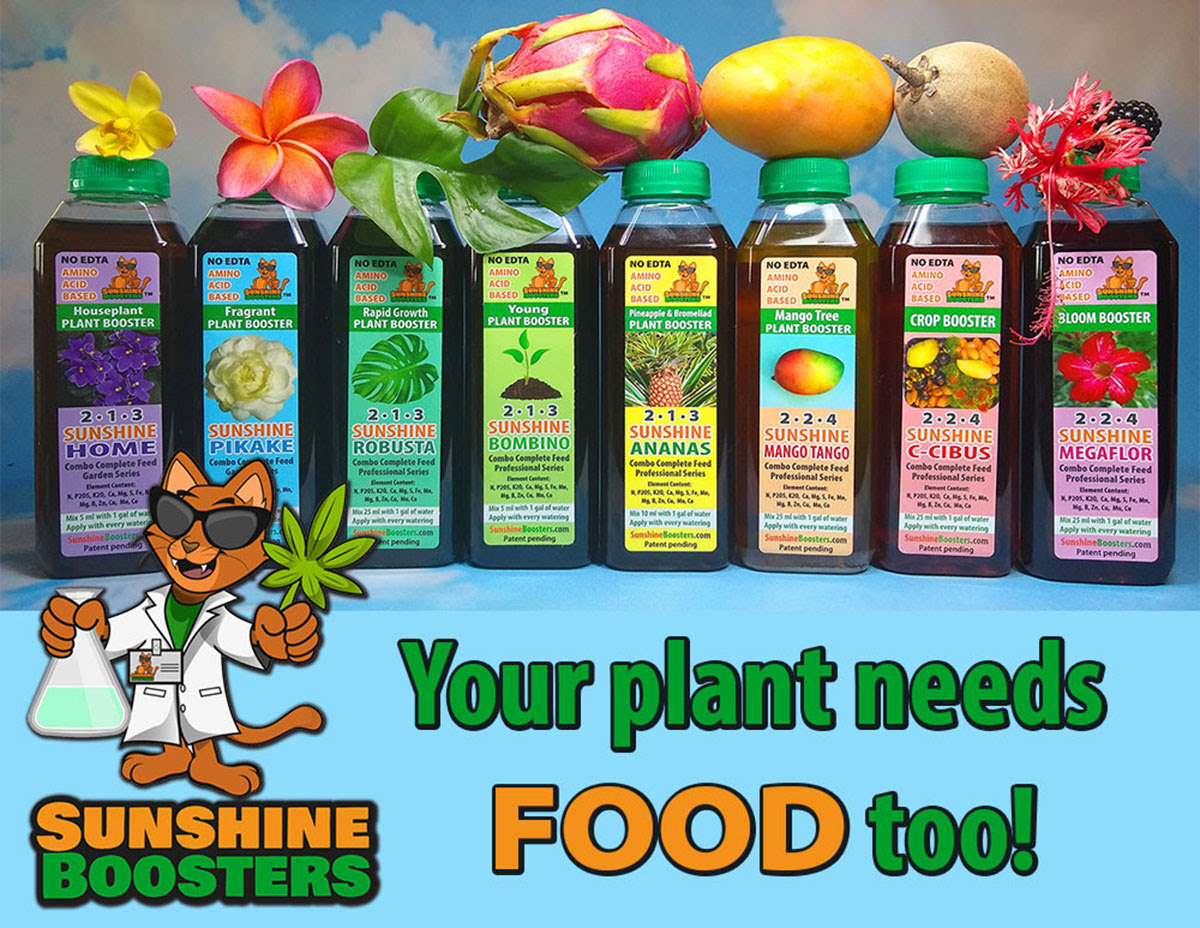
your  plant  needs  food  -  sunshine  boosters

Date: 30 Dec 2024

What is the most popular Winter-flowering shrub?

Tropical Hydrangea - Dombeya x wallichii

💋 What is the most popular Winter-flowering shrub?

  • 🌸 Tropical Hydrangea - Dombeya x wallichii - is a Queen sister of the popular Princess - Dombeya seminole that we introduced in our earlier post.
  • 🌸 Tropical Hydrangea is a stunning winter bloomer with fragrant, pink, hydrangea-like flowers that will turn heads and attract pollinators.
  • 🌸 Spectacular blooms: Clusters of fragrant, pink flowers brighten the landscape in winter and draw in bees and butterflies.
  • 🌸 Lush foliage: Large, heart-shaped leaves add tropical charm year-round.
  • 🌸 Fast-growing: Quickly creates a multi-stemmed bush, perfect for screening or covering unwanted views.
  • 🌸 Versatile landscaping: Ideal for hedges, garden accents, or a statement plant in any tropical or subtropical garden.
  • 🌸 With its beauty and utility, Tropical Hydrangea is a must-have for creating a vibrant, pollinator-friendly garden with minimal effort!


🛒 Shop Dombeyas

#Hedges_with_benefits #Butterfly_Plants

🔴 Join 👉 TopTropicals