Date: 11 Jan 2021
Tropical gardener beginning-of-year checklist
Final pre-Spring check of whatever we had forgotten! For a gardener, the year ahead is a chance to do things you want, as a way to achieve the things you need to do. If your number one New Year's resolution is to garden more (a want-to item), you also will be exercising more (a need-to). Or if you plant a new edible garden (want, want, want), you will end up checking off "eat more leafy vegetables and fruits" from your to-do list!
12 steps to get ready for 2021 season:
1 - Spray fruit trees and houseplants with insecticide and micro-elements
2 - Continue spraying SUNSHINE-Epi to improve plant hardiness
3 - Protect tender plants during cold spells and especially from freeze
4 - Reduce watering during cooler months, keeping the root zone on a dry
side
5 - To give your plants a kick start, fertilize with liquid SUNSHINE Boosters fertilizers - they are safe to be used year round
6 - Plant fruit trees: winter planting is beneficial to avoid heat stress for roots
7 - Plant Butterfly and Hummingbird Attractants
8 - Plant bulbs, vegetables and herbs. Use eco-safe, natural SUNSHINE boosters for all your edibles.
9 - Plan your summer garden and order seeds early
10 - Start tropical plants from seeds (indoors for cooler climates)
11 - Start ordering tropical plants and beneficial soil mix to get them established after shipping in pots
12 - Clean and oil garden tools

Date: 11 Sep 2020
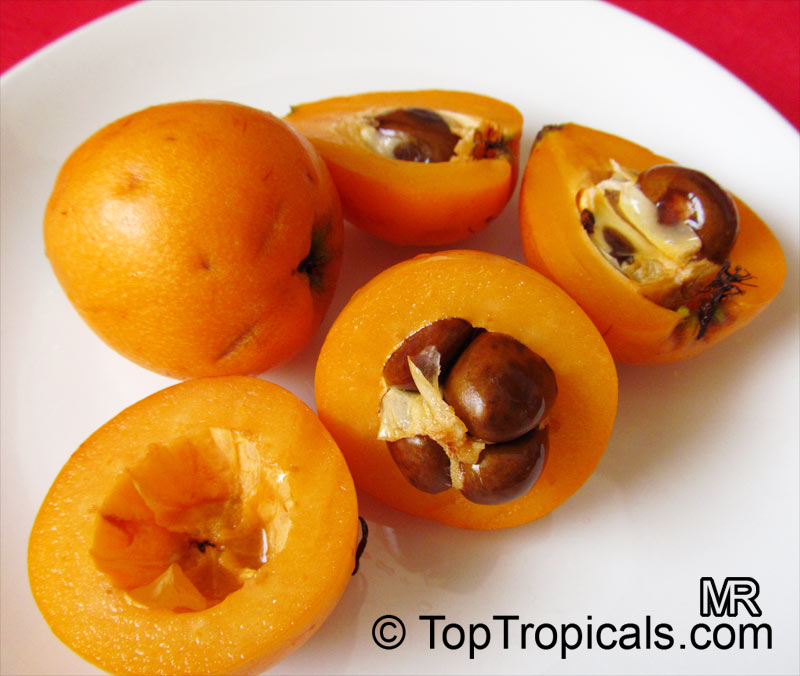
The best Loquat varieties with big, sweet fruit
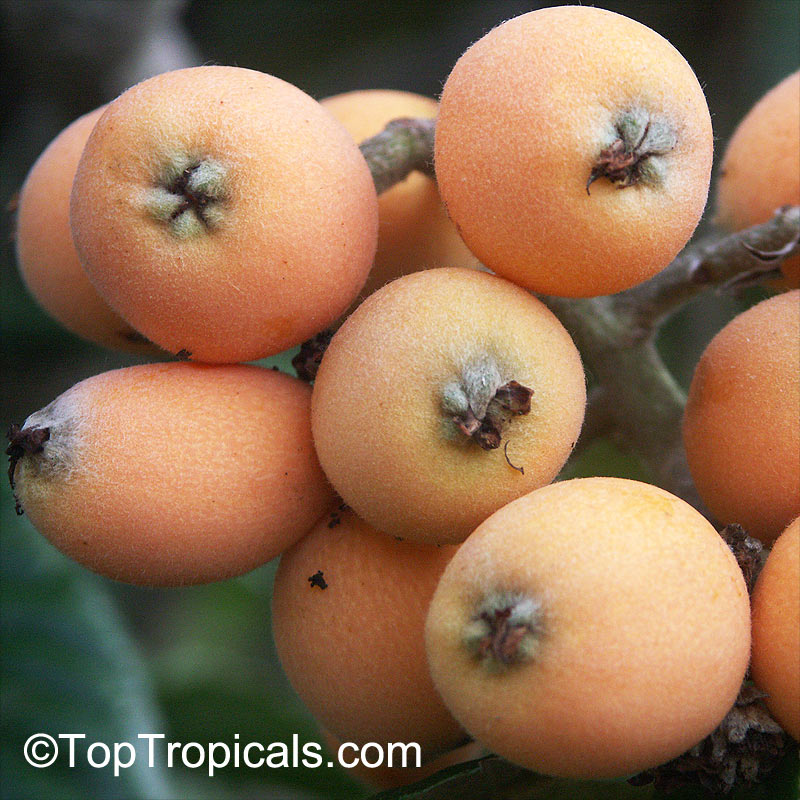
Q: I'm interested in loquat and read through the varieties you offer but wanted your recommendation. I'm looking for a variety that is big, sweet (not tart) with 1 seed. Of the varieties you offer... Which variety would you recommend?
A: From our experience, the most popular Loquat variety is Christmas.
It is an early ripening type hence the name Christmas. Fruits are very large
for a loquat, they are bright yellow with a tangy apricot flavor.
Another good variety we recommend is Yehuda - it has a large fruit and very small seed
Also, variety Oliver for many years has been considered the best loquat for South
Florida. The fruiting season is March to May. It has medium to large fruit. The
fruit is very sweet with only one-two seeds.
Loquats are very cold hardy tropical fruit trees, easy to grow, drought
tolerant, fast growing. Fruit is great for eating fresh or making jam.
Check them out while they are on sale!
Date: 30 Jun 2020
Plants like to snack!
How to feed Poinciana tree
(and other tropical flowering trees)
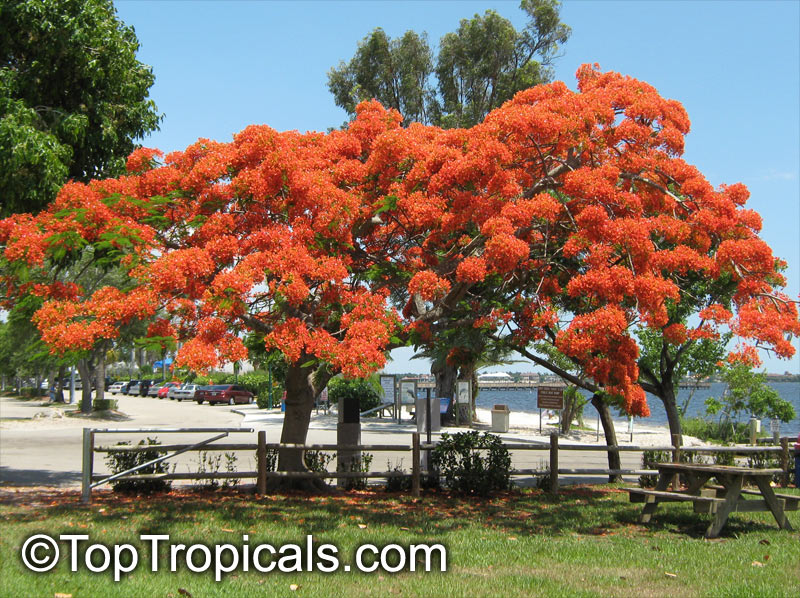
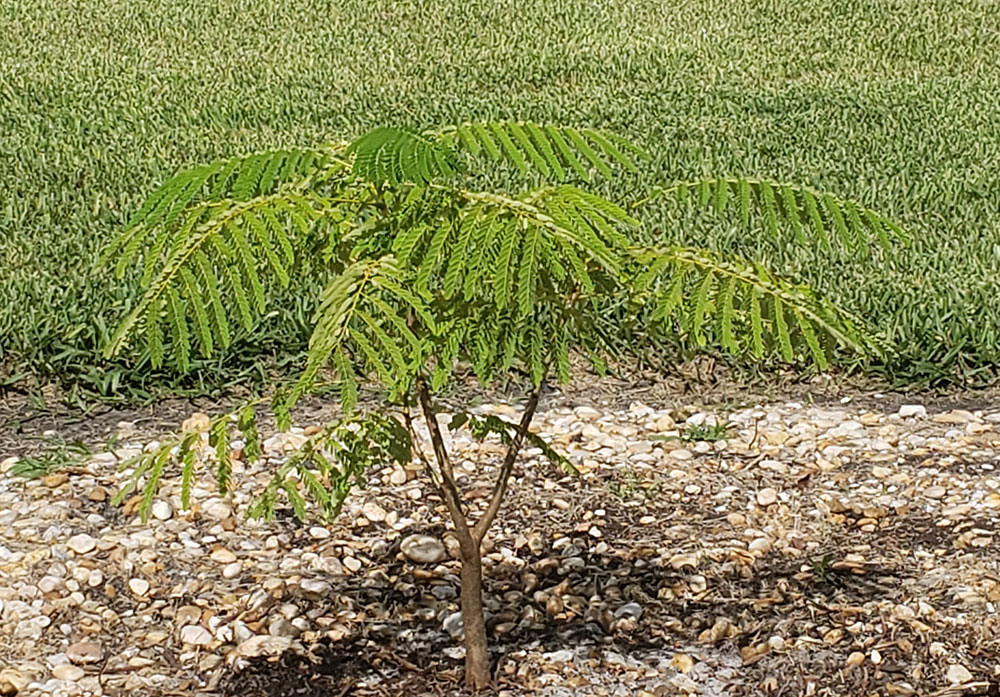
Q: We purchased a Royal Poinciana tree from TopTropicals not too long ago and we gradually gave it more sun until finally we were able to plant it in direct sunlight where it's been for a week or so. Rain has been sporadic lately so I'm giving it a little bit of water every day. It seems to be doing fine. I do have a question about whether the leaves are as green as they should be? I read online that I should fertilize it with gardenia / ixoria fertilizer in March, June, and October. I looked on homedepot.com but didn't really find anything that goes by that name. Would fertilizer help? Can you suggest a fertilizer?
A: Your Poinciana tree looks pretty healthy and happy,
congratulations with a great job!
Traditional (old-school) fertilizer recommendations usually suggest feeding
a plant 2-3 times a year with a slow-release fertilizer. And although a
plant will benefit from any fertilizer application (extra food is always good),
however, for the best results, faster growth, sooner and more profuse
blooming, your should use complete plant nutrition products - liquid fertilizers (see
why liquid
fertilizers are better than dry).
Here is an example. Some people eat a big heavy meal once a day which we
all know, is not very healthy. Other people eat balanced food more frequently
but in smaller portions - this is always the best way to go.
From this point, plants prefer SNACKING - frequent feeding, but with less
concentrated, mild and balanced nutrients.
For your beautiful Poinciana tree (and other flowering plants), we suggest
the following nutrition program:
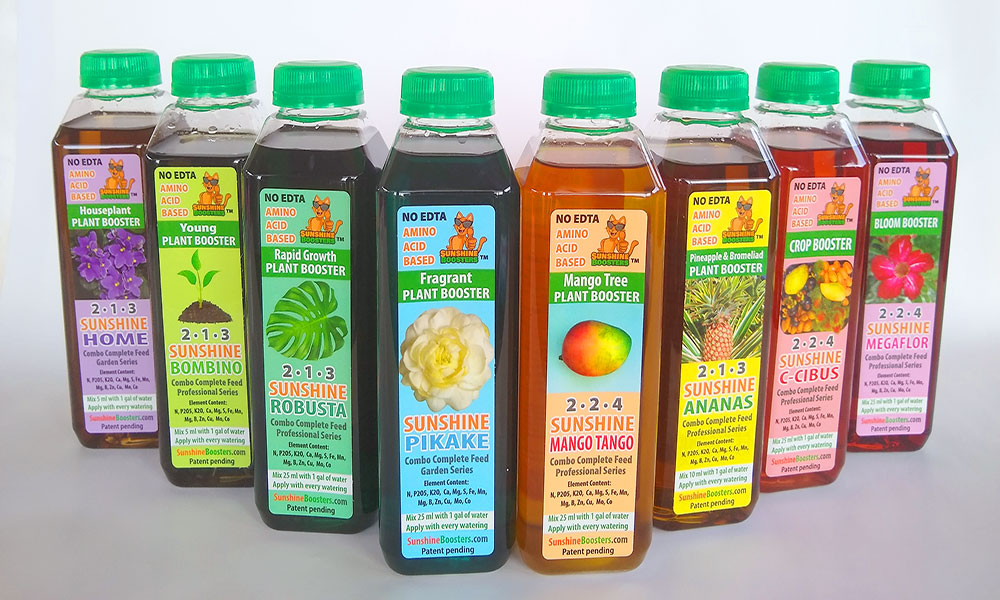
1) SUNSHINE Megaflor - Bloom Nutrition Booster - you may use this fertilizer as frequent as with every watering, it won't burn the roots, and will provide a complete nutrition for all plant needs throughout the year. You can continue fertilizing with Megaflor even during winter time. Sunshine Megaflor will help you to keep the plant healthy, vigorous, and resistant to stress and diseases. It turns leaves green and makes the plant strong so it will start flowering sooner for you.
2) Tropical Allure - Smart-Release Booster. Apply it once a month during hot season only (in Florida - from March to November).
Date: 25 Jun 2020
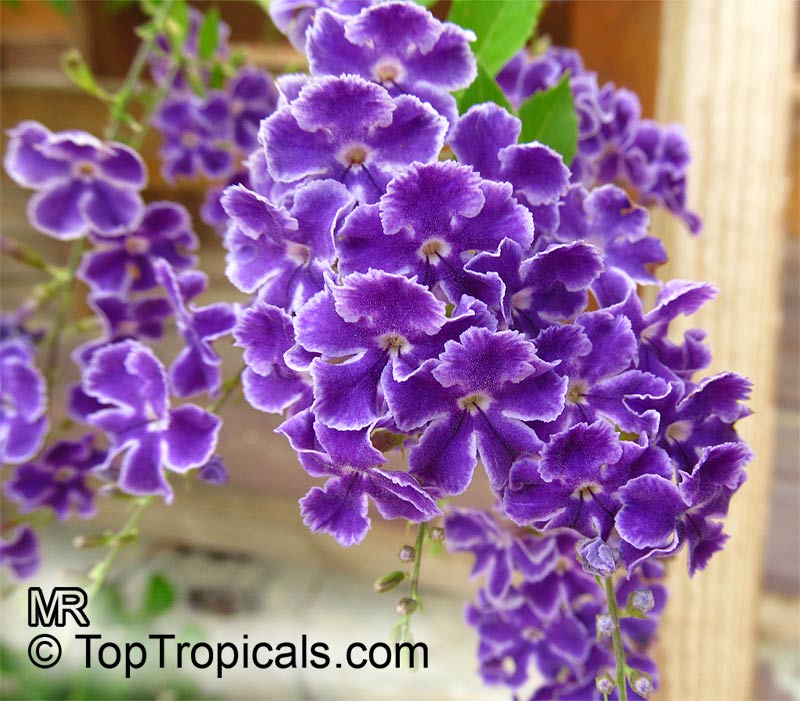
Plant of the Month: Golden Dewdrop - Duranta erecta
Stevie's Pick: what's in bloom?
Our exotic plant grower Steven Gowdy is featuring the most interesting plants he discovers and recommends today while working in TopTropicals greenhouses.
Duranta - Golden Dewdrop - is simply stunning with cascading flowers in
abundance. Either it has lavender, blue, or solid white flowers, it is a
sight to behold. The popular name Golden Dewdrop is inspired by the clusters of
bright orange-yellow berries that follow the flowers, in such quantities that
they often cause the slender branches to droop gracefully.
Duranta erecta blooms off and on all year and can be pruned to size as a
bush or a standard tree. If let go, it can grow up to 20 feet tall and wide.
Durantas are excellent butterfly and hummingbird attractors. They will
complement your tropical garden or a stand alone in your Southern landscape.
Great for providing a color contrast in the landscape, they are especially
well-suited as a bright-colored background or screening.
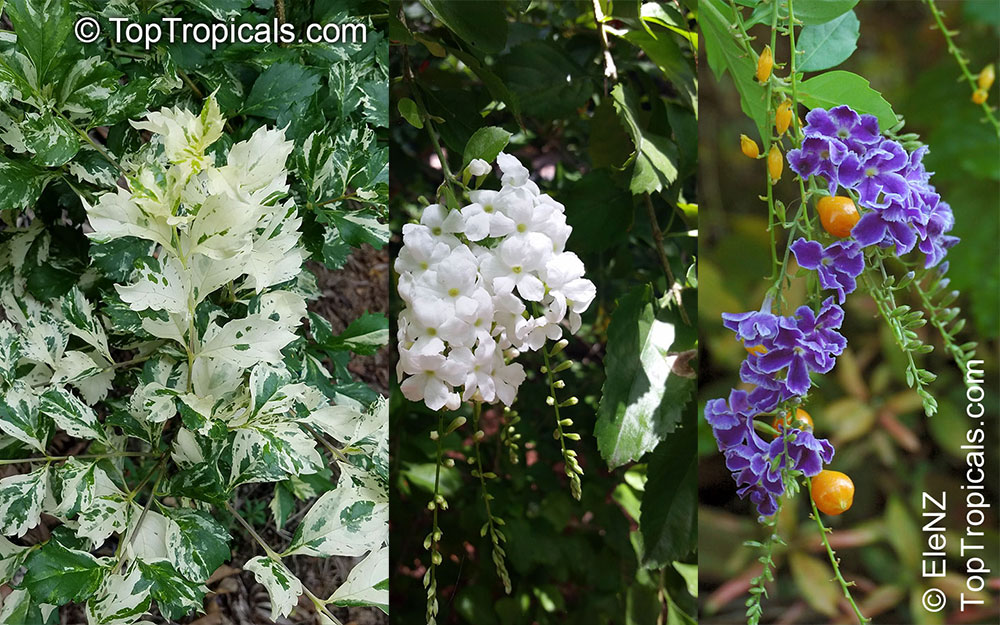
White
Golden Dewdrop has pure white flowers that appear in loose clusters, and
both berries and blossoms are often seen on a plant. This evergreen fast
growing shrub spreads and arches to 10 feet tall and wide and is great for live
hedges and covering fences and corners.
Variegated variety, also called Variegated Sky Flower, is grown for its summer flowers, and very showy
leaves that are dark green with bright white variegation and creamy-yellow
margins around the one inch long serrated leaves.. In the summer, cascading
clusters of blue tubular flowers appear followed by wonderfully contrasting
orange-yellow berries.
In mild climates, Durantas can be in flower nearly year round with flowers
and fruit appearing at the same time. It does best in full sun with frequent
deep watering and is pretty hardy, to about 20-25F. It is a good choice for
espaliers, as a small tree or large bush; all forms benefit from frequent
selective pruning. Prune back in late-winter to encourage a more compact shape
and strong flush of fresh spring foliage. Requires moderate watering in a
well-drained soil.
Date: 20 Dec 2019
Plumeria cold protection
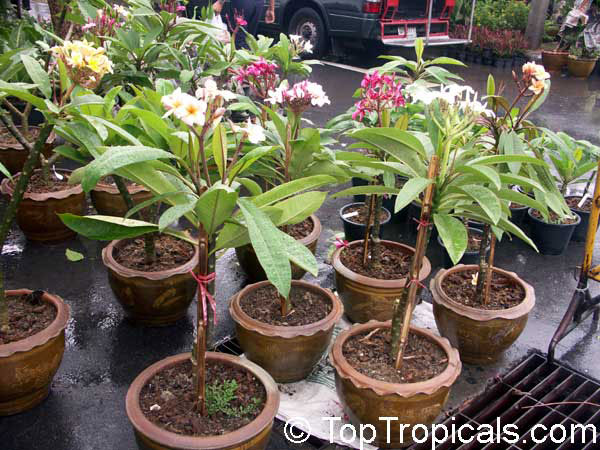
Q: We have a purple-flowering plumeria which resides on our sunny deck during the warm months and then Winter vacations on our back porch where we can close the plastic film windows and where it stays above 50 degrees (overnite) until it can get moved outside again. We live in zone 8+ in South Carolina and I would love to plant it outside. Do you think if we ghost-covered it when alerted that we would have an overnite freeze, that it would survive being planted in the ground and recover to flower when warm? I don't believe the soil in our yard has ever frozen below the top 1/2 inch or so, and never for more than a few hours at a time. What do you think?
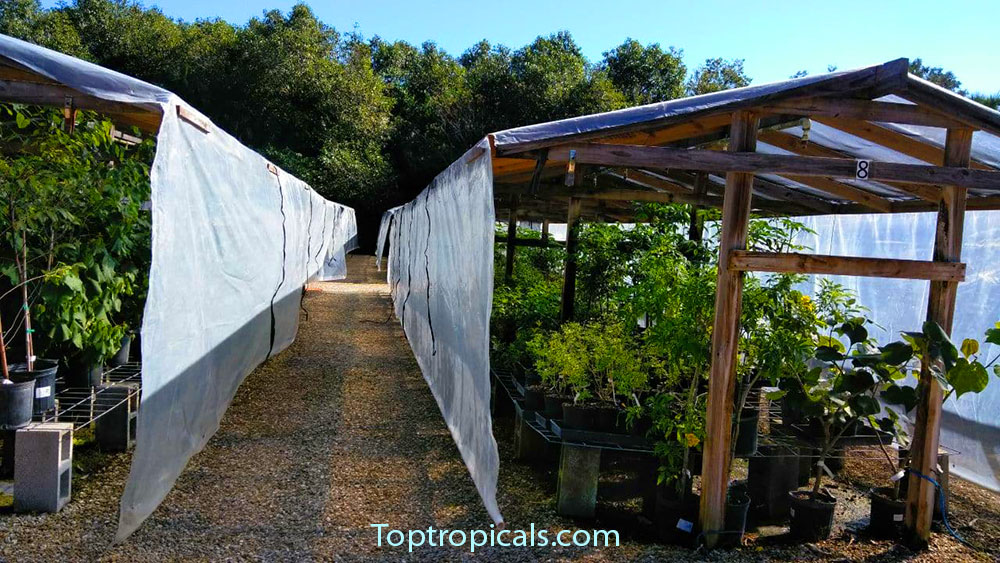
A: Plumerias are tropical plants, which means, they need frost-free environment. Even if the ground is frozen only on "the top ½" or so"- this may be enough to kill the plant. From our experience, plumerias can withstand a few hours of windchill frost (not frozen soil), but even if they survive, they may get some branches damage, and recovery may take so long that the plant may not even bloom the next year. So I wouldn't take that risk even with a ghost-cover cold protection. We have customers who grow tropical plants in the ground in colder areas, but they have greenhouse protection: this means, the soil is warm and the air temperature is maintained above 45-50F. For example, this Greenhouse in Virginia.
We recommend to continue growing your rare plumeria in container and
move it inside when temperatures drop below 50F (recommended) and for sure when
they drop below freezing. Plumeria can take a cold night (a few hours of
upper 30's) as long as it is followed by a nice warm sunny afternoon with at
least upper 50s. Otherwise, keep it indoors. The good news is, since plumerias
are deciduous and have no leaves in winter, low light level won't affect the
plant.
Just make sure to minimize watering and keep the plant on a dry side
until it starts growing new leaves in Spring. You may continue fertilizing once
a week with half-doze of Sunshine boosters - Sunshine TotalFeed. This will maintain the plant healthy and prepare
for the blooming season in Spring.